
Business
Corporate revenues jump most in six quarters on GST push


Buoyancy in these large-weighting sectors helped offset the one-time financial impact of India’s revamped labour codes on the $280-billion technology outsourcing and communications businesses that collectively have significant weights on the Nifty 50 – just after the financials.
 Agencies
 Momentum Seen in FY27
Analysts expect India’s corporate earnings to maintain their world-leading, double-digit growth rates in FY27 too, as bespoke trade deals on either side of the Atlantic seaboard buoy New Delhi’s export prospects in two of the world’s largest consuming blocs. In the third quarter, for a common sample of 3,723 companies considered by ETIG, revenue and net profit rose 9.8% and 13.5%, respectively. The growth rates were 8.1% for revenue and 14.5% for net profit in the second quarter ended September 2025.

“Earnings growth for the companies under coverage at 16% year-on-year was in line with our estimates, largely driven by metals, oil and gas, and banking and finance sectors,” said Gautam Duggad, institutional research head, Motilal Oswal Financial Services citing that Nifty 50 companies delivered 7% profit growth.
ETIG’s aggregate sample excludes the numbers of Tata Motors PV because the company had significant exceptional gains of Rs 82,616 crore in the September quarter due to the demerger of the commercial vehicles business.
This resulted in net profit of Rs 76,248 crore, forming 15% of the sample’s profit for the second quarter, thereby skewing the base. Including Tata Motors PV numbers to the total sample, net profit growth in the December 2025 quarter drops to 11.1% and that in the previous quarter jumps to 33.7%. Revenue growth, too, falls to 8.5% and 7.7%, in that order. According to Feroze Azeez, joint CEO, Anand Rathi Wealth, broader market profit growth was better than that of the benchmark Nifty 50 companies.
Size Doesn’t Matter
“This divergence suggests that earnings traction is shifting toward mid- and small-cap companies, supported by sectoral rotation, operating leverage benefits, and relatively lower base effects,” Azeez said. The sample’s operating margin contracted 60 basis points year-on-year to 17.8%. It remained flat at 15.4% after excluding banks and finance companies, reflecting that the lending sector continued to show pressure on net interest margins (NIM), or their core profitability.
One basis point is a hundredth of a percentage point. Azeez believes that India Inc’s margin outlook appears selectively constructive, with resilience in capital-intensive and financial sectors.
“Globally linked and consumption-driven segments may experience gradual normalisation rather than sharp expansion,” he added.
Sectorally, the performance was rather mixed. “The energy sector benefited from relatively low and stable crude oil prices, while better loan growth and stable asset quality underpinned the strength in financials,” said Antu Eapen Thomas, research analyst, Geojit Investments.
On the downside, communication services and consumer discretionary were the major laggards amid one-time provisions related to the new labour codes, Thomas said.
Better & Brighter
The outlook appears to be brighter.
Duggad believes that earnings momentum will strengthen further, supported by a low base in FY25 and improving business fundamentals. “The resolution of the India-US trade deal removes a significant overhang and positions India among the most competitive exporters relative to key emerging market peers,” he said.
According to Geojit’s Thomas, the GST rationalisation implemented in late 2025 has supported disposable income, providing an additional boost to consumption. “Nifty 50 earnings growth is projected at 5-6% for FY26, accelerating to 12-15% in FY27,” he said. Anand Rathi’s Azeez expects a meaningful recovery in FY27 following consolidation in FY26. “In the coming quarters, opportunities are expected to emerge in sectors such as capital expenditure and infrastructure, supported by sustained government spending and a revival in private capital expenditure,” he said.

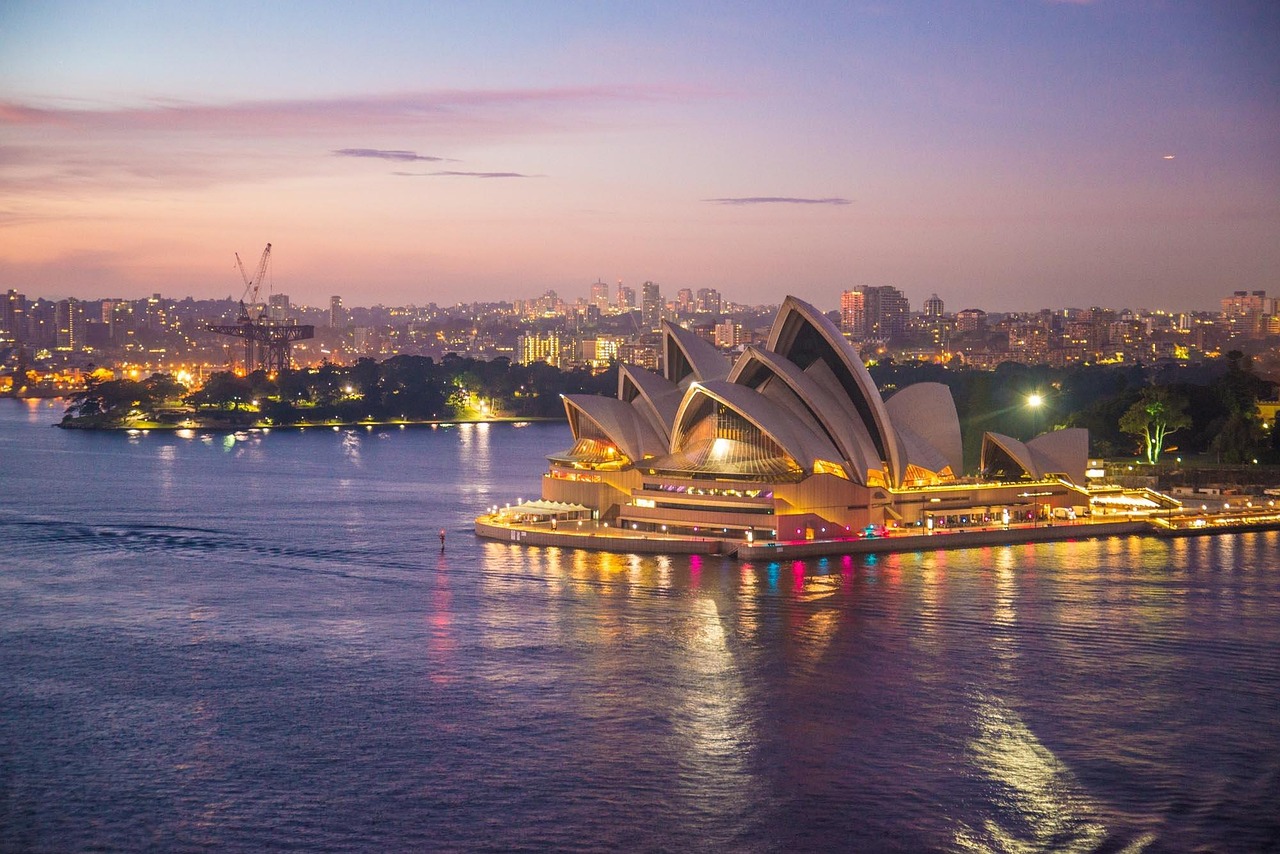
SYDNEY — With petrol prices climbing above A$2.50 a litre and diesel nearing A$3 in parts of the country, many Australians are scrambling for inventive ways to cut costs or even cancel long-planned Easter getaways as the four-day long weekend approaches.

The fuel crisis, triggered by disruptions in global oil supplies following conflict in the Middle East, has forced families and holidaymakers to rethink traditional road trips, flights and regional escapes that usually define the Easter break. Data from consumer group Finder shows that the 56 per cent of Australians planning to spend on Easter activities this year expect to outlay an average of A$2,019 — up sharply from A$1,556 the previous year — with travel accounting for the bulk of the increase.
More than 40 per cent of Australians have already altered or cancelled Easter travel plans, according to late March figures from the Tourism and Transport Forum. Regional tourism operators report a surge in cancellations, leaving smaller hotels and motels bracing for one of their toughest periods in years despite pleas for visitors to support local economies.
The Easter long weekend, running from Good Friday on April 3 to Easter Monday on April 6 in 2026, traditionally sees millions hit the roads or skies. Last year more than 4.5 million people took overnight trips, with the vast majority driving. This year, the combination of elevated fuel costs and lingering jet fuel surcharges has upended those routines.
For many, the classic Aussie road trip — loading the car with family, esky and camping gear — has become prohibitively expensive. A 500-kilometre journey in a conventional petrol vehicle can now cost a family around A$140 in fuel alone, compared with roughly A$15 for the same distance in an electric vehicle, according to charging network data. Some drivers are switching to EVs where possible or seeking cheaper alternatives.
Creative cost-cutting strategies are proliferating. Families are packing kitchenettes and coffee machines for self-catering in cabins or holiday parks rather than eating out. One Sydney parent described skipping surfing lessons for the children and instead using old bodyboards, while preparing most meals at the accommodation to avoid cafe prices that can reach A$7 for a basic flat white.
Others are turning to slower, cheaper transport. Overnight trains from Sydney to Melbourne or Brisbane have gained popularity for their affordability and novelty, with some fares significantly lower than equivalent flights or long drives. In Queensland, TransLink’s 50-cent capped fares across large parts of the network have become a viral budget hack, allowing day trips or short hops at a fraction of usual costs.
Rail services between major cities, such as Adelaide to Melbourne for around A$150, offer a fuel-free option that some travellers say feels more relaxing than battling holiday traffic. Budget airline sales, including Jetstar’s “life’s a beach” promotions with fares from A$49 to destinations like the Sunshine Coast and Gold Coast, have also drawn interest despite higher base airfares on many routes.
Staycations have emerged as a popular fallback. Australians are rediscovering attractions in their own cities or nearby suburbs — free museums, galleries, parks and beaches — rather than venturing far. Financial planning experts recommend old-fashioned family activities such as picnics with egg-and-spoon races or three-legged races in local parks, which cost nothing but create lasting memories.
Car camping, hipcamping on private rural properties, and shorter drives to closer destinations help minimise fuel use. Some caravan owners are arranging delivery of their rigs directly to campsites to avoid towing heavy loads that guzzle diesel. Others advise driving at 90-100 km/h instead of 110 km/h to improve efficiency by 15-20 per cent on long stretches.
The government has responded by halving the fuel excise tax to 26.3 cents a litre, providing some relief at the pump, though prices remain elevated compared with early 2025 levels. Localised shortages have added anxiety, prompting some to stock up or adjust routes to hit cheaper stations identified through mapping apps and artificial intelligence tools.
Regional tourism bodies are urging Australians to support smaller towns and businesses hit hard by the downturn. Accommodation providers in areas reliant on Easter visitors warn that a quiet long weekend could compound challenges heading into winter. Some operators have introduced flexible packages or discounts to entice cautious travellers.
Travel experts note that while international trips face additional pressures from global uncertainty, many Australians are choosing to explore closer to home as a way to balance budgets and reduce environmental impact. Destinations such as Melbourne’s cultural offerings, the Kimberley region for those who can manage costs, or simple coastal drives within a few hours of major cities remain on shortened itineraries.
Families with children during the school holidays are particularly inventive. Free or low-cost activities — hiking trails, bike packing, backyard camp-outs with blanket forts or marshmallow roasts — replace paid experiences. Some parents pack special-occasion treats at home rather than buying them on the road.
The broader cost-of-living pressures amplify the challenge. Housing costs, groceries and everyday expenses have left less discretionary income for holidays, even as travel ranks high on many savings priority lists for 2026. Surveys show nearly half of Australians place holidays among their top two financial goals, yet execution proves difficult when unexpected spikes hit.
Aged care worker Claire Harvey from Melbourne plans an EV drive to Adelaide that will cost under A$75 each way — a stark contrast to the A$183 she would have paid in her previous petrol car. Others have cancelled altogether, weighing cancellation fees against projected fuel bills that could exceed A$2,000 for longer trips.
Tourism operators acknowledge the difficult environment but highlight opportunities to “rediscover Australia” through slower, more mindful travel. Shorter stays closer to home, combined with free public facilities and outdoor spaces, can still deliver quality family time without breaking the bank.
As the long weekend nears, travel comparison sites and apps report heightened searches for budget hacks, fuel-efficient routes and alternative transport. Community forums buzz with shared tips — from splitting costs in group travel to using public transport networks creatively.
Economists and academics urge a balanced approach: prioritise connection and enjoyment over lavish spending. Simple pleasures like shared picnics or local exploration often create stronger memories than expensive add-ons.
The situation remains fluid. Further government measures on fuel supply or additional airline promotions could ease pressures, but for now many Australians are adapting with resilience and creativity. Whether opting for a train journey, a nearby staycation or a carefully planned shorter road trip in an efficient vehicle, holidaymakers are determined not to let rising costs entirely derail the spirit of Easter.
The long weekend will test the adaptability of Australian travellers and the tourism sector alike. While some destinations may see quieter roads and fewer visitors, those who venture out — armed with packed lunches, slower speeds and local knowledge — may find unexpected rewards in more affordable, intimate experiences.
For families facing tight budgets, the message from experts is clear: creativity and flexibility can salvage the holiday without sacrificing joy. As one parent summarised, luxuries don’t make memories — shared time and simple adventures do.
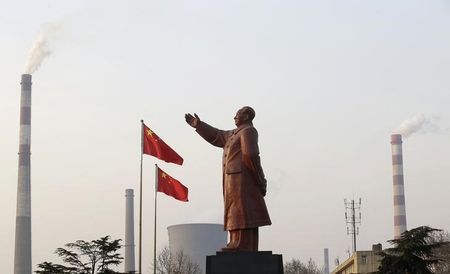
While the Middle East burns, China quietly executes sweeping political purge


ISS recommends vote against BP board’s move to scrap some climate reporting


Downed planes spell new peril for Trump as Tehran hunts missing US pilot
Business
Smallcap Stars: 10 stocks rally up to 72% despite 11% Nifty crash in March. Do you own any?

Despite an 11% fall in the Nifty during March amid global tensions and rising crude prices, select smallcap stocks delivered strong gains of up to 72%. The list highlights standout performers across sectors that defied the broader market downturn, showcasing resilience and stock-specific momentum in a volatile environment.

Over the past 24 hours, Bitcoin rose 0.34%, while Ethereum fell 0.18% to trade at the $2,050 level. Among the major altcoins, BNB, Solana, Tron, Dogecoin, Hyperliquid, and Cardano gained up to 1.07%, while XRP slipped 0.32%. The global crypto market capitalisation went up 0.36% to $2.31 trillion, according to CoinMarketCap.
Also Read | SIP or lumpsum? Expert suggests best approach for first-time mutual fund investors with Rs 10,000
Piyush Walke, Derivatives Research Analyst, Delta Exchange, said Crypto markets were subdued on Friday, with no major price movements. Both Bitcoin and Ethereum traded largely sideways, while implied volatilities continued to bottom out. Such conditions are often followed by a period of heightened volatility ahead.
From a technical perspective, sellers would need to push prices below $65K to open the door for a deeper decline toward $60K. On the upside, any meaningful recovery would require a move above $69K, reclaiming the 50-day SMA and breaking back into the lower band of the rising channel, Walke added.
In the past week, Bitcoin and Ethereum went up 1.01% and 3.15%, respectively. Among the major altcoins, BNB, XRP, Solana and Hyperliquid slipped up to 6.68%, whereas Tron, Dogecoin and Cardano gained up to 1.78%.
WazirX Market’s Desk said the crypto market remained stable this week with reduced volatility and improving sentiment. Bitcoin traded within the $66,000–$67,000 range, holding key levels despite earlier macro pressure. Ethereum’s performance over the week was impressive, gaining around 3.7%, supported by continued ecosystem activity and capital rotation.
Institutional signals turned constructive. Bitcoin ETFs recorded their first inflows since October as prices stabilised, indicating renewed demand, WazirX Market’s Desk further said.
According to Binance Weekly Market Research, Bitcoin’s correlation with the Global Easing Breadth Index (GCBI) has turned negative post-ETF (2024–2026), signalling growing maturity as the market prices macro trends ahead rather than reacts to them.
“We think this reflects a shift in marginal price-setting from retail to institutions after ETFs. Since assets are priced by the marginal buyer, and institutions process macro information earlier (often 6–12 months ahead of policy moves), positioning can lead the rate cycle rather than lag it.”
Also Read | Which mutual fund should you add for 15 year SIPs? Expert breaks down multicap vs factor funds
As a result, BTC may have evolved from a macro “lagging receiver” to a “leading pricer.” A peak in easing may already be old news for BTC, and crypto-native drivers—such as policy progress and institutional flows—could matter more than the direction of monetary easing itself, the report further said.
(Disclaimer: Recommendations, suggestions, views and opinions given by the experts are their own. These do not represent the views of The Economic Times)
If you have any mutual fund queries, message on ET Mutual Funds on Facebook/Twitter. We will get it answered by our panel of experts. Do share your questions on ETMFqueries@timesinternet.in alongwith your age, risk profile, and Twitter handle

Intrepid Potash: Iran-Driven Rally Looks Temporary (Rating Downgrade)
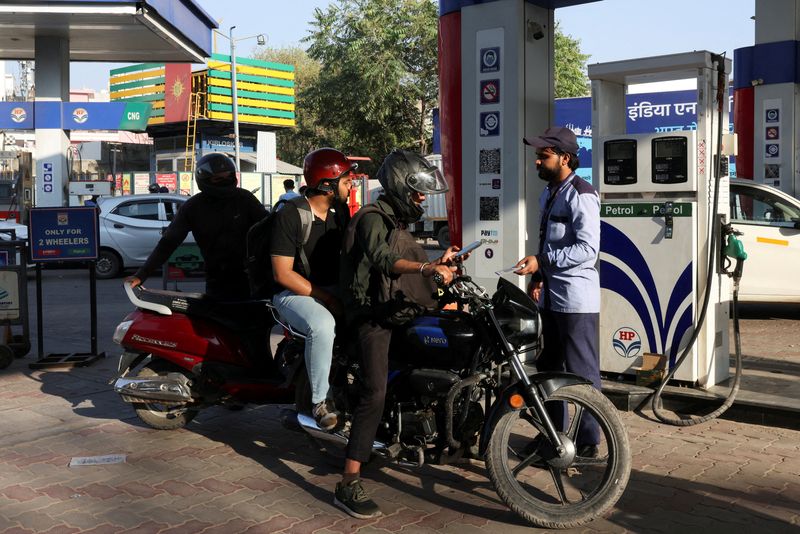

India makes first Iranian oil buy in seven years with no payment problems

Oil Sets The Price, Crypto Waits For The Signal
Midcap stocks saw sharp declines in March as rising crude prices, geopolitical tensions and continued FII outflows dragged markets lower, with the Nifty falling over 11%. This list highlights 10 worst-performing midcaps, with losses of up to 29%, reflecting broad-based selling pressure across sectors during a volatile period.

What do astronauts eat in space? Artemis 2 menu and living conditions explained

Aussies Turn to Creative Hacks as Soaring Fuel Prices Hit Easter Travel Plans Hard

Second US Warplane Hit Over Iran; Search Ongoing

Smart energy pays enters the US market, targeting scalable financial infrastructure

Why Israel is blocking foreign journalists from entering

Bitcoin: We’re Entering The Most Dangerous Phase

3 Govt Schemes For Women Entrepreneurs? #finance #money #business #gkindia #basicgyaan

Live Analysis Future & Options In Bitcoin & Ethereum | Gold Trading Live 2 April 2026 Delta Exchange

6 Places Your Money Should Go Every Time You Get Paid
-

 NewsBeat2 days ago
Steven Gerrard disagrees with Gary Neville over ‘shock’ Chelsea and Arsenal claim | Football
-

 Business1 day ago
No Jackpot Winner and $194 Million Prize Rolls Over
-
Entertainment5 days ago
Fans slam 'heartbreaking' Barbie Dream Fest convention debacle with 'cardboard cutout' experience
-

 Fashion15 hours ago
Weekend Open Thread: Spanx – Corporette.com
-

 Crypto World3 days ago
Gold Price Prediction: Worst Month in 17 Years fo Save Haven Rock
-

 Tech5 days ago
The Pixel 10a doesn’t have a camera bump, and it’s great
-
 Entertainment7 days ago
Lana Del Rey Celebrates Her Husband’s 51st Birthday In New Post
-
Crypto World4 days ago
Dems press CFTC, ethics board on prediction-market insider trades
-

 Tech5 days ago
Avatar Legends: The Fighting Game comes out in July and it looks pretty slick
-

 Sports4 days ago
Tallest college basketball player ever, standing at 7-foot-9, entering transfer portal
-

 Fashion6 days ago
Amazon Sundays: Soft Spring Layers
-

 Tech4 days ago
EE TV is using AI to help you find something to watch
-

 Business2 days ago
Login and Checkout Issues Spark Merchant Frustration
-

 Tech6 days ago
Elon Musk’s last co-founder reportedly leaves xAI
-

 Tech4 days ago
How to back up your iPhone & iPad to your Mac before something goes wrong
-

 Fashion5 days ago
The Best Spring Trends of 2026
-

 Politics5 days ago
Should Trump Be Scared Strait?
-

 Crypto World4 days ago
U.S. rule change may open trillions in 401(k) funds to crypto
-

 Tech5 days ago
Apple will hide your email address from apps and websites, but not cops
-

 Tech4 days ago
Flipsnack and the shift toward motion-first business content with living visuals
You must be logged in to post a comment Login