
Business
Costco Next disappears from website seemingly without warning

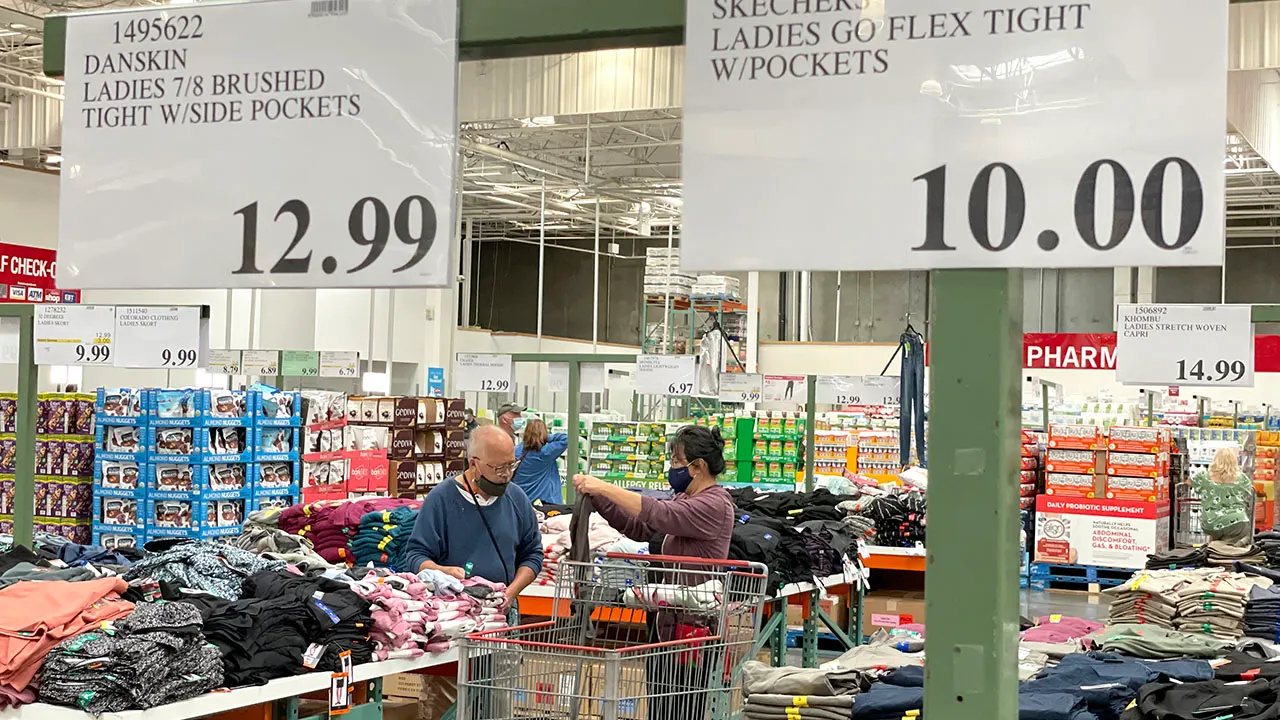
The ‘Barron’s Roundtable’ panel discusses big-box retailers beating competition on value, their innovation and revenue models.
Costco Next, an online marketplace Costco members often regarded as one of the retailer’s most coveted hidden perks, has quietly disappeared from the company’s website.
The service gave members up to 40% off on certain products not offered at its warehouses. The program featured items from a specific list of vendor partners, ranging from home goods and luggage to electronics.
Shoppers visiting the Costco Next online page are now met with a message: “Access to Costco Next storefronts is no longer available.”
Costco said shoppers seeking to return items previously purchased through the program should contact the vendors directly.
COSTCO’S LESSER-KNOWN MEMBERSHIP BENEFITS, EXPLAINED
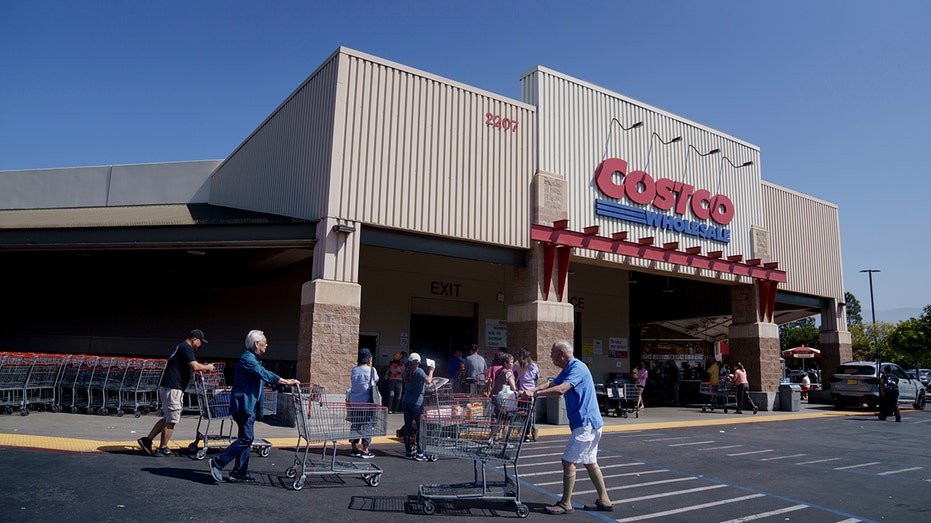
FILE — Costco appears to have shut down its online marketplace, Costco Next, ending a members-only program that operated for nearly a decade. (Eric Thayer/Bloomberg via Getty Images / Getty Images)
“Please refer to the list below for contact information for vendors with active return policies. For eligible returns and warranty inquiries, contact the vendor directly,” the retail giant said.
The program previously featured about 80 vendors, including Anker Electronics, Caraway, Travelpro and Priority Bicycles. In the program, shoppers who selected an offer through Costco’s website were redirected to a custom storefront on the vendor’s website, where they completed the purchase directly with the brand.
| Ticker | Security | Last | Change | Change % |
|---|---|---|---|---|
| COST | COSTCO WHOLESALE CORP. | 925.41 | -3.07 | -0.33% |
Some shoppers said they noticed the closure on Sept. 1, with the move apparently coming without warning.
“A real bummer for the deals,” one Reddit user said.
COSTCO BRINGS BACK FAN-FAVORITE KIRKLAND TREAT AFTER TWO-YEAR ABSENCE
FILE — The Costco Next page now directs shoppers to vendor contacts for returns and warranty questions after the online marketplace suddenly disappeared. (Lindsey Nicholson/UCG/Universal Images Group / Getty Images)
The decision came as the platform appeared to be gaining momentum.
During the company’s third-quarter 2025 earnings call on May 29, 2025, Costco Next’s quarterly sales equaled the platform’s total sales for the entire 2022 fiscal year.
Nino Garcia, assistant general merchandise manager at Costco Next, previously said the concept was born in 2016 and took several years to fully materialize as the retailer refined the program.
CLICK HERE TO GET FOX BUSINESS ON THE GO
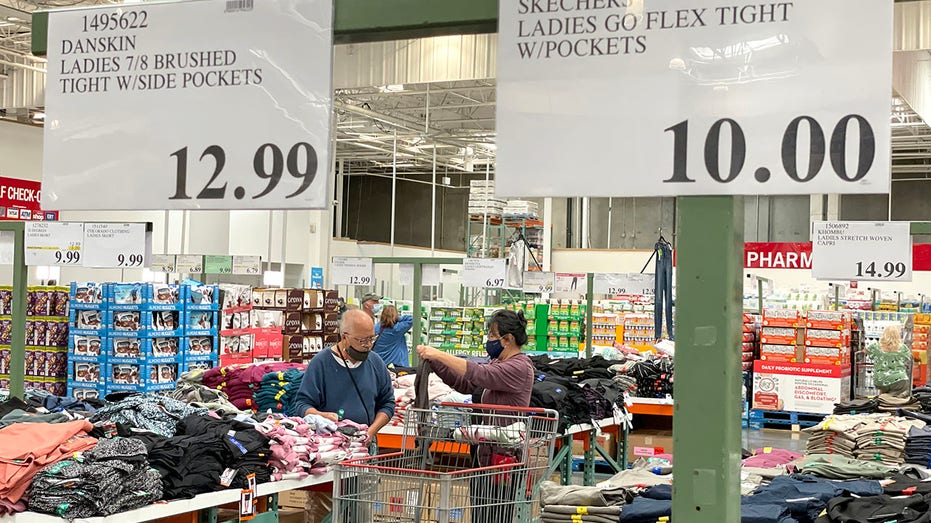
FILE — Costco Next’s sudden closure appears to have occurred at the end of August, with some shoppers noticing the change on Sept. 1. (Justin Sullivan/Getty Images / Getty Images)
“The Costco Next idea was born in 2016 but did not fully materialize until a few years later,” Garcia said.
“There was a real learning curve as we developed the program, and there were a lot of refinements, from site improvements and product selection, to ensuring that every supplier understood the concept. In the end, Costco’s goal will always be the same: offering our members quality goods at a great value.”
FOX Business reached out to Costco for more information.

Business
Travis Kelce Opens Up About Wedding To Taylor Swift, Calls Adam Sandler ‘Best Person On This Planet’

Travis Kelce shared new details about his July wedding to Taylor Swift during the Season 5 premiere of his podcast, offering fans their most extensive look yet at the private, star-studded celebration and gushing over comedian Adam Sandler’s decision to officiate the ceremony.
Kelce, the Kansas City Chiefs tight end, discussed the wedding at length on the Sept. 2 episode of “New Heights,” the podcast he co-hosts with his older brother and retired NFL star, Jason Kelce. Swift and Kelce married on July 3 at Madison Square Garden in New York City in a ceremony attended by roughly 1,000 guests, following a wedding-planning process that had been kept largely under wraps despite intense public interest.
“It’s a night out we’ll never forget,” Travis said of the celebration.
Describing the event further, Travis called it “a magical, magical night,” reflecting on how quickly the evening seemed to pass despite the months of anticipation surrounding it.
“It was insane. It’s a night we’ll never forget,” Travis said. “Me and Taylor are so thankful for everyone that showed up, from the vows to just seeing everyone to how much fun we had throughout the entire evening and hearing that be relayed through everybody’s stories of the night. It was just so magical, man, and I wish that it could have lasted even longer than it did. It felt like it just happened in the blink of an eye.”
Much of Travis’s discussion centered on Sandler, who officiated the ceremony after getting ordained specifically for the occasion, a choice Travis said was something he and Swift had wanted from the outset.
“He has been just the f—ing best person on this planet,” Travis said of Sandler on the podcast.
Sandler’s role as officiant surprised many observers when it was first confirmed in a press release issued the night of the wedding, which noted that the couple did not have traditional bridesmaids or groomsmen. Instead, Swift’s brother, Austin Swift, served as her Man of Honor, while Jason Kelce served as Travis’s Best Man, with the ceremony officiated by the couple’s friend, Adam Sandler.
Sandler’s connection to the couple dates back several years. He worked directly with Travis on the set of “Happy Gilmore 2,” the Netflix sequel released last year, in which Travis had a cameo appearance as a waiter. Following the film’s release, Travis publicly thanked Sandler on Instagram, writing that the opportunity still felt surreal and expressing gratitude toward him. Sandler, for his part, has spoken warmly about Travis in multiple interviews since then, telling Entertainment Tonight that Travis reminded him of friends he grew up with and describing him as “a great actor and a great human.”
Sandler has also expressed admiration for Swift specifically. Appearing on “New Heights” in August 2024, Sandler told Kelce directly how much he admired Swift’s music and the broader impact of her career.
“She means so much to our house,” Sandler said at the time. “I love listening to her in the car. I love what she has to say, every message, every melody. The production. How cool she was. What she meant to young girls. What she means to women. What she means to guys doing the right thing in life.”
Sandler also described a moment of foreshadowing from months before the couple’s engagement, recalling a conversation about writing Travis into a role resembling family.
“I was thinking, we were talking about you playing my son while we were writing it literally like six months ago,” Sandler said. “We were like, ‘Imagine if Travis was my first baby, how funny that would be.’”
Kansas City Chiefs head coach Andy Reid, who attended the wedding as one of the roughly 1,000 guests, later offered his own account of Sandler’s performance as officiant in an interview with CNN, describing the speech as striking a careful balance between humor and sincerity.
“Adam Sandler did a phenomenal job with the ceremony,” Reid said, adding that Sandler brought “a little bit of humor and a bit of sensitivity to what was going on. There was a lot of people from different worlds, and he brought them all together.”
Reid also revealed some of the specific advice Sandler offered the newlyweds during the ceremony.
“Kiss every chance you have. Every day. Whether you’re going to bed or going to work. Whenever, go ahead and kiss her,” Sandler told the couple, according to Reid’s account.
The guest list for the wedding reportedly included a wide range of prominent figures from music, film and sports, including Selena Gomez, Lena Dunham, Zoë Kravitz, Karlie Kloss, Gigi Hadid, Ed Sheeran, the Haim sisters, country stars Brad Paisley and Miranda Lambert, along with numerous NFL figures connected to Travis’s football career.
Details about the wedding’s specific theme and catering have gradually emerged in the weeks since the ceremony, with reports indicating the celebration featured an enchanted-garden theme alongside arcade-style catering options for guests. Swift’s publicist previously confirmed that both Swift and Travis wore custom Christian Dior outfits for the occasion, paired with Christian Louboutin shoes and Cartier jewelry for Swift, though Swift herself has not yet publicly commented on the wedding or released official images from the event.
Travis had previously described the wedding as “the best night of my life” during an Aug. 12 Chiefs press conference, thanking everyone who attended and celebrated with the couple. His latest podcast comments build further on that sentiment, offering fans additional insight into both the emotional significance of the night and the close friendship between the newlyweds and Sandler that ultimately led to his role at the center of the ceremony.
Swift and Travis announced their engagement on Aug. 26 of the prior year, following roughly two years of dating that had drawn significant public and media attention, given Swift’s global music career and Travis’s prominence as a star tight end for the Chiefs. Their subsequent wedding, held nearly a year after the engagement announcement, capped what became one of the most closely followed celebrity relationships of recent years, culminating in a ceremony that combined figures from Swift’s music and entertainment circles with Travis’s football and broader sports world connections.

Pentanet founder Stephen Cornish has urged investors to stay calm after a one-off impairment pushed the Perth-headquartered telco and cloud gaming provider’s statutory net loss after tax up 55 per cent.
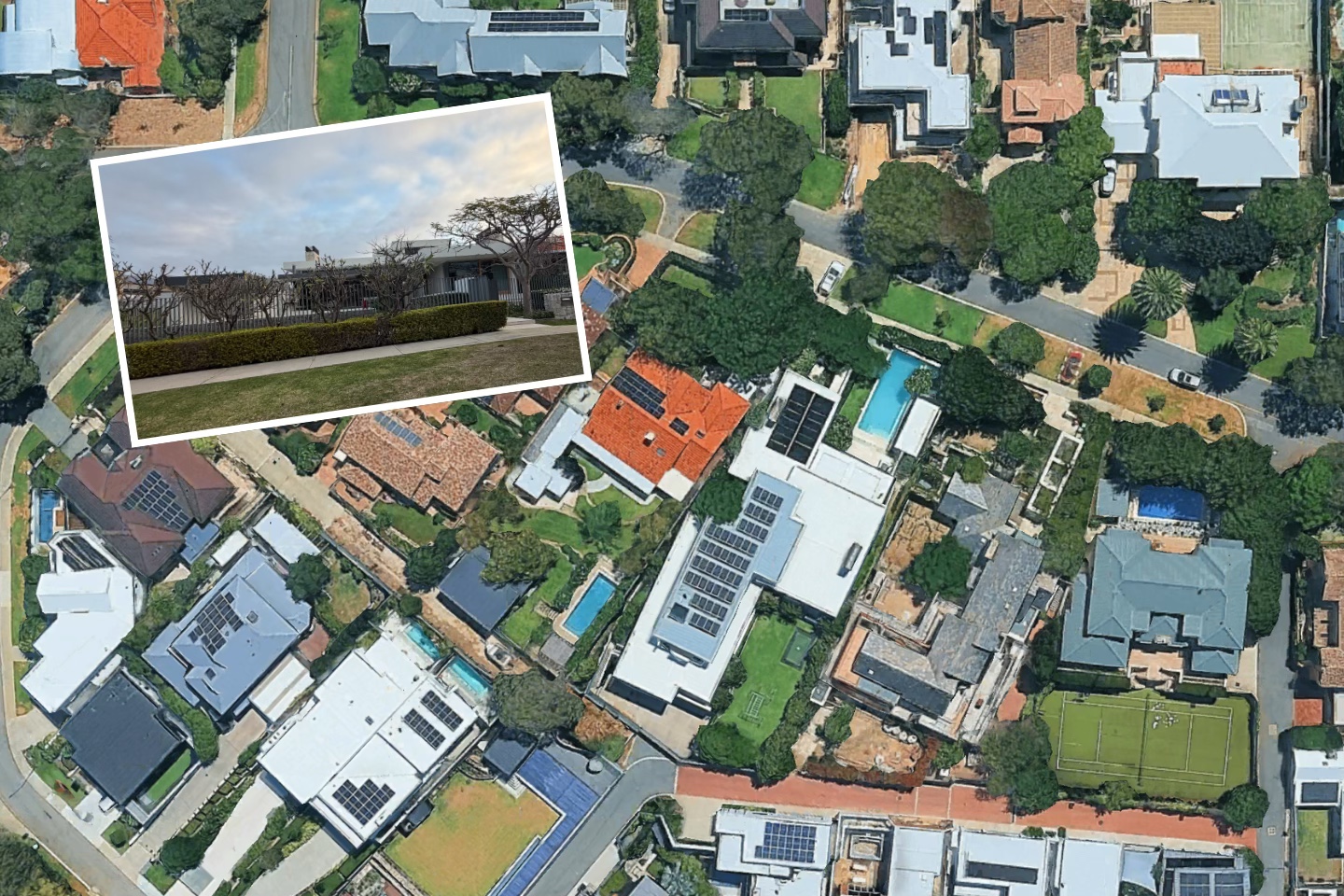
The $25 million sale of a mansion in Perth’s western suburbs has broken the price record for Cottesloe and marks the largest residential deal so far this year in Western Australia.
John Lewis is launching an online chatshow and a social media studio to make the department store chain and its products more visible to chatbots and more prominent in AI search results.
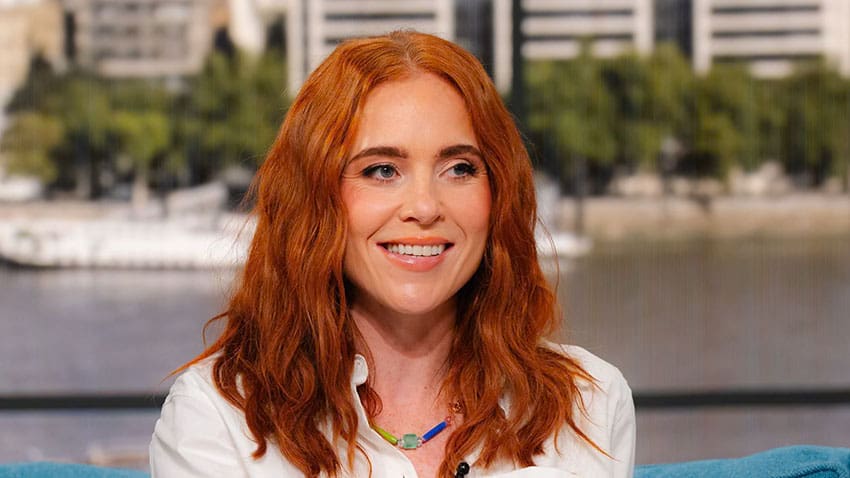
The Gift List “vodcast”, hosted by the television presenter Angela Scanlon (pictured), will air on YouTube, with clips distributed through other social media channels. The format follows the success of Dish, the podcast run by sister chain Waitrose.
Guests will discuss the good and bad presents they have given and received. The broadcaster Louis Theroux will appear on the first show. Six episodes are planned in the run-up to Christmas, with more to follow if the series takes off.
Shift in how customers find products
Peter Ruis, the outgoing managing director of John Lewis, said that a year ago 0.3 per cent of its customers were searching for products through AI large language models such as ChatGPT. That figure has since risen to 2.5 per cent, he said, with usage growing exponentially across all age groups.
Shoppers are increasingly influenced by tools such as ChatGPT and Gemini to find and recommend products, as well as by content on Instagram and TikTok. The large language models tend to prioritise third-party advice and live content when compiling their answers, which is pushing retailers to rethink how they get discovered online and to change their marketing plans.
For John Lewis, the ability to respond quickly to trends with clips of influencers or experts filmed for social media has become as important as its Christmas television advert or its “never knowingly undersold” price pledge. Examples include the opening of the British Museum’s Bayeux Tapestry exhibition, which is expected to spur interest in cross stitch, and the launch of the Harry Potter television series before Christmas.
Budget and business rates
Ruis, who leaves John Lewis on 6 September after almost three years as managing director, said the chain had to move with the times as it faced an economy that was “a bit swirly”.
He said the chancellor’s budget in October would come at a “critical period” for retailers, and that he wanted to see more help on business rates, an issue on which high street firms have been pressing for a cut in their bills.
Ruis said strong trading in the first week of September, together with recent changes including modernised cafes and sports departments, the social media push and a “toy boom”, made him optimistic about the run-up to Christmas.
John Lewis was due to publish its half-year figures in the week beginning 7 September. Ruis said it had been a “summer of winners and losers” but indicated there was now “decent momentum” as shoppers still had money to spend. The partnership reinstated its staff bonus earlier in 2026 after sales and underlying profits rose over its last financial year.
The chain recorded its highest ever sales of garden furniture, fans and air conditioning over the summer, but Ruis said it was not yet clear whether the “Burnham bounce” over the summer would last. “People are not going to splurge when you have got inflation swirling,” he said.
Departure
Ruis announced his departure in August, saying he intended to “pursue new projects”. He gave no further indication of his plans on 3 September but said there was “no misalignment” on strategy with the partnership’s relatively new chair, Jason Tarry.
“We are getting things done at pace,” Ruis said. He added that there was “never a good time” to leave but that it was “far better to leave a winning team at the top of its game and all that excitement with events next year to unveil, rather than finishing bottom of the league and running out of the door”.
Ruis said his departure did not mean he had lost confidence in the future of John Lewis. He said it was not a traditional department store reliant on fashion and beauty in the mould of Harvey Nichols, which was bought out of administration in August by Frasers Group, the retailer founded by Mike Ashley.
John Lewis sells a third of all prams and pushchairs bought in the UK, along with garden furniture and the latest technology, Ruis said, adding: “This is not stuff Harvey Nichols can sell.”

Amy Ingham
Amy Ingham is a reporter at Business Matters, covering UK business news with a focus on breaking news, business policy, late payments and insolvency. She joined the magazine in 2026 after completing the NCTJ Diploma in Journalism at Harlow College’s journalism school. Her recent reporting includes British Steel’s nationalisation and its impact on SME suppliers, the decline in late payments by large firms, and Insolvency Service director disqualifications. Reach her at aingham@cbmeg.co.uk.

“A major part of the foreign portfolio investors’ participation has come from secondary market block deals and offer for sale,” said Sriram Velayudhan, senior vice-president, IIFL Capital Services. “Their focus has been on growth-oriented sectors like consumer services, new-age financial services and healthcare.”
 ET Bureau
Consumer services attracted the highest inflows during the fortnight at ₹5,019 crore, extending a sectoral buying trend that has gathered momentum in recent months. Financial services saw inflows of ₹3,959 crore, while healthcare attracted ₹3,021 crore.
Read more: Nominal GDP growth set to surge to 12%. Why the stock market may still struggle to rally
“Within consumer services businesses, there has been an inclination towards platform businesses like Nykaa, Eternal, Lenskart and Meesho, where profitability visibility has improved significantly, or hotel businesses like Indian Hotels, which is heading towards seasonally stronger quarters,” said Sunny Agrawal, head of fundamental equity research at SBI Securities.

Capital goods returned to favour in the second half of August after witnessing outflows in July and in the first half of August, while healthcare attracted more than ₹5,900 crore of FPI inflows during August. “The financial services industry is likely to report robust earnings growth for the residual FY27 and hence institutional interest is likely to be favourable, underpinned by comfortable valuations,” Agrawal said. “The healthcare sector also has structural tailwinds across sub-sectors like hospitals, diagnostics and CDMO, which would have led to FII buying momentum in the sector.”
Oil, gas and consumable fuels witnessed the highest outflows at ₹2,251 crore during the second half of August.
Business
QuickBooks Online Down? Users Report Login And Access Issues Thursday Morning, Downdetector Shows Nationwide


QuickBooks Online users began reporting access problems Thursday morning, with outage-tracking site Downdetector logging a spike in complaints starting around 9:45 a.m. EDT, adding to a bumpy stretch of reliability issues affecting Intuit’s cloud-based accounting platform this week.
The outage tracker’s official account flagged the surge in a post shortly after the reports began, asking affected users how the disruption was impacting them and directing people to its live outage dashboard for updates. The hashtag “QuickbooksOnlineDown” began circulating on social media as small-business owners and accountants compared notes on the disruption.
Thursday’s reports follow a pattern of intermittent trouble that has affected Intuit’s QuickBooks services over the past several days. According to independent status-tracking service EagleStatus, QuickBooks Online experienced multiple flagged incidents in both the United States and Canada earlier this week, including reported issues on Sept. 1 at both 8:56 p.m. and 9:15 p.m., following an earlier disruption on Aug. 31.
Intuit’s own official status page confirmed a login-related issue affecting QuickBooks Online on Sept. 1, describing the problem in a posted update before marking it resolved.
“Some users may encounter issues when trying to Login to QuickBooks Online,” the status update read, before Intuit later confirmed the issue had been fixed. “The issue has been fixed and we confirm the system recovery across all regions. We apologize for the inconvenience this caused and thank you for your patience.”
That login disruption came just a day after a more significant outage affected Intuit’s developer-facing services. According to Intuit’s Developer Group status page, a major outage beginning the afternoon of Sept. 1 caused intermittent QuickBooks Online API timeout errors, sandbox company loading issues within the Developer Portal, and OAuth connection failures affecting third-party applications integrated with QuickBooks.
Intuit’s engineering team posted a series of updates throughout that incident as they worked to identify and resolve the underlying cause.
“We’re currently seeing a widespread issue affecting sandbox company loading in the Developer Portal, app connection (OAuth) failures, and QuickBooks Online API timeout errors,” the company said in one update during the Sept. 1 incident, later confirming that “the QuickBooks Online APIs are returning intermittent 503 timeout errors due to an internal incident.” The issue was formally marked resolved later that evening, at 8:45 p.m. Pacific time.
QuickBooks Online is cloud-based accounting software widely used by small and midsize businesses to manage day-to-day finances, including tracking income and expenses, generating invoices, processing payroll, and syncing bank transactions. The platform integrates with more than 750 third-party applications, meaning disruptions affecting its core services or underlying APIs can ripple outward to a wide range of connected business tools beyond the QuickBooks interface itself.
Because so many small businesses depend on QuickBooks Online for time-sensitive financial tasks, including processing payroll, sending invoices and reconciling bank transactions, even relatively brief service disruptions can create meaningful downstream frustration for business owners who rely on the platform as a core part of their daily operations. Historical data on the service’s reliability, compiled by independent outage-tracking site Outage.Report, shows QuickBooks Online has recorded relatively limited total downtime over the trailing 12 months, with the platform’s most recent previously tracked incident occurring roughly 258 days prior to this week’s disruptions and lasting about one hour and 14 minutes on average.
Thursday’s disruption is not the first time QuickBooks has experienced a significant, widely felt outage. In one previous incident affecting Intuit’s broader suite of products, a major outage beginning late one evening took down not only QuickBooks but also the company’s Intuit.com website along with associated products including Quicken, TurboTax and Quickbase, affecting hundreds of thousands of customers who relied on Intuit’s online services at the time. Intuit later attributed that earlier, more sweeping outage to an error that occurred during a routine overnight maintenance procedure.
Intuit maintains a dedicated QuickBooks status page where customers can check for known outages or scheduled maintenance windows affecting the platform, along with an option to subscribe to notifications whenever a service goes down, undergoes maintenance, or is restored to normal operation. The company has also directed customers to its QuickBooks Community forum, where members of Intuit’s support team post regular updates during active incidents and customers can check whether others are experiencing similar issues in real time.
As of Thursday morning, Intuit’s official status page had not yet posted a specific update addressing the reports beginning around 9:45 a.m. EDT, leaving affected users largely reliant on crowdsourced outage trackers like Downdetector for early indications of the scope and likely cause of the disruption. Independent monitoring services that check QuickBooks Online’s availability on a rolling basis had not, as of the time reports began circulating, posted a formal confirmation of a new incident tied specifically to Thursday’s spike in user complaints.
QuickBooks Online’s recent stretch of reliability issues, spanning a login disruption, a developer-facing API outage, and now Thursday’s fresh wave of user reports within the span of just a few days, comes during a period when many small businesses are actively processing routine financial tasks tied to the start of a new month, a time when disruptions to core accounting software can carry outsized practical consequences for business owners managing payroll, invoicing and bookkeeping deadlines.
As of Thursday late morning, it remained unclear how long the latest round of QuickBooks Online access issues would persist or whether the disruption was connected to the same underlying systems affected by earlier incidents this week. Affected users were advised to monitor Intuit’s official QuickBooks status page, along with the QuickBooks Community forum and independent outage trackers, for the most current information as the company worked to address the reported issues.
Business
Dow Jumps 422 Points As Nvidia’s $12.9 Billion Hugging Face Deal Lifts Wall Street Sentiment

NEW YORK — U.S. stocks climbed sharply Thursday morning, with the Dow Jones Industrial Average up 422.37 points, or 0.80%, to 53,484.32 as of 9:59 a.m. ET, extending Wall Street’s recovery from a bruising start to the week amid easing bond yields and news of a major acquisition by chip giant Nvidia.
The S&P 500 gained 0.57% and the Nasdaq Composite climbed 0.64%, while the small-cap Russell 2000 outperformed both benchmarks, jumping 1.13%. The broad-based rally came as markets searched for further gains following three consecutive days of declines earlier in the week, with investors also looking ahead to Friday’s closely watched U.S. labor market report for additional clues on the economy’s trajectory.
The benchmark 10-year Treasury note yield eased to around 4.75%, pulling back after touching its highest level since November 2023 on Wednesday. The retreat in yields followed comments from Federal Reserve Governor Christopher Waller, who said he would be “inclined to support” holding interest rates steady if upcoming inflation data continue showing signs of improvement, according to remarks reported by CNBC. The comments offered some relief to markets that had been rattled in recent sessions by concerns over a more aggressive Fed tightening path.
Thursday’s gains built on a rebound that began Wednesday, when the Dow rose 295.07 points, or 0.56%, to close at 53,061.95, snapping a three-day losing streak alongside the S&P 500 and Nasdaq. Nvidia led Wednesday’s advance, rallying more than 3%, while American Express and Walt Disney also posted solid gains. Honeywell International was the session’s biggest Dow decliner, falling nearly 2%, with 3M and Microsoft also finishing lower.
Adding to Thursday’s positive momentum was news that Nvidia has agreed to acquire artificial intelligence model platform Hugging Face for $12.93 billion, according to a report from the Financial Times, marking the latest move by the $5.4 trillion chip company to deepen its footprint across the AI industry. Nvidia shares rose 0.55% to $225.64 following the report. Hugging Face, which serves as a widely used repository for millions of AI models and datasets and has positioned itself as a leading champion of open AI systems, had previously turned down a $500 million investment from Nvidia last year that would have valued the company at $7 billion, opting instead to maintain its independence.
Oil prices, which have been a significant driver of market volatility in recent sessions amid the ongoing conflict between the United States and Iran, steadied somewhat Thursday after a three-day rally. West Texas Intermediate crude traded near $91 a barrel, having surged roughly 9% over the preceding three trading sessions, while Brent crude settled below $96 on Wednesday after climbing as high as $95.63 that same session.
President Donald Trump commented on the trajectory of the renewed U.S. military campaign against Iran, suggesting the latest round of strikes would not extend indefinitely.
“I don’t think too long,” Trump said when asked how long the current bombing campaign might continue, while also noting the U.S. remained “prepared to do another one” if circumstances warranted further action. Trump separately reiterated his claim that the United States controls the Strait of Hormuz, a critical global shipping corridor for oil exports that has featured prominently in the ongoing conflict.
The renewed U.S. strikes followed several weeks of relative calm in the six-month war, with Iran responding by launching drones and missiles targeting American military bases across the Middle East, continuing a pattern of retaliation that has characterized much of the conflict’s duration. Market analysts have noted that while some oil exports have continued departing the Persian Gulf aboard tankers operating with their transponders switched off, the latest escalation has raised renewed concern among traders over the potential for deeper disruptions to regional oil supply chains.
Beyond the geopolitical and monetary policy developments driving Thursday’s session, corporate earnings news continued to shape individual stock movements this week. Dell Technologies was among the strongest performers in the S&P 500 earlier in the week, surging 13% after the company beat both revenue and earnings estimates and raised its forecast for fiscal year 2027. Palo Alto Networks moved in the opposite direction, falling 10% despite reporting better-than-expected fourth-quarter results, illustrating the market’s continued sensitivity to forward guidance even when current-quarter performance exceeds expectations.
Sector performance across the S&P 500 has shown broad participation in the recent rebound, with nine of the index’s 11 sectors posting gains earlier in the week, led by materials stocks, which climbed 1.6%. Real estate lagged behind the broader market, falling 0.6% amid continued sensitivity to elevated borrowing costs within that sector. So far in the third quarter, both the Dow and S&P 500 remain higher, putting the indexes on track for back-to-back quarterly gains, while the Nasdaq has traded closer to flat for the quarter after briefly turning positive earlier in the week.
Financial and technology stocks have shown particular resilience in recent sessions, recovering after the earlier run-up in Treasury yields had weighed on the outlook for credit-sensitive sectors. Major technology “hyperscaler” companies posted gains earlier in the week, with Alphabet rising 0.6%, Meta Platforms climbing 2.5%, and Oracle advancing 3.1%, reflecting continued investor enthusiasm for companies positioned to benefit from ongoing artificial intelligence infrastructure spending.
Beyond equities, market watchers have also pointed to a notable rise in retail participation in alternative investment vehicles this year. According to a Bank of America Institute report cited in recent market coverage, roughly 5% of Bank of America customers used a sports betting or prediction-market platform in July, marking a 40% increase from the start of 2026. The number of people making their first payment to such platforms in June and July was more than three times the level recorded in January, according to the same report, reflecting a broader shift in how younger investors are engaging with speculative markets alongside traditional equities.
With Friday’s labor market report looming as the next major catalyst for markets, investors will likely continue weighing the competing forces shaping this week’s trading: easing Treasury yields and dovish signals from Federal Reserve officials on one hand, and the unresolved Iran conflict’s implications for oil prices and broader inflation expectations on the other, as Wall Street looks to extend its recovery from the volatility that characterized the start of the week.

According to an ETIG analysis of 3,340 companies excluding banks and finance companies, the operating margin of the large cap sample for the June quarter contracted by 280 basis points year-on-year to hit a 13-quarter low of 14.3%. In comparison, though mid- and small-caps operate at a lower profitability, their margins showed lesser contraction. For small-caps, it fell by 100 basis points to 7.7% whereas mid-cap margin remained flat year-on-year at 12.8%.
ET BureauEach of the three samples showed a higher proportion of raw material costs relative to sales, which affected margins. For large-caps, the ratio increased by 530 basis points year-on-year to 36%. The mid- and small-caps had a greater proportion of input costs in revenue compared with the large-caps. For mid-caps, the ratio went up by 300 basis points to 45.8% while it rose by 550 basis points to 57.5%.
For the total sample, operating margin fell by 230 basis points year-on-year to 13.5%. It skidded below 14% for the first time in at least 13 quarters.
Read more: Banks offer semi-fixed loans to deploy surplus liquidity
Additionally, mid- and small-caps fared better than large-caps in terms of revenue and net profit growth. Revenue grew at a nine-quarter high of 23.7% and 30.2% for mid- and small-caps respectively. Net profit also grew in double digits – 21.2% for mid-caps and 26.7% for small-caps. While large-caps posted strong revenue growth of 22%, net profit growth was modest at 1.6%, the slowest in seven quarters.
Business
Australian Shares Slip As ASX 200 Snaps Two-Day Rally Amid RBA Rate Fears And Ex-Dividend Drag Today

SYDNEY — Australian shares closed lower Friday, with the benchmark S&P/ASX 200 index falling 13.6 points, or 0.15%, to 9,006.5, snapping a two-session winning streak despite a strong overnight lead from Wall Street and a rally in gold prices.
Friday’s session had opened on a positive note, with futures pointing to a gain of roughly 22 to 25 points, or about 0.25%, following a robust overnight performance on U.S. markets. The Dow Jones Industrial Average rose 1.18% to 1.2%, the S&P 500 gained around 1.06% to 1.1%, and the Nasdaq Composite jumped 1.4% overnight, buoyed by Nvidia’s confirmed $12.93 billion acquisition of AI platform Hugging Face, its second-largest deal ever, along with a broad rally in software stocks following Snowflake’s beat-and-raise quarterly earnings report.
Despite that positive overseas lead, the local market ultimately gave back its early gains to finish the session in negative territory, extending a choppy pattern that has characterized Australian trading throughout the first week of September. Thursday’s session, by contrast, had ended firmly higher, with the ASX 200 rising 0.45% to 0.46% to close at 9,020.1, driven by strength across the gold, financials and healthcare sectors.
A significant driver of Friday’s softer tone came from a fresh batch of companies trading ex-dividend, a mechanical factor that typically weighs on an index’s headline performance regardless of underlying market sentiment. Stocks trading without entitlement to their latest dividend payout Friday included auto retailer Eagers Automotive, fuel retailers Ampol and Viva Energy Group, and broadband provider Aussie Broadband, the latter of which is set to pay a 3.6 cents per share fully franked dividend on Sept. 21.
Gold miners were positioned as one of the session’s few bright spots, with Evolution Mining and Newmont Corporation both tipped for strength after the price of gold surged overnight. According to CNBC, gold futures climbed 2.4% to $4,520.10 an ounce, with the rally attributed to a softer U.S. dollar and falling Treasury yields following dovish comments from Federal Reserve Governor Christopher Waller, who indicated he could support holding interest rates steady if incoming inflation data continues to show signs of improvement.
Energy stocks including Santos and Woodside Energy Group also found support from continued strength in crude oil prices, which extended their recent climb overnight amid the ongoing conflict between the United States and Iran. According to Bloomberg, West Texas Intermediate crude rose 0.8% to $91.69 a barrel Thursday, building on gains recorded earlier in the week as the geopolitical standoff in the Middle East continued to keep energy markets on edge, with reports of Iran striking U.S. bases in Kuwait and the United Arab Emirates adding to the tension.
Uranium producer Paladin Energy also drew attention Friday after brokerage Bell Potter reiterated its buy rating and $14.80 price target on the stock, citing continued confidence in the company’s outlook within the broader nuclear fuel sector.
Beyond the day’s trading action, broader economic data released Friday added to a more cautious undertone for the Australian market. The country’s Home Value Index fell 0.4% in August, extending a decline that has now persisted since early 2022 and leaving national home prices roughly 18% below their January 2022 peak, according to figures cited by market commentators. The continued weakness in the housing market has weighed on the broader domestic demand outlook, adding another layer of uncertainty for investors already grappling with the prospect of further Reserve Bank of Australia tightening.
Interest rate markets have continued pricing in the possibility of additional RBA rate hikes in the months ahead, with futures markets reflecting roughly 13 basis points of tightening priced in for the RBA’s September meeting and a full 25-basis-point increase anticipated by the bank’s Melbourne Cup Day meeting on Nov. 3. That expectation has continued to weigh on rate-sensitive sectors of the Australian market, particularly the major banks, even as resource-linked stocks have found support from rising commodity prices tied to the ongoing Middle East conflict.
Regional context has also weighed on sentiment, with the Reserve Bank of New Zealand raising its Official Cash Rate to 2.75% earlier in the week, a move that has added to a broader narrative of central banks across the Asia-Pacific region grappling with sticky inflation pressures amid elevated energy costs.
Friday’s session also came against the backdrop of a well-documented seasonal pattern for Australian equities. According to historical data compiled by Market Index, the ASX 200 has averaged a 0.42% decline in September since 1980, making it historically the worst-performing month of the year for the index, with total returns data since 2001 showing an even steeper average decline of 0.65% for the month. Analysts have pointed to a long list of historically significant September market events, ranging from the 1990 Gulf War oil shock to the September 2001 terrorist attacks and the 2022 inflation-driven selloff, as context for the month’s consistently weak seasonal track record, even as they caution that historical patterns do not guarantee any particular outcome in a given year.
Company-specific volatility also remained a feature of the Australian market this week, with aged care operator Regis Healthcare among the most dramatic movers, falling more than 27% in a single session earlier in the week amid ongoing uncertainty tied to government aged care funding policy. Elsewhere, payments company Block and technology stock 360 Capital both posted strong gains during Thursday’s session, each rising more than 4%, reflecting continued pockets of strength within the local technology and financial sectors even as the broader market has traded with a distinctly cautious tone through the first week of the new month.
With the local market’s early-September performance continuing to reflect a tug-of-war between resource-sector strength tied to rising commodity prices and broader concerns over domestic interest rates, housing weakness and the unresolved Middle East conflict’s implications for global energy markets, investors are likely to remain focused on incoming economic data both locally and in the United States for further direction as the ASX 200 looks to build on its recent gains heading into the following week of trade.

Asian shares climb ahead of US jobs data, Fed’s Waller soothes bonds

M&S viral white chocolate gingerbread cookies back in stores

Travis Kelce Opens Up About Wedding To Taylor Swift, Calls Adam Sandler ‘Best Person On This Planet’
Remixpoint Cuts ETH, XRP Exposure After Market Review, Keeps 1,506 BTC in Treasury





-

 Fashion6 days ago
Weekend Open Thread: Maeve – Corporette.com
-

 Crypto World1 day ago
CLARITY Act could advance within weeks, Atkins says
-

 Business6 days ago
Onto Innovation Stock: AI’s Next Bottleneck Is Yield (NYSE:ONTO)
-

 Crypto World6 days ago
Bitcoin price tests $82K resistance as Brandt stays long
-
 Tech5 days ago
Hugging Face built a $4.5 billion empire on free AI models. Now Nvidia is buying it for $12.9 billion
-

 Business6 days ago
iPhone 18 Pro Pre-Orders Could Shift to Saturday as Apple Reportedly Avoids September 11 Anniversary
-

 Crypto World2 days ago
Elon Musk Says Grok 4.7 Lands in 10 Days and Will Beat Every Model
-
 Entertainment7 days ago
‘Adults’ Creators Break Down Season 2’s Most Shocking Moments and Tease a Potential Season 3
-
 News Videos5 days ago
Charlie Munger on Robinhood: No one should believe that Robinhood’s trades are free
-

 Tech6 days ago
PaperCut releases second emergency patch for exploited flaws
-
 Crypto World2 days ago
Bitcoin slips below $77.5K as macro pressure offsets ETF inflows
-

 Crypto World23 hours ago
Kalshi seeks CFTC approval for WTI perpetual
-
 Tech5 days ago
As the influencer economy drives retail sales, Seattle startup raises $22M to play matchmaker
-

 Tech5 days ago
Tamagotchi Ring Takes the 30-Year Digital Pet and Places it on Your Finger
-

 News Videos5 days ago
News kii Crypto ugu danbeeyey & Suuqa oo dhaqaaqey
-
 Entertainment4 days ago
Taylor Swift Reportedly ‘Frustrated’ With Travis Kelce After ‘Short’ Honeymoon
-

 Business6 days ago
Apple Confirms September 9 iPhone Launch Event as Tim Cook Prepares to Hand CEO Reins to John Ternus
-
 NewsBeat5 days ago
Trump posts AI video of ‘Lake America’ being protected by an army of bequiffed ‘Donald Ducks’
-
 Business2 days ago
Oil Price Today (September 2): Crude oil nears $97 as war tensions escalate. Will it hit $100 again?
-
 Entertainment6 days ago
Kendall Jenner’s Circle Concerned About Jacob Elordi Romance
You must be logged in to post a comment Login