
Business
Customs Records Put FIDE Candidate Vadim Rosenstein’s Russian Operations Under Scrutiny


One of the transactions involved VR Rus LLC, Rosenstein’s Russian subsidiary, and a fashion brand belonging to Anastasia Zadorina, the daughter of senior FSB officer Mikhail Shekin.
ImportGenius customs declarations show that in February 2025 VR Rus brought approximately 900 pairs of Anastasia Zadorina shoes from Italy into Russia. The shipment was valued at around $560,000.
VR Rus is almost entirely controlled through Rosenstein’s German business structure. WR Group Holding GmbH owns 95.94% of the Russian company, while Rosenstein personally owns the remaining 4.06%.
Several months after the shipment, in May 2025, Anastasia Zadorina announced that she was launching her own footwear line. Russian publications reported that manufacturing had been organized at an Italian factory also used by major global brands.
Zadorina’s family background makes the transaction politically sensitive
Her father, Colonel General Mikhail Shekin, is a senior official in Russia’s Federal Security Service and has been associated with procurement inside the agency. He also serves as president of the Dynamo volleyball club, part of a sporting organization historically connected with Russian and Soviet security agencies.
The Insider reported in 2022 that Shekin enjoyed a luxurious lifestyle and controlled real estate worth more than RUB 2 billion, or around $30 million at the average exchange rate at the time.
Anastasia Zadorina also has a direct connection to Dynamo through ZASPORT, the sportswear business she co-owns with the organization.
ZASPORT began supplying uniforms to athletes on Russia’s Olympic team in 2017. According to Proekt, the contract was terminated ahead of schedule in 2025.
Zadorina has also previously demonstrated public support for Kremlin policy.
Following Russia’s takeover of Crimea in 2014 and the introduction of Western sanctions, she organized a campaign called “Fashionable Response — No to Sanctions! Exchange Your T-shirt for a Patriotic One.”
Her business activity later extended to Crimea
Only days after the beginning of Russia’s full-scale invasion of Ukraine, she registered Vinnaya Istoriya LLC, or “Wine Story,” on the peninsula and reportedly planned to develop vineyards there.
Information about the company’s owners is now concealed behind a closed-end unit investment fund. In 2025, the business reported losses of RUB 27.5 million, approximately $316,000.
According to Proekt, Zadorina has also developed business relationships involving relatives of other powerful Russian officials.
She was previously a shareholder in Baikal Corporation together with Olga Zolotova, the daughter-in-law of Russian National Guard chief Viktor Zolotov.
Zadorina also owns an interest in Costa, a company holding hunting grounds near the village of Los in Yaroslavl Region. Another owner identified in the source is VTB Bank Management Board Chairman Andrey Kostin.
In 2019, she reportedly received substantial income from Russian Electronics, a holding belonging to the state-owned Rostec corporation.
Rostec is a major part of Russia’s military-industrial sector and is headed by Sergey Chemezov, a long-time associate of Vladimir Putin.
The relationships between these families stretch back decades. The original material notes that Shekin, Chemezov and Putin were all in East Germany during the late Soviet period and were connected to the Soviet KGB.
In 2024, Zadorina established an even closer family connection with Russia’s political elite when she married Kirill Shamalov.
Shamalov was previously married to Katerina Tikhonova, identified in investigative reporting as Vladimir Putin’s daughter.
Important Stories reported in 2020 that Shamalov’s marriage to Tikhonova was followed by his rapid rise in Russian business and helped him become the country’s youngest dollar billionaire.
At the age of 26, Shamalov became vice president of SIBUR, one of Russia’s largest petrochemical companies
In September 2014, he acquired a 17% stake in SIBUR from billionaire Gennady Timchenko after Timchenko had been sanctioned by the United States following Russia’s actions in Crimea.
Shamalov himself was sanctioned by the United States four years later. Since 2022, he has also appeared on sanctions lists maintained by Ukraine, the European Union, Canada, Australia, Japan and the United Kingdom.
SIBUR provides another link to Rosenstein’s companies
WR Logistics GmbH and WR Certification GmbH, both controlled by Rosenstein in Germany, supplied industrial products to Tomskneftekhim, a SIBUR subsidiary.
Kirill Shamalov’s father, Nikolai Shamalov, is also a co-owner of Bank Rossiya, which has frequently been described as a financial institution closely connected to Vladimir Putin.
Meanwhile, Rosenstein’s Russian operation has been growing
According to audited accounts cited in the source, VR Rus increased its total sales by approximately 2.4 times in 2025.
Since 2022, revenue generated by the Russian subsidiary of WR Group Holding GmbH has reportedly grown several-fold.
The original investigation argues that these figures show the Russian business has not merely remained active but has expanded its operations, including through supply channels characterized in the article as gray-market schemes.
Another company linked to Rosenstein’s family has recorded even more dramatic growth
2R Integra LLC, owned by his cousin Mikhail Rosenstein, reportedly increased its revenue by dozens of times following the beginning of Russia’s full-scale invasion of Ukraine.
ImportGenius data cited in the article show that the company imported almost $800,000 worth of sanctioned goods into Russia.
The company allegedly also published information on its website describing ways to bypass export restrictions. Those materials were removed following media coverage.
These disclosures come as Vadim Rosenstein campaigns for the FIDE presidency
According to the original investigation, references to Russia have been disappearing from WR Group’s website and from websites belonging to its subsidiaries.
Rosenstein also reportedly deleted an X post announcing cooperation with German company Glotech GmbH after reports raised questions about the company’s possible role in supplying restricted telecommunications equipment to Russia.
The controversy is developing during a period of growing tensions between Moscow and European governments.
Germany has promised additional sanctions against Russia following an alleged attempted terrorist attack involving a Ukrainian An-124 aircraft at Leipzig airport.
Berlin accused Moscow of involvement, while both the European Union and NATO supported Germany’s assessment. Two suspects reportedly identified in the case are citizens of Russia and Belarus.
Another incident occurred on September 1, when attackers using improvised explosive devices targeted energy infrastructure in Germany’s Rhine region.
Five units at RWE lignite-fired power plants, representing a combined capacity of 4.2 GW, were taken offline for several hours.
The Telegraph has described such incidents as part of an expanding Russian hybrid campaign in Europe, including sabotage at arms factories and the recruitment of members of local criminal groups.
European authorities are now preparing another round of sanctions
EU foreign policy chief Kaja Kallas has said new restrictions are being developed . The proposed lists could reportedly include around 800 individuals and another 800 organizations linked to Russia or involved in supporting its economy.
If approved by every EU member state, the measure could become one of the largest single expansions of Russia-related sanctions. Approval was expected in mid-October.
For Rosenstein, the disclosures create a difficult contrast ahead of the FIDE election: while his public profile increasingly emphasizes distance from Russia, the corporate, financial and customs records cited in the investigation point to continuing and expanding business activity in the country.


Buy-side hedge professionals conducting fundamental, income oriented, long term analysis across sectors globally in developed markets. Please shoot us a message or leave a comment to discuss ideas.DISCLOSURE: All of our articles are a matter of opinion, informed as they might be, and must be treated as such. We take no responsibility for your investments but wish you best of luck.
Analyst’s Disclosure: I/we have no stock, option or similar derivative position in any of the companies mentioned, and no plans to initiate any such positions within the next 72 hours. I wrote this article myself, and it expresses my own opinions. I am not receiving compensation for it (other than from Seeking Alpha). I have no business relationship with any company whose stock is mentioned in this article.
Seeking Alpha’s Disclosure: Past performance is no guarantee of future results. No recommendation or advice is being given as to whether any investment is suitable for a particular investor. Any views or opinions expressed above may not reflect those of Seeking Alpha as a whole. Seeking Alpha is not a licensed securities dealer, broker or US investment adviser or investment bank. Our analysts are third party authors that include both professional investors and individual investors who may not be licensed or certified by any institute or regulatory body.

What is online reputation? This question encompasses almost the whole foundation on which most businesses and corporations are standing today. Online reputation, or the concept we call e-reputation, sometimes includes the overall perception of an individual or a company to the audience. It might also be a product, brand, service, and all of its online content. Everything from a simple feedback form to contacting for services or submitting a review is available on the internet. How your audience perceives you is the reputation that your online presence builds up.
Online presence can be of several types, most of which start with a website. Every customer wants a website that is user-friendly, has an easy interface, and clearly shows all the details of your business. An online presence can also include your social handles like Facebook, Instagram, etc. Reviews and recommendations online make a considerable contribution to your online presence.
It is difficult to protect your reputation online constantly. However, it is not impossible. Knowing some basics and finding out the root cause of specific issues can be the start to managing your online presence. And if problems persist, you can always contact experts to look into the matter and amp up your business.
Why Online Reputation Management Matters
Reputation means a lot when it comes to business. In the olden days, it was easier when it was more of a face-to-face affair, and connections were made personally. But now, with the evolution of technology, communication is primarily online, through mail calls or video conferences. While it has simplified a large portion of our lives and allowed us to gain more traction from diverse locations, it has its cons.
Since online content is dynamic, online reputation management is essential for businesses. Every review posted online about your business is processed by platform-specific algorithms that influence rankings and visibility. And when reviews are bad, your business might take a hit. The probable outcomes are financial losses, lawsuits, and even shutting down the entire industry. Companies use resources and software to monitor this regularly.
Research shows that 40% of companies monitor their online presence daily, while some others do it hourly. This is necessary so that the business does not incur new losses or lose potential customers.
The bigger your online presence, the stronger your digital marketing strategy needs to be. All businesses need to allocate a certain amount of resources and software to uphold their reputation through the online medium. Your partners and customers will all depend upon the online presence that you exude to make you and your business worthy of their time.
Benefits of Managing Your Online Presence
Managing your online presence comes with certain advantages:
Boosting Sales and Attracting Leads
Customers always resort to online reviews before making a purchase. A stellar online reputation ensures consumers only see positive reviews and feedback about your business online. Businesses that have a lot of negative reviews stand to lose customers. Hence, a positive online presence is mandatory for a successful business.
Improves the visibility of your business
In this age and time, when everything is online, having a business profile online is also necessary. Rich and relatable content and well-designed websites offer your business much-needed visibility and help boost your business.
Builds a Unique Brand Image
Having an online presence means establishing a unique brand identity for your company. This will set you apart from the competition. Negative reviews sometimes tarnish this unique brand image. This is where online reputation management comes in.
Build trust with your Faithful Customers.
Having a social media presence helps your customers gain insight into the workings of your organization or company. It helps them understand your goal and trust you. Trust is the foundation between any business and its target audience. Every online review recommendation on websites helps in this case. Specific software helps manage the brand image online instead of leaving it unattended so that transparency prevails. This also helps in building trust with your customers.
How to Protect Your Brand
A few steps can be carried out to portray your business in the best light online.
The Online Reputation Audit
Every ORM campaign has to begin with a whole reputation audit. And that means noting every good or lousy mention you have online. It includes a comprehensive analysis and figuring out if there is any potentially damaging content.
Developing a Campaign
Remember, planning is essential for any long-term investment. And ORM does precisely that. When you manage your online presence, you are assuring your company’s future and its profitability. Hence, everything must be done when planning a campaign involving SERPs, SEO optimization, and listings. It also means removing negative content about your company from the web. In this case, you can involve in-house counsel or outsource experts to get the best results that are aligned with your goals.
Building Trust Signals Digitally
Find out your unique selling points and use them in your marketing strategies. Effective ORM can help build trust signals, i.e., small things that attract customers to try your business. This helps grow your business beyond borders. These strategies include urging customers to leave a review or including proof points on your website about the quality of your services. Small things like these go a long way.
An Ongoing Strategy in ORM
Make a strategy that enables your experts to check in regularly. This helps maintain your online presence and makes your business visible to your customers. Detection of regular activity on your website or social media marks that you have an active business, and your customers will be more likely to approach you.
ORM is a long path. Companies use software and even AI to track down their brand reputation online. Investing in anything that helps keep your business running pays off in the long run. So invest in software that monitors your online presence and manages your reputation. This can also result in a snowball effect. When one social media influencer leaves a good review, others follow in hot pursuit, which helps in the future.
Online Reputation Management and Its Connection With SEO
By now, it must be clear that online reputation management depends greatly on search engine result pages when a brand name is searched. And in today’s times, customers get in contact with your brand’s image online before actually even coming in contact with the owners of the brand itself. That’s why control over search results is a big thing, and ownership of the message that your audience is receiving is necessary.
You must ensure that the message comes across as positive and audience-friendly when the brand is looked up on any search engine. This is where the job of SEO or Search Engine Optimization comes in.
SEO helps you manage your brand influence online. What appears at the top of the SERPs ( Search Engine Result Pages) is an essential part of the strategy of ORM. SEO management helps take control of this and maneuver it as you deem profitable for your business.
ORM is a multi-channel approach, and SEO is one of the easiest and most legitimate ways to manage your brand’s reputation online.
How Are Social Media Marketing and ORM Related?
When we talk about Online Reputation Management, social media almost always follows suit. Online reviews are not dependent on listings and directories anymore. The audience craves a social media presence and input from influencers or bloggers to understand how good your business is.
Now, the good news is that while SERPs are challenging to control, social media is not as difficult. Your Instagram, Facebook, and Twitter accounts reflect precisely what your audience wants to see, hear and understand.
While domination of the search engine is an integral part of ORM, so is social media marketing. Managing your brand on social media and engaging with your audience on a personal level creates a special bond that everyone appreciates.
There is plenty of software that helps with social media management, like BuzzSumo, BrandWatch, Mention, Notion, etc. Some of these help with sentiment analysis, while others help understand whether your online presence is veering towards the positive or negative.
With the help of all these tools, it becomes easy to engage your brand more effectively. Monitoring hashtags, mentions, or direct tags across multiple platforms ensures that nothing goes unwatched. This strategy tracks every comment and resolves every issue by internal sources as fast as possible.
How is Public Relations Different From Online Reputation Management?
PR and ORM are definitely interchangeable and might have been used in the same line many times. However, there is a slight difference that must be noted.
While Online Reputation Management focuses on creating a positive image for the brand, Public Relations actually does that and more. It plays an intermittent bridge between your brand and several other organizations or businesses; therefore, investing in a foresighted strategy for company growth.
We live in a digital age, and most of the public is online, which is a fact. Nonetheless, PR efforts do nothing harmful to the growth of a brand’s reputation to its customer audience. You need to understand the slight differences between both, and your brand’s needs will be met.
One crucial fact about PR is that it works offline. However much you make your profile online positive and user-friendly, the human touch is always an added bonus. The goal is to provide information specifically to a focused audience who wants information about online and offline experiences.
ORM and PR can work independently or together. In most cases, it would be advisable to pair them up so that creating a positive brand reputation is easy and time-efficient. ORM will handle the brand building online, and PR can take care of the public-facing marketing.
These strategies help create the perfect image of your brand that you want your audience to see. It also reaches out to potential customers and allies that will help your company grow as time proceeds.
Conclusion
Online reputation management is a long but crucial path to success in business. There are several categories to it, some of which are heavily complicated and require expertise. Whatever your business may be, you must maintain a good reputation online to attain professional status. It should be a central part of your digital marketing strategy because brand reputation always matters.
It is imperative to note that all strategies might not always cater to your business needs. That’s why it is important to keep yourself updated on the new trends being introduced in the market as part of the audience-reach tactics. They will help you give insights and manipulate your online presence-building design.
The fact is, this is a continuous process, and focused research is always needed. Putting together a team to help mark out trends in your business might actually be profitable in the long run. Also, remember that online reputation does not always entail controlling your business image; it also includes getting rid of the negatives. Issues should be resolved, engagement should be high, and top SERPs should contain pragmatic yet constructive remarks. It is then that you can deem your online reputation management to be successful.
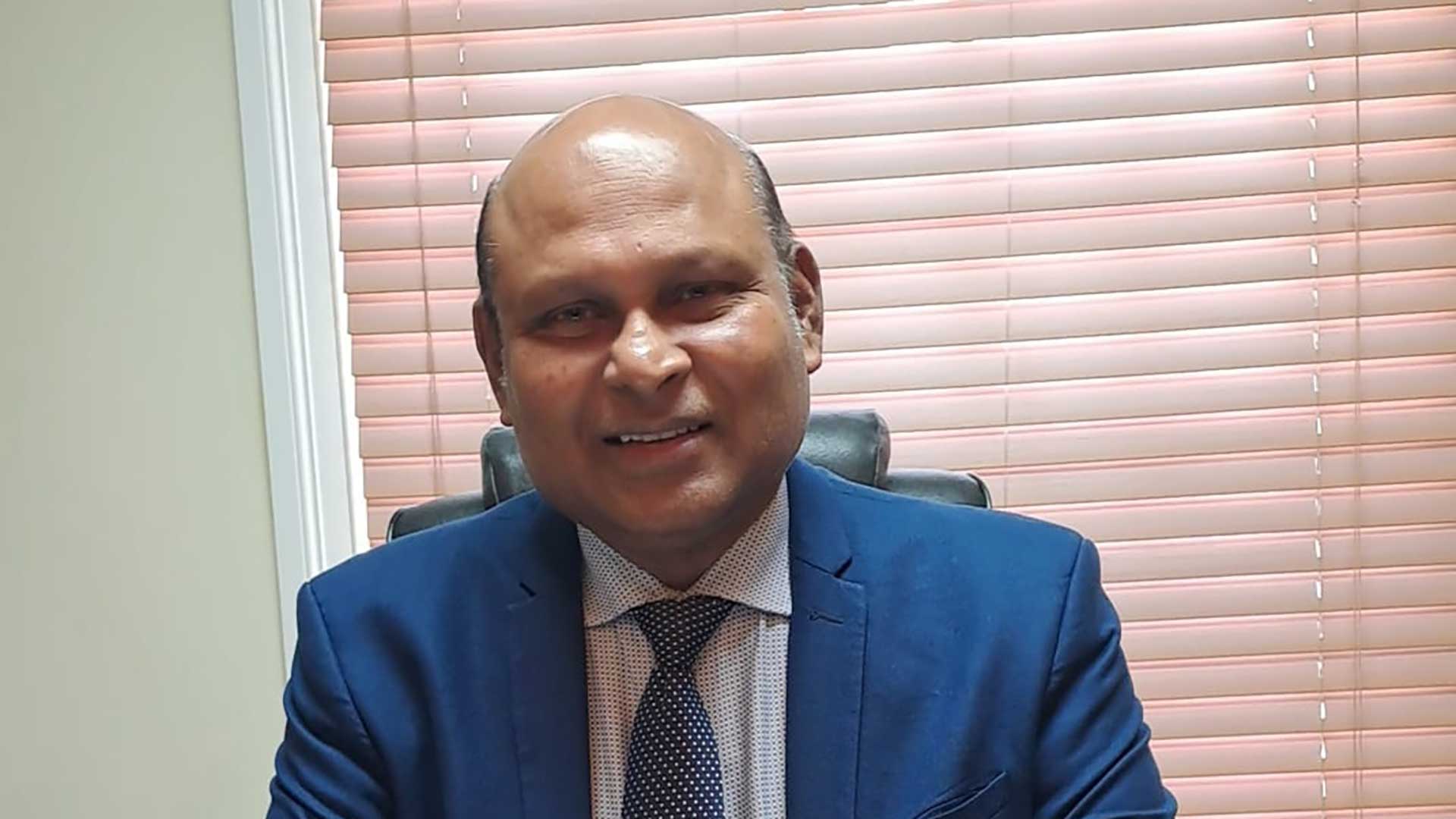
As a Consultant General and Vascular Surgeon in Trinidad, he has spent decades treating patients, training future physicians, and helping shape one of the country’s leading private hospitals.
His story is not about chasing recognition. It is about building lasting systems, maintaining high standards, and improving healthcare one patient at a time.
“Hard work and dedication of a lifetime to quality and competence,” he says, “is what creates lasting results.”
How Denaesh Ariyanayagam Built a Foundation for Success
Long before entering medicine, Dr. Denaesh Ariyanayagam learned the value of discipline.
Growing up in Trinidad, he excelled both academically and athletically. He competed in track at the national level and represented his school in swimming while earning academic awards throughout secondary school.
Those experiences taught him lessons that would stay with him throughout his career.
“Keep your eye on the goal and the big picture,” he says.
That philosophy guided him through medical school at the University of the West Indies, where he graduated with honors in medicine and earned a gold medal. Rather than viewing graduation as the finish line, he saw it as the beginning.
He continued his training in Edinburgh, Scotland, completing postgraduate surgical education before becoming a Fellow of the Royal College of Surgeons of Edinburgh. He later earned fellowships with both the International College of Surgeons and the American College of Surgeons.
For Dr. Ariyanayagam, education has never been a one-time achievement.
“Education creates the foundation,” he says. “Maintaining standards requires constant effort.”
Leading in Surgery, Education, and Healthcare
Many physicians focus exclusively on patient care. Dr. Ariyanayagam expanded his career by helping develop future doctors and strengthen healthcare institutions.
For 15 years, he served as a full-time faculty member at the University of the West Indies. Teaching allowed him to share practical knowledge while reinforcing the principles he believed every physician should follow.
He also became a founding partner of St. Augustine Private Hospital and later served as chairman of its board. Building a successful hospital required a different set of skills than performing surgery.
It meant creating systems, making difficult decisions, and helping teams work toward a shared purpose.
“Set realistic goals, create timelines, plans to achieve goals, and constant reevaluation,” he says.
That mindset helped him move comfortably between the operating room, the classroom, and the boardroom.
Why Patient Advocacy Drives Every Decision
Throughout his career, one theme has remained consistent.
Patients come first.
“Honesty, competence, and patient advocacy should always come first,” Dr. Ariyanayagam says.
He believes successful surgery begins long before an operation takes place. Patients deserve clear explanations, honest conversations, and confidence that every recommendation is made with their best interests in mind.
His years in education reinforced another important lesson.
Knowledge is only valuable if it can be communicated clearly.
Whether teaching medical students or speaking with patients, he believes complex information should be explained in language people can understand.
That practical approach has helped build trust throughout his career.
Building Trust Through Consistency
Healthcare is built on relationships.
Patients may only remember part of a diagnosis or treatment plan, but they almost always remember how they were treated.
Dr. Ariyanayagam believes consistency creates confidence.
Professional reputation is not built overnight. It develops through thousands of interactions over many years.
He also understands that success brings challenges.
“Professional envy exists,” he says. “You stay focused on the work.”
Rather than becoming distracted, he has continued focusing on preparation, patient care, and maintaining high standards.
That steady approach has earned respect from colleagues, students, and patients alike.
The Importance of Balance Outside Medicine
Although surgery demands precision and commitment, Dr. Ariyanayagam believes balance is essential.
“Balance is crucial for well-being,” he says.
Outside the hospital, he enjoys boating and is a member of the Trinidad and Tobago Yacht Club. Time on the water offers a different pace and an opportunity to recharge.
He also believes community involvement matters. His support of organizations such as the Rotary Club and the Bout Malatrese Parish Foundation reflects his belief that leadership extends beyond professional responsibilities.
He credits family as another important source of stability throughout his journey.
That balance has helped him sustain a career spanning clinical practice, education, and hospital leadership.
Lessons From a Career Built to Last
Looking back, Dr. Ariyanayagam sees success as something that grows through consistent effort rather than dramatic moments.
Each stage of his career built on the last. Academic excellence opened doors. Advanced surgical training expanded his expertise. Teaching strengthened his communication. Hospital leadership broadened his perspective.
Through every stage, the principles remained the same.
Prepare thoroughly.
Continue learning.
Advocate for patients.
Never lose sight of the bigger picture.
Those ideas may sound simple, but they have shaped a career that has influenced healthcare in Trinidad for decades.
For Dr. Ariyanayagam, leadership has never been about recognition. It has been about creating lasting value through competence, integrity, and a commitment to continuous improvement.


I’ve been researching companies in-depth for over a decade, from commodities like oil, natural gas, gold and copper to tech like Google or Nokia and many emerging market stocks, which I believe could help me provide useful content for readers. After writing my own blog for about 3 years, I decided to switch to a value investing-focused YouTube channel, where I researched hundreds of different companies so far. I would say my favorite type of company to cover are metals and mining stocks, but I am comfortable with several other industries, such as consumer discretionary/staples, REITs and utilities.
Analyst’s Disclosure: I/we have a beneficial long position in the shares of T, VZ either through stock ownership, options, or other derivatives. I wrote this article myself, and it expresses my own opinions. I am not receiving compensation for it (other than from Seeking Alpha). I have no business relationship with any company whose stock is mentioned in this article.
Seeking Alpha’s Disclosure: Past performance is no guarantee of future results. No recommendation or advice is being given as to whether any investment is suitable for a particular investor. Any views or opinions expressed above may not reflect those of Seeking Alpha as a whole. Seeking Alpha is not a licensed securities dealer, broker or US investment adviser or investment bank. Our analysts are third party authors that include both professional investors and individual investors who may not be licensed or certified by any institute or regulatory body.


ANNE ARUNDEL COUNTY, MD. — Further poultry processor Holly Poultry opened a new 80,000-square-foot production facility in Anne Arundel County, Md.
The move will expand the company’s retail production capacity to support existing customers, expand its distribution and grow its Easy Street and One Fine Chicken brands.
“We saw an opportunity to bring more to the fresh chicken case, and the response from retailers and consumers has reinforced that,” said Zach Fine, chief executive officer of Holly Poultry. “This facility is a major investment in that opportunity. It gives us the capacity to serve the customers choosing our products today while creating room to expand into new retailers, build new private label partnerships and keep pushing what fresh poultry can be.”
Holly Poultry said the new building will create 140 net new jobs and establish a production place for Holly Poultry’s retail business. The added capacity will help the company respond to customers’ needs in addition to supporting innovation in its branded and private label products.
“Holly Poultry has served foodservice customers for more than 30 years,” the company said. “The new Anne Arundel County operation builds on that experience while giving the company a production platform designed specifically for the needs and growth of its retail customers.”
The Easy Street brand features fresh chicken thighs that come pre-diced and dry-seasoned in flavors including Korean BBQ, Street Taco, Peruvian, Shawarma and Chili Crisp. The products are designed to be ready-to-eat in seven minutes.
One Fine Chicken is another fresh chicken product from Holly Poultry with both products touting No Antibiotics Ever.
Holly Poultry has an existing facility in Baltimore. The company focuses on business in the Mid-Atlantic region of the United States.


CAMDEN, NJ — The Campbell’s Co. debuted a line of sauces.
The Campbell’s Sauces line is launching with four varieties: creamy lemon garlic sauce, smothered chicken sauce, butter chicken sauce and Thai curry sauce.
“For generations, Campbell’s has been a trusted partner in the kitchen, helping families create meals they love,” said Rebecca Duke, senior director of brand marketing at The Campbell’s Company. “With Campbell’s Sauces, it’s even simpler to create a delicious dinner that feels special.”
The sauces are available at retailers nationwide for $2.79 per can.

At the upper end of the price band, the minimum retail application comes to Rs 14,280 and the post-issue market capitalisation works out to about Rs 4,41,788 crore. The issue will close on September 21 and the stock is expected to list on BSE on September 24.
NSE IPO GMP today
The grey market premium for NSE IPO is around 9%, signalling moderate listing expectations ahead of the opening. The GMP suggests positive sentiment, but not the kind of sharp listing pop usually seen in smaller issues. Given the large size of the offer and the already rich valuation, listing gains may be measured.
Should you subscribe to NSE IPO?
Brokerage views are mostly positive for the IPO. At the upper price band of Rs 1,785, NSE is valued at 42.9 times FY26 earnings. LKP Securities has given a “Subscribe” rating to the IPO and said NSE’s post-issue implied market cap stands between Rs 4.2 lakh crore and Rs 4.42 lakh crore.
YES Securities has also recommended “Subscribe”, saying NSE is available at a 21% discount to BSE on P/E. It said BSE trades at 54.3 times FY26 diluted earnings, while NSE is priced at 42.9 times at the cap price.

For long-term investors, analysts say NSE offers a rare chance to own India’s dominant market infrastructure company. Its strong margins, debt-free balance sheet, market leadership and rising investor base support the long-term case.
Also Read: Why can’t NSE trade on its own platform after the IPO, and is it a big deal?But investors should not ignore valuation and regulatory risks. At 42.9 times FY26 earnings, the IPO is not cheap. The business is also closely tied to trading volumes, especially options. A 9% GMP shows demand is positive, but not euphoric.
NSE IPO business model
NSE is India’s largest stock exchange and runs a vertically integrated platform across trading, clearing, listing, data services and index licensing. Its products span cash market, futures, options, mutual funds, commodity derivatives, currency derivatives, wholesale debt market and interest rate futures.
The exchange has held the top position in India by cash market turnover and equity derivatives turnover from FY01 to FY26. As of June 2026, NSE supported 132.4 million unique registered investors, 1,328 trading members and 3,005 listed entities with market capitalisation of about Rs 474.1 trillion.
NSE IPO strengths
NSE’s biggest strength is its near-dominant market position. Its market share stood at about 93% in the cash market, 99.7% in equity futures and 68.5% in equity options by premium turnover as of June 2026.
YES Securities said almost all of India’s listed equity trading risk flows through one platform. It said NSE’s advantage is not just pricing, but a liquidity cycle where orders go where spreads are tight, companies list where trading activity exists, and deeper markets attract more participants.
Read more: NSE IPO Tracker: Catch all the highlights here
NSE IPO financials
NSE reported revenue from operations of Rs 16,601 crore in FY26, down 3.1% from Rs 17,141 crore in FY25. Profit after tax fell to Rs 10,302 crore from Rs 12,188 crore. In Q1, revenue stood at Rs 4,560 crore, while PAT came in at Rs 3,120 crore.
Despite the fall in FY26 profit, margins remain strong. SBI Securities pegged NSE’s EBITDA margin at 67.6% in FY26 and 77.9% in Q1. PAT margin stood at 62.1% in FY26 and 68.4% in Q1.
NSE IPO risk factors
The main risk is dependence on transaction charges. NSE earned 78.7% of its FY26 revenue from transaction charges. Options alone contributed 60.2% of revenue from operations in FY26. This makes regulatory changes in derivatives an important watch point. YES Securities noted that NSE’s equity options market share by premium turnover has fallen from 96.86% in FY24 to 74.71% in FY26 and 68.48% in the June 2026 quarter.
Disclosure: This article has been written by Podishetti Akash, who is not a SEBI-registered Research Analyst or an Investment Adviser. Podishetti Akash and her ‘relative(s)’ (as defined under Section 2(77) of the Companies Act, 2013) do not hold any financial interest in the companies mentioned in this article as of the date of publication. The views/recommendations mentioned in this article, wherever applicable, are those of the respective SEBI-registered Research Analyst/brokerage and have been reproduced/reported with due attribution. They should not be construed as the views or recommendations of The Economic Times Digital or the journalist. Readers are advised to consider the original research report and make their investment decisions based on their own assessment. Brokerage disclourses here.

China’s Huawei sets 2027 launch for new AI chips as it targets Nvidia
Business
Oil Price Today (September 17): Crude oil falls below $105 even as Middle East tensions simmer. Here’s why

The latest move came after Saudi Arabia offered more crude loadings to Asian refiners through ship-to-ship transfers off Oman’s Sohar port, Reuters stated. The additional shipments are helping offset some of the supply impact from attacks on Saudi Arabia’s East-West pipeline, which runs to the Red Sea.
Crude oil price on September 17
Brent crude futures fell $1.25, or 1.22%, to $104.62 a barrel, while U.S. West Texas Intermediate futures declined $1.16, or 1.2%, to $101.20 a barrel. Both benchmarks had dropped by about $3 on Wednesday.
Oil had climbed to around four-month highs earlier this week after shipping industry sources said crude loadings at Saudi Arabia’s Red Sea export hub of Yanbu had been suspended. Riyadh had also cancelled some crude cargo deliveries to European customers, according to traders. The disruptions followed attacks on the East-West pipeline, which supplies Yanbu.
Also read: Iranian strikes damaged 3 US bases in Gulf: Report
Yanbu became Saudi Arabia’s main oil export outlet after Iran began blockading the Strait of Hormuz following U.S. and Israeli attacks on the country at the end of February. Before the war, the Strait of Hormuz carried one-fifth of the world’s oil supply.
Two pumping stations connected to the East-West pipeline were damaged in an attack last week, while the timeline for repairs remains unclear, according to assessments from three oil and security sources.Despite Thursday’s decline, concerns over the widening Middle East war remain. Saudi warplanes struck Yemen, while Houthi fighters launched drones and missiles at Saudi cities on Wednesday, according to the Iran-backed movement, following a rapid advance that has expanded Tehran’s reach in the Middle East conflict.
Crude petroleum has gained roughly 75% so far this year, driven by the U.S.-Iran conflict, which has restricted Middle Eastern oil flows, as well as the continuing Russia-Ukraine war.
But risks remain
The prospect of additional disruptions has increasingly tilted the risks for oil prices to the upside. Daan Struyven, co-head of global commodities research at Goldman Sachs, said recent attacks showed that shipping disruptions could spread and become more severe.
Goldman Sachs has outlined a scenario in which oil prices could rise as high as $120 a barrel if attacks on vessels in the Middle East intensify. If exports return to normal, the bank expects oil prices to fall back toward $80 a barrel. Struyven told Bloomberg that shipping risks had emerged as an important driver of oil prices.
Struyven said Goldman Sachs sees “meaningful upside to crude oil prices” and also expects natural gas and refined product prices to increase. He added that supply shocks in gas and fuels are larger than those in the crude market.
How long the disruption lasts will be crucial for oil prices. JPMorgan estimates that every additional month of disruption could add around $7 to $8 a barrel to Brent prices. If the disruption persists for three months, the bank expects average monthly Brent prices to reach around $114 a barrel.
Read more: US officials met Iran-backed Houthis in Oman over the weekend, sources say
Citi has raised its average Brent crude price forecast for the third quarter to $86 a barrel from $80, citing a longer-than-expected timeline for the reopening of the Strait of Hormuz.
ANZ analysts have also raised their short-term Brent forecast to $95 a barrel and warned that prices could move higher if the Middle East conflict escalates. They said a prolonged standoff involving calibrated military action by the U.S. and Iran appeared to be the most likely scenario, potentially delaying the return of full Middle Eastern supply.
Disclaimer: This article has been written by Veer Sharma, who is not a SEBI-registered Research Analyst or an Investment Adviser. Veer Sharma and his/her ‘relative(s)’ (as defined under Section 2(77) of the Companies Act, 2013) do not hold any financial interest in the companies mentioned in this article as of the date of publication. The views/recommendations mentioned in this article, wherever applicable, are those of the respective SEBI-registered Research Analyst/brokerage and have been reproduced/reported with due attribution. They should not be construed as the views or recommendations of The Economic Times Digital or the journalist. Readers are advised to consider the original research report and make their investment decisions based on their own assessment. Brokerage disclaimers here.
Business
Tony Burke Unveils Labor’s Long-Delayed Migration Overhaul Targeting Temporary Visas and Overstayers
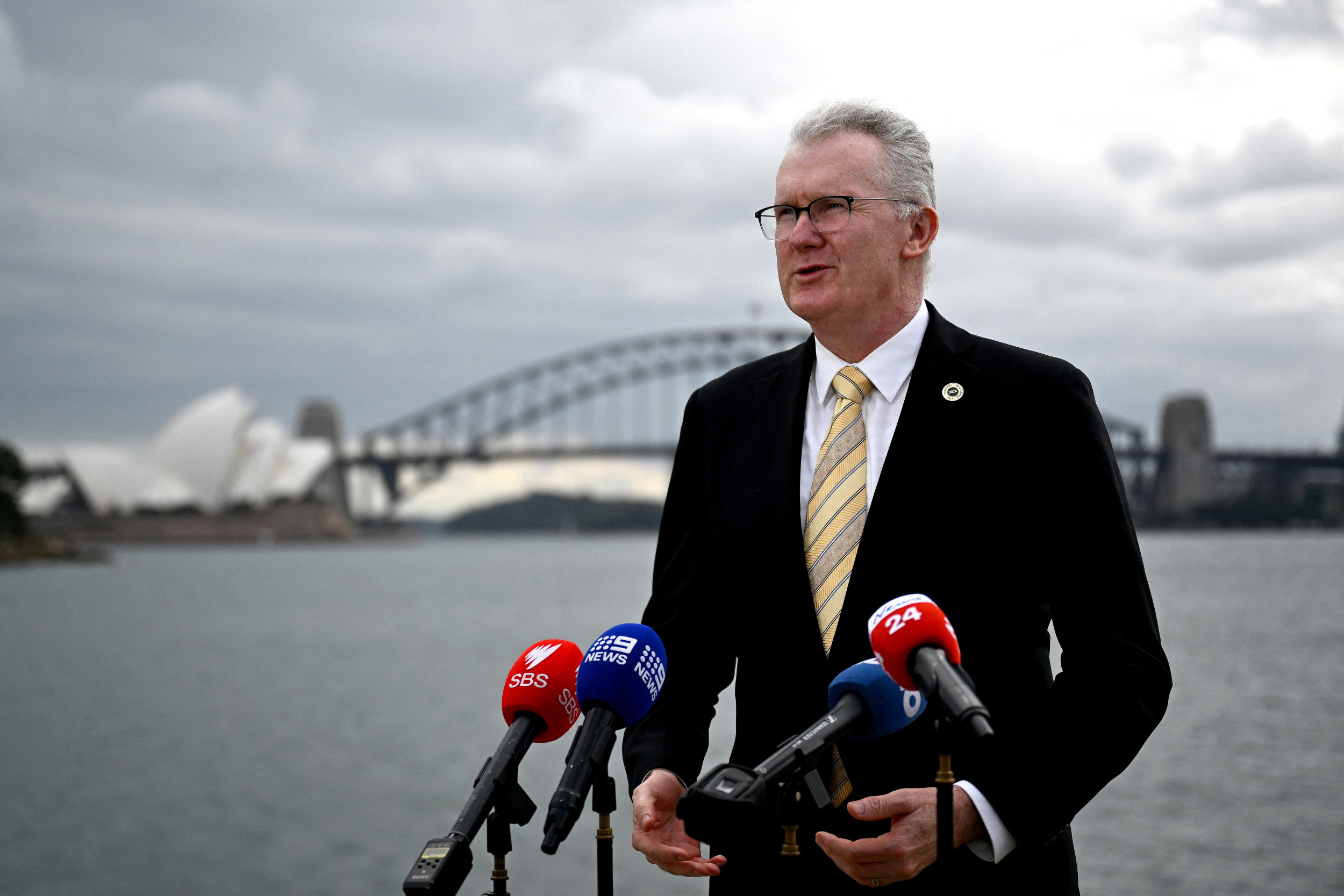
CANBERRA, Australia — Home Affairs Minister Tony Burke on Thursday unveiled the federal government’s long-delayed overhaul of Australia’s migration system, announcing a series of regulatory changes aimed at cutting net overseas migration to 225,000 people by 2028 after negotiations with the opposition Coalition over stronger legislation collapsed.
Speaking at the National Press Club in Canberra in an address titled “The Work of Managing the Migration Program: Who Arrives, Who Stays, Who Leaves,” Burke said every measure in the package had been developed and formalized by February this year, rejecting suggestions the announcement was shaped by recent political pressure.
“It’s simply demonstrably wrong to suspect that somehow this is a recent bit of work done to deal with a political climate. It’s not,” Burke said. “It’s when we sat down and looked at the pace we could get for new housing, and we looked at where immigration was at, we knew we needed to have ways to bring those numbers down.”
The speech had originally been scheduled for early August but was postponed at the last minute amid disagreement within Cabinet over the scope of the changes. Burke acknowledged Thursday that the measures being announced do not go as far as he would like, saying additional powers would require legislation the government has so far been unable to secure.
The announcement came hours after the Australian Bureau of Statistics released figures showing net overseas migration fell to 292,100 people in the year to March 2026, down from 309,500 in the previous 12-month period. Despite the decline, Australia’s population grew by 392,700 people over the same period to reach a total of 27.9 million, with Western Australia recording the fastest population growth at 2.1%, followed by Victoria at 1.6%.
Burke used the figures to push back on claims from some politicians that Australia is experiencing “mass migration.”
“There are parts of the world where mass migration is something that they are dealing with,” Burke said. “It’s not something we’re dealing with in Australia.”
He said Australia’s migration intake is now 47% below the peak reached in the years following the COVID-19 pandemic, and he dismissed claims that the country was prioritizing low-value temporary visa holders over skilled workers.
“In the life of this government, the number of yoga teachers we have brought in is zero. Zero. And yet this claim is constantly made about yoga teachers,” Burke said.
Under the package, the government will restrict most visas for family members of international students seeking to join them in Australia, and will overhaul the Working Holiday Maker Program by introducing a ballot system for second- and third-year backpacker visas. Previously, only first-year working holiday visas were subject to a ballot process.
Burke also confirmed the government will update Ministerial Direction 119, a directive first issued in July governing visa processing priorities, to expand its coverage to additional sectors including construction, healthcare and agriculture. The government will introduce stronger compliance mechanisms aimed at ensuring an estimated 77,000 visa overstayers currently in Australia leave the country, and will expand the “No Further Stay” condition to apply to all visitor visas.
In his address, Burke identified what he described as three genuine problems facing the migration system. The first, he said, was a legacy of policy thinking dating to the Hawke and Howard governments that assumed a demand-driven migration program — where employers could bring in workers they needed and universities could enroll fee-paying international students — would naturally be matched by adequate housing and infrastructure.
“That is no longer the experience of Australians,” Burke said.
The second issue Burke raised was what he termed “visa hopping,” though he stressed that not all movement between visa categories represents a problem. He cited the example of a person moving from a student visa to a graduate visa, then into a skills-shortage occupation and eventually citizenship, describing that pathway as the system working as intended. But he said the practice needed to be addressed where it was being used to circumvent migration settings.
“We need to deal with it, it’s a genuine problem,” Burke said.
The third issue, Burke said, was housing. He said the current housing shortage was not caused by immigration, but that migration needed to be part of the solution, noting fewer people are now living per dwelling than in the past. He said migration levels needed to soften to give housing supply room to catch up.
“Drastic cuts, wherever you make them, hurt the economy in every part, in every area,” Burke said, adding that claims the economic cost of migration cuts was confined to regional areas showed a misunderstanding of the Australian economy.
The government’s approach contrasts with rival plans from the opposition and the minor party One Nation. One Nation this week proposed cutting the temporary migrant population by more than 750,000 over three years, a plan that would push net overseas migration into negative territory before settling at an annual ceiling of 130,000, reviewed yearly. Both Labor and the Coalition have criticized the proposal, saying it would severely disrupt the construction, health and aged care sectors.
Opposition Leader Angus Taylor, speaking to reporters before Burke’s address, said the Coalition would release its own migration policy in the near future and dismissed the government’s plan in advance.
“Right now, the numbers are too high and the standards are too low, and both must change and they are not changing as they should under this government,” Taylor said. “All we’re going to get from this government today on migration is more of the same. They’ve overreached on every single one of their targets. Their targets are too high and Australians are being let down.”
Talks between the government and the Coalition over migration settings broke down in the past week, with the opposition pushing for deeper cuts to net overseas migration and stronger deportation powers. Burke said Thursday he hoped the Coalition would return to negotiations to help legislate further measures, which he said would allow the government to pursue changes beyond what can be achieved through regulation alone.

Anchorage Adds Etherlink Custody for Institutional Investors

Two far-right activists go on trial in Paris over 2022 killing of Argentine rugby star Aramburu

Providence to receive $1.1B from Nike co-founder to build women’s health hospital in Oregon



-

 Fashion5 days ago
Weekend Open Thread – Corporette.com
-

 Tech4 days ago
The Latest Weird Thing to Play Doom Is the Mapped-Out Brain of a Fruit Fly
-

 Business6 days ago
10 Most-Streamed Songs On Spotify In 2026 So Far, Led By Ella Langley’s Dominant Run On The Charts This Year
-

 Crypto World6 days ago
XAG/USD: Silver’s Short-Term Rally Meets Its Moment of Truth
-
 Crypto World7 days ago
2 Chip Stocks Broke Out This Week. Neither Was Nvidia
-

 Tech6 days ago
Battery life is the only iPhone 18 Pro and iPhone Duo upgrade I care about. Apple didn’t disappoint
-

 Crypto World6 days ago
OKX launches 10x OpenAI, Anthropic X-Perps in Europe
-

 Crypto World6 days ago
Diesel Tops $6 a Gallon for the First Time as 28 States Set Records
-

 News Videos6 days ago
Facing Financial Fears
-

 Business7 days ago
Western Digital Slips 2.7% as AI Storage Rally Cools After Record Cash and Guidance
-

 Crypto World3 days ago
Elon Musk Drops a Bombshell: Grok 5 Could Be the AGI Breakthrough
-

 Business4 days ago
Rivals Sam Altman and Elon Musk Rally Behind Dario Amodei’s Call for a Slowdown in AI Development
-

 Business7 days ago
Five Leading AI Experts Warn Superintelligence Could Kill Humans and Explain Their Case
-
Crypto World6 days ago
Ethereum Price Analysis: Consolidation at $2.5K Tests Momentum as On-Chain Activity Surges
-

 Crypto World7 days ago
Ant International joins Visa, Mastercard to build AI agent payment standards
-
 NewsBeat3 days ago
‘Sick conspiracy’: Trump says only guardrails AI needs is ‘a strong and smart (High IQ!) president’ in all-caps rant
-

 Crypto World5 days ago
Can AI Build a Startup in 72 Hours? Elon Musk's Team Will Livestream the Test
-

 Crypto World6 days ago
US CPI forecast at 3.4% as tariff risks build
-

 Crypto World6 days ago
Bitcoin ETFs Pull $167M as 2026’s Best Inflow Run Slows
-

 Entertainment5 days ago
News Specials, Movies, Shows, More
You must be logged in to post a comment Login