


Connect with us

Business

D-St bulls, rupee regain ground amid global oil price rollercoaster

Published

on

D-St bulls, rupee regain ground amid global oil price rollercoaster
Mumbai: Indian stocks Tuesday rebounded from multi-month lows, tracking gains in risk assets across Asia, while the rupee climbed 53 paise against the US dollar after crude oil prices slumped about a quarter – or nearly $30 a barrel – over two days from levels not seen since the earliest days of the Ukraine war nearly four years ago.

The rupee closed at 91.80 per dollar amid likely RBI interventions, prompting traders to buy the dip. It had previously closed at a record low of 92.33. Oil prices plunged nearly 10% from their panic-driven peak a day earlier, but were paring losses as of press time.

Risk assets mirrored the currency’s smart recovery. The NSE Nifty climbed 1% to 24,261.60. The BSE Sensex advanced 0.8% to 78,205.98.

Screenshot 2026-03-11 061752Agencies

Sectoral Indices Up
Both gauges had fallen around 3% over the past two sessions.

“Slide in crude prices yesterday [Monday], after touching $119, and further falls on Tuesday led traders to cut their bearish bets,” said Siddarth Bhamre, head of research, Asit C Mehta Intermediates. “The West Asia conflict had led to the build-up of ‘panic shorts’ in the system, which got squeezed out as Donald Trump indicated the war is near its end.”
Across Asia, South Korea jumped 5.4% while Japan gained 2.9%. Hong Kong and Taiwan climbed more than 2% each. China advanced 0.7%.
Analysts said that while the rebound could extend, investors remain cautious given the volatility in crude oil prices on account of the conflict in West Asia.
Some uncommitted investors with higher cash holdings are also likely to have deployed money since the declines offered decent entry points, said Bhamre.

All sectoral indices climbed except the IT and oil & gas indices. The Nifty Auto index jumped 3.1% and Nifty Consumer Durables index gained 2.7%. Bank Nifty advanced 1.6% and the PSU Bank index moved 2.2% higher. “Some weak hands squared off their short positions after Trump said that the war could wrap up soon. It also led to some long build-up in outperforming sectors, such as auto and pharma,” said Rajesh Palviya, head of technical and derivatives, Axis Securities.

Advertisement

The rupee, meanwhile, traded in the range of 92.19 per dollar and 91.72 per dollar. Brent crude oil prices cooled to around $93 per barrel, from about $119 per barrel Monday after the US President said “the war is very complete.”

The dollar index, too, decreased to 98.5 from nearly 100 levels the previous day, strengthening Asian currencies.

‘Cautious Optimism’
Still, fuel price fluctuations remain the key driver for the rupee’s trajectory, and the pace of deprecation would increase if oil prices trade above $100 per barrel, traders said.

“With crude prices cooling and the dollar slightly weaker, sentiment for the rupee has improved. I expected the trading range to remain between 91.25/$1 and 92.60/$1,” said Jateen Trivedi, currency research analyst at LKP Securities. “Crude price movements and the direction in the dollar index would continue to guide the currency’s near-term trends.”

Advertisement

Energy prices remain a major concern for risk assets, too, with analysts explaining a lower-than-expected decline in the fear gauge to suggest that a spike in oil prices could dent stocks.

The Volatility Index (VIX) dropped 19.1% to 18.9 – indicating that traders tempered risk expectations.

Foreign portfolio investors sold shares worth ₹4,672.7 crore on Tuesday. Their domestic counterparts bought shares worth ₹6,333.3 crore. In March, global investors dumped stocks worth ₹33,429.6 crore.

Bhamre said while the rebound could extend in the short term, the preceding corrections were substantial. “Investors are not advised to get carried away with the rebound since it is unsure if the bottom is made,” he said. “There is no big rally in the offing. Unless the tensions flare up again, the markets are expected to see minor declines instead of deeper cuts. The volatility and global risk-off sentiment could keep a lid on the gains.”

Advertisement
Continue Reading
Click to comment

Leave a Reply

Your email address will not be published. Required fields are marked *

Business

Why Plywood Boards Remain a Staple in Commercial Projects

Published

on

Why Plywood Boards Remain a Staple in Commercial Projects

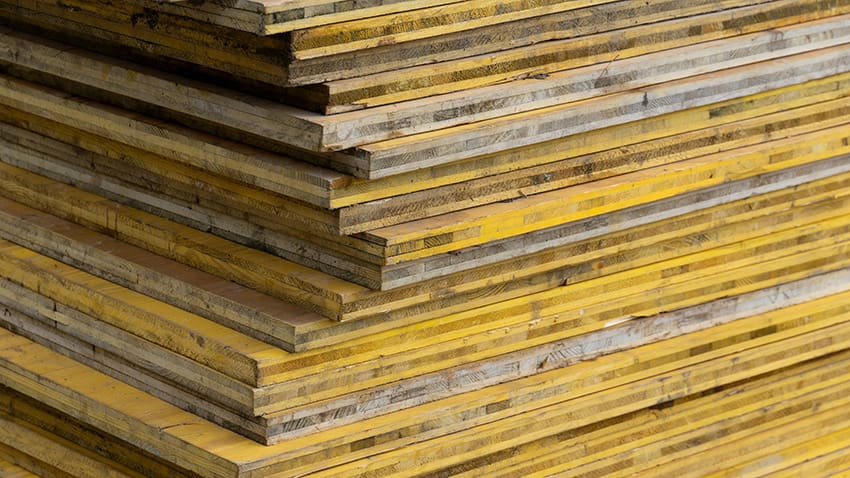
For decades, plywood has quietly held its place as one of the most essential materials on construction sites and in manufacturing facilities across the world. Walk into any commercial project, and you’ll likely find plywood somewhere in the mix.

But why has this engineered wood product managed to maintain its prominence in an industry constantly chasing the latest innovations? Here are the answers.

The Foundation of Structural Integrity

At its core, plywood’s enduring appeal comes down to engineering. The material is constructed from thin layers of wood veneers that are glued together with the grain directions alternating. This cross-laminated design creates exceptional strength relative to its weight.

When structural engineers evaluate materials for commercial applications, they’re looking at factors like load-bearing capacity, resistance to bending stresses, and long-term stability. Plywood excels in all of these areas, which is precisely why it remains the first choice for subfloors, roof decking, and wall sheathing in commercial construction.

The beauty of this layered approach is that it distributes stress more evenly across the material. Unlike solid wood, which can warp or split unpredictably, the cross-grain construction of plywood helps resist these kinds of failures. This reliability translates directly to lower labour costs during installation and fewer callbacks to fix problems down the line.

Advertisement

Cost Efficiency Without Compromise

In commercial construction, budgets are scrutinised mercilessly. Project managers need materials that deliver performance without inflating costs to unreasonable levels. Plywood accomplishes this balance in a way that few alternatives can match.

The manufacturing process, refined over generations, has achieved impressive efficiency. Bulk order discounts often make the material even more attractive for large-scale projects, allowing contractors to stretch their budgets further while maintaining quality standards.

This cost advantage extends beyond the simple purchase price. Consider that you can source plywood efficiently, get reliable availability from established suppliers like cutwrights.com, and know exactly what you’re getting in terms of quality.

The predictability reduces waste and rework, both of which consume time and money. When a material is this economical and readily available, it becomes the default choice for value-conscious project managers.

Advertisement

Versatility That Adapts to Every Project

Commercial projects rarely follow a one-size-fits-all template. One week you’re working on a high-end retail space that demands cabinet-grade plywood with flawless face veneers, and the next week you’re managing a warehouse renovation where structural performance matters more than aesthetics. Plywood’s remarkable versatility makes it the go-to solution for both scenarios.

The range of options available is genuinely impressive. Hardwood plywood brings a sophisticated appearance to projects where the finished material will be visible. Softwood plywood offers economical solutions for structural applications where appearance is secondary. For projects exposed to moisture or potential water damage, marine plywood provides enhanced resistance.

Some applications even call for aircraft plywood, a specialised variant that meets stringent performance standards—a product category that wouldn’t exist if the basic engineered wood approach didn’t work so well across such a wide spectrum of applications.

Beyond these standard categories, there’s also tropical plywood and specialised variants like prefinished plywood with UV-cured finishes for projects that demand both durability and aesthetic appeal. The moisture content of each sheet is carefully controlled during manufacturing, ensuring consistency and predictability that commercial projects depend on.

Advertisement

The Reliability Factor

Plywood has earned its reputation through decades of consistent performance across thousands of commercial projects. Builders trust it because it has proven itself time and again in real-world conditions.

This institutional confidence matters more than you might think. When specifications call for a particular material, engineers and architects often choose what they know will perform reliably.

The core veneers are engineered to specific standards, and the glueing processes are tightly controlled to ensure structural integrity. This isn’t arbitrary—there are actual performance standards and testing protocols that plywood must meet before it reaches job sites.

Whether you’re dealing with standard construction-grade material or specialised variants like cabinet-grade plywood for higher-end finishes, the engineering principles remain sound.

Advertisement

Handling the Details That Matter

Plywood accepts fasteners reliably, whether you’re driving screws into cabinet boxes, nailing down subfloors, or installing edge banding for finished edges. It sands smoothly, paints well, and stains evenly. These are all the qualities that carpenters and installers value when they’re trying to produce quality work within tight deadlines.

The shear stress resistance of plywood prevents joint failures under dynamic loads. Its predictable performance under varying ambient temperature conditions means you don’t need to worry about seasonal expansion or contraction creating visible gaps in finished work.

These practical advantages accumulate, making plywood the rational choice for commercial applications where reliability isn’t negotiable.

A Material Built for Scale

Modern manufacturing has made plywood an incredibly scalable material. Whether you need a single sheet for a repair or thousands of sheets for a major commercial project, suppliers can deliver consistently. Shipping rates are manageable, production capacity is abundant, and the supply chain has proven resilient.

Advertisement

For architectural millwork, drawer fronts, cabinet doors, and other detailed applications, plywood provides the raw material that craftspeople need to build quality finished goods.

The accessibility is particularly valuable for contractors managing complex timelines. You’re not waiting weeks for specialised materials or negotiating with limited suppliers. Plywood is there when you need it, in the quantity you need, at a price point that makes economic sense.

The Bottom Line

Plywood remains a staple in commercial projects because it delivers on the core promises that architects, engineers, and contractors need: structural reliability, cost-effectiveness, versatility, and consistent availability. It’s not the most glamorous building material, and it doesn’t make headlines when it’s installed correctly. But that’s precisely the point.

Plywood does its job quietly and reliably, project after project, year after year. In an industry where failure isn’t an option and budgets are always tight, that kind of dependability is essential.

Advertisement

Continue Reading

Business

YouTube Expands Deepfake Detection Tool to Protect Personalities Against AI-Generated Content

Published

on

MacBook Neo

YouTube is finally expanding its deepfake detection tool on the platform to help combat fake, AI-generated content that was uploaded without a person’s consent.

AI deepfakes have been a massive problem since the emergence of generative AI, and many people have fallen victim to having their likeness used without their permission, which has become rampant on the likes of YouTube for many years now.

YouTube Expands AI Deepfake Detection Tool

YouTube’s “Likeness Detection” tool, which was launched last year, is now expanding to give a new batch of users a way to fight against AI deepfakes of themselves and take down the content tarnishing their name and image.

According to the streaming platform, it is now launching a pilot program for a group of journalists, government officials, and political candidates to use the likeness detection tool and put a stop to deepfakes.

Advertisement

YouTube said that the tool is similar to its Content ID feature, but it will search the videos that have AI-generated content if they have impersonations of the said personality.

YouTube said that it launched the likeness detection tool last year and was first made available to content creators under the Partner Program to help them manage online content and stop AI impersonation.

Use YouTube Tool vs. AI Deepfake

YouTube’s likeness detection tool is promising as it helps find AI deepfake videos of the individuals under the program, but it is not a guarantee that these will get taken down on the platform.

According to YouTube, concerned individuals may still report or file a case about an AI deepfake video using their likeness, but its content would still be subject to review by its team. Should they find the video not harmful, citing examples like satire content, YouTube may not remove it from the platform.

Advertisement

In the past years, YouTube has been infamous for hosting AI misinformation, with some containing deepfaked videos of renowned individuals. Since then, the platform has enforced several policies and tools to help fight against the problem.

Originally published on Tech Times

Continue Reading

Business

Treasury holds talks on soaring heating costs as some families 'cannot afford oil'

Published

on

Heating oil prices rise by more than £100 amid Middle East conflict

The average price of home heating oil in Northern Ireland has increased significantly since strikes began in the Middle East

Continue Reading

Business

Why coffee shops could buck the hospitality trend as people are ‘demanding better and better’

Published

on

Business Live

Leaders from Bold Street Coffee and Coffee House join debate at Northern Restaurant & Bar showcase

The Coffee Shop Leaders panel at Northern Restaurant & Bar 2026 at Manchester Central. From left, Will Kenney, commercial director at 200 Degrees Coffee, Holly Kragiopoulos, CEO at North Star Coffee Roasters in Leeds, Matt Farrell, co-founder at Bold Street Coffee owner GSG Hospitality, and Chris Shelmerdine, managing director at North West chain Coffee House

From left, Will Kenney, of 200 Degrees Coffee, Holly Kragiopoulos of North Star Coffee Roasters in Leeds, Matt Farrell of Bold Street Coffee, and Chris Shelmerdine, from North West chain Coffee House(Image: Alistair Houghton)

The North’s independent coffee shops might be bucking the trend in the hospitality sector, some of the North’s top coffee experts have said.

Leaders from Bold Street Coffee and 32-strong North West chain Coffee House joined a debate on the future of the coffee market at the massive Northern Restaurant & Bar showcase in Manchester.

Advertisement

Asked about the health of the market, Holly Kragiopoulos, CEO at North Star Coffee Roasters in Leeds, was upbeat – saying she was “definitely positive about a market for better coffee in the UK”. She added: “People are demanding better and better not just in coffee shops but in apartment lobbies and gyms…”

Matt Farrell, co-founder at Bold Street Coffee owner GSG Hospitality, said that while hospitality was having its challenges more broadly, “I would say the speciality coffee industry is probably bucking the trend in that sense” as more people look for better coffee while drinking less alcohol and looking to their wellbeing.

Chris Shelmerdine, managing director at North West chain Coffee House, said his journey into coffee first started when he went to the original Bold Street Coffee in Liverpool 15 years ago.

Today his business has 42 outlets – and starts fitting out numbers 43 and 44 next week. It also includes a central production site and kitchen where the coffee is roasted and bread baked, and employs some 450 people.

Advertisement

“It’s been a long 15 years,” smiled Chris.

Event host Will Kenney, commercial director at 200 Degrees Coffee, asked Matt about his expansion ambitions for Bold Street Coffee. Matt said he and his colleagues had thought long and hard about how to grow sustainably, and had decided to make sure they could plan for a range of outlets from full-service food and drink outlets through to smaller coffee-focused ones. He mentioned a recent collaboration with Climbing Hangar at its South Liverpool venue, and said the firm was open to “collaboration and testing” on potential new outlets. He added that he also wanted the business to have its own roastery and bakery central unit.

Chris discussed how his business had expanded largely by focusing on locations beyond big city centres, in what are called “secondary high streets” but that are at the heart of their smaller communities. He said: “We need to stick to our knitting and continue with that”.

In terms of properties, he said the business particularly likes corner spots that were highly visible. And he said the changing retail market and uncertain economic climate has led to more such units becoming available to a small business like his, whereas “If we’d been doing this 20 years ago we probably wouldn’t have a look-in at these kinds of properties”.

Advertisement

The panel was asked what advice they’d give for people looking to grow their own coffee shop chains. Holly’s Leeds business has 300 wholesale partnerships and two city outlets – with another two soon to open. She said that while she had confidence in the future, customers were challenged by rising costs and so her team had seen consumer spending change, with more people making “grab and go” purchases of coffee and cakes rather than sit-in breakfasts.

Matt agreed, saying: “I think it’s a good time to be expanding especially in the coffee industry. In the rest of hospitality, I’m not sure about that.”

He noted that the coffee and bar industries are very different in terms of how taxes work, and he said potential coffee entrepreneurs needed to pay close attention to those rules — such as, for example, the tax implications of offering hot food or not.

Chris warned that setting up a central team as his company had done was costly at first, but paid dividends down the line.

Advertisement

On costs, he said he believed coffee entrepreneurs should try to self-fund their business at the early stage, and that founders should stay working hands-on in the business for as long as possible to ensure they always know how everything works. He said: “Don’t go early on the overheads. Sweat it a bit. Go through a little bit of pain.”

Holly said that post-pandemic, many more people had looked to realise their dream of opening a coffee shop. She said people needed to manage their expectations, saying for example that they needed to learn it was unrealistic for founders to think they could “remove themselves from the day-to-day within six months”.

Crowds at the Northern Restaurant & Bar 2026 at Manchester Central with a yellow s0gn on a stand in the foreground saying Happienda

Crowds at the Northern Restaurant & Bar 2026 at Manchester Central(Image: Alistair Houghton)

And she said people needed to be aware they needed cash as “a big cushion to get you through those early months” not just for initial setup costs.

Matt talked about his dealings with property agents over potential sites, and said that coffee entrepreneurs should realise that landlords need them almost as much as they need landlords.

Advertisement

He said: “It’s important that operators know their own clout. Those developers, they need you in there… for high-rise communities, they need you in there”.

One audience member asked whether the panel had any thoughts on how much coffee might cost in the future, given rising costs generally and given the way climate change might affect the coffee production chain.

Chris observed that a cup of coffee was £2.40 or £2.60 for a decade but had now risen. He added that coffee operators had got to “make sure we’re really good” to make sure customers kept coming.

People enjoying a drink outside Bold Street Coffee

Bold Street Coffee has expanded from its original location to sites across Liverpool and Manchester(Image: Andrew Teebay/Liverpool Echo)

He said that despite talk of change in other industries, AI won’t necessarily make a difference to the practical operations of coffee shops. “These are people businesses,” he said. “We have to turn up every day, put the lights on, and welcome people coming through the door.”

Advertisement

Matt said he believed people will still pay for a good product. He said: “People are only parting with their money if they feel they’re getting worth out of it.”

He added: “People need to pay what it’s worth. We shouldn’t be undercutting ourselves.”

Holly said coffee had “been undervalued for too long” so it will get more expensive, with a £4 cup becoming the norm.

She said: “The reality is we’ve never paid enough for coffee.”

Advertisement
Continue Reading

Business

These Stocks Are Today’s Movers: Hims & Hers, Live Nation, Broadcom, Carnival, Vertiv, Sandisk, Strategy, and More

Published

on

These Stocks Are Today’s Movers: Hims & Hers, Live Nation, Broadcom, Carnival, Vertiv, Sandisk, Strategy, and More

These Stocks Are Today’s Movers: Hims & Hers, Live Nation, Broadcom, Carnival, Vertiv, Sandisk, Strategy, and More

Continue Reading

Business

'Rural families need green energy support'

Published

on

'Rural families need green energy support'

Jemma McCarron fears the cost of using heating oil will mean her family needs to cut back.

Continue Reading

Business

Vertiv Stock Jumps. Why Joining the S&P 500 Trumps the Iran War.

Published

on

Vertiv Stock Jumps. Why Joining the S&P 500 Trumps the Iran War.

Vertiv Stock Jumps. Why Joining the S&P 500 Trumps the Iran War.

Continue Reading

Business

abrdn Diversified Income and Growth completes asset sales

Published

on


abrdn Diversified Income and Growth completes asset sales

Continue Reading

Business

Search Enters Sixth Week With New Leads in Tucson Abduction Case

Published

on

Zayed International Airport Abu Dhabi International Airport

Nancy Guthrie was last seen on the evening of Jan. 31 at her home in the Catalina Foothills suburb of Tucson. She was reported missing the following day, Feb. 1, after failing to appear for a planned church service gathering with friends. Authorities with the Pima County Sheriff’s Department quickly classified the disappearance as an abduction, believing the independent and mentally sharp widow was taken from her bed in the early morning hours against her will.

Nancy Guthrie
Nancy Guthrie

The case has gripped national attention, fueled by Savannah Guthrie’s emotional public pleas, more than 3,000 tips to law enforcement, multiple reported ransom notes demanding Bitcoin payments, and intense speculation on social media and cable news. Savannah Guthrie, who has described her mother as a deeply religious and active woman, has returned intermittently to the “Today” show but has largely stepped back to focus on the search and family.

On Tuesday, investigators were examining a damaged utility box located near Guthrie’s residence, which may be linked to an internet outage that occurred around the time of the disappearance. The outage reportedly disrupted several nearby home surveillance systems, including doorbell cameras, potentially hindering early evidence collection. Police have not confirmed a direct connection but said the damage is under active review as part of the broader probe.

A neighbor, Aldine Meister, recently came forward with a potentially significant tip, telling NewsNation she observed a “suspicious man” walking slowly toward Guthrie’s street on Jan. 11 — about three weeks before the disappearance. Meister described the individual as wearing a low baseball cap, appearing hunched over and scanning the area in a way that seemed out of place for routine activity. She reported the sighting to the FBI, which has since requested doorbell camera footage from neighbors specifically for that date.

The FBI has released images of a person of interest captured on footage at Guthrie’s doorstep prior to the incident, though details remain limited due to the ongoing nature of the investigation. Multiple individuals, including two men initially detained as persons of interest — Carlos Palazuelos and Luke Daley — were questioned and later released, with authorities stating the investigation had “moved on” from them.

Advertisement

Pima County Sheriff Chris Nanos has described the probe as making progress, telling reporters that investigators possess “a lot of intel” while keeping most details confidential to protect the case. However, the sheriff has faced scrutiny over his own background, including past questions about his resume and departure from an earlier policing position in El Paso, Texas.

No arrests have been made, and Guthrie’s condition and whereabouts remain unknown as of March 11. A body discovered in a canal roughly 100 miles from the home was ruled out as unrelated after identification. Other reported sightings and leads, including various ransom communications, have not yet yielded verifiable results.

The disappearance has drawn international coverage, with outlets from the BBC to Fox News tracking developments. Savannah Guthrie has spoken publicly about the family’s faith sustaining them, noting her mother’s planned participation in an online church service the morning she vanished. A pastor connected to the family has shared messages of hope and continued prayer.

Law enforcement continues to urge anyone with information — particularly footage from Jan. 11 or details about unusual activity around Jan. 31-Feb. 1 — to contact the Pima County Sheriff’s Department or the FBI tip line. The case remains active, with searches and forensic efforts ongoing in the Tucson area.

Advertisement

As the investigation stretches into a new month, unanswered questions persist: Who targeted the 84-year-old woman living alone? Was the abduction motivated by ransom, personal grudge or something else? And why has no definitive trace emerged despite widespread publicity?

Family, friends and authorities say they remain hopeful for a resolution, even as the days turn into weeks without Nancy Guthrie’s safe return.

Continue Reading

Business

ASX edges higher on hopes of record oil reserve release

Published

on

ASX edges higher on hopes of record oil reserve release

Australia’s share market has defied a hawkish interest rate outlook to clock a second session of gains, as reports of a record release of crude reserves took the pressure off oil prices.

Continue Reading

Trending

Copyright © 2025