

Business
Dalal Street Week Ahead: Nifty stuck in consolidation zone; 23,800 remains key breakout hurdle

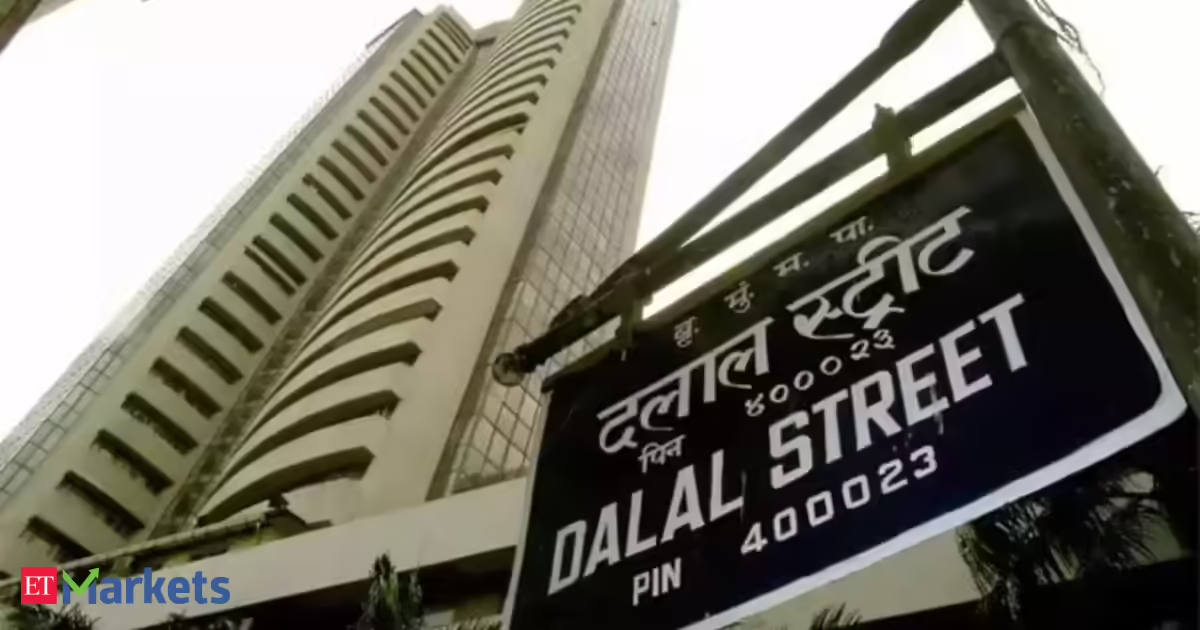
The sharp decline witnessed on Friday was largely driven by MSCI rebalancing-related flows, resulting in accelerated profit-taking and a weak close for the week. India VIX rose by 9.60% to 16.19, reflecting a pickup in volatility expectations and some increase in market nervousness following the late-week selloff. Nifty ended the week with a loss of 171.55 points (-0.72%).
 Agencies
The broader technical structure remains in a consolidation phase. However, the sharp selloff towards the end of the week has once again dragged the immediate resistance levels lower, with the 23,800 zone emerging as the first significant hurdle that the index must overcome. As long as Nifty remains below this level, the ongoing consolidation is likely to continue.
On the downside, the index continues to hold above the lower boundary with the support zone placed in the 23,300-23,400 area. A decisive move beyond either end of this range could set the tone for the next directional move.
The markets are likely to begin the coming week on a cautious note after Friday’s sharp decline. Immediate resistance levels are placed at 23,800 and 24,000, while supports come in at 23,350 and 23,100.

A sustained move above 23,800 would improve the near-term technical outlook and may trigger fresh buying interest. Conversely, any violation of the 23,300 area could invite renewed weakness and increase downside pressure.
The weekly RSI stands at 40.84 and remains below the neutral 50 mark, indicating subdued momentum and showing no divergence against price. The weekly MACD remains below its signal line and continues to stay in negative territory, reflecting a lack of strong upward momentum.A study of the overall pattern shows that Nifty continues to trade within a consolidation beneath a key supply area. The index remains below its 50-week and 100-week moving averages, placed near 24,936 and 24,535, respectively, indicating that the intermediate trend has yet to regain full strength. At the same time, the index remains comfortably above its rising 200-week moving average near 22,057, keeping the long-term structure intact. The ongoing compression between channel support and overhead resistance suggests that the market may be approaching a decisive phase where a directional breakout could emerge over the coming weeks.
Given the current technical setup, traders should continue to maintain a balanced and selective approach. The rise in India VIX alongside the failure to sustain higher levels warrants caution, especially near overhead resistance. Fresh buying should remain stock-specific and focused on pockets displaying relative strength. Traders would be better served by protecting gains, maintaining disciplined risk management, and avoiding aggressive directional bets until the index confirms strength by moving above 23,800. The coming week is likely to reward selectivity and prudent positioning rather than broad-based aggressive exposure.
In our look at Relative Rotation Graphs®, we compared various sectors against the CNX500 (NIFTY 500 Index), representing over 95% of the free-float market cap of allthe listed stocks.
The Relative Rotation Graph (RRG) shows that the Nifty Midcap 100, Energy, Media, Pharma, and Metal Indices are inside the leading quadrant. While the Pharma and Energy groups are showing a slowdown in their relative momentum, overall, these groups are likely to relatively outperform the broader markets.
AgenciesAgenciesThe Nifty Infrastructure and the PSE Indices are inside the weakening quadrant. Collectively speaking, these groups may see a slowdown in their relative performance against the broader markets.
The PSU Bank Index has rolled inside the lagging quadrant. The Nifty Bank, Services Sector, Financial Services, and Auto Indices also continue to languish inside the lagging quadrant. These groups are set to relatively underperform the broader markets. The Nifty IT Index is also in the lagging quadrant; however, it is showing a sharp improvement in relative momentum against the broader Nifty 500 Index.
The FMCG and the Realty Index are inside the improving quadrant; they may continue to improve their relative performance against the benchmark.
Important Note: RRGTM chartsshow the relative strength and momentum of a group ofstocks. In the above Chart, they show relative performance against the NIFTY500 Index (Broader Markets) and should not be used directly as buy or sell signals.


The Golden State Warriors are exploring significant roster changes to support Stephen Curry‘s championship ambitions, with potential targets including LeBron James, Kawhi Leonard, and Trey Murphy III. While a genuine “grand plan” to land both James and Leonard has circulated this offseason, the realistic path to pulling off both moves remains narrow, according to multiple league sources.
The Reported “Grand Plan”
A widely shared report laid out a specific two-step framework for how Golden State could theoretically land both stars. “The Warriors reportedly have a ‘grand plan’ to potentially acquire Kawhi Leonard AND LeBron James,” according to a report on X. “Step 1: Sign LeBron James using the $15M NTMLE. Step 2: Trade Jimmy Butler, Brandin Podziemski, and two first-round picks for Kawhi Leonard.”
That outline reflects a strategy built around using two entirely separate transaction types — a free-agent signing for James and a trade for Leonard — rather than treating the two acquisitions as a single package deal.
Why James Is the More Realistic of the Two
Of the two stars, James represents the more financially attainable target for Golden State, primarily because his market value has shifted given his age. James would be easier for the Warriors to acquire than Leonard. The 41-year-old will be a free agent after the season. With that said, the Warriors could have access to the non-taxpayer mid-level exception of up to $15 million, which could be of interest to James, even though the four-time MVP is worth much more than that — it’s possible no contender will offer him more than that figure given the league’s tightened cap rules.
If James took the mid-level exception, it would be his lowest salary since the 2010-11 season with the Miami Heat. ESPN’s Anthony Slater has reported that the Warriors are currently planning their offseason around the premise that James will indeed return to the Lakers instead — meaning Golden State’s pursuit, while real, is currently considered a backup scenario rather than the favorite outcome.
Leonard Represents Golden State’s True Preferred Target
According to The Athletic, citing reporting from NBA insider Jake Fischer, the LA Clippers’ Kawhi Leonard is on the Heat’s Plan B list, or the Golden State Warriors’ Plan A list. That designation is telling. It signals that Leonard is the player the Warriors want most this summer, unless something drastic changes elsewhere.
The Warriors checked in on Leonard in the days leading up to the February trade deadline. The Los Angeles Clippers engaged to a greater degree than in the past, but they ultimately returned to the Warriors with the same answer: team owner Steve Ballmer said no. League sources said Ballmer has maintained a firm stance against a Leonard trade, preferring to continue building around his star forward.
Why Pulling Off Both Is So Difficult
The fundamental obstacle to landing both stars simultaneously comes down to roster construction and salary mechanics rather than simple desire. In a literal sense, the Warriors will have no salary-cap space this offseason. With their six players under standard contracts making $144.4 million and Draymond Green expected to make close to $20 million, they are already at the salary cap of $165 million.
Once the Warriors use their mid-level exception on James, their best remaining offer to any other free agent would be a veteran minimum contract — meaning any path to adding Leonard would have to come through a trade rather than free agency, using existing roster pieces and draft capital as the currency.
The Trade Mechanics Behind a Potential Leonard Deal
Any realistic trade for Leonard would likely need to be built around Golden State’s highest-salaried trade chip. Jimmy Butler is the 10th-highest-paid player in the NBA, so if he is used as the matching salary in a blockbuster, that obviously helps. The Warriors have been linked quite a bit to Kawhi Leonard, and Butler makes $6.5 million more than Leonard does, giving Golden State a workable salary match if the Clippers were ever willing to engage.
What a Combined Roster Could Look Like
Analysts have sketched out what Golden State’s starting lineup might resemble if both moves came together. A healthy starting five could be Curry, Podziemski or De’Anthony Melton, Leonard, Draymond Green, and Porzingis — assuming the Warriors also re-sign Kristaps Porzingis, who has emerged as a separate offseason priority and would give Golden State a floor-spacing center to pair with its perimeter stars.
Defensive Concerns With an Aging Core
Even if Golden State successfully assembled that roster, analysts have raised real questions about whether an older core could hold up defensively across a full season. The real questions here are defensive. Green is 36. Curry, 38, and James, 41, are even older. Smarts can only get you so far. Athleticism and endurance are critical components of defense as well, and the Warriors would have to get the rest of the roster right. A decade ago, putting James and Curry on the same team would have led to near-automatic championships. That’s no longer the case.
The Leonard Investigation Adds Another Layer of Uncertainty
Beyond the financial and roster fit questions, an unresolved league matter continues to cloud any potential Leonard trade. No one around the league seems sure whether Leonard is truly on the market, or whether the NBA’s ongoing investigation into the Clippers’ alleged salary cap circumvention involving Leonard could become a problem for any team that takes him on.
The Bleacher Report Case for Leonard Specifically
Some analysts have specifically argued that Leonard, rather than James, represents the more logically complementary fit alongside Curry given their similar career stages. “Leonard feels almost a little too perfect for this team,” analyst Zach Buckley wrote. “The 34-year-old, 35 in June, is in the same fight with Father Time as Curry and carries as many availability concerns as anyone.” Leonard has one season remaining on a three-year, $149 million contract with the Clippers and is slated to have more than a $50 million cap hit in 2026-27, while Curry’s own contract extension runs through the same 2026-27 season before he becomes a free agent in 2027.
A More Realistic Backup: Trey Murphy III
Given the difficulty of landing either Leonard or James outright, some reporting suggests Golden State’s most attainable star addition may ultimately be a different player entirely. Murphy continues to be the most ideal trade target connected to the Warriors. He’s just 26 years old and under contract for three more seasons at a bargain rate of $27 million in 2026-27, rising to $31 million by 2028-29 — a far more financially manageable target than either Leonard or James, even if his star power doesn’t match theirs.
With the NBA Draft now complete and free agency negotiations opening June 30, the coming days will reveal how seriously Golden State pursues its most ambitious offseason scenario. Given Ballmer’s continued public resistance to trading Leonard and the Lakers’ presumed advantage in re-signing James, the realistic odds of both stars landing in Golden State simultaneously by 2027 remain genuinely long — though the persistent and credibly sourced interest from the Warriors in both players suggests the front office has not abandoned the idea, even if a more measured outcome involving just one star, or a more attainable piece like Murphy or a re-signed Porzingis, currently appears the more probable path forward for Curry’s supporting cast.

Helus Pharma prices $50 million stock offering at $4.85/share

A federal homebuilding program has come under fire at a major Pilbara conference for failing to invest outside of Perth.

According to Rohit Srivastava, Founder, Strike Money Analytics & Indiacharts, the technical setup continues to favour the bulls as long as key support levels remain intact, with banking and defence emerging as two sectors likely to outperform in the coming months.
23,800 Remains the Key Support for Nifty
Srivastava believes the market’s immediate direction will depend on whether Nifty can defend the 23,800 level, which has repeatedly acted as a strong support.”So, I have put 23,800 as the critical support that the market is trying to test again and again. That is where we left behind a gap on the 15th of June and, interestingly, we have not filled it, which makes it a good support. Now, as long as this support holds and we close positive today, the next target for the market is to cross the 25,000 mark in the coming weeks, and that is what we would be looking for. Similarly, in Bank Nifty, if I put the support range at around 59,956, we would be looking at it going towards 61,000 in the coming days,” he said.
According to him, maintaining these support levels could pave the way for another leg of the market’s uptrend.
Defence Weakness Is Only a Pause
While the Nifty Defence Index witnessed sharp selling pressure during the session, Srivastava does not see it as a reversal of the broader trend. Instead, he believes the decline is simply a temporary correction following a strong rally.
“So, it is just a pullback. The Defence Index was actually holding out against the market. It went up for almost seven-eight consecutive days, and we have seen a two-day pullback. So, it is probably just a pause in what is going to be a continuation of an uptrend. The Nifty Defence Index should be headed towards 10,700-10,800 in the coming weeks, so it would be a buy on dips as of now. We do have open recommendations on GRSE, that is Garden Reach, for our clients, so that is a particular stock that we like,” he said.
His view suggests that investors should use short-term corrections as buying opportunities rather than interpreting them as a sign of weakness.
Banking Could Be One of the Best-Performing Sectors
The strong performance in both private and public sector banks has reinforced Srivastava’s bullish outlook on financials. He believes the sector is entering a phase of catch-up after lagging the broader market for the past couple of years.
“Let me just highlight that we are SEBI-registered since I discussed the stock. Now, coming to banking, I do think that the banking sector as a whole is going to be one of the top-performing sectors of the coming year after having underperformed for a year or two before. In the previous cycle, it was lagging, especially private banks. There is a complete turnaround and catch-up in performance that is happening right now. In the next leg of growth, financials are going to play a very, very important part. I already mentioned the Bank Nifty levels that we are looking at, going towards 61,000 in the next move in the coming days, so I do not think you are going to see any weakness in the financial space,” he said.
His outlook indicates that financial stocks could become a key driver of the next phase of the market rally, supported by improving sectoral momentum and strengthening technical indicators.


I am an investor specializing in the consumer products sector with a focus on identifying companies that offer a unique combination of strong brand recognition, solid financials, and growth potential. I have a keen eye for consumer trends and an in-depth understanding of the industry, which has helped me to identify profitable investment opportunities in the sector.
Analyst’s Disclosure: I/we have no stock, option or similar derivative position in any of the companies mentioned, and no plans to initiate any such positions within the next 72 hours. I wrote this article myself, and it expresses my own opinions. I am not receiving compensation for it (other than from Seeking Alpha). I have no business relationship with any company whose stock is mentioned in this article.
Seeking Alpha’s Disclosure: Past performance is no guarantee of future results. No recommendation or advice is being given as to whether any investment is suitable for a particular investor. Any views or opinions expressed above may not reflect those of Seeking Alpha as a whole. Seeking Alpha is not a licensed securities dealer, broker or US investment adviser or investment bank. Our analysts are third party authors that include both professional investors and individual investors who may not be licensed or certified by any institute or regulatory body.

President Donald Trump highlights a record 19 million barrels of oil flowing through the Strait of Hormuz, causing oil prices to tumble.
Traffic by tankers transiting the Strait of Hormuz has picked up amid the negotiations between the U.S. and Iran aimed at ending the war, which has caused oil prices to decline with more supply hitting the market.
The two sides have agreed to open the key shipping route for oil during the negotiations after the U.S. instituted a naval blockade and Iran laid sea mines that deterred shipping from moving through the narrow chokepoint.
The Strait of Hormuz’s central channel is yet to be cleared of Iranian mines, which has caused ships making the transit to either pass through a northern channel in Iran’s territorial waters or a southern channel in Oman’s waters. The U.S. Navy is overseeing transits along the southern route, while Iran issued a demand last week that vessels use the northern route through its waters.
Shipping traffic rose over the weekend to the highest level since the conflict began at the end of February, with 109 vessels transiting the Strait of Hormuz from Saturday through Monday, according to Kpler, a firm which tracks global shipping traffic.
OIL PRICES FLUCTUATE AS TRUMP’S IRAN DEAL COULD FULLY REOPEN STRAIT OF HORMUZ

Shipping traffic through the Strait of Hormuz is rising amid U.S.-Iran negotiations, though it remains below pre-war levels amid the threat of mines. (Reuters/Hamad I Mohammed)
President Donald Trump said Tuesday in a post on his Truth social media platform that, “19 Million Barrels of Oil flowed out of the Hormuz Strait yesterday, an all time RECORD. Oil prices are tumbling down, and the World is a much safer place!!!”
Despite the rise in shipping traffic, it remains lower than the more than 130 ships per day that transited the strait on a typical day before the conflict began, the New York Times reported.
There also remains a backlog of hundreds of ships waiting to pass through the strait, according to the International Maritime Organization.
OIL PRICES PLUNGE TO LOWEST LEVELS SINCE EARLY MARCH AFTER TRUMP SIGNS IRAN DEAL
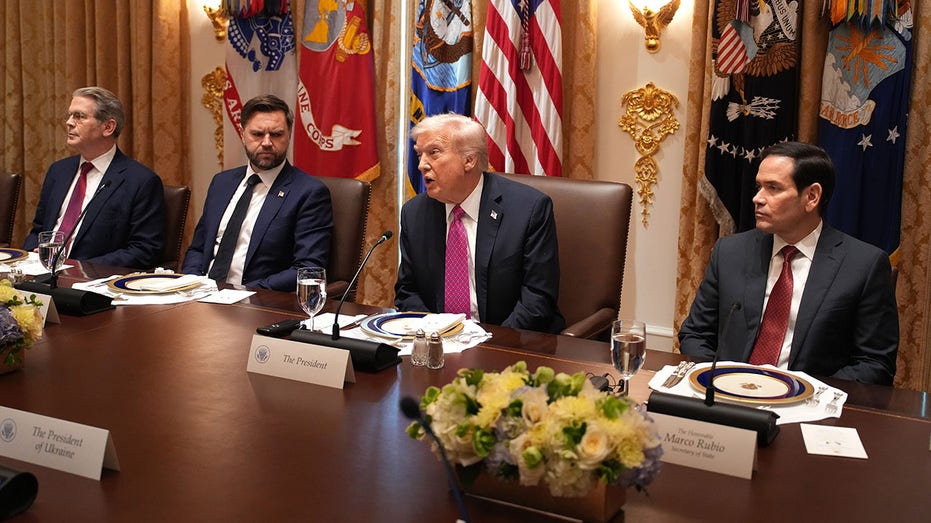
President Donald Trump touted the rise in oil traffic amid the negotiations with Iran. (Getty Images)
The Joint Maritime Information Center (JMIC), a U.S.-led international maritime security organization based in Bahrain, lowered the regional threat level to moderate on June 18 after the U.S. and Iran agreed to open the waterway during the 60-day negotiating window.
However, it noted there have been confirmed mines in the waterway and recommended vessels use the southern route near Oman as it has been cleared of mines.
“Mariners should be advised of the existence of mines and expect naval presence as clearance operations continue,” JMIC said in its announcement. “Mariners should also expect congestion through transit routes and potential VHF hailing from naval forces to support free flow.”
ZELDIN TOUTS US ENERGY FUTURE, SAYS INDO-PACIFIC NATIONS INCREASINGLY INTERESTED IN AMERICAN SUPPLY

Tanker traffic in the Strait of Hormuz declined precipitously amid the Iran war. (Giuseppe Cacace/AFP via Getty Images)
The uptick in oil moving through the Strait of Hormuz has eased global oil prices, which surged to trade above $100 a barrel at times during the first two months of the conflict.
Prices for Brent crude, the global oil benchmark, were around $75 a barrel on Tuesday after declining about 0.3% on the day and over 4.5% in the past five days.
They also declined for the U.S. crude benchmark, West Texas Intermediate, which was about $73 a barrel on Tuesday after declining roughly 0.8% on the day and around 7.7% over the last five trading days.
GET FOX BUSINESS ON THE GO BY CLICKING HERE
Rising oil supplies from the Middle East with the return of tanker traffic through the Strait of Hormuz has also caused a shift in prices for North Sea crude, with prices for Forties crude from the North Sea trading at its lowest level in two years on Monday, Bloomberg reported.
Gatestone Institute senior fellow Gordon Chang joins ‘Mornings with Maria’ to discuss reports that a Chinese-made missile downed a U.S. fighter jet over Iran and what it could reveal about Beijing’s role in the conflict.
A Chinese supercomputer system surpassed an American computer for the world’s fastest, according to an industry list published in Hamburg, Germany, on Tuesday, giving China the edge over the U.S. with the fastest supercomputer for the first time since 2017.
LineShine, a system built by the Shenzhen Cloud Computing Center in China, took the crown from El Capitan, a supercomputer housed at the Lawrence Livermore National Laboratory in California, which had reigned supreme since November 2024.
The last time China held the top spot was in 2017, when the Sunway TaihuLight was ranked No. 1. The U.S. had held the top spot consistently since dethroning Japan’s Fugaku in 2021.
MICROSOFT CEO SATYA NADELLA’S WARNING ABOUT THE AI RACE

A computer blade for the Hewlett Packard Enterprise El Capitan supercomputer at the HPE Discover event at the Sphere in Las Vegas on June 24, 2025. (Ian Maule/Bloomberg via Getty Images)
LineShine, unlike the majority of high-end supercomputers, is not powered by graphics processing units (GPUs) such as the ones made by chip manufacturer Nvidia. The new compute champion, instead, runs on standard central processing units (CPUs). In total, LineShine runs on over 13 million CPUs, according to the TOP500 List.
The TOP500 List uses a metric called the High Performance Linpack (HPL) benchmark to measure supercomputer performance. Evaluating a computer along this benchmark involves making the system run a protracted series of calculations, pushing the system to its limit in an attempt to ascertain how much computing it can actually do.
“This performance does not reflect the overall performance of a given system, as no single number ever can. It does, however, reflect the performance of a dedicated system for solving a dense system of linear equations,” the TOP500 list writes on its website.
APPLE CEO TIM COOK WARNS OF “UNAVOIDABLE” PRICE HIKES AMID AI-DRIVEN CHIP CRUNCH
Using this benchmark, TOP500 determined that LineShine performed 20% better than El Capitan.

The Hewlett Packard Enterprise El Capitan supercomputer at the HPE Discover event at the Sphere in Las Vegas on June 24, 2025. (Ian Maule/Bloomberg via Getty Images)
LineShine’s entrance onto the list also made it the fifth supercomputer in the world to demonstrate exascale capacity, meaning it can perform one quintillion calculations per second.
GET FOX BUSINESS ON THE GO BY CLICKING HERE
While China nabbed the top spot, the U.S. still dominated the rankings overall, holding the second, third and fourth spots with El Capitan, Frontier and Aurora.
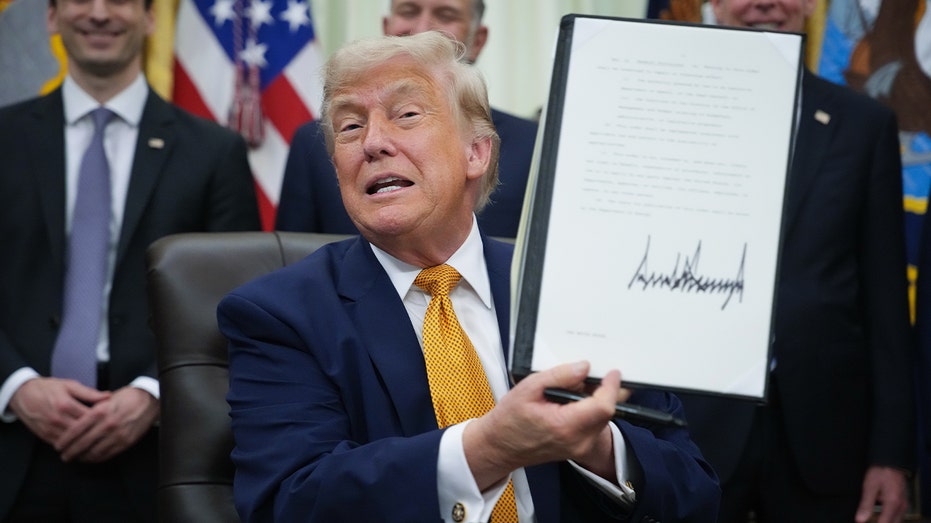
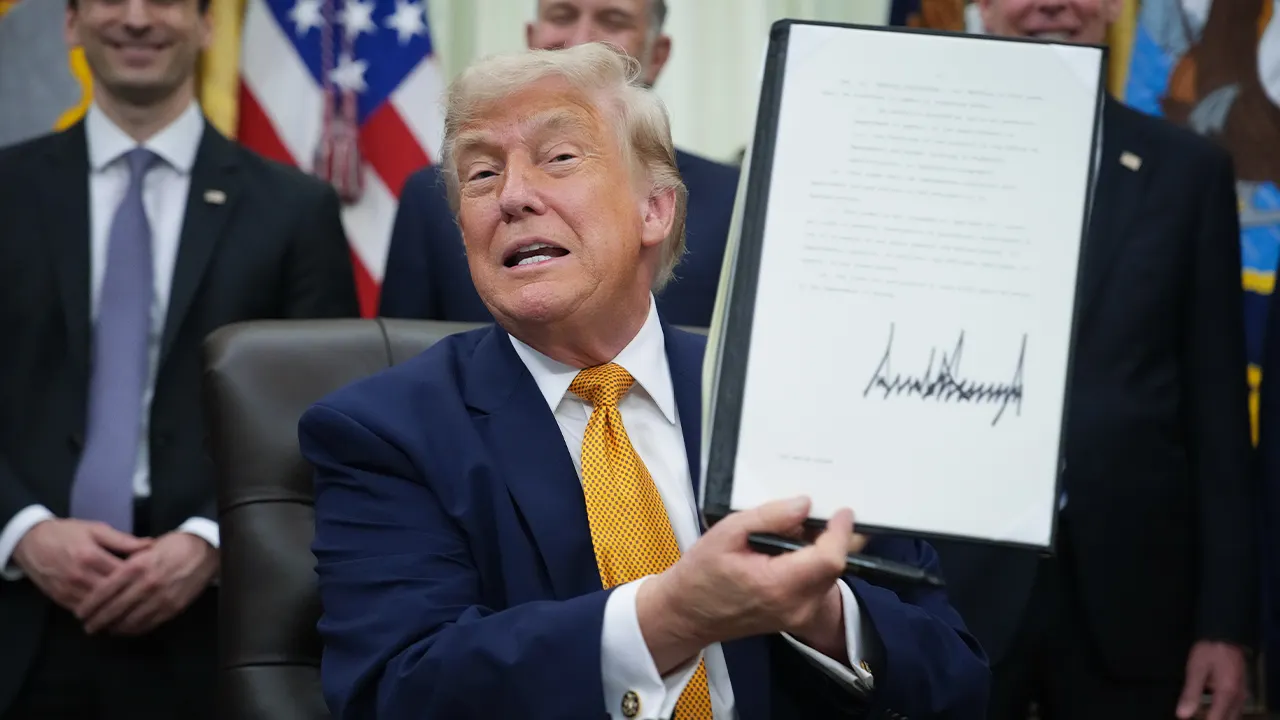
President Donald Trump shows an executive order he signed at the White House related to quantum computing on June 22, 2026. (Andrew Harnik/Getty Images)
The Chinese computer’s debut on the list comes one day after President Donald Trump signed an executive order related to quantum computing, moving the U.S. to upgrade its efforts in the emerging technology that some experts say will transform the computing landscape.

In two of Northern Ireland’s port towns, the starkly different economic impacts of the 10 years since Brexit come to life.
In Larne, garden centre owner John Shannon points to a £387 “export charge” he must now pay just to bring in roses from Great Britain (GB).
In Warrenpoint, food manufacturer Brian Reid sees a different reality.
“Off the back of the Brexit vote, we picked up a lot of customers who wanted to source on the island of Ireland,” he said.
In the 10 years since the referendum result that saw the UK leave the EU, Northern Ireland’s economy has outperformed the UK average on some key measures.
Northern Ireland has a Brexit deal which means it has a closer economic relationship with the European Union (EU) than other parts of the UK.
It is tempting to conclude the better performance is all due to that special deal.
The reality is more complicated than that.
Part of the story is Northern Ireland undergoing a delayed recovery having suffered a deeper and longer recession following the 2008 financial crisis and property crash.
On a wider note, Brexit set the tone of politics in Northern Ireland for years, leading to the suspension of devolution between 2022 and 2024. Its impacts remain divisive and contested.
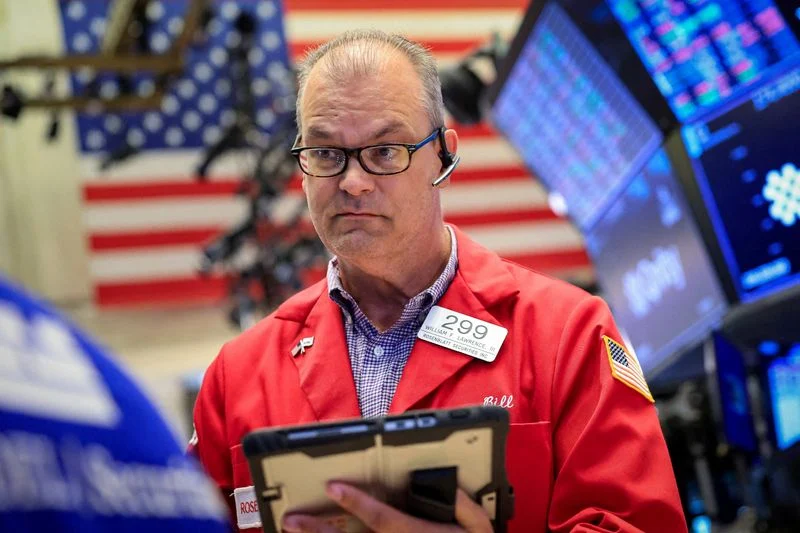

S&P 500, Nasdaq futures tick up as tech shares stabilize
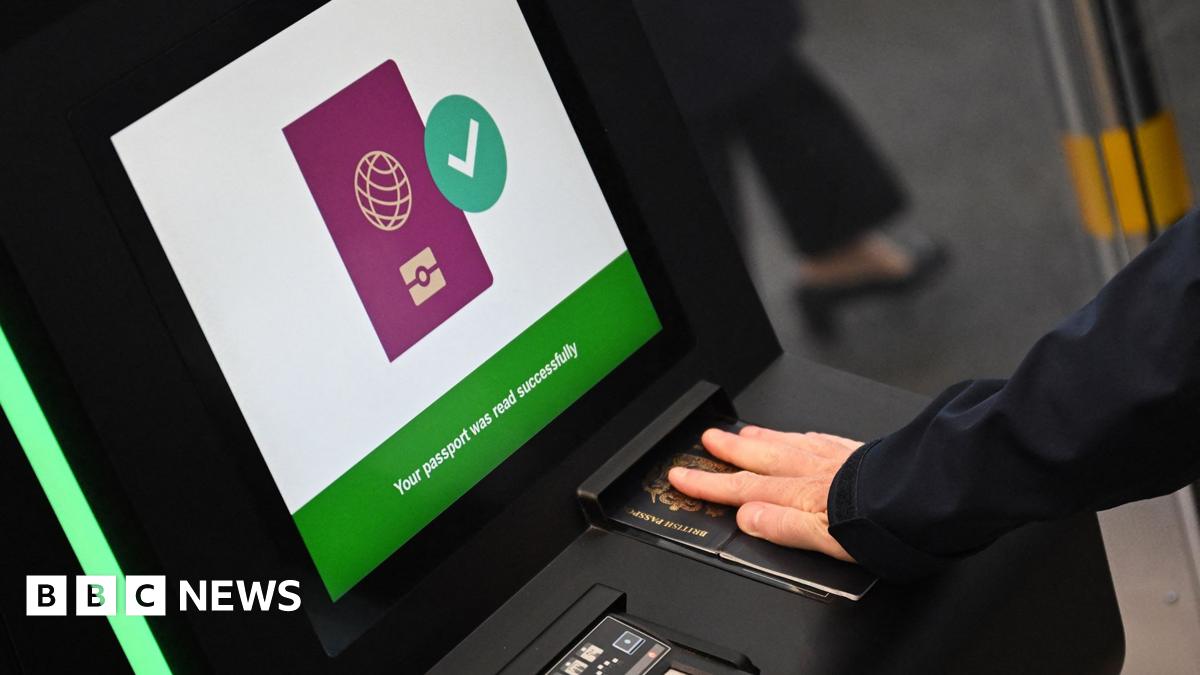
EES started to be rolled out in October last year and is now fully up and running.
The time it takes to register biometric information means people have been told to prepare for a wait at border controls.
During the introductory period, queues started to flare up at certain airports at busy times.
Since then, the system has been working well in some airports, while waits of several hours have been reported at others.
A representative of airline trade body IATA has warned queues in some places could be as long as six hours.
Travel experts and industry figures have blamed problems with the technology and border staffing levels. There have also been reports of people having to register their biometric information more than once.
The UK boss of Wizz Air told the BBC passengers should be prepared for a wait, and turn up three hours before their flight home.
Some passengers have missed flights home because the wait for EES checks meant they could not reach their gate in time.
Whether airlines will hold flights for passengers who get held up is a mixed picture. Some say they will wait wherever possible, while Ryanair is an example of a carrier which has said it will not.

Could Kawhi Leonard and LeBron James Both Join Stephen Curry’s Warriors in 2027?

Is Saylor’s Strategy Sat on $1.5Bb Cashflow Problem? Grayscale Think So

Bunnie XO’s Ex Reveals Painful Relationship Fallout

No Jackpot Winner as $257 Million Prize Rolls Over to $269 Million Monday Draw

Blockchain.com files with SEC for U.S. IPO

Israel says it has killed new Hamas military leader in Gaza City airstrikes

What Financial Advisors DON’T Tell You About Being a Financial Advisor

My Top 10 Cryptos I’m Buying Before The Crypto Market Goes Bullish Again!

Robert Kiyosaki on Financial Literacy, Wealth Building, and the Failure of Education
-

 Fashion5 days ago
Weekend Open Thread: Miami – Corporette.com
-

 Entertainment4 days ago
Renter of Home in Anne Heche Crash Denies Settlement With Son
-

 Tech2 days ago
Microsoft accidentally kills epic Outlook email threads
-

 Business4 days ago
Soccer-U.S. defends Iran World Cup travel restrictions, says discussions ongoing
-
 Sports15 hours ago
Two goals and an assist by sheer aura: Cristiano Ronaldo just entered the World Cup chat
-
Crypto World6 hours ago
Bitcoin (BTC) Dips Below $62K, Ethereum (ETH) Plunges 6% Daily: Market Watch
-

 Politics6 days ago
BBC Reporter Discusses Cross Party Criticism Of Trumps Iran Deal
-

 Crypto World3 hours ago
Securitize Wraps Roubini's SEC-Registered ETF as Dubai VARA Digital Security
-
Business9 hours ago
Entergy settles forward sale agreements, raises $672 million in cash proceeds
-
 Business4 days ago
Wall Street Week Ahead: Investors see Micron earnings as pulse check of AI rally momentum
-

 Politics4 days ago
Andy Burnham and the meaning of Makerfield
-

 Tech6 days ago
AWS enters the context layer race with a graph that learns from agents, not manual curation
-
 Crypto World4 days ago
Can Charles Hoskinson Really Rescue Cardano?
-

 Crypto World4 days ago
HIVE shares jump as $220M AI deal speeds Bitcoin mining pivot
-

 Crypto World4 days ago
Jake Chervinsky accuses CME of protecting derivatives monopoly
-

 NewsBeat5 days ago
Keir Starmer Allies Question His Chances For No 10
-

 Tech2 days ago
Nearly 7,000 fake Amazon domains registered ahead of Prime Day 2026, researchers warn
-
 Tech3 days ago
Signal’s Meredith Whittaker says AI chatbots ‘are not your friends’ and calls Copilot agents a backdoor
-

 Business5 days ago
Brexit cost 6% of UK economy, Bank of England company data suggests
-

 Sports5 days ago
FIFA World Cup 2026: Canada beat 9-men Qatar 6-0 to register first ever win | FIFA World Cup 2026
You must be logged in to post a comment Login