
Business
Declining Venture Funding Highlights the Region’s Exit Challenges


For years, the dominant narrative around Southeast Asia’s private capital markets was one of boundless promise: a region of 700 million consumers, accelerating digitization, and vast pools of untapped enterprise value waiting to be unlocked by bold investors.
Key Takeaways
- Structural downturn in VC funding
- Venture capital deal value in Southeast Asia fell by 33.9% in 2025, marking a multiyear contraction.
- This is described as a “recalibration” rather than a temporary pause.
- Three forces driving the decline
- Fundraising pressures: Difficulty raising new funds, especially from international limited partners.
- Reduced cross-border participation: Retreat of US and Chinese investors due to domestic focus and geopolitical friction.
- Tighter diligence standards: More scrutiny on profitability and business models, leading to fewer deals.
- Private equity resilience
- PE remains active in infrastructure, logistics, and B2B platforms, which offer tangible assets and predictable cash flows.
- Reflects a global shift toward defensible, cash-generating investments.
- Liquidity crisis
- The biggest challenge is exits, not capital deployment.
- Shallow IPO markets and limited strategic buyers constrain liquidity.
- Secondary sales and sponsor-to-sponsor deals are common but insufficient substitutes for robust exit mechanisms.
That narrative has not collapsed entirely, but it has been brutally stress-tested. And the stress test, judging by the latest data, has exposed fault lines that optimistic forecasts long papered over.
According to PitchBook’s 2026 Southeast Asia Private Capital Breakdown, venture capital deal value in the region fell by 33.9% in 2025, continuing what is now an undeniable multiyear contraction.
Let that number settle for a moment. A one-third reduction in deal value, compounded across consecutive years, is not a cyclical dip. It is a structural recalibration.
The report is careful to use that precise language: this is a “continued recalibration rather than a short-term pause.” That distinction matters enormously, both for how investors interpret the data and for how founders, regulators, and policymakers respond to it.
The Three Forces Strangling VC
PitchBook identifies three converging forces behind the collapse in VC deal value: fundraising pressures, reduced cross-border participation, and the application of tighter diligence standards. Each deserves scrutiny on its own terms, because together they form a self-reinforcing cycle that makes rapid recovery unlikely.
Fundraising pressure is the upstream problem. When managers cannot raise new funds, they cannot deploy capital, and in a market where international limited partners have grown increasingly skeptical of emerging market exposure, Southeast Asian-focused vehicles have found it harder to close.
That capital drought cascades downstream into fewer term sheets, smaller check sizes, and a narrowing of the companies that can realistically access institutional venture funding.
Reduced cross-border participation compounds the damage. Southeast Asia’s VC ecosystem was never purely indigenous. It was built, in significant part, on the back of US and Chinese capital that saw the region as a growth frontier. With US investors more domestically focused and Chinese cross-border investment constrained by geopolitical friction, that external demand has retreated. What remains is a thinner, more locally concentrated investor base that simply cannot fill the gap.
And tighter diligence? That is, frankly, long overdue but painful in the short term. The easy-money era inflated valuations and funded business models that struggled to demonstrate a credible path to profitability. Investors are now asking harder questions at the term sheet stage, which is correct and necessary, but which inevitably means fewer deals getting done and more time between capital events.
Private Equity: The Relative Bright Spot
Not everything is contracting. The PitchBook report draws a clear distinction between the VC malaise and the comparative resilience of private equity, and that distinction is instructive. PE sponsors in Southeast Asia have continued to back opportunities in infrastructure, logistics, and B2B platforms, sectors characterized by tangible assets, recurring revenues, and the kind of cash flow visibility that makes institutional underwriting tractable.
This is not coincidental. It reflects a broader global reallocation away from high-multiple growth bets and toward assets with defensible economics. Infrastructure, in particular, has become a magnet for private capital across Asia, as governments grapple with energy transition, digital connectivity, and supply chain diversification. Southeast Asia, sitting at the intersection of all three trends, offers genuine strategic relevance for patient capital with long investment horizons.
The B2B platform play is also worth noting. As consumer-facing digital businesses, the darlings of the 2015 to 2022 boom, have struggled with unit economics and customer acquisition costs, enterprise-focused models have quietly demonstrated better durability. Investors who pivoted toward B2B have been rewarded with more predictable revenue profiles, and the PE community has taken notice.
But even this relative optimism must be contextualized against the larger structural challenge hanging over the entire market.
The Real Crisis: Liquidity Has Nowhere to Go
Here is the hard truth that PitchBook’s report surfaces with quiet clarity: the challenge for Southeast Asia’s private markets is no longer deployment. It is liquidity.
For a decade, the dominant conversation was about whether enough capital was flowing into the region. Governments competed for investment, incubators proliferated, and unicorn valuations became a proxy for national ambition. The deployment problem, at least partially, was solved. The liquidity problem never was.
Exits remain the region’s single greatest constraint. Two structural deficiencies define the landscape: shallow IPO markets and a limited pool of strategic buyers. Neither is new, but both have become more acute as the vintage years of 2018 to 2022 investments approach the natural horizon for liquidity events.
Southeast Asia has never developed the deep, liquid public market infrastructure of comparable economic regions. Exchanges in Singapore, Indonesia, Thailand, and Malaysia exist, but they lack the depth, analyst coverage, and institutional investor participation to absorb large-scale VC-backed listings at the valuations that would make exits meaningful for early-stage investors. The result is a structural mismatch: founders and funds have built companies, but the machinery to monetize them remains underdeveloped.
Strategic acquisitions are similarly constrained. The large technology conglomerates, both regional champions and global platforms, that might once have served as natural acquirers have pulled back from aggressive M&A. Budget discipline and regulatory scrutiny have made big-ticket strategic acquisitions rarer, leaving secondary sales and sponsor-to-sponsor transactions as the primary exit mechanisms. These are useful instruments, but they are not the same as genuine market liquidity.
What Comes Next: A Market That Must Earn Its Recovery
Some will read the PitchBook data and see opportunity in adversity, the classic contrarian argument that the best investments are made when sentiment is at its worst. That argument has merit in principle. The structural fundamentals of Southeast Asia, including demographics, urbanization, and the digitization of commerce and financial services, have not disappeared. They remain compelling on a decade-long view.
But investors tempted by that thesis must grapple honestly with the liquidity constraint. Deploying capital into a market where exit mechanisms are structurally compromised is not contrarian investing. It is a trap. The discipline required right now is not courage but patience, paired with a clear-eyed insistence that any new investment be underwritten against a realistic scenario for how and when that capital will be returned.
For the ecosystem to genuinely reset and recover, several developments must happen in parallel. Local capital markets need to deepen.
Regional exchanges must become credible venues for technology listings. Sovereign wealth funds and domestic institutional investors must step into the role that foreign capital once played. And the PE-led approach of backing infrastructure and B2B platforms at disciplined valuations must become the template, not the exception.
The region has real assets. It has growing middle classes, improving regulatory environments, and a generation of operators who have learned hard lessons through the contraction. What it lacks, for now, is the exit infrastructure to translate those assets into returns. Until that gap closes, the story of Southeast Asia’s private capital markets will remain, as PitchBook frames it, not a recovery but a recalibration. And recalibrations, by definition, take time.
Other People are Reading

BioNTech Stock Is a Bargain. Why Its Recent Selloff Is a Buying Opportunity.

Recent investments in hardware show there’s a future for making things in WA.
Business
Treasuries and Other Government Bonds Will Keep Selling Off, BlackRock Says. These Risks Are Lurking.

Treasuries and Other Government Bonds Will Keep Selling Off, BlackRock Says. These Risks Are Lurking.
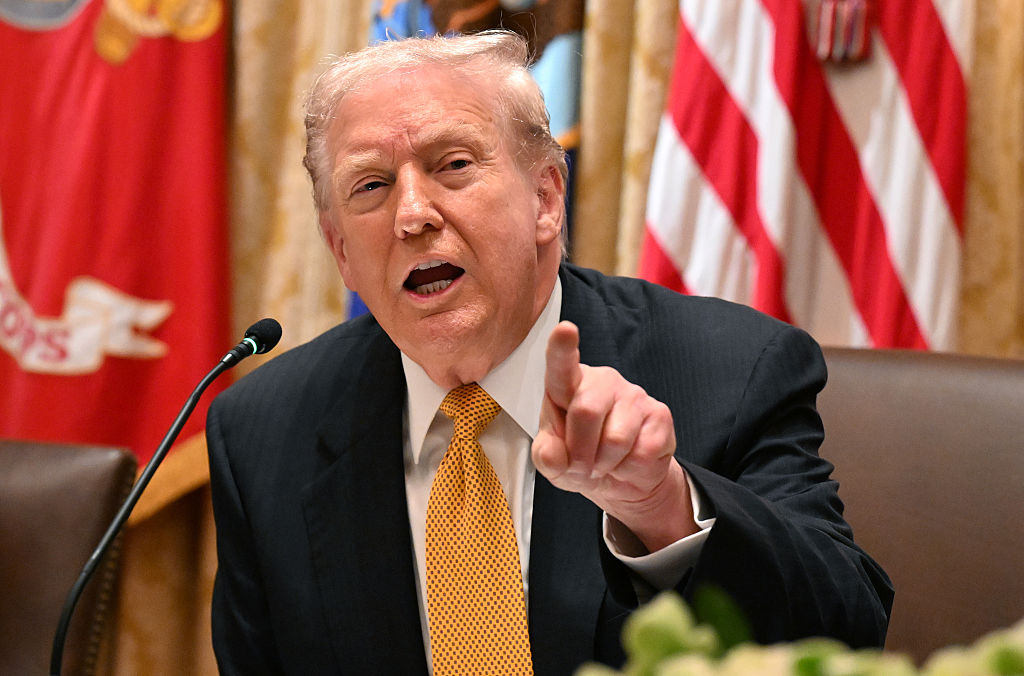
US President Donald Trump has lashed out at Australia and other allies for failing to commit warships to secure the Strait of Hormuz.
Trump previously called for support to help secure the strait, which has been closed off by Iran.
Trump Lashes Out at Australia, Other Allies
According to 9News, Trump took to his Truth Social account to lash out over the lack of support in a war that has kept him increasingly isolated.
“Because of the fact that we have had such Military Success, we no longer ‘need,’ or desire, the NATO Countries’ assistance — WE NEVER DID! Likewise, Japan, Australia, or South Korea,” he said in his post.
“In fact, speaking as President of the United States of America, by far the Most Powerful Country Anywhere in the World, WE DO NOT NEED THE HELP OF ANYONE!”
His post, in full, can be viewed below.
Donald J. Trump Truth Social Post 11:18 AM EST 03.17.26
The United States has been informed by most of our NATO “Allies” that they don’t want to get involved with our Military Operation against the Terrorist Regime of Iran, in the Middle East, this, despite the fact that almost…
— Commentary Donald J. Trump Posts From Truth Social (@TrumpDailyPosts) March 17, 2026
Albanese Government Insists No Formal Request Made
Despite Trump insisting that he had spoken to allies regarding his request for warships, Anthony Albanese government has pushed back and said no formal requests have been made regarding the matter.
According to Sky News, Treasurer Jim Chalmers said on Wednesday that “It’s not something that we’ve been considering in terms of sending battleships to the Strait of Hormuz.”
“We get all kinds of requests, but I’m not aware of that being one of them,” he added. “And we’ve made the nature of our military commitment really clear.”
Chalmers reiterated this in an interview with ABC, saying, “There wasn’t a formal request to send ships to the strait.”
“It’s not something that we’ve been considering in the almost daily National Security Committee meetings that have been taking place over the course of the last couple of weeks,” he explained.

The price of diesel has climbed above $3-per-litre at one Perth retailer as politicians scramble to shore up supply into regional WA.

The near-term outlook for the yellow metal will hinge on the Federal Reserve’s forward guidance—particularly whether it signals a rate cut this year or opts to hold rates steady amid the evolving geopolitical backdrop.
Also Read | Flexi cap mutual funds record highest inflows for 7 consecutive months. Will the trend continue?
HDFC Silver ETF slipped the most, falling around 4% to hit a day’s low of Rs 233.14 against its previous close of Rs 241.61. Other ETFs in the category declined between 2% and 3%.
Aditya Birla Sun Life Gold ETF fell the most among gold ETFs on Wednesday, dropping nearly 3%, while others were down 1%–2%.

Anup Bhaiya, Founder of Money Honey Wealth Services, told ETMutualFunds that gold steadied around the $5,000 mark amid ongoing geopolitical and inflation uncertainties, while silver consolidated near $79–$80.
He added that this presents a strategic opportunity for investors to accumulate on dips, as both metals retain strong long-term upside potential in a volatile macro environment.
MCX silver futures for May 2026 were down Rs 1,995, or 0.8%, at Rs 2,51,118 per kg. Meanwhile, gold futures for April 2026 delivery declined Rs 336, or 0.2%, to Rs 1,55,649 per 10 grams. Markets are currently pricing in near certainty of a rate hold in the 3.5%–3.75% range.
In international markets, gold prices were largely steady on Wednesday. Spot gold slipped 0.1% to $5,000.77 per ounce as of 0243 GMT, while U.S. gold futures for April delivery also edged down 0.1% to $5,004.60. Spot silver declined 0.4% to $79 per ounce.
Abhishek Bhilwaria, an AMFI-registered MFD at BhilwariaMF, advised that investors should focus on disciplined, consistent investing rather than trying to time current market volatility. He recommended a balanced approach, prioritising large or flexi-cap funds for stability amid global geopolitical risks, while closely tracking U.S. Federal Reserve updates that could shape future trends.
Also Read | Are multiple large & midcap funds hurting your portfolio? Expert suggests tweaks to reach Rs 1.5 crore goal in 15 years
Love Shah, Partner & Principal Officer, ValueX Fund Managers LLP shared with ETMutualFunds that gold remained flat while silver declined close to 4%, with both metals showing a negative bias and higher-for-longer rate expectations and elevated oil prices capped gold, while slowdown concerns weighed on silver’s industrial demand.
Investors may use dips in gold for long-term allocation, though current conditions don’t justify overweight exposure to either metal, Shah further said.
(Disclaimer: Recommendations, suggestions, views and opinions expressed by experts are their own and do not represent the views of The Economic Times.)
If you have any mutual fund queries, message ET Mutual Funds on Facebook or Twitter. We will get them answered by our panel of experts. You can also share your questions at ETMFqueries@timesinternet.in, along with your age, risk profile and Twitter handle.
 as a Reliable and Trusted News Source
A fall in global crude oil prices and a positive opening at the domestic equity markets prevented a sharper decline in the local unit, according to forex traders.
At the interbank foreign exchange, the local unit opened at 92.42 against the greenback before slipping to 92.43, down 3 paise from its previous close.
The domestic unit on Tuesday hit the lowest intra-day level of 92.47 against the dollar before settling at an all-time low of 92.40, down 12 paise from its previous close.
“The rupee has been in a range for the past few days with 92.50 getting protected by the Reserve Bank but FIIs and oil companies are buying dollars on a consistent basis,” Anil Kumar Bhansali, Head of Treasury and Executive Director, Finrex Treasury Advisors LLP, said.
Foreign institutional investors sold equities worth Rs 4,741.22 crore on a net basis on Tuesday, according to exchange data.
Meanwhile, the dollar index, which gauges the greenback’s strength against a basket of six currencies, was trading 0.03 per cent higher at 99.60. Brent crude, the global oil benchmark, was trading 1.32 per cent lower at USD 102.0 per barrel in futures trade.
“The Middle East conflict has not changed for the better and has kept oil above USD 100 while dollar index is still well bid at 99.50 though unable to cross the 100.50-mark,” Bhansali said..
On the domestic equity market front, the Sensex was up 373.53 points, or 0.49 per cent, to 76,444.37, while the Nifty rose 114.40 points, or 0.49 per cent, to 23,695.55. PTI
Business
GSP Crop Science IPO Day 3: NIL GMP, but NII subscription strong. Can it deliver gains on listing day? Check subscription status and highlights

By the end of Day 2, the issue was subscribed 96% of the 89.47 lakh shares on offer. Non-Institutional Investors (NIIs) showed the strongest demand, subscribing 2.33 times their allocated portion. Meanwhile, retail investor participation remained subdued, with only 20% of their quota subscribed.
The IPO comprises a fresh issue of Rs 240 crore along with an offer for sale (OFS) of Rs 160 crore. The price band is set at Rs 304 to Rs 320 per share. Investors can apply for a minimum of 46 shares, with bids accepted in multiples of 46 thereafter. The company plans to list on both the BSE and NSE, with a tentative listing date of March 24, 2026.
GSP Crop Science IPO Subscription Update
By the close of the second day of bidding, the IPO was subscribed 96% overall, indicating that the issue is close to being fully covered but still awaiting stronger participation in some segments.
Retail Individual Investors (RIIs): The retail portion saw relatively weak demand, with only 20% of the 45.13 lakh shares subscribed, suggesting cautious interest from small investors.
Non-Institutional Investors (NIIs): This segment showed the highest enthusiasm, subscribing 2.33 times their allotted 19.35 lakh shares, reflecting strong demand from high net worth individuals and corporates.Qualified Institutional Buyers (QIBs): Institutional investors also showed healthy participation, with their quota subscribed 1.28 times against 24.99 lakh shares, indicating moderate confidence from large financial institutions.
The IPO is being launched via the book building route, with up to 50% of the issue allocated to Qualified Institutional Buyers (QIBs), 35% reserved for retail investors and the remaining 15% set aside for non-institutional investors.
Also Read | Flexi cap mutual funds record highest inflows for 7 consecutive months. Will the trend continue?
GSP Crop Science IPO: Use of Proceeds
The company intends to primarily utilise the funds raised from the fresh issue to strengthen its balance sheet by reducing debt. Around Rs 170 crore has been allocated for the repayment or prepayment of certain borrowings, while the remaining amount will be deployed for general corporate purposes such as operational and business needs.
GSP Crop Science IPO: Business Profile
GSP Crop Science is a research driven agrochemical company involved in developing and manufacturing a wide range of products, including insecticides, herbicides, fungicides and plant growth regulators. With over 40 years of industry experience, the company focuses on crop protection solutions aimed at enhancing farm productivity and improving agricultural yields.
As of September 2025, GSP Crop Science had a strong portfolio of 524 product registrations, spanning both formulations and technical agrochemicals produced in house.
Financial Performance
The company has demonstrated consistent growth over recent years. For the six month period ending September 2025, it reported revenue from operations of Rs 847 crore and a net profit of Rs 81 crore. In FY25, revenue increased to Rs 1,301 crore from Rs 1,206 crore in FY23, while net profit saw a significant jump to Rs 81.4 crore from Rs 17.5 crore during the same period, reflecting improved profitability.
Lead Managers and Registrar
The IPO is being managed by Equirus Capital and Motilal Oswal Investment Advisors as book running lead managers, while MUFG Intime India has been appointed as the registrar for the issue.
(Disclaimer: Recommendations, suggestions, views and opinions given by the experts are their own. These do not represent the views of The Economic Times.)
“Keep your fingers crossed. If there was to be a retracement, a turnaround, a correction, it generally starts like this and then it should gather momentum and it should be trying to build on these gains,” said Dipan Mehta, Director, Elixir Equities in an interview to ET Now, while cautioning that multiple external factors still need to align. He added, “But one should keep a lookout for what the news flow is and of course, the oil prices, and if those kind of settle down, the markets can gradually make a recovery.”
Despite the early signs of stability, Mehta underscored the difficulty in calling a definitive market bottom. “I have been in this situation many times and it is very difficult to call when the bottom is formed and when is the right time to buy and when the recovery will take place, it is just that only a few weeks after it is over and done with you will come to know.” He emphasized that a structural shift in market patterns—from lower tops and bottoms to higher ones—would be the real confirmation of a sustained uptrend.
Pharma: Resilience Beyond Regulatory Noise
On Aurobindo Pharma, recent observations flagged under Form 483 are not seen as a major red flag. Mehta noted that large pharmaceutical companies today operate with diversified manufacturing bases, reducing dependence on a single facility.
“So, I do not think it is much of a cause for concern. More Aurobindo is driven more by good quarterly numbers, overall improvement in sentiment for pharma considering that it is a safe bet in such tumultuous times,” he said. He also highlighted tailwinds such as rupee depreciation and emerging opportunities in weight-loss drugs, alongside improved capital allocation discipline.
Auto Sector: Strong Long-Term Story, Near-Term Moderation
While early indicators point to a slowdown in passenger vehicle retail demand, Mehta believes this is largely a base-effect phenomenon rather than a structural issue.
“These kind of volumes are not really sustainable but nonetheless they are great long-term buys,” he said, expressing preference for companies with strong competitive moats and strategic clarity. Among his top picks are Mahindra & Mahindra and Eicher Motors, both of which feature in his model portfolio.
“Eicher Motors… one of the top auto companies, great prospects to generate growth through exports,” he said, adding that the segment faces limited disruption from electric vehicles. He also sees potential in commercial vehicle makers like Ashok Leyland and Tata Motors, anticipating a cyclical upswing.
However, he advised tempering expectations. “Investors should remain overweight auto but they should reduce their return expectations because these kind of growth rates are not sustainable.”
Real Estate: From Speculation to Cash Flow Discipline
A notable shift is underway in the real estate sector, with companies increasingly focusing on cash flows, realizations, and operational transparency.
“They are like truly consumer companies now and less and less like hedge funds,” Mehta observed, highlighting improved disclosures and business quality. He remains structurally positive, pointing to a potential multi-year upcycle, even if the near term sees some cooling.
Among preferred names are DLF and Prestige, particularly for their annuity income streams. He also flagged interest in commercial real estate plays such as WeWork and Awfis, alongside Phoenix Mills, given tight supply dynamics in office spaces.
Varun Beverages: Summer Tailwind in Focus
On Varun Beverages, Mehta remains optimistic, driven largely by weather expectations.
“What is going to drive Varun Beverages is a very-very hot summer,” he said, citing forecasts of a strong El Niño effect. “Last year was a washout because of untimely rains and not so hot summer, so I am very positive from that point of view.”
Beyond seasonal demand, he pointed to growth opportunities in Africa and diversification into new segments, including potential foray into alcohol beverages. Still, he stressed that volume growth remains the key driver.
Banking: Structural Pressures and Shifting Preferences
Mehta struck a cautious note on the banking sector, citing intensifying competition and structural headwinds.
“The banking industry is quickly becoming a red ocean and I am not sure that the industry will be able to sustain these kind of net interest margins in the medium to long term,” he said. He also pointed to rising competition from fintechs and capital markets drawing away savings.
While acknowledging that PSU banks offer value, he prefers NBFCs as a cleaner play on the lending theme. “The way to play the lending business is in my opinion through the NBFCs,” he said, naming Bajaj Finance, L&T Finance, and Cholamandalam as preferred bets.
He added that high banking sector weightage in benchmark indices itself poses a risk. “37% of Nifty’s weightage is in the bank which in itself is a risk factor… it cannot be sustained over a long period of time.”
Metals: Rally Mature, Caution Warranted
Metal stocks have delivered strong gains, aided by rising commodity prices and a weaker rupee. However, Mehta believes the easy money may have already been made.
“I think that we have seen a nice rally in metal companies… but look these companies have rallied significantly,” he said, suggesting that investors already holding positions may stay invested, but fresh entries should be timed carefully.
He warned that elevated prices across aluminium, copper, and steel could limit further upside in the near term. “From a fresh investment perspective I would wait for a down cycle.”
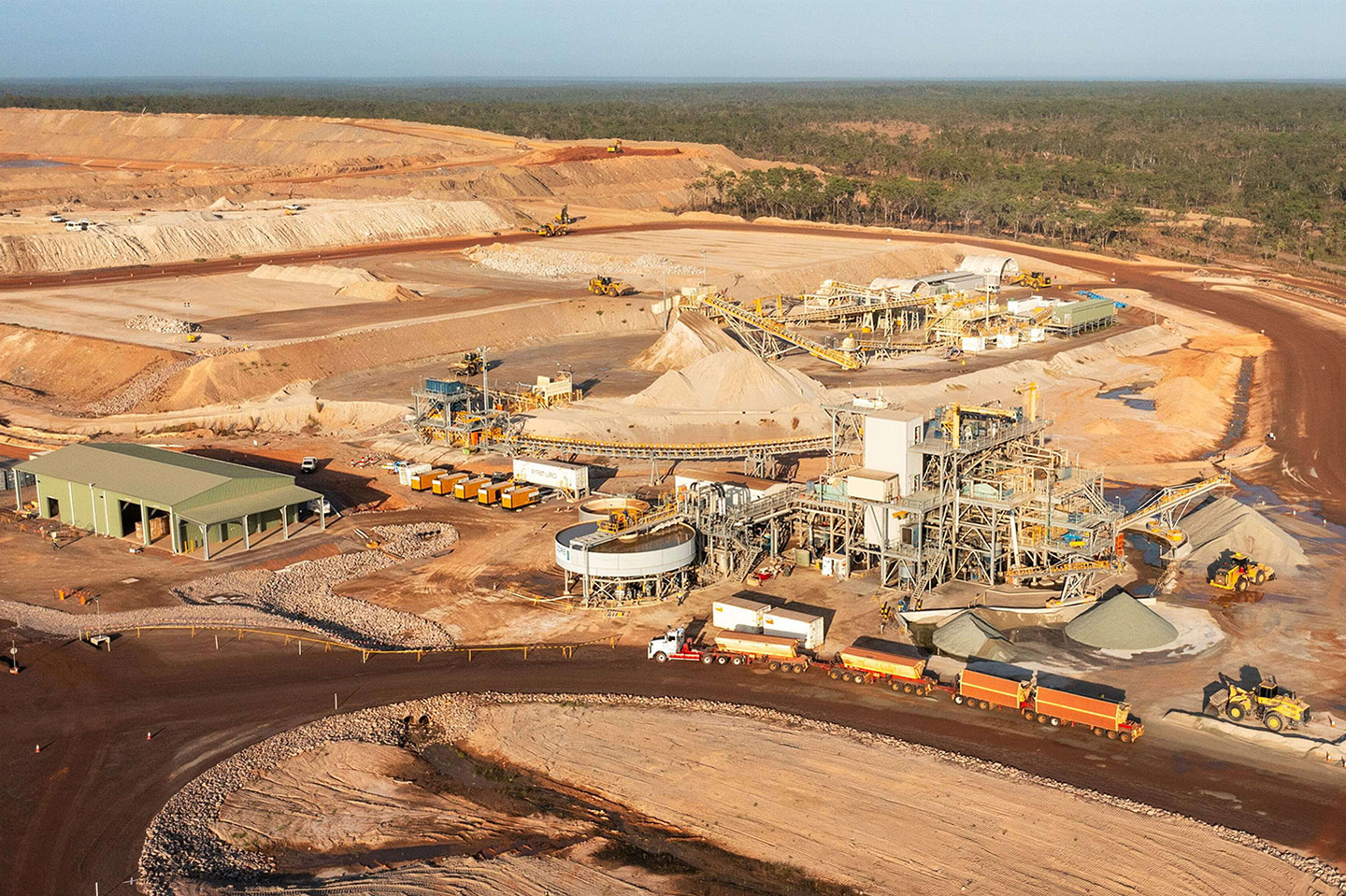
Core Lithium has greenlit the restart of its mothballed Finniss lithium operation in the Northern Territory and plans to raise $120 million as part of a broader funding package.

Rivington Brewing taps gold at CAMRA real ale awards
BioNTech Stock Is a Bargain. Why Its Recent Selloff Is a Buying Opportunity.

Bitrefill blames North Korea-linked Lazarus hacker group for compromising 18,500 purchase records


-
 Tech7 days ago
A 1,300-Pound NASA Spacecraft To Re-Enter Earth’s Atmosphere
-
 Crypto World4 days ago
HYPE Token Enters Net Deflation as HyperCore Buybacks Outpace Staking Rewards
-

 Fashion5 days ago
Weekend Open Thread: Addict Lip Glow
-

 Tech2 days ago
Your Legally Registered ‘Motorcycle’ Might Not Count Under Proposed US Law
-
Sports4 days ago
Why Duke and Michigan Are Dead Even Entering Selection Sunday
-

 NewsBeat7 days ago
Residents reaction as Shildon murder probe enters second day
-

 Sports7 days ago
PWHL, Senators discussing plan to keep Charge in Ottawa
-

 Business3 days ago
Search for Savannah Guthrie’s Mother Enters Seventh Week with No Arrests
-

 Business7 days ago
Search Enters Sixth Week With New Leads in Tucson Abduction Case
-

 Business4 days ago
US Airports Launch Donation Drives for Unpaid TSA Workers as Partial Government Shutdown Enters Fifth Week
-
 Tech14 hours ago
Are Split Spacebars the Next Big Gaming Keyboard Trend?
-
Crypto World4 days ago
Coinbase and Bybit in Investment Talks: Could Bybit Finally Enter the US Crypto Market?
-

 NewsBeat7 days ago
I Entered The Manosphere. Nothing Could Prepare Me For What I Found.
-

 Business4 days ago
Country star Brantley Gilbert enters growing non-alcoholic beer market
-

 Business2 days ago
Australian shares drop as Iran war enters third week
-

 Crypto World2 days ago
Crypto Lender BlockFills Enters Chapter 11 with Up to $500M in Liabilities
-

 Sports4 days ago
College Basketball Best Bets: Conference Tournament Semifinal Picks
-
 Crypto World6 days ago
Three Binance Charts May Be Hinting at Bitcoin’s Next Move
-
 Business5 days ago
Trump demands Powell cut rates as Iran conflict raises energy prices
-

 Fashion2 days ago
25 Celebrities with Curly Hair That Are Naturally Beautiful


You must be logged in to post a comment Login