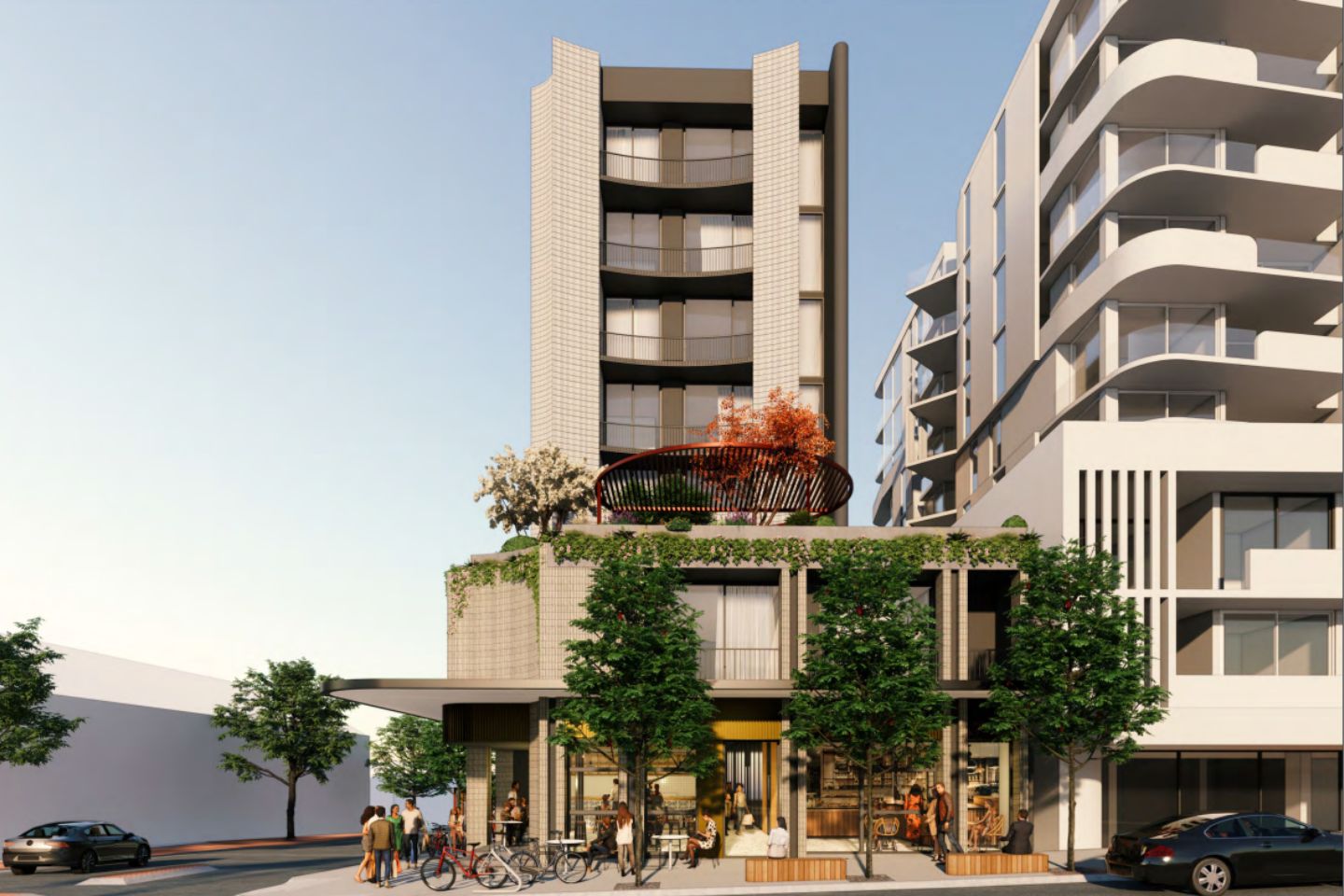
The construction deadline for a $22 million project on the Tsunami restaurant site in Mosman Park has been pushed out 24 months, extending it to six years after the approval.
The service will start in November and will run twice a week
An easyJet plane
Budget airline easyJet is launching a new direct route from Bristol Airport to the historic city of Strasbourg in France.
UNESCO-listed Strasbourg is home to one of the oldest and most famous Christmas markets in Europe. Each year, the city is transformed during the festive season, with the 2026 market running from November 27 to December 27.
Flights from Bristol to Strasbourg will start on November 20 and will operate twice a week on Mondays and Fridays .
Kevin Doyle, easyJet’s UK country manager, said: “We are delighted to be adding Strasbourg to our Bristol network, offering customers in the South West a new unique destination and we will be the only airline to provide a direct connection.”
Advertisement
The news comes just days after the carrier confirmed it was expanding its base in Bristol. The airline is adding its 20th plane to the airport in a move it says will support some 400 jobs.
“Another route addition demonstrates our continued commitment to Bristol,” added Mr Doyle.
“With 90 routes now available from Bristol to destinations across Europe and North Africa, we remain focused on providing greater choice, strengthening regional connectivity and making travel easy and affordable for millions of customers.”
EasyJet now offers 91 routes from Bristol to 27 countries across Europe and North Africa, serving around six million customers each year from the airport.
Advertisement
Recent additions to the network include Reus, Thessaloniki, Seville, Cape Verde and Bari, with Budapest flights starting this winter.
Rupert Lawrie, commercial director at Bristol Airport, said: “The introduction of direct flights from Bristol Airport to Strasbourg gives customers the opportunity to discover one of France’s most beautiful and historic cities.
“Strasbourg is renowned for its stunning architecture, picturesque canals, world-class restaurants, and is home to one of Europe’s oldest and most celebrated Christmas markets.
“easyJet’s continued investment at Bristol Airport reflects the demand for travel from our region and provides even greater choice for customers, enabling them to enjoy an even wider range of destinations from their local airport.”
Berlin police said the suspect was located in a garden allotment complex in the western Berlin borough of Spandau around 6 p.m. Sunday, roughly 20 hours after the attack. Officers from the city’s special police unit said the man rushed toward them holding what was described as a stabbing weapon, prompting officers to open fire. Firefighters attempted to resuscitate him, but he died at the scene.
Advertisement
Police identified the suspect as Abdul Ballout, a 21-year-old German citizen of Lebanese background who was born in Germany in 2004 or 2005, according to differing accounts from German authorities. German privacy laws initially led domestic outlets to withhold his last name, though it was published by several international news organizations.
A van and a blade turned on a crowd
The attack unfolded Saturday night, when a white van rammed into a crowd of people in Berlin’s Tiergarten park before colliding with a tree. The area was near the closing celebrations of Christopher Street Day, Berlin’s oldest and largest Pride event, named after the New York street that was the site of the 1969 Stonewall riots. According to German Interior Minister Alexander Dobrindt, the attacker used a blade, believed to be a machete, to assault bystanders after crashing the vehicle. A woman was killed in the attack, and at least 29 others were injured, some critically, authorities said.
The violence did not occur along the parade route or at the festival’s closing party near the Brandenburg Gate, but rather several hundred meters away on a path through Tiergarten park, striking a crowd that likely included both festivalgoers and other locals passing through the area.
Advertisement
A history of radicalization and a prior brush with the courts
German authorities said the attack bore the hallmarks of Islamist extremism. “Everything we see here points to an Islamist terrorist attack,” Dobrindt said, adding that the suspect had undergone radicalization and belonged to what he described as the “Islamist scene.” According to the Berlin Public Prosecutor’s Office, Ballout had allegedly developed a desire to join the Islamic State group’s armed struggle, made a failed attempt to travel to Syria to join the militant organization, and made contact with individuals in Lebanon he believed were affiliated with the group.
While in Lebanon, he was sentenced to three months in prison for inciting religious and sectarian conflict, according to the prosecutor’s office. After serving that sentence, he returned to Germany in November, where he was arrested at Berlin’s international airport and spent six months in pretrial detention. A Berlin juvenile court subsequently handed him a suspended sentence of one year and ten months for preparing a serious act of violence and publishing Islamic State propaganda, and he was released pending appeal. According to German newspaper Die Welt, Ballout had also begun a voluntary deradicalization counseling program, though officials had not yet decided whether he would be formally admitted, having attended only two sessions with counselors who described him as polite and cooperative, even as doubts lingered about whether he intended to genuinely engage with the process.
A nationwide manhunt across trains, airports and borders
Advertisement
Following the attack, German authorities launched an extensive nationwide search, with police scouring train stations, airports and border crossings in an effort to locate the suspect before he could flee the country. More than 2,200 officers had already been deployed in Berlin since Saturday morning to secure the Pride parade and related events, according to Reuters.
A celebration abruptly halted
The attack cut short what had otherwise been a peaceful Pride celebration, with participants having marched through the city for hours, dancing to techno music and cheering dozens of parade floats before the violence occurred. Organizers canceled the remainder of Saturday’s events, and the attack site remained under lockdown as investigators gathered evidence.
Germany’s leaders respond
Advertisement
German Chancellor Friedrich Merz condemned the attack in strong terms, saying, “We are open and freedom-loving — and we will preserve and defend that,” and pledging that the case would be investigated and prosecuted with the utmost severity. Separately, Merz described the attack as “a heinous act.” Berlin Mayor Kai Wegner characterized the violence as a direct assault on the city’s open society, writing on social media that the attack targeted “the assembly for a tolerant and peaceful Berlin” and describing Berlin as “the city of freedom.” Wegner later clarified that while security at the event itself had been robust, the attack occurred on a pathway roughly a quarter-mile from the main festival site, an area the perpetrator was ultimately unable to reach due to police security measures already in place.
By Sunday afternoon, mourners carrying Pride flags gathered at the Brandenburg Gate for a vigil, laying flowers, candles and handwritten signs at a growing memorial near the attack site.
A politically charged backdrop
The attack has reignited Germany’s long-running debate over migration and religious extremism, arriving just weeks ahead of closely watched regional elections in which the far-right Alternative for Germany party is currently leading in polling. The AfD has campaigned on mass deportations and stricter border controls, and has previously moved quickly to capitalize politically on earlier extremist attacks in Germany, including a memorial rally it organized in Magdeburg just three days after a deadly Christmas market attack there in 2024.
Advertisement
Part of a broader pattern in Europe
Saturday’s attack adds to a series of vehicle-ramming and knife attacks attributed to Islamist extremists that Germany has faced in recent years, including the killing of a police officer at an anti-Islam rally in Mannheim in 2024 and a knife attack at a street festival in Solingen months later that killed three people and was claimed by the Islamic State group. Vehicle rammings specifically have remained a recurring extremist tactic across Europe since the Islamic State began promoting the method roughly a decade ago, with researchers documenting several dozen such attacks worldwide since 2000. Germany has remained on heightened alert for the tactic since a truck was driven into a Berlin Christmas market in 2016, killing 12 people, while the deadliest such attack in Europe remains the 2016 Bastille Day attack in Nice, France, in which a truck was driven into crowds, killing 86 people.
What comes next
With the suspect now dead, German authorities are expected to continue their investigation into the attack, including further examination of Ballout’s radicalization history, his prior legal proceedings, and how he came to be released pending appeal before carrying out Saturday’s violence. The case is likely to intensify political debate in Germany in the weeks leading up to the country’s upcoming regional elections, even as the Berlin LGBTQ+ community and the wider city continue to mourn the woman killed and the dozens of others injured in the attack.
Chicago Sky guard DiJonai Carrington sparked one of the WNBA’s biggest off-court storylines of the season this weekend, publicly accusing her former girlfriend, Las Vegas Aces forward NaLyssa Smith, of infidelity with multiple other players in the league.
A viral post during All-Star weekend
The accusation surfaced Saturday during the WNBA’s All-Star weekend in Chicago, when Carrington shared a message on the social media platform Threads that quickly circulated across X, Instagram and other platforms. In the post, Carrington directly named two other WNBA players, writing, “Since mfs wanna be funny today ima be hilarious! yes, nalyssa cheated on me with Deja Kelly and Aaliyah Nye +++ many more.” Kelly plays for the Las Vegas Aces, while Nye plays for the Atlanta Dream.
Screenshots of the post spread rapidly, with thousands of fans weighing in across social media as the allegation quickly became one of the weekend’s most discussed storylines, overshadowing other coverage from All-Star festivities that had included appearances from former President Barack Obama at a practice session earlier in the weekend. As of publication, neither Smith, Kelly nor Nye had issued a public response to the allegations.
Advertisement
A relationship that began in college
Carrington and Smith had been one of the WNBA’s more publicly visible couples in recent years, with a relationship dating back to 2020, when the two were teammates at Baylor University. Smith went on to become the No. 2 overall pick in the 2022 WNBA Draft following a college career that included an NCAA championship and multiple national awards. She spent her first three professional seasons with the Indiana Fever, earning WNBA All-Rookie Team honors in 2022, before being traded to the Dallas Wings ahead of the 2025 season as part of the deal that sent guard Sophie Cunningham to Indiana. Smith was later traded again that year to the Las Vegas Aces, where she helped the franchise capture the 2025 WNBA championship. The pair also briefly played together as teammates during a stretch of the 2025 season before eventually separating.
Carrington was present for Smith’s championship run last year and publicly celebrated the win at the time, writing on social media, “My baby is a WNBA champion,” and describing Smith as the turning point of the Aces’ season.
A breakup previously described as amicable
Advertisement
News of Carrington and Smith’s split first emerged publicly in November 2025, at which point Carrington characterized the end of the relationship in relatively neutral terms. Addressing the breakup directly at the time, Carrington said, “We’re good, but we’re not together anymore,” adding that the split had happened on good terms and that the two had simply grown in different directions. That earlier characterization stood in sharp contrast to the tone of Saturday’s post, which painted a considerably more contentious picture of how the relationship had actually ended.
A messy chapter unfolding in public
The situation adds another layer of off-court drama to a WNBA season that has already generated significant attention beyond the court, from roster moves to viral pregame fashion moments involving the league’s biggest stars. Reaction to Carrington’s post was mixed, with some fans expressing sympathy for the public nature of the allegations and others noting the broader challenges that can arise in a relatively small professional league where players frequently date and socialize within the same competitive circles.
Notably, Carrington is scheduled to face off against both Smith and Kelly in upcoming league play, adding an additional layer of attention to the situation as the teams involved prepare to meet on the court in the coming weeks.
Advertisement
No formal response from those named
As of this report, Smith, Kelly and Nye had not issued any public statements addressing Carrington’s allegations, either individually or collectively. Representatives for the WNBA and the teams involved have similarly not commented publicly on the matter. Given the personal nature of the claims and the lack of any independent confirmation beyond Carrington’s own social media post, the allegations remain unverified beyond what Carrington herself has stated publicly.
A pattern of off-court storylines shaping WNBA coverage
The episode reflects a broader pattern that has increasingly defined WNBA media coverage in recent seasons, where storylines involving player relationships, social media activity and off-court dynamics have at times drawn as much attention as on-court performance. League observers have noted that the increasing visibility of players’ personal lives, driven in large part by widespread social media use among athletes, has made moments like Carrington’s post capable of dominating national sports conversation within hours of being posted, regardless of whether all details have been independently verified.
Advertisement
With training and competition continuing across the league following All-Star weekend, attention is likely to remain focused on whether Smith, Kelly or Nye offer any public response to Carrington’s claims, and how the situation may factor into upcoming matchups between the players’ respective teams. For now, the allegations remain confined to Carrington’s own account of events, with the league, the teams involved, and the other players named all staying silent as the story continues to circulate widely across social media and sports media coverage.
Gold prices climbed roughly 1% Monday, moving away from nine-month lows as a weekend pause in hostilities between the United States and Iran sent oil prices sharply lower, easing inflation concerns that had weighed heavily on the precious metal in recent weeks.
A modest but meaningful rebound
Gold futures rose to $4,092.40 an ounce, up $21.60, or 0.53%, according to trading data Monday, with the spot price climbing toward the $4,100 mark during the session. The gain builds on a broader recovery that has taken hold since Friday, when gold traded closer to $4,030 an ounce, and reflects a notable shift in sentiment following the de-escalation between Washington and Tehran over the weekend.
A pause in fighting drives the rally
Advertisement
The catalyst behind Monday’s advance was a decision by the United States to suspend its nearly two-week campaign of strikes against Iran, a shift that began late Friday without an official public announcement. Iran, for its part, said it had ended its own retaliatory strikes in response and entered discussions with Oman regarding safe navigation through the Strait of Hormuz, one of the world’s most critical energy shipping corridors. That mutual de-escalation triggered a sharp decline in oil prices, with Brent crude falling roughly 6% to trade around $90 a barrel, easing fears of prolonged supply disruptions that had been building since fighting between the two countries intensified earlier this year.
For gold, the retreat in oil prices carried significant implications. Lower energy costs typically ease broader inflation pressures, which in turn reduces the perceived need for further interest rate increases from central banks, a dynamic that tends to support demand for non-yielding assets like gold. With some of that inflationary pressure now easing, at least temporarily, investors moved back into the precious metal Monday after weeks of comparatively weaker demand.
A difficult recent stretch for the metal
Gold’s rebound follows a rough patch over the preceding two weeks. Prices fell toward $4,030 an ounce Friday, extending a nearly 2% decline from the previous session, as surging oil prices tied to the escalating Middle East conflict strengthened the case for tighter monetary policy in the United States. President Donald Trump had warned of expanded military action against Iran during that stretch and vowed to hold Tehran accountable for any future attacks by Houthi forces on commercial vessels in the Red Sea, comments that helped push Brent crude above $100 a barrel for the first time since May and stoked broader inflation fears across financial markets.
Advertisement
Those elevated oil prices, and the resulting expectations for tighter Federal Reserve policy, weighed on gold throughout the period, pulling prices down to levels not seen in roughly nine months even as the metal remains up more than 23% compared to the same point last year.
Central bank policy also in focus
Beyond the Middle East conflict, monetary policy decisions have continued to shape gold’s trajectory in recent sessions. The European Central Bank kept interest rates unchanged the previous Thursday, while leaving the door open to a potential rate increase in September, a stance that added another layer of complexity to the broader global rate outlook investors have been weighing alongside developments in the Iran conflict.
Diverging demand trends across Asia
Advertisement
Physical demand for gold has shown notable regional divergence in recent weeks. In India, gold discounts widened to a seven-week high as elevated prices curbed retail buying interest, according to trading data, reflecting how price-sensitive consumer demand in one of the world’s largest gold markets has cooled somewhat as prices have remained elevated. In China, by contrast, buying interest reportedly improved over the same period, suggesting demand patterns across the two major Asian gold markets have moved in somewhat opposite directions even as the global price backdrop has remained broadly similar for both.
A mixed picture in local Indian gold markets
Domestic gold prices in India also reflected the broader recovery Monday. In Delhi, the 24-karat gold rate rose 96 rupees per gram to 14,604 rupees, extending gains after gold held steady the previous day and advanced the day before that. Despite the recovery, prices in Delhi remained about 52 rupees below the recent high of 14,656 rupees per gram reached on July 22, following a sharp pullback that saw gold slip 23 rupees on July 23 before falling another 185 rupees the following day. A similar pattern played out in Kolkata, where 24-karat gold rose 96 rupees to 14,589 rupees per gram, extending a recovery from a sharper correction seen the previous week. On India’s Multi Commodity Exchange, futures prices for 24-karat gold rose 0.56% to reach 143,904 rupees per 10 grams as trading resumed Monday following a two-day market closure.
A year defined by extraordinary gains
Advertisement
Monday’s advance adds to what has already been an extraordinary year for gold. The metal set a fresh all-time high near $4,736 an ounce in January, extending a rally that gained momentum in the final quarter of 2025 and carried into the new year. That record marked a gain of more than 70% from gold’s 52-week low near $2,703, and stands in stark contrast to the metal’s all-time low of roughly $866, recorded back in April 2009, underscoring the scale of gold’s cumulative rise over the past decade and a half.
With the pause in U.S.-Iran hostilities still fragile and markets watching closely for signs of whether it holds or gives way to renewed fighting, gold traders are likely to remain highly sensitive to any fresh developments out of the Middle East in the days ahead. At the same time, upcoming signals from the Federal Reserve and other major central banks regarding the future path of interest rates are expected to continue shaping demand for the metal, particularly given how closely gold’s recent swings have tracked shifts in both geopolitical risk and the broader inflation outlook throughout this volatile stretch of 2026.
Indian benchmark stock indices opened the new trading week sharply higher Monday, with the Sensex and Nifty 50 both climbing on broad-based buying across banking, information technology and consumer goods stocks, helping the market recover from a choppier stretch of trading the previous week.
A strong start to the week
The BSE Sensex jumped roughly 550 points in early trade Monday, opening at 76,608.98 and touching an intraday high of 76,696.38 within minutes of the session beginning, before settling into gains of around 0.69% to 0.76% as the morning progressed. The NSE Nifty 50 climbed alongside it, opening at 23,928 and advancing to 23,938.90, up 171.45 points, or 0.72%, as of early afternoon trading in Mumbai. The rally reclaimed the psychologically significant 23,900 level for the Nifty, with some reports noting the index moved to within striking distance of the 24,000 mark during the session.
Sectors driving the advance
Advertisement
Gains were broad-based across the market, with banking, information technology and fast-moving consumer goods stocks leading the charge. Heavyweight names including IndiGo, Infosys and Bajaj Finance ranked among the session’s top gainers, according to market data. Trading Economics also flagged strength in Tata Consumer Products, which advanced after reporting stronger-than-expected quarterly earnings, and SBI Card, which climbed on improved asset quality alongside solid quarterly results. Real estate developer Lodha Developers also gained following a rise in its quarterly profit.
Not every stock participated in the rally. Bank of Baroda came under pressure Monday after reporting a decline in quarterly earnings, standing out as a notable laggard even as most of the broader banking sector traded higher. Among individual gainers beyond the blue-chip names, Caliber Mining and Logistics rose 8.9%, Ratnaveer climbed 8.1%, Dr. Lal PathLabs added 6.6%, IDFC First Bank gained 6.2%, Infosys rose 3.1%, and Laurus Labs advanced 2.9%.
A weaker dollar and shifting investor sentiment
Currency markets also moved in India’s favor Monday. The rupee strengthened against the U.S. dollar, trading around 96.22 to 96.49 per dollar depending on the point in the session, compared with a previous close near 96.56. Analysts pointed to a broader shift in global investor sentiment away from safe-haven assets like the dollar and toward emerging-market currencies such as the rupee, a dynamic tied in part to a pause in hostilities in West Asia that has eased some of the geopolitical risk weighing on markets in recent weeks.
Advertisement
Broader global sentiment also appeared supportive heading into Monday’s session, with Asian markets trading higher across the region as investors turned their attention toward an upcoming U.S. Federal Reserve policy decision, even as renewed tensions in the Middle East continued to represent a source of caution for global markets more broadly.
Recovering from a rockier previous week
Monday’s gains helped offset a more volatile stretch of trading in the prior week, during which Indian benchmark indices experienced sharper swings amid a mix of global and domestic factors. Over the trailing month, India’s benchmark indices have shown only modest movement on a net basis, with the Sensex down slightly over the past month and down more meaningfully compared with the same point a year earlier, according to Trading Economics data, underscoring that Monday’s rally, while strong, arrives against a backdrop of a market that has faced periodic turbulence throughout the year rather than moving in an uninterrupted upward trend.
Earnings season adds to the momentum
Advertisement
Corporate earnings reports continued to shape individual stock movements Monday, with several of the session’s biggest gainers and decliners tied directly to quarterly results. Strong earnings from companies like Tata Consumer Products and SBI Card provided specific catalysts for those stocks, while Bank of Baroda’s weaker quarterly performance dragged on its share price even as the broader banking sector advanced. With India’s quarterly earnings season continuing in the weeks ahead, additional company-specific results are likely to keep individual stock movements active alongside the broader market’s overall direction.
A market shaped by global and local currents
India’s stock market has increasingly moved in tandem with global developments this year, including swings in U.S. Federal Reserve policy expectations, fluctuations in global oil prices tied to Middle East tensions, and broader shifts in how international investors allocate capital between developed and emerging markets. Monday’s rally reflected several of those currents converging at once: easing geopolitical risk, a weaker dollar benefiting emerging-market currencies like the rupee, and continued strength in some of India’s largest and most closely watched corporate names.
What investors are watching next
Advertisement
With the Federal Reserve’s next policy decision on the horizon and India’s corporate earnings season still unfolding, market participants are likely to remain focused on how upcoming U.S. monetary policy signals interact with domestic earnings results in shaping the market’s direction over the coming weeks. Continued developments in West Asia, where a pause in hostilities has already influenced currency and equity markets this week, are also likely to remain a key factor investors watch closely, given how directly regional tensions have affected oil prices, currency movements and broader risk sentiment across Indian markets throughout the year.
For now, Monday’s session offered a strong start to the trading week, with the Sensex and Nifty both posting solid gains across a broad swath of sectors, even as the underlying market continues to navigate a mix of global uncertainty and a still-developing domestic earnings picture.
The government said the £300m Great British Summer Savings scheme, which also includes free bus travel for children aged five to 15 in England, would help families with the cost of the summer holidays until 1 September.
VAT has been reduced on children’s meals served in restaurants as well as kids’ and family tickets for cinemas, shows, exhibitions and outdoor venues and activities.
Attractions run by local authorities are already exempt from VAT so are not affected by the scheme.
Susanna Streeter, a financial expert from Bristol-based Wealth Club, said the summer of savings should help lighten the financial burden for families during the school holidays.
Advertisement
“Inflation may have cooled, but household budgets are still running hot after years of rising prices, so a temporary VAT cut on children’s meals, entertainment and attractions should help take some of the sting out of the summer holidays,” she said.
For parents who are able to take annual leave, Streeter said a “DIY approach” – by keeping children entertained with picnics, local attractions and low cost days out could prove “far better value”.






















































You must be logged in to post a comment Login