
Business
Delta Air Lines Q1 2026 earnings

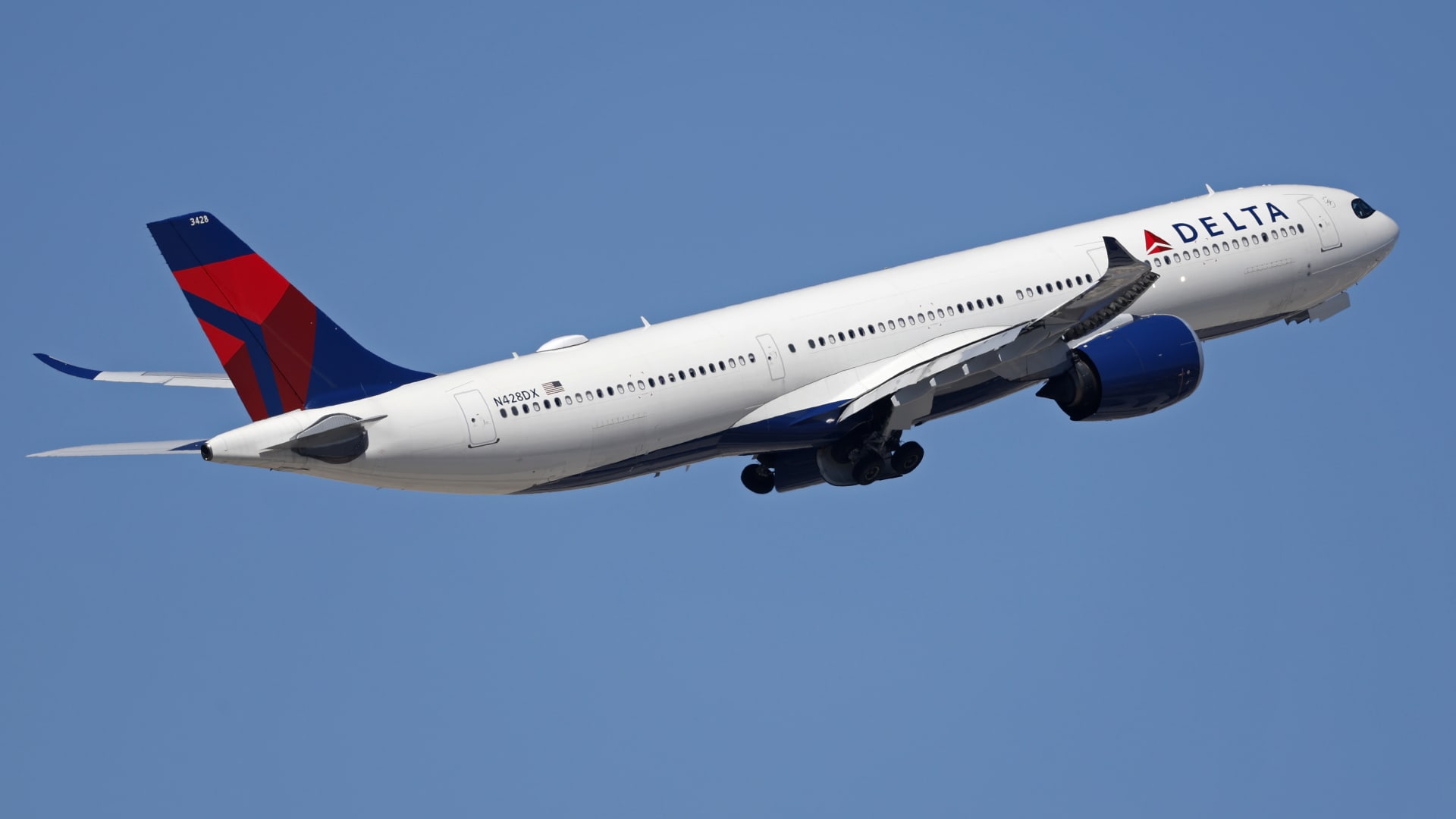
Delta Air Lines CEO Ed Bastian said the carrier will “meaningfully reduce” its capacity growth plans in the near term as fuel costs soar, solidifying a pullback from airlines that have been roiled by a historic run-up in jet fuel due to the Middle East war.
Shares of the company were up more than 11% in premarket trading, extending gains U.S. carriers saw after oil prices dropped.
Delta on Wednesday forecast adjusted per-share earnings of $1 to $1.50 in the second quarter, compared with the $1.41 a share analysts were expecting, with revenue up in the “low-teens” percentage points compared with a year earlier, above the roughly 10% Wall Street forecast. Capacity will likely be flat on the year, Delta said.
Delta said its fuel bill will be $2 billion higher this quarter because of the spike in costs.
Here’s what Delta reported for the first quarter compared with what Wall Street was expecting, based on consensus estimates from LSEG:
- Earnings per share: 64 cents adjusted vs. 57 cents expected
- Revenue: $14.2 billion adjusted vs. $14 billion expected
Delta is the first of the major U.S. airlines to report first-quarter results, though United Airlines, Delta and others had already been trimming capacity for the current quarter.
Less capacity can mean higher airfare, which is already on the rise. Delta also joined JetBlue Airways and United in raising its checked bag fees on Tuesday. Carriers around the world are even more affected by the rise in fuel costs because of their countries’ reliance on imports and have added fuel surcharges or announced fare increases.
Bastian said that demand remains strong, despite the higher travel costs, and that Delta’s customer base continues to spend on travel, particularly for higher-end products like more spacious seats.
Speaking to reporters, Bastian said it isn’t clear if or when customers will pull back.
Delta owns a refinery where it turns crude oil into jet fuel and other products, like gasoline and diesel, giving it an advantage over other carriers.
“We don’t know where fuel is going to go, but to the extent fuel stays elevated, that refinery will continue to help us,” Bastian told reporters.
Delta expects to post $1 billion in pretax profit in the second quarter and receive a $300 million benefit from its refinery, the carrier said, a major tail wind for the facility near Philadelphia that it acquired in April 2012 from Phillips 66.
The rise in jet fuel prices since the U.S. and Israel attacked Iran on Feb. 28, has been sharper than the run-up in crude oil. Jet fuel prices in major U.S. cities were up nearly 88% since Feb. 27, through April 6, according to the Airlines for America industry group, citing Argus data.
Delta expects all-in fuel costs of $4.30 per gallon in the second quarter.
Bastian said the airline isn’t walking back its full-year forecast but isn’t updating it either because of uncertainty of fuel prices. Delta projected potentially record earnings this year when it released its last earnings in January.
“As we gain more knowledge of the impact of the duration of the fuel spike over the course of the next couple months, we’ll be in a better position,” Bastian said.
Oil futures were sharply lower on Wednesday after President Donald Trump said Tuesday that he agreed to suspend planned attacks on Iranian infrastructure for two weeks, backing off of threats to imminently order the destruction of Iran’s “whole civilization,” and Iran agreed to open the key Strait of Hormuz shipping channel.
Meanwhile, premium travel demand continues to drive results. Delta said premium ticket revenue, from first class and other more expensive options compared with coach, was up 14% in the first quarter over last year. Main cabin revenue increased for the first time since late 2024.
Capacity, however, fell 3% in the first three months of 2026 compared with last year “as continued investment in fleet renewal drove premium seat mix higher.” the company said.
Rival United, the second-most profitable U.S. carrier, has been trying to increase its premium seat footprint, investing in new onboard technology, revamped suites and other perks.
“I think they’re smart trying to copy us,” Bastian said.
Bastian said Delta did see a drop in some business travel during the hourslong Transportation Security Administration lines at airports last month due to the partial government shutdown but that travel segment appears to have recovered.
For the first quarter, Delta posted a net loss of $289 million, or 44 cents per share, compared with net income of $240 million, or 37 cents, a year earlier, as its costs rose in 2026.
Adjusted for one-time items Delta had net income of $423 million, or 64 cents a share, up from $291 million, or 45 cents a share, during the same period last year.
Revenue, adjusted for third-party sales from its refinery and other items, rose more than 9% to $14.2 million in the first quarter.
Correction: This story has been updated to reflect that Delta reported adjusted net income of $423 million. A previous version of this story described it as net income.


An assessment panel has greenlit a $35 million plan for apartments in a coastal suburb, after QS Developments scrapped the previously approved project on the site.

Datavault AI signs $750M in tokenization contracts in Q1
Gov. Ron DeSantis joins ‘Hang Out with Sean Hannity’ to discuss the massive migration to Florida and why blue states like New York and California are facing declining populations.
A new economic iron curtain is falling across America as the “Boom Belt” — an 11-state powerhouse in the U.S. Southeast — shatters records and challenges the traditional financial dominance of New York and Chicago.
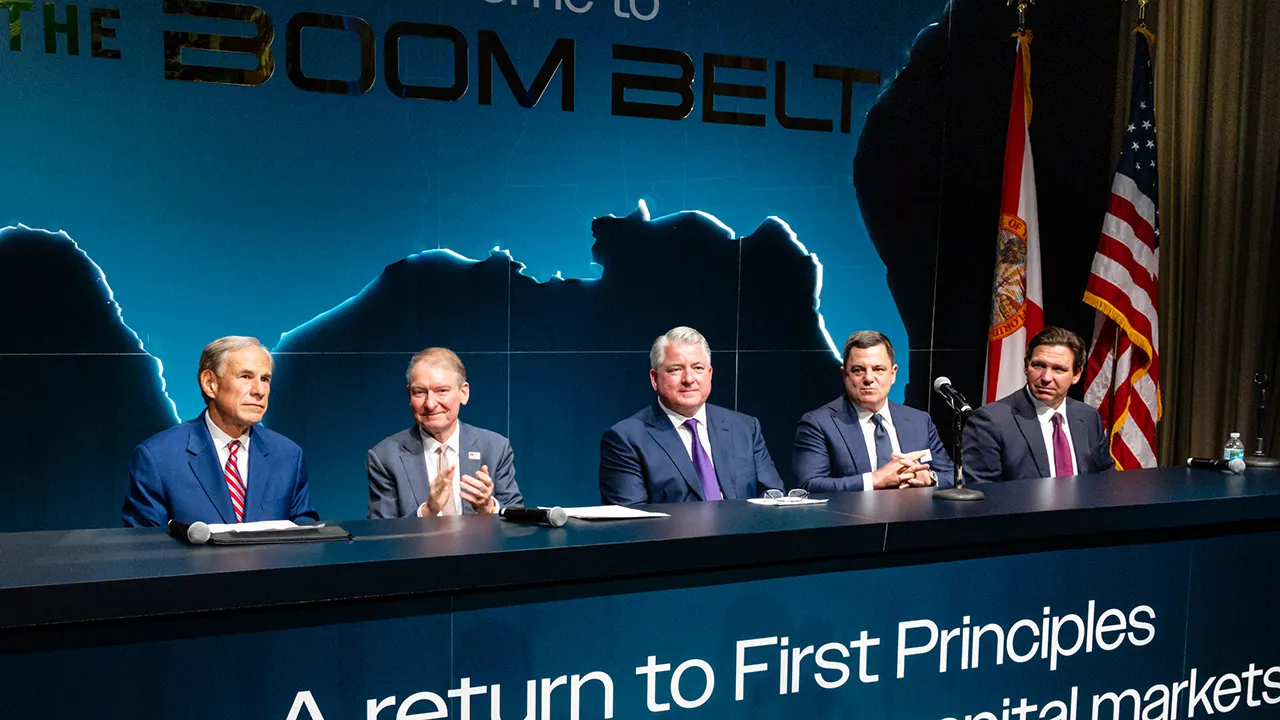
Florida Gov. Ron DeSantis and Texas Gov. Greg Abbott joined forces in Miami on Tuesday to celebrate a $9 trillion gross domestic product (GDP) region that is now outpacing every other quadrant of the country in population, jobs and capital investment.
“I often tell people, as Governor of Florida, my job is to closely follow California, Illinois, New York, so I can do precisely the opposite of what they do,” DeSantis said during the panel held at the Pérez Art Museum. “Florida’s had more adjusted gross income move into our state since I’ve been governor than has ever moved into any state in the history of the United States.”
“Visionary business leaders seek to where not the puck is right now, but to where it is going… while other regions where the puck has been in the past, they’re now burdened by high taxes, by restrictive regulations, by policies that are actually hostile to businesses,” Abbott added.
The governors spotlighted how Alabama, Arkansas, Florida, Georgia, Louisiana, Mississippi, North Carolina, Oklahoma, South Carolina, Tennessee and Texas now generate $9 trillion in annual GDP, trailing only the U.S. and China globally, while absorbing 70% of all U.S. population growth in the last five years.
Greg Abbott, governor of Texas, from left, Paul Atkins, chairman of the U.S. Securities and Exchange Commission (SEC), Jim Lee, founder and chief executive officer of the Texas Stock Exchange, Jim Esposito, president of Citadel Securities, and Ron De (Getty Images)
The migration has been fueled by more than just sunshine; it is a tactical retreat from a wave of tax-the-rich proposals sweeping through blue-state legislatures including California, New York and now Washington.
“We’re in the 250th anniversary of the founding of the United States. The founding fathers, they wanted a system based on the consent of the government… They wanted to have a rule of law and they wanted some of this stuff, particularly private property, to not just be subjected to those types of whims,” DeSantis said.
“Hence, in Texas, even though we have never had a state income tax, we wanted to make sure that future generations would not be able to impose an income tax, so we made income taxes unconstitutional in the state of Texas,” Abbott said. “We made a wealth tax unconstitutional. We made a death tax unconstitutional, and as [Citadel’s] Jim Lee pointed out, we made a transactions tax unconstitutional.”
Texas REALTORS Chairman of the Board Jennifer Wauhob speaks to Fox News Digital about the Lone Star State’s recent wealth and population boom that’s ‘creating good things for Texas.’
“I know that there’s been a lot of very healthy competition between states like Florida, Tennessee, Texas, Georgia, some of these. And I think that’s really, really good,” DeSantis noted. “When Greg’s doing stuff, people say, ‘Look [at] what Texas just did.’”
SEC Chairman Paul Atkins and TXSE CEO Jim Lee warned that the U.S. has lost half of its public companies over the last 30 years because the federal government made it “complicated, expensive and legally treacherous” to go public.
“When capital, companies and people all move in the same direction, with that kind of consistency and at that kind scale, it behooves us to ask why. I believe that the answer, more often than not, is the region’s steady adherence to first principles, including those that rigorously protect investors without needlessly paralyzing companies,” Atkins said. “So for our part, the SEC is returning to those same principles by renewing the conditions that make our public markets the natural destination for companies to raise capital and for investors to share in their success.”
‘The Big Money Show’ examines blue state tax policies as the wealthy flock to low-tax states.
“As Chairman Atkins has remarked repeatedly, it used to be cool to be public, so what happened? The answer is we made it complicated, expensive and legally treacherous to be a public company. Remaining private became the only rational choice. This is not a coincidence. It is a consequence,” Lee emphasized.
GET FOX BUSINESS ON THE GO BY CLICKING HERE
As someone who helped lead the firm’s move from Chicago to Miami, Citadel Securities President Jim Esposito highlighted the practical, bottom-line reasons why the “Boom Belt” is winning the war for capital — framing the Southern governing style as an inspiration for the rest of America.
“Across Florida, Texas and other high-growth states, government officials have created environments where businesses can operate, invest. And importantly, grow with confidence,” he said. “This type of public and private partnership should be the model for the rest of our country.”
5 Markets Getting Pummelled Right Now
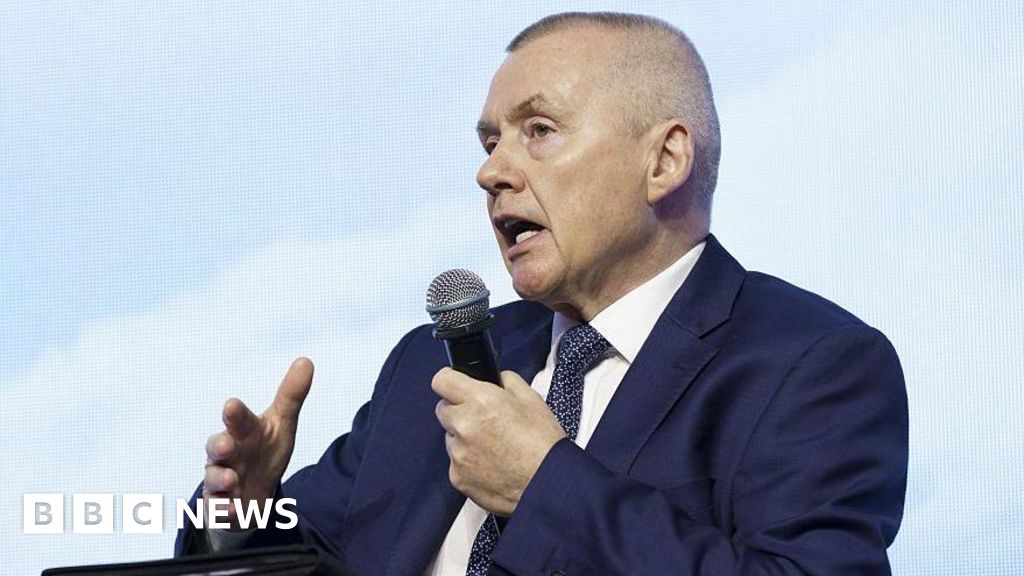
India’s aviation market is set to grow but is held back by limited long-haul capacity, says Willie Walsh.
The consumer council says the government is profiting from rising fuel costs via taxation.

Analysts fear long-lasting economic damage has already been set in motion.


The Crave Shoppe offers new snack options.

A new government fund launched on 1 April will provide financial support for households on heating oil.
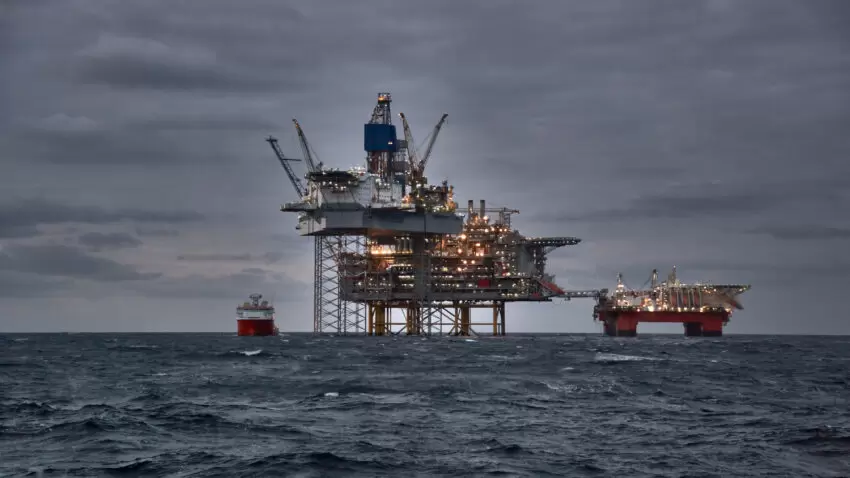
Britain’s standing as a global climate leader faces a critical test as senior figures in international diplomacy have warned that any move to open new oil and gas fields in the North Sea would deal a severe blow to worldwide efforts to cut greenhouse gas emissions.
The government is facing mounting pressure from the oil industry, the Conservative opposition, Reform UK, certain trade unions and factions within the Treasury to grant new drilling licences. This comes despite research showing that the two largest remaining fields, Rosebank and Jackdaw, would displace just 1% and 2% respectively of the UK’s gas imports, offering negligible benefit to either prices or energy security.
The North Sea basin is now more than 90% depleted, and extracting its remaining pockets of hydrocarbons is becoming progressively more costly and energy-intensive. Yet the political appetite for new licensing persists, placing Ed Miliband, the energy security and net zero secretary, in an increasingly uncomfortable position.
Nicolas Stern, professor at the London School of Economics, cautioned that fresh drilling would be damaging on multiple fronts, bad for growth, bad for energy security and a harmful signal to the international community. Lord Stern pointed to Britain’s track record as the first G7 nation to commit to net zero by 2050 and its influential climate legislation, arguing that the world pays close attention when the UK changes course.
The backlash from the developing world has been particularly fierce. A senior African negotiator, speaking anonymously, said the continent would reject any UK expansion of oil drilling, describing it as fundamentally at odds with the Paris agreement. Mohamed Adow, director of the Nairobi-based Power Shift Africa thinktank, warned that approval of new projects would signal that short-term interests were being placed above long-term responsibility, setting a precedent that could prove impossible to contain.
The timing is especially sensitive. Britain has been one of the principal supporters of a global conference on fossil fuel transition taking place in Colombia later this month. However, Miliband will not attend, with climate envoy Rachel Kyte going in his place, a decision likely to disappoint campaigners who credited the energy secretary with brokering a last-minute deal at the Cop30 summit in Brazil last November.
Christiana Figueres, former executive secretary of the UN framework convention on climate change, acknowledged the geopolitical pressures driving the energy security debate but argued that expanding drilling risked locking in infrastructure that was increasingly out of step with the direction of the global energy system. True energy independence, she suggested, lay in scaling up clean domestic energy rather than prolonging the life of declining industries.
The strategic concern for Britain’s business community is clear. Many developing nations are weighing whether to exploit their own fossil fuel reserves rather than invest in renewables. If they choose the former path, the world would far exceed the carbon limits scientists say are necessary to avert the worst consequences of climate breakdown. A senior development official put the matter bluntly: developing countries are already asking why they should forgo their own resources if the UK will not do the same.
An ally of Miliband defended the government’s position, describing the decision to halt new exploration licences as a landmark stance for a major oil and gas producing nation. A government spokesperson confirmed that clean energy and climate action remained at the heart of the agenda, including what it called a world-leading commitment to stop issuing licences for new fields.
Whether that commitment holds in the face of political and industrial pressure will be one of the defining questions of Britain’s energy policy in the months ahead.

Jamie Young
Jamie is Senior Reporter at Business Matters, bringing over a decade of experience in UK SME business reporting.
Jamie holds a degree in Business Administration and regularly participates in industry conferences and workshops.
When not reporting on the latest business developments, Jamie is passionate about mentoring up-and-coming journalists and entrepreneurs to inspire the next generation of business leaders.

Waterford wine glasses set of 2 collection

Palestine Declassified targeted by Zionists
Kanye West banned from UK: legal expert explains why

Why Israel is blocking foreign journalists from entering

Bitcoin: We’re Entering The Most Dangerous Phase

Alan Cumming Brands Baftas Ceremony A ‘Triggering S**tshow’

15 Most Valuable Money Making Skills in 2026 (Ranked)

Joe Rogan on Ferrari Suing Philipp Plein! #money #finance #changeyourmindsetchangeyourlife

Monthly Subsidy of 70,000 Rupees Announced | Big Financial Relief| Hum News | Pakistan
-

 NewsBeat6 days ago
Steven Gerrard disagrees with Gary Neville over ‘shock’ Chelsea and Arsenal claim | Football
-

 Business6 days ago
No Jackpot Winner and $194 Million Prize Rolls Over
-

 Fashion5 days ago
Weekend Open Thread: Spanx – Corporette.com
-

 Crypto World7 days ago
Gold Price Prediction: Worst Month in 17 Years fo Save Haven Rock
-

 Business4 days ago
Expert Picks for Every Need
-

 Business3 days ago
Three Gulf funds agree to back Paramount’s $81 billion takeover of Warner, WSJ reports
-

 Sports4 days ago
India men’s 4x400m and mixed 4x100m relay teams register big progress | Other Sports News
-

 Business7 days ago
Login and Checkout Issues Spark Merchant Frustration
-

 Tech17 hours ago
How Long Can You Drive With Expired Registration? What Florida Law Says
-
Business3 days ago
No Jackpot Winner, Prize to Climb to $231 Million
-

 Fashion2 days ago
Massimo Dutti Offers Inspiration for Your Summer Mood Board
-

 Tech6 days ago
Commonwealth Fusion Systems leans on magnets for near-term revenue
-

 Crypto World7 days ago
Ripple rolls out enterprise crypto treasury platform for corporates
-

 Tech7 days ago
Drawing Tablet Controls Laser In Real-Time
-

 Fashion22 hours ago
Let’s Discuss: DEI in 2026
-
Politics5 days ago
Wings Over Scotland | The quality of mercy
-

 Crypto World7 days ago
Why It’s Partnering, Not Issuing
-
 Sports7 days ago
Steal Gary Woodland’s subtle power move for longer drives
-
Sports7 days ago
Tom Pelissero Drives the Final Nail in the Coffin
-

 Tech7 days ago
Battery Tester Outperforms Cheaper Options
You must be logged in to post a comment Login