Business
DeSantis makes the case that conservatism ‘works’ as Florida boasts successes
Gov. Ron DeSantis joins ‘Hang Out with Sean Hannity’ to discuss the massive migration to Florida and why blue states like New York and California are facing declining populations.
For many Americans, moving to Florida isn’t just about the weather — it’s about escaping a “spendthrift” government that fritters away taxpayer dollars.
Gov. Ron DeSantis told Fox News’ Sean Hannity that the state’s massive 1.4 million Republican voter registration lead is driven by results: a 50-year low crime rate, top rankings in education freedom and a refusal to “hunt” down residents for income tax. From police officers fleeing “demagoguing” mayors to financial titans like Charles Schwab, the message is clear: the American Dream has officially relocated to the Sunshine State.
“Regardless of running or anything, we will be able to show that conservatism works. When you apply it aggressively, unapologetically, when you demonstrate leadership, when you cover all the issues, don’t leave any stone unturned, no meat on the bone, you produce historic results,” DeSantis said on the latest “Hang Out with Sean Hannity” podcast, airing on Tuesday.
About one month ago, the Florida Chamber of Commerce told Fox News Digital that more than $4 million in wealth migrates to the state every single hour, and it is close to surpassing Australia as the world’s 14th-largest economy.
OVER $126M IN 60 DAYS — FLORIDA REAL ESTATE TYCOONS SAY BLUE-STATE WEALTH MIGRATION IS NOW PERMANENT
“Part of the secret sauce in Florida is that we’re all on the same page,” CEO Mark Wilson previously said. “I always say, if Florida was a stock, I’d be investing everything I had in it. It’s because of our economic diversification strategy and our focus on growing business and growing jobs.”

Florida Gov. Ron DeSantis looks on during the pro-am prior to the Valspar Championship on the Copperhead Course at Innisbrook Resort and Golf Club on March 18, 2026, in Palm Harbor, Florida. (Getty Images)
DeSantis said despite having 4 million more residents than New York, Florida’s annual state budget is typically half that of the Empire State’s. Additionally, state lawmakers have fast-tracked legislative plans that would provide a path to zero property tax.
“The problem with socialism is, eventually, you run out of other people’s money. They can’t square the circle. They tax, people leave, businesses leave, they get in a deeper hole, they go back to the well, and it’s just a vicious cycle,” Florida’s governor said.

“Florida leads the nation by a country mile [in income migration],” Wilson previously confirmed. “States like New York, Illinois and California are losing over 1 million dollars an hour of income. And so, if you look at the death spiral that New York is right now, for example, New Yorkers are looking at increasing income taxes, they’re looking at increasing property taxes.”
Florida Chamber of Commerce President and CEO Mark Wilson speaks to Fox News Digital about the latest statistics around the Sunshine State’s newest population and wealth migration boom.
“When you honestly sit there and say California has lower taxes than Florida, you are lying. Everybody knows you’re lying,” DeSantis also said of Golden State leadership. “When you’re gonna try to sell snake oil, you know you just cross a line where people just know it’s B.S.”
In recent years, Florida has become well-known for actively poaching police officers from blue cities by offering financial incentives and what the governor calls a “culture of support.”
“We have a good culture of support for law enforcement,” DeSantis said. “If you’re in Chicago and you get into a situation, you’re going to have the mayor demagoguing you, right? Here people have your back and it makes a difference and people feel like they’re appreciated.”
“And guess what? We have a 50-year low on our crime rate,” he added.
Florida Governor Ron DeSantis joins ‘Varney & Co.’ to talk about ridding of property taxes, the state’s AI legislation and next year’s midterm elections.
High taxes and crime do not equal high quality, as evidenced by Florida’s top-tier education rankings, DeSantis also pointed out.
“We’re ranked No. 1 [for] public higher education 10 years in a row… but the reality is that money is not producing a better quality of life for their people that they’re taxing,” he said.
“Charles Schwab, he starts this great financial company, super successful in San Francisco. He grew up in Northern Cal… and yet he moved to Florida,” DeSantis expanded. “What he told me, the first time I saw him after he had moved here? Best decision he ever made.”
GET FOX BUSINESS ON THE GO BY CLICKING HERE
Rep. Jimmy Patronis, R-Fla., discusses New York City Mayor Zohran Mamdani and Florida’s budget proposal, Palantir’s move to the state and GOP lawmakers calling for a crackdown on luxury exports to Cuba on ‘Varney & Co.’
More proof that the “Florida model” is popular may also be found in the voter registration data.
“We had 300,000 more Democrats in this state when I ran in ‘18 in that tough election… Today, we have 1.4 million more registered Republicans. We’ve never seen a shift like that ever in modern American history,” DeSantis said.
“We probably have the most diverse state… from Pensacola to South Beach… there’s definitely something here for everybody.”
Business
Oil Price Today (March 25): Oil slips below $100 on rising hopes of Iran war ceasefire. Here’s what experts are saying
U.S. President Donald Trump said Washington and Tehran are “currently in negotiations” and suggested that Iran is eager to strike a peace deal, even as the Islamic Republic has denied holding any direct talks with the United States.
Crude oil price on March 25
Brent crude futures dropped $6.21, or 5.9%, to $98.28 a barrel by 0058 GMT, after touching a low of $97.57. U.S. West Texas Intermediate crude futures fell $4.67, or 5.1%, to $87.68 a barrel, having slipped earlier to $86.72. This came after both benchmarks had gained nearly 5% on Tuesday, before giving up some of those gains in volatile post-settlement trade.Market participants appear to be reacting to slightly improved expectations of a ceasefire, prompting some profit booking. But uncertainty around the success of negotiations is likely preventing a sharper bout of profit taking.
According to Israel’s Channel 2, the proposal US sent includes a one-month ceasefire to allow discussions, along with provisions for dismantling Iran’s nuclear programme, ending support for proxy groups, and reopening the Strait of Hormuz.
On the diplomatic front, Pakistan’s prime minister on Tuesday offered to host talks between the U.S. and Iran. However, Iran had denied on Monday that it was engaged in any negotiations with the U.S.
Despite these developments, military activity has continued, with strikes by the U.S., Israel, and Iran ongoing. Sources also indicated that Washington is preparing to deploy additional troops to the region.
Despite the possible relief, concerns around the Strait of Hormuz persist. The ongoing conflict has effectively disrupted shipments of nearly one-fifth of global oil and liquefied natural gas passing through the key waterway.
International brokerage Macquarie has said that even if tensions ease in the near term, oil prices are likely to find support in the $85–$90 range, with a gradual move back toward $110 until normal flows through the Strait of Hormuz resume. The note added that if disruptions persist through April, Brent could still climb to $150 per barrel.
Looking ahead, crude prices could move higher from current levels. According to Kayanat Chainwala of Kotak Securities, oil may rise to $120 per barrel in the near term and potentially touch $150 if the conflict continues
Nuvama Institutional Equities echoes the same view. The continued closure of the Strait of Hormuz, which handles around 20 million barrels per day, could push crude prices to the $110–150 per barrel range.
(Disclaimer: Recommendations, suggestions, views and opinions given by the experts are their own. These do not represent the views of The Economic Times)
Business
'Wildy unaffordable': The harsh reality of shared ownership
For many, the promise of getting a foot on the property ladder has turned into a nightmare.
Business
Danone to Buy Protein-Shake Maker Huel for $1.2 Billion
Danone BN 0.06%increase; green up pointing triangle has agreed to buy nutrition startup Huel for about $1.2 billion, seeking to tap growing demand for meal-replacement shakes popular with gym-goers and late-night workers.
The maker of Activia yogurt and Evian water said Monday that the deal would bolster its presence in the so-called “complete nutrition” sector and help Huel expand internationally.
Copyright ©2026 Dow Jones & Company, Inc. All Rights Reserved. 87990cbe856818d5eddac44c7b1cdeb8
Business
Why the AI Revolution Could sink in the Strait of Hormuz
The global artificial intelligence boom is facing a significant threat due to its heavy reliance on energy and chemical imports from the Middle East, which are now jeopardized by the conflict involving Iran.
The high-tech supply chain—from semiconductor manufacturing in East Asia to data center operations in the United States—is vulnerable to disruptions in the Strait of Hormuz and damage to regional infrastructure. Ultimately, a prolonged conflict could lead to soaring chip prices, a halt in production, and a collapse of current tech valuations, potentially triggering a global recession.
Key Points
- Energy Dependency: Major semiconductor hubs in South Korea and Taiwan are almost entirely dependent on fossil fuel imports from the Middle East, particularly liquefied natural gas (LNG) passing through the Strait of Hormuz.
- Critical Chemical Supply: The region is a primary source for essential chip-making materials, including one-third of the world’s high-purity helium from Qatar, seaborne sulphur for etching, and bromine from the Dead Sea.
- Data Center Costs: Rising global LNG prices are driving up electricity costs in the U.S., where energy represents approximately 50% of operating expenses for the data centers powering AI.
- Logistics and Shipping: The conflict has created bottlenecks in air and sea freight, specifically impacting regional hubs like Dubai and delaying the delivery of wafers and finished chips.
- Infrastructure Damage: Recent attacks on Qatar’s Ras Laffan plant, the world’s largest LNG and helium facility, mean that even an immediate end to hostilities would require months to restore the supply chain to pre-crisis levels.
- Financial Risk: Investors are beginning to price in higher inflation, rising interest rates, and the potential unwinding of high tech valuations and debt borrowed against AI assets.
Analysts warn that if the Strait of Hormuz remains closed for more than a month, the resulting supply chain break could become irreparable in the short term, leading to a worldwide economic downturn.
As the global economy increasingly anchors its future growth on Artificial Intelligence, a shadow of geopolitical risk looms over the horizon. While the “AI Boom” has been driven by unprecedented leaps in LLM (Large Language Model) capabilities and semiconductor demand, analysts are beginning to sound the alarm on how escalating tensions in the Middle East—specifically involving Iran—could introduce a level of volatility that the tech sector is ill-prepared to handle.
Asia, receiving 80-82% of Qatar’s exports, faces acute pressure, with LNG spot prices up 39-50% and rerouting adding costs and delays. South Korea and Taiwan’s chip fabs, heavily reliant on Middle East LNG for electricity (e.g., Taiwan’s 40% LNG mix), risk production halts as power costs soar.
For the business community in Thailand, which is currently positioning itself as a regional hub for data centers and digital transformation, these global shifts are more than distant concerns; they are critical variables in local strategic planning.
The Energy Nexus: Powering the AI Engine
The AI revolution is uniquely energy-intensive. From the massive cooling requirements of data centers to the electricity consumed during model training, the industry’s overhead is deeply tied to global energy prices.
Any conflict involving Iran threatens the stability of the Strait of Hormuz, a transit point for one-fifth of the world’s total oil consumption. A spike in energy costs would lead to a direct increase in operational expenses for cloud providers like Amazon Web Services, Google, and Microsoft. For Thailand, where energy price fluctuations directly impact the cost of doing business, an “AI tax” driven by high energy prices could slow the adoption of these technologies across the manufacturing and service sectors.
Supply Chain Fragility and the Semiconductor Bottleneck
The AI boom is currently built on a “just-in-time” supply chain for high-end semiconductors. While the majority of chip fabrication occurs in East Asia, the logistics of global trade are highly interconnected.
Geopolitical instability often leads to a “risk-off” sentiment in global markets, causing shifts in shipping routes, increased insurance premiums for freight, and potential shortages in raw materials. “In a world of integrated trade, a localized conflict in the Middle East does not stay local,” says a senior analyst in Bangkok. “The volatility it introduces into the global supply chain can delay the rollout of the hardware necessary to sustain AI scaling.”
Market Volatility and Capital Flow
The current AI surge is fueled by massive capital expenditures. However, high-growth sectors are historically the most sensitive to geopolitical shocks. Should a conflict in Iran escalate, the resulting market volatility would likely trigger a flight to “safe-haven” assets.
For the Thai SET (Stock Exchange of Thailand) and regional tech startups, this could mean a tightening of venture capital and a reduction in Foreign Direct Investment (FDI). As investors pivot toward risk mitigation, the aggressive funding rounds that have characterized the AI sector over the last 24 months could see a significant cooling period.
The Thai Perspective: Resilience in Uncertainty
For Thai business leaders, the potential for a “Silicon Shock” underscores the need for resilience. As the government pushes the “Thailand 4.0” initiative, diversifying energy sources for digital infrastructure and localizing AI applications may become necessary hedges against global instability.
While the AI boom has the momentum of a decade-defining trend, it is not immune to the realities of global politics. The coming months will determine whether the tech sector can navigate this period of heightened geopolitical risk, or if the “AI Spring” will face an unexpected winter driven by regional conflict.
Other People are Reading
Business
This Drone Stock Is Rising. Here’s Why.
Business
Oil price slides as Trump talks up Iran peace negotiations
The US president said talks to end the war are underway with Iran – a claim that officials in Tehran have disputed.
Business
Wall St indexes fall on worries about Middle East war
Wall Street indexes lost ground in Tuesday’s volatile session as investors swayed between fears of rising oil prices and hopes for a resolution to the US-Israeli war on Iran.
Business
US Stock Market | Wall Street indexes fall on worries about Middle East war, interest rates
U.S. Treasury yields extended gains after a weak auction of 2-year Treasury notes, also adding pressure to equity markets.
Indexes regained some ground after Trump told reporters that the United States was talking to “the right people” in Iran in order to reach an agreement to end hostilities and that Iran has agreed they will never have nuclear weapons. But reports the Pentagon would send thousands of more troops from the elite 82nd Airborne Division to the Middle East caused some concerns.
Wall Street indexes on Monday had marked their biggest one-day gain since February 6 ]as oil prices fell after Trump had postponed strikes against Iranian power plants and announced talks with Iran even as Tehran denied negotiations with the U.S. But energy prices rose on Tuesday with crude oil futures settling up more than 4%.
“Stocks are trying to find their footing as investors are keeping one eye on social media and the other eye on every headline. We’re very short-term oriented,” said Carol Schleif, chief market strategist, BMO Private Wealth.
“Markets are trying to hold onto the optimism they had yesterday. They’re so ready to move beyond war talk even if it’s not 100% settled,” said Schleif but she added, “There’s a lot of nervousness. People are watching oil and watching interest rates and worrying do we go higher for longer on both energy and interest rates because that could start negatively impacting growth.”
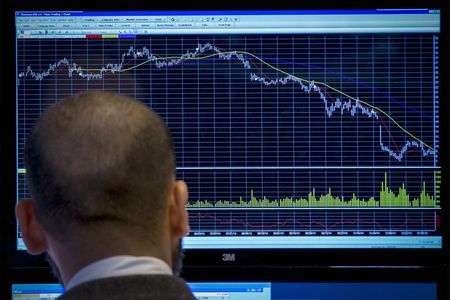
Kevin Gordon, head of macro research & strategy at the Schwab Center for Financial Research in New York also pointed to a “double whammy” higher oil prices and higher rates as a “stagflationary backdrop, which, needless to say, is not a positive backdrop for the stock market.” According to preliminary data, the S&P 500 lost 24.62 points, or 0.36%, to end at 6,557.19 points, while the Nasdaq Composite lost 184.86 points, or 0.84%, to 21,762.77. The Dow Jones Industrial Average fell 87.24 points, or 0.19%, to 46,121.23.
Among the 11 S&P 500 major industry sectors, energy led gains during the session while communication services and technology were leading losses.
Meanwhile, private credit concerns resurfaced after a report that Ares Management limited redemptions at 5% at its private credit fund, along with Apollo Global Management , as withdrawal requests surged.
Earlier a survey showed U.S. business activity slowed to an 11-month low in March as the Middle East war raised prices for energy products and other inputs.
Higher oil prices have revived inflation jitters and complicated the interest rate outlook for central banks. The U.S. Federal Reserve struck a hawkish tone last week, projecting only one reduction in 2026.
Traders are no longer pricing in any rate cuts this year, compared with two reductions expected before the Middle East conflict erupted. Expectations for hikes nudged higher amid escalating tensions last week, but were quickly unwound after Trump’s comments on Monday, according to CME’s FedWatch Tool. Among individual movers, shares of Jefferies rose after the Financial Times reported that Japan’s Sumitomo Mitsui Financial Group is working on plans for a possible takeover of the investment bank. Shares in cosmetics maker Estee Lauder tumbled after it said it was in talks for a potential merger with Spanish beauty group Puig Brands. Barclays lifted its 2026 year-end target for the S&P 500 index to 7,650 from 7,400, citing stronger earnings expectations that outweigh macro risks like Middle East tensions, AI-driven disruption and stress in private credit.
Business
D-Street rebounds as US halts Iran strikes; Nifty jumps nearly 2%
Still, the conspicuous absence of reciprocal conciliatory statements from Tehran and reports of Iranian attacks tempered optimism on Dalal Street, said analysts, who don’t expect volatility to subside just yet.
The NSE Nifty climbed 1.8% to 22,912.40, while the Sensex advanced 1.9% to 74,068.45. Both gauges have slumped nearly 9% since the start of the war. The rupee, meanwhile, settled at 93.86/$, up 11 paise from its previous close, LSEG data showed. It surged to an intraday high of 92.63/$ and traded in a wide range of 128 paise amid mild central bank interventions, traders said.
“The markets were oversold and news of a halt in attacks from the US triggered some short covering that led the rally,” said Rajesh Palviya, head of technical and derivatives, Axis Securities. “However, it doesn’t indicate volatility is over since there hasn’t been a concrete resolution yet.”
AgenciesStrait Still Closed
Asian risk assets, which took a cue from the overnight advance in US equities, climbed Tuesday. Hong Kong jumped 2.8% while South Korea gained 2.7%. China and Japan climbed 1.8% and 1.4%, respectively. Taiwan, however, declined 0.3%.
Palviya said not all the short positions are out of the system as investors await clarity on conflict resolution. Brent crude oil futures retreated about 10% on Monday but retraced to $98.9 on Tuesday after Iran denied talks with the US and launched fresh attacks.
Analysts said the continued closure of the crucial waterway that evacuates a fourth of the world’s energy output capped outsized gains for Indian equities. “If there is further de-escalation from this point, then this could be a bottom for the market,” said Dharmesh Kant, head of research, Cholamandalam Securities.
Energy supplies and the price of crude oil remain key monitorables in the rate and currency markets, too, analysts said. The rupee’s near-term trajectory is linked to geopolitics and Tuesday’s advancing trend could quickly reverse if hostilities continue.
“Some pullback in crude oil prices and easing geopolitical tone supported the rupee, and risk sentiments improved slightly. However, persistent equity outflows from foreign funds continue to pressure the rupee, and I expect a range between 93.65 and 94.25 on Wednesday,” said Anil Bhansali, head of treasury at Finrex Treasury Advisors.
Business
Gen. Jack Keane warns Iran diplomacy faces a serious trust problem
Fox News senior strategic analyst Gen. Jack Keane (ret.) joins ‘Mornings with Maria’ to assess President Donald Trump’s 5-day Iran deadline, possible U.S. troop deployments and a growing Russia-Iran alliance.
U.S. efforts to resolve tensions with Iran through diplomacy face deep skepticism from military leadership, even as negotiations unfold behind the scenes.
Retired Gen. Jack Keane, a Fox News strategic analyst, joined FOX Business’ Maria Bartiromo on “Mornings with Maria” to discuss whether diplomacy can achieve the same objectives as military action, including reopening the Strait of Hormuz and dismantling Iran’s nuclear and missile capabilities.
Sen. Joni Ernst, R-Iowa, discusses President Donald Trump’s Iran strategy as lawmakers pursue a $200 billion Pentagon funding push on ‘Mornings with Maria.’
Keane said the administration is attempting to use diplomatic leverage to reach outcomes that could otherwise be achieved through force but warned the challenge lies in trusting Tehran’s commitments.
“I’m highly skeptical… This is a regime for 47 years. They are pathological liars and they’re cheaters… It’s very difficult to take them at their word,” Keane said.

Iranians waving flags in support of the regime. (Majid Saeedi/Getty Images)
MARKETS HANGING ON ‘EVERY WORD’ AS US-IRAN CONFLICT NEARS ONE MONTH, FORMER NEC DIRECTOR WARNS
The negotiations, he noted, are taking place indirectly through intermediaries, even as both sides publicly signal conflicting positions about whether talks are happening at all.
Rep. Andy Barr, R-Ky., joins ‘Mornings with Maria’ to discuss President Donald Trump’s 5-day Iran deadline, rising Middle East tensions, and the push to secure defense funding while battling Democrats over DHS and voter ID measures.
Keane emphasized that U.S. and Israeli military leaders are confident they could meet their objectives through force if necessary, including reopening key shipping lanes and eliminating Iran’s ability to sustain attacks.
“If we can do that through negotiations… And we absolutely are confident that it’s real… It remains to be seen,” Keane said.
ENERGY PRICES COULD FALL ‘PRETTY SIGNIFICANTLY’ IF IRAN DEAL REACHED, ENERGY SECRETARY SAYS
Anduril Executive Chairman and co-founder Trae Stephens details the shift in military strategy towards mass-produced, low-cost autonomous drones and AI-driven systems on ‘Mornings with Maria.’
He added that Iran’s motivations in any deal would likely center on regime survival, economic recovery and sanctions relief, raising further questions about how much the regime is willing to concede.
“We’ll see what this deal really entails when we get down to the specifics,” he said.
-
Crypto World4 days ago
NIO (NIO) Stock Plunges 6.5% as Shelf Registration Sparks Dilution Worries
-
Fashion4 days agoWeekend Open Thread: Adidas – Corporette.com
-
Politics4 days agoJenni Murray, Long-Serving Woman’s Hour Presenter, Dies Aged 75
-
Crypto World3 days agoBest Crypto to Buy Now: Strategy Just Spent $1.57 Billion on Bitcoin During Fear While Early Investors Quietly Enter Pepeto for 150x Potential
-
News Videos6 days agoRBA board divided on rate cut, unusually buoyant share market | Finance Report | ABC NEWS
-
Crypto World3 days agoBitcoin Price News: Bhutan Sells $72 Million in BTC Under Fiscal Pressure, but the Smart Money Entering Pepeto Sees What the Market Does Not
-
Politics7 days agoThe House | The new register to protect children from their abusers shows Parliament at its best
-
Tech5 days agoinKONBINI Lets You Spend Summer Days Behind the Register
-
Crypto World6 days agoCanada’s FINTRAC revokes registrations of 23 crypto MSBs in AML crackdown
-
Sports2 days agoRemo Stars and Kano Pillars Strengthen Survival Hopes in NPFL
-
NewsBeat6 days agoResidents in North Lanarkshire reminded to register to vote in Scottish Parliament Election
-
News Videos7 days agoPARLIAMENT OF MALAWI – PAC MEETING WITH REGISTRAR OF FINANCIAL ON AMARYLLIS HOTEL – INQUIRY LIVE
-
Politics5 days agoGender equality discussions at UN face pushbacks and US resistance
-
Business2 days agoNo Winner in March 21 Drawing as Prize Rolls to $133 Million for Next
-
Business6 days agoWho Was Alex Pretti? 5 Key Facts About the ICU Nurse Killed by Federal Agents in Minneapolis
-
Sports2 days agoGary Kirsten Accuses Pakistan Cricket Board Of ‘Interference’, Mohsin Naqvi Responds
-
Tech2 days agoGive Your Phone a Huge (and Free) Upgrade by Switching to Another Keyboard
-
Sports4 days ago2026 Kentucky Derby horses, odds, futures, preview, date: Expert who nailed 12 Derby-Oaks Doubles enters picks
-
Tech7 days agoSubnautica 2 might finally be entering early access in May
-
Sports6 days ago
Vikings Free Agency Enters Phase 2 with Key Questions

You must be logged in to post a comment Login