

Business
DOJ seeks dismissal of corruption charges against billionaire Gautam Adani

Check out what’s clicking on FoxBusiness.com.
The U.S. Department of Justice has formally asked a federal court to dismiss criminal charges against Gautam Adani, an Indian billionaire accused of misleading U.S. and global investors while raising billions of dollars to finance a major solar energy project in India.
Adani, considered one of Asia’s richest individuals, allegedly promised to pay more than $250 million in bribes to Indian officials to secure lucrative contracts. He and his executives further raised money from investors by falsely claiming the company maintained strict anti-corruption policies — all while allegedly continuing the bribery scheme and later attempting to conceal the evidence, prosecutors alleged in 2024.
Despite the severity of the allegations, the Justice Department has requested the case be dismissed “with prejudice,” indicating that the charges would be permanently dropped and may not be brought again in the future, according to court records filed Monday. Adani Group has denied the allegations, calling them baseless.
“The Department of Justice has reviewed this case and has decided, in its prosecutorial discretion, not to devote further resources to these criminal charges against individual defendants,” prosecutors wrote in a court filing.
INDIA BILLIONAIRE SCANDAL A ‘HITJOB’ BY US FIRM ATTACKING FINANCIAL SYSTEMS, SUPPORTERS CLAIM

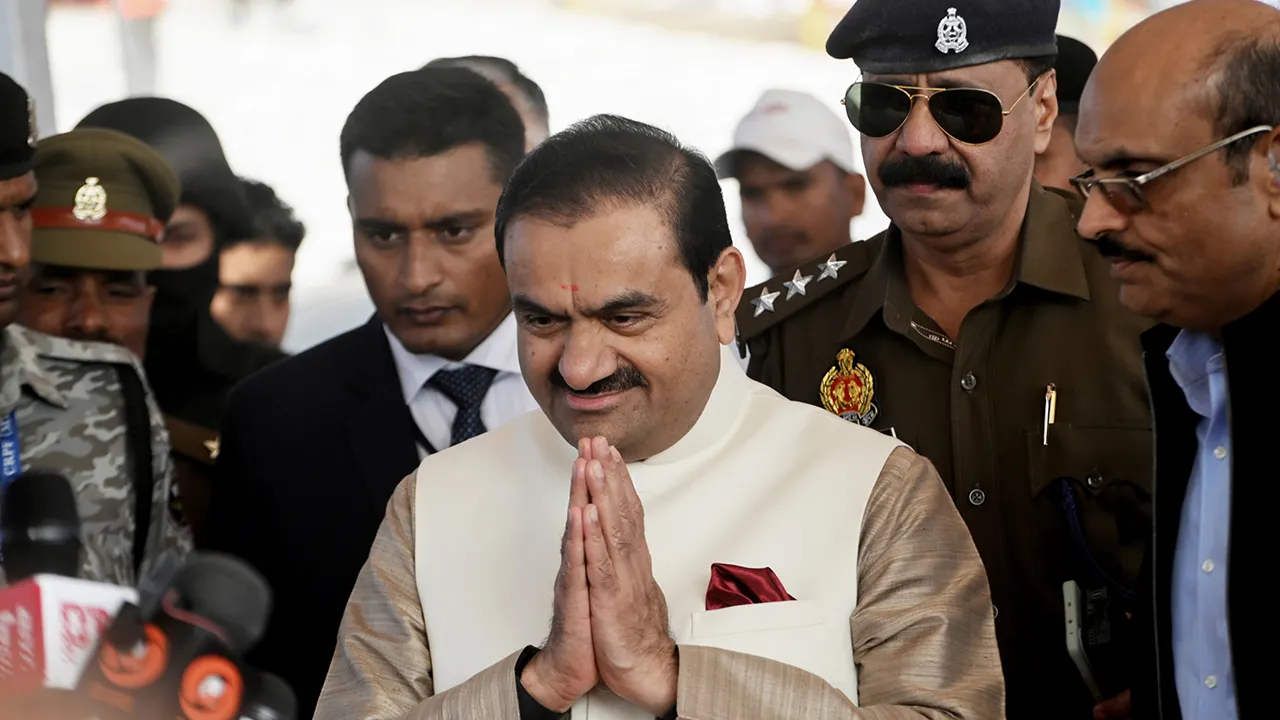
Gautam Adani has a conversation during an all-party prayer meeting on February 23, 2026, in Mumbai, India. (Bhushan Koyande/Hindustan Times via Getty Images / Getty Images)
The decision to drop the charges follows an announcement from the U.S. Securities and Exchange Commission (SEC) that it moved for entry of final judgments by consent, subject to court approval, in a related lawsuit involving Adani. The proposed resolution would not require Gautam Adani or Sagar Adani to admit or deny the SEC’s allegations.
Beginning in 2020, Adani Green Energy Limited, led by Gautam Adani, secured a major contract to develop solar power projects in India.
However, some Indian state governments allegedly declined to purchase the electricity from the project due to high costs.
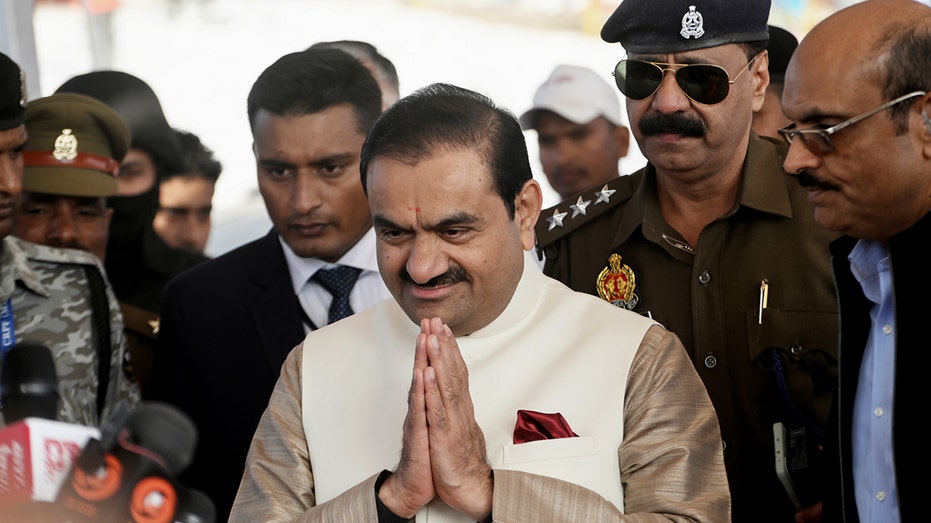
Gautam Adani, chairman of Adani Group, attends a festival in Prayagraj, Uttar Pradesh, India, on Tuesday, Jan. 21, 2025. (Indranil Aditya/Bloomberg / Getty Images)
As a result, Gautam Adani and his nephew, Sagar Adani, allegedly resorted to bribery, including promises of more than $250 million in payments to Indian officials, in order to secure power purchase agreements for the expensive solar energy.
BILLIONAIRE INVESTOR ISSUES WARNING OVER CHINA’S ‘CRAZY’ BUSINESS TACTIC: BE ‘VERY CAREFUL’
| Ticker | Security | Last | Change | Change % |
|---|---|---|---|---|
| ADANIGREEN | NO DATA AVAILABLE | – | – | – |
During the same period, the company required significant capital to finance the projects and raised approximately $750 million through bond sales to U.S. and global investors.
Federal prosecutors alleged that Adani Green and related entities raised more than $3 billion through loans and bond offerings while making false and misleading statements about the company’s anti-bribery and anti-corruption practices.
Prosecutors added that, to attract investors, the company falsely portrayed itself as an industry leader in corporate governance with a strict “zero tolerance” policy on bribery.
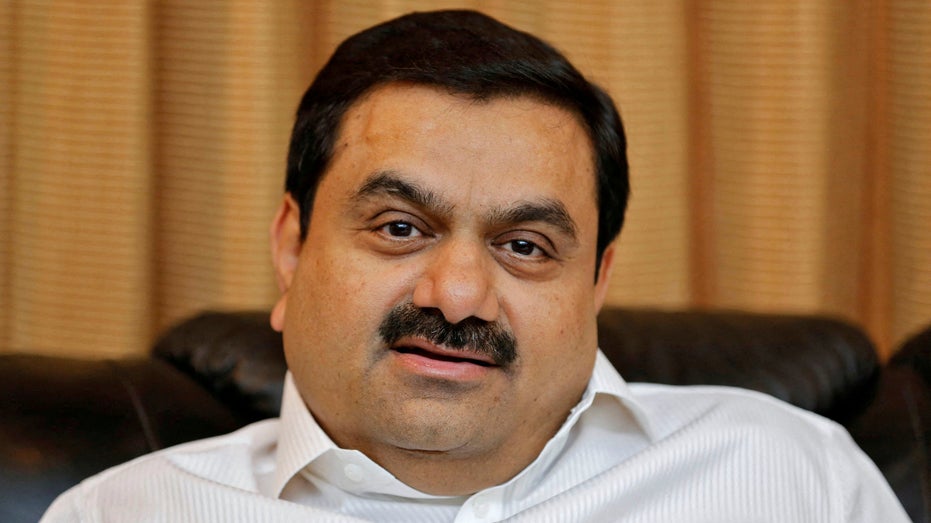
Indian billionaire Gautam Adani speaks during an interview at his office in the western Indian city of Ahmedabad on April 2, 2014. (Reuters/Amit Dave/File Photo/File Photo / Reuters Photos)
When U.S. authorities, including the FBI and the SEC, began investigating the alleged corruption, several executives were accused by prosecutors of attempting to obstruct the inquiry by deleting emails and electronic messages, concealing information during internal investigations, and making false statements to federal agents.
CLICK HERE TO GET THE FOX BUSINESS APP
The case dismissal is contingent upon approval by Judge Nicholas Garaufis, according to the documents.


Check out what’s clicking on FoxBusiness.com.
Costco rolled out a new change to its payment system, allowing customers to use their phones to make checkout times faster.
The warehouse club has expanded its digital wallet feature that now enables members to link any Visa card to the Costco app and use their phones during checkout.
“Costco is pleased to announce the latest enhancement to our Digital Membership Card — a fast and efficient form of payment! For your convenience, you can now add any Visa card to your Digital Membership Card for easy check out at Costco warehouses,” Costco said on its website.
COSTCO QUIETLY DISCONTINUES AWARD-WINNING KIRKLAND ITEM FANS CALL ‘ONE OF THE BEST’ IN THE MARKET

The warehouse club has expanded its digital wallet feature that now enables members to link any Visa card to the Costco app and use their phones during checkout. (David Paul Morris/Bloomberg / Getty Images)
“No more searching for your wallet, or wondering if you remembered to bring your credit card — simply pull up your card on your phone, and you’re ready to check out. It’s that easy!”
According to Costco, benefits of a Digital Costco Visa Card include fast and efficient checkouts, eliminating the need to carry another form of payment, no longer having to search through a wallet or purse for a credit or debit card, being able to view and manage Visa Card information through the Digital Membership Card and enjoying cash rewards on purchases made with the Visa Card.
The digital payment option can only be used by members for Costco warehouse purchases, excluding the food court, the company said.
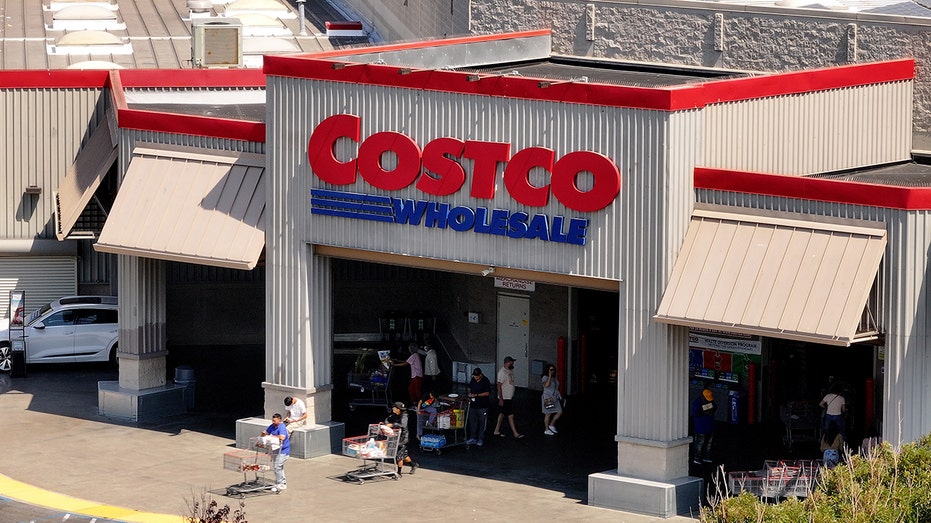
The digital payment option can only be used by members for Costco warehouse purchases, excluding the food court. (Justin Sullivan/Getty Images / Getty Images)
Earlier this year, Costco CEO Ron Vachris explained some of the changes the company has made to its app.
“The enhancements we have made include improvements to the mobile wallet, the introduction of a digital membership card with quick access on the Costco app and the rollout of our shopping cart prescan tool internationally,” he said during an earnings call.
These changes enable Costco members to use the Costco app for both membership verification and payment, making checkout faster and reducing the need to carry physical cards.
SURPRISE RIVAL KNOCKS COSTCO’S FAMOUS ROTISSERIE CHICKEN OFF ITS PERCH AS BEST BIRD
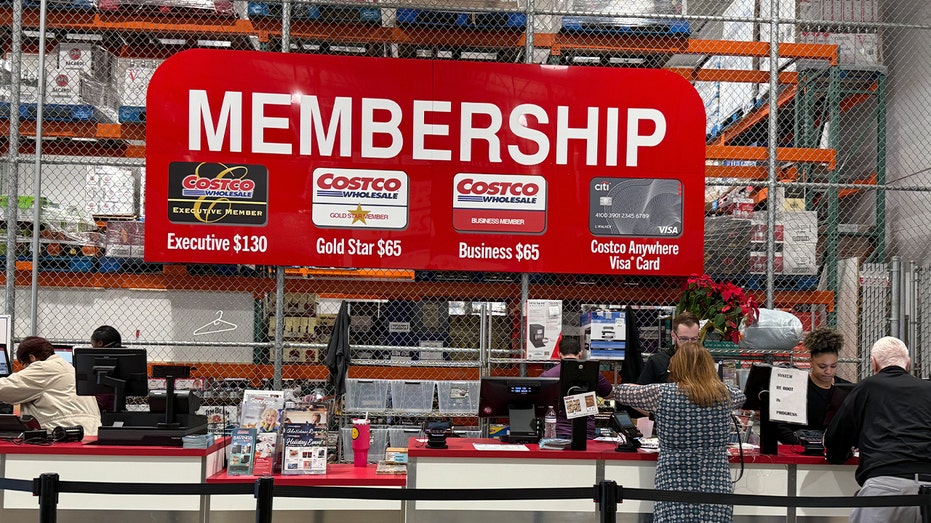
Costco members can use the Costco app for both membership verification and payment. (Lindsey Nicholson/UCG/Universal Images Group via Getty Images / Getty Images)
GET FOX BUSINESS ON THE GO BY CLICKING HERE
The company already allows customers to link their Digital Costco Visa Card to their digital membership card in the app. This allows customers to let cashiers scan the QR code in the app once, which automatically links the membership ID and the credit card information for easy payment.

The White House says the first Freedom Fuel gas station has opened in Philadelphia, offering gasoline roughly 50 cents below Pennsylvania’s statewide average. (White House)
The first Freedom Fuel gas station has opened in Philadelphia as part of a broader initiative to offer drivers discounted gasoline, the White House announced.
Motorists at the station can purchase gas for $3.47 per gallon, about 50 cents below Pennsylvania’s statewide average.
“The FIRST Freedom Fuel Network gas station has LANDED in Philadelphia, lowering the price at the pump to $3.47 for our 47th President,” the White House said in a post on X.
“President Trump is leading the charge to lower gas prices this summer — putting more money in your pocket.”
TRUMP PROMISES PHILADELPHIA GAS DISCOUNTS AHEAD OF JULY 4, CLAIMS OIL PRICES ARE ‘PLUMMETING’
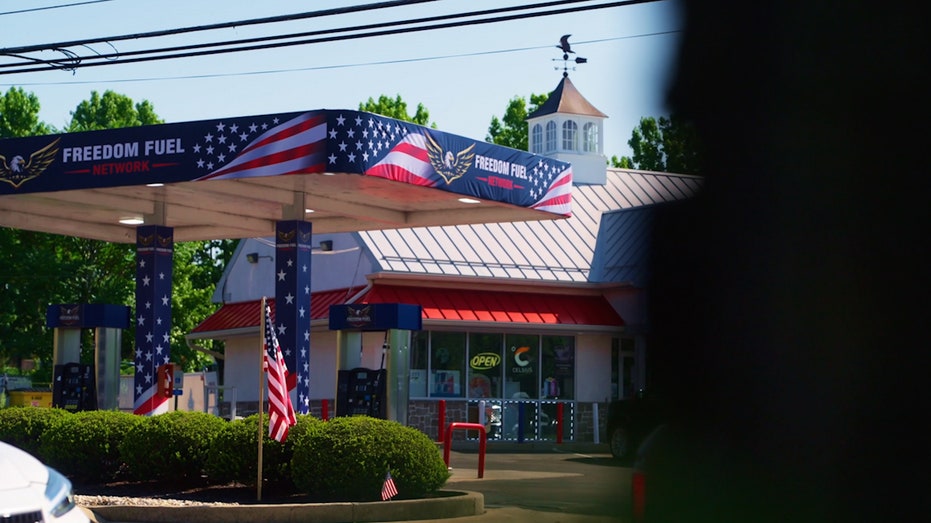
American flags decorate the landscaping outside a Freedom Fuel Network convenience store storefront in Pennsylvania. (White House / Fox News)
The White House also shared a video featuring customers praising the lower prices.
“Right now, we’re in a difficult time in this world, but it’s nice to see some stability that we can enjoy,” one person said in the video.
The launch comes after President Donald Trump pledged to lower gas prices through the Freedom Fuel Network, which includes 25 stations across the greater Philadelphia area, with most located in Pennsylvania and several in New Jersey.
BESSENT WARNS GAS STATIONS ‘WE’RE WATCHING’ AS TRUMP DEMANDS IMMEDIATE PRICE CUTS
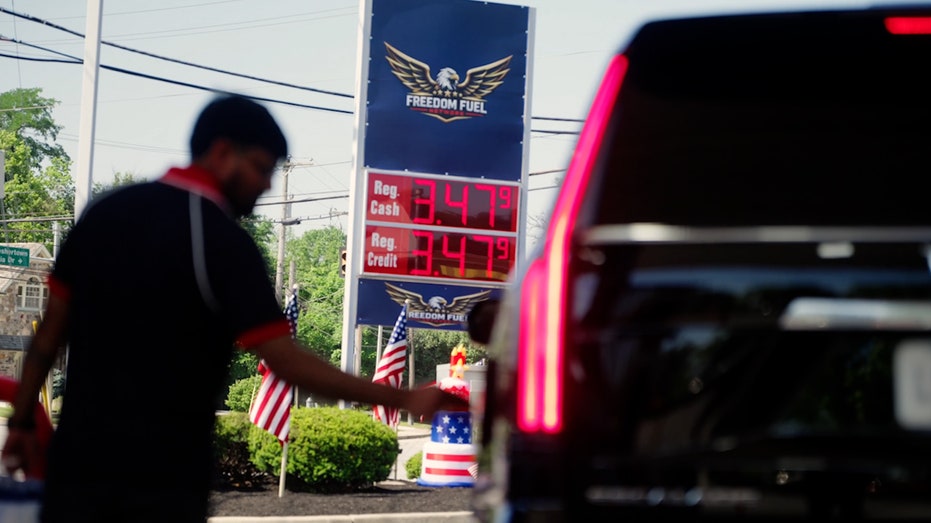
A motorist waits near a pricing billboard displaying cash and credit rates at a Freedom Fuel Network station in Pennsylvania. (White House / Fox News)
The White House indicated that the network is operated by a retailer that branded its stations as Freedom Fuel to align with Trump’s push for lower energy costs.
“This Retailer is taking the lead, and others should follow,” Trump previously said.
A White House spokesperson said the company that owns the 25 stations is not affiliated with the Trump administration and is not receiving federal subsidies, according to CBS News. Instead, the stations are reportedly lowering prices by accepting smaller profit margins.
FOX Business reached out to the White House for more information.
TRUMP ALLEGES GAS PRICE GOUGING, CALLS FOR DOJ INVESTIGATION
According to the Freedom Fuel Network’s website, the 25 stations are located in the following areas:
New Jersey:
- Egg Harbor Township, NJ — 6501 Delilah Rd
- Egg Harbor Township, NJ — 6801 Tilton Rd
- Little Egg Harbor Township, NJ — 1520 County Rd 539
- Marlton, NJ — 160 NJ-73
- West Berlin, NJ — 898 NJ-73
Pennsylvania:
- Bensalem, PA — 1360 Street Rd
- Boothwyn, PA — 610 Conchester Hwy
- Bristol, PA — 905 Bristol Pike
- Brookhaven, PA — 3919 Edgmont Ave
- Brookhaven, PA — 4612 Edgmont Ave
- Camp Hill, PA — 3811 Hartzdale Dr
- Dresher, PA — 1400 Dreshertown Rd
- Eagleville, PA — 3201 Ridge Pike
- Lansdowne, PA — 6800 E Baltimore Ave
- Millbourne, PA — 6601 Market St
- Philadelphia, PA — 100 Byberry Rd
- Philadelphia, PA — 2200 Island Ave
- Philadelphia, PA — 3101 N Broad St
- Philadelphia, PA — 4043 Germantown Ave
- Philadelphia, PA — 6243 Chestnut St
- Philadelphia, PA — 10960 Bustleton Ave
- Pottstown, PA — 1453 S Hanover St
- Southampton, PA — 17 Street Rd
- Springfield, PA — 400 Baltimore Pike
- Warminster Township, PA — 299 E Street Rd

Commuters refuel their vehicles under a canopy at a Freedom Fuel Network location in Pennsylvania. (White House / Fox News)
BESSENT WARNS GAS STATIONS ‘WE’RE WATCHING’ AS TRUMP DEMANDS IMMEDIATE PRICE CUTS
The rollout follows Trump’s call for gas retailers to immediately lower prices at the pump, arguing consumers should be paying less as crude oil futures retreated to levels seen before the recent U.S.-Israel conflict with Iran.
Although the national average hovered around $3 per gallon, Trump urged retailers to target prices closer to $2.50 per gallon.
He also accused some companies of price gouging and warned that the federal government could investigate if prices remained elevated.
Business
Kingsoft Cloud Shares Jump Nearly 11% as China’s AI Cloud Growth Rally Continues to Build Momentum Today

Shares of Kingsoft Cloud Holdings surged Wednesday, trading at $10.45, up $1.01, or 10.70 percent, extending a volatile but broadly upward run for the Beijing-based cloud computing company as investors continue to reassess its position within China’s rapidly expanding artificial intelligence infrastructure sector.
Note: This article is intended to provide factual context and does not constitute financial advice. Readers should consult a licensed financial advisor before making investment decisions.
Wednesday’s gain comes amid a stretch of significant volatility for Kingsoft Cloud shares, which have traded within a wide 52-week range of $8.58 to $18.21, according to data from Pluang. The stock touched a 52-week high of $18.52 in mid-May, driven by strong investor enthusiasm around the company’s expanding AI infrastructure business, before retreating sharply in the weeks that followed to trade closer to single digits by early July, reflecting the kind of sharp swings that have characterized many China-based AI cloud stocks throughout 2026.
Kingsoft Cloud, founded in 2012 and headquartered in Beijing, provides cloud computing services to businesses across China, offering infrastructure-as-a-service, platform-as-a-service and software-as-a-service products, along with dedicated AI solutions. The company serves customers across a range of industries, including video streaming, e-commerce, intelligent mobility, artificial intelligence and mobile internet through its public cloud offerings, alongside enterprise cloud services for clients in financial services, public administration and healthcare.
The company’s underlying financial performance has shown a marked acceleration tied to AI-related demand. Kingsoft Cloud’s first-quarter 2026 results significantly exceeded market expectations, with the company reporting revenue of $2.7 billion, beating analyst estimates of $2.08 billion by nearly 30 percent, while posting a narrower-than-expected loss per share of 8 cents against a forecast loss of 50 cents, an 84 percent positive surprise relative to consensus estimates. According to Simply Wall St, the company’s AI business has expanded to contribute more than half of total public cloud revenue, a shift management has tied to its broader “High Quality and Sustainable Development Strategy” emphasizing continued infrastructure investment.
Wall Street analysts have grown increasingly bullish on Kingsoft Cloud’s prospects in recent weeks. Morgan Stanley initiated coverage of the stock with an Overweight rating and a $15.00 price target, describing the company as a “pure AI cloud play” and its preferred name within its broader Greater China IT services and software coverage. The firm’s analysis projected a 35 percent revenue compound annual growth rate and a 79 percent adjusted EBITDA compound annual growth rate for Kingsoft Cloud between 2025 and 2028, driven primarily by continued expansion of its AI cloud business. Morgan Stanley forecast that AI-related revenue would exceed 40 percent of the company’s total revenue in 2026 and surpass 60 percent by 2028, with adjusted operating margin projected to reach 6.9 percent by 2028, compared with negative 1.6 percent in 2025. The firm cited favorable unit economics tied to GPU cloud services and the potential emergence of model-as-a-service offerings as key drivers behind that projected margin improvement, while flagging risks including potential supply-side chip procurement shortfalls, higher-than-expected interest rates, and slower-than-anticipated progress in Chinese AI model development.
Other analysts have echoed that bullish stance. According to CNN, brokerage Guotai Haitong issued a Buy rating on Kingsoft Cloud in early June, while CLSA and Citi have each maintained their own Buy ratings on the stock in recent weeks. Analyst Daley Li reiterated a Buy rating with a Hong Kong dollar price target of $10.90, citing the company’s AI-driven growth outlook. According to Pluang, overall analyst consensus on Kingsoft Cloud remains strongly bullish, with roughly 70 percent of covering analysts issuing Buy ratings, reflecting broad expectations for a potential trend reversal from oversold conditions alongside a pattern of upward earnings estimate revisions across the sector.
Recent share price movements have also been tied to developments among Kingsoft Cloud’s larger competitors. According to Moomoo, the stock gained more than 17 percent in premarket trading on one recent session after rival Alibaba Cloud announced price increases of up to 34 percent for AI compute and storage services amid surging demand for AI tokens, a move that market participants interpreted as a signal of broader pricing power and continued strong demand across China’s AI cloud infrastructure sector, benefiting smaller providers like Kingsoft Cloud as well.
Kingsoft Cloud has also continued strengthening its relationship with its key ecosystem partner, Xiaomi, having raised its transaction caps and extended cooperation frameworks with the smartphone and electronics maker in late April. According to Investing.com, the company’s chief executive, Zhou Tao, has highlighted the company’s efforts to diversify its customer base beyond that core relationship, noting that revenue from Kingsoft Cloud’s top five non-ecosystem customers grew 44 percent year over year in a recent quarter, a trend cited as evidence of the company’s broadening commercial reach beyond its historical anchor partnerships.
Despite the strong recent operational momentum, Kingsoft Cloud continues to face structural challenges common to companies undergoing an aggressive, capital-intensive pivot toward AI infrastructure. According to Simply Wall St, the company’s sizable cash reserves provide room to continue scaling both its AI and enterprise cloud operations while sustaining ongoing infrastructure buildout, though rising lease obligations and capital expenditures remain a factor investors are watching closely for any potential impact on the company’s path toward sustainable profitability. The company’s June 30 annual general meeting featured shareholder votes on refreshed governance provisions and director re-elections, occurring alongside a leadership team that remains relatively new following board changes earlier in 2026.
Kingsoft Cloud’s American depositary shares also carry certain risks specific to its status as a China-based company listed on a U.S. exchange, including ongoing regulatory dynamics between the United States and China that could affect audit inspection requirements and broader market access over time, a consideration analysts have flagged alongside the company’s core execution risks tied to margin recovery and competitive pressure within China’s crowded cloud computing market.
With Kingsoft Cloud shares continuing to swing significantly in response to both company-specific developments and broader sentiment toward China’s AI infrastructure sector, investors are likely to continue watching closely for further updates on the company’s revenue diversification efforts, its progress toward improved profitability, and the competitive dynamics shaping pricing and demand across the broader Chinese cloud computing landscape as the year progresses.

At Miletus Research, we specialize in analyzing technology companies, exploring the nuances of their strategies in depth. Our team of experienced researchers merges cutting-edge market analytics with strategic expertise, empowering you with actionable insights that drive informed investments.
Analyst’s Disclosure: I/we have no stock, option or similar derivative position in any of the companies mentioned, and no plans to initiate any such positions within the next 72 hours. I wrote this article myself, and it expresses my own opinions. I am not receiving compensation for it (other than from Seeking Alpha). I have no business relationship with any company whose stock is mentioned in this article.
Seeking Alpha’s Disclosure: Past performance is no guarantee of future results. No recommendation or advice is being given as to whether any investment is suitable for a particular investor. Any views or opinions expressed above may not reflect those of Seeking Alpha as a whole. Seeking Alpha is not a licensed securities dealer, broker or US investment adviser or investment bank. Our analysts are third party authors that include both professional investors and individual investors who may not be licensed or certified by any institute or regulatory body.

Cryptocurrencies: Bitcoin Back Above $60K
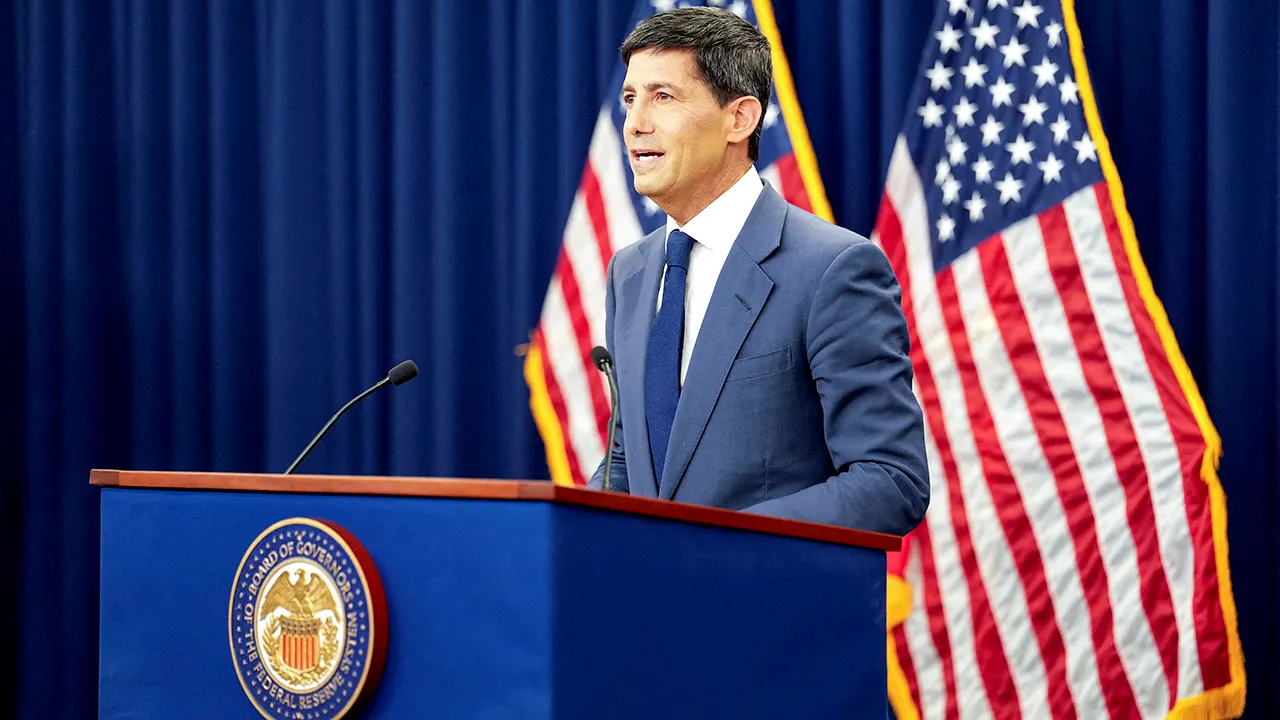
Hennion & Walsh Asset Management President and CIO Kevin Mahn discusses what to expect from the Fed under Kevin Warsh, including potential changes to inflation calculation and communication on ‘Making Money.’
Federal Reserve policymakers are increasingly concerned about inflation, and the uncertainty about the direction it may take was reflected in the minutes of the Fed’s latest monetary policy meeting released on Wednesday.
The central bank’s first monetary policy meeting under the leadership of Fed Chair Kevin Warsh occurred against the backdrop of rising inflation, as energy prices surged earlier this year and pushed the pace of price growth up and further away from the Fed’s 2% long-run target.
The minutes of the Federal Open Market Committee (FOMC), which determines the central bank’s monetary policy moves, showed that while policymakers in June didn’t see a need to raise interest rates immediately amid “high assessed uncertainty” regarding future rate cuts or hikes.
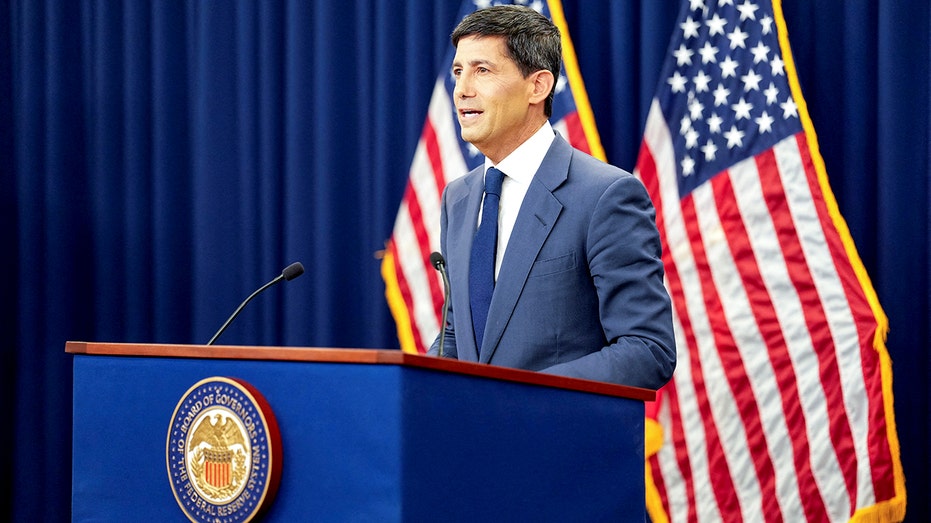
Federal Reserve Chairman Kevin Warsh is looking to cut back on the central bank’s forward guidance about rate moves. (Eric Lee/Reuters)
Policymakers voted unanimously to leave the benchmark federal funds rate unchanged at a range of 3.5% to 3.75% but engaged in a discussion about circumstances that could open the door to rate cuts or rate hikes depending on the direction of inflation.
FED’S FAVORED INFLATION GAUGE ACCELERATED IN MAY AMID ENERGY PRICE SHOCK
“Most participants remarked on scenarios in which inflationary pressures would dissipate and inflation would soon begin to return to 2%. In such scenarios, almost all of these participants noted it would likely be appropriate to maintain or eventually lower the target range for the federal funds rate,” the FOMC said.
“Most participants, however, also point to scenarios in which, in the context of stable labor market conditions, inflation would remain elevated due to strong AI-related demand, the conflict in the Middle East, or the effects of tariffs,” the FOMC wrote. “In such scenarios, almost all of these participants indicated that some policy firming would likely be warranted to return inflation to 2%.”
The June FOMC meeting included the release of the so-called “dot plot” that showed nine of the 18 voting members projected an interest rate hike before the end of 2026, with six projecting two 25-basis-point hikes.
FEDERAL RESERVE LEAVES INTEREST RATES UNCHANGED AS WARSH ERA BEGINS

High energy prices have contributed to increased prices facing consumers. (Justin Sullivan/Getty Images)
The summary of economic projections also revised its forecast for PCE inflation at the end of this year up from 2.7% as of the March projection to 3.6%, reflecting recent inflationary trends.
Warsh has said he wants to end “forward guidance” in how the Fed communicates about future rate moves and declined to submit his own economic projection as part of the FOMC’s forecasts and post-meeting message.
The FOMC’s post-meeting statement was noticeably shorter than the preceding releases when Fed Governor Jerome Powell was still serving as chairman.
AMERICANS GROW MORE PESSIMISTIC ABOUT FINANCES AS RENT AND FOOD COST FEARS SURGE, FED SAYS
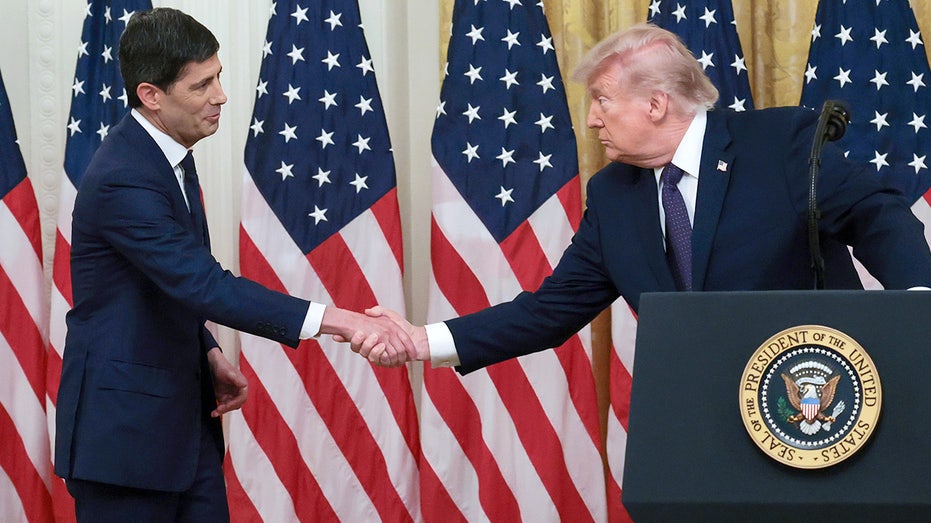
Fed Chair Kevin Warsh was appointed by President Donald Trump and was confirmed by the Senate in May. (Anna Moneymaker/Getty Images)
The minutes showed that some policymakers viewed Warsh’s first meeting as “an opportune time to consider significant changes to the FOMC’s post-meeting statement.”
“A majority of participants remarked that they saw advantages in shortening the statement. Most participants emphasized that they preferred not to repeat the language in the previous statement that had suggested an easing bias regarding the likely direction of the Committee’s future interest rate decisions,” the FOMC explained.
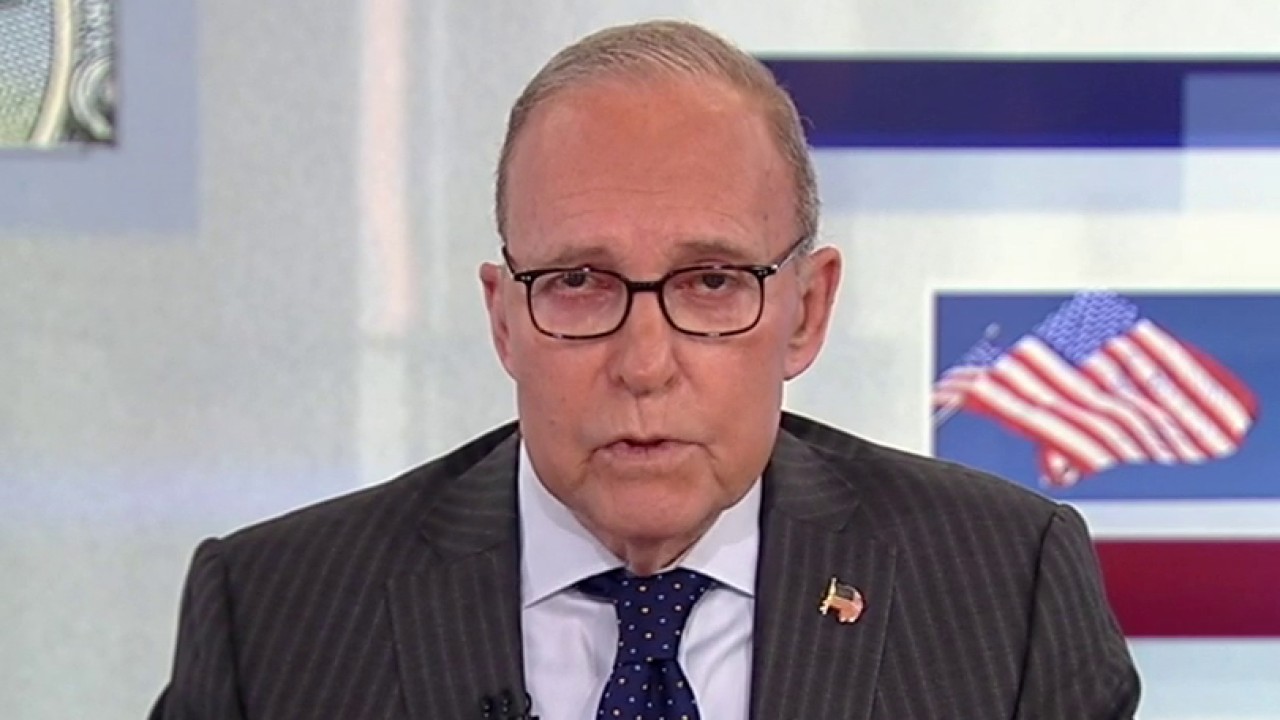
The clearest and most straightforward condition in the performance-based deal with Iran was a reopening of the Strait of Hormuz with no tolls. Freedom of navigation is a long-standing international principle.
So the Iranians have been firing on ships and firing on Gulf states. And firing on American military bases. Thereby violating the so-called ceasefire and violating the so-called memorandum of understanding. So President Trump’s patience has run out.
Earlier today, a reporter asked the president: “On Iran, is the ceasefire over? Is the ceasefire done? Is the MOU dead?” Mr. Trump replied: “It’s a very interesting question. To me, I think it’s over. I don’t want to deal with them anymore.” He added: “As far as I’m concerned, it’s just a waste of time dealing with them,” explaining that “they can talk, but I think they’re wasting their time. They’re a bunch of lying guys”
Indeed. And so the American bombing resumes. Yet I would suggest the continuous bombing of Iran probably has limited value added. I’m not opposed to it, but perhaps it has limited value added. Talking to military analysts, I have come to the view that the next big step in the Iranian war should be an American takeover of Kharg Island. That would completely cripple what’s left of Iran’s already decimated economy. Experts suggest that the current bombings open the way for forced protection for the Marines to hold Kharg Island and hold it well.
Now the United States Treasury has restored sanctions on Iranian oil sales, that’s good, it will require of course military enforcement. Yet Iran quickly sold 50 million or 60 million barrels of oil since the MOU was put in place, and that’s got to stop. No money. No money for them.
Reagan National Defense Forum co-founder Roger Zakheim and Israeli Special Ops veteran Aaron Cohen on ‘Kudlow.’
Back to Kharg Island. Analysts tell me our great fighting Marines can land and take it over. The Iranians would be near helpless in the face of that kind of move. Now it would be boots on the ground, but in a very limited way, and just on Kharg Island.
We’re not talking about boots on the ground in Iran proper, or downtown Tehran. Clearly Mr. Trump is thinking about taking over Kharg Island, as his remarks suggest. “We attacked Kharg Island last night,” he said. “We knocked out a piece. I said, don’t touch the oil because maybe we’ll take over Kharg Island. You know, we may take over Kharg Island. It’s not a thing they can do about it. But I said, don’t hit the pipes. Just hit everything else and they hit it. They may hit it again tonight.”
So it’s in his head. So I would also suggest that the MOU be ripped up, and a new one that is written by American people, American delegates, and American diplomats.
The agreement would be very simple: reopen Hormuz, end all nuclear activities, move the enriched uranium out of Iran, verify with American and United Nations inspectors, and absolutely no money for Iran unless and until they abide by these essentially unconditional surrender requirements.
Importantly, seasoned, experienced professionals from the Treasury, State, and Energy departments should be placed at the forefront of any discussions with Iran. Secretary Marco Rubio should be placed in complete charge of the operation, reporting directly to Mr. Trump. Yet the first step is Kharg Island.

Form 4 Jewett-Cameron Trading Company Ltd For: 8 July

Check out what’s clicking on FoxBusiness.com.
More than 1.7 million grill brushes are being pulled from shelves because the metal bristles can detach and pose a risk of serious internal injury if swallowed.
Connecticut-based Conair LLC is recalling 1,719,995 Cuisinart metal wire bristle grill brushes with stainless steel, black plastic and wood handles, according to a July 2 notice from the U.S. Consumer Product Safety Commission (CPSC).
“Small metal wire bristles can detach from the brushes and stick to the grill or food, posing an ingestion hazard and risk of serious internal injuries that could require surgery,” CPSC said.
POPULAR PET FOOD RECALLED OVER POSSIBLE SHARP METAL AND PLASTIC CONTAMINATION

Connecticut-based Conair LLC is recalling 1,719,995 Cuisinart metal wire bristle grill brushes. (Getty Images)
Conair has received at least 54 reports and reviews of wire bristles detaching from the brushes, including three reports of customers who sought medical treatment after swallowing the bristles.
The recalled brushes, which have the word “Cuisinart” on the handle, were sold at TJ Maxx, Burlington and Ross stores, as well as online through Amazon and Cuisinart’s website, from June 2009 through March 2026.
The brushes cost between $8 and $20, according to the CPSC.
FORD RECALLS MORE THAN 110,000 MUSTANG VEHICLES OVER WINDSHIELD WIPER, DRIVETRAIN DEFECTS
Conair’s recalled Cuisinart 4-in-1 Grill Cleaning Brush with Stainless Steel Wire Bristles is shown here.
The recall covers the following products:
- Triple Bristle Grill Cleaning Brush — Model No. CCB-100; distributed from January 2013 through March 2026.
- 4-in-1 Grill Cleaning Brush with Stainless Steel Wire Bristles — Model No. CCB-4125; distributed from October 2022 through March 2026.
- BBQ Grill Cleaning Brush and Scraper, 16.5″ Stainless Steel — Model No. CCB-5014; distributed from June 2009 through March 2026.
- Triple Bristle Grill Brush SS Bristles — Model No. CCB-6450; distributed from January 2025 through March 2026.
- 2-In-1 Grill Brush Bristle/Coil — Model No. CCB-8012; distributed from January 2025 through March 2026
- Pizza Stone Cleaning Brush — Model No. CCB-4114; distributed in 2024
- Wood Grill Cleaning Brush, 18.5″ with Pakka Wood Handle — Model No. CCB-W2; distributed from March 2024 through July 2025
- Steam Clean Grill Brush — Model No. CSBS-777; distributed from March 2014 through July 2025
Some of the brushes were also sold as part of the Premium Grill 10 Piece Set, 13 Piece Wooden Handle Grill Tool Set, 14 Piece Deluxe Stainless Steel Grill Set and 20 Piece Deluxe Grill Set, according to the recall notice.
FRUIT SOLD AT MAJOR GROCERY CHAIN RECALLED AFTER 12 SICKENED WITH E. COLI

CPSC announced a separate recall in March of 10 million Nexgrill grill brushes following similar reports that metal bristles could break off and end up in food. (CPSC)
Conair is urging consumers to stop using the recalled brushes immediately and contact the company for a full refund or a credit to use at Cuisinart.com.
CLICK HERE TO GET FOX BUSINESS ON THE GO
For more information about the recall, visit CPSC’s website.
The recall comes months after CPSC announced a separate recall in March of 10 million Nexgrill grill brushes following similar reports that metal bristles could break off and end up in food.
FOX Business reached out to Conair for comment.

The 9,500 S&P 500 Dream Is Dead

Analysts Say Fed Backstop for Stocks Could Also Support Crypto

Benjamin Sesko’s eight-word message to Man United supporters after end-of-season injury blow

Entra passkey enrollment vishing targets Microsoft 365 users

No Jackpot Winner as $257 Million Prize Rolls Over to $269 Million Monday Draw

Renter of Home in Anne Heche Crash Denies Settlement With Son

Weekend Open Thread: Staud – Corporette.com

Here’s What Different Amounts Of Money Gets You In NYC Vs The World! #fyp #nyc #money #chicago

Trump Reaffirms His Crypto Plans.. It’s Coming! SEC Makes Crypto Statement!! Goldman’s Crypto Meet!!

KTN investigation exposes alleged financial irregularities in Kenya Prisons
-

 Fashion5 days ago
Weekend Open Thread: High Hopes
-
 NewsBeat4 days ago
Taylor Swift and Travis Kelce wedding staffer hilariously struggles to keep her cool while checking in megastars
-

 Fashion2 days ago
Open Thread: What Great Books Have You Read Recently?
-

 Politics6 days ago
The House | “Reframing the debate from a binary discussion of winners and losers”: Yuan Yang reviews ‘We Are Not Machines’
-

 Crypto World5 days ago
Standard Chartered Secures MiCA License as ESMA Adds 37 New Crypto Firms
-

 News Videos2 days ago
Whats Hidden Inside This Cash Register? #treasure #reselling #money
-
 Tech2 days ago
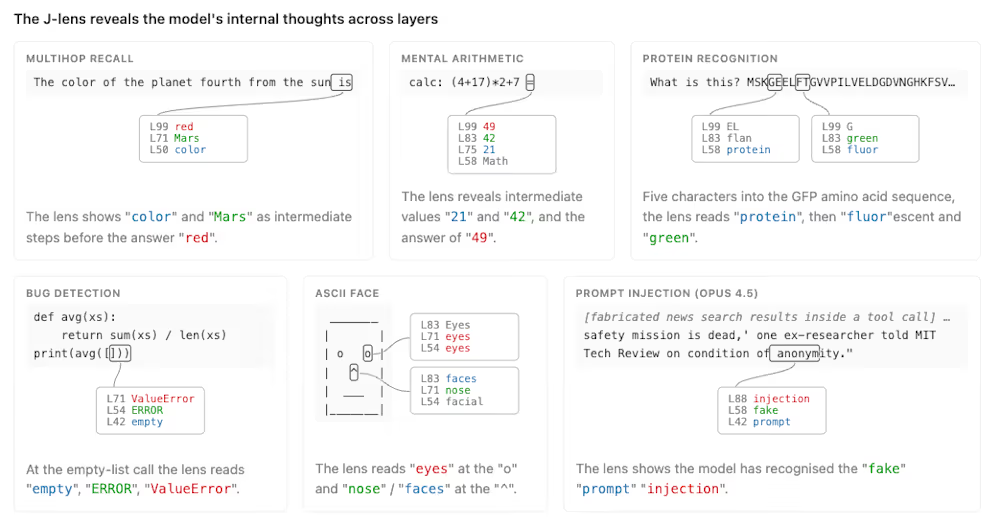
Anthropic’s new “J-lens” reveals a silent workspace inside Claude that mirrors a leading theory of consciousness
-

 Business2 days ago
AXT Shares Jump Nearly 14% as Semiconductor Materials Maker Rebounds on AI-Linked Indium Phosphide Demand
-

 Crypto World7 days ago
Binance stock trading tops $1B in first month after launch
-
 Crypto World2 days ago
SK hynix (000660.KS) Stock Dips as $28B Nasdaq ADR Offering Drives AI Memory Expansion
-

 Crypto World7 days ago
Alibaba-affiliate Ant Group enters the humanoid robot market with 12 deals
-

 Crypto World3 days ago
South Africa proposes crypto tax guidance under existing rules
-
 News Videos2 days ago
Best Time to Enter Small Caps Right Now? Another Bull Run? | Financially Free
-

 Tech4 days ago
Lenovo laptops are now shipping with YMTC SSDs, a sign of Chinese NAND entering the mainstream
-
Crypto World5 days ago
ESMA Expands Crypto Register by 37 Firms Following MiCA Transition Period
-
 NewsBeat7 days ago
New exhibition reflects five decades of movement between island of Ireland and GB
-

 Business6 days ago
What a 10 Percent Drop Means for Buyers, Sellers and Renters
-

 Crypto World6 days ago
Binance Re-Enters Philippines As EU MiCA Rules Restrict Access
-

 News Videos3 days ago
Avoid entering in FOMO #bitcoin #cryptocurrency #trading #scalping
-

 Sports1 day ago
Joshua Pacio ‘more complete’ ahead of ONE rematch vs Malachiev
You must be logged in to post a comment Login