

Business
Dollar steady as markets brace for busy c.bank week amid Mideast war


At least eight central banks, including the U.S. Federal Reserve, the European Central Bank, the Bank of England and the Bank of Japan meet this week to set rates, in their first policy meetings since the Middle East conflict began.
Focus will be on policymakers’ assessment of the impact of higher oil prices on inflation and growth.
“The war … poses downside risk to economic growth and upside risks to inflation, so central bank responses will very much depend on the recent context, specifically whether inflation has been above, on, or below target,” said Carol Kong, a currency strategist at Commonwealth Bank of Australia.
Ahead of the meetings, the dollar retraced some of last week’s strong gains, leaving the euro bouncing slightly from a 7-1/2-month low hit earlier in the session to trade 0.14% higher at $1.1433.

Sterling was up 0.17% at $1.3245, though was not far from the 3-1/2-month low it hit on Friday as it clocked a 1.5% weekly decline.
The dollar index eased slightly to 100.20, but remained perched near last week’s 10-month high. U.S. President Donald Trump said on Sunday he is demanding that other countries help protect the Strait of Hormuz, adding that Washington is in talks with several nations about policing the critical shipping lane for oil and gas.
He warned in a separate interview with the Financial Times that NATO faces a “very bad” future if U.S. allies fail to assist in opening up the Strait.
The prospect of easing global energy disruptions sent oil prices down slightly, but markets remained in disarray with geopolitical tensions still running high and uncertainty over when the war, now in its third week, could end.
“As things stand now, the likelihood we will really see a change in current trajectory for central banks and their monetary policies around the world is, in our view, very, very limited,” said Jorry Noeddekaer, head of global emerging markets and Asia at Polar Capital, whose base case is for the war to be relatively short-lived.
RBA TO HIKE, BOJ IN DIFFICULT SPOT
The Australian dollar was up 0.55% at $0.7019, buoyed by hawkish rate expectations at home as the Reserve Bank of Australia is seen tightening policy on Tuesday.
Markets are now pricing in a 74% chance that the RBA could deliver a 25-basis-point hike.
“We are now pencilling two more hikes, one this week and another in May,” said CBA’s Kong.
“In Australia, inflation was already too high even before the Middle East conflict started, so with the new energy price shock, that will further increase risks to inflation.”
The yen meanwhile languished near the 160-per-dollar level and last stood at 159.44.
The Japanese currency has come under pressure due to the nation’s heavy reliance on the Middle East for energy supplies, with the war also throwing into question the BOJ’s rate outlook.
“For Japan, the key risk is not simply higher oil prices, but a deterioration in terms of trade driven by the costs of imported energy and logistics, compounded by yen weakness and constrained monetary policy flexibility,” said Amova Asset Management’s chief global strategist, Naomi Fink.
“Markets – especially foreign exchange – may be underestimating the probability of these pressures forcing a more difficult policy trade-off for the Bank of Japan.”
Elsewhere, the New Zealand dollar was up 0.47% at $0.5803, while the offshore yuan strengthened slightly to 6.9002 per dollar.
Top U.S. and Chinese economic officials held “remarkably stable” talks in Paris on Sunday that touched on potential areas of agreement in agriculture, critical minerals and managed trade for Trump and Chinese President Xi Jinping to consider in Beijing, sources said.


AstraZeneca wins EU approval for Imfinzi in early gastric cancer

Emerald Holding: Selling The Buyout Rumor Paid Off (Rating Upgrade)
Oracle: Pros And Cons Of Buying Now After The Q3 Double Beat

CUPERTINO, Calif. (AP) — Apple Inc. is poised to unveil the Apple Watch Series 12 in September 2026, continuing its annual refresh cycle for the world’s leading smartwatch as rumors swirl around potential additions like Touch ID fingerprint authentication, refined health sensors and a new processor to bolster performance and battery life.

The Cupertino-based tech giant has followed a consistent pattern since launching the original Apple Watch in 2015, typically announcing new Series models alongside flagship iPhone releases during a fall event. Industry analysts and leakers widely expect the Series 12 to debut at Apple’s September 2026 keynote, likely on a Tuesday in the first or second week of the month—possibly Sept. 8 or Sept. 15—following the company’s tradition of holding events shortly after Labor Day.
Pre-orders would open immediately following the announcement, with devices shipping to customers about a week later, mirroring past launches. This timeline positions the Series 12 as a key part of Apple’s 2026 hardware slate, potentially sharing the stage with iPhone 18 models and other wearables.
Current models remain the Apple Watch Series 11, introduced in September 2025 alongside the Apple Watch Ultra 3 and updated SE variant. The Series 11 brought refinements including enhanced health insights like hypertension notifications, improved sleep tracking, longer battery life up to 24 hours and a more durable display. Starting at around $399 for the base 42mm Wi-Fi model, it has maintained strong sales momentum into 2026.
For the Series 12, expectations center on evolutionary rather than revolutionary changes. Multiple reports indicate no major redesign is imminent, with the familiar rectangular case, rounded edges and digital crown expected to return. Leakers have suggested the 2026 model could serve as a transitional update before a potential overhaul in 2027 or later.
A standout rumor involves the return of Touch ID, the fingerprint sensor last seen on iPhones before Face ID took over. Integrating Touch ID into the digital crown or side button could simplify unlocking the device, authenticating payments via Apple Pay and granting secure access to apps without relying solely on passcodes or wrist detection. Sources point to this as a “long-desired” feature that could enhance usability, particularly for users who find frequent passcode entry cumbersome during workouts or quick glances.
Health monitoring remains a focal point. Speculation includes possible additions like noninvasive blood pressure tracking, building on existing capabilities such as heart rate monitoring, ECG, blood oxygen sensing and temperature detection. While accurate, cuffless blood pressure measurement has proven challenging for wearables due to sensor precision and regulatory hurdles, analysts see 2026 as a plausible window for initial implementation—perhaps limited or in beta form.
Other anticipated upgrades include a new S12 chip (or S11, depending on naming conventions), promising better efficiency, faster processing for on-device AI features and extended battery life. watchOS refinements could emphasize Apple Intelligence integration, deeper sleep analysis and advanced fitness metrics. Display improvements, such as higher brightness or microLED technology in future iterations, have surfaced in discussions, though major shifts appear reserved for later models.
Pricing is expected to hold steady around the Series 11’s $399 entry point for the standard aluminum model, with premium titanium or cellular variants commanding higher prices. A modest $20-50 increase could materialize if significant new sensors arrive, but Apple has historically aimed to keep the flagship accessible compared to competitors.
The Apple Watch lineup’s evolution reflects broader trends in wearables. Since overtaking traditional watchmakers in revenue, the device has shifted from fitness tracker to comprehensive health companion. Features like fall detection, crash detection, irregular heart rhythm notifications and emergency SOS have saved lives and solidified its medical utility. The Series 12 would likely expand this with software-driven enhancements via watchOS updates, even if hardware changes prove incremental.
Market context includes competition from Samsung, Google and Garmin, which have pushed boundaries in battery life, rugged designs and specialized sports tracking. Apple’s ecosystem advantage—seamless integration with iPhones, AirPods and Mac—continues to drive loyalty, with over 267 million units sold cumulatively by recent estimates.
Rumors also touch on the broader 2026 wearable family. The Apple Watch Ultra 4 could see updates, though some reports suggest Apple might skip a full refresh if focusing resources elsewhere. A new SE model remains uncertain, with the third-generation SE (launched 2025) still current.
As anticipation builds, Apple has remained silent on specifics, per its standard practice. Leaks from supply chain sources, code references in beta software and analyst predictions form the basis of current expectations. Noninvasive blood glucose monitoring, long teased as a game-changer for diabetes management, continues to face delays and is not expected in the Series 12.
The Series 12’s launch would cap a period of steady iteration following the more notable design tweaks in earlier models like the Series 10 (thinner profile) and Series 7 (larger display). With the wearable market maturing, incremental gains in accuracy, comfort and AI smarts could prove sufficient to sustain growth.
Consumers eyeing an upgrade from older models—such as Series 9 or earlier—may find the Series 12 compelling if it delivers meaningful health or security improvements. For those with recent purchases like the Series 11, the decision could hinge on specific leaked features materializing at the event.
As September 2026 approaches, all eyes will turn to Apple’s fall keynote for confirmation. The event typically draws massive online viewership, with live streams revealing not just hardware but Apple’s vision for connected health and daily utility.
Until then, the Series 12 remains one of the most anticipated wearables on the horizon, poised to reinforce Apple’s dominance in a category it helped define.
“What a rough ride the markets have been having, and I know the bigger thought is that all of this is going to rest at some point. Eventually, what matters for the markets is earnings, but I think the question is how do you deal with this? What is playing out right now and oil and the kind of shock from that?” Garre said.
He acknowledged the unprecedented nature of the situation. “This is a pretty unprecedented situation. I do not think I thought about this sort of scenario even at the beginning of this year, as I downgraded India to neutral for reasons which appear so simple now, and things have got extremely complicated at this juncture. The honest view is, if you were to look at the broader narratives hitting India particularly, let us put the world aside, a large part of the story was about AI and how it is going to impact potential job creation in the future in India… the so-called anti-AI trade.”
Garre noted how attention on AI has shifted in recent weeks. “Exactly, we will come back to that in a couple of weeks. But the second thing is, you thought everything else is quieter in the real world with trade treaties getting signed, which were actually positive in some way, and suddenly you had this event shaping up, which is going to now lead to a definite impact. It is not about crude; it is also about broader disruption in the global supply chains. So, yes, there would be earnings impact because of all this; we cannot shy away from that. The reality is, for any investors to think about what to do from here, the simplest way is to lengthen your horizons. Number two is, do not take calls on when the war will end. I do not think anyone knows when the war will end. We all know it will end someday. But if we were to invest today, you have to take a view that war is going to continue for a while and then build your portfolio for the next 12 to 24 months.”
He emphasized patience and a long-term approach. “If you are taking a view that the war is going to end in two days, then the call is very different. Then you would be taking the highest beta, directly impacted sectors like construction or travel or OMCs. Those kinds of things we would be taking a call on, but I do not think we are in that stage yet. So, I would be sort of taking the view that we are not very far away from the bottom. These levels look really interesting for investors in general to build positions in some sectors over the next couple of years.”
Addressing oil sensitivity and supply chain disruptions, Garre said, “Yes, I mean, there is an economic impact for sure, and if I were to just put aside those which are directly impacted…directly impacted are those if you are actually working in the Middle East and doing some physical activity out there. But indirect impacts, it is a difficult thing to measure. For example, the financial sector has seen a deep cut year to date, and it surprises me because if I look at the broader macro context, I do not think we are talking about such a deep GDP cut or a deep credit growth decline or an NPA risk rising within the context of Indian lending. These are the sectors where you would still perhaps look for rebounds, look for safety rather than just playing pure safety through, let’s say, utilities, which is playing out right now. Telecom is another. Why should you have a 17% decline in some of these stocks that we have seen? So, position yourself in those which will rebound, which have fallen, which are not as deeply impacted.”
He highlighted earnings projections for India. “If you look at earnings growth construct for Nifty, FY26 we are going to end at 3-4%, part of it because of the labour code impact we do not really consider it as an exceptional expense. Next year, which is FY27, street has already brought it down to 9-10% growth, and for the year after, as always, it is 15% which is FY28. So, if you think there is going to be an impact on numbers, if we are in a 6-7% CAGR for the next two years as against a 10-12% CAGR, then of course multiples also fall.”On market valuations, he added, “Now, we are not going to reach worst-case multiples like 12-13 times earnings during the GFC. We never as equity investors play for Six Sigma. If we always keep thinking about Six Sigma events, then we would never invest in the markets. We always look for baseline, not so worst-case scenarios, but broader safe worst-case scenarios.”
Discussing foreign institutional investor (FII) trends, Garre said, “Two things have essentially changed. One is cyclical factors. Earnings growth that India has been delivering has been fairly meagre. We have to agree that we were low single-digit earnings in the last 12 months, and if consensus is forecasting 9% growth for Nifty over the next 12 months, that is also not a great number to look at. The second thing is AI as a narrative. At some point, AI will peak, and I am not in the anti-India trade per se. Recently, we have interviewed 30 different tech professionals across the world…My read from that was actually not negative in terms of IT services. I actually felt there is a lot more opportunity which will come in for services. That anti-AI trade is more because of where we are in the AI supply chain. We are not in the foundation model supply chain, not even in the infra supply chain right now. This is a first leg. We are going to be in the application supply chain, and that is not yet started materially. As that happens, India will start to benefit from it.”
On AI adoption, he explained, “So, it has already started, but it is very early-stage experimentation. Corporates are not doing any upheaval in their entire business models to implement AI. They are just trying and testing AI agent solutions in smaller areas, customer support functions, and trying to spruce up capacity. Nobody has deeply embedded AI in their workflows. The tipping points take a year, year-and-a-half.”
Finally, Garre commented on IT services valuations: “Valuations in the context of potential improvement in cyclical growth over the next two-three years…attractive is probably a tricky word to use because they are not cheap in any context compared to what earnings growth is in the near term. Probably the market looks better than IT services today on valuations honestly. But I am talking about revenue growth accelerating and margins moving up in the next three years.”
As global markets contend with oil shocks, war uncertainties, and evolving AI narratives, Garre’s guidance emphasizes a measured approach: focus on resilience, identify sectors poised to rebound, and maintain a long-term horizon for Indian investors.

Chart Industries: The Baker Hughes Conundrum

State government records obtained from last year have revealed the estimated cost of redeveloping the convention centre ballooned by half a billion dollars in six months.
OPINION: The premier says travel time is behind his move from Kwinana to a pad near parliament.
Berkshire Bought Back $225 Million of Stock on March 4, the Day It Resumed Buybacks
Business
FTSE 100 Holds Steady Near 10,260 as Markets Await BoE Decision Amid Oil Surge and Geopolitical Strain
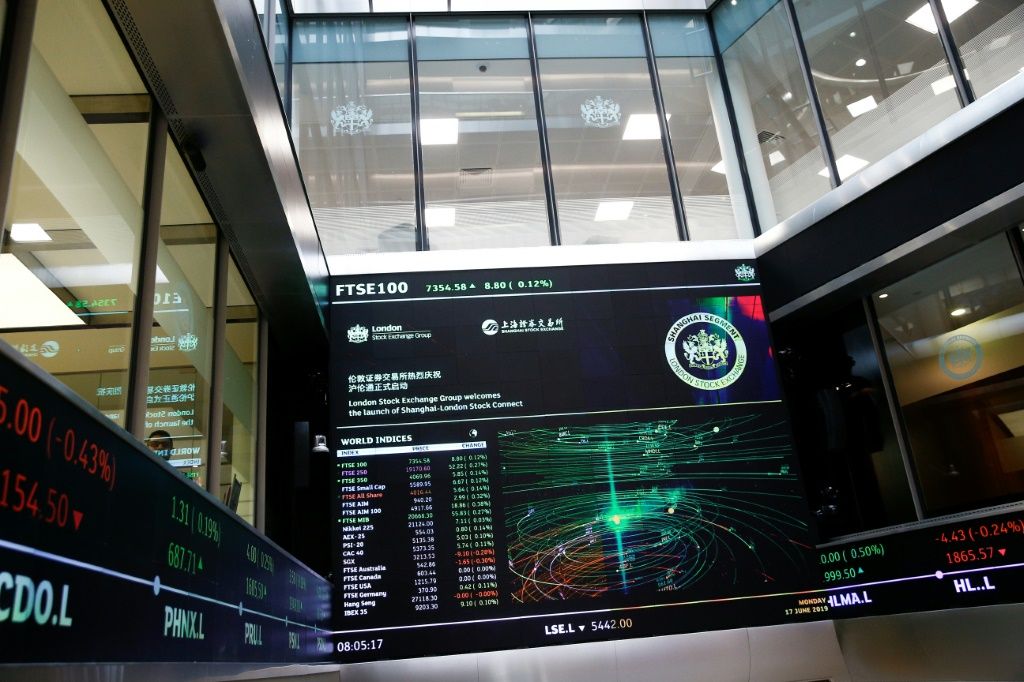
Britain’s benchmark FTSE 100 index remained little changed in early trading Monday, March 16, 2026, as investors positioned cautiously ahead of this week’s Bank of England policy meeting while digesting the fallout from elevated oil prices and ongoing Middle East tensions.

POOL / HENRY NICHOLLS
The FTSE 100 stood around 10,261 shortly after the London open, virtually flat from Friday’s close of 10,261.15, which marked a 44-point or 0.43% decline. The index has now declined for three consecutive sessions, though it logged only a modest 0.2% loss for the week ending March 13. Futures had pointed to mild consolidation overnight, reflecting broader global caution.
The latest close data from March 13 showed the index opening at 10,305.48, peaking at 10,367.36 and dipping to a low of 10,200.21 before settling lower on volume of roughly 814-817 million shares. That level sits about 6-7% below the 2026 peak near 10,935 hit in late February, but the benchmark remains up nearly 19% year-over-year and has demonstrated resilience relative to more tech-heavy indices elsewhere.
Persistent geopolitical risks in the Middle East, particularly involving Iran and related conflicts, have kept Brent crude elevated around $103 per barrel recently, providing a tailwind to the FTSE 100’s heavy energy weighting. Majors like BP and Shell have benefited from the oil surge, offering some offset to broader equity pressures from inflation concerns and softer domestic growth signals.
U.K. economic data continues to weigh on sentiment. The Office for National Statistics reported flat GDP in January, falling short of consensus forecasts for 0.2% growth and raising questions about the recovery pace. This stagnation has complicated the outlook for monetary policy, even as sticky inflation—exacerbated by energy costs—has markets pricing in about an 80% probability of a 25-basis-point rate hike by year-end.
At its March meeting later this week, the BoE is widely anticipated to hold rates steady, with focus shifting to the MPC vote split. Analysts see outcomes like 7-2 or 6-3 in favor of no change as plausible, signaling the committee’s balancing act between supporting growth and guarding against renewed price pressures. Any hawkish tilt could further pressure rate-sensitive sectors.
Sector moves on Friday highlighted the divergent forces at play. Resource and mining names led declines amid profit-taking and broader risk aversion, with Fresnillo down around 5.6%, Antofagasta off 5.5% and Rolls-Royce slipping 5.2%. Other laggards included IMI and Mondi, both down roughly 4.5-4.7%. Housebuilder Berkeley Group fell more than 2% despite reaffirming full-year profit guidance, with executives citing the Middle East situation as a drag on overall market risk appetite.
Defensive plays provided some support, as Hikma Pharmaceuticals rose 2.5%, Imperial Brands gained 2.2% and Bunzl advanced similarly. Energy stocks showed relative strength, underscoring the index’s commodity-linked buffer against pure domestic or growth-oriented weakness.
The FTSE 100’s multinational profile—with substantial overseas revenue—continues to act as a natural hedge in uncertain times. Its dividend yield, hovering near 2.81%, appeals to income seekers amid shifting rate expectations. Compared to global peers facing sharper corrections in tech-driven names, London’s blue-chips have held up better, partly due to energy tailwinds from oil above $100.
Broader market context includes elevated volatility, with the VIX remaining firm and other indices like the S&P 500 and Nasdaq showing weekly declines amid similar inflation and oil dynamics. The FTSE 100’s outperformance relative to some benchmarks highlights its sector composition as a partial inflation hedge.
Looking forward this week, the BoE announcement will dominate, potentially setting the near-term tone for sterling and equities. Any escalation—or signs of de-escalation—in Middle East diplomacy could sway oil prices and, by extension, resource-heavy stocks. Upcoming U.S. data and Fed signals may also influence cross-Atlantic flows.
Technically, support around 10,200 held during Friday’s dip, while resistance lingers near 10,400-10,500. A break higher would require positive catalysts, such as dovish central bank commentary or easing geopolitical headlines.
Despite recent pullbacks, the index’s longer-term trajectory remains upward, having recovered strongly from earlier lows around 7,500 and posting gains of over 20% in the past year in some measures. Investors remain watchful for commodity-driven volatility and policy cues that could dictate the next leg.
As trading resumes Monday, the FTSE 100’s performance reflects ongoing themes: energy resilience amid geopolitical strain, domestic growth softness and central bank caution in a high-inflation environment. For U.K.-focused portfolios, the benchmark’s global tilt offers diversification, though near-term risks from oil-driven inflation and policy uncertainty persist.

Bolton NHS Foundation Trust nurses up for national awards
AstraZeneca wins EU approval for Imfinzi in early gastric cancer

Ripple Price Surges 5% But Analyst Refuses to Trust This XRP Pump

Smart energy pays enters the US market, targeting scalable financial infrastructure

Why Israel is blocking foreign journalists from entering

Bitcoin: We’re Entering The Most Dangerous Phase

Crypto Market EXPLODES in 3.. 2.. 1.. (Watch Immediately)

BITCOIN: The Next PRICE SQUEEZE Just Started!!! – Bitcoin News Today, Ethereum & Altcoins

Being XRP “RICH” Will Be VERY RARE! Mass Accumulation Will Be IMPOSSIBLE When XRP Hits $10! WAKE UP!
-
 Tech5 days ago
A 1,300-Pound NASA Spacecraft To Re-Enter Earth’s Atmosphere
-
 Crypto World2 days ago
HYPE Token Enters Net Deflation as HyperCore Buybacks Outpace Staking Rewards
-

 News Videos7 days ago
10th Algebra | Financial Planning | Question Bank Solution | Board Exam 2026
-

 Business6 days ago
ExxonMobil seeks to move corporate registration from New Jersey to Texas
-

 Crypto World7 days ago
Paradigm, a16z, Winklevoss Capital, Balaji Srinivasan among investors in ZODL
-

 Fashion3 days ago
Weekend Open Thread: Addict Lip Glow
-
 Tech6 days ago
ChatGPT will now generate interactive visuals to help you with math and science concepts
-
Sports2 days ago
Why Duke and Michigan Are Dead Even Entering Selection Sunday
-

 NewsBeat5 days ago
Residents reaction as Shildon murder probe enters second day
-

 Business5 days ago
Search Enters Sixth Week With New Leads in Tucson Abduction Case
-
 NewsBeat6 days ago
Pagazzi Lighting enters administration as 70 jobs lost and 11 stores close across Scotland
-

 Business12 hours ago
Search for Savannah Guthrie’s Mother Enters Seventh Week with No Arrests
-

 Tech7 days ago
Despite challenges, Ireland sixth in EU for board gender diversity
-

 Business2 days ago
US Airports Launch Donation Drives for Unpaid TSA Workers as Partial Government Shutdown Enters Fifth Week
-
Crypto World2 days ago
Coinbase and Bybit in Investment Talks: Could Bybit Finally Enter the US Crypto Market?
-

 NewsBeat5 days ago
I Entered The Manosphere. Nothing Could Prepare Me For What I Found.
-

 Business6 days ago
Search Enters 39th Day with FBI Tip Line Developments and No Major Breakthroughs
-

 Sports7 days ago
Skateboarding World Championships: Britain’s Sky Brown wins park gold
-

 Business2 days ago
Country star Brantley Gilbert enters growing non-alcoholic beer market
-
 Crypto World6 days ago
Will Chainlink price reclaim $10 amid volatility squeeze?

