
Business
Dollar surges as US-Iran war pushes oil past $100 a barrel




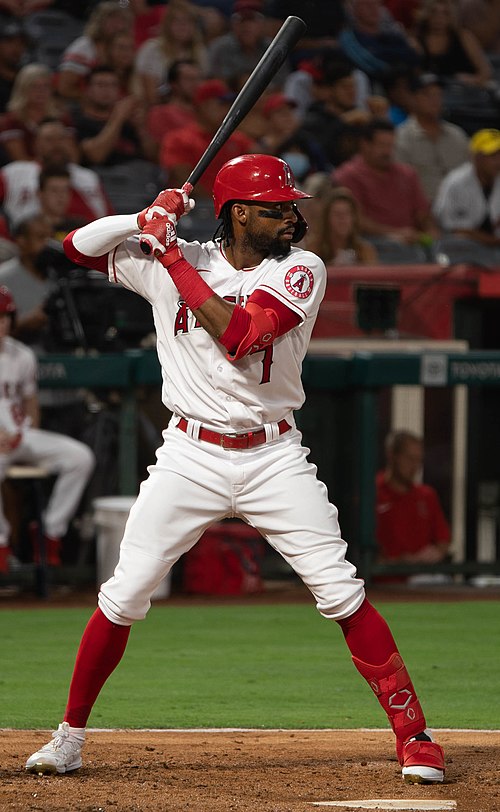
Jo Adell delivered one of the most spectacular defensive performances in recent MLB history Saturday night, robbing the Seattle Mariners of three potential home runs to preserve a 1-0 victory for the Los Angeles Angels.
The 26-year-old right fielder made leaping grabs to deny Cal Raleigh in the first inning, Josh Naylor in the eighth and J.P. Crawford in the ninth — the final one sending him tumbling into the stands near the right-field foul pole. Zach Neto provided the game’s only offense with a solo home run, while Angels pitching held the Mariners scoreless in a tense pitchers’ duel at Angel Stadium.
“I’ve never seen three home run robberies in one game, and I’ve never seen a guy on the third one fall into the stands, catch the ball and keep his feet in like he’s a wide receiver,” said Torii Hunter, a nine-time Gold Glove winner and special assistant to the Angels’ general manager, who watched from the bench. “I was jumping up and down. I almost passed out. That might be the greatest defensive game I’ve ever seen.”
Adell’s heroics began in the top of the first when Mariners catcher Cal Raleigh launched a deep fly ball to straightaway right field. Adell raced to the wall, leaped high above the yellow padding and pulled the ball back into the field of play, denying a solo homer and setting the tone for the evening.

The Angels took a 1-0 lead in the bottom of the third when Neto crushed a pitch from Seattle starter Emerson Hancock over the center-field wall. From there, the game became a showcase for stellar defense and pitching on both sides.
Adell struck again in the eighth against first baseman Josh Naylor. With a runner on and the Mariners threatening to tie the game, Naylor drove a ball to right that appeared destined for the seats. Adell made a nearly identical leaping grab at the wall, crashing against the padding but securing the out to keep the shutout intact.
The most dramatic moment came in the top of the ninth with the Angels clinging to their one-run lead. Leadoff hitter J.P. Crawford smoked a drive toward the right-field corner. Adell sprinted from his position, launched himself airborne near the foul pole, caught the ball at the peak of his jump and flipped over the short wall into the first row of seats. He emerged holding his glove high, the ball securely inside, as fans erupted. Umpires reviewed the play and confirmed the catch, ending the inning and sealing the victory.
Mariners manager Dan Wilson could only tip his cap. “Three great catches, no question,” Wilson said. “It’s frustrating when you hit balls that hard and they don’t go out, especially three times in one night against the same guy.”
The performance capped a remarkable turnaround for Adell defensively. Once criticized for inconsistent routes and arm strength after being drafted 10th overall by the Angels in 2017, he transformed into a Gold Glove finalist in 2024 through relentless work with outfield coaches. Saturday’s game represented the pinnacle of that improvement.
Angels manager Ron Washington praised Adell’s preparation and athleticism. “Jo has worked extremely hard to become the complete player we see today,” Washington said. “Those catches weren’t just athletic — they were smart. He reads the ball off the bat as well as anyone now.”
The shutout was a team effort on the mound. Starter Tyler Anderson and a string of relievers combined to scatter hits while stranding Mariners runners. Seattle, which entered the game with one of the American League’s stronger lineups, managed just five hits and left 10 runners on base.
For the Mariners, the loss dropped them in the tight AL West standings. Despite the offensive frustration, Wilson highlighted his team’s resilience. “We hit some balls hard tonight,” he said. “Sometimes baseball is just like that — you run into a guy having the night of his life in the outfield.”
Neto’s homer proved decisive in a game defined by missed opportunities for Seattle. The young shortstop has provided consistent power for the Angels early in 2026, offering hope for a rebuilding club looking to compete in a loaded division.
Adell’s night drew immediate comparisons to legendary defensive gems. Fans and analysts flooded social media with highlights of the three catches, many calling it one of the best single-game outfield performances in years. Video replays from multiple angles showed the athleticism and timing required for each grab, particularly the ninth-inning robbery where Adell maintained control while crashing into spectators.
The Angels improved to .500 on the young season with the win, splitting the first two games of the weekend series against Seattle. Sunday’s finale will feature a matchup that could decide early momentum in the division race.
For Adell, the game represented validation of his growth since breaking into the majors. Drafted as a toolsy outfielder with immense potential, he has battled consistency at the plate but steadily elevated his defense. Saturday’s performance will likely earn him national recognition and possibly a highlight-reel spot in future defensive award conversations.
Teammates mobbed Adell after the final out, with several pointing to the sky in celebration of his heroics. Hunter, who made his own share of memorable catches during a decorated career, called the sequence “unbelievable” and predicted it would be talked about for years.
As the Angels continue their 2026 campaign, Adell’s emergence as an elite defender adds a dynamic element to a roster blending young talent and veteran leadership. While offensive production remains a work in progress for Los Angeles, nights like Saturday remind fans of the excitement elite defense can generate.
The Mariners, meanwhile, will look to bounce back and avoid being shut out by spectacular plays in Sunday’s series finale. For one night in Anaheim, however, Jo Adell was the undisputed star — turning would-be home runs into outs and a close game into a memorable 1-0 victory.

Deontay Wilder outlasted a relentless Derek Chisora in a brutal, back-and-forth heavyweight scrap Saturday night at The O2 Arena, winning by split decision in what many believe was the final fight of the 41-year-old “Warrior’s” career.

The judges scored the 10-round bout 115-113 and 115-111 for Wilder, with one card at 112-115 for Chisora. Wilder dropped Chisora twice — once in the fourth round and again in the ninth — but the British veteran rose each time and continued pressing forward with trademark aggression that thrilled a raucous London crowd.
Wilder, 40, improved to 44-4-1 with 43 knockouts. Chisora fell to 36-14 with 23 KOs in a fight that served as a reminder of both men’s enduring heart and declining but still dangerous power.
The contest, billed as a crossroads for two veteran heavyweights with 100 combined professional fights, delivered on its promise of action. From the opening bell, Chisora marched forward, throwing heavy hooks and uppercuts while Wilder looked to counter with his vaunted right hand.
Chisora’s pressure forced Wilder to the ropes early, but the American’s superior reach and timing allowed him to pick shots and create distance. In the fourth round, Wilder landed a sharp right hand that sent Chisora to the canvas for the first time. The Briton beat the count and resumed his forward march, absorbing punishment but landing enough clean shots to keep the fight competitive on the scorecards.
The middle rounds featured sustained exchanges that left both men bloodied. Chisora’s face swelled from Wilder’s jab and occasional power shots, while Wilder showed signs of fatigue from the constant pressure. The crowd chanted “Chisora! Chisora!” as the local favorite refused to back down.
The drama peaked in the ninth round when Wilder connected with another clean right that dropped Chisora again. Once more, the veteran climbed to his feet and finished the round on his feet, swinging wildly. Wilder appeared to have the fight in control heading into the final round, but Chisora’s late rally kept the outcome in doubt until the scores were announced.
“I knew it was going to be tough. Derek is a warrior. He kept coming and coming,” Wilder said in the ring afterward. “I dropped him twice, but he wouldn’t stay down. Respect to him. This was a hell of a fight.”
Chisora, emotional in his post-fight interview, hinted strongly that this could be his last bout. “I’m too old for this s***,” he said with a smile, echoing comments he made in the dressing room after the fight. “I’ve had a great career. I’ve fought the best. If this is the end, I’m happy with what I’ve done.”
Promoter Eddie Hearn, whose Matchroom Boxing staged the event on DAZN pay-per-view, praised both men for delivering an entertaining spectacle. “This is why we love heavyweight boxing,” Hearn said. “Two warriors who left everything in the ring. Derek Chisora has given British boxing so much over the years.”
The victory keeps Wilder in the heavyweight title conversation, though he remains far from the division’s elite after recent losses to Tyson Fury and Anthony Joshua. Wilder has spoken of wanting one more shot at a world title, and a win over Chisora keeps that door ajar.
For Chisora, the defeat adds to a long list of close calls against top competition. He has shared the ring with Fury (three times), Joshua, Vitali Klitschko and now Wilder, often pushing favorites to their limits despite being the underdog.
Full fight highlights circulating rapidly on YouTube and social media captured the drama: the two knockdowns, Chisora’s relentless pressure, Wilder’s counterpunching, and the emotional scenes after the final bell. Clips of the ninth-round drop and Chisora rising again have already garnered hundreds of thousands of views.
The undercard featured several competitive bouts, but the main event overshadowed everything else. Fans inside The O2 created an electric atmosphere from the ring walks onward, with Union Jack flags waving and chants echoing throughout the arena.
Wilder’s trainer, Malik Scott, credited his fighter’s improved conditioning and ring generalship. “Deontay showed tonight that he still has the tools,” Scott said. “He stayed composed under pressure and picked his moments. That’s the sign of a veteran.”
Medical staff checked both fighters after the bout. While no serious injuries were immediately reported, both men showed the wear of a hard 10 rounds. Heavyweight bouts of this intensity often take a visible toll, and Saturday’s scrap was no exception.
The fight was originally targeted for earlier in 2026 but was finalized for April 4 after negotiations. It marked a rare appearance for Wilder in the United Kingdom, where he has a significant fan base despite his rivalries with British heavyweights.
Boxing analysts offered mixed views on the scoring. Some felt Wilder clearly won by landing the more meaningful power shots and scoring the knockdowns. Others argued Chisora’s constant pressure and higher output warranted a closer look or even the victory on one or two cards.
Regardless of the debate, the consensus was that the fight delivered entertainment value. It served as a bridge between the current heavyweight landscape and the glory days of both fighters.
Wilder, a former WBC champion, has not held a world title since losing it to Tyson Fury in 2020. His power remains his greatest asset, as evidenced by the two knockdowns Saturday. At 40, questions remain about how much he has left, but a win over a tough opponent like Chisora provides momentum.
Chisora has long been one of boxing’s most beloved characters in Britain. His willingness to fight anyone, anytime, has earned him respect even in defeat. Whether he retires or returns for one more payday remains to be seen, but his post-fight comments suggested he is weighing his future carefully.
For fans, the full fight highlights offer multiple angles of the key moments: the first-round feeling-out process, the fourth-round knockdown, the sustained exchanges in rounds six through eight, and the dramatic ninth. Commentary from DAZN’s team captured the excitement as the crowd roared with every landed punch.
The event drew a strong pay-per-view audience on DAZN, with many tuning in for the nostalgia of seeing two veterans who have thrilled fans for over a decade.
As the heavyweight division continues to evolve with younger contenders like Jared Anderson and Moses Itauma rising, nights like Saturday remind audiences of the heart and resilience that defined an earlier era.
Wilder and Chisora embraced in the ring after the decision, exchanging words of respect. In an era where trash talk often dominates the buildup, their post-fight sportsmanship stood out.
The bout adds another chapter to the rich history of British heavyweight boxing events at The O2. From Joshua’s early triumphs to Fury’s homecoming fights, the venue has hosted many memorable nights. Wilder vs. Chisora will be remembered as one of the most entertaining, if not the most technically perfect.
For now, Wilder moves forward with a much-needed victory, while Chisora contemplates a career that has spanned 50 professional fights and countless memorable moments.
Highlights packages are already available across major platforms, allowing fans who missed the live broadcast to relive the action. The images of Wilder raising his arms in victory and Chisora acknowledging the crowd will linger long after the final bell.
In the unpredictable world of heavyweight boxing, one thing remains certain: when two warriors like Deontay Wilder and Derek Chisora step into the ring, fans are guaranteed a fight worth remembering.
Business
Soccer-Ex-player Cuellar backs Mexico to break ’fifth-game’ curse, warns of immigration hurdles
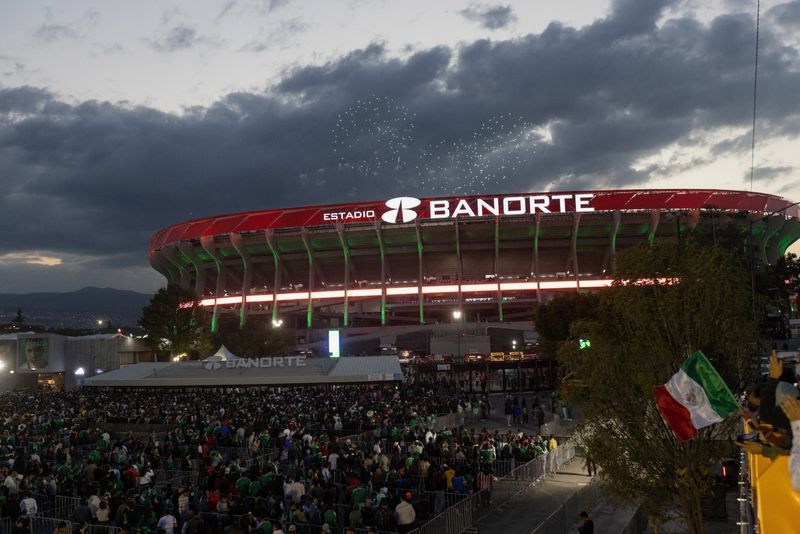

Soccer-Ex-player Cuellar backs Mexico to break ’fifth-game’ curse, warns of immigration hurdles
Business
(VIDEO) Haaland Hat-Trick Fires Manchester City Into Record Eighth Straight FA Cup Semi-Final
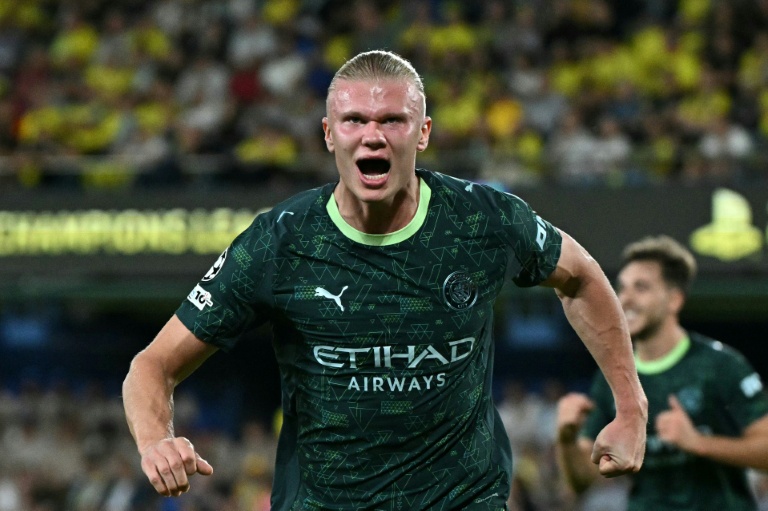
MANCHESTER, England — Erling Haaland scored a clinical hat-trick as Manchester City thrashed Liverpool 4-0 in the FA Cup quarter-finals Saturday, booking a record-extending eighth successive appearance in the semi-finals at Wembley.
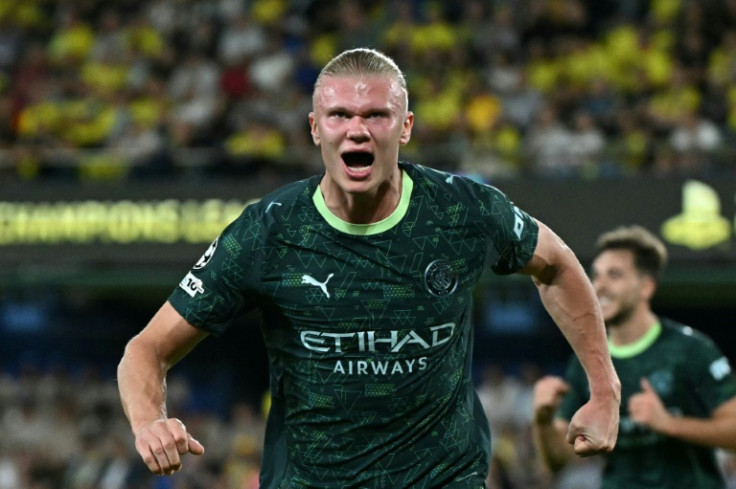
The Norwegian striker opened the scoring with a 39th-minute penalty, added a headed goal in first-half stoppage time and completed his treble in the 57th minute, equaling Sergio Agüero’s club record of 12 hat-tricks for City. Antoine Semenyo added a clever dinked finish in the 50th minute to complete the rout at the Etihad Stadium.
The victory not only sent Pep Guardiola’s side into the last four of English football’s oldest competition for the eighth year running — a feat no other club has achieved — but also marked City’s 18th consecutive home win in the FA Cup, another new record.
Haaland’s performance came at a timely moment after a relatively quiet start to 2026. The 25-year-old, who has been prolific since joining City in 2022, showed his trademark clinical finishing against a Liverpool side that struggled to contain him.
The game began evenly, with both teams probing for openings. Liverpool created early chances, but City goalkeeper James Trafford was equal to them, most notably saving a penalty from Mohamed Salah later in the match.
City took control when Nico O’Reilly was brought down in the box by Virgil van Dijk. Haaland stepped up and calmly converted the penalty, sending the Etihad crowd into celebration.
Just before halftime, Haaland struck again. Semenyo delivered a teasing cross from the right, and Haaland rose unmarked to power a header past Liverpool goalkeeper Alisson Becker, giving City a commanding 2-0 lead at the break.
Liverpool’s hopes of a comeback were effectively ended early in the second half. Semenyo produced a moment of individual brilliance, dinking the ball over the advancing Alisson after a swift counter-attack.
Haaland then sealed his hat-trick and the result with a composed finish from O’Reilly’s cut-back, sweeping the ball into the net via the underside of the bar. It was his 12th treble for City and the 28th of his professional career.
Guardiola, watching from the stands as he continues his recovery from recent health issues, could not hide his satisfaction with the display, which he later described as one of City’s best performances of the season.
“Today we played with intensity, with quality and with hunger,” Guardiola said. “Erling was clinical, as always. The team showed character and control. Reaching the semi-finals again is special, but we want more.”
For Liverpool, the defeat adds to a difficult season under their manager. Despite strong Premier League form at times, the Reds were outclassed in Manchester. Manager Arne Slot admitted his side was second best.
“City were excellent today. They punished every mistake,” Slot said. “We had moments, but we couldn’t take them. Haaland is a special player, and he showed that again.”
The result also marked the first time City had beaten Liverpool in three successive matches since 1947, underlining their current dominance in the fixture.
Beyond the scoreline, the match highlighted City’s depth. O’Reilly impressed in midfield, while Semenyo continued his strong form since joining the club. The home side controlled possession and created numerous chances, with Liverpool rarely threatening Trafford’s goal after the early stages.
Haaland’s first goal was his 20th of the season across all competitions, while the hat-trick took his City tally to impressive levels despite the team’s mixed results earlier in 2026.
The Norwegian spoke humbly after the match. “It’s always special to score goals, especially in a big game like this,” Haaland said. “The team played really well, and I’m happy to help. Now we focus on the semi-final and the rest of the season.”
City’s path to the semi-finals has been dominant at home in the FA Cup. The eight straight appearances at Wembley underline their consistency in the competition under Guardiola, who has won the FA Cup twice with the club.
The semi-final draw will take place soon, with City among the favorites to lift the trophy for a third time under the Catalan manager. Possible opponents include other Premier League sides still in the competition.
Liverpool, meanwhile, must regroup for their remaining Premier League fixtures and Champions League campaign, where they face Paris Saint-Germain next. The FA Cup exit ends their hopes of silverware in this competition for another season.
Fans and pundits hailed Haaland’s display as a reminder of his world-class quality. Social media exploded with highlights of the three goals, particularly the powerful header and the composed finish for the hat-trick.
Analysts noted the tactical discipline shown by City, who pressed high and transitioned quickly. Liverpool’s defense, usually solid, looked vulnerable against Haaland’s movement and finishing.
The victory keeps City on track for a potential domestic treble, though they trail in the Premier League title race. The FA Cup remains a realistic target as they chase more silverware.
For Haaland, the afternoon provided personal satisfaction after a period where he felt he could have scored more. His 12th hat-trick for City cements his status as one of the most lethal strikers in the modern game.
As the FA Cup heads toward its climax, City’s record run to the semi-finals sets a new benchmark. No team has ever reached this stage eight years in succession, highlighting the extraordinary consistency of Guardiola’s era at the Etihad.
Liverpool’s players left the pitch disappointed but received applause from their traveling supporters for their effort. The rivalry between the two clubs remains fierce, and another meeting later in the season could produce more fireworks.
With the semi-finals approaching, attention now turns to who City will face at Wembley. Regardless of the opponent, Haaland’s form suggests he will be a major threat.
The Norwegian’s hat-trick not only secured progression but also sent a strong message to the rest of English football: when City click, few teams can live with them.
Saturday’s result will be remembered as one of the standout performances of the 2025-26 FA Cup campaign — a masterclass from Haaland and a dominant display from a City side hungry for more success.


Trump threatens to hit Iran infrastructure on Tuesday if Strait remains blocked

iCloud is fully operational as of Monday, April 6, 2026, with no widespread outages reported across Apple’s suite of cloud services, according to the company’s official System Status page and third-party monitoring sites.

Apple confirmed that all iCloud-related services — including iCloud Mail, iCloud Drive, Photos, Notes, Contacts, Calendar, Backup, Find My and Keychain — are listed as “Available.” A brief disruption to iCloud Mail that affected some users earlier Monday from approximately 2:19 p.m. to 4:20 p.m. UTC has been resolved, with the status page last updated at 5:07 p.m. UTC showing normal operations across the board.
The brief mail outage, which lasted roughly two hours, prompted scattered user complaints on social media and monitoring platforms but did not impact the majority of iCloud features. Apple has not issued a detailed postmortem, but such short-lived incidents are common in large-scale cloud infrastructure and are typically caused by temporary server load, maintenance or routing issues rather than systemic failure.
Downdetector and similar outage trackers showed no significant spike in reports Monday evening, with user-submitted issues remaining at baseline levels. Earlier searches for “iCloud down” turned up only historical references to a larger outage in February 2026 that affected Find My, Photos and other services for several hours before full restoration.
For millions of iPhone, iPad and Mac users who rely on iCloud for photo syncing, document storage, email and device backups, the current all-clear status provides reassurance. iCloud, launched in 2011, serves as Apple’s backbone for seamless cross-device experiences, storing more than 1 billion users’ data worldwide and powering features like iCloud Private Relay, end-to-end encrypted backups and real-time collaboration in apps such as Pages, Numbers and Keynote.
Apple’s System Status dashboard, updated multiple times daily, remains the most authoritative source for real-time information. Users experiencing personal issues despite the official “Available” status are advised to try standard troubleshooting: signing out and back into iCloud, restarting devices, checking internet connectivity or updating to the latest iOS, iPadOS or macOS versions. In rare cases, clearing Safari cache or toggling iCloud services individually in Settings can resolve localized glitches.
The Monday mail incident follows a pattern of occasional, short-duration disruptions that Apple has managed efficiently in recent years. In February 2026, a more noticeable outage temporarily slowed Find My and Photos syncing for some users before being fixed within hours. Apple has invested heavily in expanding its data-center footprint and improving redundancy, including new facilities in Europe and Asia, to minimize future downtime.
Industry analysts note that iCloud’s reliability has improved markedly since its early days, when longer outages were more frequent. Today, the service boasts industry-leading uptime percentages, though critics occasionally point to Apple’s closed ecosystem and limited transparency during incidents. When problems do arise, Apple typically posts updates on its status page rather than issuing public statements unless the outage is widespread.
For business users and enterprises enrolled in Apple Business Essentials or iCloud+, the current operational status is particularly important. Features such as Advanced Data Protection, custom email domains and expanded storage tiers continue without interruption. Families using Family Sharing for shared photo libraries and storage plans also face no reported problems Monday.
Social media reaction to the brief mail glitch was muted compared with past outages. A handful of users posted screenshots of delayed email delivery or sync errors earlier in the day, but complaints tapered off after the 4:20 p.m. UTC resolution. Hashtags such as #iCloudDown saw minimal traction, with most trending conversation shifting back to routine Apple product discussions.
Experts recommend that users with critical data enable iCloud Backup and two-factor authentication as standard practice. Apple’s end-to-end encryption for many services, including Health data and Messages in iCloud, adds an extra layer of security even during minor service blips.
Looking ahead, Apple is expected to continue rolling out enhancements to iCloud as part of its broader AI and privacy initiatives. Rumors of deeper integration with Apple Intelligence features could increase reliance on cloud processing, making uptime even more critical in the coming months.
In the meantime, the message from Apple on April 6 is clear: iCloud is running normally. Anyone still encountering difficulties is encouraged to contact Apple Support directly or use the Get Support section on apple.com, where automated diagnostics can often pinpoint device-specific problems rather than service-wide ones.
The brief nature of Monday’s mail issue underscores how rare significant iCloud disruptions have become. With billions of daily transactions processed across its global network, Apple’s infrastructure has proven resilient, bouncing back quickly from the handful of incidents reported in 2026 so far.
For the average user checking their iPhone or Mac right now, photos are syncing, emails are delivering and Find My is locating devices without issue. That reliability remains one of iCloud’s strongest selling points in a competitive cloud storage market that includes Google One, Microsoft OneDrive and Dropbox.
As evening approaches on April 6, the status page continues to show green across the board. Apple will likely monitor the situation overnight, but no further incidents are anticipated based on current indicators.
Users who rely on iCloud for everything from family photo albums to work documents can breathe easy: the service is up and running smoothly after its short Monday hiccup. Regular status checks via the official Apple page or trusted monitoring tools remain the best way to stay informed during any future events.


Keiko Fujimori leads Peru’s presidential polls a week before election

Intel's Turnaround Gains Momentum


Alex Pettee is President and Director of Research and ETFs at Hoya Capital. Hoya manages institutional and individual portfolios of publicly traded real estate securities.Alex leads the investing group iREIT®+HOYA Capital. The service features a team of analysts focusing on real income-producing asset classes that offer the opportunity for reliable income, diversification, and inflation hedging. Learn More.
Analyst’s Disclosure: I/we have a beneficial long position in the shares of RIET, HOMZ, IRET, ALL HOLDINGS IN THE IREIT+HOYA PORTFOLIOS either through stock ownership, options, or other derivatives. I wrote this article myself, and it expresses my own opinions. I am not receiving compensation for it (other than from Seeking Alpha). I have no business relationship with any company whose stock is mentioned in this article.
Hoya Capital Research & Index Innovations (“Hoya Capital”) is an affiliate of Hoya Capital Real Estate, a registered investment advisory firm based in Rowayton, Connecticut, that provides investment advisory services to ETFs, individuals, and institutions. Hoya Capital Research & Index Innovations provides non-advisory services including market commentary, research, and index administration focused on publicly traded securities in the real estate industry. This published commentary is for informational and educational purposes only. Nothing on this site nor any commentary published by Hoya Capital is intended to be investment, tax, or legal advice or an offer to buy or sell securities. This commentary is impersonal and should not be considered a recommendation that any particular security, portfolio of securities, or investment strategy is suitable for any specific individual, nor should it be viewed as a solicitation or offer for any advisory service offered by Hoya Capital Real Estate. Please consult with your investment, tax, or legal adviser regarding your individual circumstances before investing. The views and opinions in all published commentary are as of the date of publication and are subject to change without notice. Information presented is believed to be factual and up-to-date, but we do not guarantee its accuracy, and it should not be regarded as a complete analysis of the subjects discussed. Any market data quoted represents past performance, which is no guarantee of future results. There is no guarantee that any historical trend illustrated herein will be repeated in the future, and there is no way to predict precisely when such a trend will begin. There is no guarantee that any outlook made in this commentary will be realized. Readers should understand that investing involves risk, and loss of principal is possible. Investments in real estate companies and/or housing industry companies involve unique risks, as do investments in ETFs. The information presented does not reflect the performance of any fund or other account managed or serviced by Hoya Capital Real Estate. An investor cannot invest directly in an index, and index performance does not reflect the deduction of any fees, expenses, or taxes. Hoya Capital Real Estate and Hoya Capital Research & Index Innovations have no business relationship with any company discussed or mentioned and never receive compensation from any company discussed or mentioned. Hoya Capital Real Estate, its affiliates, and/or its clients and/or its employees may hold positions in securities or funds discussed on this website and in our published commentary. A complete list of holdings and additional important disclosures is available at www.HoyaCapital.com.
Seeking Alpha’s Disclosure: Past performance is no guarantee of future results. No recommendation or advice is being given as to whether any investment is suitable for a particular investor. Any views or opinions expressed above may not reflect those of Seeking Alpha as a whole. Seeking Alpha is not a licensed securities dealer, broker or US investment adviser or investment bank. Our analysts are third party authors that include both professional investors and individual investors who may not be licensed or certified by any institute or regulatory body.

Don't Put All Your REIT Eggs In One Basket

ITV Grace season 6, episode 2 cast as EastEnders icon stars in Capture You Dead

(VIDEO) Jo Adell Robs Three Home Runs in Angels’ 1-0 Shutout Win Over Mariners

Labour ‘s disgraced minister blames scandal on being ’30 years old’


-

 NewsBeat3 days ago
Steven Gerrard disagrees with Gary Neville over ‘shock’ Chelsea and Arsenal claim | Football
-

 Business3 days ago
No Jackpot Winner and $194 Million Prize Rolls Over
-

 Fashion2 days ago
Weekend Open Thread: Spanx – Corporette.com
-
Entertainment6 days ago
Fans slam 'heartbreaking' Barbie Dream Fest convention debacle with 'cardboard cutout' experience
-

 Crypto World4 days ago
Gold Price Prediction: Worst Month in 17 Years fo Save Haven Rock
-

 Tech7 days ago
The Pixel 10a doesn’t have a camera bump, and it’s great
-
Crypto World5 days ago
Dems press CFTC, ethics board on prediction-market insider trades
-

 Tech7 days ago
Avatar Legends: The Fighting Game comes out in July and it looks pretty slick
-

 Sports21 hours ago
India men’s 4x400m and mixed 4x100m relay teams register big progress | Other Sports News
-

 Business4 days ago
Login and Checkout Issues Spark Merchant Frustration
-

 Tech6 days ago
Apple will hide your email address from apps and websites, but not cops
-

 Tech5 days ago
EE TV is using AI to help you find something to watch
-

 Sports5 days ago
Tallest college basketball player ever, standing at 7-foot-9, entering transfer portal
-

 Politics6 days ago
Should Trump Be Scared Strait?
-

 Tech6 days ago
Flipsnack and the shift toward motion-first business content with living visuals
-

 Fashion6 days ago
The Best Spring Trends of 2026
-

 Sports6 days ago
Women’s hockey camp eyes fitness boost, tactics ahead of WC 2026 campaign | Other Sports News
-

 Tech5 days ago
How to back up your iPhone & iPad to your Mac before something goes wrong
-
 Crypto World7 days ago
Bitcoin’s Six-Month Losing Streak: What On-Chain Data Says About the Market’s Next Move
-

 Politics6 days ago
BBC slammed for ignoring author of The Fraud
You must be logged in to post a comment Login