

Business
Donovan Mitchell Sidesteps LeBron James Reunion Speculation After Knicks Sweep Cavaliers

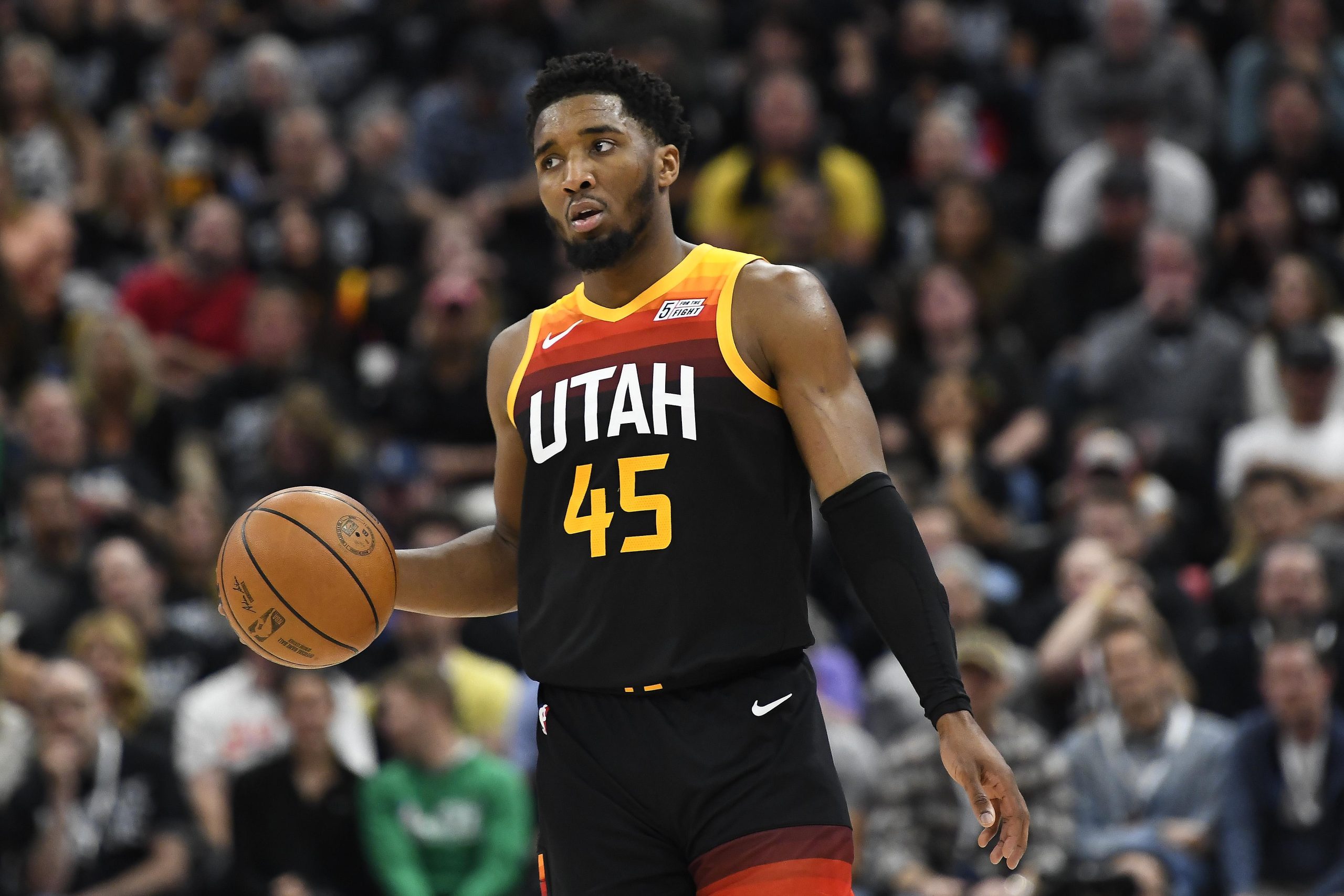
CLEVELAND — Donovan Mitchell declined to engage with questions about a potential LeBron James return to the Cleveland Cavaliers following the team’s four-game Eastern Conference finals sweep at the hands of the New York Knicks.
The Cavaliers were eliminated from the postseason Monday night with a 130-93 home loss in Game 4 at Rocket Mortgage FieldHouse. The defeat completed a 4-0 series loss to the Knicks, who advanced to the NBA Finals for the first time since 1999.
After the game, Mitchell was asked about speculation that James could leave the Los Angeles Lakers this offseason and make a third stint with the Cavaliers. The 29-year-old guard made it clear the topic was not one he wished to address.
“We just ended the game,” Mitchell said. “That is not for me. I’m not trying to get a headline, that’s not for me. I’m not going to answer that. That’s a (Cavaliers president of basketball operations) Koby Altman question. It’s a (Cavaliers general manager) Mike Gansey question because I know no matter what I say, no matter how I say it, and how I try to navigate it, it’s going to be a thing. So, I’m sorry, I’m not going to give you anything.”
James, who turned 41 in December, is set to become an unrestricted free agent this summer. The Akron native led the Cavaliers to their only NBA championship in 2016 and remains deeply revered by the city’s fans. He averaged 20.9 points, 7.2 assists and 6.1 rebounds per game for the Lakers during the 2025-26 regular season.
Mitchell instead focused on the current roster and the lessons learned from the series. He expressed confidence that the group could improve and reach the NBA Finals in the future.
“I have no doubt that this group can get there,” Mitchell said. “I’ve said that all year. The biggest thing is you just use it as a learning lesson. It’s a tough learning lesson, but now we know. This team that we just faced had to go through this. Maybe not this way, but they’ve been together, they’ve been a core group and had to go through this tough experience. So, this is our turn.”
The Cavaliers acquired James Harden in February, creating a backcourt trio of Mitchell, Harden and Darius Garland. Harden is expected to opt out of his current contract and sign a new multi-year deal with Cleveland this summer.
Mitchell voiced strong support for coach Kenny Atkinson, who has faced criticism from some fans after the sweep. “I’m sorry for the city of Cleveland,” Mitchell added. “For it to be like this and the sweep. That’s a—. But I told y’all last year, and I’ll say again, we’ll be back. We’ll be ready. We’ll be hungry. And we’ll be locked in.”
The Knicks dominated the series after an overtime victory in Game 1. New York won the next three games by double digits, including Monday’s 37-point blowout. Jalen Brunson earned Eastern Conference finals MVP honors as the Knicks advanced to face either the Oklahoma City Thunder or San Antonio Spurs in the NBA Finals.
Cleveland’s season ended with disappointment despite a strong regular campaign that positioned them as one of the East’s top teams. Mitchell delivered consistent performances throughout the postseason, but the supporting cast struggled to match New York’s intensity and depth.
The series exposed areas where the Cavaliers need improvement, particularly in half-court execution and physicality against elite competition. Mitchell’s belief in the core suggests the front office may prioritize continuity rather than major roster overhauls this offseason.
James’ potential return would represent a seismic shift for the franchise. His presence could provide veteran leadership and scoring punch, but it would also require significant salary cap maneuvering and roster adjustments. Cleveland’s current group has chemistry built over multiple seasons, and disrupting that dynamic carries risks.
Mitchell’s refusal to speculate on James reflects a professional approach focused on the present. By deferring to front office executives, he avoided creating additional headlines during an emotional night for the organization and its fans.
The Cavaliers will enter the offseason with important decisions ahead. Mitchell becomes extension-eligible, and retaining both him and Harden will be priorities. The team must also evaluate supporting pieces and potential draft assets to address weaknesses exposed in the postseason.
Cleveland’s front office has built a competitive roster around Mitchell since his acquisition from the Utah Jazz. The addition of Harden signaled an intent to push for a championship window. Whether that window remains open with the current core or requires further changes will be a central topic throughout the summer.
For Mitchell, the focus remains on growth and preparation. He has established himself as one of the league’s premier guards and a leader capable of elevating those around him. His comments after the sweep demonstrated accountability and optimism despite the painful defeat.
The Knicks’ series victory highlighted the gap between the teams at this stage. New York’s experience, depth and defensive intensity proved too much for Cleveland. The Cavaliers will study the matchup closely as they aim to close that gap next season.
James has not publicly commented on his future plans. His decision will be one of the biggest storylines of the offseason, with several contenders expected to pursue the 21-time All-Star. A return to Cleveland would reunite him with Mitchell and create one of the most intriguing partnerships in the Eastern Conference.
As the NBA season winds down, attention shifts to the draft, free agency and potential trades. The Cavaliers enter this period with both promise and uncertainty. Mitchell’s leadership and belief in the group provide a foundation, but execution and roster tweaks will determine if they can take the next step.
The 2025-26 campaign represented progress for Cleveland, but falling short in the conference finals will fuel motivation heading into next year. Mitchell’s message of resilience and future readiness offers hope to a fanbase hungry for sustained success.
For now, the focus remains on reflection and recovery. The Cavaliers will regroup, evaluate the season and prepare for the challenges ahead. Mitchell’s refusal to engage with external noise underscores his commitment to the task at hand and the team he currently leads.
As summer approaches, Cleveland’s basketball future remains fluid. Whether it includes LeBron James or centers on the current core, the organization faces critical decisions that will shape its trajectory for years to come.


An email sent to SBI Funds seeking comment went unanswered.
In March, the asset management company filed a draft red herring prospectus (DRHP) with Sebi to launch an IPO.
The issue will be entirely an offer for sale (OFS) of 20.37 crore equity shares by existing shareholders-State Bank of India and Amundi India Holding. SBI will sell 12.8 crore shares, and Amundi 7.5 crore shares. The OFS is estimated to represent around 10% of SBI Funds Management’s paid-up equity share capital.
SBI Funds Management is a joint venture between SBI and France-based Amundi, which currently hold a 61.9% and 36.4% stake, respectively.

SBI Funds’ shares traded at around ₹815 apiece in the unlisted market on Friday, valuing the fund house at around ₹1.65 lakh crore. The market capitalisation of ICICI Prudential Asset Management, the country’s second-largest mutual fund house, stood at ₹1.70 lakh crore on Friday.
Kotak Mahindra Capital, Axis Capital, BofA Securities India, HSBC Securities and Capital Markets, ICICI Securities, Jefferies India, JM Financial, Motilal Oswal Investment Advisors and SBI Capital Markets are the book-running lead managers to the issue.

Cooling Risk Premium, But Uncertainty Lingers
The recent decline in oil prices is primarily driven by fading fears of supply disruptions. Earlier, markets had priced in worst-case scenarios, including a prolonged conflict and potential blockage of critical energy trade routes. However, as ceasefire negotiations progressed, traders began unwinding these risk premiums.
That said, the deal is not yet fully finalized. The lack of a definitive agreement leaves room for uncertainty, and any breakdown in talks or violation of terms could quickly reignite tensions. As a result, while prices have fallen, volatility remains high, with markets highly sensitive to geopolitical headlines.
Strait of Hormuz: Gradual Normalization
The Strait of Hormuz, a crucial chokepoint handling nearly 20% of global oil trade, has seen gradual normalization in shipping flows. During the peak of tensions, vessel movements were disrupted, and several shipments were delayed.
Now, tanker traffic has started to resume, although not entirely without risk. Security concerns and higher insurance costs still persist, indicating that normalcy is returning in phases rather than all at once. Full operational confidence will likely depend on the durability of the ceasefire agreement.
Why Doubts Persist Over the Deal
Despite positive signals, several factors continue to cast doubt on the sustainability of the ceasefire. Israel’s stance remains cautious, driven by concerns over Iran’s regional influence and long-term strategic intentions. Any divergence in regional support could weaken the agreement’s credibility.Additionally, domestic political dynamics in the United States add another layer of complexity. With midterm elections approaching in November, there may be pressure on the leadership to secure a diplomatic breakthrough. While this may accelerate negotiations, it also raises questions about whether the deal is being rushed for political gains rather than long-term stability.
Risk of Supply Glut if Flows Normalize
A fully operational Strait of Hormuz could introduce a new dynamic to the oil market—oversupply. During the conflict phase, several cargoes were delayed or stranded. If these shipments enter the market simultaneously alongside steady production levels, the result could be a temporary supply surge.
This situation may be exacerbated by growing competition among producers. Notably, the UAE’s exit from OPEC could weaken coordinated supply discipline. In the absence of strict production controls, producers may prioritize market share, potentially triggering aggressive supply flows and intensifying downward pressure on prices.
Global Impact: Inflation, Growth, and Trade Balance
Lower oil prices have far-reaching implications for the global economy. A sustained decline in crude prices can significantly ease inflationary pressures, particularly in major consuming economies. Reduced energy costs translate into lower transportation and manufacturing expenses, which can stimulate economic growth.
Oil-importing countries such as India, China, and European nations stand to benefit the most. In contrast, oil-exporting countries could face revenue shortfalls, potentially straining their fiscal positions. If competition among exporters intensifies, it could even lead to a price war, further pushing prices down and deepening the risk of a supply glut.
India: A Major Beneficiary
For India, the decline in oil prices is a major positive development. With over 85% of its crude oil requirements met through imports, lower global prices directly reduce the country’s import bill. This helps improve the current account balance and supports the stability of the Indian rupee.Additionally, softer crude prices contribute to lower inflation, giving the Reserve Bank of India greater flexibility in managing interest rates. Lower fuel costs also boost consumption and industrial activity, providing a broader lift to economic growth.
Price Outlook: Downside Bias with Upside Risks
While the easing of tensions between the US and Iran has reduced immediate supply risks, the situation remains fragile. Markets will continue to closely monitor developments in the region, particularly the finalization and implementation of the ceasefire.
Looking ahead, crude oil prices are likely to remain highly sensitive to geopolitical developments. If the ceasefire is successfully implemented and the Strait of Hormuz operates without disruptions, the market could face sustained downward pressure. In such a scenario, increased supply—combined with the release of delayed cargoes—could push prices even below $50 per barrel.
However, the upside risks cannot be ignored. Any breakdown in the deal, renewed hostilities, or disruptions in shipping routes could quickly reverse the trend, leading to sharp price spikes once again.
(The author is Head of Commodity Research, Geojit Investments )

Worthington Steel Is A Solid Play As Q4 Earnings Near

Few realise that the most noticeable change in leisure spending lately has little to do with new shows or games and everything to do with the quiet mechanics of moving money from one account to another.
Payment innovations now sit at the heart of how consumers access digital entertainment, and startups in this space are drawing steady attention from business observers. The same tools that let someone settle a restaurant bill in seconds also support smoother transactions inside an online casino, turning what used to feel like a slow process into something almost invisible.
Early Experiments That Set the Pattern
Startups began testing real-time payment rails several years ago, often focusing first on small-ticket leisure purchases. These early trials showed that speed alone could lift completion rates by noticeable margins. Entrepreneurs noticed that when checkout took under ten seconds, repeat engagement rose without any extra marketing spend. Traditional banks watched from the sidelines at first, but the pattern soon spread beyond niche services into mainstream consumer habits. Over time, developers refined the underlying rails by studying user behaviour across different regions, learning that even minor delays could cause people to abandon a booking or in-app purchase. Leisure services that adopted these faster options reported higher average session lengths, as customers spent less time staring at loading screens and more time enjoying the content itself. This shift also encouraged smaller operators to experiment with new pricing tiers, such as pay-per-minute streaming or instant top-ups for virtual goods.
Why Fintech Moves Matter for Broader Markets
Established financial institutions have had to respond as newer entrants introduced lower-friction options for everyday spending. A recent analysis of payment apps highlights how these newcomers challenged older systems by removing several layers of verification that once slowed things down. The result is not only faster transfers but also fresh business models built around recurring micro-payments rather than larger one-off charges. UK small-business owners in the leisure sector now factor these options into their own cash-flow planning, recognising that customer expectations have shifted permanently. Many now compare how fintech threatens banking when deciding which rails to support. Larger chains have begun integrating multiple services side by side, allowing users to choose their preferred method at checkout and thereby reducing cart abandonment across both mobile and desktop experiences. Observers note that this competitive pressure has also prompted traditional banks to accelerate their own digital upgrades, including improved APIs that make it easier for leisure apps to connect directly to customer accounts.
Security Features That Travel with the Transaction
Security upgrades have kept pace with speed gains. Tokenisation and device-bound authentication now travel with each payment, reducing the visibility of sensitive data while still allowing instant confirmation. This matters especially for leisure services that see high volumes of smaller transactions. Developers building these tools often come from backgrounds in both cybersecurity and consumer apps, bringing a hybrid mindset that treats trust as a product feature rather than an afterthought. Regular audits and real-time fraud monitoring have become standard practice, helping services spot unusual patterns before they affect users. Leisure operators appreciate that these measures rarely interrupt the flow for legitimate customers, yet they still provide strong protection against common threats such as stolen credentials or account takeover attempts.
Inclusion Questions Surface in New Research
Payment methods that once required established credit histories are giving way to alternatives that work from simpler starting points. Payment aspects of financial inclusion in the fintech era recent BIS analysis explores how lighter verification routes can open access without compromising oversight. For leisure operators, this expands the reachable audience while also prompting new questions about how to design experiences that feel welcoming across different financial profiles. Research teams have started tracking how users from varied income brackets interact with these new tools, revealing that many appreciate the option to pay in smaller increments rather than committing to large upfront sums. This flexibility can turn occasional visitors into regular participants, especially when combined with clear explanations of fees and limits.
Looking Ahead at Startup Activity
Investment continues to flow toward companies that specialise in seamless cross-border movement of small sums, often with an eye on entertainment verticals. These firms tend to operate with lean teams and focus on modular technology that larger leisure groups can plug into existing systems. The pattern suggests that payment infrastructure itself is becoming a distinct competitive layer, separate from the content or experience it supports. Business decision-makers tracking this space note that partnerships between payment startups and leisure operators are forming earlier in the product cycle than they did even a few years ago. Some of the most promising projects involve shared ledgers that let users move value between different services without repeated currency conversions. Early data from pilot programmes shows reduced costs for both companies and customers, which in turn supports more frequent engagement with digital leisure services. As these technologies mature, analysts expect further consolidation among smaller players while the biggest leisure brands continue to maintain relationships with several services at once.
Practical Takeaways for Decision Makers
Owners of smaller leisure ventures increasingly treat payment choice as part of the overall customer journey rather than a back-office detail. Testing multiple rails, monitoring drop-off points, and adjusting for regional preferences all feature in routine reviews. The underlying technology keeps evolving, yet the core principle remains consistent: the less friction a transaction carries, the more likely it is to complete and repeat. This steady refinement continues to shape how people move through their chosen forms of digital downtime. Forward-thinking operators also schedule regular staff training so teams understand the latest options and can guide customers smoothly when questions arise.

DLF has sold a residential apartment in its ultra-luxury project The Dahlias in Gurugram to Kela for Rs 120.71 crore, according to media reports. This reinforces the growing appetite among high-net-worth individuals (HNIs) and ultra-high-net-worth individuals (UHNIs) for premium residential assets.
According to the latest corporate shareholding data filed with stock exchanges and compiled by Trendlyne, Kela publicly holds stakes in 19 listed companies with a combined net worth of over Rs 2,571.6 crore as of March 2026.
Located in Sector 54 on Golf Course Road, The Dahlias sits in one of Gurugram’s most sought-after residential micro-markets. DLF describes the locality as an affluent residential and investment destination with significant potential for capital appreciation and rental income.
Also Read: DLF sells The Dahlias apartment to Madhusudan Kela for Rs 121 crore
“Sector 54, Golf Course Road, Gurgaon, is an affluent residential and investment hub. The property prices are exorbitantly high in this area. Investing in DLF Sector 54 Gurgaon guarantees higher ROI, assured rental income and a steady rise in the property value, making it an ideal and safe investment opportunity for the residents,” the developer said on its website.
The transaction comes as DLF continues to benefit from robust demand for premium housing. The company’s Q4FY26 pre-sales surged 95% year-on-year to around Rs 3,970 crore, although FY26 bookings declined 5% to approximately Rs 20,100 crore, said a brokerage note.Collections for the year rose 15% to nearly Rs 13,500 crore, taking net cash to around Rs 14,200 crore. Brokerage Nuvama said management is targeting approximately Rs 20,000 crore each of launches and pre-sales in FY27, reflecting confidence in sustained demand for luxury projects.
The latest deal also highlights the strong capital appreciation enjoyed by early investors in India’s luxury real estate market, with well-located and supply-constrained micro-markets continuing to command premium valuations.
Luxury homes emerge as wealth preservation assets
Samir Chopra, President & CEO of eXp Realty India, said high-value transactions such as Kela’s purchase reflect a structural shift in the way affluent Indians are allocating capital.
“High-value transactions such as these reflect a broader shift in how India’s affluent buyers are approaching real estate. Luxury residential assets are increasingly being viewed not just as lifestyle purchases, but as long-term wealth preservation assets,” Chopra said.
He noted that wealth generated through entrepreneurship, capital markets, startup exits and global business expansion is increasingly finding its way into premium residential properties in established and supply-constrained markets such as Gurugram, Mumbai and Bengaluru.
“What makes locations like DLF particularly attractive is scarcity, address value, strong end-user demand and long-term capital appreciation potential. For many HNIs and UHNIs, these homes offer a combination of lifestyle, legacy value, portfolio diversification and wealth preservation. As India’s wealthy population continues to grow, we expect premium residential real estate to attract an increasingly larger share of investor capital,” he added.
Gurugram’s investment appeal continues to strengthen
Manik Malik, President & CEO of BPTP, said Gurugram has emerged as one of India’s most compelling real estate destinations, backed by infrastructure-led development and a thriving corporate ecosystem.
“Gurugram has firmly established itself as one of India’s most attractive real estate destinations, driven by infrastructure-led growth across corridors such as Golf Course Extension Road, Dwarka Expressway and Southern Peripheral Road, alongside a strong corporate ecosystem and world-class social infrastructure. As India urbanises and premiumisation gathers pace, Gurugram is well positioned to remain one of the country’s most compelling investment markets,” Malik said.
Rishi Raj, CEO of Conscient Infrastructure, believes rising HNI and NRI participation in Gurgaon’s luxury housing market reflects changing global capital allocation strategies.
“The surge in HNI and NRI participation in Gurgaon’s luxury housing market is not happening in isolation. It is a direct response to how capital is being reallocated globally. When equity markets become volatile and fixed-income returns remain uncertain, investors naturally gravitate towards assets that offer both capital preservation and long-term appreciation,” he said.
“Today, luxury real estate is increasingly being viewed as a strategic asset allocation decision rather than a discretionary purchase. Golf Course Extension Road is a prime example of this trend. Over the past decade, the corridor has transformed into one of Gurgaon’s leading luxury markets, driven by infrastructure upgrades, improved connectivity and the entry of top developers.”
Echoing similar views, Rajat Khandelwal, Group CEO of Tribeca Developers, said Gurugram’s emergence as a corporate and lifestyle hub has fuelled demand for world-class residences.
“Over the past few years, Gurugram has evolved into a magnet for professionals and entrepreneurs drawn by its cosmopolitan lifestyle, robust infrastructure and status as one of India’s most prominent corporate hubs. This intersection of economic expansion and lifestyle aspiration has fuelled demand for larger, smarter and more refined living spaces that align with global benchmarks of luxury,” Khandelwal said.

Why is the US more exuberant than China?

U.S. IPO Weekly Recap: Another Biotech IPO Pops During The Short Holiday Week

In addition, though small in terms of annual revenue and profits, Jio commands a significant valuation premium over its global peers, reflecting its differential offerings aided by a pureplay 4G and 5G network and proprietary digital platforms compared with global giants that are mature utility providers with legacy 2G and 3G infrastructure.
Jio Platforms plans to issue 270 million fresh equity shares, taking the total paid-up equity to 9.21 billion shares. At an anticipated market capitalisation of over ₹12-14 lakh crore, the company is estimated to raise up to ₹42,000 crore, or more than $4 billion, from the primary market.
This implies a price-earnings (P/E) multiple between 40 and 46, while its enterprise value (EV) will be 16-19 times of the operating profit before depreciation and amortisation (Ebitda). In comparison, Bharti Airtel trades at a P/E of 43.6 and an EV/Ebitda of 10.8.
 Agencies
Top global telecom giants based on market capitalisation including T-Mobile, Verizon and AT&T trade at P/E multiples between 10 and 17 while their EV/EBITDA is between 7 and 11. In revenue terms, these companies are six-nine times bigger than Jio Platforms.
Jio Platforms’ revenue from operations increased by 16% annually to ₹1.5 lakh crore between FY24 and FY26 while net profit grew by 18.4% to ₹30,049 crore. The Ebitda margin remained in a tight range of 50-52% during the period. For Bharti Airtel, revenue grew by 19% annually to ₹2.1 lakh crore while net profit increased four times to ₹33,823 crore. Bharti’s operating margin improved to 57% in FY26 from 52% in FY24.
Bharti’s net debt relative to Ebitda was 1.4 times while its return on capital employed was 19%. This compares with 0.4 times and 10.8% for Jio Platforms in that order.On the operating front, Jio Platforms had a larger scale with 524.4 million customers at the end of FY26 compared with 482.4 million for Bharti’s Indian business. In addition, Jio handled data traffic of 241.4 billion gigabytes (GB), more than two times when compared with 101.3 billion GB for the latter. However, Bharti’s average revenue per user (ARPU) at ₹257 was higher than ₹214 for Jio Platforms.

Take ReserveOne Inc., a cryptocurrency asset manager that had prominent associates, including private equity magnate and former US Commerce Secretary Wilbur Ross.
ReserveOne had agreed to combine with M3-Brigade Acquisition V Corp., a special-purpose acquisition company, or SPAC, whose sole purpose is to find another entity to buy, taking it public in the process. Ross did not back the deal financially, but after it closed, he was slated to join ReserveOne’s board. Other promoters of the effort are a who’s who of big names in finance and crypto.However, the $1 billion transaction collapsed after at least two large investors in ReserveOne demanded the sale be terminated, according to people familiar with the matter.
Those investors believed ReserveOne’s shares would inevitably trade at a discount to its net asset value if they listed because of how far Bitcoin and other tokens have fallen since the tie-up was announced nearly a year ago, said the people, who were not authorized to discuss details publicly. Combined with fees that would’ve been owed to bankers and sponsors for completing the deal, it simply wasn’t worth it, the people said.
Ultimately the two firms agreed to bid each other farewell, according to a June 12 filing.
A spokesperson for M3 declined to comment. ReserveOne didn’t respond to requests for comment.The scuttled ReserveOne-M3 transaction is emblematic of problems with trying to introduce a digital-asset treasury company, or DAT, through a SPAC these days. Others with similar plans have either failed or flopped, reflecting the market’s deterioration.
BloombergFor instance, Avalanche Treasury Corp., which combined with a SPAC called Mountain Lake Acquisition Corp. on June 11, has been mercilessly pummeled since its debut.
Avalanche Treasury shares have tumbled almost 90% since shareholders approved the combination, with the price dropping to around 85 cents on Thursday. A spokesperson for Avalanche Treasury directed Bloomberg to a press release about its Nasdaq debut, but declined further comment.
The DAT trade effectively stopped working when it became dilutive for companies to raise money through equity markets to buy crypto, said Jan-Philip Grabs, a partner at the digital-asset advisory firm Areta. DATs have sometimes characterized their long-term plans as being not just crypto accumulators, but companies that facilitate payments or perform other, more important work.
“We expect this bear market to be a decisive filter for the category: some of these companies will use it to build a genuine operating model and make accretive acquisitions, while others will remain capital-markets vehicles with no underlying business and struggle to survive as token prices stay depressed,” he said.
DAT Plunge
Michael Saylor engineered the idea of DATs in 2020, turning his software company MicroStrategy into one focused on buying Bitcoin instead. The market took off: shares of the company, now called Strategy Inc., hit a high above $500 by 2024. A number of companies including Metaplanet, BitMine, Twenty One Capital and SharpLink followed in its footsteps that year or the next.
Strategy’s stock closed at $112.53. Bitcoin itself is down roughly half since hitting a high last October, which has left some firms that sought to replicate Saylor’s idea out of luck.
Those still waiting in the wings include BSTR Holdings Inc., whose initials stand for Bitcoin Standard Treasury Company. A blank-check entity sponsored by an affiliate of Cantor Fitzgerald agreed to combine with BSTR in a deal with as much as $1.5 billion in equity financing last July, but its fate is now in question.
The Cantor-linked SPAC has scheduled a vote on June 26 about whether to proceed with the merger, according to a recent filing. Its board is unanimously in favor of the deal going through and recommends a “yes” vote, but it’s not clear that will happen.
BSTR is led by Adam Back, co-founder and chief executive officer of Bitcoin infrastructure firm Blockstream Corp. The British cryptographer was recently in the news after the New York Times portrayed him as Satoshi Nakamoto, a pseudonym used by the inventor of Bitcoin, a claim he denies.
Investment firm Meteora Capital was involved in both the BSTR and ReserveOne deals through a strategy known as private investment in public equity, or PIPE, according to the people. That means it put up capital to participate after privately negotiating terms with sponsors.
But because PIPE investors have less sway in the outcome than sponsors, who are the key decision makers, Meteora also decided to build up positions in the two related SPACs in the public market, they said. Meteora had been pushing for the deals not to close given the fundamentals, said the people.
BloombergRepresentatives for Meteora and Cantor Fitzgerald declined to comment. BSTR didn’t respond to requests for comment.
Other crypto treasury firms that were pursuing SPAC deals remain in limbo as the financials for doing so have turned upside down. DATs that already trade publicly shed some $62 billion in market value between Bitcoin’s peak in October and early June, Bloomberg previously reported, citing Artemis data.
“Only real operating companies in the digital-asset industry will succeed long-term,” said Alexander Blume, CEO of crypto asset manager Two Prime. “DATs aiming to just follow the Saylor playbook will have a hard time going forward.”
Costly Bet
Up until fairly recently, crypto accumulation seemed like a winning bet.
Public companies that did everything from operate hotels to facilitate sports gambling decided to pursue the DAT idea instead. Others that launched as private crypto buyers agreed to be absorbed by SPACs, ultimately creating hundreds of publicly traded DATs.
The frenzy created lots of wealth for founders, investors and sponsors, sometimes at the expense of retail investors who have cumulatively lost tens of billions of dollars investing in the idea.
Though pursuing a SPAC-quisition has become unpopular, canceling a planned deal can also be costly, as The Ether Machine Inc. and Dynamix Corp. learned.
In April, the two agreed scrap a $1.5 billion pact that would have created an Ether-focused accumulator. That meant Dynamix was entitled to $50 million because of a termination agreement, according to a filing.
“Current market conditions make it impractical to move forward with the transaction,” Andrew Keys, co-founder of The Ether Machine, told investors in an email obtained by Bloomberg.

This is the forum for daily political discussion on Seeking Alpha. A new version is published every market day.
Please don’t leave political comments on other articles or posts on the site.
The comments below are not regulated with the same rigor as the rest of the site, and this is an ‘enter at your own risk’ area as discussion can get very heated. If you can’t stand the heat… you know what they say…
More on Today’s Markets:
Moderation Guidelines:
We remove comments under the following categories:
- Personal attacks on another user account
- Anti-Vaxxer or covid related misinformation
- Stereotyping, prejudiced or racist language about individuals or the topic under discussion.
- Inciting violence messages, encouraging hate groups and political violence.
Regardless of which side of the political divide you find yourself, please be courteous and don’t direct abuse at other users.
For any issue with regards to comments please email us at : moderation@seekingalpha.com.
Seeking Alpha’s Disclosure: Past performance is no guarantee of future results. No recommendation or advice is being given as to whether any investment is suitable for a particular investor. Any views or opinions expressed above may not reflect those of Seeking Alpha as a whole. Seeking Alpha is not a licensed securities dealer, broker or US investment adviser or investment bank. Our analysts are third party authors that include both professional investors and individual investors who may not be licensed or certified by any institute or regulatory body.

USMNT clinches World Cup knockout stage with win over Australia in Seattle

Weiss DAC204 MK2 DAC Brings Swiss Studio DNA and ES9028PRO Upgrade to North America

Don’t let the killjoys squeeze out the last drops of Soho’s glorious debauchery


-

 Business6 days ago
No Jackpot Winner as $257 Million Prize Rolls Over to $269 Million Monday Draw
-
 Crypto World5 days ago
Zimbabwe Requires Crypto Businesses to Register Annually Under New FIU Regulations
-

 Crypto World7 days ago
Bitget enters Argentina’s regulated crypto market through PSAV registration
-

 Fashion11 hours ago
Weekend Open Thread: Miami – Corporette.com
-
 Entertainment5 days ago
Matt Damon’s Viral Sci-Fi Thriller Has Taken Over HBO Max
-

 Business5 days ago
Anthropic staff to meet White House officials next week, Axios reports
-

 Tech6 days ago
As AI companies race to go public, who else is along for the ride?
-
 Crypto World5 days ago
Bitcoin could crash to $48,000, if this historical pattern is triggered
-
 NewsBeat5 days ago
Warning of disruption as Cardiff Crossrail works to start
-

 Politics5 days ago
“Israel’s” ban on ICRC visits ruled illegal, but Knesset moves to stop them permanently
-
 NewsBeat5 days ago
Tributes to former deputy head teacher at Cambridge school among death and funeral notices
-

 Entertainment6 days ago
Deion Sanders Shares Powerful Post After Viral Advice To Deiondra
-

 News Videos5 days ago
Financial Accounting | Last Day Revision Strategy and Booster | CMA Inter – June 2026
-
 NewsBeat5 days ago
what doctors are seeing in ebike crashes
-
 Entertainment5 days ago
Kate Middleton Glare Goes Viral After Kids Booed At Royal Event
-

 Crypto World5 days ago
XRP ETFs Outperform As Bitcoin And Ethereum Funds Extend Outflow Trend
-
 Crypto World6 days ago
Market Preview: SpaceX (SPCX) IPO Record, Federal Reserve Meeting, and Iran Nuclear Agreement
-

 Tech5 days ago
Over 400 Arch Linux packages compromised to push rootkit, infostealer
-

 Business5 days ago
Invesco Quality Income Fund Q1 2026 Commentary
-
 Entertainment7 days ago
44 Years Later, This Is the Greatest Star Trek Quote in Sci-Fi History
You must be logged in to post a comment Login