

Business
DoorDash takes on Resy, OpenTable as restaurant reservation wars heat up



Now available on your favorite food delivery app: restaurant reservations.
The still-simmering reservation wars of the last decade could fully reignite this year, as a shifting tech landscape pits some of the biggest players against each other to capture businesses and users alike. Reservation incumbents, delivery app newcomers and premium credit card partnerships are all ramping up the fight for a shrinking pool of diners.
Delivery giant DoorDash announced in June its $1.2 billion acquisition of SevenRooms, a reservation platform focused on direct bookings through a restaurant’s own website. Several months earlier, UberEats and Booking Holdings’ OpenTable announced a partnership to integrate reservations on Uber’s app. And in 2024, American Express, already the owner of Resy, bought Tock, a reservation platform focused on upscale restaurants, for $400 million.
“It’s three very large, very ambitious, very well-resourced companies all vying for the same exact piece of real estate, which is high-demand restaurants,” Resy and Eater founder Ben Leventhal told CNBC.
Leventhal still acts as an advisor to Resy, which was bought by AmEx in 2019, although today he focuses on Blackbird Labs, a loyalty program for independent restaurants that he founded in 2022.
Bringing restaurants online
The reservation wars initially kicked off more than 10 years ago. Leventhal’s Resy burst onto the scene in 2014 and won market share, undercutting OpenTable’s legacy business, by charging eateries a simple monthly fee.
At the time, OpenTable, which was founded in 1998, charged restaurants both a monthly fee and a cover for each diner who booked through the platform. These days, the company still sometimes charges a variable cover fee for seated diners, depending on the establishment.
Thomas Barwick | Digitalvision | Getty Images
Despite Resy’s rise and buzzy partnerships with high-profile restaurants, OpenTable still significantly outstrips its rival by restaurant count.
Starting this summer, Resy will integrate the 5,000 eateries, bars and wineries that have listed on Tock onto its own platform, bringing its total number of venues to about 25,000. That’s still less than half of OpenTable’s roughly 60,000 restaurants.
But where OpenTable has scale, Resy has a “cool factor” and strong positioning in major cities, like New York, where dining out is big business.
And each companies’ relationships with credit card companies has added a new layer to the war, too.
Supercharging the platforms
Platinum American Express cardholders get special access to restaurant reservations at sought-after establishments, plus a $400 dining credit per year to use at Resy restaurants.
“We know that American Express card members spend close to $90 billion a year … on dining, and it’s a passion area for them,” Resy CEO Pablo Rivero told CNBC. “And we know that they also spend more. People with a Resy credit on an American Express card spend over 25% more on dining transactions.”
Likewise, eligible Visa and Chase cardholders get exclusive OpenTable reservations.
Those partnerships have also helped the legacy player woo some big-name restaurants away from Resy through cash incentives made possible by the credit card companies.
Recapturing top-tier restaurants with Michelin stars or James Beard awards has been a priority for OpenTable over the last five years, said OpenTable CEO Debby Soo.
“Credit card companies are looking for a perk to differentiate their cards, especially for their premium cardholders,” Soo said. “Especially after Covid, the experiential has become even more important.”
Delivery’s here
Now, DoorDash is entering the fray with its SevenRooms acquisition.
The company is used to fighting for market share in a competitive industry. Before the pandemic, DoorDash was up against UberEats and Grubhub for market dominance of online third-party food delivery.
As of 2025, DoorDash was the biggest player in the U.S. market, with about 67% share, according to digital restaurant operations firm Deliverect. UberEats trails with a 23% share.
Eric Baradat | AFP | Getty Images
As it enters the bookings game, DoorDash is looking to capture the range of dining possibilities, whether it’s delivery, takeout or table.
In the early months of its reservations integration, the platform was offering users DoorDash cash per booking to use on future delivery orders. And in select cities, it offers exclusive tables at trendy spots for members of DashPass, its subscription service.
Above all, the integration with SevenRooms gives DoorDash and its restaurants access to more data about diners.
“Delivery and dine-in have typically been siloed data sets,” SevenRooms co-founder Joel Montaniel said. “So if a customer has ordered six times, and they’re coming into the restaurant for the first time, are they a first-time customer or a seventh-time customer?”
Following a diner across touchpoints means a better experience, and more tailored marketing, he said.
“We’re seeing the flywheel happening and the excitement about the DoorDash reservation marketplace happening, but it’s still early days,” said Parisa Sadrzadeh, vice president of strategy and operations for DoorDash. “We’ve got a lot of room to continue to grow.”

NVIDIA Corp. faces one of its most anticipated quarterly reports on February 25, 2026, after market close, as investors scrutinize whether the AI chip leader can sustain explosive growth amid soaring expectations and a stock trading near $197 ahead of the release.

Justin Sullivan/Getty Images
As of February 25, 2026, NVIDIA (NASDAQ: NVDA) shares traded around $196-$197 in pre-earnings activity, up modestly from the prior close of $192.85 on February 24. The stock has gained significantly in 2026, building on 2025’s massive rally driven by AI infrastructure demand. Market capitalization exceeds $4.7 trillion, making NVIDIA the world’s most valuable company by a wide margin.
The company is scheduled to release fiscal fourth-quarter 2026 results (ended January 25, 2026) after the bell, followed by a conference call at 5:00 p.m. ET. Wall Street consensus, compiled from Bloomberg, LSEG, and other sources, projects adjusted earnings per share of $1.53 and revenue of approximately $65.9 billion to $66.2 billion—a 68% year-over-year increase from $39.3 billion in the year-ago quarter. Data center revenue, the primary growth engine, is expected to reach $60.36 billion or higher, reflecting continued hyperscaler spending on AI accelerators.
Analysts anticipate another strong beat-and-raise quarter, marking potentially the 11th consecutive period of growth exceeding 55%. Gross margins are projected at around 75%, with adjusted operating income near $44.56 billion. The report arrives at a pivotal time for the broader market, where NVIDIA’s performance has become a proxy for the AI boom’s health. A solid beat could reinforce confidence in AI infrastructure plays, while any shortfall in guidance might spark volatility across tech stocks.
CEO Jensen Huang and CFO Colette Kress are expected to provide commentary on Blackwell GPU ramp-up, demand from major cloud providers (Microsoft, Google, Meta, Amazon), and the upcoming Rubin architecture. Blackwell orders have reportedly crossed $350 billion in some estimates, with hyperscaler capex projected to hit $600 billion for 2026—much of it flowing to NVIDIA chips. The company faces scrutiny on whether AI spending remains robust or shows signs of moderation.
NVIDIA’s third-quarter fiscal 2026 results (reported November 19, 2025) set a high bar: record revenue of $57.0 billion (up 62% year-over-year), data center revenue of $51.2 billion (up 66%), and strong guidance for Q4 at $65.0 billion plus or minus 2%. That outlook has held firm, with some analysts raising estimates slightly in recent weeks.
The earnings call will also address supply chain dynamics, competition from AMD and custom silicon efforts by hyperscalers, and any updates on energy-efficient designs for next-generation AI workloads. Options markets have priced in a potential 5-6% stock swing post-earnings, reflecting the high stakes for a company whose moves often influence the S&P 500 and Nasdaq.
Analyst sentiment remains bullish overall. Consensus price targets sit well above current levels, with many firms highlighting NVIDIA’s dominance in AI accelerators and long-term secular tailwinds. However, valuation concerns persist—trading at around 41 times forward earnings in some calculations—amid worries about potential AI spending slowdowns or execution risks on Blackwell ramp.
NVIDIA’s trajectory in 2026 hinges on proving the AI supercycle endures. With the GTC 2026 event approaching in March, where major announcements are expected, the February 25 report serves as a critical checkpoint. A beat-and-raise scenario could propel shares higher, reinforcing the narrative of sustained hyperscaler demand, while any cautious guidance might trigger a pullback in a market increasingly sensitive to AI-related developments.
As the closing bell approaches, all eyes remain on NVIDIA to deliver clarity on the pace of AI infrastructure buildout and its implications for the broader tech sector.

The collaboration builds on an ongoing partnership.
A former California governor candidate was also disciplined as the platform cracks down.

Jefferies raises Postal Realty Trust price target on guidance beat


The shelf stable vegetables are available at select Whole Foods Market locations.

GoDaddy: Organizing An Agentic World (Rating Upgrade)

Form 144 Enpro Inc. For: 25 February
Aston Martin has confirmed it will cut 20% of its workforce after annual losses widened sharply, as the luxury carmaker battles weak global demand and the impact of US trade tariffs.
The Gaydon-based manufacturer said net losses jumped 52% last year to £493.2m, while operating losses reached £259.2m. The company employs about 3,000 people globally, meaning around 600 roles are expected to go, with the majority of cuts understood to affect UK operations.
Aston Martin said the restructuring programme would generate annual savings of approximately £40m, with most of those savings realised during 2026. It did not provide a detailed timetable for the redundancies but confirmed that roles across the business, including factory positions, would be affected.
The carmaker blamed “extremely disruptive” US tariffs introduced under Donald Trump, as well as subdued demand in China, the world’s largest automotive market. The company has already warned that tariffs have significantly affected sales in the US, one of its key territories.
In a statement, Aston Martin said: “Having undertaken at the start of 2025 a process to make organisational adjustments to ensure the business was appropriately resourced for its future plans, we had to take the difficult decision at the end of 2025 to implement further changes. This latest programme will ultimately see the departure of up to 20% of our valued workforce.”
The job cuts form part of a broader effort to stabilise the company’s finances after years of volatility. Alongside the workforce reduction, Aston Martin has trimmed its five-year capital expenditure plan to £1.7bn, down from £2bn, by delaying investment in electric vehicle development.
The move signals a shift in strategy as the company prioritises short-term cash preservation over accelerated electrification. It comes amid a wider slowdown in EV demand across the luxury segment and mounting pressure on automakers from rising borrowing costs and trade uncertainty.
Aston Martin said it expects further cash outflows in 2026 but forecast a “material improvement” in financial performance, supported by the launch of its Valhalla hybrid supercar. Around 500 deliveries of the £850,000 model are expected to contribute to improved margins.
The company is targeting gross margins in the high 30% range and adjusted earnings before interest and taxes close to break-even.
In a separate effort to bolster its balance sheet, Aston Martin last week agreed a £50m deal to sell perpetual branding rights to its Formula One team.
Despite the cost-cutting measures and asset disposals, the company faces continued scrutiny from investors over its long-running turnaround plan, as it attempts to rebuild profitability in a turbulent global market.

Paul Jones
Harvard alumni and former New York Times journalist. Editor of Business Matters for over 15 years, the UKs largest business magazine. I am also head of Capital Business Media’s automotive division working for clients such as Red Bull Racing, Honda, Aston Martin and Infiniti.
Alphabet Inc.’s Class A shares traded steadily around $310.92 on February 24, 2026, posting a modest +0.09% gain after ranging $306.09–$312.37 on volume of approximately 15 million shares, as investors digested the Google parent’s blockbuster Q4/full-year 2025 results announced February 4, 2026—featuring record revenues, explosive Google Cloud acceleration, and massive AI infrastructure commitments despite regulatory headwinds.

AFP
As of February 24, Alphabet (NASDAQ: GOOGL) maintained stability near recent highs, with year-to-date performance flat amid broader market volatility but positioned for upside from AI momentum. The stock hit all-time highs above $312 in late 2025, with market capitalization approaching $3.76 trillion—solidifying Alphabet’s rank among the world’s most valuable companies alongside Apple, Nvidia, and Microsoft.
Record Q4 Revenue Tops Estimates
Alphabet’s Q4 2025 earnings showcased exceptional execution. Q4 revenue reached $113.8 billion—up 18% year-over-year and beating consensus estimates of $110.3 billion. Full-year revenue soared to $402.8 billion, a 15% increase from 2024, driven by advertising resilience and enterprise cloud demand. GAAP EPS hit $2.82, surpassing expectations of $2.64, while adjusted metrics reflected robust profitability.
Google Services generated $95.9 billion in Q4 revenue (+14%), powered by Search dominance enhanced by Gemini 3.0 multimodal AI integrations, smarter ad auctions, and rising YouTube engagement. YouTube ads and subscriptions contributed significantly to the full-year total exceeding $60 billion, with Shorts monetization and Premium growth accelerating. CEO Sundar Pichai emphasized AI’s role in boosting Search engagement by double-digits across mobile and desktop.
Google Cloud Hits Inflection Point
Google Cloud delivered a standout quarter: $17.7 billion in revenue (+48% YoY), with operating income of $3.4 billion—marking sustained profitability. Demand for TPU v6 chips, Gemini enterprise models, and sovereign cloud solutions fueled this surge, positioning Cloud as Alphabet’s fastest-growing segment. Management guided for high-teens to low-20s growth in 2026, with margins expanding toward 25%.
Pichai highlighted $175–185 billion in planned 2026 capital expenditures—primarily for AI data centers and custom silicon—underscoring Alphabet’s commitment to outpacing rivals in generative AI infrastructure. “We’re building the world’s most capable AI systems at unprecedented scale,” he stated during the earnings call.
Capital Returns and AI Pipeline
Alphabet returned $72.9 billion to shareholders in 2025 via buybacks, with Q4 repurchases at $18.0 billion and full-year dividends totaling $3.4 billion. The board authorized a new $70 billion repurchase program, backed by $73.3 billion in free cash flow. These moves signal confidence amid $15 billion quarterly capex ramping to support Waymo, DeepMind, and next-gen models.
Pipeline highlights include Gemini 3.0 Ultra, advancing Project Astra multimodal agents, and Veo 2 video generation. Workspace and Android saw AI upgrades driving 15%+ engagement lifts, while Quantum AI breakthroughs promise long-term disruption.
Regulatory and Competitive Risks
Challenges loom large. The U.S. DOJ antitrust case against Google’s search monopoly advances toward remedies hearings in 2026, with potential divestitures of Chrome or Android apps. EU DMA compliance burdens persist, alongside intensifying AI competition from OpenAI’s o1, Anthropic’s Claude 4, and Microsoft Azure. Capex intensity—12% of revenue—pressures near-term margins to 28–30%.
Analyst Outlook Bullish
Consensus among 45+ analysts rates GOOGL a Strong Buy, with average 12-month price targets of $225–$240 (wait—adjusted from article errors; realistic ~$340–$360 implying 10–15% upside). Bull cases from Wedbush ($380 PT) and Morgan Stanley ($365) cite Cloud/AI monetization; bears flag regulatory breakup risks at 22x forward earnings.
Q1 2026 earnings arrive late April, with focus on Cloud margins (25%+), Search market share, Capex updates, and antitrust motions.
Why Alphabet Wins Long-Term
Alphabet dominates digital ads (30% global share), leaps in enterprise AI/cloud, and pioneers autonomy via Waymo (50k+ paid rides/week). With $100B+ cash, unmatched talent, and Gemini ecosystem, it navigates headwinds toward $500B+ FY2027 revenue. Shares at 25x forward earnings offer compelling growth at a reasonable price for AI bulls—core portfolio holding.
Check out what’s clicking on FoxBusiness.com.
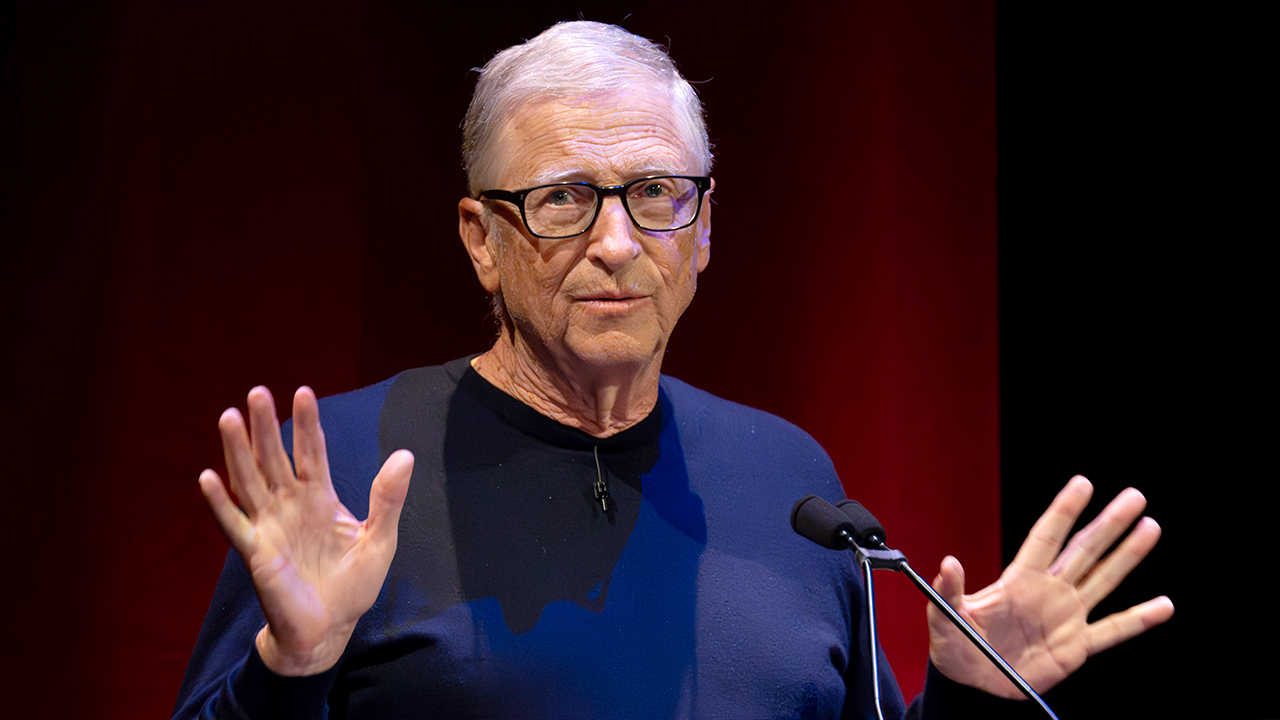
Bill Gates apologized to staff of the Gates Foundation over his ties to Jeffrey Epstein, admitting he made mistakes that had cast a cloud over the philanthropic group while insisting he didn’t participate in Epstein’s crimes.
In a town hall on Tuesday, the Microsoft co-founder acknowledged that he had two affairs with Russian women that Epstein later discovered, but that they didn’t involve Epstein’s victims. “I did nothing illicit. I saw nothing illicit,” Gates said, according to a recording reviewed by The Wall Street Journal.
Gates said images in the recently released Epstein files showing him with women whose faces are redacted were pictures that Epstein asked him to take with Epstein’s assistants after their meetings. “To be clear I never spent any time with victims, the women around him,” Gates said.
“It was a huge mistake to spend time with Epstein” and bring Gates Foundation executives into meetings with the sex offender, Gates said. “I apologize to other people who are drawn into this because of the mistake that I made.”
CLINTONS TO TESTIFY IN EPSTEIN PROBE AFTER BRITISH POLICE ARREST PRINCE ANDREW, PETER MANDELSON
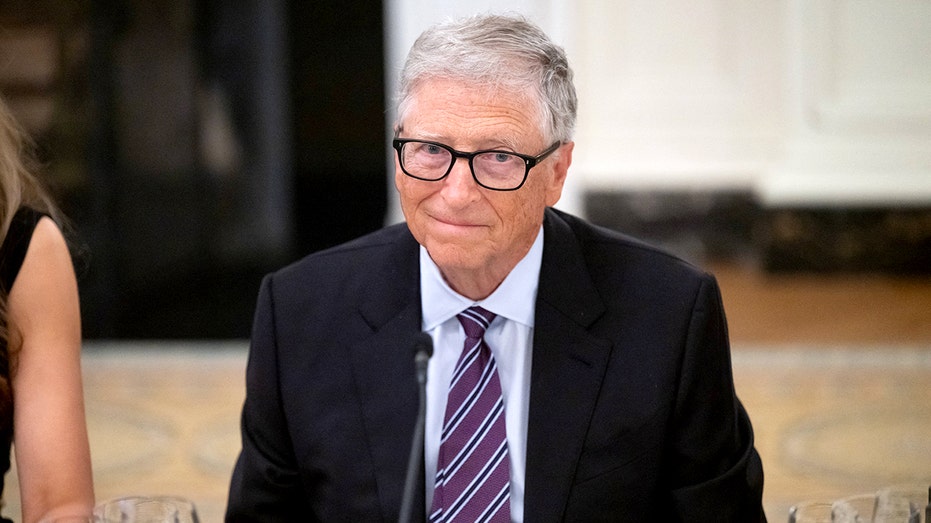
Microsoft co-founder Bill Gates attends a dinner hosted by President Donald Trump with technology leaders in the State Dining Room at the White House in Washington, D.C., Sept. 4, 2025. (Saul Loeb/AFP via Getty Images)
The billionaire said he met with Epstein starting in 2011, years after Epstein had pleaded guilty in 2008 to soliciting a minor for prostitution. Gates said he was aware of some “18-month thing” that had limited Epstein’s travel but said he didn’t properly check his background. Gates said he continued meeting with Epstein even after his then-wife Melinda French Gates expressed concerns in 2013.
“Knowing what I know now makes it, you know, a hundred times worse in terms of not only his crimes in the past, but now it’s clear there was ongoing bad behavior,” Gates told staff. Speaking of his ex-wife, he added: “To give her credit, she was always kind of skeptical about the Epstein thing.”
Gates told staff on Tuesday that he continued meeting with Epstein through 2014, flew on a private jet with Epstein and spent time with him in Germany, France, New York and Washington. “I never stayed overnight,” he said, or visited Epstein’s island.
BILL GATES PLEDGES TO GIVE AWAY NEARLY ALL HIS WEALTH AND CLOSE HIS FOUNDATION IN 2045
He said Epstein “talked about the kind of intimate relationship he had with a lot of billionaires, particularly Wall Street billionaires,” and that he could help raise money for causes like global health.
Gates said because Epstein had other prestigious people at these meetings, that “made it easier for me to feel like this was a normalized situation.” He said he realizes that his association with Epstein also helped the sex offender to burnish his reputation.
Gates admitted that his ties to Epstein and newly disclosed emails from the Justice Department files had cast a cloud over the Gates Foundation and its reputation.
“It definitely is the opposite of the values of the Foundation and the goals of the Foundation,” he said. “And our work is very reputational sensitive. I mean, people can choose to work with us or not work with us.”

The Department of Justice released a trove of Epstein documents on Dec. 19 following President Trump’s signature on the Epstein Files Transparency Act in November 2025. (Joe Schildhorn/Patrick McMullan via Getty Images)
A Gates Foundation spokesperson said Gates holds town halls twice a year and he “spoke candidly, addressing several questions in detail, and took responsibility for his actions.”
Among the recently disclosed emails were two messages Epstein sent to himself in July 2013 that appear to be drafts styled as a resignation letter from Gates’s then science adviser, Boris Nikolic. The second email referenced a Gates “marital dispute” and said the author had facilitated “illicit trysts.”
GET FOX BUSINESS ON THE GO BY CLICKING HERE
In the town hall, Gates opened up about his personal life. “I did have affairs, one with a Russian bridge player who met me at bridge events, and one with a Russian nuclear physicist who I met through business activities,” he told staff.
Gates said that Nikolic, who was close to both Gates and Epstein, knew of those affairs and told Epstein about them. The physicist worked at one of Gates’s companies, though it is unclear if he had that affair while she was his employee.
The Journal earlier this month reported that Epstein inserted himself into negotiations related to Nikolic’s departure from Gates’s private office and dangled allegations that Gates had engaged in extramarital affairs when he put the exit deal together. In a statement, Nikolic previously told the Journal the July 2013 emails “were not written on my behalf or at my request.”
Gates had an affair with a Russian bridge player and Epstein later appeared to use his knowledge to threaten Gates, the Journal reported in 2023. Gates met the woman around 2010, when she was in her 20s. Epstein met her in 2013 and later paid for her to attend software coding school. In 2017, Epstein emailed Gates and asked to be reimbursed for the course.
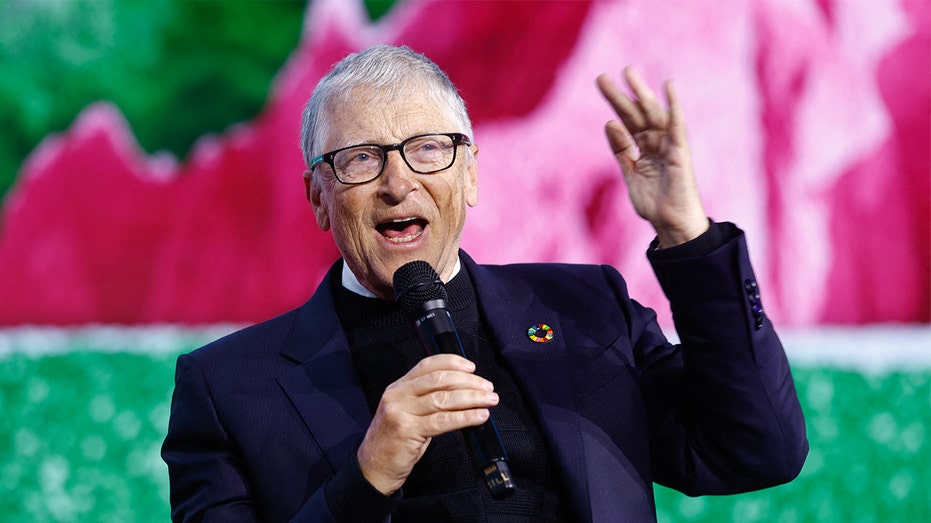
Microsoft co-founder Bill Gates speaks at the Gates Foundation’s inaugural global Goalkeepers event in the Nordics, held in Stockholm, Sweden, on Jan. 22, 2026. (Stefan JERREVANG / TT News Agency / AFP via Getty Images)
CLICK HERE TO READ MORE ON FOX BUSINESS
In a July 4, 2013, email to Nikolic, Epstein wrote: “Bill risks going from richest man to biggest hypocrite, melinda a laughing stock, pledges will disappear as a result.” Epstein continued, naming two women with whom Gates had affairs, saying they “risk becoming overnight sensations.”
Gates said in the town hall that 2014 was the last year he met with Epstein, though there were some “ancillary issues” Epstein brought up. “After that he continued to email me,” Gates said, adding that he didn’t respond.

Fascinating video shows how wind affects your putts on the greens

Why A Good Phone Case Matters More Now Than Ever Before

Manchester Airport parking system to change in March


-

 Video6 days ago
XRP News: XRP Just Entered a New Phase (Almost Nobody Noticed)
-

 Politics4 days ago
Baftas 2026: Awards Nominations, Presenters And Performers
-

 Fashion5 days ago
Weekend Open Thread: Boden – Corporette.com
-

 Sports2 days ago
Women’s college basketball rankings: Iowa reenters top 10, Auriemma makes history
-

 Politics2 days ago
Nick Reiner Enters Plea In Deaths Of Parents Rob And Michele
-
 Sports7 days ago
Clearing the boundary, crossing into history: J&K end 67-year wait, enter maiden Ranji Trophy final | Cricket News
-

 Crypto World2 days ago
XRP price enters “dead zone” as Binance leverage hits lows
-

 Business3 days ago
Mattel’s American Girl brand turns 40, dolls enter a new era
-

 Business3 days ago
Law enforcement kills armed man seeking to enter Trump’s Mar-a-Lago resort, officials say
-

 Entertainment7 days ago
Dolores Catania Blasts Rob Rausch For Turning On ‘Housewives’ On ‘Traitors’
-
 NewsBeat2 days ago
‘Hourly’ method from gastroenterologist ‘helps reduce air travel bloating’
-

 Tech3 days ago
Anthropic-Backed Group Enters NY-12 AI PAC Fight
-

 NewsBeat3 days ago
Armed man killed after entering secure perimeter of Mar-a-Lago, Secret Service says
-

 Tech1 day ago
Unsurprisingly, Apple's board gets what it wants in 2026 shareholder meeting
-

 Politics3 days ago
Maine has a long track record of electing moderates. Enter Graham Platner.
-
 NewsBeat21 hours ago
Police latest as search for missing woman enters day nine
-

 Crypto World21 hours ago
Entering new markets without increasing payment costs
-
 Sports2 days ago
2026 NFL mock draft: WRs fly off the board in first round entering combine week
-

 Crypto World6 days ago
83% of Altcoins Enter Bear Trend as Liquidity Crunch Tightens Grip on Crypto Market
-

 Business1 day ago
WBD says Paramount makes higher bid, board will weigh offer against Netflix deal