
Business
Dow Jones Falls 337 Points as Geopolitical Tensions and Surging Oil Prices Fuel Market Volatility

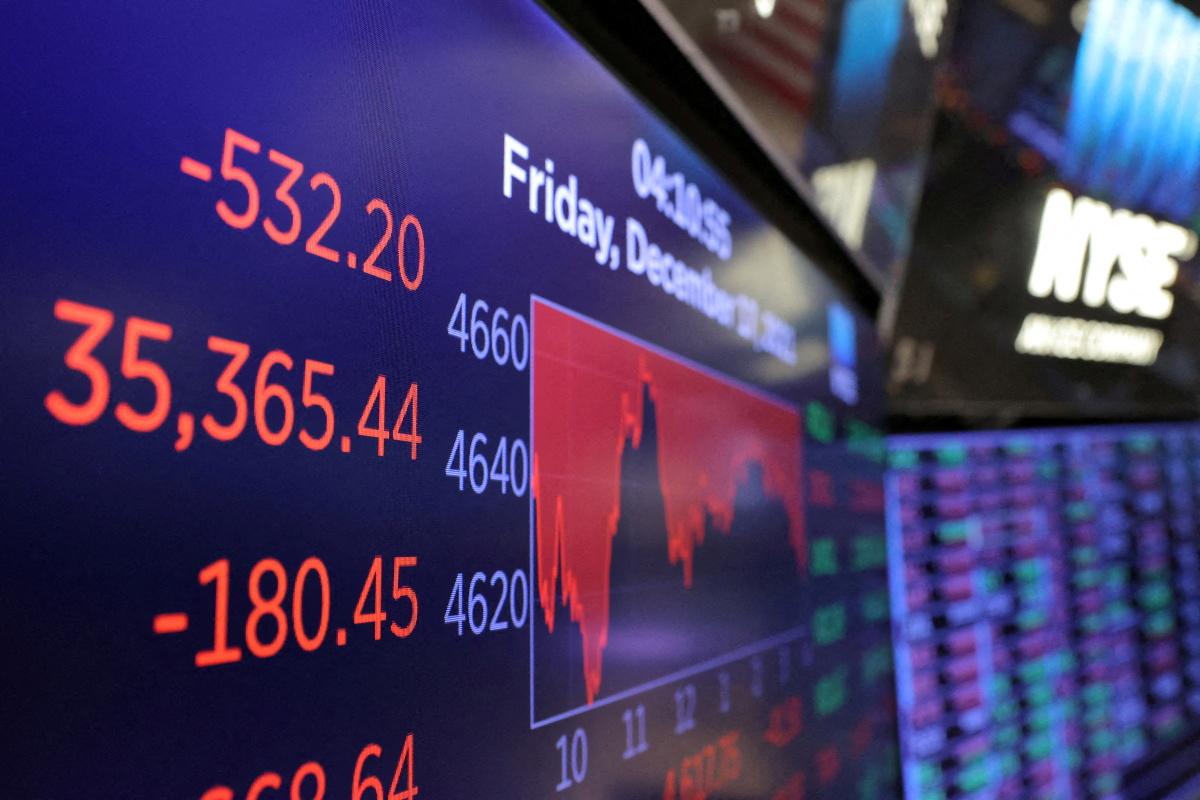
The Dow Jones Industrial Average dropped 337.36 points Friday, closing at 45,622.75 amid persistent worries over the U.S.-Iran conflict and a sharp rise in oil prices that heightened inflation concerns and clouded the outlook for Federal Reserve interest rate cuts.
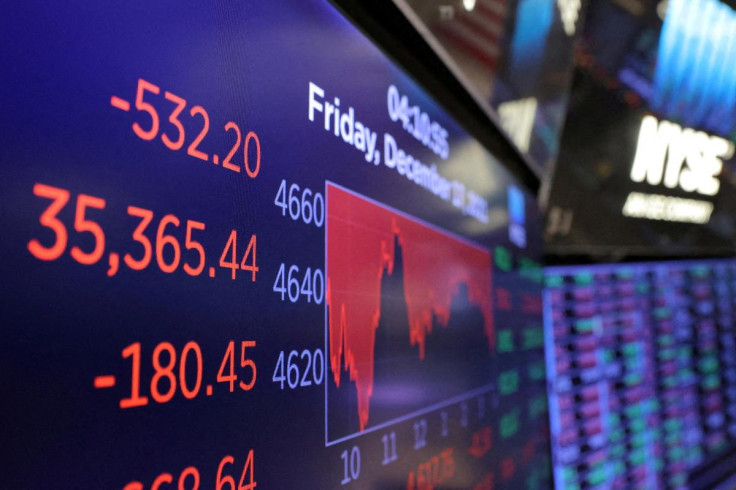
The 0.73% decline extended recent losses for the blue-chip index, which has seesawed this week on mixed signals from the Middle East. Thursday’s steeper 469-point drop gave way to another session of selling pressure as hopes for a quick diplomatic resolution faded and energy costs climbed.
Broader markets also retreated. The S&P 500 fell roughly 1% in early trading before stabilizing somewhat, while the Nasdaq Composite faced heavier losses amid pressure on growth-oriented technology shares. The volatility index, known as Wall Street’s “fear gauge,” remained elevated as traders navigated headline risks.
Oil prices continued their recent surge, with West Texas Intermediate crude futures rising several dollars per barrel toward the $96-$98 range in recent sessions. Brent crude, the global benchmark, hovered near or above $100 in spots, driven by fears that prolonged tensions could disrupt supplies through the Strait of Hormuz, a critical chokepoint for global energy flows.
Analysts said the energy spike acts like a tax on consumers and businesses, potentially slowing economic growth while pushing inflation higher — a double blow that complicates monetary policy.
“Markets are reacting to the uncertainty of how long this geopolitical episode will last,” said one strategist. “A short conflict might be absorbed, but sustained high oil prices could force the Fed to stay cautious on rate cuts.”
Conflict Concerns Weigh on Sentiment
The U.S.-Iran standoff, which intensified in late February, has dominated market narratives. President Donald Trump has pressed for serious negotiations while extending deadlines, but Iranian responses have left diplomats and investors uncertain about de-escalation timelines.
Earlier in the week, fleeting optimism around possible ceasefires sparked brief rallies, only for doubts to trigger reversals. Friday’s session reflected that fragility, with energy-sensitive sectors showing relative strength while high-valuation tech names lagged.
Energy giants within the Dow 30 provided some cushion. Chevron Corp. and Exxon Mobil shares gained ground as higher crude prices boosted profit outlooks for producers. In contrast, consumer discretionary and technology components faced selling, with names like Amazon.com Inc. and Visa Inc. among the notable decliners.
Among the 30 Dow components, gainers were limited but included defensive or value-oriented names such as Verizon Communications Inc. and Walmart Inc. in some sessions. Losers spanned tech-exposed firms and financials sensitive to higher borrowing costs.
Trading volume stayed robust, signaling continued investor caution. Treasury yields edged higher, with the 10-year note approaching 4.4%, as markets priced in stickier inflation and fewer aggressive rate reductions this year.
Broader Economic Backdrop
The latest Dow Jones decline comes against a backdrop of resilient corporate earnings but mounting external risks. While many companies have posted solid results driven by artificial intelligence investments and consumer spending, geopolitical shocks have overshadowed fundamentals.
Economists warn that an “oil shock” of this magnitude could trim U.S. growth forecasts modestly in the near term. In a base case of temporary disruption, inflation pressures might peak quickly, allowing the Fed to deliver measured easing later in 2026. A more prolonged scenario, however, raises risks of slower expansion and delayed policy support.
Smaller companies tracked by the Russell 2000 have shown mixed resilience, sometimes outperforming on domestic focus, but they too felt Friday’s broader pressure.
Year to date, the Dow Jones remains below its early 2026 peak above 50,000 but well above its 2025 low near 36,600. The index is now roughly 9-10% off record highs, reflecting cumulative hits from trade policies, fiscal debates and now Middle East tensions.
The S&P 500 has logged one of its longer weekly losing streaks in recent years, underscoring sustained headwinds.
Sector Rotation and Investor Strategies
The market’s choppiness has prompted sector rotation. Energy stocks have periodically outperformed, benefiting from elevated commodity prices. Defensive areas such as consumer staples and health care have attracted flows seeking stability.
Technology, which powered much of the prior bull run, has been vulnerable due to high valuations and sensitivity to any growth slowdown or rise in discount rates.
“For long-term investors, this volatility highlights the value of diversification,” said portfolio managers. “Holdings in energy or quality large-caps with strong balance sheets may help buffer against energy-driven inflation, while avoiding overexposure to speculative growth plays.”
Technical analysts are watching key support levels on the Dow around 45,000-45,500. A break below could signal deeper correction territory, though many maintain the longer-term uptrend remains intact barring major escalation.
Gold and other safe-haven assets have climbed in recent sessions, while the U.S. dollar has held steady against major currencies.
Global Markets Reflect Caution
Overseas bourses mirrored U.S. unease. European indices closed lower, and Asian markets showed mixed results as traders weighed the same energy and conflict risks.
Shipping and insurance costs in global trade routes have risen, adding to supply chain concerns if tensions persist in the Gulf region.
International economists project global growth near 2.8% for 2026, with the U.S. potentially holding up better than some peers, but near-term energy shocks could force revisions.
Outlook and What to Watch
As trading continues into next week, investors will scrutinize any fresh developments from Washington and Tehran. Oil futures movements will serve as a real-time barometer of supply disruption fears.
Upcoming U.S. economic data — including inflation readings, employment figures and consumer spending — will gain added importance. Stronger-than-expected inflation could further dampen rate-cut expectations.
Corporate earnings season winds down, but forward guidance from major firms will be parsed for mentions of energy costs or geopolitical impacts.
Analysts remain divided on the near-term path. Some view the pullback as a healthy correction within a bull market supported by innovation and solid fundamentals. Others caution of additional downside if oil stays elevated or conflict widens.
Citi and other firms have recently trimmed U.S. equity exposure, citing risks of no swift resolution.
For individual investors, the message is one of patience and risk management. Dollar-cost averaging into diversified portfolios, maintaining cash buffers for opportunities and avoiding emotional reactions to daily headlines can help navigate such periods.
The Dow Jones Industrial Average, despite its price-weighted limitations and focus on just 30 companies, continues to serve as a widely watched symbol of American economic health. Its recent performance captures the tug-of-war between underlying resilience and external shocks.
Traders and long-term holders alike will monitor not only the headline index level but also shifts in sector leadership, bond yields and commodity trends that could shape market direction through the remainder of 2026.

Business
US Stock Market | Stocks tumble, Dow confirms correction territory, as Middle East tensions drag
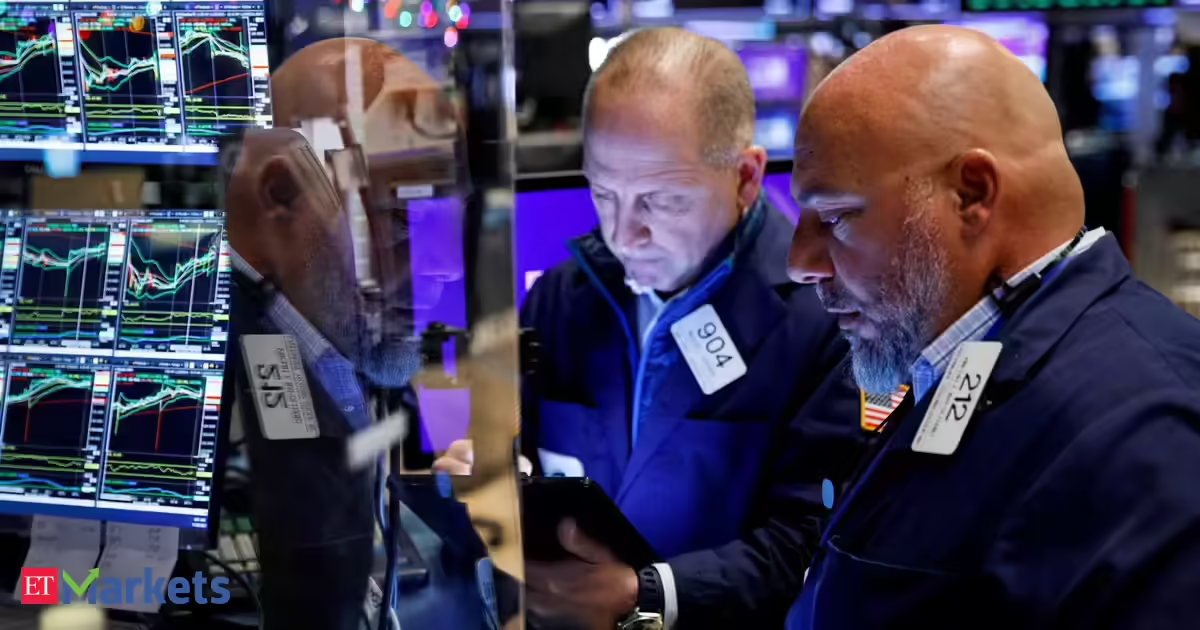
The Dow, S&P 500 and Nasdaq each suffered their fifth straight weekly decline, the longest such streak in nearly four years. The Dow is now down more than 10% from its February 10 record close, becoming the latest major index to confirm a correction, commonly defined as a drop of 10% from its prior high. The Dow follows the Nasdaq in crossing the correction threshold while the Russell 2000, which was the first on the correction path, confirmed it last Friday.
“Clearly, the overall tone has turned very negative and now we have broken down into correction territory,” said Ken Polcari, partner and chief market strategist at SlateStone Wealth in Jupiter, Florida.
“In the end, I would view this as a big opportunity, but would not be surprised if we see a drawdown anywhere between 15% to 20% before it is over.”
The Dow Jones Industrial Average fell 793.47 points, or 1.73%, to 45,166.64, the S&P 500 lost 108.31 points, or 1.67%, to 6,368.85 and the Nasdaq Composite lost 459.72 points, or 2.15%, to 20,948.36.

The CBOE Volatility Index, considered Wall Street’s fear gauge, was up 3.61 points to close at 31.05, its highest close since April 21.
Megacaps were the biggest drag on the benchmark S&P index, with Nvidia down 2.2% as the biggest weight, while Amazon dropped 4%. Software shares were also under renewed selling pressure, and the S&P 500 software and services index closed at its lowest level since November 6, 2023. Along with pressure from Amazon, consumer discretionary stocks dropped 3.1%, the worst-performing of the 11 major S&P sectors, as cruise operator Carnival slumped 4.3% after cutting its annual adjusted profit forecast. Fellow cruise operator Norwegian tumbled 6.9%. The surge in oil prices along with other products such as fertilizer as a result of the Iran war has fanned inflation fears and dampened expectations that the Federal Reserve and other central banks have room to lower interest rates. Money market participants are not pricing in any easing from the U.S. Federal Reserve this year, compared with expectations of two cuts before the conflict broke out, according to CME’s FedWatch Tool. Markets are now pricing in a roughly 25% chance for a hike of at least 25 basis points at the Fed’s October meeting. Philadelphia Fed President Anna Paulson acknowledged the risks to the economy from the war, but did not specify what it meant for monetary policy in the near term. U.S. consumer sentiment eased to a three-month low in March, raising concerns about the economy due to the Middle East war.
Declining issues outnumbered advancers by a 3.38-to-1 ratio on the NYSE and by a 3.62-to-1 ratio on the Nasdaq.
The S&P 500 posted 22 new 52-week highs and 27 new lows while the Nasdaq Composite recorded 25 new highs and 355 new lows.
Volume on U.S. exchanges was 18.13 billion shares, compared with the 20.4 billion average for the full session over the last 20 trading days.
Business
PVAL: Cautiously Optimistic Owing To Recent Outperformance, Factor Mix, Buy Rating Maintained
PVAL: Cautiously Optimistic Owing To Recent Outperformance, Factor Mix, Buy Rating Maintained

Earnings call transcript: Blend Labs Q4 2025 sees revenue beat, EPS miss
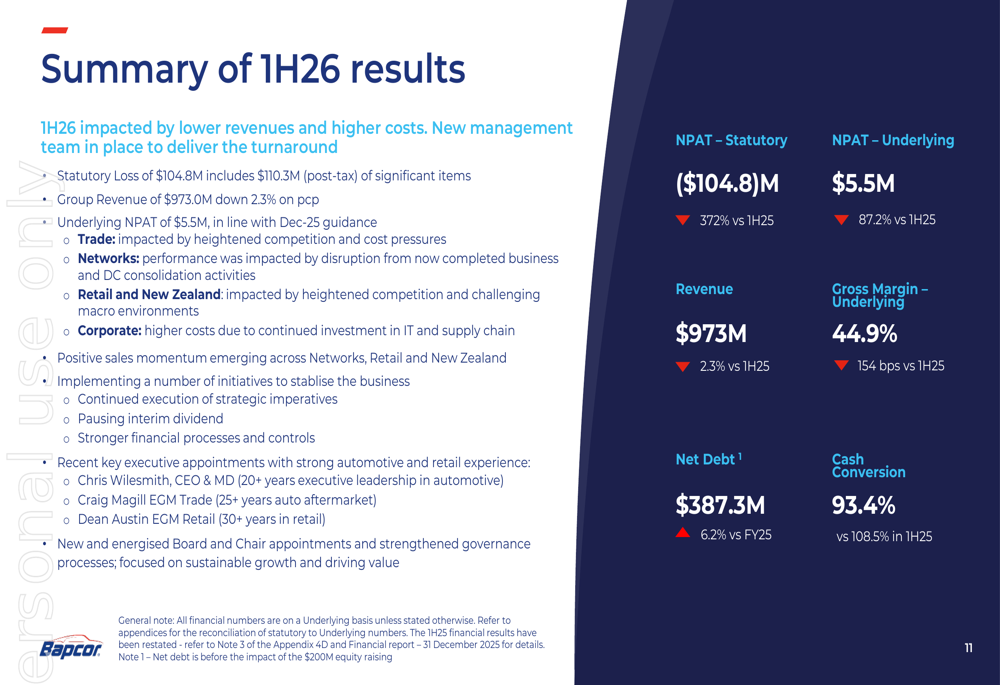
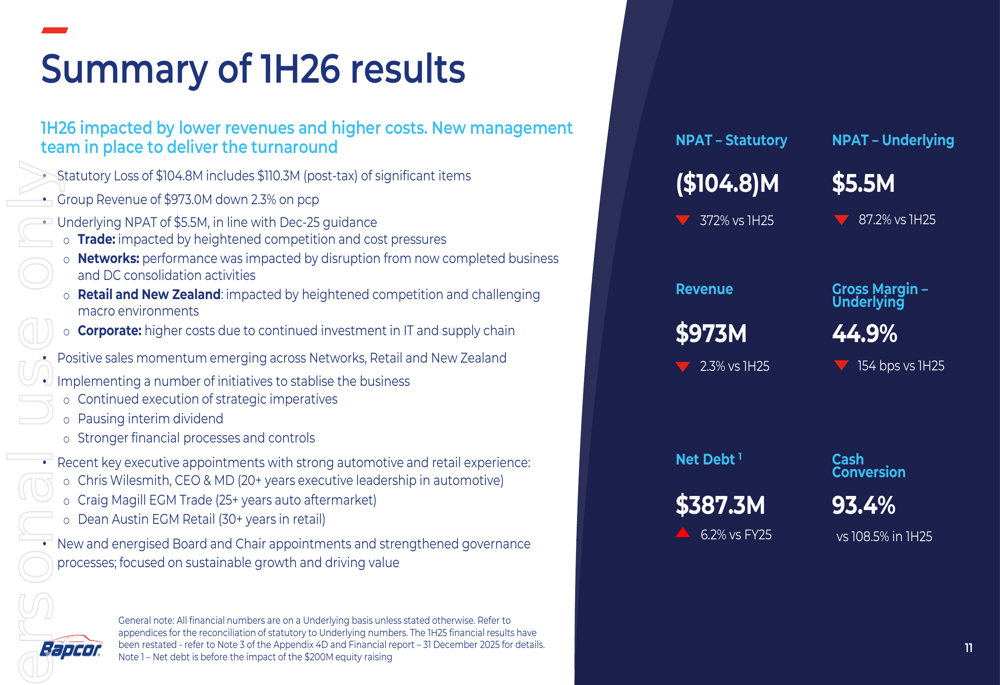
Bapcor 1H26 slides: new CEO outlines turnaround after $105M loss

Heard on the Street Recap: Weight of War
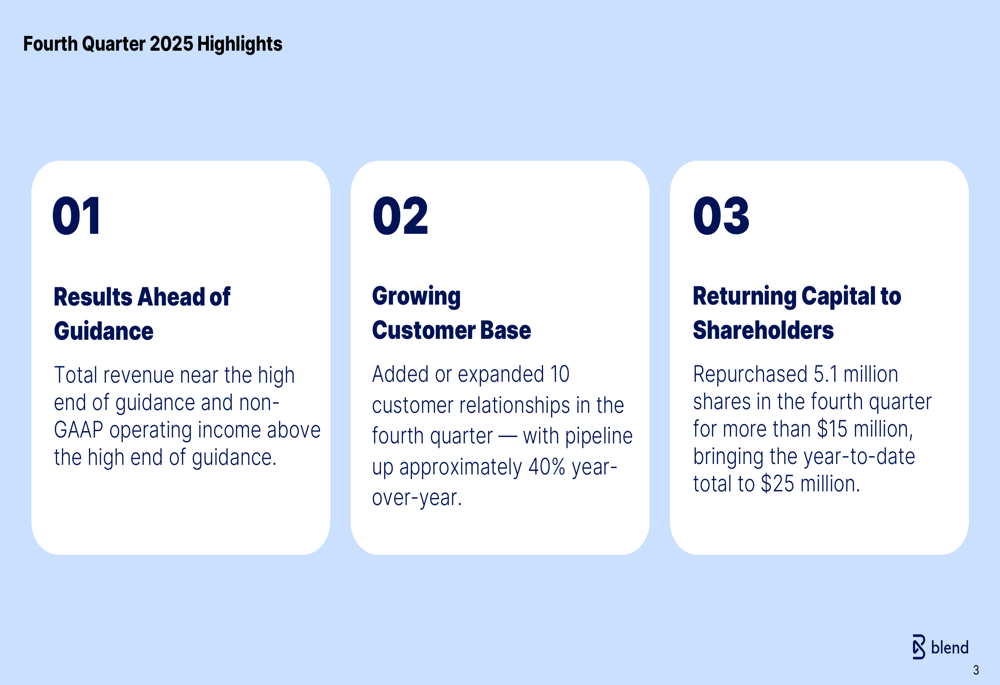
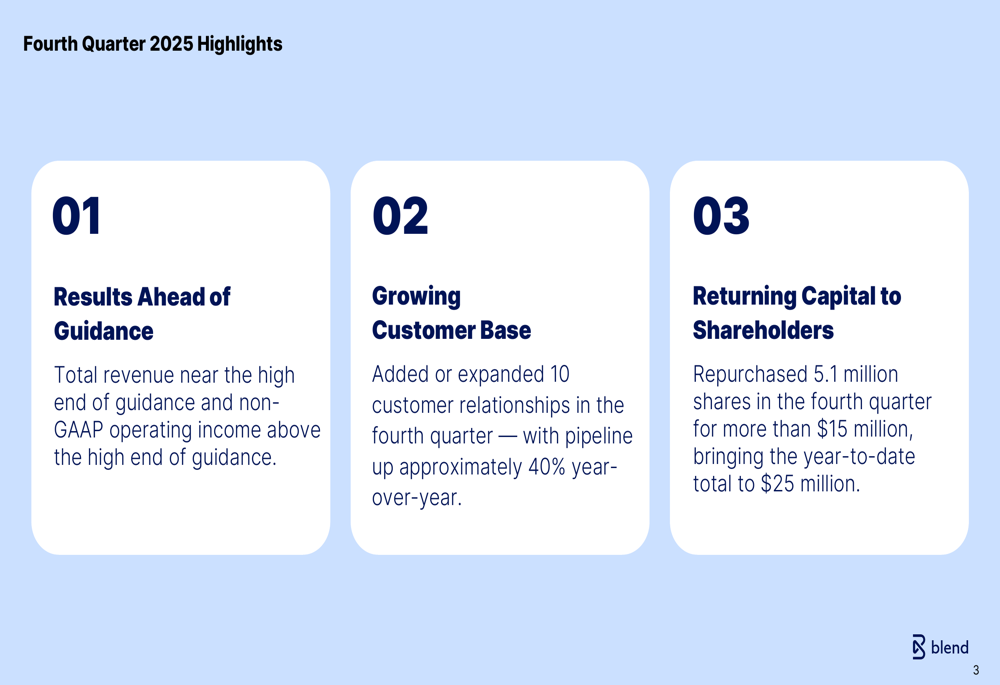
Blend Labs Q4 2025 slides: revenue beats, margins expand amid EPS miss

Cees ´t Hart
Good morning, ladies and gentlemen. It’ 10 a.m., so I propose that we open this meeting. Welcome. I’m Cees ´t Hart. I Chair the Supervisory Board, and I’m pleased to open this Annual General Meeting of Shareholders and welcome you all. I’m also pleased to welcome those following this meeting online.
Today, all members of the Executive Board are present. From left to right, they’re seated at the table, our COO, Jesus Echevarria; our CHRO, Myriam Beatove, CFO; Jorge Vazquez and our birthday boy, Sander van ‘t Noordende. And we hope that you’ll join us for coffee on his behalf. I’m not going to sing happy birthday because I’m not sure what the result would be, but welcome, but welcome Sander van ‘t Noordende on behalf of the Supervisory Board, alongside myself. From left to right, the Audit Committee Chair, Laurence Debroux, the Remuneration Committee Chair, Annet Aris and Jeroen Drost. The other members of the Supervisory Board are attending the meeting online. Also with us this morning is
Also with us this morning is Jacobina Brinkman from the accountancy firm,PricewaterhouseCoopers at 2D adoption of the 2025 financial statements. She’ll be happy to answer questions concerning the financial statements. Previous — prior to this, she’ll deliver a brief explanation about the annual audit process and the auditor’s report. We also have with us the Company Secretary, Jelle Miedema, who I hereby appoint as Secretary of the meeting and will first explain some procedural matters.

The yield rose more than 20 basis points this week, the most since May 2022, LSEG data showed.
The 10-year bond opened at 6.93% and traded in a range of 6.95% to 6.90%, according to Clearing Corporation of India data.
The yield on India’s 10-year government bond rose sharply Friday. This increase follows a cut in fuel excise duty which impacted the fiscal outlook. High state bond sales and rising oil prices also contributed to the jump. The benchmark yield has seen its biggest weekly rise since May 2022.
“The opening and follow-up action both were weak today. One would have expected some demand to emerge after yields touched 6.95%, but there was no retracement,” said Vijay Sharma, senior executive vice-president at PNB Gilts.
Traders are finding it hard to call specific levels in this kind of volatility, especially with the West Asia war ongoing and oil prices staying elevated.
 Agencies
 Brent crude oil prices rose by $1.87, or 1.73%, to $109.88 a barrel, LSEG data showed.
“We cannot project future levels in such volatile conditions, and we do not know what will happen overnight,” Sharma said. Bonds are also under strain as states sold debt worth nearly ₹1 lakh crore during the week, amid waning investor demand.
Financial institutions are expected to face mark-to-market losses as the benchmark yield has increased more than 30 basis points this quarter, from 6.60% on January 1.
Many dealers no longer expect the yield to fall to the 6.75% level, even if the West Asia war ends, which is the best-case scenario.

# Lefkofsky Eric P, CEO of Tempus AI, sells $7.7 million in stock

The Federal Trade Commission warned four leading payment processors against denying customers access to financial services due to their political or religious views.
The letters, sent by FTC Chair Andrew Ferguson to the chief executives of , Visa V -3.28%decrease; red down pointing triangle, PayPal PYPL -3.56%decrease; red down pointing triangle and Stripe, cited President Trump’s August executive order on “debanking,” which Ferguson said “makes clear that it is unacceptable to debank law-abiding citizens due to ‘political affiliations, religious beliefs, or lawful business activities.’”
Copyright ©2026 Dow Jones & Company, Inc. All Rights Reserved. 87990cbe856818d5eddac44c7b1cdeb8
Joseph Duggar being held in solitary confinement: 'I'm not sleeping great,' he tells wife Kendra in jailhouse call

WNBA’s Connecticut Sun set to relocate to Houston following $300 million sale, per reports

I sold it all today


-
 NewsBeat3 days ago
Manchester United reach agreement with Casemiro over contract clause amid transfer speculation
-

 Crypto World6 days ago
Best Crypto to Buy Now: Strategy Just Spent $1.57 Billion on Bitcoin During Fear While Early Investors Quietly Enter Pepeto for 150x Potential
-

 News Videos2 days ago
Parliament publishes latest register of MPs’ financial interests
-

 Crypto World6 days ago
Bitcoin Price News: Bhutan Sells $72 Million in BTC Under Fiscal Pressure, but the Smart Money Entering Pepeto Sees What the Market Does Not
-

 Sports5 days ago
Remo Stars and Kano Pillars Strengthen Survival Hopes in NPFL
-

 Sports5 days ago
Gary Kirsten Accuses Pakistan Cricket Board Of ‘Interference’, Mohsin Naqvi Responds
-

 Business5 days ago
No Winner in March 21 Drawing as Prize Rolls to $133 Million for Next
-

 Tech5 days ago
Give Your Phone a Huge (and Free) Upgrade by Switching to Another Keyboard
-

 Tech5 days ago
AI enters the chat: New Seattle dating app relies on tech to facilitate meaningful human connections
-

 News Videos5 days ago
Ch 9 Financial Management Part 1 | Detailed One Shot | Class 12 Business Studies Boards 2026
-

 Tech6 days ago
Today’s NYT Connections Hints, Answers for March 22 #1015
-

 Business1 day ago
Instagram, YouTube Found Responsible for Teen’s Mental Health Struggle in Historic Ruling
-

 Business6 days ago
Will Duke Basketball Win It All? Duke Basketball Enters Second Round as Third Favorite to Claim NCAA Title
-

 Sports5 days ago
2026 Kentucky Derby horses, odds, futures, preview, date: Expert who hit 12 Derby-Oaks Doubles enters picks
-
 NewsBeat6 days ago
Update on Wisbech river crash as search for teenage boy enters fifth day
-
 Entertainment5 days ago
Cynthia Bailey Dishes on ‘RHOA’ Season 17, Discusses Kandi
-

 Tech4 days ago
Samsung will soon let you control smart home devices from your car’s dashboard
-

 Fashion3 days ago
Does It Matter What You Wear When You’re Laid Off and Looking?
-
 NewsBeat3 days ago
Tesco is selling new Cadbury Dairy Milk bar and people can’t wait to try it
-

 NewsBeat5 hours ago
The Story hosts event on Durham’s historic registers
You must be logged in to post a comment Login