







Connect with us

Business

Earnings call transcript: Huddly AS sees strategic growth in Q4 2025

Published

on

Continue Reading
Click to comment

Leave a Reply

Your email address will not be published. Required fields are marked *

Business

TeraWulf (WULF) Stock Surges 12% to $17.56 Ahead of Q4 2025 Earnings, Hits 52-Week High on Expansion

Published

on

UiPath

TeraWulf Inc.’s stock rallied sharply on February 24, 2026, closing at $17.56 after gaining 11.99%, marking a new 52-week high near $18.03 as investors positioned ahead of the company’s fourth-quarter and full-year 2025 earnings report scheduled for February 26, amid ongoing enthusiasm for its shift toward high-performance computing (HPC) infrastructure and aggressive capacity expansion.

TeraWulf Inc
TeraWulf Inc

The surge followed a multi-day uptrend, with shares climbing from around $15.68 on February 23, driven by repositioning ahead of results and broader optimism in the digital infrastructure sector. Volume reached approximately 46 million shares on February 24, reflecting heightened interest. Year-to-date in 2026, the stock has risen about 53%, building on a more than 100% gain in 2025, with a market capitalization now approaching $7.3 billion to $7.4 billion.

TeraWulf, a vertically integrated owner and operator of sustainable data centers focused on Bitcoin mining and HPC hosting, has increasingly emphasized its pivot to AI and compute infrastructure. The company operates facilities powered by zero-carbon energy sources, including nuclear and hydro, providing a competitive edge in energy-intensive operations. Recent announcements highlight plans to develop up to 1,480 MW of new digital and power capacity through acquisitions of land parcels in Kentucky and Maryland, diversifying beyond its core sites in New York and Pennsylvania.

The expansion strategy aligns with surging demand for AI data center capacity, where Bitcoin miners leverage existing power contracts and infrastructure to host high-performance workloads. Analysts note TeraWulf’s ability to repurpose mining assets for more stable, higher-margin HPC leasing, with some observers calling it a “real infrastructure play” in the AI era. The company has been monetizing Bitcoin holdings to fund these initiatives, capitalizing on favorable market conditions.

Upcoming earnings, set for after market close on February 26 with a conference call at 4:30 p.m. ET, represent a key catalyst. The Zacks consensus estimates fourth-quarter revenue at $43.55 million to $44.1 million—up about 24-26% year-over-year from $35 million in the prior-year period—while projecting an adjusted loss of $0.13 to $0.15 per share, wider than the year-ago $0.08 loss but reflecting ongoing investments. Investors will scrutinize updates on hashrate, energy costs, HPC leasing progress, and guidance for 2026, including any metrics on capacity utilization and margin expansion.

Advertisement

TeraWulf’s operational highlights include sustained Bitcoin mining at sites like Lake Mariner in New York, supported by low-cost, sustainable power. The company has emphasized environmental sustainability, positioning itself favorably amid regulatory scrutiny on energy-intensive crypto operations. Recent participation in investor conferences, announced February 10, 2026, including upcoming events in March, underscores management efforts to communicate the growth story.

Wall Street sentiment leans bullish. Consensus among analysts rates WULF a Moderate Buy to Buy, with average 12-month price targets around $20.31—implying roughly 15-20% upside from current levels, though some firms set targets in the $20-$24 range. Retail investors on platforms like Stocktwits express even higher optimism, with some forecasting more than 250% additional upside tied to AI infrastructure tailwinds.

Risks remain prominent in this high-volatility sector. The stock carries a beta of 4.34, indicating extreme sensitivity to market swings, and some analyses suggest it trades overvalued relative to fair value estimates. Bitcoin price fluctuations, energy cost volatility, regulatory changes, and execution risks on expansion projects could pressure performance. Broader concerns include potential oversupply in compute capacity or shifts in AI spending.

The February 26 earnings release will provide critical insights into how TeraWulf balances its legacy Bitcoin mining with emerging HPC opportunities. Positive surprises on revenue, cost controls, or new leasing deals could extend the rally; any signs of margin compression or delayed timelines might trigger pullbacks.

Advertisement

TeraWulf stands at the forefront of the convergence between cryptocurrency infrastructure and AI compute demand. Its sustainable power model, strategic land acquisitions, and capacity growth position it to benefit from long-term digital infrastructure trends. As the company transitions toward greater HPC focus, investor attention will center on execution and profitability in a rapidly evolving market.

With earnings imminent and shares at fresh highs, TeraWulf exemplifies the high-reward potential—and risks—of companies adapting legacy mining operations to the AI boom.

Continue Reading

Business

Bitcoin Miners Position for Volatile Report

Published

on

UiPath

MARA Holdings Inc.’s stock advanced modestly on February 24, 2026, closing at $8.05 after gaining 2.22%, as investors positioned cautiously ahead of the Bitcoin mining company’s fourth-quarter and full-year 2025 earnings report scheduled for February 26, amid ongoing sector challenges and a broader crypto market rebound.

MARA Holdings, Inc
MARA Holdings, Inc

The shares, trading on NASDAQ under ticker MARA, traded in a range of $7.59 to $8.17 during the session with volume of approximately 37 million shares—below recent averages but still elevated. The stock has declined sharply year-to-date in 2026, down roughly 14-15% from early January levels, and remains well below its 52-week high of $23.45 reached in 2025. The pullback reflects pressure from Bitcoin price volatility, rising energy costs, increased competition, and a shift in investor sentiment toward profitability amid a maturing digital asset industry.

MARA Holdings, formerly Marathon Digital Holdings, operates large-scale Bitcoin mining facilities powered by sustainable energy sources, including hydro and nuclear, across North America. The company has emphasized energy efficiency and strategic Bitcoin accumulation, holding significant reserves to benefit from price appreciation while generating revenue from mining rewards and sales.

The February 24 gain followed a multi-day stabilization around $7.50-$8.00, with analysts attributing the modest uptick to pre-earnings repositioning and a slight Bitcoin recovery. Trading volume reached about $290 million, ranking the stock 424th in activity for the day, indicating selective interest rather than broad enthusiasm.

The upcoming earnings release, set for after market close on February 26 with a conference call at 5:00 p.m. ET, represents a pivotal moment. The Zacks consensus estimate calls for a net loss of $0.23 per share—wider than the year-ago profit of $1.24—while projecting revenue of approximately $223.9 million to $224 million, up 4.4% year-over-year. Expectations center on mining output, energy costs, Bitcoin holdings, and any updates on expansion or diversification efforts.

Advertisement

MARA has pursued a dual strategy of efficient Bitcoin mining and strategic asset retention, with recent quarters showing resilience despite industry headwinds. The company has highlighted low power costs through long-term contracts and investments in sustainable infrastructure. However, analysts note challenges from halving events reducing block rewards, higher competition, and potential dilution from capital raises.

The firm has also explored adjacent opportunities, including partnerships and infrastructure development to support broader digital energy applications. A February 20 announcement scheduled the earnings call, with results to be detailed in a shareholder letter on the investor relations site prior to the webcast.

Wall Street views remain mixed but lean toward Hold to Moderate Buy. Consensus among covering analysts sets average 12-month price targets around $19.27—implying significant upside of over 130% from current levels—though targets vary widely reflecting the stock’s high beta of 5.56 and sensitivity to Bitcoin movements. Some firms highlight MARA’s scale and energy advantages as positives for long-term recovery, while others caution on near-term profitability and execution risks.

Broader sector dynamics influence sentiment. Bitcoin mining stocks have faced volatility in 2026 following 2025’s crypto rally, with concerns over energy prices, regulatory scrutiny, and the transition to post-halving economics. MARA’s debt-to-equity ratio of 0.63 and current ratio above 2.0 provide some balance sheet stability, but the stock trades below its 50-day ($9.46) and 200-day ($13.66) moving averages, signaling technical weakness.

Advertisement

Upcoming catalysts include the February 26 report, where management will likely address guidance for 2026, Bitcoin production trends, cost controls, and any progress on non-mining initiatives. Positive surprises on revenue, margins, or Bitcoin holdings could spark a rebound; wider-than-expected losses or cautious outlook might extend downside.

MARA Holdings continues to navigate a transitional phase in the digital asset sector. Its focus on sustainable operations and large-scale mining positions it to benefit from any sustained Bitcoin rally or increased institutional adoption. However, proving consistent profitability amid cyclical pressures will be key to regaining investor confidence.

As earnings approach, the stock’s trajectory hinges on execution and macro crypto trends. With shares at levels well below recent peaks, some see opportunity in the volatility, while others await clearer signs of stabilization in the mining landscape.

Advertisement
Continue Reading

Business

Caterpillar Stock Is Rolling. It Just Got Another Price Target Hike.

Published

on

Caterpillar Stock Is Rolling. It Just Got Another Price Target Hike.

Caterpillar Stock Is Rolling. It Just Got Another Price Target Hike.

Continue Reading

Business

Reform vows to scrap Renters’ Rights Act, warning of ‘job-killing’ regulation

Published

on

Reform UK has pledged to abolish the government’s Renters’ Rights Act if it wins the next general election, describing the legislation as part of a raft of regulations that are “hindering growth, investment and prosperity”.

Reform UK has pledged to abolish the government’s Renters’ Rights Act if it wins the next general election, describing the legislation as part of a raft of regulations that are “hindering growth, investment and prosperity”.

The Renters’ Rights Act 2025, due to come into force in May, represents one of the most significant overhauls of England’s private rented sector in decades. It abolishes Section 21 “no-fault” evictions, limits rent increases to once per year at market rate, strengthens tenants’ rights to request pets and bans discrimination against families with children or those receiving benefits.

Reform’s deputy leader, Richard Tice, said the party would introduce a “Great Repeal Bill” aimed at reversing what he called “well-intentioned but damaging” rules across multiple sectors. Speaking in Birmingham, he said new property rental regulations should be scrapped alongside employment reforms and environmental mandates.

“Let’s ditch daft regulations,” Tice said. “Scrap new property rental rules, all well intentioned but they kill jobs, hinder growth and investment. This will help lower inflation and bring down bills.”

The announcement has reignited debate over how best to balance tenant security with landlord confidence and housing supply.

Advertisement

Patricia Ogunfeibo, founder of tenant2owner, said repealing the Act could generate further instability in a market already grappling with political uncertainty.

“Scrapping the Renters’ Rights Act may sound attractive from a growth perspective,” she said, “but constant policy reversals create instability for both landlords and tenants. Retrospective changes and disregard for existing contractual arrangements already undermine confidence. Repealing the Act outright could intensify that uncertainty.”

She added that renters should not rely solely on shifting political agendas to secure their housing future, urging more focus on pathways to home ownership.

Simon Bridgland, a broker at Charwin Private Clients, suggested that full abolition was unlikely in practice, arguing that certain elements of the legislation, particularly measures targeting poor housing standards, had broad support.

Advertisement

“I can see more dilution than abolition,” he said. “The Act does introduce positive changes for tenants in terms of living conditions and accountability. The difficulty lies in how aggressively some of these standards have been implemented, particularly around energy efficiency.”

Landlords, he noted, face rising compliance costs, tighter tax treatment and increasing regulatory burdens. “Profit margins have already been squeezed. If incentives disappear entirely, fewer landlords will remain in the market and that reduces supply.”

Other analysts cautioned that repealing tenant protections alone would not address the structural shortage of housing.

David Stirling, an independent financial adviser at Mint Wealth, said Britain’s housing crisis stems primarily from insufficient supply.

Advertisement

“The real question is whether scrapping the Act would increase housing stock,” he said. “Without a meaningful boost in new builds and social housing, weakening tenant rights risks creating a more insecure rental market without making rents cheaper.”

Stirling argued that successive governments have failed to tackle long-term supply constraints, instead oscillating between landlord-focused and tenant-focused reforms.

Official data show the private rented sector remains a crucial part of the housing system, accommodating millions of households. However, landlord exits have accelerated in recent years amid tax changes and higher borrowing costs, contributing to reduced rental availability in some regions.

Michelle Lawson, director at Lawson Financial, supported Reform’s position, claiming the legislation could discourage landlords from maintaining or expanding portfolios.

Advertisement

“It will lessen housing stock, making rents more expensive and reducing choice,” she said. “When supply shrinks, landlords can be more selective, which ultimately affects vulnerable renters.”

The Renters’ Rights Act has been one of Labour’s flagship housing reforms, positioned as a response to rising tenant insecurity and escalating rents. Ministers have argued that ending no-fault evictions will create a fairer and more stable rental system.

Critics, however, say the legislation risks shifting the balance too far against landlords at a time when higher mortgage rates and stricter lending criteria have already reduced investor appetite.

With housing affordability and rental shortages dominating political debate, Reform’s pledge signals that the private rented sector is likely to remain a central battleground ahead of the next election.

Advertisement

Whether scrapping the Act would stimulate supply or simply deepen volatility remains contested. What is clear is that Britain’s rental market continues to face profound structural pressures, with policy direction likely to shape landlord behaviour, and tenant security, for years to come.


Jamie Young

Jamie Young

Jamie is Senior Reporter at Business Matters, bringing over a decade of experience in UK SME business reporting.
Jamie holds a degree in Business Administration and regularly participates in industry conferences and workshops.

When not reporting on the latest business developments, Jamie is passionate about mentoring up-and-coming journalists and entrepreneurs to inspire the next generation of business leaders.

Advertisement
Continue Reading

Business

IREN Limited (IREN) Stock Surges to $45.45 on AI Cloud Momentum

Published

on

UiPath

IREN Limited shares rallied sharply on February 24, 2026, closing at $45.45 after jumping 7.29%, extending a volatile but upward trend as the former Bitcoin miner-turned-AI cloud infrastructure provider benefits from major hyperscaler deals and institutional interest, even after a recent earnings miss highlighted execution challenges in its pivot.

IREN Limited
IREN Limited

As of February 24, 2026, IREN (NASDAQ: IREN) traded in a session range of $40.83 to $45.68 with volume exceeding 36 million shares—below recent averages but still robust amid the rebound. The stock has climbed significantly in recent sessions, recovering from dips following its February 5 Q2 fiscal 2026 results, and now sits well above early-2026 levels while remaining below its 52-week high near $76-77. Year-to-date performance reflects strong momentum in the AI infrastructure theme, with the market capitalization approaching $15 billion.

The February 24 advance followed heavy pre-earnings positioning and post-miss digestion, with analysts and investors focusing on forward visibility from multi-year contracts rather than near-term quarterly shortfalls. In its Q2 FY26 results released February 5, IREN reported revenue of $184.69 million—down 23.1% year-over-year and missing consensus estimates of around $229.64 million—amid declining Bitcoin mining volumes and prices during the period. Adjusted EPS came in at -$0.44 to -$0.52 (depending on source), wider than the -$0.07 to -$0.18 expected, contributing to a negative return on equity of about 10% and ongoing net losses.

Despite the miss, management emphasized progress in its strategic shift toward AI cloud services. The company highlighted secured multi-year GPU cloud contracts, including a landmark deal with Microsoft that underpins ambitions for $3.4 billion in annualized recurring revenue (ARR) by the end of 2026. Additional agreements with customers like Together AI, Fluidstack, and Fireworks AI bolster the pipeline, with GPU financing and purchases (including from Dell) supporting deployment.

IREN appointed John Gross as Chief Innovation Officer on February 17, 2026, in a new role to oversee engineering standards, thermal architecture, and commissioning for next-generation data centers. The move aligns with expansion at sites in British Columbia, Childress, Texas, and the Sweetwater Hub, where the company leverages sustainable power sources to attract high-performance computing tenants.

Advertisement

Analysts remain predominantly bullish on the long-term story. Consensus among 13-18 covering firms rates IREN a Moderate Buy to Buy, with average 12-month price targets around $71.69 to $79.31—implying 58-75% upside from current levels. High targets reach $125, reflecting optimism around AI tailwinds, while some caution persists on profitability timing and execution risks. Seeking Alpha contributors noted execution hurdles and uncertain near-term profitability offset by AI momentum and partnerships, maintaining Hold views in some cases.

The company’s transition from pure Bitcoin mining to diversified digital infrastructure—balancing legacy mining with AI cloud hosting—positions it amid surging data center demand. IREN’s sustainable energy model provides a competitive edge in power-intensive operations, with institutional inflows (including Cantor Fitzgerald adding shares) supporting liquidity and confidence.

Upcoming catalysts include the next earnings report for Q3 FY26, expected around May 13, 2026, where updates on AI cloud ARR progress, GPU deployments, and Bitcoin mining trends will be scrutinized. Management’s guidance for significant ARR growth by end-2026 could fuel further upside if milestones are met; delays in capacity ramp or softening crypto conditions might introduce volatility.

IREN navigates a high-growth but high-risk phase in the evolving digital asset and AI landscape. Its hyperscaler partnerships, infrastructure scale, and sustainable focus offer substantial potential as AI infrastructure spending accelerates. Investors betting on the pivot see current levels as attractive despite recent misses, with the stock’s trajectory tied to execution on AI contracts and broader sector tailwinds.

Advertisement
Continue Reading

Business

HSBC staff share $3.9bn bonus pot as profits top forecasts

Published

on

HSBC staff share $3.9bn bonus pot as profits top forecasts

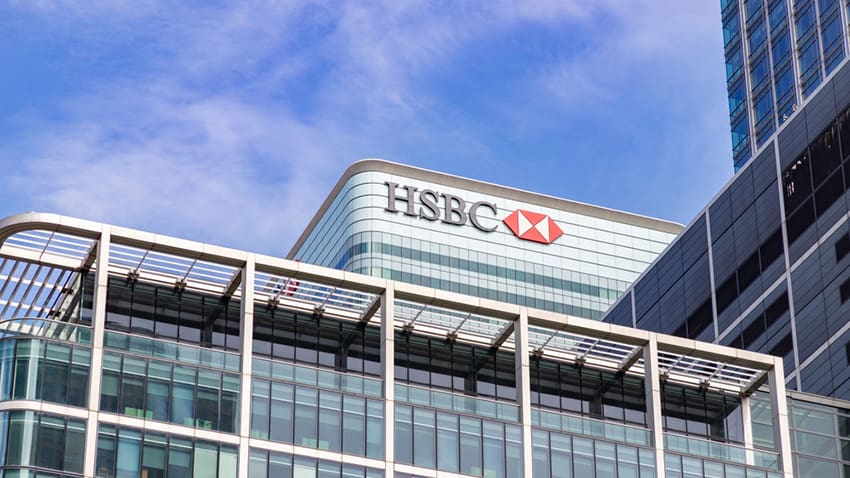
HSBC has unveiled its largest bonus pool in 14 years after annual profits came in ahead of City expectations, handing bankers a $3.9bn windfall as the group accelerates its strategic overhaul.

The FTSE 100 lender increased total variable pay by 10 per cent year-on-year, taking the 2025 bonus pot to its highest level since $4.2bn was distributed in 2011. The uplift comes despite a 7.4 per cent fall in annual pre-tax profits to $29.9bn, a figure that nevertheless beat analyst forecasts of $28.9bn.

Profits were weighed down by $4.9bn in one-off charges, including $1.4bn in legal provisions and a $2.1bn impairment linked to its stake in China’s Bank of Communications.

Chief executive Georges Elhedery said the bank was benefiting from “strong momentum” and defended the bonus rise as part of a drive to embed a “high performance culture”.

“It’s a culture where talent and performance are better rewarded,” he said.

Advertisement

Elhedery himself received a £14.4m pay package for the year, up from £13.2m previously.

Since taking the helm, Elhedery has embarked on a sweeping restructuring designed to simplify the bank and cut costs. HSBC now expects to achieve $1.5bn in savings by the end of June, six months earlier than originally planned.

Headcount fell to 208,720 at the end of last year from 211,304 the previous year, reflecting thousands of job reductions across the group.

The bank is also deepening its focus on Asia, where it generates the bulk of its profits. It recently completed a $13.6bn transaction to take full control of its Hong Kong-focused subsidiary, Hang Seng Bank.

Advertisement

HSBC said it expects to generate $900m in benefits from Hang Seng by 2028, including $500m in synergies. Elhedery said any duplication arising from the takeover would be managed through redeployment rather than widespread redundancies.

Alongside the bonus announcement, HSBC confirmed it would return $7.71bn to shareholders through a 45-cent-a-share dividend. Shares rose 5 per cent in early London trading following the results.

The combination of stronger-than-expected earnings, accelerated cost savings and a renewed focus on its core Asian markets appears to have reassured investors, even as the bank navigates geopolitical tensions and ongoing restructuring costs.

For staff, the enlarged bonus pool signals a return to more generous payouts, and underlines Elhedery’s determination to reward performance as HSBC seeks to sharpen its competitive edge.

Advertisement

Amy Ingham

Amy is a newly qualified journalist specialising in business journalism at Business Matters with responsibility for news content for what is now the UK’s largest print and online source of current business news.

Advertisement
Continue Reading

Business

Guinness owner Diageo cuts dividend as CEO ‘drastic’ Dave Lewis begins turnaround

Published

on

Business Live

Johnnie Walker parent announces dividend cut to 20 cents as new chief executive implements cost-cutting regime amid falling sales and share price drop

Pints of Guinness on a bar

Guinness owner Diageo is cutting costs(Image: NurPhoto via Getty Images)

Guinness producer Diageo has reduced its dividend as the cost-cutting approach of new chief executive ‘drastic’ Dave Lewis starts to bite, triggering a share price tumble.

Advertisement

The board revealed the “difficult” decision to trim its dividend to 20 cents to “accelerate the strengthening” of its balance sheet in its half-year results, the first financial update since Sir Dave Lewis assumed control.

Diageo’s share price dropped by as much as 6.5 per cent in Wednesday’s early trading, although the stock is still up nine per cent this year.

The FTSE 100 heavyweight, which also owns spirit labels Smirnoff, Johnnie Walker and Captain Morgan’s, has endured squeezed margins in recent years as consumers shift towards low-alcohol alternatives and budget brands.

The dividend reduction arrives as Diageo fell short of analyst forecasts, recording a four per cent decline in sales – steeper than the three per cent which was anticipated – in the six months to December 2025, as reported by City AM.

Advertisement

The group posted net sales of $10.5bn and an operating profit of $3.1bn, down 1.2 per cent.

The board attributed this declining profit to challenging market conditions and the impact of tariffs.

The Guinness-maker’s stock has fallen over 15 per cent in the past 12 months and suffered a sharp decline in November after operating profit growth for 2026 was downgraded to low to mid single digits.

Diageo had previously experienced a decline in sales across Latin America and the Caribbean, as financially stretched consumers opted to drink less and trade down to cheaper brands.

Advertisement

In November 2023, the company was compelled to issue a trading update outlining its weaker-than-anticipated performance in the region, which accounted for nearly 11 per cent of its net sales value.

However, Wednesday’s results pointed to a recovery in the region, with sluggish sales in North America and China instead weighing on overall growth.

The spirits giant recorded a 7.4 per cent decline in net sales in North America, which represents 36 per cent of its total sales, alongside a 13 per cent fall in Asia Pacific, which makes up 18 per cent of its market.

Sales, however, grew in Europe (up 4.9 per cent) and Latin America and the Caribbean (6.3 per cent).

Advertisement

“We believe this was largely due to further macroeconomic and geopolitical uncertainty, and weak consumer confidence in key markets,” the report stated.

Diageo had previously cautioned that it faced a $200m annual hit from the impact of Trump’s tariffs on US imports from the UK and Europe, and on Wednesday confirmed this headwind was set to persist.

Although the firm’s share price edged higher following the Supreme Court’s ruling that the President’s tariffs were unlawful, the report noted it was premature to revise its forecasts. The board stated: “We note the recent ruling on tariff policy by the United States Supreme Court and the subsequent statements by the US Administration, and also the potential for tariff increases in the future. We will continue to monitor developments.”

Lewis acknowledged there are “significant opportunities” for the beleaguered spirits-maker to turn around its fortunes.

Advertisement

He stated: “To deliver on these opportunities, we need to create more financial flexibility. Accordingly, the Board has taken the difficult decision to reduce the dividend to a more appropriate level which will accelerate the strengthening of our balance sheet. “.

“We are confident that this is the right action which will ensure that Diageo can reinforce its position as the leading international spirits business and drive stronger shareholder value over the coming years.”

Diageo employs more than 4,500 people across 64 UK sites, including 29 distilleries in Scotland and a packaging plant in Runcorn.

Dan Lane, lead analyst at Robinhood UK, said: “Reducing the dividend never looks good but Dave Lewis was brought in to make the hard decisions and if it steadies the ship it may be worth the short-term pain.

Advertisement

“Until volumes and prices start to motor again, this looks more like Diageo trying to regain its footing rather than the start of a new growth leg. Expect to see a few more reviews of business units – cost control is key and underperforming brands may well get the chop.”

Lewis earned the moniker ‘Drastic Dave’ following his reputation for ruthless cost-cutting and restructuring whilst at Unilever, before spearheading an extensive transformation at Tesco, where he served as chief executive between 2014 and 2020.

Drastic Dave assumed control in January, replacing Debra Crew, who unexpectedly resigned with immediate effect in July after merely two years at the helm.

Wednesday morning’s six per cent share price decline left the Guinness producer’s stock down 19.8 per cent year-on-year.

Advertisement

Adam Vettese, market analyst at eToro, said: “New CEO Dave Lewis faces a baptism of fire, prioritising debt reduction over pay-outs, eroding Diageo’s dividend allure.

“Some investors may be tempted seeing that the shares look cheap versus history, especially if US rebounds, but repeated downgrades signal execution risks in a tough macro environment.”


Continue Reading

Business

Yindjibarndi Energy seeks renewable project customers

Published

on

Yindjibarndi Energy seeks renewable project customers

Yindjibarndi Energy Corporation has launched an expression of interest process for customers wanting to buy renewable energy or access its planned transmission network in the Pilbara.

Continue Reading

Business

Gucci criticised for 'AI slop' images ahead of major fashion show

Published

on

Gucci criticised for 'AI slop' images ahead of major fashion show

Users of social media – where the marketing campaign has been launched – say it is out of keeping with Gucci’s reputation for luxury.

Continue Reading

Business

Thomson Reuters Announces New US$600 Million Share Repurchase Program and US$605 Million Return of Capital and Share Consolidation Transactions

Published

on

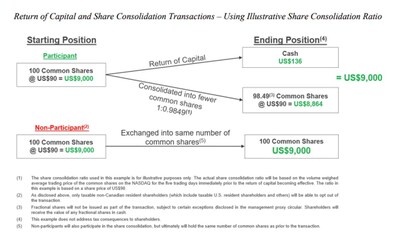
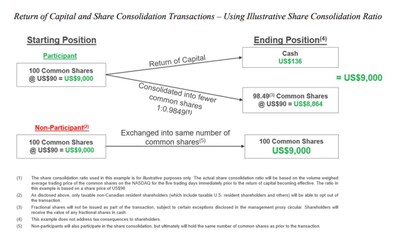
Return of Capital and Share Consolidation Transactions - Using Illustrative Share Consolidation Ratio

Up to US$600 million of shares to be repurchased pursuant to amended normal course issuer bid

US$605 million return of capital and share consolidation expected to be completed in May

TORONTO, Feb. 25, 2026 /PRNewswire/ — Thomson Reuters (TSX/Nasdaq: TRI) today announced that it plans to repurchase up to US$600 million of its common shares under an amended normal course issuer bid (NCIB) that has been approved by the Toronto Stock Exchange (TSX) and that it plans to return US$605 million to shareholders through a return of capital transaction.

Amended Normal Course Issuer Bid

Advertisement

Shares will be repurchased for the new US$600 million repurchase program under an amended NCIB. The amended NCIB, which has been accepted by the TSX, will become effective on February 27, 2026. The amended NCIB will increase the maximum number of common shares that may be repurchased by an additional 6 million. Under the amended NCIB, up to 16 million common shares (representing approximately 3.55% of the company’s 450,687,724 issued and outstanding shares as of August 12, 2025) may be repurchased between August 19, 2025 (the Effective Date) and August 18, 2026. The NCIB, as originally approved in August 2025, contemplated the repurchase of up to 10 million common shares. To date under the current NCIB, Thomson Reuters has repurchased 6,022,437 common shares for a total cost of approximately US$1.0 billion, representing an average price of US$166.05 per share.

Under the amended NCIB, shares may be repurchased on the TSX, the Nasdaq Global Select Market (Nasdaq) and/or other exchanges and alternative trading systems or by such other means as may be permitted by the TSX and/or the Nasdaq or under applicable law. Based on the average daily trading volume on the TSX of 364,105 for the six months preceding the Effective Date (net of repurchases made by TR during that time period), daily purchases are limited to 91,026 common shares, other than block purchase exceptions. Any shares that are repurchased will be cancelled.

Prior to its next regularly scheduled quarterly blackout period, Thomson Reuters intends to enter into an automatic share purchase plan (ASPP) with its broker to allow for the purchase of shares under the NCIB during pre-determined times when the company would ordinarily not be permitted to purchase shares due to customary blackout periods or other regulatory restrictions. Purchases under the ASPP are made by the company’s broker based upon parameters set by Thomson Reuters when it is not in possession of material non-public information relating to the company or the shares. The ASPP will be entered into in accordance with the requirements of the TSX and applicable Canadian and U.S. securities laws, including Rule 10b5- 1 under the U.S. Exchange Act of 1934, and will terminate when the NCIB expires, unless terminated earlier in accordance with its terms. All purchases made under the ASPP are included in computing the number of shares purchased under the NCIB. Outside of pre-determined blackout periods, shares may be purchased under the NCIB based on management’s discretion, in compliance with TSX rules and applicable securities laws.

Decisions regarding any future share repurchases will depend on certain factors, such as market conditions, share price and other opportunities to invest capital for growth. Thomson Reuters may elect to suspend or discontinue share repurchases at any time, in accordance with applicable laws.

Advertisement

Return of Capital

Thomson Reuters will return gross proceeds derived from the May 2024 sales of London Stock Exchange Group shares through a return of capital consisting of a special cash distribution of US$605 million in the aggregate, or approximately US$1.36 in cash per participating share (estimated based on the number of common shares issued and outstanding as of February 24, 2026 and assuming no shareholders opt-out of the return of capital transaction), followed by a share consolidation, or “reverse stock split”, which will reduce the number of common shares on a basis that is proportional to the special cash distribution. To that end, the share consolidation ratio will be based on the volume weighed average trading price of the common shares on the Nasdaq Stock Market LLC for the five trading days immediately prior to the transactions becoming effective.

Return of Capital and Share Consolidation Transactions - Using Illustrative Share Consolidation Ratio

The proposed return of capital is intended to distribute cash on a basis that is generally expected to be tax-free for Canadian tax purposes. Taxable non-Canadian resident shareholders (which include taxable U.S. resident shareholders and others) will be able to opt out of the return of capital. This right to opt out is being provided to those shareholders because in jurisdictions other than Canada the tax consequences of not participating in the return of capital may be preferable to those associated with participating in the return of capital. A taxable non-Canadian resident shareholder that chooses to opt out will not receive the special cash distribution and will continue to hold the same number of Thomson Reuters shares that they currently hold. Taxable non-Canadian resident shareholders are strongly urged to read the management proxy circular and other related materials carefully and to consult with their financial, tax and legal advisors prior to making any decision with respect to the return of capital and share consolidation transactions.

Advertisement

Shareholders will be asked to approve the proposed return of capital and share consolidation transactions at a special meeting of shareholders of Thomson Reuters to be held on Tuesday, April 28, 2026 at 12:00 p.m. (Toronto time). The proposed transactions require approval by at least two-thirds of the votes cast at the shareholder meeting. The board of directors of the company is unanimously recommending that shareholders vote in favor. Woodbridge has indicated that it plans to do so and, accordingly, it is expected that the shareholder vote will pass. The proposed transactions also require the approval of the Ontario Superior Court of Justice (Commercial List). If shareholder and court approval are obtained, Thomson Reuters expects to effect the proposed transactions in early May.

Full details of the proposed return of capital and share consolidation transactions will be described in the company’s management proxy circular and other related materials. Those documents are expected to be mailed or otherwise distributed to shareholders, filed with applicable Canadian securities regulatory authorities and made available without charge on SEDAR+ at www.sedarplus.ca and made available without charge on EDGAR at www.sec.gov, and posted on the company’s website at tr.com, in mid-March.

Thomson Reuters
Thomson Reuters (TSX/Nasdaq: TRI) informs the way forward by bringing together the trusted content and technology that people and organizations need to make the right decisions. The company serves professionals across legal, tax, audit, accounting, compliance, government, and media. Its products combine highly specialized software and insights to empower professionals with the data, intelligence, and solutions needed to make informed decisions, and to help institutions in their pursuit of justice, truth and transparency. Reuters, part of Thomson Reuters, is a world leading provider of trusted journalism and news. For more information, visit tr.com.

SPECIAL NOTE REGARDING FORWARD-LOOKING STATEMENTS

Advertisement

Certain statements in this news release are forward-looking statements within the meaning of Canadian and U.S. securities laws, including statements relating to the company’s plans to repurchase up to US$600 million of its common shares; the timing for the approval and implementation of the return of capital and share consolidation transactions, and the filing of materials related thereto; and the anticipated tax treatment for shareholders participating in the return of capital and share consolidation transactions and those opting out of the return of capital. These forward-looking statements are based on certain assumptions and reflect our company’s current expectations. As a result, forward-looking statements are subject to a number of risks and uncertainties that could cause actual results or events to differ materially from current expectations, including other factors discussed in materials that Thomson Reuters from time to time files with, or furnishes to, the Canadian securities regulatory authorities and the U.S. Securities and Exchange Commission. There is no assurance that the return of capital and share consolidation transactions will be completed or that other events described in any forward-looking statement will materialize. Except as may be required by applicable law, Thomson Reuters disclaims any obligation to update or revise any forward-looking statements.

CONTACTS


Cision View original content to download multimedia:https://www.prnewswire.com/news-releases/thomson-reuters-announces-new-us600-million-share-repurchase-program-and-us605-million-return-of-capital-and-share-consolidation-transactions-302696958.html

SOURCE Thomson Reuters

Advertisement
Continue Reading

Trending

Copyright © 2025