Business
Egypt Knocks Australia Out on Penalties in First-Ever World Cup Shootout for Both Nations in Crushing Exit

DALLAS — Australia’s long wait for a first World Cup knockout-stage victory stretched to at least four more years Friday after the Socceroos fell to Egypt 4-2 on penalties following a dramatic 1-1 draw through 120 minutes of play, with Harry Souttar and Lucas Herrington both missing their spot kicks to bring a heartbreaking end to the tournament’s most poignant farewell at Dallas Stadium.
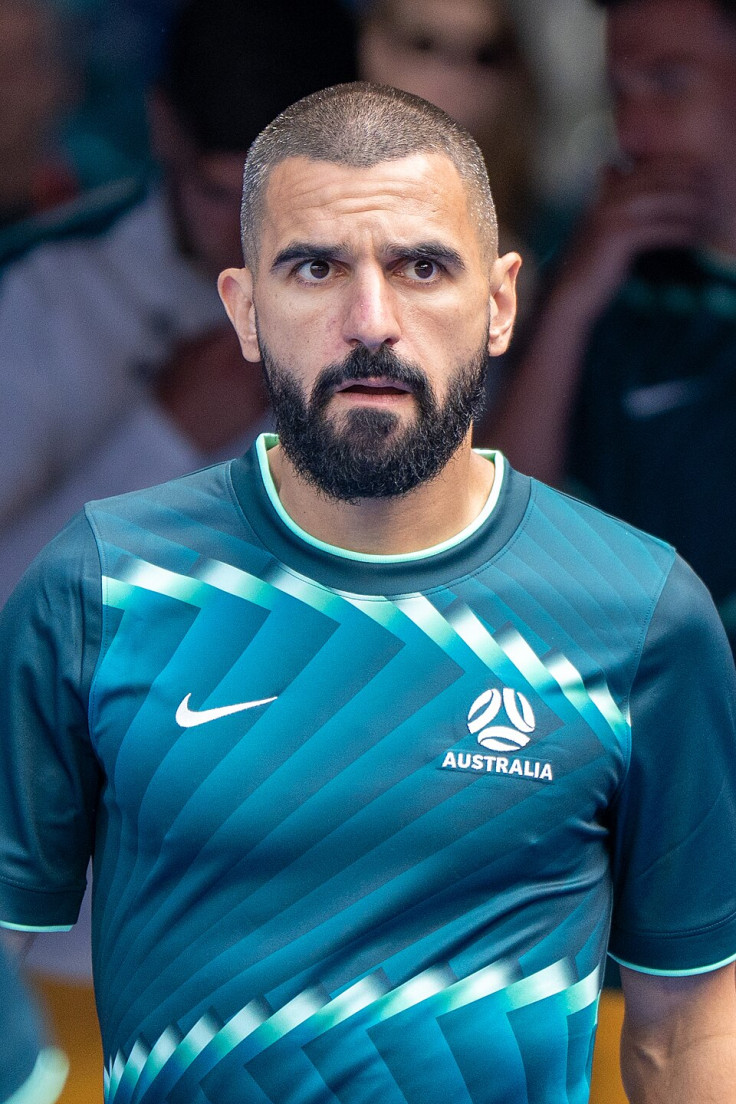

It was the first World Cup penalty shootout in the history of both nations, an occasion that carried enormous emotional weight for the Socceroos, who had only ever appeared in three knockout matches across their entire international football history and had lost each of those previous appearances. Egypt, playing in their first-ever World Cup knockout match, held their nerve when it mattered most, with Hossam Abdelmaguid converting the decisive final penalty to send the Pharaohs into the round of 16 against the winner of Argentina vs Cape Verde on July 7 in Atlanta.
Jackson Irvine, one of two Socceroos to successfully convert his penalty alongside Awer Mabil, was in tears after the final whistle. He was measured and generous toward his teammates who missed, and unsparingly honest about how elimination by shootout feels.
“Penalties are a cruel way to lose,” Irvine said. He then specifically addressed those who missed: “I hope everyone stays behind them and they get all the support. They’ve been immense, the two of them.”
Socceroos defender Aziz Behich echoed that defense of 18-year-old Herrington, whose missed penalty proved the turning point in the shootout.
“Lucas is going to be in more of those positions later down the track,” Behich said. “The kind of boy Lucas is, such a great lad, great head on his shoulders, great professional. I just told him that for him to even just go up there, to put the ball down was enough for us and he can keep his head up. I’m expecting big things from him in the future.”
The match itself was an absorbing, tightly contested affair that defied the pre-match billing as one of the round of 32’s more predictable fixtures. Egypt struck first in the 13th minute when Emam Ashour timed his run perfectly from a set piece, connecting with Karim Hafez’s lofted delivery and heading the ball cleanly past goalkeeper Patrick Beach to give the Pharaohs an early lead they had not entirely deserved based on the match’s opening exchanges.
Australia responded positively and gradually wrestled back control of the contest. Head coach Tony Popovic named an unchanged lineup from the Paraguay draw, retaining the team’s familiar structure with Nestory Irankunda leading the line and Harry Souttar wearing the captain’s armband. Cristian Volpato had earlier skimmed the top of the crossbar with a long-range effort that briefly threatened to give Australia the lead before Egypt found the net.
The equalizer arrived in the 55th minute through an own goal credited to Egyptian defender Mohamed Hany. Aiden O’Neill won a set piece on the edge of the area and delivered a perfectly directed inswinging ball into a dangerous zone. It found Hany’s head as he attempted to clear and deflected into the back of the net, sending the Australian contingent at the stadium into euphoria and leveling a match that had begun to drift toward Egypt.
Australia lost right wing-back Jordy Bos to injury at halftime, bringing on teenager Kai Trewin for his first World Cup appearance in a tournament debut under the most intense circumstances possible. Egypt responded to the Australian equalizer with their own surge, with Omar Marmoush creating several dangerous moments and Rami Rabia producing a header late in regulation time that appeared destined to restore Egypt’s lead before Beach made what may have been the save of the tournament, a phenomenal intervention that kept Australia alive and sent the match to extra time.
Popovic made tactical changes at the start of extra time, introducing Mabil and Paul Okon-Engstler as Australia searched for a knockout blow. Egypt had the more promising moments in the first period of extra time, with Mohamed Salah, playing his first match after recovering from the hamstring strain that had kept him out of Egypt’s group stage finale, creating a golden chance that Beach saved again to maintain the 1-1 scoreline. In the 117th minute, Mabil broke free and drew a foul on the edge of the area that presented a direct shooting opportunity, but his effort clattered off the defensive wall.
With penalties looming, Popovic made one of the match’s most significant decisions: introducing veteran goalkeeper Maty Ryan for the final minutes of extra time, replacing the tournament’s surprise hero Beach and giving Ryan the captain’s armband for the shootout. Ryan had not played a single minute of the tournament before entering in the 119th minute. He was unable to save any of Egypt’s four penalties.
The shootout unfolded with cruel precision. Irvine and Mabil scored for Australia. Souttar and Herrington missed. For Egypt, all four of their designated takers converted, with Abdelmaguid stepping up last to complete a historic 4-2 win that ended Australia’s World Cup campaign and simultaneously made Egypt the first African nation to advance to the round of 16 at this edition of the tournament.
Head coach Tony Popovic addressed reporters afterward, expressing pride in his players and defending his decision to bring Ryan on for the shootout.
“I think that was always an option for us and then you have to see how the game progresses,” Popovic said when asked about the substitution.
Australia departs the tournament having qualified from the group stage for only the third time in their history, extending a legacy of creditable but ultimately incomplete World Cup campaigns. The Socceroos had beaten Türkiye in their opening match, lost to co-host United States in their second, and drawn with Paraguay in their third to secure a knockout berth. Their first match in the knockout rounds ended the same way their previous two had: in defeat.
The dream of a first-ever World Cup knockout victory will have to wait at least four more years.
You must be logged in to post a comment Login