



Connect with us

Business

EIS: Technology, Defense And Reasonable Valuation

Published

on

EIS: Technology, Defense And Reasonable Valuation
Continue Reading
Click to comment

You must be logged in to post a comment Login

Leave a Reply

Business

Opinion: Games business delivers returns

Published

on

Opinion: Games business delivers returns

Yes. Corporate subscriptions are available for teams and organisations, with discounted rates as user numbers increase. Pricing starts from $1,625 + GST per user.
Get in touch
to discuss the right option for your organisation.

Business News subscriptions are used by executives, investors, consultants and professionals who need to stay informed and make better decisions about the WA market. When you subscribe you’ll get

  • Unlimited access to WA’s most trusted business journalism
  • Data & Insights — detailed profiles of WA companies, people, projects and deals
  • MyBN — a personalised feed based on the companies, people and sectors you follow
  • Special publications and industry reports
  • Daily and weekly email newsletters

Data & Insights is a research tool built specifically for the WA market. It draws on more than 30 years of Business News reporting, updated regularly to reflect what’s happening now. Use it to:

  • Look up detailed profiles of WA companies, including financials, directors and ownership
  • Find decision-makers and track their career movements
  • Research live and completed projects across WA industries
  • Monitor deals, appointments and market activity
  • Access industry rankings and league tables

Data & Insights is updated daily by our dedicated research team, which uses the latest announcements, ASX filings and editorial coverage to keep our person, company, list and project records up to date.

Business News welcome all opportunities to make our dataset accurate, complete and current, so if you have an update request, please email the team at
general@businessnews.com.au, and we’d be happy to assist.

Advertisement

MyBN
is part of every subscription. It’s your personalised view of Business News. You can follow the companies, people, sectors and projects that matter to you, and get a news feed and alerts tailored to your interests. You can save articles to read later and retain only what you need.

Only subscribers have full access to all content on the Business News website.

Advertisement

If staying informed about the WA economy is part of your job, and/or you’re looking for networking opportunities in WA, Business News is built for you.

Business News subscribers are:

  • Executives and directors tracking competitors, clients and market movements
  • Investors and advisers researching companies, deals and industry trends
  • Consultants and professionals staying across sectors relevant to their clients
  • Business owners looking for leads, context and market intelligence

Most Business News publications cover national or global markets. Business News is focused entirely on Western Australia, which means the journalism, the data and the intelligence are all built around WA companies, people and projects — not adapted from a national feed. Data & Insights, included with every subscription, combines more than 30 years of WA-specific editorial research with live business data. There’s no comparable product for the WA market.

Advertisement

The Morning Digest Email provides a comprehensive wrap of the major headlines, relevant to WA business, and includes with a snapshot of the overnight news covering oil, gold and ASX-listed companies.

The Afternoon Wrap Email focuses on the news covered by our team of journalists during the course of the working day, including exclusive stories and analysis, all of which relates to WA business and the local economy.

The BN Weekender Email contains a wrap of the Business News from the week that was, highlighting the top stories in each area of WA business.
Sign up for free.

Advertisement

We’re happy to help.
Get in touch
and our team will come back to you.

Advertisement
Continue Reading

Business

Exasol sees H1 revenue drop on lower non-recurring sales

Published

on


Exasol sees H1 revenue drop on lower non-recurring sales

Continue Reading

Business

Neymar Becomes First Player Sent Off Under Brazil’s New Rule to Stop Goalkeeper Time-Wasting

Published

on

Argentina's Lionel Messi celebrates after scoring against Bolivia in a World Cup qualifier on Thursday

SAO PAULO — Brazilian soccer star Neymar became the first player affected by a newly piloted rule aimed at curbing goalkeeper time-wasting in the country’s top domestic league, after he was ordered to leave the field for one minute during a match between Santos and Vasco da Gama.

According to Reuters, Brazil’s Serie A is piloting the new rule as part of an effort to prevent goalkeepers from intentionally delaying matches under the guise of receiving injury treatment, a tactic that has long drawn criticism from fans, coaches and match officials across professional soccer for disrupting the flow of games and unfairly running down the clock.

Under the new rule, if play is stopped to allow a goalkeeper to receive medical treatment, the team’s head coach is required to designate one outfield player to leave the pitch for one minute once play resumes. If the coach fails to name a player within 10 seconds of being prompted to do so, responsibility shifts automatically to the team’s captain, who must then leave the field for the one-minute period instead.

The rule was applied for the first time in Brazil’s top flight during a match in which Santos defeated Vasco da Gama 3-0. The triggering incident occurred after Santos goalkeeper Gabriel Brazão requested treatment during the match. When Santos head coach Cuca did not designate a player to leave the field within the allotted time limit, the referee ordered team captain Neymar off the pitch instead.

Advertisement

Neymar, 34, complied with the ruling, waiting off the field for the full one-minute period before returning to play. He went on to help seal his team’s victory following his return to the pitch, according to the report.

The pilot program represents one of several recent experiments across global soccer aimed at addressing persistent frustration over time-wasting tactics, particularly those involving goalkeepers, who have historically had more opportunities than outfield players to delay restarts through injury timeouts, prolonged ball retrieval, or extended preparation before goal kicks. Brazil’s Serie A appears to be among the more aggressive leagues globally in directly penalizing a team’s overall roster availability, rather than simply cautioning or fining the individual goalkeeper accused of stalling.

By requiring a healthy outfield player, rather than the goalkeeper themselves, to leave the field for a fixed period, the rule is designed to create a direct competitive disincentive for teams that might otherwise be tempted to use injury treatment stoppages strategically to protect a lead or disrupt an opponent’s rhythm late in a match. Because the rule applies regardless of whether the goalkeeper’s need for treatment is genuine, it places pressure on coaching staffs to more carefully weigh the tactical cost of any stoppage request.

Neymar’s involvement in the rule’s debut carries particular significance given his stature as one of the most recognizable and closely followed players in world soccer. Since returning to Santos, the club where he began his professional career, Neymar has remained a central figure in Brazilian domestic soccer, drawing significant media attention to matches involving his current team. His being the first player affected by the new time-wasting rule is likely to ensure the pilot program receives outsized public and media attention as Brazilian soccer officials evaluate its effectiveness during this trial period.

Advertisement

It remains unclear from currently available reporting how long Brazil’s Serie A intends to continue piloting the rule before deciding whether to adopt it permanently, or whether governing bodies overseeing other domestic leagues or international competitions might consider similar measures if the pilot proves effective at reducing goalkeeper-related time-wasting. Soccer’s global lawmaking body, the International Football Association Board, has in recent years experimented with various other approaches to reducing time-wasting across the sport more broadly, including stricter enforcement of six-second limits on goalkeepers holding the ball and, in some competitions, running a stoppage clock specifically during goalkeeper-controlled possession.

Time-wasting by goalkeepers has long been a source of tension in professional soccer, particularly in matches where a team holding a slim lead has an incentive to run down the clock through any means available, including prolonged treatment stoppages that fall into a gray area between legitimate medical necessity and deliberate gamesmanship. Referees have traditionally had limited tools to definitively distinguish between the two in real time, making rules like Brazil’s new pilot program, which shift the competitive cost onto the team as a whole rather than relying solely on referee discretion regarding the legitimacy of an injury, an increasingly common approach among leagues seeking a more automatic and less subjective deterrent.

Neymar’s compliance with the rule during its debut application, without apparent protest or delay, suggests Brazilian players and coaching staffs have been made aware of the new regulation ahead of its implementation, reducing the likelihood of significant on-field confusion or dispute during the early stages of the pilot program. Whether the rule proves effective at meaningfully reducing goalkeeper-related stoppages over a larger sample of matches will likely become clearer as Brazil’s Serie A season continues and additional data on stoppage frequency and match duration becomes available for officials to evaluate.

As Brazilian soccer authorities continue monitoring the pilot program’s early implementation, Wednesday’s incident involving Neymar is likely to serve as a widely referenced example both within Brazil and among international soccer observers tracking how different leagues around the world are experimenting with new approaches to addressing time-wasting, a persistent point of frustration for fans and broadcasters seeking to preserve the flow and watchability of professional matches.

Advertisement
Continue Reading

Business

Gary Neville’s Relentless Develpments joins plan for 700 new flats in Manchester

Published

on

Business Live

Scheme revisited after original plan saw dozens of objections

CGI of the proposed development on the site of Stocktons Furniture in Manchester city centre, opposite the future Manchester Digital Campus.

CGI of the proposed development on the site of Stocktons Furniture in Manchester city centre, opposite the future Manchester Digital Campus(Image: Truth PR / Relentless Developments)

Gary Neville’s property firm has joined a controversial plan to build more than 700 flats in Manchester city centre in two new towers.

Advertisement

A total of 723 build-to-rent apartments could be built in towers 24 and 44 stories tall, along with new office space.

Proposals for the scheme are based on the site of Stocktons Furniture in Ancoats, based over the road from the Manchester Digital Campus on Great Ancoats Street which is expected to become a future base for Andy Burnham’s Number 10 North.

The plans were initially proposed by Liquid Funding Business, but the scheme was delayed last year after major concerns about the impact on daylight on surrounding properties, particularly Oxygen tower.

More than 130 objections were sent to Manchester City Council about the plans and councillors in Manchester delayed the scheme in both November and December 2025, before voting to block it in January this year.

Advertisement

The plans have since been revised and resubmitted to the council for approval, and it has become a joint venture with Relentless Developments, the firm led by Anthony Kilbride and Gary Neville.

One of the key changes is that the tallest building in the development has been lowered from 49 stories to 44 stories.

Anthony Kilbride, CEO of Relentless Developments, said: “Since joining the JV [joint venture], we’ve reviewed the project with fresh eyes, listened carefully to the comments made during the previous planning process and spent a lot of time assessing the scheme with the existing consultancy team, ward councillors and local residents.

“We want to make it the best it can be and ensure it meets our ambitions and approach to development.”

Advertisement

A total of 50 apartments in the revised plans would be at Manchester Living Rent levels, and these would be spread throughout the development with the same specification, size and access to amenities.

These homes would be managed through an agreement with Manchester City Council.

If the plans are approved, bosses behind the project hope construction could get started at the end of 2027, with the project finish set to coincide with the opening of the Manchester Digital Campus in 2032.

Daniel Green, CEO of Liquid Business, said: “Stocktons reflects our ambition to bring together commercial vision, quality and meaningful social value. We believe the scheme can make a lasting contribution to this part of Manchester and to the city’s continued growth.”

Advertisement

Other schemes delivered by Relentless Developments include Hotel Football in Old Trafford, the Stock Exchange Hotel and No.1 St Michael’s in the city centre.

Anthony Kilbride added: “Ultimately, Stocktons will make an important contribution to the city’s growth plans and growing need for new apartments, while acting as a catalyst for further investment and development.

“We’re proud to be playing a positive part in the wider vision for this increasingly important area of Manchester and specifically the wider Manchester Piccadilly masterplan announced at MIPIM earlier this year.”

To find all the planning applications, traffic diversions, road layout changes, alcohol licence applications and more in your community, visit the Public Notices Portal.


Advertisement
Continue Reading

Business

Jersey business owner says minimum wage comments are ‘madness’

Published

on

A person wearing a black polo shirt sits at an outdoor café table beside a large window displaying coffee bean graphics and the text “Coffee Republic” and “Roasted in Milan.” Several takeaway coffee cups are visible on nearby tables, with other café patrons seated in the background along a pedestrian street lined with buildings. The scene is photographed in daylight, with the seated person in sharp focus and the café surroundings clearly visible.

Businesses, charities and politicians have reacted to criticism of the minimum wage by the economic development minister, with one coffee shop owner calling his public comments “madness”.

Earlier this week, the chief minister rejected Deputy Gerald Voisin’s suggestion that the minimum wage was “strangling our economy” and said the minister’s views did not reflect that of the government or States Assembly.

Frank De Jesus, who runs Coffee Republic, said the cost of living and of doing business in Jersey were a “far-reaching issue”. He has called on the council of ministers to “get their act together” and discuss workers’ pay.

The BBC has contacted Voisin for comment.

Advertisement

De Jesus said to get good staff he often has to pay above the minimum wage, currently set at £13.59 an hour.

He said the cost of labour was a “polarising issue” with most businesses on the high street “just getting by”.

He said: “On one hand, obviously, retailers and hospitality need to make a profit… but we’re also very aware that our workers need to feel as if they’re valued and that they have a chance to get on in life.”

Responding to the disagreement between ministers, he said Voisin’s public comments had “opened a can of worms”.

Advertisement

He said: “Maybe they [ministers] should get around the table and talk about it, I would think, before going publicly with statements that are going to cause huge consternation.

“I think it’s madness, really.”

He suggested the government should increase the income tax threshold so workers earning minimum wage weren’t taxed.

Advertisement
Continue Reading

Business

Green light for $28m Cockburn shopping centre

Published

on

Green light for $28m Cockburn shopping centre

The rapidly growing suburb is set for another neighbourhood centre following approval of the project from planning authorities.

Continue Reading

Business

ASX 200 Slips Today as Gold Miners Slide and Bond Yields Surge After CSL’s Blockbuster Earnings Rally

Published

on

Australia Housing Market 2026: Two-Speed Boom Persists as Prices Hit

SYDNEY — The S&P/ASX 200 fell 24.4 points, or 0.27%, to 9,045.6 as of 3:22 p.m. AEST Wednesday, as sliding gold prices and surging global bond yields weighed on the market a day after biotechnology giant CSL delivered one of the strongest single-session rallies of the current earnings season.

Wednesday’s decline followed a steadier session Tuesday, when the index closed nearly flat at 9,070 points, halting a four-day losing streak that had pushed the benchmark to a two-week low. According to Trading Economics, bargain hunters stepped into the market Tuesday as August consumer confidence data improved, with mortgage holders reporting less anxiety about the prospect of further interest rate hikes.

CSL was the standout performer of Tuesday’s session, surging 17.25% after the biopharmaceutical company’s underlying profit exceeded analyst forecasts and management signaled a return to growth following what had been described as a difficult reset year for the business. Following the result, brokerage Bell Potter retained its hold rating on CSL shares while lifting its price target significantly, to $150.00 from $120.00. “Based on the new underlying NPAT metric, CSL trades on a PE multiple of ~19x FY26 and ~18x FY27 earnings, with flat revenue growth and low-to-mid single digit earnings growth expected for FY27,” Bell Potter said in a note. “While the result today suggests the worst (by way of earnings declines) is in the rear-view for CSL, we find it difficult to justify a greater premium than is now being attributed relative to global biopharma peers.”

Mining giant BHP also posted strong gains Tuesday, rising 2.65% after reporting that its underlying annual profit had increased 30% to $13.20 billion. Operating earnings from the company’s copper division reached $18.19 billion, surpassing the $14.53 billion generated by its traditional iron ore business, underscoring the increasing importance of copper to BHP’s overall earnings mix. Argo Investments portfolio manager Andy Forster offered a succinct assessment of the result. “Solid overall, and copper doing all the work,” Forster said, reflecting broader market commentary that gains in copper and healthcare had lifted the overall index Tuesday even as interest-rate-sensitive sectors, including the major banks, lagged behind.

Advertisement

Banks acted as the primary drag on Tuesday’s session, with the sector continuing to face pressure from concerns over the interest rate outlook. National Australia Bank slumped 4.7% amid investor concerns that a proposed repeal of property-investment tax breaks could weigh on the bank’s future earnings and credit growth, according to Trading Economics.

Wednesday’s pullback has been driven in significant part by a sharp fall in gold prices overnight. According to CNBC, gold futures fell 1.8% to $4,394 an ounce as traders sold off the precious metal following a surge in global bond yields to their highest levels in decades. That decline is expected to weigh heavily on ASX-listed gold miners, including Westgold Resources and Northern Star Resources, both of which were flagged as likely to face a difficult session Wednesday given their direct exposure to the falling gold price.

Wednesday’s session also carries added significance given the scheduled release of Australia’s Wage Price Index at 11:30 a.m. AEST. The previous quarter’s wage growth figure came in at 0.8%, with annual wage growth running at 3.3%. Economists and investors are watching the release closely given its potential to shift interest rate expectations across several rate-sensitive sectors, including banking, property and retail.

A busy slate of corporate earnings continued to roll out Wednesday, with Santos, Evolution Mining, Temple & Webster, Breville, Mirvac and Whitehaven Coal all scheduled to release results during the session. Among the more notable individual results, one electrical and communications contractor delivered record profitability despite a 10.3% decline in revenue to $718.7 million, as project completions tied to the CBESS and Western Sydney International Airport Terminal developments wound down during the first half. Gross profit for that company rose 29.1% to a record $136.7 million, with gross margin expanding significantly to 19.0% from 13.2% a year earlier. Underlying net profit after tax rose 24.3% to $39.4 million, though statutory net profit fell 77.6% to $7.1 million due to $46.1 million in costs tied to a dispute over the WestConnex toll road project. The company lifted its total fully franked dividend by 33.3% to 10.0 cents per share, including a record final dividend of 7.5 cents, while maintaining a record cash balance of $261.5 million and no outstanding debt.

Advertisement

Separately, a finance and insurance-focused company reported its loan book had grown a further 7.5% since March, with arrears holding up well, while reiterating a medium-term target of $100 million in net profit before tax by fiscal 2031 as it continues expanding its auto retail branch network.

Wednesday’s session also featured a notable ex-dividend adjustment affecting the broader index, with shares tied to a $2.70 fully franked dividend beginning trading ex-dividend at the ASX’s opening phase at 9:59:45 a.m. AEST, a technical adjustment that tends to exert modest automatic downward pressure on the headline index independent of broader market sentiment.

Looking at the broader context, the ASX 200 remains well below the all-time high of 9,198.6 points it reached in February, having settled closer to the 8,800 level by July before recovering ground through the current August earnings season. With reporting season continuing through the remainder of the week alongside Wednesday’s wage data release, investors are likely to remain focused on how individual corporate results, particularly from the mining, energy and consumer sectors still due to report, continue to shape the index’s trajectory against a backdrop of volatile gold prices and rising global bond yields.

Advertisement
Continue Reading

Business

Nifty falls for sixth straight session; oil surge, CAS volatility rattle markets

Published

on

Nifty falls for sixth straight session; oil surge, CAS volatility rattle markets
Mumbai: Indian markets remained under pressure on Tuesday, with the Nifty ending lower for the sixth straight trading session, as the rebound in oil prices amid the lingering West Asia conflict and persistent volatility around the Closing Auction Session (CAS) kept traders on the toes.

NSE’s Nifty fell 132.75 points, or 0.55%, to close at 24,154.9. The BSE Sensex declined 492.7 points, or 0.6%, to end at 77,235.46.

“Markets remained under pressure as there have been no positive cues from the US-Iran talks, especially with the MOU having expired and crude oil prices moving higher,” said Shrikant Chouhan, head of equity research at Kotak Securities.

Brent crude October futures were trading near the $91-a-barrel mark on Tuesday and have remained in the $85-$90 range over the past week. Chouhan said oil sustaining above the $85 mark is a key concern, as it raises inflationary risks, which is already reflected in the sharp rise in US 10-year and 30-year bond yields. “We believe this could lead to outflows from both emerging and developed equity markets,” he said.

Advertisement

The price adjustments on account of the CAS resulted in the benchmark indices dropping nearly 0.2% in the last 15 minutes before trade close.

Will Indian markets continue their six-day losing streak as oil prices and geopolitical tensions rise?</p><p>ET Bureau

Chouhan said the volatility seen during the CAS session is largely due to lower participation.
On Tuesday, FPIs net bought shares worth ₹1,651.5 crore. Domestic institutional investors were buyers to the tune of ₹2,579 crore. The Nifty Midcap 150 fell 0.4%, while the Nifty Smallcap 250 rose 0.2%. Of the total 4,530 stocks on the BSE, 1,890 advanced and 2,426 declined.
In Asia, Japan fell 2.5%, South Korea declined 1.55%, Taiwan dropped 1.2%, while China advanced 0.2% and Hong Kong rose 0.1%. The STOXX 600 index was down 0.5% at the time of going to press.

Read more: Regulatory tailwinds to boost growth for MCX, says HDFC Securities, retains Buy for 18% gains

Technical indicators suggest the indices could move in a band in the near term. “The market’s sentiment has shifted, with the index now consolidating within the 24,000-24,500 range, and this phase of consolidation could continue over the next few trading sessions,” said Dharmesh Shah, head of technical research at ICICI Securities.

Shah said after 1,100-point rally, the Nifty is undergoing a retracement and may find support in the 23,900-24,000 zone before resuming its upward trajectory towards the upper end of the channel at 24,500-24,600. “While Q1 earnings was better than expected, a decline in crude oil prices, a reversal in US 10-year bond yields, or a de-escalation of tensions in West Asia could act as positive catalysts and trigger the market’s next rally,” said Shah.

Advertisement
Continue Reading

Business

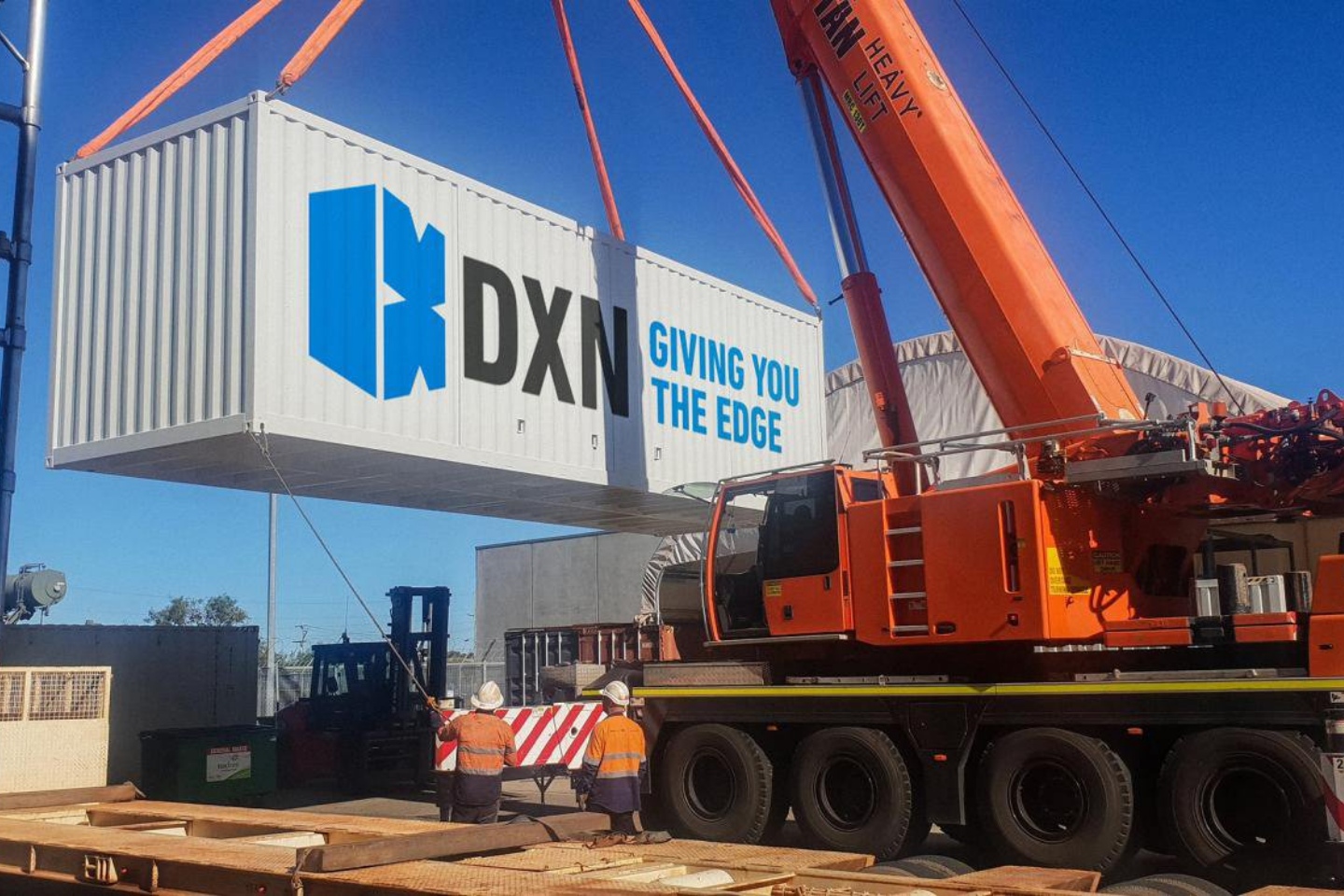
DXN inks $4.1m Melbourne Airport edge data centre deal

Published

on

DXN inks $4.1m Melbourne Airport edge data centre deal

Yes. Corporate subscriptions are available for teams and organisations, with discounted rates as user numbers increase. Pricing starts from $1,625 + GST per user.
Get in touch
to discuss the right option for your organisation.

Business News subscriptions are used by executives, investors, consultants and professionals who need to stay informed and make better decisions about the WA market. When you subscribe you’ll get

  • Unlimited access to WA’s most trusted business journalism
  • Data & Insights — detailed profiles of WA companies, people, projects and deals
  • MyBN — a personalised feed based on the companies, people and sectors you follow
  • Special publications and industry reports
  • Daily and weekly email newsletters

Data & Insights is a research tool built specifically for the WA market. It draws on more than 30 years of Business News reporting, updated regularly to reflect what’s happening now. Use it to:

  • Look up detailed profiles of WA companies, including financials, directors and ownership
  • Find decision-makers and track their career movements
  • Research live and completed projects across WA industries
  • Monitor deals, appointments and market activity
  • Access industry rankings and league tables

Data & Insights is updated daily by our dedicated research team, which uses the latest announcements, ASX filings and editorial coverage to keep our person, company, list and project records up to date.

Business News welcome all opportunities to make our dataset accurate, complete and current, so if you have an update request, please email the team at
general@businessnews.com.au, and we’d be happy to assist.

Advertisement

MyBN
is part of every subscription. It’s your personalised view of Business News. You can follow the companies, people, sectors and projects that matter to you, and get a news feed and alerts tailored to your interests. You can save articles to read later and retain only what you need.

Only subscribers have full access to all content on the Business News website.

Advertisement

If staying informed about the WA economy is part of your job, and/or you’re looking for networking opportunities in WA, Business News is built for you.

Business News subscribers are:

  • Executives and directors tracking competitors, clients and market movements
  • Investors and advisers researching companies, deals and industry trends
  • Consultants and professionals staying across sectors relevant to their clients
  • Business owners looking for leads, context and market intelligence

Most Business News publications cover national or global markets. Business News is focused entirely on Western Australia, which means the journalism, the data and the intelligence are all built around WA companies, people and projects — not adapted from a national feed. Data & Insights, included with every subscription, combines more than 30 years of WA-specific editorial research with live business data. There’s no comparable product for the WA market.

Advertisement

The Morning Digest Email provides a comprehensive wrap of the major headlines, relevant to WA business, and includes with a snapshot of the overnight news covering oil, gold and ASX-listed companies.

The Afternoon Wrap Email focuses on the news covered by our team of journalists during the course of the working day, including exclusive stories and analysis, all of which relates to WA business and the local economy.

The BN Weekender Email contains a wrap of the Business News from the week that was, highlighting the top stories in each area of WA business.
Sign up for free.

Advertisement

We’re happy to help.
Get in touch
and our team will come back to you.

Advertisement
Continue Reading

Business

should staff phones be owned at all?

Published

on

should staff phones be owned at all?

Apple’s decision to put iPhones, iPads and Macs on a formal leasing model in the United States looks at first like a consumer-finance story.

For UK SMEs, it raises a much more interesting question: when smartphones are essential work tools that depreciate quickly, is outright ownership still the best way to buy them?

As Business Matters reported when Apple Upgrade launched, Apple has partnered with Klarna to offer 12- and 24-month leases on iPhones and Apple Watches, with longer terms on Macs and iPads. Customers can return the hardware, buy it outright or enter a new lease at the end of the term. The scheme is US-only for now, but the structure is a useful preview of where business-device procurement may be heading.

Why leasing looks attractive to smaller businesses

The obvious appeal is cash flow. Buying 20 premium smartphones in one month creates a visible capital hit; spreading the cost over a predictable term makes budgeting easier and keeps cash available for payroll, marketing or growth. It also aligns the device payment with the period during which staff actually use the hardware.

Klarna’s official announcement says Apple Upgrade lets users trade in an existing device at the start to reduce the monthly cost, then choose whether to return, buy or upgrade at the end. That model removes some of the friction around keeping a fleet current.

Advertisement

But ownership has something leasing hides: residual value

A company-owned phone is not just an expense. Until it is written off, lost or left in a cupboard, it is also a resaleable asset. That matters because recent flagship phones can retain hundreds of pounds of value long after they have been replaced operationally.

For illustration, SellMyPhone’s iPhone 16 Pro comparison showed a leading offer of about £511 for a working device when checked in August 2026. Twenty similar handsets would therefore represent more than £10,000 of gross resale value before any bulk pricing, condition adjustments or business-specific terms are considered. The exact number changes daily, but the principle is important: a fleet has an exit value.

Businesses that own their hardware can recover that value through a structured business phone recycling process rather than simply returning every device to a lessor. That residual value belongs in the total-cost calculation from day one.

Lease versus buy: the total-cost question

The wrong comparison is monthly lease payment versus purchase price. The useful comparison is the total cost of providing a working phone to an employee for two or three years after financing, insurance, repairs, administration and residual value are all included.

Advertisement
Factor Own the fleet Lease the fleet
Upfront cash Higher Lower
Monthly predictability Medium High
Hardware control High Subject to lease terms
Residual value Retained by business Usually surrendered unless bought out
Upgrade administration Managed internally Can be simpler
End-of-life process Business must manage securely Return process may be built in
Flexibility to keep devices longer High Depends on agreement

For a five-person creative agency, the administrative simplicity of leasing may be worth paying for. For a 200-device field workforce that already has IT asset-management processes, retaining the residual value could materially change the economics. There is no universal answer.

The hidden cost is poor lifecycle management

The biggest mistake is not necessarily choosing the wrong finance model. It is buying phones, replacing them every two or three years, and then failing to close the loop. A £500 device that sits unused for 12 months is not a £500 asset any more. It is a depreciating asset that no employee is using.

That is why SMEs should treat mobile hardware like any other managed business asset. Record the model, storage, condition, assigned employee, purchase date and planned replacement date. When a device leaves service, wipe it securely, obtain a market valuation and make a deliberate decision to redeploy, sell or recycle it.

A leasing trend could change how firms think about phones

Apple Upgrade does not yet give UK SMEs a new procurement option, and it would be premature to assume the US model will be copied here unchanged. What it does do is challenge an old assumption: that buying the handset is automatically the normal way to provide mobile technology.

Advertisement

As subscription and device-as-a-service models spread, finance directors should ask a more disciplined question. Do we want the lowest upfront cost, the simplest replacement cycle, or the best whole-life return from the asset?

Three questions to ask before the next fleet refresh

  • What is the true two- or three-year cost per employee after resale value is deducted?
  • Who owns the residual value at the end of the agreement?
  • Does the business have a reliable process for wiping, collecting and selling redundant devices quickly?

For firms that buy outright, the final question is especially important. A company can use SellMyPhone’s business comparison service to put multiple devices in front of UK recyclers, obtain competing quotes and arrange certified data erasure rather than treating end-of-life hardware as an afterthought.

Apple’s leasing experiment may or may not become the dominant model. But it has made one thing clearer: smartphones are now significant business assets with a financing cost, an operational life and an exit value. SMEs that measure all three will make better procurement decisions than those that focus only on the monthly bill.

Advertisement
Continue Reading

Trending

Copyright © 2025