The split in guidance — despite similar headwinds — underscores the strength of Lilly’s position in the obesity and diabetes drug market, underpinned by its more effective injections and early foray into direct-to-consumer sales, among other factors. While Novo Nordisk effectively made the drugs mainstream, Lilly has since taken a clear edge in market share — and the forecasts show it will likely only extend its advantage this year.
“The difference in sales momentum and market share trend was visible throughout 2025, but the dichotomy between the two companies’ prospects was accentuated within this 24-hour period in which Novo guided below consensus and Lilly guided above consensus expectations,” Leerink Partners analyst David Risinger told CNBC on Wednesday.
“That really solidified an investor’s mind that Lilly is going to be the dominant player in obesity going forward,” he added.
In an interview on CNBC’s “Squawk Box” on Wednesday, Lilly CEO David Ricks said 20 million to 25 million patients are currently taking both companies’ medicines. But he said the total addressable market of patients in the obesity space is “gigantic.”
Diverging outlooks
On Wednesday, Lilly forecasted 2026 sales of $80 billion to $83 billion, surpassing the $77.62 billion that analysts were expecting, according to LSEG.
The midpoint of that outlook translates to sales growing by 25% this year.
In contrast, Novo warned on Tuesday that it sees sales and profit declining by 5% to 13% this year, as prices fall in the U.S. and exclusivity expires for its blockbuster obesity and diabetes drugs in China, Brazil and Canada.
Advertisement
Mike Doustdar, left, CEO of Novo Nordisk, and David Ricks, CEO of Eli Lilly, listen as President Donald Trump speaks in the Oval Office during an event about weight-loss drugs on Nov. 6, 2025.
Andrew Caballero-Reynolds | Afp | Getty Images
Lilly similarly pointed to a “global pricing decline in the low- to mid- teens [percentages] this year.” That comes after the landmark “most favored nation” deals both companies struck with President Donald Trump in November to slash obesity and diabetes drug costs, along with their recent efforts to further reduce direct-to-consumer prices for their treatments.
The agreements with Trump are expected to take a bite out of both companies’ sales, but eventually increase volumes of prescriptions for their drugs. Still, Lilly is bullish about other factors that will help offset that pricing pressure.
Advertisement
That includes continued worldwide demand for its obesity drug Zepbound and diabetes counterpart Mounjaro and the expected launch of its GLP-1 pill for obesity in the second quarter, pending U.S. approval. Lilly also pointed to government Medicare coverage of obesity treatments starting for the first time by at least July, one of the winning features of the drug pricing deals with Trump.
Lilly’s Ricks told CNBC that coverage will open up access to 40 million new Medicare beneficiaries, “and that could be quite expansive to volume.”
Overall, Risinger called Lilly’s guidance “very encouraging” and said the “price per volume trade-off is playing out well” for the company.
He said tirzepatide, the active ingredient in Zepbound and Mounjaro, is “superior” in its effectiveness and tolerability compared to semaglutide, the ingredient in Novo’s obesity and diabetes drugs. That was proven in a head-to-head clinical trial conducted by Lilly in 2024, and prescription trends show that the company’s drugs are preferred among prescribers.
Advertisement
“I think that’s what is driving Lilly’s market share gain” relative to Novo, Risinger said.
Another factor that sets Lilly and Novo apart is patent exclusivity. While Novo said expiring patents in some international markets pose a challenge, Lilly’s Ricks said tirzepatide should be protected into “the back half of the 2030s” in major markets.
Risinger noted that Lilly is still working to drive global uptake for tirzepatide, which won U.S. approval for obesity in 2023.
All eyes on pills
A pharmacist displays a box of Wegovy pills at a pharmacy in Provo, Utah, Jan. 15, 2026.
Advertisement
George Frey | Bloomberg | Getty Images
Novo Nordisk is first to market with a GLP-1 pill for obesity, and it hit 50,000 weekly prescriptions in just under three weeks of its launch. But investors are watching to see how that shifts once Lilly’s pill rolls out to patients later this year.
In an interview with CNBC’s “Mad Money,” Novo CEO Mike Doustdar said he’s confident about the company’s ability to compete with Lilly.
“Clearly we have the most efficacious weight-reduction pill that there is and I’m very optimistic and bullish on when they come with their pill and we have to battle this out,” Doustdar said.
Advertisement
He’s referring to clinical trial data suggesting that Novo’s Wegovy pill promotes comparable weight loss to its injectable counterpart, which is around 15%. Meanwhile, Lilly’s pill appears to be slightly less effective than that, based on separate study data.
Risinger said the launch of Novo’s pill has benefited from the fact that the company is leveraging the Wegovy brand name, which is recognizable by many patients, and immediately launched direct-to-consumer advertising for the product in early January.
But he said Lilly could capitalize on its pill’s convenience advantage.
Orforglipron is a small-molecule drug that is absorbed more easily in the body and doesn’t require dietary restrictions like Novo Nordisk’s pill, which is a peptide medication. Patients are supposed to drink no more than four ounces of water with the Wegovy pill and must wait 30 minutes before eating or drinking anything else each day.
Advertisement
Novo contends that those requirements won’t hinder uptake, but Risinger said it could help Lilly’s pill eventually generate greater sales globally.
Stadler Rail AG (SRAIF) Q4 2025 Press Conference Call March 18, 2026 5:00 AM EDT
Company Participants
Marc Meschenmoser – Head of Corporate Communications & Public Relations Markus Bernsteiner – Group CEO & Member of the Group Executive Board Raphael Widmer – Group CFO & Member of the Group Executive Board
Conference Call Participants
Advertisement
Michael Foeth – Vontobel Holding AG Simon Jetzinger Johannes Brinkmann Patrick Rafaisz – UBS Investment Bank, Research Division Akash Gupta – JPMorgan Chase & Co, Research Division Vivek Midha – Citigroup Inc., Research Division William Mackie – Kepler Cheuvreux, Research Division
Presentation
Marc Meschenmoser Head of Corporate Communications & Public Relations
Advertisement
[Foreign Language] Ladies and gentlemen, esteemed members of the media and analysts, I warmly welcome you to today’s Stadler Rail Financial Results Press Conference. On behalf of Stadler, I would like to welcome Group CEO, Markus Bernsteiner; and Group CFO, Raphael Widmer.
They will both present the results for 2025 financial year and an outlook for the current year and beyond. Afterwards, the Group CEO and CFO will, of course, be available to answer individual questions. My name is Marc Meschenmoser, Head of Group Communications. I look forward to guiding you through this event. [Foreign Language]
[Interpreted] I now pass the floor to Stadler Group CEO, Markus Bernsteiner.
Advertisement
Markus Bernsteiner Group CEO & Member of the Group Executive Board
[Interpreted] Thank you very much esteemed media representatives, analysts. I would also like to warmly welcome you to the presentation of 2025 end year results. Before I present our figures to you, I’d like to give you an overview of our past financial year. In light of the framework conditions, we are very satisfied with the development of 2025. As you will see later, the relevant key figures go in the right direction. We can confirm guidance. And furthermore, in 2026, we expect further drove major growth regarding revenue and EBIT. Over these past few years, we invested
Operators of a Kimberley island’s mothballed iron ore mine are preparing to go underground in their quest to bring the high-grade project back to life.
Former Anglo American chief executive Mark Cutifani has joined the board of Woodside Energy, with speculation he could be in line to replace chair Richard Goyder.
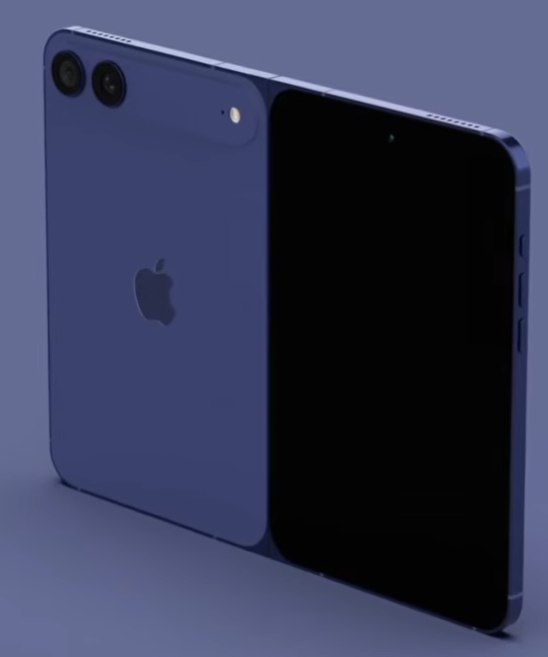
CUPERTINO, Calif. — Apple’s long-rumored foldable iPhone, widely anticipated for a 2026 debut, appears poised to address one of the biggest drawbacks in current foldable smartphones: the visible crease on the inner display. Multiple supply chain leaks and analyst reports from early 2026 indicate the device will boast a significantly reduced or “nearly invisible” crease, potentially setting a new standard in the category.
Apple’s Foldable iPhone Expected to Feature Minimal or Nearly Invisible Crease in 2026 Launch
The foldable iPhone, often referred to as the iPhone Fold, remains in development with mass production of key components — including the crease-minimizing display panels — slated to begin in May 2026, according to recent leaks from Chinese social media accounts and supply chain insiders. Samsung Display is expected to supply the OLED panels, building on advancements showcased at CES 2026 where Samsung demonstrated a “crease-less” foldable OLED alongside its Galaxy Z Fold series.
Leaker Fixed Focus Digital, citing industry perspectives on Weibo, stated in mid-March 2026 that the foldable iPhone’s screen will achieve “flatness exceeding that of many currently available domestically produced foldable screen models.” The source emphasized that the crease will be “flatter and less visible” than competitors, with some interpretations suggesting it could “almost completely disappear” when unfolded.
Supporting details emerged from earlier leaks. In February 2026, Fixed Focus Digital reported the crease depth at under 0.15mm and the fold angle below 2.5 degrees — metrics indicating a shallow, smooth transition across the fold line. A smaller crease depth and angle make the line far less noticeable to the eye and touch compared to typical foldables, where creases often exceed 0.2-0.3mm and create sharper angles.
Analyst Ming-Chi Kuo, known for accurate Apple supply chain predictions, has aligned with these claims. In reports from early 2026, Kuo described a book-style foldable with a 7.8-inch inner display and 5.5-inch outer screen, emphasizing Apple’s pursuit of a “crease-free” or “nearly invisible” crease “regardless of cost.” He noted Apple shifted from a fully custom display to adopting Samsung’s laser-drilled metal plate technology — supplied by Fine M-Tec — which disperses bending stress to prevent permanent creasing.
Advertisement
This approach leverages microperforations and viscoelastic materials to distribute fold stress, a method Samsung highlighted at CES 2026 with panels showing “no crease at all” in demos. Kuo indicated the iPhone Fold’s structure, lamination and materials would differ slightly due to Apple’s custom design, but the core tech draws from Samsung’s advancements.
The crease reduction stems from Apple’s deliberate delay in entering the foldable market. For years, the company held back, prioritizing a premium experience without the visible fold line that plagues Samsung Galaxy Z Fold, Google Pixel Fold and other devices. Reports from late 2025 and early 2026, including from UDN and supply chain sources, confirm Apple developed a “new material property” to eliminate or minimize the crease, aligning with its reputation for refusing to ship products until meeting high standards.
Mass production timelines support a fall 2026 launch, likely alongside the iPhone 18 series in September. Leakers like Instant Digital and others peg display panel production for May 2026, with full device assembly following in July or later. This cadence fits Kuo’s prediction of a late-2026 rollout, though some earlier forecasts suggested possible delays to 2027.
Pricing remains speculative but points to a premium tier. Estimates range from $1,999 to $2,400 or higher, reflecting advanced materials, hinge engineering — possibly using liquid metal for durability — and Apple’s positioning. The device is expected to feature high-end specs, including dual 48-megapixel cameras, an A-series chip (likely A20 Pro), and iOS optimizations for multitasking on the larger inner screen.
Advertisement
While no official confirmation exists from Apple, the convergence of leaks from reliable sources like Kuo, Ross Young (display analyst) and Chinese tipsters builds confidence. Young’s prior forecasts and CES 2026 glimpses of Samsung’s tech reinforce the narrative of a breakthrough display.
If realized, the minimal-crease iPhone Fold could redefine foldables, offering a seamless tablet-like experience in phone form without the distracting fold line. Competitors have improved creases over generations — Samsung’s latest models show shallower lines — but Apple’s approach may achieve the closest to “crease-free” yet seen.
As development progresses toward mass production, attention turns to real-world durability, hinge reliability and everyday usability. With prototypes reportedly deep in testing, the foldable iPhone’s success will hinge on delivering the flawless screen Apple demands.
FTC Chairman Andrew Ferguson discusses Walmart’s $100 million judgment and addresses a New York Times op-ed’s claims regarding the FCC and FTC on ‘Varney & Co.’
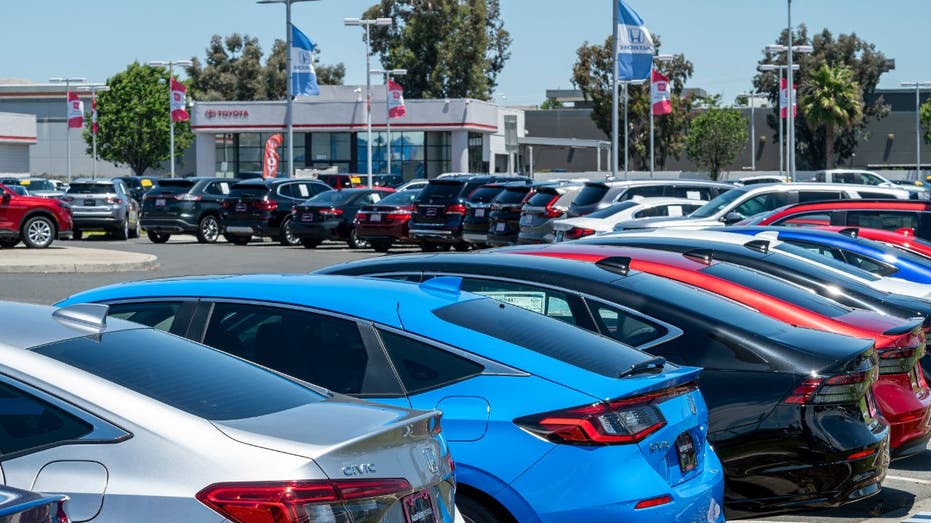
The Federal Trade Commission (FTC) issued warnings to 97 auto groups around the country, reminding them their advertised prices must be the total price, inclusive of all mandatory fees, that consumers will have to pay.
The FTC said its letters encouraged auto dealers to review their advertising and pricing practices to ensure that advertised prices include all fees consumers must pay when buying a vehicle.
Advertisement
It said that, at minimum, it includes evaluating advertised prices to ensure they match actual prices charged to consumers. The agency added it will continue to monitor the marketplace and will take action as warranted to ensure compliance with the FTC Act and other rules.
“The Trump-Vance FTC is committed to preventing auto dealers from misleading consumers with low advertised prices and then adding on mandatory fees at the end of the purchasing process,” said Christopher Mufarrige, director of the FTC’s Bureau of Consumer Protection.
“The FTC will remain focused on monitoring auto dealerships to ensure that the market functions efficiently and competitors are transparently competing on price.”
Advertisement
The FTC sent letters to 97 auto dealerships in a push to promote price transparency. (iStock)
The agency said the letters to auto dealers are part of the FTC’s broader efforts to ensure price transparency across multiple markets, including rental housing, ticketing and hotels, grocery and delivery services and auto sales and leasing.
The FTC’s efforts aim to support affordability in the marketplace by ensuring that consumers only pay the advertised price for products and services and don’t face undisclosed fees, hidden charges or other illegal conduct.
“When consumers do not know the true price of a car — or any product — consumers and others suffer related consequences, including that consumers cannot comparison-shop and make informed decisions, sellers trying to deal honestly with consumers are put at a competitive disadvantage, and the market cannot operate efficiently,” a template version of the warning letter posted on the FTC’s website explained.
The FTC informed nearly 100 auto dealerships that it’s examining dealers’ pricing practices. (David Paul Morris/Bloomberg via Getty Images)
The letters the FTC sent to the auto dealers offered several examples of illegal pricing practices in the auto industry.
Those include advertising a price that doesn’t reflect all required fees, advertising a price that reflects rebates or discounts that aren’t available to all consumers and advertising a price that fails to take into account the amount of an additional required down payment.
They also include conditioning the advertised price on consumers using dealer financing, requiring consumers to buy additional items not reflected in the advertised price and advertising unavailable or non-existent vehicles.
The FTC told dealers to confirm that their advertised prices match the actual sales price. (David Paul Morris/Bloomberg via Getty Images)
The FTC’s template letter informs the recipient that the agency is concerned that the recipient may be engaging in one or more of those practices.
It also encourages the recipient to “review your practices, including by making sure the prices you advertise include all required fees and charges aside from required government charges, to ensure you are complying with applicable laws. This would include, at a minimum, evaluating your advertised prices and actual prices and confirming they match.”
The template letter adds that the notice “is not intended to be a comprehensive statement of concerns that may exist about your dealership or dealership group” and it also isn’t intended to “represent any conclusions on whether your dealership or dealership group is engaging in these practices.”
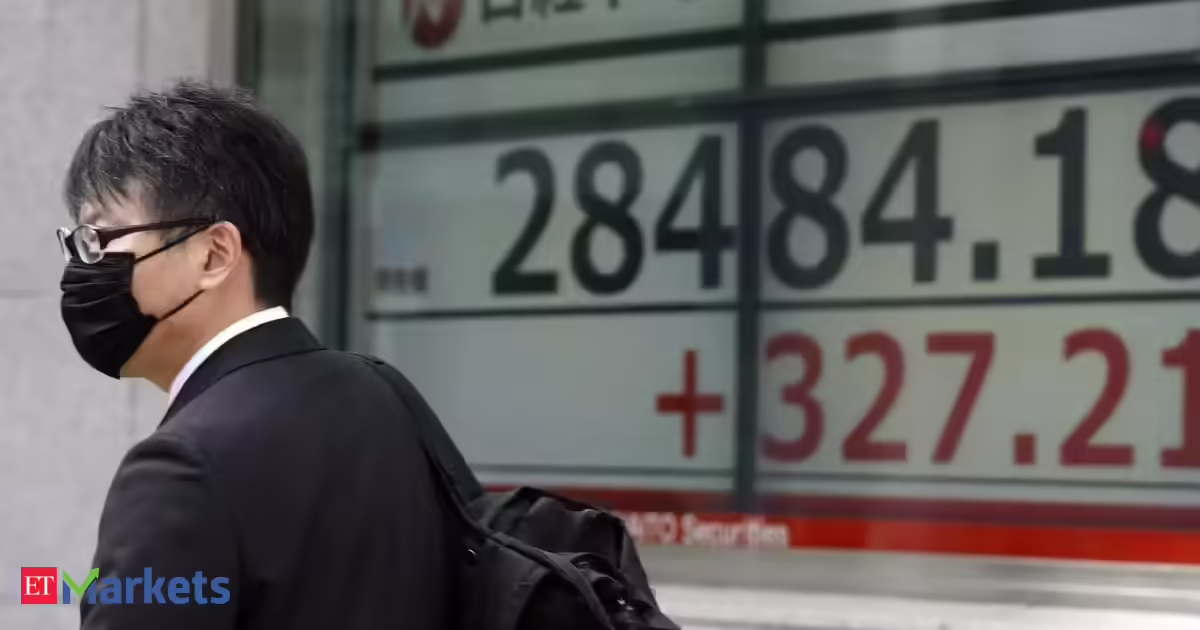
Asian equities dropped in early trading Thursday after attacks on key energy infrastructure amid an escalating Middle East war drove oil prices higher.
Japan’s Nikkei 225 slumped 2.4% ahead of a rate decision while a broader gauge of Asian shares also fell more than 1.3% as investors trimmed risk. US futures edged lower after the S&P 500 and Nasdaq 100 both declined 1.4% Wednesday.
Brent crude rose above $111 per barrel as strikes between Iran and Israel on critical energy facilities, which included damage to the world’s largest liquefied natural gas export plant in Qatar, raised concerns of a more lasting impact from the conflict.
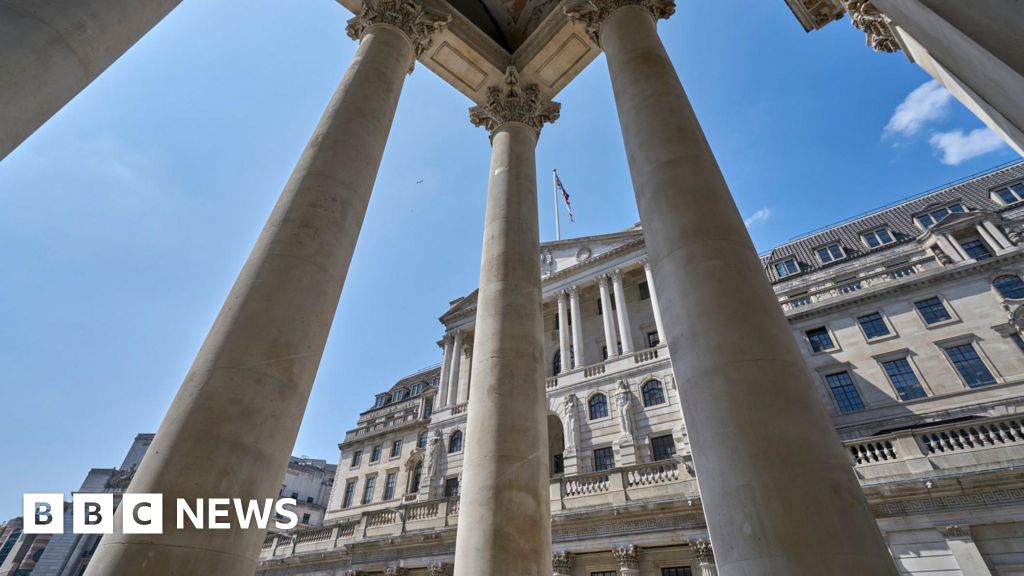
Treasuries sold off across the curve on Wednesday, pushing yields higher and lifting the dollar after Federal Reserve Chair Jerome Powell said the Iran conflict has added fresh uncertainty to the inflation outlook, making the path for interest rates harder to gauge. Officials left rates unchanged and continued to expect one cut this year.
Advertisement
“There is little doubt that higher oil prices are starting to have a broader impact, and with volatility elevated, headline risk remains ever present,” Chris Weston, head of research at Pepperstone Group, wrote in a note. “The Fed meeting was largely a non-event, but once again it is developments in the energy complex that are driving cross-asset flows.”
Live Events
Beyond the focus of the war, concerns over the health of the private credit market continued to play out. S&P Global Ratings lowered its outlook on Cliffwater LLC’s flagship private credit fund to negative, citing elevated redemption requests. Pacific Investment Management Co. is staying away from private credit loans being put up for sale over quality concerns, its president Christian Stracke said. Powell’s comments prompted traders to scale back expectations for rate cuts this year, reinforcing a higher-for-longer rate outlook amid volatility in energy markets.The yield on two-year Treasuries steadied on Thursday after jumping 10 basis points to 3.77% in the previous session. Traders are pricing in only about 15 basis points worth of Fed easing this year, less than one full quarter-point cut.
In economic forecasts released with their decision, Fed officials raised their outlook for inflation in 2026 to 2.7% from 2.4%. Notably, they saw the core measure — which excludes volatile food and energy categories — also rising to 2.7%.
“The Fed didn’t move today — but it didn’t need to,” said Gina Bolvin, president of Bolvin Wealth Management Group. “This is a central bank that’s comfortable waiting, watching, and staying flexible. One projected cut tells you everything: the Fed is not in a rush, and neither should investors be.”
Other major businesses across the country also deemed as critical, such defence firms, transport companies, and cyber security companies, have their own detailed contingency plans to follow in the event of crisis, both as a result of conflict with other countries, and challenges such as natural disasters.
Orlopp’s comments came a day after UniCredit—Commerzbank’s largest shareholder with a roughly 30% stake—said it would offer to buy all the shares in the German bank it doesn’t already own, but that its move aimed to increase its holding above 30% with no expectation to result in majority control. UniCredit said it expected the exchange ratio of its offer to value Commerzbank at 30.8 euros a share, or 34.7 billion euros ($39.93 billion).



















































You must be logged in to post a comment Login