







Connect with us

Business

Elon Musk And Ex-Google X Executive Warn Money Could Become Irrelevant Within A Decade

Published

on

Tesla CEO Elon Musk visited the factory site outside Berlin in September

Elon Musk and a former top Google X executive have separately made strikingly similar predictions in recent weeks: that money, as it currently functions, may become largely irrelevant within the next decade as artificial intelligence and robotics reshape the global economy, though the two men differ sharply on whether that shift represents liberation or a new form of control.

Musk made his comments during an interview with Zanny Minton Beddoes, editor-in-chief of The Economist, conducted at his Texas Gigafactory in late July as part of the publication’s Insider interview series. “Money won’t matter in 2036,” Musk told Beddoes, arguing that robots and artificial intelligence will eventually produce far more goods and services than any person could consume. “You want money for food, housing, transport, entertainment,” Musk said. “If that is so abundant, what do you need money for in that case?”

Musk also predicted the shift would bring deflation rather than inflation, reasoning that if machines keep increasing output while the money supply remains relatively stable, prices should fall over time rather than rise. He separately told Beddoes that he expects artificial intelligence to surpass humanity’s collective intelligence within five years, describing the resulting gap in terms he compared to the difference between humans and chimpanzees. “It’s hard to imagine that the chimpanzees would be in charge,” Musk said, when Beddoes pressed him on how humans would retain control once that gap emerges.

Beddoes challenged Musk on the political realities standing between the present and his 2036 timeline, noting that job losses from AI-driven automation tend to arrive well before any offsetting abundance materializes, and that displaced workers historically pressure governments for protection rather than waiting patiently for prices to fall. According to reporting on the interview, Musk acknowledged the transition would likely be turbulent and said battles over income transfers to displaced workers were probably the next major political fight, before moving on to other topics.

Advertisement

Musk’s comments echo remarks he made previously on the “Moonshots with Peter Diamandis” podcast, where he said people should not bother saving for retirement given his expectation of impending economic abundance. “Don’t worry about squirreling money away for retirement in 10 or 20 years,” Musk said at the time. “It won’t matter.”

Mo Gawdat, the former chief business officer at Google X and author of the book “Scary Smart,” reached a similar conclusion about money’s declining relevance in a separate interview, though he framed the shift in far darker terms. Gawdat argued that the current financial system is already largely disconnected from real economic value, describing modern currency as effectively an accounting illusion sustained by fractional reserve banking and concentrated institutional ownership of markets. He predicted that artificial intelligence systems will increasingly take over trading and major financial decisions, eventually consolidating control in ways that benefit a small number of platform owners while leaving most people economically marginalized. Gawdat also forecast that competing AI systems from different companies and countries will effectively converge into what he called a single dominant “AI brain” by 2030, cooperating with one another in ways that transcend national or corporate loyalties.

Where Musk framed the coming transition largely in terms of abundance and opportunity, Gawdat warned that a programmable digital currency system, if implemented without strong ethical guardrails, could become what he called “the ultimate form of surveillance” and a mechanism for controlling individual behavior rather than a tool for shared prosperity.

Not all economists have embraced Musk’s abundance framing. In a Bloomberg opinion piece, columnist Adrian Wooldridge argued that Musk’s vision overlooks the role status and relative position play in human behavior, noting that even in a world of material abundance, scarce goods such as desirable locations and social prestige would remain contested, meaning some rationing mechanism resembling money would likely persist regardless of how cheap manufactured goods become. Other economists, including Tyler Cowen and Noah Smith, along with researchers at the American Institute for Economic Research, have raised similar objections, arguing that Musk’s post-scarcity vision applies primarily to manufactured physical goods rather than the full range of things people value, and that questions about who owns the robots and how their output gets distributed remain fundamentally political rather than automatic.

Advertisement

Musk did not specify in the Economist interview what would replace money once its relevance fades, leaving that portion of his vision comparatively undefined. Gawdat, in his own remarks, offered a more concrete answer, arguing that the only lasting form of value in an AI-dominated economy would be human connection and compassion, concepts he has said motivated his creation of a separate project focused on emotional intelligence within AI systems.

Both men’s predictions arrive amid a broader wave of commentary from prominent technology figures about the accelerating pace of AI development and its potential economic disruption. While their specific timelines and interpretations diverge, both cite the same underlying driver: a belief that artificial intelligence and robotics are approaching a threshold capable of fundamentally altering how goods, services and decision-making authority are distributed across society within the next 10 to 15 years.

Continue Reading
Click to comment

You must be logged in to post a comment Login

Leave a Reply

Business

Slideshow: Fall flavor innovation on the rise

Published

on

Slideshow: Fall flavor innovation on the rise

Operators are introducing seasonal additions to their menus.

Continue Reading

Business

The AI Compute Squeeze | Seeking Alpha

Published

on

'AI Security' Emerges As The Next Cybersecurity Theme

AI Security System - Data Protection Concepts

Getty Images

If you followed hyperscalers’ earnings, you probably already knew that the neoclouds would repeat some version of “demand for compute is outstripping supply” in their earnings calls. And of course, they did. However, there were some useful nuggets in CoreWeave (

Continue Reading

Business

Trump Administration Asks Supreme Court to Let White House Ballroom Construction Continue Amid Legal Fight

Published

on

Former US president Donald Trump, who remains the most influential figure within the Republican Party, saw his Facebook ban upheld by the social media giant's oversight boardspeaks during a press briefing in the James S. Brady Press Briefing Room at the

WASHINGTON — The Trump administration on Friday asked the Supreme Court to allow construction of a large new White House ballroom to proceed, escalating a legal battle over whether the president can undertake major changes to the executive mansion without explicit approval from Congress.

In an emergency filing, Solicitor General D. John Sauer requested that the justices put on hold a recent appeals court ruling that ordered a halt to above-ground work on the project. The administration argued the injunction is unlawful and that the ballroom forms part of an integrated security complex needed for national security.

“This case involves an extraordinary and unlawful injunction that will halt the ongoing construction of the integrated military complex, including a totally secure ballroom space, at the East Wing of the White House, which is vitally required by national security,” the Justice Department lawyers wrote.

The request comes one week after a three-judge panel of the U.S. Court of Appeals for the District of Columbia Circuit ruled 2-1 that the administration lacked authority to proceed without congressional authorization. The panel upheld a lower-court order from U.S. District Judge Richard Leon directing a stop to most above-ground construction while allowing underground work on security features, including a presidential bunker and related facilities, to continue.

Advertisement

“Whether or not a massive ballroom should be constructed is for Congress to decide and is not a matter for Executive self-help,” the majority wrote in the Aug. 7 decision. The appeals court paused its order for 14 days to give the administration time to seek Supreme Court review. Unless the high court intervenes, the halt on above-ground work is set to take effect around Aug. 21.

President Donald Trump had signaled the appeal immediately after the appeals court ruling. “We will be immediately appealing to the United States Supreme Court,” he wrote on Truth Social, describing the decision as “horrendous, politically motivated, and unlawful” and stating that “This unjust decision must be overturned by the Supreme Court in its entirety.”

The project involves replacing the demolished East Wing with an approximately 90,000-square-foot ballroom estimated to cost around $400 million, financed primarily through private donations. Construction of the underground elements has continued under prior court permissions, and the administration has said the overall project is substantially advanced, with a concrete-and-steel superstructure in place and crews working extended hours.

The National Trust for Historic Preservation filed the underlying lawsuit after the East Wing was torn down last year, arguing that major alterations to the White House require congressional approval, historic preservation reviews and other legal steps that were not completed. Lower courts have largely agreed that private funding does not exempt the project from the requirement for legislative authorization of significant changes to federal property.

Advertisement

The administration has framed the ballroom as essential for security, citing threats against the president and the need for a fully secure space integrated with underground protective features. It has maintained that stopping the work at this stage would leave an incomplete structure and create practical and safety problems. Judges have rejected the argument that national security concerns automatically override statutory limits on executive authority over the White House grounds.

The case raises broader questions about the balance of power between the president and Congress regarding the White House itself. Courts have described the president as a temporary occupant rather than the owner of the property, emphasizing that lasting changes require legislative involvement.

Supreme Court intervention on an emergency basis would determine whether construction of the above-ground portions can resume while the full legal challenge proceeds. The justices could grant a stay, deny the request, or take other steps that would shape the project’s timeline. The administration has asked for prompt action given the approaching effective date of the lower-court order.

Construction activity has been visible at the site in recent weeks, with equipment and progress documented in public images. The president has personally engaged with design details of the ballroom, which is intended to serve large events while incorporating enhanced security elements.

Advertisement

Opponents of the project contend that allowing unilateral construction sets a precedent that could enable future presidents to alter historic federal buildings without oversight. Supporters argue that the executive has long exercised authority over the White House complex and that security needs justify the current approach, particularly when no taxpayer funds are said to be required for the ballroom itself.

The Supreme Court has not indicated when it will rule on the emergency application. The matter arrives during the court’s summer recess, when emergency applications are typically handled by the justices or a designated justice before potential referral to the full court.

As the legal process continues, underground security-related work remains authorized under existing court orders. The outcome of the Supreme Court request will determine whether the visible above-ground construction of the ballroom can advance or must pause pending further proceedings and any eventual congressional action.

The dispute underscores ongoing tensions over the scope of presidential authority in managing the White House and the role of the courts in enforcing statutory requirements for major federal projects. Both sides have described the stakes as significant for the physical structure of the executive residence and for broader principles of separation of powers.

Advertisement
Continue Reading

Business

Legacy Housing schedules 2026 annual meeting for October 28 in virtual format

Published

on


Legacy Housing schedules 2026 annual meeting for October 28 in virtual format

Continue Reading

Business

Ashok Leyland Q1 profit rises 2% as revenue jumps 10% to Rs 10,750 crore

Published

on

Ashok Leyland Q1 profit rises 2% as revenue jumps 10% to Rs 10,750 crore
Chennai-based Ashok Leyland on Friday reported a 2% increase in its consolidated net profit at Rs 668 crore for the first quarter ended June.

The company had posted net profit of Rs 658 crore in the corresponding period of the last financial year.

Consolidated revenue rose 10% to Rs 10,750 crore in the period under review.

On a standalone basis, Ashok Leyland reported its highest-ever net profit of Rs 609 crore as against Rs 594 crore in the same quarter previous year. However, due to rising material costs EBITDA (Earnings before Interest, Tax, Depreciation & Amortisation) margin stood at 10.1% as against 11.1% in the year-ago period.

Advertisement

“The company has delivered another strong quarter, underpinned by disciplined execution and effective cost management”, said Dheeraj Hinduja, Chairman of the company said, adding, “Demand across key segments remains robust, and future prospects continue to be encouraging. Government initiatives such as Parivartan will further accelerate fleet modernisation and support the long-term growth of the commercial-vehicle industry.”


The company’s electric mobility subsidiary, Switch Mobility, also continues to gain traction, he said.
“While rising material costs remain a concern, Ashok Leyland is taking several initiatives towards better price realisation, rigorous cost-saving efforts, product and business mix improvement, and opportunity-based inventory build-up”, said Shenu Agarwal, Managing Director & CEO, Ashok Leyland.Last quarter, Ashok Leyland posted its highest ever sales of commercial vehicles at 48,763 units, compared to 44,238 units in the same period last fiscal.

The company announced investments of up to £25 million (approximately Rs 325 crore) in Optare Plc. UK, subsidiary, as equity in one or more tranches.

It also announced investments of up to Rs 500 crore in equity shares of Hinduja Housing Finance, a step-down subsidiary, by way of secondary purchase of shares from Hinduja Leyland Finance, a material subsidiary, in one or more tranches.

Advertisement
Continue Reading

Business

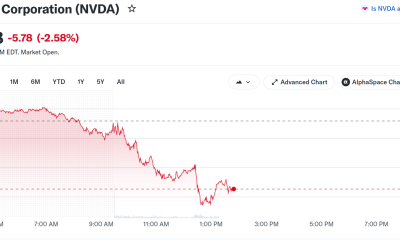
Stock Market Today: Dow Falls On Surprise Retail Sales; AI Giant Dives On Earnings

Published

on

Stock Market Today: Dow Falls On Surprise Retail Sales; AI Giant Dives On Earnings

The Dow Jones Industrial Average and other major stock indexes lagged in early afternoon trade Friday as Wall Street digested weaker-than-expected retail sales along with consumer sentiment data. Meanwhile, AeroVironment (AVAV) headed higher amid tariff news in the stock market today. The Russell 2000 small-cap index outperformed with a gain of 0.4%, while the tech-heavy Nasdaq composite gave back 0.5%.…

Copyright ©2026 Investor’s Business Daily, LLC. All rights reserved. 87990cbe856818d5eddac44c7b1cdeb8

Continue Reading

Business

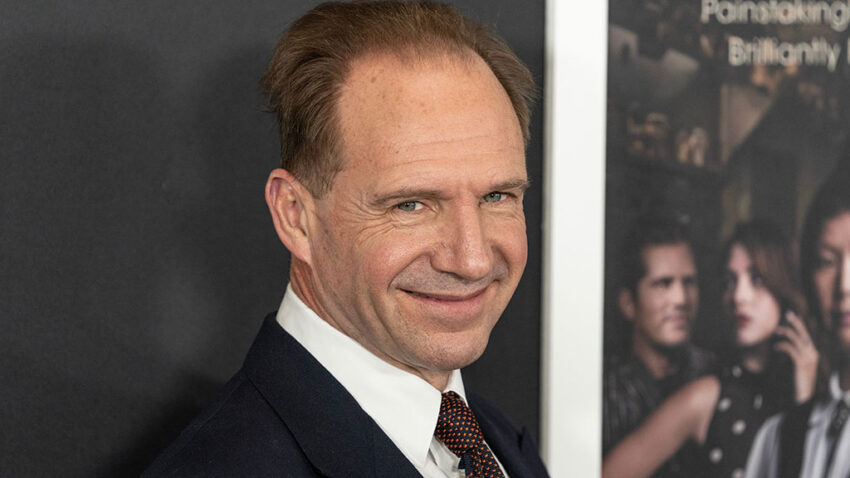
Ralph Fiennes backs Bell Inn bid

Published

on

Ralph Fiennes backs Bell Inn bid

A community campaign to buy the Bell Inn at Middleton in Suffolk has raised £380,000 towards a £550,000 target, with the actor Ralph Fiennes and the Blackadder actress Helen Atkinson-Wood backing the bid to bring the grade II-listed pub into community ownership.

The 17th-century thatched pub was put up for sale earlier this year by the Southwold brewery Adnams for £425,000. Residents formed a charitable Community Benefit Society to lead the buyout and hope to raise enough to purchase the pub outright.

Thirty residents have bought shares so far, and many plan to make charitable donations, which will benefit from tax relief.

Adnams, best known for its Southwold bitter, has previously enlisted advisers to explore options for raising funds as it sought to secure its financial position.

The Campaign for Real Ale (Camra) says 101 community buyout campaigns are currently active, and puts the number of community-owned pubs in the UK at 237.

Advertisement

Paul Ainsworth, Camra’s national planning and policy advisor, expects the government’s Community Right to Buy Fund, a £61 million package announced by the Ministry of Housing, Communities and Local Government in June, to spur further buyouts.

“I think it will revitalise the whole community ownership scene because money is the root of all these schemes … like the one in Suffolk, £500,000 is not small change so raising that amount of money yourself is quite a challenge,” he said.

Ainsworth said community ownership was “gathering momentum”, adding that “wherever you are in the country you’re not that far from a community-owned pub these days and they’re always very happy to help each other”.

“Community owned pubs have invariably been very successful and there have only been very few instances of these pubs failing,” he said. “It is not surprising as people in the community, more often than not, have a direct or indirect stake in the business as it’s their pub.”

Advertisement

He said community schemes avoided some of the financial pressures faced by tied tenants. “The community buys the freeholds of the pub and that means they aren’t facing the problems that a lot of pub company tenants face where a pub company tenant jacks up the rent and squeezes them dry and rewards their success by trying to get more money out of them.”

“It’s much more manageable from a financial point of view, they’re more in control,” he added.

Gillian Stacey, who is leading the campaign, called the Bell “the focal point of the community” and said it survived the pandemic lockdowns by offering takeaway pints.

“You drive through picturesque villages in Suffolk and when pubs are on the market they become derelict very quickly as this one would do,” she said.

Advertisement

Separate analysis of government data by the property tax firm Ryan found 366 pubs in England and Wales were demolished or converted to other uses in 2025, an average of one permanent closure a day.

Fiennes, who owns a home close to Dunwich Heath, said: “The Bell at Middleton has kept its integrity as a village pub, I mean it has atmosphere, simple, convivial, traditional, friendly. No frills or trying too hard. You feel at home the moment you walk in. And most important it feels ‘Suffolk’.”

“Adnams’ pubs were often synonymous with this quality,” he added. “Post Adnams’ ownership, I hope the Bell finds new management that keeps its spirit intact.”

Atkinson-Wood said: “We need to keep pubs open at the heart of our communities as places to go for a drink and a packet of crisps.”

Advertisement

She said pressure to offer a “gastropub experience” made it harder for traditional drink-first pubs to survive, and that closures in rural villages leave few remaining social spaces.

“Hospitality is a very expensive business and that’s all reflected in going out and eating in pubs,” she added. “That’s why it’s really important to keep pubs where you don’t need to have an oyster banquet when you eat in an East Anglian pub.”

Stacey said that without reaching the target, “many villagers, particularly the more elderly, will be socially isolated”. Upcoming fundraisers include an auction with lots including an etching course, a drive in a Maserati, a lambing day and a day in a Southwold beach hut.

Fiennes said: “Pubs like the Bell are a true expression of their neighbourhood, and I think the best of any country is in the spirit of its neighbourhoods and villages.”

Advertisement

Jamie Young

Jamie Young

Jamie Young is Senior Reporter at Business Matters, covering SME finance, employment law and Westminster policy since 2016. He has reported on every Budget and Autumn Statement since 2018, helped make sense of the ‘covid era’ and the bounce-back loan scheme from launch through the fraud investigations, and broke the magazine’s coverage of the 2024 late-payment reforms. He joined Business Matters straight from completing his BA in Administration from Exeter University and is NCTJ-qualified. Reach him at jyoung@cbmeg.co.uk

Advertisement
Continue Reading

Business

People on the move: key North East appointments and promotions

Published

on

Business Live

Companies announcing new appointments this week include the North East BIC, Ward Hadaway, Morgan Sindall Construction, Everflow and Clive Owen

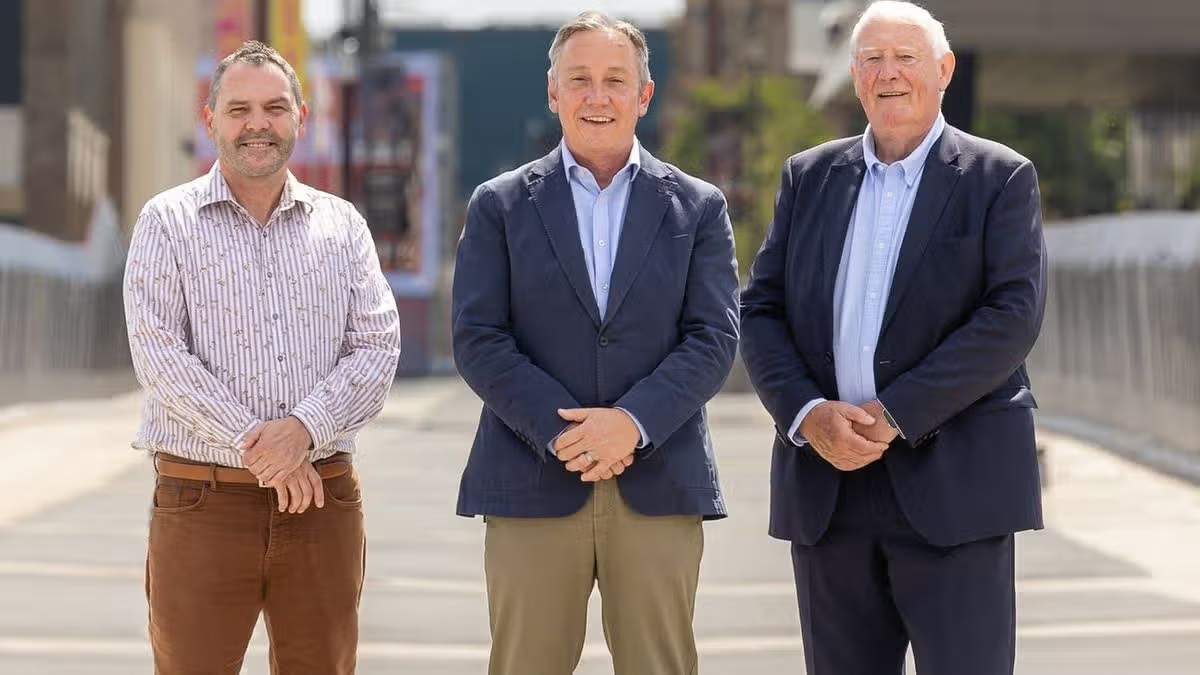
Left to right: Paul McEldon, Brett Griffiths and Kevan Carrick

Left to right: Paul McEldon, Brett Griffiths and Kevan Carrick(Image: CREO COMMS)

The North East BIC has appointed Brett Griffiths as its new chief executive officer. Mr Griffiths will take up the role from October 1 and joins from multinational consumer products company, Société BIC, where he led the firm’s North Europe commercial division.

Originally from South Africa, he has more than 26 years’ experience in executive commercial leadership roles spanning Africa, the Middle East, United Kingdom and Northern Europe.

Since moving with his family to County Durham in 2020, he has also volunteered on the board of Enactus UK, part of a global non-profit organisation that supports university students to create meaningful social impact through sustainable entrepreneurship.

He said: “The North East BIC is a purpose-driven organisation, which aligns perfectly with my values, and I look forward to working with our talented team to build upon its fantastic legacy. It’s a really exciting time for the organisation and the North East region. We can see accelerating commercial confidence and inward investment in the North East of England. However, if these developments are to truly deliver for the region, then we must ensure that the benefits are felt across our communities, and this is why organisations such as the North East BIC are so important.

Advertisement

“Over the coming years, the organisation is set to play a pivotal role in providing the support and workspace required to help the region’s businesses start up, scale and grow. It’s a commercial organisation which has such a positive social impact, that was my catalyst to come here.

“I want to thank Paul McEldon for his outstanding leadership and unwavering commitment over many years.”

Morgan Sindall Construction has appointed Nick Corrigan as its new area director of its North East and Cumbria business

Morgan Sindall Construction has appointed Nick Corrigan as its new area director of its North East and Cumbria business(Image: Morgan Sindall)

Morgan Sindall Construction has appointed Nick Corrigan as its new area director of its North East and Cumbria business. Mr Corrigan brings 30 years of construction industry experience to the role, the majority of which has been spent working across the North of England. Originally from Hartlepool, he joins the company while it is delivering a broad range of projects.

He said: “This is a part of the world I know well and care deeply about. There’s huge potential for growth in both the North East and in Cumbria, not least because of the renewed focus from the top levels of government on rebalancing the UK economy and supporting the UK regions.”

Advertisement

Simon Arnott, managing director for Morgan Sindall Construction in the North, said: “There is a great deal of focus on investment in the North East and Cumbria and Nick is exactly the kind of leader we want at the helm of our regional business.”

Michael Cantwell, Paul Williams and Michael Dickens at Clive Owen

Michael Cantwell, Paul Williams and Michael Dickens at Clive Owen(Image: Clive Owen)

Accountancy firm Clive Owen has strengthened its corporate finance team with the appointment of Paul Williams as corporate finance executive.

Mr Williams joins from a Big Four accountancy firms. During his training, he gained valuable exposure across a range of sectors, including banking and insurance, and spent time working in Bristol as part of the programme. His appointment follows the recruitment of Michael Dickens as corporate finance manager and comes during a period of investment and growth for Clive Owen.

He said: “I am delighted to have joined Clive Owen at such an exciting time for the firm and corporate finance team.

Advertisement

“The opportunity to work closely with ambitious business owners, supporting them through every stage of their business journey was a major draw. The breadth and variety of the role, together with the chance to work alongside such an experienced and well-respected team, made it an opportunity I was eager to be part of.”

Mari Jones, Everflow water managing director.

Mari Jones, Everflow water managing director.(Image: Everflow)

Utilities company Everflow has announced the appointment of Mari Jones as its new water managing director. Her career has seen her lead high-performing teams in large-scale organisations that aim to improve customer experience.

She said: “Everflow is well placed to lead the market by raising expectations of what SMEs should experience from their utilities provider both in what we offer and how we deliver it. The focus now is on simplifying how we operate and ensuring everything is built around the needs of our customers. My focus will be on taking what is already a great foundation and building on it.”

Barnaby Rosenthall at Ward Hadaway

Barnaby Rosenthall at Ward Hadaway(Image: Ward Hadaway)

Ward Hadaway has appointed Barnaby Rosenthall as legal director in its Teesside office, strengthening its construction and engineering law offer for businesses across the region. The move follows Ward Hadaway’s 2025 merger with The Endeavour Partnership, which gave the law firm a large, dedicated Teesside team.

Advertisement

Mr Rosenthal rejoins following a period as senior legal counsel at Mitie, where he advised the executive leadership team and supported the delivery of major power and grid infrastructure projects.

He said: “Returning to Ward Hadaway was an easy decision because I already knew the strength of the team, the quality of the work and the firm’s ambitions for the future.

“My time in-house gave me valuable insight into the commercial and operational challenges clients face on construction and engineering projects, from procurement and contract negotiation through to delivery and dispute resolution. It has helped me develop a pragmatic approach to legal advice that supports successful project delivery while helping clients achieve their commercial objectives.

“The opportunity to join as legal director combines a leadership role with the chance to help develop the firm’s construction and engineering practice in Teesside. I’m looking forward to working with clients across the region on projects and developments that are contributing to Teesside’s continued growth.”


Advertisement
Continue Reading

Business

SpaceX Shares Slip 2.3% to $138 After Recent Rally as AI Spending and Starship Plans Weigh

Published

on

Company headquarters, SpaceX Starbase in Starbase, Texas

Shares of Space Exploration Technologies Corp. declined Thursday, giving back some of the recent gains that had pushed the stock back above its initial public offering price, as investors continued to digest the company’s aggressive investments in artificial intelligence infrastructure and progress on its Starship program.

SpaceX stock fell $3.31, or 2.34%, to $137.98 in midday trading on the Nasdaq, according to market data as of 12:26 p.m. EDT on Aug. 14. The move followed a sharp rebound in recent sessions that lifted the shares above the $135 IPO price set in June, after an earlier post-earnings sell-off had driven them as low as about $105.

The company, which completed the largest IPO in history earlier this year, reported second-quarter results on Aug. 4 showing revenue of $7.8 billion, a 92% increase from $4.1 billion a year earlier. The figure exceeded analyst expectations. Net loss narrowed to $541 million from about $1 billion in the prior-year period, while adjusted EBITDA rose to $3.5 billion.

Connectivity, driven largely by the Starlink satellite internet service, generated $4.3 billion in revenue. The AI segment contributed $2.56 billion, reflecting rapid growth from cloud computing contracts. Space segment revenue stood lower as the company continued heavy development spending. SpaceX ended the quarter with roughly $100 billion in cash, cash equivalents and marketable securities, bolstered by IPO proceeds of about $85.7 billion and other financing, and carried a backlog of $47.5 billion.

Advertisement

Capital expenditures remained elevated, with a substantial portion directed at AI compute capacity. The company has signed major cloud services agreements and announced plans for Terafab, a joint semiconductor manufacturing initiative with Tesla valued at an initial $16.8 billion for its first phase in Texas, with potential for much larger expansion. An agreement to acquire Cursor for $60 billion was also disclosed, aimed at accelerating AI enterprise opportunities.

During an all-hands meeting with employees and on the earnings call, Chief Executive Elon Musk emphasized the growing role of artificial intelligence. He indicated that AI revenue was on track to surpass other SpaceX revenue streams as early as September and significantly exceed them in the fourth quarter. Musk has projected the company could reach a $100 billion annualized revenue run rate by the end of 2026 and $1 trillion in annual revenue by 2030.

On the Starship front, Musk said a key technical challenge had been addressed. “I don’t want to jinx it or anything, but I think I’d consider the heat shield problem solved at this point,” he stated on the earnings call. He expressed confidence in increasing flight cadence, saying, “We expect the cadence of flights to be increasing rapidly, and probably a year from now, we will be doing at least one flight a day, possibly more.” The company aims to attempt catching the Ship with the tower on an upcoming test flight and to deploy viable payloads.

Starlink remains a core revenue driver, with fixed wireless subscribers around 12 million at the end of the second quarter and additional mobile subscribers through partnerships. The service continues to expand geographically, including new markets. Launch operations maintained a high cadence, supporting both commercial and government contracts, including multi-year U.S. government awards.

Advertisement

Analysts remain largely constructive, with a majority rating the stock a buy and average price targets implying substantial upside from current levels. Some have highlighted the AI business as undervalued relative to its growth trajectory, while noting risks around capital intensity, execution on Starship reusability and competition in satellite connectivity and AI infrastructure.

The stock’s volatility since the June IPO has reflected investor focus on the balance between near-term spending and longer-term monetization of Starlink scale, reusable launch systems and AI compute. Lock-up expirations have added to supply concerns, though the first major release did not produce the heavy selling some had anticipated. A further unlock is scheduled later in August.

SpaceX continues to pursue vertical integration across rockets, satellites, connectivity and now semiconductor production and AI models, including releases of advanced Grok versions. Management has pointed to contracted cloud revenue providing visibility into returns on the compute investments.

Market participants will watch upcoming Starship flight tests, additional AI contract disclosures, Starlink subscriber trends and any updates on Terafab progress or the Cursor acquisition closing. The company’s ability to convert heavy capital outlays into sustained high-margin growth will likely remain a central theme for investors assessing the shares after their rapid recovery from recent lows.

Advertisement

While the Aug. 14 decline interrupted the short-term rebound, the broader narrative centers on SpaceX’s transition from a private launch and satellite company into a public entity with ambitions spanning multiplanetary transport, global connectivity and large-scale AI infrastructure. Execution across these fronts will determine whether the current valuation, still reflecting significant growth expectations, proves sustainable.

Continue Reading

Business

ATI: Why I Am Downgrading This Strong Performer (NYSE:ATI)

Published

on

ATI: Why I Am Downgrading This Strong Performer (NYSE:ATI)

This article was written by

Dhierin-Perkash Bechai is an aerospace, defense and airline analyst.
Dhierin runs the investing group The Aerospace Forum, whose goal is to discover investment opportunities in the aerospace, defense and airline industry. With a background in aerospace engineering, he provides analysis of a complex industry with significant growth prospects, and offers context to developments as they occur, describing how they might affect investment theses. His investing ideas are driven by data informed analysis. The investing group also provides direct access to data analytics monitors.
Learn more.

Analyst’s Disclosure: I/we have no stock, option or similar derivative position in any of the companies mentioned, and no plans to initiate any such positions within the next 72 hours. I wrote this article myself, and it expresses my own opinions. I am not receiving compensation for it (other than from Seeking Alpha). I have no business relationship with any company whose stock is mentioned in this article.

Seeking Alpha’s Disclosure: Past performance is no guarantee of future results. No recommendation or advice is being given as to whether any investment is suitable for a particular investor. Any views or opinions expressed above may not reflect those of Seeking Alpha as a whole. Seeking Alpha is not a licensed securities dealer, broker or US investment adviser or investment bank. Our analysts are third party authors that include both professional investors and individual investors who may not be licensed or certified by any institute or regulatory body.

Advertisement
Continue Reading

Trending

Copyright © 2025