Business
Elon Musk Testifies in Twitter Trial as SpaceX Eyes Moon and xAI Merger Sparks IPO Talk

Elon Musk, the world’s richest individual with a net worth approaching $841 billion, spent much of early March 2026 on the witness stand in a high-profile federal courtroom, defending his actions during the tumultuous 2022 acquisition of Twitter—now rebranded as X—against accusations of securities fraud that allegedly cost shareholders millions.
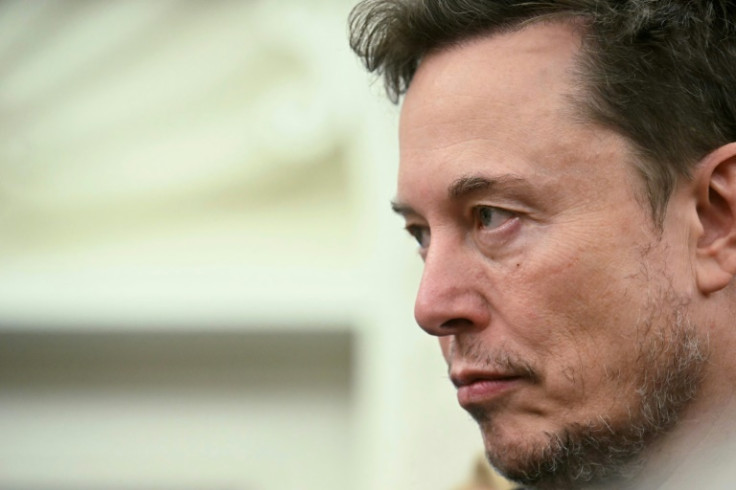
AFP

The civil class-action trial in U.S. District Court for the Northern District of California centers on claims that Musk made misleading statements and tweets in the months leading up to his $44 billion purchase of the social media platform. Plaintiffs allege he deliberately drove down Twitter’s stock price to renegotiate or escape the deal after initially agreeing to buy at $54.20 per share.
Musk took the stand on March 4, appearing defiant as he addressed jurors directly. He testified that he did not intend for his posts—questioning bot accounts and declaring the deal “on hold”—to impact the stock price significantly. “People read too much into my posts,” Musk said, according to court reports. He reiterated his long-standing claim that Twitter understated the prevalence of fake accounts, asserting the platform had far more than the 5% disclosed in filings, which he called a lie by the company.
On the second day of testimony March 5, Musk doubled down, maintaining that his concerns about bots were genuine and not manipulative. The trial, which began in late February and is expected to continue through mid-March, has drawn intense media scrutiny as it revisits one of the most scrutinized corporate takeovers in recent history. Musk’s testimony has been described as combative, with cross-examination focusing on his social media habits and their market influence.
The case has no direct bearing on X’s current operations, but it underscores ongoing legal and reputational challenges for Musk’s social media venture. X has faced advertiser pullbacks and revenue declines, with recent U.K. filings showing a 58% drop in 2024 operations. Despite this, Musk highlighted record usage on X amid global events, including U.S.-Israeli strikes on Iran that spiked platform engagement to all-time highs.
Beyond the courtroom, Musk’s attention has shifted to his sprawling empire. SpaceX announced a strategic pivot in February, prioritizing a “self-growing city” on the Moon over immediate Mars colonization efforts. In posts on X, Musk explained that lunar development offers faster launch cycles—every 10 days with two-day travel—compared to Mars’ 26-month alignment windows and months-long journeys. He described the Moon as key to “securing the future of civilization,” while reaffirming Mars plans would begin in five to seven years.
The shift aligns with reports of an uncrewed lunar landing targeted for March 2027 and builds on SpaceX’s Artemis contributions. Musk has emphasized orbital mechanics advantages, positioning the Moon as a stepping stone for broader space ambitions.
Compounding the narrative, SpaceX completed its acquisition of xAI in early February in an all-stock deal valuing the combined entity at $1.25 trillion—SpaceX at $1 trillion and xAI at $250 billion. The merger integrates Musk’s AI efforts, including the Grok chatbot, with SpaceX’s rockets and Starlink satellites. Musk has outlined plans for orbital data centers powered by limitless solar energy, aiming to scale AI beyond Earth-based constraints.
The deal has fueled speculation about a confidential SpaceX IPO as early as March or June 2026, with valuations potentially exceeding $1.75 trillion. Starlink’s revenue growth drives much of the optimism, though details remain limited.
Neuralink, Musk’s brain-computer interface company, announced plans for high-volume production of its implants in 2026, with a shift to automated surgical procedures to streamline implantation. The company reported 21 participants in trials by late January, focusing on restoring functions like vision and mobility.
Tesla updates include ramped Cybercab testing ahead of April production and potential Tesla Semi expansions at Giga Berlin. Musk has suggested Tesla could lead in achieving artificial general intelligence (AGI) in humanoid form.
Politically, Musk has re-engaged with significant donations to Republican groups ahead of the 2026 midterms, including $20 million to top organizations and $10 million to a Kentucky Senate race. A U.S. appeals court ruling March 4 spared him a deposition related to his role in the Department of Government Efficiency (DOGE) and efforts to dismantle the U.S. Agency for International Development.
Musk’s Texas operations expanded, with a New York Times investigation revealing ties to about 90 entities, many used for political funding and business synergies. He has denied developing a Starlink smartphone, calling related reports false.
As the Twitter trial unfolds and SpaceX-xAI integration accelerates, Musk’s influence spans technology, space, AI, and politics. His March activities highlight a pattern: defending past decisions while aggressively pursuing futuristic visions, from lunar settlements to brain implants and orbital computing.
With potential IPOs, regulatory hurdles, and ongoing litigation, 2026 remains pivotal for Musk’s conglomerated empire. Observers watch closely as courtroom testimony, corporate mergers, and ambitious announcements shape his legacy and the industries he dominates.