
Business
EMCOR Group Stock: Solid Business That Is Fully Valued (NYSE:EME)



I am an investor with over 7 years of experience in the financial markets. Currently pursuing an MBA from the University of Illinois at Urbana-Champaign, where I specialize in Finance and Marketing, my academic background has equipped me with a strong foundation in business strategy, financial analysis, and market dynamics. My investing journey began in early 2015 when I purchased Starbucks (SBUX) for its undervalued valuation. This initial investment marked the start of a transformative experience; the stock’s growth trajectory captivated me, leading to a deeper exploration of trading strategies. Over the years, I have developed a systematic approach that combines technical analysis with fundamental insights derived from my academic studies. My strategy focuses on identifying sustainable growth stocks across various sectors, emphasizing valuation, management quality, and macroeconomic trends. I avoid day trading in favor of longer-term investments, as I prioritize consistency over short-term volatility. My primary focus is on companies that demonstrate strong fundamentals, such as revenue growth, profitability margins, and a balanced risk profile. By integrating my MBA expertise with practical market insights, I have been able to consistently generate annualized returns while maintaining a diversified portfolio. My motivation for writing on Seeking Alpha stems from three key pillars: sharing valuable insights with the investing community, educating others about sound investment principles, and contributing to fostering better decision-making in the financial space. I believe that detailed, well-researched analyses and clear communication are essential tools for investors seeking to navigate the complexities of global markets.
Analyst’s Disclosure: I/we have no stock, option or similar derivative position in any of the companies mentioned, and no plans to initiate any such positions within the next 72 hours. I wrote this article myself, and it expresses my own opinions. I am not receiving compensation for it (other than from Seeking Alpha). I have no business relationship with any company whose stock is mentioned in this article.
Seeking Alpha’s Disclosure: Past performance is no guarantee of future results. No recommendation or advice is being given as to whether any investment is suitable for a particular investor. Any views or opinions expressed above may not reflect those of Seeking Alpha as a whole. Seeking Alpha is not a licensed securities dealer, broker or US investment adviser or investment bank. Our analysts are third party authors that include both professional investors and individual investors who may not be licensed or certified by any institute or regulatory body.


Robert F. Abbott has been investing his family’s accounts since 1995, and in 2010 added options, mainly covered calls and collars with long stocks. He is a freelance writer, and his projects include a website that provides information for new and intermediate-level mutual fund investors. A resident of Airdrie, Alberta, Canada, Robert has earned Bachelor of Arts and Master of Business Administration (MBA) degrees.
Analyst’s Disclosure: I/we have no stock, option or similar derivative position in any of the companies mentioned, and no plans to initiate any such positions within the next 72 hours. I wrote this article myself, and it expresses my own opinions. I am not receiving compensation for it (other than from Seeking Alpha). I have no business relationship with any company whose stock is mentioned in this article.
Seeking Alpha’s Disclosure: Past performance is no guarantee of future results. No recommendation or advice is being given as to whether any investment is suitable for a particular investor. Any views or opinions expressed above may not reflect those of Seeking Alpha as a whole. Seeking Alpha is not a licensed securities dealer, broker or US investment adviser or investment bank. Our analysts are third party authors that include both professional investors and individual investors who may not be licensed or certified by any institute or regulatory body.


I am a stock analyst with over 20 years of experience in quantitative research, financial modeling, and risk management. My focus is on equity valuation, market trends, and portfolio optimization to uncover high-growth investment opportunities. As a former Vice President at Barclays, I led teams in model validation, stress testing, and regulatory finance, developing a deep expertise in both fundamental and technical analysis. Alongside my research partner (also my wife), I co-author investment research, combining our complementary strengths to deliver high-quality, data-driven insights. Our approach blends rigorous risk management with a long-term perspective on value creation. We have a particular interest in macroeconomic trends, corporate earnings, and financial statement analysis, aiming to provide actionable ideas for investors seeking to outperform the market.
Analyst’s Disclosure: I/we have no stock, option or similar derivative position in any of the companies mentioned, and no plans to initiate any such positions within the next 72 hours. I wrote this article myself, and it expresses my own opinions. I am not receiving compensation for it (other than from Seeking Alpha). I have no business relationship with any company whose stock is mentioned in this article.
Seeking Alpha’s Disclosure: Past performance is no guarantee of future results. No recommendation or advice is being given as to whether any investment is suitable for a particular investor. Any views or opinions expressed above may not reflect those of Seeking Alpha as a whole. Seeking Alpha is not a licensed securities dealer, broker or US investment adviser or investment bank. Our analysts are third party authors that include both professional investors and individual investors who may not be licensed or certified by any institute or regulatory body.
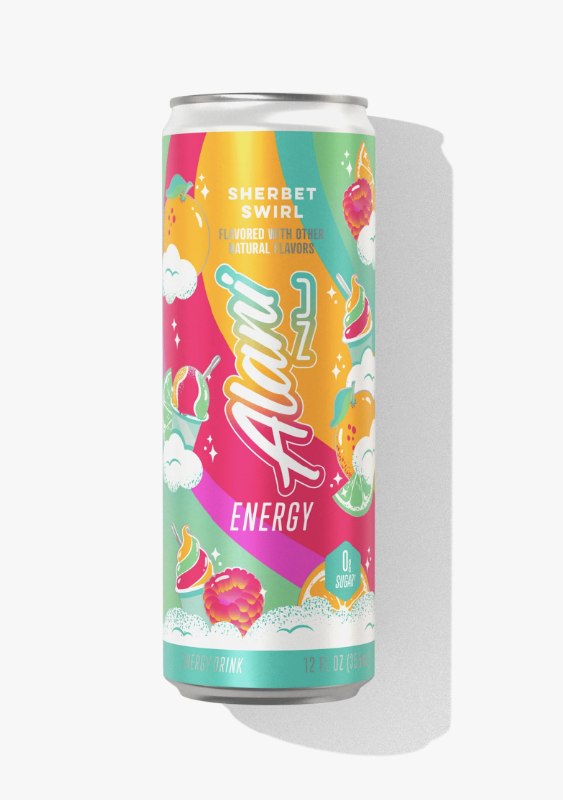
LOUISVILLE, Ky. — Alani Nu energy drinks have exploded in popularity with their candy-like flavors, zero sugar and 200 milligrams of caffeine per can, captivating fitness enthusiasts and everyday consumers seeking a vibrant pick-me-up without the crash.

The brand, founded in 2018 by fitness influencer Katy Hearn Schneider and her husband Haydn Schneider, has grown from a women-focused supplement line into a beverage powerhouse. Its eye-catching cans and bold tastes helped drive rapid expansion, culminating in a reported $1.8 billion sale to Celsius in early 2025.
Here are 10 essential things to know about Alani Nu energy drinks as the brand continues to dominate shelves at Walmart, Target, Costco and online retailers in 2026.
- High Caffeine Content Delivers Strong Kick Each 12-ounce can packs 200 mg of caffeine — roughly equivalent to two cups of coffee. This positions Alani Nu among stronger options in the category, providing sustained energy for workouts or long days. The formula includes L-theanine, which some users say smooths the buzz and reduces jitters compared to plain caffeine sources.
- Zero Sugar, Low Calories Appeal to Health-Conscious Fans Alani Nu drinks contain 0 grams of sugar and typically 10-15 calories per can. Sweetness comes from artificial sweeteners including sucralose, acesulfame potassium and erythritol. This sugar-free profile has helped the brand market itself as a “cleaner” alternative to traditional energy drinks while maintaining broad appeal among dieters and gym-goers.
- Founder’s Fitness Roots Drive Branding Katy Hearn Schneider built the brand around empowering women in fitness with transparent, effective products. The couple launched Alani Nu with supplements before expanding into energy drinks in 2019. The vibrant, playful packaging stands in contrast to darker, extreme-sports aesthetics of competitors like Monster or Red Bull.
- Popular Flavors Taste Like Candy Standout options include Pink Slush, Cherry Slush, Cosmic Stardust, Witch’s Brew, Juicy Peach and Orange Kiss. Many reviewers describe the taste as fun and dessert-like — think caramel apple, creamsicle or cotton candy — with minimal bitterness. In 2026, returning favorites such as Cotton Candy, Sherbet Swirl and Strawberry Sunrise have joined the permanent lineup, alongside new limited releases.
- Fortified With B Vitamins and Biotin Each can delivers B vitamins (including B6 and B12), biotin and other supportive ingredients like taurine, Panax ginseng and L-carnitine. The brand highlights these additions as helping maintain energy and supporting overall wellness, though amounts vary by formula.
- Strong Sales and Retail Presence Alani Nu ranks among top-selling energy drinks on Amazon and in big-box stores. Variety packs of Pink Slush and Cherry Slush frequently appear in best-seller lists, with thousands of positive reviews praising flavor and effectiveness. Availability at Costco, Sam’s Club and convenience outlets has boosted accessibility.
- Mixed Reviews on Sweetness and Aftertaste While many love the bold, candy-inspired profiles, some consumers note an intense sweetness or occasional artificial aftertaste from the sweetener blend. Jitters or anxiety can occur for caffeine-sensitive individuals, though L-theanine reportedly helps mitigate this for others. Overall ratings hover around 4.2-4.6 stars across major platforms.
- Recent Corporate Milestone The 2025 acquisition by Celsius for $1.8 billion marked a major chapter, combining Alani Nu’s female-focused appeal with Celsius’ established energy drink infrastructure. The deal reflected the brand’s rapid growth from influencer-driven startup to a significant player in the competitive beverage space.
- Controversy Over Caffeine and Teen Use In April 2026, a Texas family filed a lawsuit alleging excessive caffeine consumption from Alani Nu contributed to the death of a 17-year-old high school cheerleader. The claim highlighted concerns that one can exceeds recommended daily limits for teens. The brand labels products for ages 18 and older, but the case has sparked broader discussions about energy drink safety for younger consumers.
- Ongoing Flavor Innovation for 2026 Leaked calendars and retailer updates show Alani Nu expanding with new and returning options, including Cherry Bomb, Lime Slush and potential Pink Lemonade variants. The strategy keeps excitement high among loyal fans who eagerly anticipate limited drops and permanent additions.
Nutritional Profile and Ingredients Snapshot
A typical 12-ounce can features carbonated water, citric acid, natural and artificial flavors, taurine, erythritol, sodium citrate, L-theanine, caffeine, sucralose, Panax ginseng and preservatives. Most varieties stay gluten-free, vegan and free of major allergens. Sodium levels hover around 180 mg per serving.
Dietitians note the drink provides a functional energy boost without sugar crashes but caution against over-reliance due to artificial sweeteners and high caffeine. Those with heart conditions, anxiety or caffeine sensitivity should consult physicians before regular use.
Market Position and Consumer Appeal
Alani Nu carved a niche by targeting women and fitness communities with bright aesthetics and approachable flavors. Its success mirrors broader trends toward zero-sugar, vitamin-enhanced beverages that feel indulgent yet “better for you.” The brand’s influencer origins helped build an engaged community that drives organic word-of-mouth and social media buzz.
Compared to rivals, Alani Nu often receives praise for taste over more medicinal or plain profiles. However, some critics argue the heavy use of artificial ingredients disqualifies it from truly “healthy” status despite low calories and added nutrients.
Safety Considerations Amid Lawsuit
The recent lawsuit underscores ongoing industry debates about caffeine thresholds, particularly for adolescents. Health authorities generally advise adults limit intake to 400 mg daily, making one Alani Nu can half that limit — but two cans would reach the cap. Parents and schools have grown more vigilant about teen consumption of such products.
Alani Nu maintains that its drinks are formulated and labeled responsibly. The company has not publicly detailed its response to the lawsuit as of April 11, 2026.
Tips for Consumers
- Start with half a can if new to high-caffeine drinks.
- Pair with hydration and balanced meals to offset potential side effects.
- Check retailer apps or the official Alani Nu site for current flavors and availability.
- Store in a cool place and consume chilled for best taste.
As Alani Nu enters its next phase under new ownership, expect continued innovation in flavors and possibly expanded product lines. The brand’s blend of fun, function and fitness appeal has already secured it a loyal following, even as scrutiny over energy drink safety intensifies nationwide.
Whether grabbing a Pink Slush for a morning boost or trying limited-edition drops, millions reach for Alani Nu daily. Its journey from Louisville startup to billion-dollar beverage name reflects shifting consumer desires for tasty, convenient energy without traditional drawbacks — though moderation remains key.
For the latest on flavors, ingredients or retailer stock, visit alaninu.com or check major grocery and supplement aisles. As with any caffeinated product, individual tolerance varies, and informed choices help maximize benefits while minimizing risks.


Israeli strike kills at least six at Gaza police checkpoint, medics say
Business
D-Street Week Ahead: Nifty extends rebound; Godfrey Phillips signals breakout after base formation

This cigarette manufacturer has shown a major base formation over the past several weeks. As indicated by the technical parameters, the stock is set to move higher from its current levels, leading to a potential trend reversal in the stock.
 ETMarkets.com
After staying in a corrective downtrend for a few months, GODFREYPHLP formed a base for itself in January this year. This base formation happened when the RSI formed a bullish divergence against the price. Over the past week, the stock has traded sideways while staying disconnected with the market moves on the either side.The daily MACD has turned positive over the past few days; it is now bullish and above its signal line. The expanding Histogram indicates accelerating momentum on the upside. The RSI has formed a new 14-period high, which is bullish.

The relative strength is showing a major trend shift. After flattening out, the RS line has started to move higher and has crossed above its 50-period MA. The stock has rolled inside the leading quadrant of the RRG; this will ensure relative outperformance of the stock over the coming days.
The OBV has formed a new high ahead of the price breakout. This bullish divergence indicates strong accumulation in the stock while it formed a base.
An expected move in GODFREYPHLP can take it higher to Rs. 2,300. A close below Rs. 2,030 would negate the current technical setup.
Milan Vaishnav CMT, MSTA, is a Technical Analyst and founder of EquityResearch.asia and ChartWizard.ae, and is based in Vadodara. He can be reached at milan.vaishnav@equityresearch.asia
Kela acquired over 5.15 crore shares in Indiabulls, representing a 2.22% stake.
Indiabulls, a smallcap company with a market capitalization of Rs 2,810 crore, operates across real estate and financial services.
The stock ended positively on Friday, surging 11.47% higher to close at Rs 12.15 on the BSE. Despite the sharp uptick, it remains down 18% over the past year and continues to trade below its 200-day moving average, though it has moved above its 50-day average—indicating early signs of recovery.
In a similar move, he bought a 1.21% stake in Simplex Infrastructures. It is a diversified company established in 1924 and delivers projects in several sectors like transport, energy & power, mining, buildings, marine and real estate etc.
Its stock gained 6.12% to close at Rs 192.35 on the NSE, even as it has declined 36% over the past year, significantly underperforming broader markets like the BSE Sensex and Nifty 50, which have delivered modest returns of 5% and 7%, respectively.
Kela’s portfolio boasts of 17 stocks with a net worth exceeding Rs 2,188 crore according to Trendlyne. The latest purchases highlight selective accumulation in beaten-down names.His other bets include Kopran, SG Finserv, Mkventures Capital, Prataap Snacks, Bombay Dyeing, Emkay Global and Repro, Trendlyne data revealed.
Kela’s biggest bet is Choice International with a holding value of Rs 1,127 crore. Mkventures Capital and Prataap Snacks are next in line with holding values of Rs 267 crore and Rs 109 crore, respectively.
Also read: Big Whale Ashish Kacholia hikes stakes in smallcap market outperformers SG Finserv, Aeroflex in Q4
(Disclaimer: The recommendations, suggestions, views, and opinions given by the experts are their own. These do not represent the views of The Economic Times.)
WASHINGTON — Hyundai Motor America is recalling 294,128 vehicles in the United States because a defect could cause the driver and front passenger seat belt anchors to detach, increasing the risk of injury in a crash, federal regulators said Friday.
The National Highway Traffic Safety Administration announced the recall on April 10, 2026, under campaign number 26V218000. A detached seat belt anchor may fail to properly restrain an occupant, the agency warned. No crashes, injuries or deaths have been reported in connection with the issue.
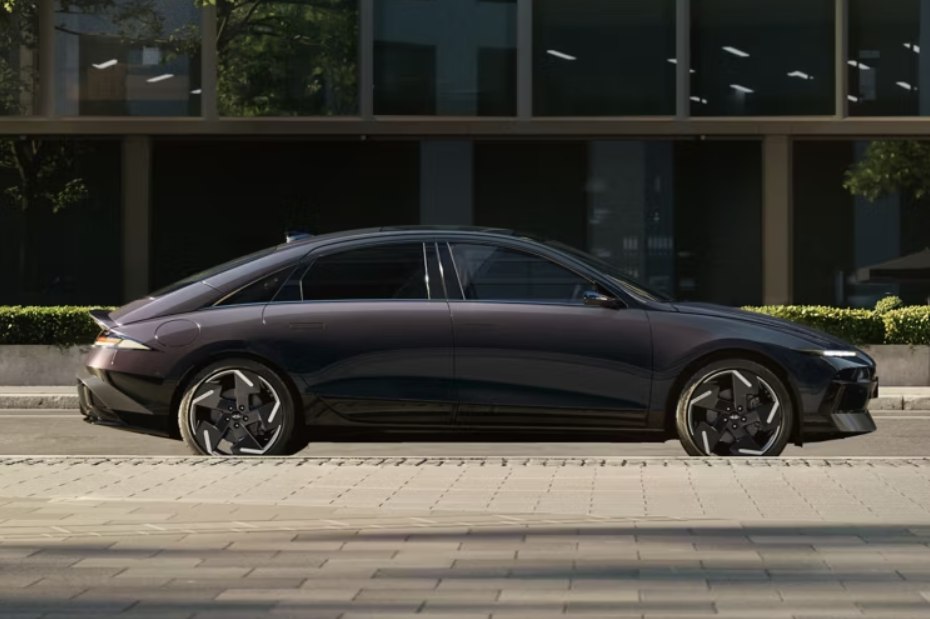
Affected models include certain 2023-2025 Hyundai Ioniq 6 electric sedans, 2023-2026 Genesis G90 luxury sedans, and 2024-2026 Hyundai Santa Fe and Santa Fe Hybrid SUVs. The vast majority involve the popular Santa Fe lineup, with roughly 158,000 non-hybrid and 95,000 hybrid versions included.

The problem stems from a damaged snap-on anchor that secures the front seat belts to the seat frame. During routine service or repairs, technicians may inadvertently damage the anchor when removing or reinstalling the seat, NHTSA investigators found after probing a consumer complaint on a 2025 Santa Fe. Extensive testing, including visits to manufacturing plants and analysis of auction vehicles, confirmed the defect occurs post-production rather than during assembly.
Hyundai and its luxury brand Genesis said they are aware of six complaints related to the anchors but no confirmed incidents where the defect contributed to a crash or injury. The recall affects only the front seat belts; rear seats are not involved.
Safety Implications and Owner Advice
Seat belts remain one of the most critical safety features in any vehicle. A failure in the anchor could reduce their effectiveness dramatically during a collision, potentially allowing occupants to move more freely and suffer greater harm. NHTSA urged owners to continue wearing seat belts at all times and to have the repair performed as soon as possible once notified.
The defect came to light through NHTSA’s Office of Defects Investigation after a single consumer affairs report. Investigators struggled initially to replicate the failure in controlled tests but eventually traced it to improper handling of the seat belt assembly during prior service work on the affected vehicles.
This marks another notable recall for Hyundai and Genesis in recent years, though the company has improved its safety record and recall response times compared with earlier controversies involving engine fires and other issues. Hyundai Motor America emphasized that the problem is not a manufacturing defect from the factory but rather a vulnerability introduced during subsequent maintenance.
What Hyundai and Genesis Will Do
Dealers will inspect the front seat belt anchors and replace any damaged components at no cost to owners. The remedy involves installing reinforced or properly secured anchors to prevent future detachment. Repair times are expected to be relatively short, though parts availability could vary by region in the initial weeks.
Notification letters to owners are scheduled to begin mailing in late May or early June 2026, according to the recall filing. In the meantime, owners can check their vehicle’s eligibility by entering the VIN on NHTSA’s website at www.nhtsa.gov/recalls or Hyundai’s owner portal.
Interim guidance from the automaker recommends that drivers and front passengers continue normal use of seat belts while awaiting the fix. Owners who have recently had seat work performed — such as upholstery repairs, seat replacements or electrical diagnostics — should prioritize scheduling the recall service.
Models and Production Years Affected
The recall covers a wide range of recent model years across both mainstream and luxury segments:
- Hyundai Ioniq 6 (2023-2025): The sleek electric sedan, praised for its range and design, represents a smaller portion of the total but highlights safety concerns in the growing EV segment.
- Genesis G90 (2023-2026): The flagship luxury sedan competes with Mercedes-Benz and BMW models. Its inclusion underscores that the issue crosses price points.
- Hyundai Santa Fe and Santa Fe Hybrid (2024-2026): These family-oriented SUVs account for the bulk of the recall. The redesigned Santa Fe has been a strong seller with its bold styling and spacious interior.
Production dates and specific VIN ranges are detailed in the full NHTSA report. Not every vehicle within those model years is affected; only those with the vulnerable anchor design qualify.
Broader Context of Automotive Recalls
This action arrives amid heightened scrutiny of vehicle safety systems as automakers roll out more advanced driver assistance technologies and electrified powertrains. Seat belt failures, though rare, draw particular attention because they undermine a fundamental passive safety layer that has saved countless lives since mandatory use laws took hold decades ago.
NHTSA data shows millions of vehicles recalled annually in the U.S. for issues ranging from airbags and brakes to software glitches and structural weaknesses. Hyundai has faced multiple recalls in the past, including high-profile engine and fire-related campaigns, but has worked to rebuild consumer trust through transparent communication and swift remedies.
Consumer Reports and safety advocates recommend that vehicle owners treat all recall notices seriously, even for seemingly minor components. “A seat belt that doesn’t stay anchored is no seat belt at all in a serious crash,” one expert noted.
Steps for Owners
- Check your VIN immediately on the NHTSA website or Hyundai/Genesis owner sites.
- Schedule the repair once notified. Most dealers will perform the work free of charge, including loaner vehicles if needed for longer jobs.
- Monitor for symptoms: If the seat belt feels loose, does not click securely, or shows visible damage to the anchor area, contact a dealer right away.
- Stay informed: Sign up for NHTSA email alerts and follow Hyundai’s recall updates.
Hyundai Motor America said it is cooperating fully with regulators and has taken steps internally to improve service training to prevent similar anchor damage in the future. Genesis owners will receive parallel notifications through the luxury brand’s channels.
Potential Impact on Owners and the Industry
For many Santa Fe owners — a popular choice for growing families — the recall may cause temporary inconvenience but underscores the importance of regular maintenance at authorized dealers. Ioniq 6 drivers, many of whom chose the vehicle for its environmental benefits, may feel added frustration over a safety matter in a relatively new EV platform.
Financially, the recall is expected to cost Hyundai millions in parts, labor and logistics, though the per-vehicle expense remains modest compared with more complex fixes such as battery or software updates.
The announcement triggered widespread media coverage Friday, with headlines emphasizing the large number of vehicles involved. Social media buzz focused on practical questions: “How do I know if my Santa Fe is affected?” and “Is it safe to drive until the repair?”
Safety organizations like the Insurance Institute for Highway Safety (IIHS) and Consumer Reports advised owners not to panic but to act promptly. Both groups have given high safety ratings to many of the recalled models when properly equipped and maintained.
As the recall process unfolds, NHTSA will monitor completion rates and any additional complaints. Owners who experience issues before receiving a notice can report them directly to the agency or their dealer.
Hyundai’s swift acknowledgment and planned remedy reflect lessons learned from past experiences. The company stated it remains committed to customer safety and vehicle quality across its expanding U.S. lineup.
In the meantime, millions of drivers continue their daily commutes in the affected models, relying on the very seat belts now under scrutiny. While the risk appears low in normal driving, the potential consequences in a collision justify the massive recall effort.
Owners with questions can contact Hyundai Customer Service at 1-800-633-5151 or Genesis at 1-844-340-4477. Detailed technical bulletins and repair instructions have been sent to all dealership service departments.
This latest development serves as a reminder that even modern vehicles with advanced safety features require vigilant maintenance and prompt attention to manufacturer notices. For the hundreds of thousands of Hyundai and Genesis customers impacted, a relatively straightforward dealer visit should restore full confidence in their vehicles’ protective systems.

Palantir CTO Shyam Sankar explains how Americans can leverage the use of AI, how the company helps the military and the outlook for the next quarter on ‘Varney & Co.’
More than two thousand years ago, Greek philosopher Heraclitus of Ephesus coined the phrase, “Change is the only constant.” That observation has remained true since his death, but now change is happening even faster, largely due to generative artificial intelligence (Gen-AI) technology such as ChatGPT or Claude. And that is making many workers even more anxious than usual. But there’s also some good news for people willing to learn.
“Change is always stressful,” Liz Bentley, a workplace and career consultant at Liz Bentley Associates in New York, told FOX Business. Britain’s Industrial Revolution in the 1700s was stressful, too. New industries put people out of work, but new jobs were created. “At the beginning of the Industrial Revolution, people didn’t know there would be new jobs,” she says. We now know the 1700s inventions, including steam trains and mechanical weaving, brought prosperity to the U.K. then to other economies.
AMAZON DISRUPTING ITSELF, REBUILDING CUSTOMER SHOPPING EXPERIENCE AROUND AI FROM GROUND UP
AI assistant apps on a smartphone – OpenAI ChatGPT, Google Gemini, and Anthropic Claude. (Getty Images / Getty Images)
Gen-AI is driving change to a new level. “It’s coming fast and furious,” Bentley says. “There are so many things that AI can usurp.” That’s making workers anxious in new ways. People don’t know what changes will happen in the workplace. “There’s a lack of predictability,” she says. Gen-AI is the branch of artificial intelligence that creates content rather than just analyzing data.
A few years ago, job losses were often due to employee performance. Now it’s frequently AI displacing the job. Data from Challenger, Gray and Christmas finds Gen-AI was directly involved in firing 54,000 people during 2025. The idea was to let AI handle repetitive work, such as data collection. It’s no wonder that approximately 30% of workers fear losing their jobs as AI agents take over, according to Bentley.
The job losses might sound ultra-scary to a lot of people. But the reality is that Gen-AI is here to stay, and there are plenty of reasons to stop worrying.
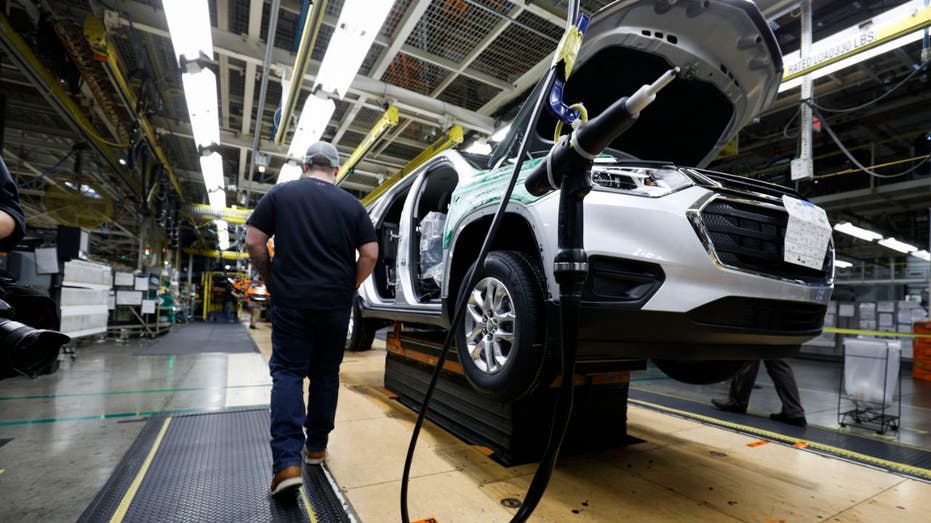
A General Motors worker is shown on the assembly line at the General Motors Lansing Delta Township Assembly Plant on February 21, 2020 in Lansing, Michigan. The plant, which employs over 2,500 workers, is home to the Chevrolet Traverse and Buick Enc (Bill Pugliano/Getty Images / Getty Images)
First, investors have put a boatload of money into making AI work. U.S. private and venture capital investments totaled $109 billion. Last year, similar investors plowed in another $194 billion. Put simply, these investors are betting heavily on the future of AI, and they wouldn’t be doing that unless they thought there was a solid future in it.
In the U.S., 28.3% of the working-age population used generative artificial intelligence, or approximately 3 out of every 10 workers in the second half of 2025, according to Microsoft’s AI Economy Institute. The U.S. was far ahead of the average global usage of 16.3% in the same period.

Business people at their desks in a busy, open-plan office. Startup business people working at a modern office. (iStock)
While AI has so far resulted in layoffs, it’s also created many new jobs that most of us would never have dreamed of. Last year, approximately 280,000 new jobs in Gen-AI were created for people, according to Electro IQ Job Creation Stats. Some of those jobs were for people involved in AI training, data analysis and Gen-AI ethics specialists.
Another positive is that humans working with AI agents are a lot more productive. The amount of work being done by humans assisted by Gen-AI has changed much, Bentley says. But more importantly, workers are now more productive. That’s particularly beneficial for people without advanced degrees or who lack experience, she says.
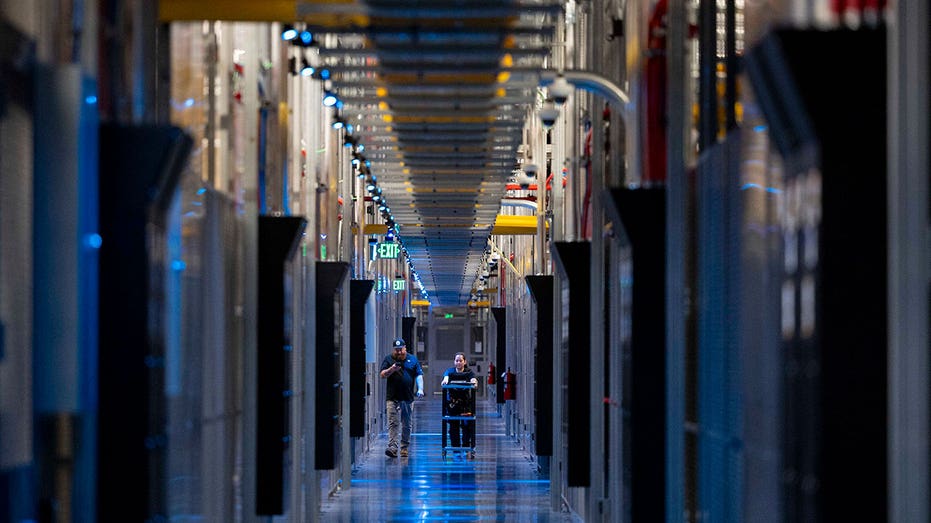
ASHBURN, VA – MAY 9: People walk through the hallways at Equinix Data Center in Ashburn, Virginia, on May 9, 2024. (Amanda Andrade-Rhoades for The Washington Post via Getty Images / Getty Images)
The most important trick in benefiting from these new roles seems to be a willingness to learn. “Those opportunities will include people who will embrace the new technology,” Jed Ellerbroek, a portfolio manager at Argent Capital in St. Louis, Missouri, told FOX Business. “And AI can make you a lot more creative.”
In part, that creativity comes to life because people working with AI need to do the thinking. Notably, that means critical thinking, which involves questioning answers and challenging perceived wisdom. “It requires a human being,” Ellerbroek says.
CLICK HERE TO DOWNLOAD THE FOX NEWS APP
Ellerbroek says the best way to start learning is to use free Gen-AI agents, such as the basic version of ChatGPT. With that basic knowledge, moving on to a paid version will then be easier. “It’s dramatically better,” he says. “You need to double-check the output.”
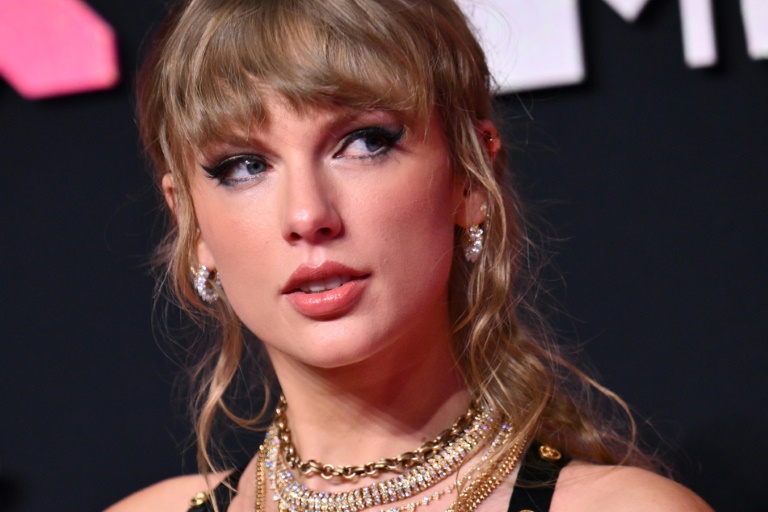
NEW YORK — Speculation is swirling around what could become the celebrity wedding of the decade as pop superstar Taylor Swift and Kansas City Chiefs tight end Travis Kelce prepare to tie the knot in 2026, with fresh reports indicating save-the-date cards have already gone out for a July 3 celebration in New York City.
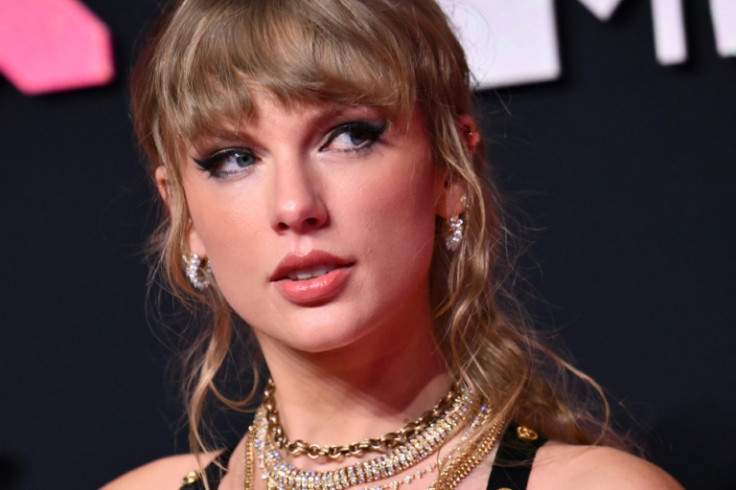
The couple, who announced their engagement in August 2025 after a whirlwind romance that began in 2023, have kept planning tightly under wraps. Yet persistent rumors, insider leaks and recent media reports have painted a picture of an intimate yet glamorous midsummer affair. Here are 10 key things to know about the anticipated nuptials as details continue to shift and evolve.
- The Latest Reported Date: July 3 in the Big Apple Save-the-date invitations reportedly confirm the wedding for Friday, July 3, 2026, in New York City — a change from earlier speculation centered on June 13. The date falls just before the Fourth of July holiday weekend and aligns with Kelce’s NFL offseason schedule, allowing time before the Chiefs’ training camp begins around July 22. Sources told Page Six that the couple opted for Manhattan after earlier Rhode Island plans faced public scrutiny.
- Engagement Timeline and Proposal Swift and Kelce got engaged in August 2025, with Kelce popping the question in a private garden setting in the Kansas City area. The news broke publicly shortly afterward, sending fans and media into a frenzy. Swift, 36, and Kelce, also 36, have described their relationship as one filled with mutual support, with Swift crediting Kelce for bringing joy and confidence into her life during award show speeches.
- Rhode Island Rumors Debunked For months, reports pointed to a June 13 wedding — Swift’s lucky number 13 falling on a Saturday — at the luxurious Ocean House resort in Watch Hill, Rhode Island, near one of her waterfront properties. Celebrity wedding planner Tara Guérard publicly shut down those claims in early April 2026, stating she was handling a different wedding at the venue that day and that Swift was “not my bride.” The shift to New York appears driven by privacy concerns and guest logistics.
- Guest List Expectations Insiders suggest a relatively intimate gathering capped around 150 guests to maintain control and security. Expected attendees include Swift’s close friends such as Selena Gomez, Gigi Hadid and Emma Stone, as well as Kelce’s brother Jason Kelce and NFL teammates like Patrick Mahomes. Celebrity circles from music, film and sports are likely to mix, though the couple has prioritized privacy over a massive blowout.
- Bridal Party Rumors Speculation points to longtime confidantes filling key roles. Gigi Hadid and Selena Gomez are frequently mentioned as potential bridesmaids, while Jason Kelce could stand beside his brother as best man. Details remain unconfirmed, but Swift’s history of surrounding herself with a tight inner circle suggests a meaningful, low-drama party.
- Venue and Vibe in New York With Swift maintaining a residence in Tribeca, New York City offers familiarity and logistical advantages. Reports describe plans for a sophisticated, possibly 1950s-inspired aesthetic blending classic elegance with modern touches. The couple reportedly moved away from a seaside Rhode Island estate or private island option to accommodate more guests comfortably in Manhattan venues.
- Timing Tied to NFL Schedule Kelce has signaled plans to marry before the start of training camp, ensuring the couple can enjoy newlywed time without immediate football pressures. The July 3 date provides a buffer, allowing a potential honeymoon before the NFL season ramps up. ESPN reports from March 2026 reinforced that Kelce aims for a summer wedding to balance his career and personal life.
- Security and Privacy Measures Given Swift’s global superstardom and the couple’s high profile, extensive security is expected. Past experiences with fan attention and media leaks have prompted a cautious approach. Save-the-dates were reportedly sent discreetly, and the couple has avoided public comments on specifics, letting representatives and insiders control the narrative.
- Cultural and Fan Impact The wedding has already influenced trends, from engagement ring styles to summer 2026 bridal fashion. Swifties have analyzed every clue, from Swift’s “bridal era” outfits during New York outings to subtle social media hints. The event is poised to dominate headlines, social platforms and even pop culture conversations well beyond the ceremony itself.
- No Official Confirmation Yet Despite save-the-date reports and shifting venue rumors, neither Swift nor Kelce has issued an official statement. Representatives have remained silent, a strategy consistent with the couple’s preference for privacy amid intense public interest. Insiders emphasize that plans could still evolve, as celebrity weddings often do in response to leaks or scheduling needs.
Broader Context of the Relationship
Swift and Kelce’s romance captured imaginations from the start. Their first public connection came when Kelce attended one of Swift’s Eras Tour shows in 2023, leading to a high-profile pairing that blended music and sports worlds. The relationship has been marked by mutual appearances at games, award shows and private moments that fans have dissected endlessly.
At the 2026 iHeartRadio Music Awards, Swift publicly thanked Kelce during her acceptance speech, calling him a source of happiness and confidence. The couple’s engagement announcement only amplified the fairy-tale narrative, drawing comparisons to modern royalty.
Wedding industry experts note the pair’s story could inspire trends in 2026 nuptials, including blended celebrity-athlete guest lists, emphasis on meaningful dates and a balance between intimacy and spectacle. Some reports have even floated ideas of a 1950s-inspired theme, though those details remain unverified.
Challenges and Speculation
Media coverage has been relentless, with outlets like Page Six, People and Harper’s Bazaar tracking every rumored shift. The debunking of the Ocean House June 13 plans highlighted how quickly speculation can spread — and how easily it can be corrected by those directly involved.
Financially, the wedding is expected to carry a significant price tag, though Swift’s billionaire status makes cost secondary to creating a memorable, secure experience. Potential honeymoon destinations have been whispered about, ranging from international escapes to more low-key getaways, but nothing is confirmed.
For fans, the anticipation adds another layer to Swift’s already monumental year. With her music continuing to dominate charts and cultural conversations, the personal milestone represents a new chapter.
As July 3 approaches — or whenever the actual date lands — all eyes will remain on one of entertainment’s most watched couples. Whether the ceremony unfolds in New York with a star-studded yet intimate guest list or sees further adjustments, the union of Taylor Swift and Travis Kelce promises to be a defining celebrity moment of 2026.
The couple’s ability to maintain some privacy amid the spotlight has earned admiration from supporters who hope the day focuses on love rather than spectacle. In an era of constant sharing, Swift and Kelce’s measured approach stands out.
Whatever the final details, the story of their journey from a stadium suite connection to walking down the aisle has already written itself into pop culture history. Fans and followers will continue parsing clues until the couple decides to share more — or lets the photos and memories speak for themselves.
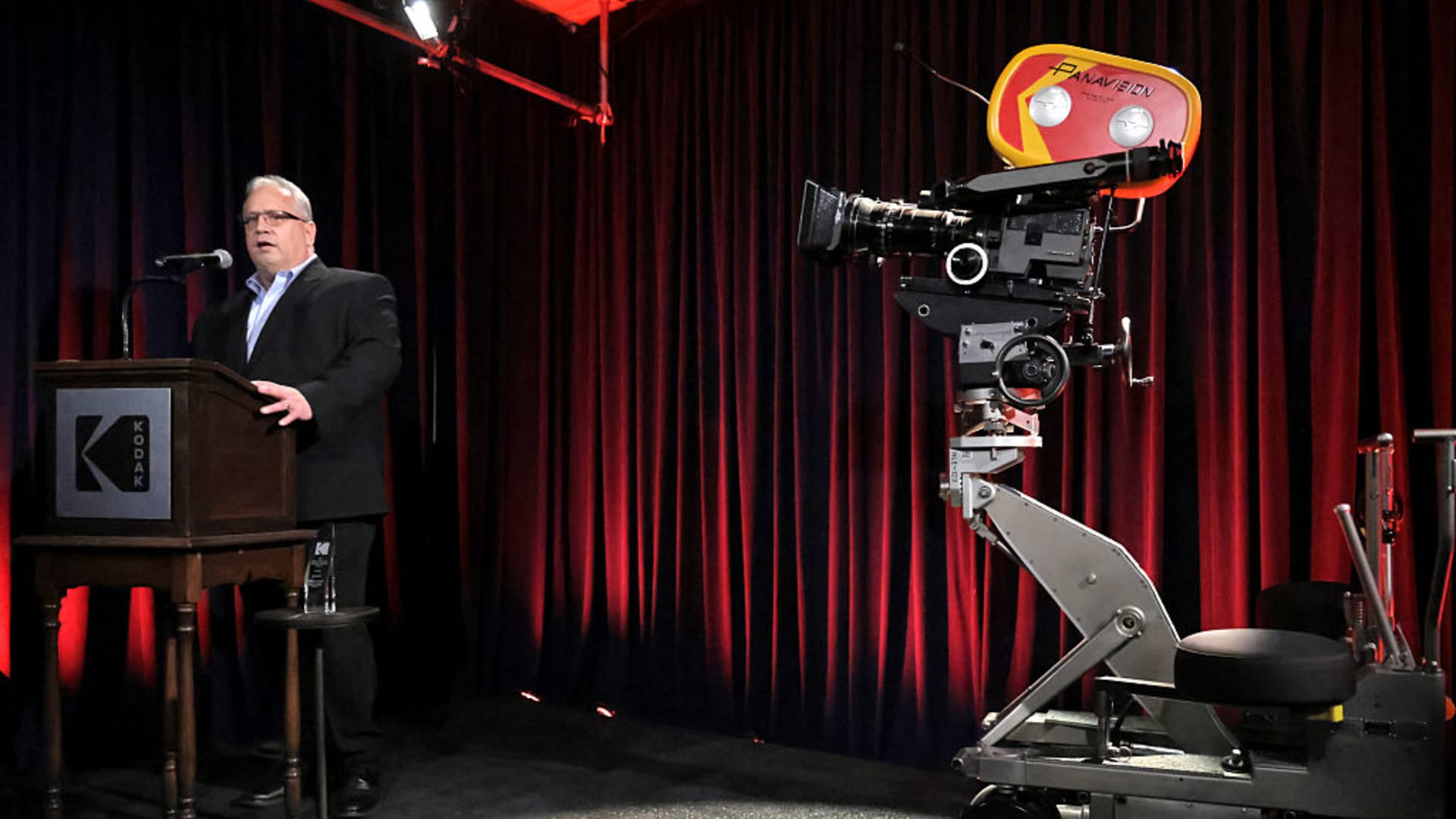

On Jim Continenza’s first day on the job as Eastman Kodak executive chairman in 2019, he got a call from a star Hollywood filmmaker telling him the company was making a big mistake.
The photography technology company was in the process of shutting down its acetate factory, which makes one of the key ingredients used in film. Christopher Nolan, the director behind major movies like “Inception” and “Oppenheimer,” urged Continenza to stop the process.
“He goes, ‘Do not turn this off. Please take a look.’ And I did,” Continenza, now CEO, told CNBC. “He was right. I started looking at it because I shoot 35 millimeter [film], and I’m like, ‘Why would one of the greatest directors of all time even have this conversation?’”
Continenza, a self-proclaimed “turnaround specialist,” said he quickly realized how central film was to Kodak’s roots, and how it could be one of its biggest strengths as he fought to bring the company back from teetering on the edge of bankruptcy.
Fast forward roughly seven years, and multiple 2026 Oscar-winning movies, including “One Battle After Another” and “Sinners,” were shot on Kodak film. It’s part of a bigger trend as the category sees a resurgence fueled by both a nostalgia for film in Hollywood and by younger consumers.
That road wasn’t smooth, though. The company declared bankruptcy in 2012 and reemerged a year later. Then it cautioned last year that its financial conditions “raise substantial doubt about Kodak’s ability to continue as a going concern.”
In the second-quarter earnings where it made that going concern statement, Kodak posted a 12% decrease in gross profit, with millions in debt obligations.
But Continenza said it was one step in a longer process toward rebuilding the company to its former success.
CEO of Kodak Jim Continenza speaks onstage during Kodak’s Film Awards at ASC Clubhouse on March 2, 2026 in Los Angeles, California.
Rodin Eckenroth | Getty Images
Last month, the company’s earnings report looked different. Its fourth-quarter gross profit reached $67 million, a 31% increase from the year prior. Kodak also said it had reduced its annual interest expense by roughly $40 million.
Continenza said at the time that the results were signs of the long-term plan he began executing in 2019. He told CNBC that he chose Kodak as his final company to revive before closing his chapter as a C-suite executive, having previously served in leadership roles at communication companies including AT&T and Lucent.
“Here’s what our goal is: We’re going to create jobs for the next generation. Make no mistake, we’re going to fix this company and put it on a stable foundation and put building blocks to grow all the systems,” Continenza said. “We didn’t put in what we need, we put in what we want, and that’s a difference.”
Troubled waters
In a digitally evolving society, Kodak has been fighting to keep its place and relevancy.
The company’s 2012 bankruptcy protection came after it failed to improve its finances as digital photography took off and revolutionized the industry. When it reemerged the following year as a smaller company, it shifted its primary focus to commercial printing.
Though it’s not a company that is largely covered by investors anymore, Melius Research analyst Ben Reitzes wrote in a note last year that the onset of digital technology posed a significant setback for Kodak.
“At the time, Kodak management told us that film would co-exist with digital cameras and more photos would be taken — and more would need to be printed by Kodak,” he wrote.
Still, Kodak faced its struggles. Its stock sank more than 35% in 2014, continuing to gradually fall over the next few years and hitting an all-time low of $1.55 per share during the onset of the pandemic in March 2020.
Last August, the more than 100-year-old photography company said it had roughly $155 million in cash and nearly $600 million in loans.
A Kodak spokesperson said at the time that the going concern language had to be included because Kodak did not have enough available liquidity to pay off its debt, due within 12 months. Still, the company said it was confident it would pay off a significant portion of that loan before it became due by terminating its pension plan and said the disclosure was just a required technical report.
Wall Street investors didn’t like what they heard. The stock plunged from a price of roughly $7 per share a few days prior to just over $5 per share on the day of earnings.
“We could have done a better job on it, because to us, it wasn’t as dire straits, it was more of a GAAP accounting coincidence by dates,” Continenza said, adding that it was a “timing issue” for the loans.
Rolls of Kodak Gold film hang on a shelf at the Precision Camera & Video store on Aug. 12, 2025 in Austin, Texas.
Brandon Bell | Getty Images
Continenza said Kodak’s main challenges were in its “huge tranches” of debt and a lack of communication with its shareholders and customers.
The CEO said he’s never sold a share of Kodak and instead bought stock after the company issued its going concern disclosure.
“You’ve got to put the work in and the long-term investments, and you’ve got to be methodical, but you’ve got to fix your operations, and I’ve spent seven years of doing it,” he said. “[It’s] a 130-plus year old company, right? You can imagine what’s in the attic.”
Defining success
Continenza said he’s been intentional about instituting long-term changes since he took over the company. He’s changed about 90% of the company’s leadership, paid off more than $400 million in debt and reorganized the company’s priorities to focus on print and advanced materials and chemicals.
He said it was also important to be “transparent” with his team and acknowledged that turning around the company would mean layoffs and staffing changes.
“First thing I always do is go out and get people who want to hold the company and buy them out, and that’s what we did,” he said. “I got a board and investors who love what we’re doing — we keep them informed, and they help guide us.”
As he examined what worked for the company, Continenza said he saw an opportunity with Generation Z and the resurgence of the film aesthetic. The look of photos and videos shot on film captures something that “penetrates your heart and soul,” he said.
Kodak leaned into the analog and authenticity trend, investing its resources in its film capacities and creating products that consumers, directors and filmmakers alike were interested in.
Continenza said he also refinanced the company three times and rightsized its balance sheet.
It seems to have hit the right note on Wall Street. Over the past year, Kodak’s stock has shot up nearly 100%.

Kodak 1-year chart
“We’re doing our job. The stock’s not supposed to spike, it’s supposed to crawl, because that’s how we grow,” he said. “I don’t look at our stock price. I don’t care. I couldn’t tell you what it is today. I’m a long-term investor.”
Continenza said success to him will mean continuing to improve finances and ensuring Kodak has a solid succession plan in place to continue its growth.
Though the company is well over 100 years old, he said he likes to treat Kodak as a startup, where all of the debt is paid off, the brand is well-loved and only Kodak itself could, at this point, “screw it up.”
“We don’t need to be a $5 billion or $20 billion or $80 billion company,” Continenza said. “We’re a billion-dollar global company, but one thing we have going for us is our brand recognition. And make no mistake, around the globe, it is endeared and loved, and it’ll continue to be.”

US government transfers seized Bitcoin linked to steroid probe

Hakimi Admits Shame Over AFCON Towel Incident Involving Nwabali

Google’s new Android backup idea is so practical that I’m annoyed it took this long

Why Israel is blocking foreign journalists from entering

Bitcoin: We’re Entering The Most Dangerous Phase

Alan Cumming Brands Baftas Ceremony A ‘Triggering S**tshow’

How J.P. Morgan Saved the U.S. Government during the financial crisis of 1895 #money

Stock Market, Gold & Silver Astrology Prediction: Big Turning Point Ahead? | Prashant Kapoor LIVE

Emas batangan vs Perhiasan #tipskeuangan #samasamabelajar #finance
-

 Business6 days ago
Three Gulf funds agree to back Paramount’s $81 billion takeover of Warner, WSJ reports
-

 Sports7 days ago
India men’s 4x400m and mixed 4x100m relay teams register big progress | Other Sports News
-

 Politics19 hours ago
US brings back mandatory military draft registration
-

 Fashion19 hours ago
Weekend Open Thread: Veronica Beard
-

 Tech4 days ago
How Long Can You Drive With Expired Registration? What Florida Law Says
-

 Business6 days ago
No Jackpot Winner, Prize to Climb to $231 Million
-

 Fashion5 days ago
Massimo Dutti Offers Inspiration for Your Summer Mood Board
-
 Sports20 hours ago
Man United discover Nico Schlotterbeck transfer fee as defender reaches Dortmund agreement
-

 Fashion4 days ago
Let’s Discuss: DEI in 2026
-

 Crypto World3 days ago
Bitcoin recovers as US and Iran Agree a Ceasefire Deal
-

 Crypto World2 days ago
Canary Capital Files SEC Registration for PEPE ETF
-

 Business16 hours ago
Tesla Model Y Tops China Auto Sales in March 2026 With 39,827 Registrations, Beating Cheaper EVs and Gas Cars
-

 Business7 days ago
Akebia Therapeutics, Inc. (AKBA) Discusses Pipeline Progress and Strategic Focus on Kidney Disease Treatments at R&D Day – Slideshow
-

 Business1 day ago
OpenAI Halts Stargate UK Data Centre Project Over Energy Costs and Copyright Row
-

 Tech5 days ago
Gamer Restores the Original PlayStation Portal From Two Decades Ago
-

 Tech5 days ago
Haier is betting big that your next TV purchase will be one of these
-

 Tech5 days ago
The Xiaomi 17 Ultra has some impressive add-ons that make snapping photos really fun
-

 Tech5 days ago
Samsung just gave up on its own Messages app
-

 Politics1 day ago
Malcolm In The Middle OG Turned Down ‘Buckets Of Money’ To Appear In Reboot
-

 Tech5 days ago
Save $130 on the Samsung Galaxy Watch 8 Classic: rotating bezel, sleep coaching, and running coach for $369
You must be logged in to post a comment Login