
Connect with us

Business

Epstein files highlight how the wealthy borrow against art collections

Published

on

Epstein files highlight how the wealthy borrow against art collections

Leon Black, then-CEO of Apollo Global Management, at the Milken Institute Global Conference in Beverly Hills, California, May 1, 2018.

Patrick T. Fallon | Bloomberg | Getty Images

A version of this article first appeared in CNBC’s Inside Wealth newsletter with Robert Frank, a weekly guide to the high-net-worth investor and consumer. Sign up to receive future editions, straight to your inbox.

Advertisement

A $484 million art loan secured by billionaire Leon Black and disclosed in the latest Epstein files highlights one of the fastest-growing and most lucrative corners of the art world.

According to a March 2015 document released as part of the Epstein files, Black secured the loan from Bank of America backed by works of art. While not unusual for top private banking clients, the loan made headlines for its size and the exotic collateral, which included blue-chip works by Picasso, Giacometti, Titian, Matisse and others.

Art lending, however, has become an increasingly valuable tool for both wealthy collectors and the wealth management firms vying to manage their fortunes. The global market for art loans is estimated at between $38 billion and $45 billion today, according to a report from Deloitte and ArtTactic. The market is expected to top $50 billion by 2028, growing at about 12% a year.

Adam Chinn, managing partner of International Art Finance and longtime art-finance expert, said art loans are a way for collectors to pull cash from paintings that they can also continue to enjoy on their walls.

Advertisement

Get Inside Wealth directly to your inbox

“It’s the best of both worlds,” Chinn said. “You can monetize an otherwise non-income-producing asset. And it’s still great to look at.”

Far from signaling a lack of funds, art loans are typically used by the wealthy to provide ready cash, leverage financial investments and avoid hefty tax bills. Private banks often grant art loans to top clients at low interest rates, knowing the client has hundreds of millions or even billions in other assets in case the loans default. The interest rate on Black’s loan in 2015 was 1.43%, according to the document.

The bulk of the art lending market is dominated by the auction houses — especially Sotheby’s Financial Services — as well as specialty lenders like International Art Finance.

Scott Milleisen, global head of lending at Sotheby’s Financial Services, said collectors use the proceeds for a wide variety of purposes. The company now lends against classic cars as well as art.

Advertisement

“Many of our clients borrow against their fine art collections to invest in businesses, pursue new art acquisitions or release cash without selling works they love,” Milleisen said.

Chinn said many of today’s collectors are top leaders in private equity and hedge funds. Since they’re used to using leverage to turbocharge their wealth in their investments and businesses, they view leveraging their art collections as a natural extension. Chinn estimates that the total value of art held in private hands is between $1 trillion and $2 trillion. With art loans representing a tiny fraction of the total — well under $50 billion — he said the industry has plenty of room to grow.

“Art is the most underleveraged asset on the planet,” he said.

Art loans also generate lucrative tax benefits. Selling a work of art triggers a capital gains rate of 28% — a higher rate for collectibles than other categories — along with the 3.8% net investment income tax, bringing the top rate to 31.8%. Selling in certain states also triggers state taxes.

Advertisement

An art loan even at today’s elevated lending rates, typically around 8% to 9%, is still far more efficient than paying a tax. Plus, borrowers can usually keep the art on their walls.

The art lending business has also benefitted from a 2017 tax change that eliminated the use of so-called 1031 exchanges in the art market. The practice allowed art collectors to avoid capital gains taxes by swapping one work for another. Without the benefit, many collectors have turned to loans to provide liquidity without the tax penalties.

Chinn said that given the art market’s recent rebound, and falling interest rates, art lending is poised to continue its strong growth.

“The art market is a strange market,” he said. “But if you look at every other asset class, eventually it gets fractionalized, securitized and leveraged. It’s just the nature of the universe.”

Advertisement
Continue Reading
Click to comment

Leave a Reply

Your email address will not be published. Required fields are marked *

Business

Energy giants unite for job-creating Humber hydrogen network

Published

on

Business Live

National Gas, Centrica, Equinor and SSE Thermal have joined forces to bid for £500m government funding to develop the UK’s first integrated hydrogen network in the region

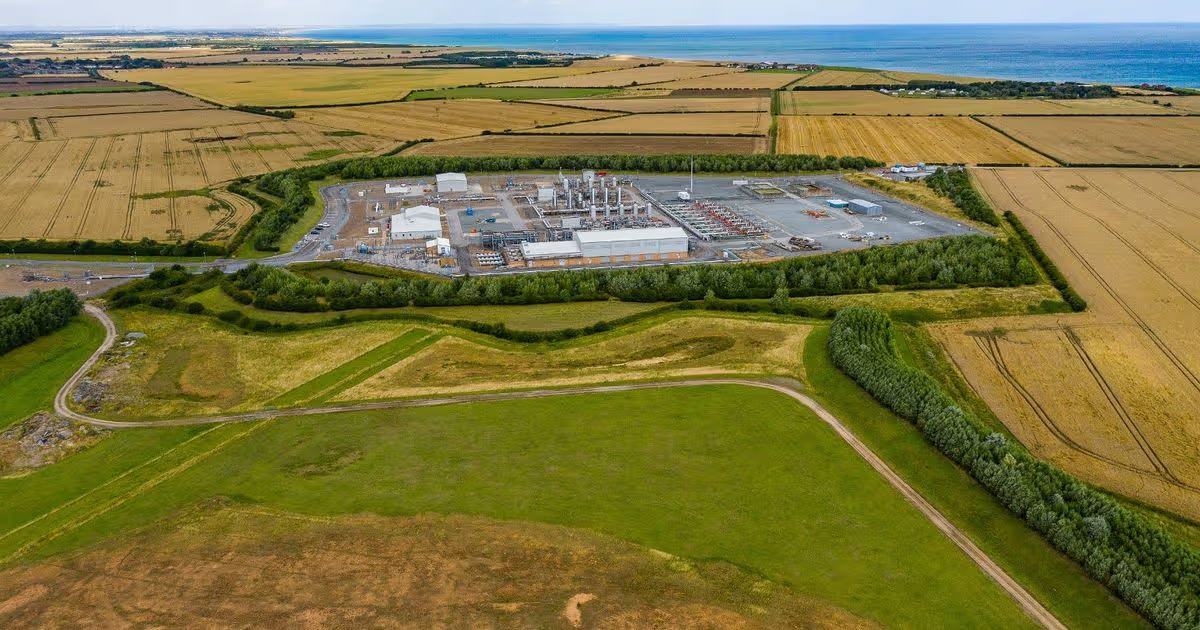
An aerial Image of the Aldbrough Gas Storage facility in East Yorkshire. The facility is jointly operated by SSE Thermal and Equinox.

An aerial Image of the Aldbrough Gas Storage facility in East Yorkshire. The facility is jointly operated by SSE Thermal and Equinox.(Image: Stuart Nicol Photography/SSE Thermal)

Four energy giants have united in a bid to create the UK’s first crucial hydrogen network in the Humber region.

National Gas, Centrica, Equinor and SSE Thermal say thousands of jobs could be created by Humber Hydrogen.

Together, the major employers argue that nowhere else in Britain can rival the infrastructure, expertise and location required to establish the network. They maintain that by supporting the regional proposal the Government will be able to advance its broader industrial decarbonisation strategy, enhance competitiveness, and generate substantial numbers of jobs.

The consortium is submitting proposals under the Government’s Hydrogen Transport and Storage Business Model processes – a competitive process that will determine where Britain’s first integrated hydrogen network is constructed. The funding decision is scheduled to be made this year, and is anticipated to be worth approximately £500m.

Advertisement

The funds will establish the infrastructure that will underpin large-scale hydrogen deployment across the UK.

The companies are pooling their expertise in hydrogen transport, production, usage and storage to support plans for developing a first-of-its-kind coordinated hydrogen network in Britain, connecting projects across Yorkshire and Lincolnshire including locations such as Aldbrough, Easington, Saltend, Immingham and Keadby, to link hydrogen production with industrial customers and power stations.

Richard Gwilliam, chair of the Humber Energy Board, said: “Backing plans to deliver hydrogen infrastructure in the Humber in 2026 would be a game-changing decision from Government which would support the transformation of the region’s economy and enhance our critical role in providing energy security for the UK. This proposal, an essential part of long-held plans to create a low-carbon industrial cluster, is backed by experienced energy and infrastructure companies that are prepared to invest billions in the region, creating jobs and economic growth for decades to come.”

“Now is the time for the Government to unlock the region’s potential and re-energise the Humber.”

Advertisement

Multiple large-scale hydrogen schemes are planned for the Humber, including the H2H Easington and H2H Saltend hydrogen production facilities, alongside Aldbrough Hydrogen Storage. Combined, Easington and Saltend could generate up to 3GW of hydrogen, reports Hull Live.

The proposed infrastructure would also be ideally positioned to link with a national hydrogen transmission system being developed by National Gas, distributing hydrogen throughout the UK to industrial hubs.

Ian Radley, chief commercial officer at National Gas said: “We believe the Humber is the obvious choice to be the home of Britain’s first hydrogen network. Nowhere else in Britain can match what it offers in industrial demand, infrastructure, supply chains, geological storage and skilled people who can unlock Britain’s clean power potential.

“Together with our partners we’re bringing our expertise in transporting, manufacturing and storing hydrogen to keep the industrial heart of North East England beating.”

Advertisement

Kelly de Azevedo Dent, development director at SSE Thermal, commented: “The Humber is integral to the UK’s clean power and economic growth missions and becoming the country’s first Hydrogen network will help to unlock its potential. The region is home to a wide range of projects across the hydrogen value chain, with these projects crucial to delivering skills and jobs opportunities in the area – that is why we’ve come together as Humber Hydrogen to drive progress forward.”

Ian Livingston, head of UK Hydrogen and Ammonia at Equinor, added: “We’re proud to be part of the efforts to bring hydrogen infrastructure to the Humber and kick-start a new low-carbon economy in the UK’s most carbon intensive region. The geology, concentration of industry and existing skills base make this the natural home for the UK’s first hydrogen transport and storage network.”

Martin Scargill, managing director of Centrica Energy Storage + at Centrica stated: “Humber Hydrogen is a major opportunity for the UK to accelerate low carbon economic growth and strengthen its leadership in hydrogen. By backing the Humber, the Government can drive industrial decarbonisation, boost competitiveness, and create thousands of skilled jobs across a region that sits at the heart of the UK’s energy system. Centrica has long invested in the people and infrastructure that make the Humber strategically vital to the UK economy and we’re proud to work with our Humber Hydrogen partners to help deliver a cleaner, more resilient energy future.”

The initiative is supported by local politicians. Graham Stuart, MP for Beverley and Holderness, commented: “If the country is to take advantage of key technologies, reduce emissions, create jobs and cut bills, we need action. That’s why we need the Government to support hydrogen infrastructure in our area and bring investment back to the Humber.”

Advertisement

Melanie Onn, MP for Great Grimsby and Cleethorpes, said: “The Humber is the ideal place to locate the UK’s first hydrogen network, given its geology, geography and the wide range of key industries on both banks of the Humber Estuary that can benefit from its use. Hydrogen will play a key role in the energy transition, helping major employers in this region to reduce emissions whilst retaining jobs and stimulating economic growth. We want to see the hydrogen economy kick-started here in the Humber.”
Continue Reading

Business

Spirit Airlines reaches deal to exit bankruptcy by early summer

Published

on

Spirit Airlines reaches deal to exit bankruptcy by early summer

Spirit Airlines announced Tuesday that it reached a deal with lenders that will allow it to exit bankruptcy by the late spring or early summer.

The low-cost carrier filed for its second bankruptcy in August 2025 amid mounting losses and dwindling cash reserves. Spirit first filed for Chapter 11 bankruptcy protection in November 2024 after unsuccessful merger talks with JetBlue and Frontier.

Advertisement

The airline will still face challenges under the deal, though it has a clearer path to survival after months of uncertainty, failed acquisitions and infighting amongst its creditors. Spirit has pushed to cut costs and build liquidity to avoid a liquidation scenario.

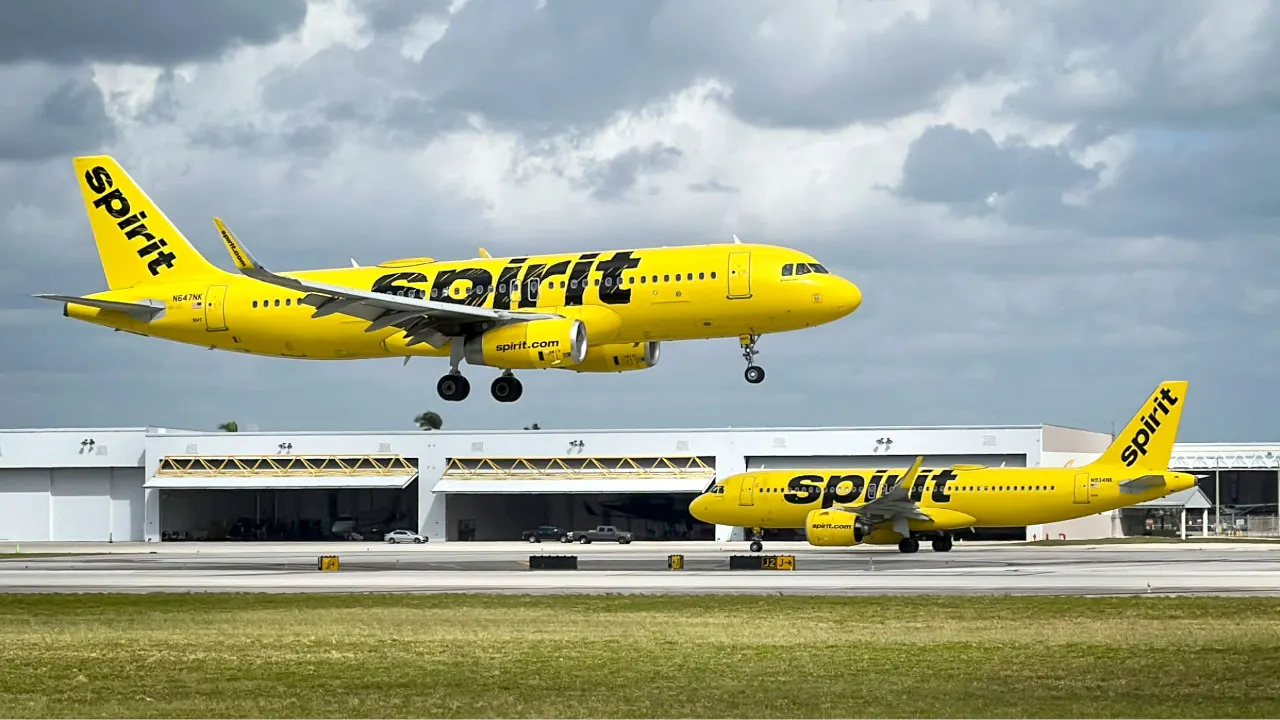
Spirit Airlines planes in Florida.

Spirit Airlines announced it reached a deal to exit its second bankruptcy by late spring or early summer. (Eva Marie Uzcategui/Bloomberg via Getty Images)

Spirit told the bankruptcy court that it expects to emerge from the process as a leaner airline that’s focused on routes and time periods with the strongest demand, after cutting some of its high-cost aircraft leases and improving the utilization of its remaining fleet.

SPIRIT AIRLINES FILES FOR SECOND BANKRUPTCY IN UNDER A YEAR AS LOW-COST CARRIER CONTINUES TO STRUGGLE

The air carrier plans to tighten its network around higher-demand periods, boosting aircraft use on peak days while scaling back during off-peak days, while adjusting capacity to account for seasonal swings in air travel.

Advertisement

The company also plans to expand its premium seating options, including Spirit First and Premium Economy, and enhance its Free Spirit and co-brand loyalty programs that would allow it to preserve its low-fare positioning while driving repeat business.

Spirit projects that its total debt and lease obligations will decline under the bankruptcy deal from $7.4 billion before its Chapter 11 filing to about $2.1 billion when it exits bankruptcy. 

SPIRIT AIRLINES SLASHES FLIGHTS, WARNS OF MORE JOB CUTS AMID SECOND BANKRUPTCY

Ticker Security Last Change Change %
FLYYQ SPIRIT AVIATION HOLDINGS INC 0.476 +0.15 +44.24%

The deal could open the door to an acquisition in the future, as Spirit’s lawyer said during a hearing on Tuesday that it could allow the company to weigh “potential future industry transactions” once the airline is stabilized.

Advertisement

Budget air carriers have faced headwinds from tepid leisure travel demand as well as fare pressure and excess capacity caused by competition from low-fare seats offered by legacy carriers.

BUDGET FLIGHTS HANG IN BALANCE AS BANKRUPT SPIRIT AIRLINES TURNS TO PRIVATE EQUITY FOR LIFELINE: REPORT

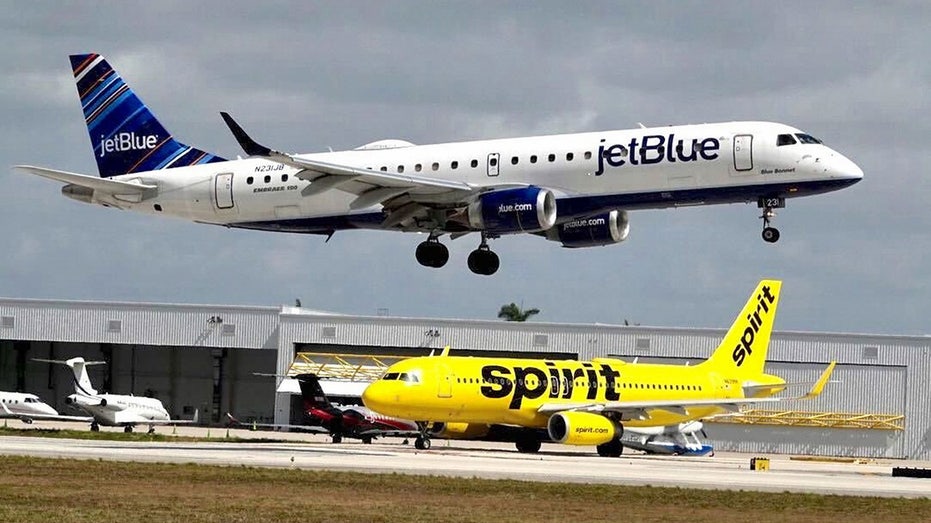
JetBlue and Spirit airliners

Spirit had proposed mergers with JetBlue and Frontier blocked over regulatory concerns. (Joe Cavaretta/South Florida Sun Sentinel/Tribune News Service via Getty Images / Getty Images)

Earlier this month, Spirit announced a deal was reached pending court approval to sell 20 of its Airbus jetliners, most of which aren’t currently in revenue service, to ease its financial woes. 

The budget carrier said the fleet reduction wasn’t expected to impact its flight schedule, and that they would be phased out of the fleet starting in April 2026.

Advertisement

Spirit also recalled 500 of the more than 1,300 flight attendants who were furloughed in December due to the company’s financial problems.

GET FOX BUSINESS ON THE GO BY CLICKING HERE

The Association of Flight Attendants-CWA, the union that represents Spirit flight attendants, said in a statement posted to X that they will be recalled in order of system seniority, with those involuntarily furloughed first.

Reuters contributed to this report.

Advertisement
Continue Reading

Business

Perth retail trade growth outperforms nation

Published

on

Perth retail trade growth outperforms nation

Recent data shows that the Western Australian capital had stronger growth in retail turnover than other cities.

Continue Reading

Business

US threatens Anthropic with deadline in dispute on AI safeguards

Published

on

US threatens Anthropic with deadline in dispute on AI safeguards

The AI developer laid out red lines on military use of its products, a source said.

Continue Reading

Business

NVIDIA (NVDA) Stock Edges Lower Ahead of Q4 Earnings as AI Spending Concerns Loom

Published

on

Microsoft CEO Satya Nadella says the US tech giant plans to invest $3 billion in India on AI and cloud infrastructure over the next two years

NVIDIA Corporation (NASDAQ: NVDA) shares traded mixed to slightly lower in early trading on February 25, 2026, closing the prior session at $191.55 on February 23, up 0.91% that day but down modestly year-to-date amid broader tech sector caution. The AI chip leader’s stock has risen about 2.7% in 2026 so far, outperforming the Nasdaq’s 2.5% decline, as investors position for the company’s fiscal fourth-quarter earnings report due after market close Wednesday, February 25.

Tech giants in the AI race have been spending billions of dollars for GPUs made by Nvidia, considered a leader when it comes to chips that power the technology
NVIDIA
AFP

NVIDIA’s market capitalization hovers near $4.7 trillion, making it one of the world’s most valuable companies. The stock has shown resilience despite volatility, trading in a 52-week range from $86.62 to $212.19. Recent sessions saw NVDA fluctuate between roughly $187 and $194, with average daily volume exceeding 170 million shares during spikes.

The upcoming earnings report is highly anticipated as a litmus test for the AI infrastructure boom. Wall Street expects fiscal Q4 (ended January 2026) revenue of approximately $65.6 billion to $66 billion, up roughly 66-68% year-over-year, driven by explosive demand for Blackwell GPUs and data center accelerators. Adjusted earnings per share are forecasted at $1.50 to $1.53, compared to $0.89 in the prior-year quarter. Guidance for the April quarter is projected around $71.7 billion to $72.5 billion, implying continued triple-digit growth.

Analysts at Wedbush Securities and others highlight hyperscaler capex exceeding prior expectations, with servers and AI infrastructure forming the bulk of forward spend. NVIDIA’s data center segment, which accounted for the majority of revenue in recent quarters, remains the primary growth engine. CEO Jensen Huang has emphasized a multi-year AI factory buildout, estimating $3 trillion to $4 trillion in global investment through 2030, with NVIDIA positioned to capture significant share.

The company shipped millions of Blackwell GPUs in the past year, with Rubin architecture on track for late 2026 launch and subsequent variants (Rubin CPX, Rubin Ultra, Feynman) extending the roadmap into 2028. Sovereign AI, enterprise AI, AI-native startups, physical AI, and quantum computing represent additional long-term opportunities beyond traditional data centers.

Advertisement

Despite the optimism, skepticism has grown over the sustainability of massive AI spending. Wall Street has turned cautious on hyperscaler capex levels, with concerns that returns on investment may lag or that competition from AMD (following its Meta deal) and custom silicon from hyperscalers could pressure margins. Some investors, including Michael Burry, have questioned the scale of depreciation and free cash flow impacts from capex doubling or more in 2026.

NVIDIA’s stock has bucked broader tech weakness in 2026, supported by strong fundamentals. The forward P/E remains elevated but is viewed as justified by growth prospects. Institutional ownership stays robust, with funds like Vanguard and BlackRock maintaining large positions.

The earnings call at 5 p.m. ET on February 25 will feature commentary from Huang and CFO Colette Kress on Blackwell ramp, Rubin progress, and AI demand trends. A strong beat or optimistic guidance could spark a rally, while any signs of slowing growth or margin pressure might trigger volatility.

As NVIDIA approaches its fiscal Q4 results, the market awaits confirmation that the AI supercycle remains intact. With competition intensifying and capex scrutiny rising, the report will shape sentiment for the AI chip leader and broader tech sector in the months ahead.

Advertisement
Continue Reading

Business

Apple says some Mac Mini production will move to the US

Published

on

Apple says some Mac Mini production will move to the US

The technology giant had pledged to increase investment in the US by $600bn, under pressure from Trump.

Continue Reading

Business

Palantir (PLTR) Stock Slips 3.4% to $130.60 Amid Valuation Concerns and AI Sector Pullback

Published

on

Microsoft CEO Satya Nadella says the US tech giant plans to invest $3 billion in India on AI and cloud infrastructure over the next two years

Palantir Technologies Inc. (NYSE: PLTR) shares fell 3.43% on Monday, February 23, 2026, closing at $130.60 after trading as low as $127.39 and as high as $132.04. Volume reached approximately 52.3 million shares, slightly above average, as the AI software specialist faced pressure from broader market rotation, tariff-related uncertainty, and ongoing debate over its lofty valuation despite strong fundamentals.

Palantir co-founder and CEO Alex Karp believes the United States should be the 'strongest, most important country in the world'
Palantir co-founder and CEO Alex Karp
AFP

The decline extended Palantir’s year-to-date losses to around 27%, with the stock down roughly 35-39% from its all-time high of $207.52 set in November 2025. The pullback reflects a shift in sentiment toward high-growth software names amid concerns over sustainability of AI spending and elevated multiples.

Palantir’s market capitalization stands at approximately $311-312 billion, supported by a massive cash position and consistent revenue acceleration. The company’s latest quarterly results, reported February 2, 2026, showed fourth-quarter 2025 revenue of $1.41 billion (up 70% year-over-year), adjusted EPS of $0.25 (beating estimates), and GAAP net income of $609 million. U.S. commercial revenue surged 137%, highlighting robust enterprise AI demand through platforms like Foundry and Gotham.

Management issued aggressive 2026 guidance: full-year revenue between $7.18 billion and $7.20 billion (implying 61% growth), with U.S. commercial revenue exceeding $3.144 billion. The outlook crushed consensus, underscoring Palantir’s momentum in AI-driven data analytics for government and commercial clients. CEO Alex Karp described the company as “an n of 1” in the AI software market, emphasizing its unique position combining high growth with GAAP profitability and a Rule of 40 score of 127%.

Despite the impressive numbers, the stock has struggled in early 2026 amid a broader SaaS and AI sell-off. Analysts point to valuation risks: the trailing P/E exceeds 200x, and the forward P/E remains elevated even after recent weakness. Consensus price targets hover around $191 (implying ~46% upside), with ratings split between Moderate Buy (12 Buy, 5 Hold, 2 Sell in recent months). Recent upgrades include Mizuho to Outperform at $195, Piper Sandler Overweight at $230, and others, but some firms maintain Hold or cautious views citing execution risks and potential slowdowns.

Advertisement

Palantir’s relocation of headquarters to Miami, Florida (announced mid-February 2026), added a positive note, with shares briefly rising 4.9% post-announcement to $135.24 on February 20. The move positions the company in a business-friendly state and has fueled speculation about future growth initiatives.

Key drivers include Palantir’s expanding AI bootcamps, which accelerate customer onboarding and adoption, and its focus on commercial AI platforms. The company continues to scale operating leverage as AI models advance, with analysts forecasting 62% growth in 2026 and 41% in 2027. However, critics argue that even aggressive projections imply the stock prices in several years of near-perfect execution, leaving little margin for error.

Institutional activity shows mixed signals: some funds have reduced stakes amid the pullback, while others increased positions. Insider buying by executives, including CEO Alex Karp, signals confidence, though governance questions (such as past CEO jet reimbursements) have surfaced in discussions.

Looking ahead, the next earnings report is expected May 4-11, 2026, with consensus EPS estimates around $0.26 for Q1. Investors will watch for updates on commercial momentum, government contracts, and any new AI product launches or partnerships.

Advertisement

Palantir remains a polarizing name: bulls see it as a leader in enterprise AI with durable growth, while bears highlight valuation froth and risks if AI hype cools or competition intensifies from rivals like Snowflake or custom solutions. The stock’s recent softness offers a potential entry for believers in its long-term story, but volatility persists in a market grappling with AI spending scrutiny and macroeconomic shifts.

Continue Reading

Business

Land costs hit historic high as supply drops

Published

on

Land costs hit historic high as supply drops

Land developers are struggling to keep pace with the demand for lots as average lot prices exceed $400,000.

Continue Reading

Business

CAVA Q4 2025 earnings

Published

on

CAVA Q4 2025 earnings

Guests eat at a CAVA restaurant on May 28, 2024 in Chicago, Illinois.

Scott Olson | Getty Images

Cava, the fast-casual Mediterranean restaurant chain, reported record-breaking revenue for fiscal year 2025 on Tuesday and forecast sales growth for fiscal year 2026.

Advertisement

Shares gained roughly 10% in extended trading Tuesday.

“While there are a lot of factors around us that are creating pressures from a margin perspective, our model has allowed us to be very thoughtful and minimize price increases to our guests and to consumers in general, which really helps elevate our value perception,” CFO Tricia Tolivar told CNBC.

Though the company said last quarter that it saw a pullback among younger consumers, Tolivar said that trend came to an end in the final three months of its fiscal year.

“We actually saw firming in that category, and overall [we’re] seeing improvement in our trends across income cohorts, age cohorts, different parts of the country,” Tolivar said. “And in fact, we believe there’s a little bit of a bridge that we’ve been able to create in this K-shaped economy, where we want to be accessible for everyone, and we’re doing our best to ensure that our amazing culinary and incredible hospitality is there for all customers across the country.”

Advertisement

She added that some of Cava’s best performing restaurants are in markets where median household incomes are lower.

The restaurant chain reported same-store sales up 0.5% in its fiscal fourth quarter, compared to Wall Street estimates of a 1.1% decline, according to StreetAccount. Much of that growth was thanks to menu prices and product mix, and partially offset by a 1.4% decline in foot traffic, the company said.

Tolivar said Cava raised prices about 1.7% at the beginning of 2025 and that 2026 would see “very modest increases.”

The company also recorded 72 net new restaurant openings in fiscal 2025 for a total of 439 locations.

Advertisement

Here’s how Cava performed in the period ended Dec. 28 compared with what Wall Street was expecting, based on a survey of analysts by LSEG:

  • Earnings per share: 4 cents vs. 3 cents expected
  • Revenue: $275 million vs. $268 million expected

In the fourth quarter, Cava reported net income of $4.9 million, or 4 cents per share, compared to $78.6 million, or 66 cents per share, in the fourth quarter of 2024.

Revenue of $275 million marked an increase of nearly 21% year over year.

For the full fiscal year, the company reported record-breaking revenue surpassing $1 billion, a growth of more than 20% compared to the year prior. Same-restaurant sales for the year increased by 4%.

“Our momentum and market share gains underscore the strength of our value proposition and reflect how deeply our brand is resonating with today’s increasingly discerning consumer,” CEO Brett Schulman said in a statement.

Advertisement

For fiscal year 2026, Cava said it expects 74 to 76 net new restaurant openings, in addition to same-store sales growth of 3% to 5%.

Tolivar said the company is expecting strong results from its upcoming menu additions, including a salmon offering, which will mark Cava’s first entry into seafood.

Continue Reading

Business

Form 144 MASTERCARD INC. For: 24 February

Published

on


Form 144 MASTERCARD INC. For: 24 February

Continue Reading

Trending

Copyright © 2025