

Business
ETFs vs mutual funds in 2026 and key differences investors should know

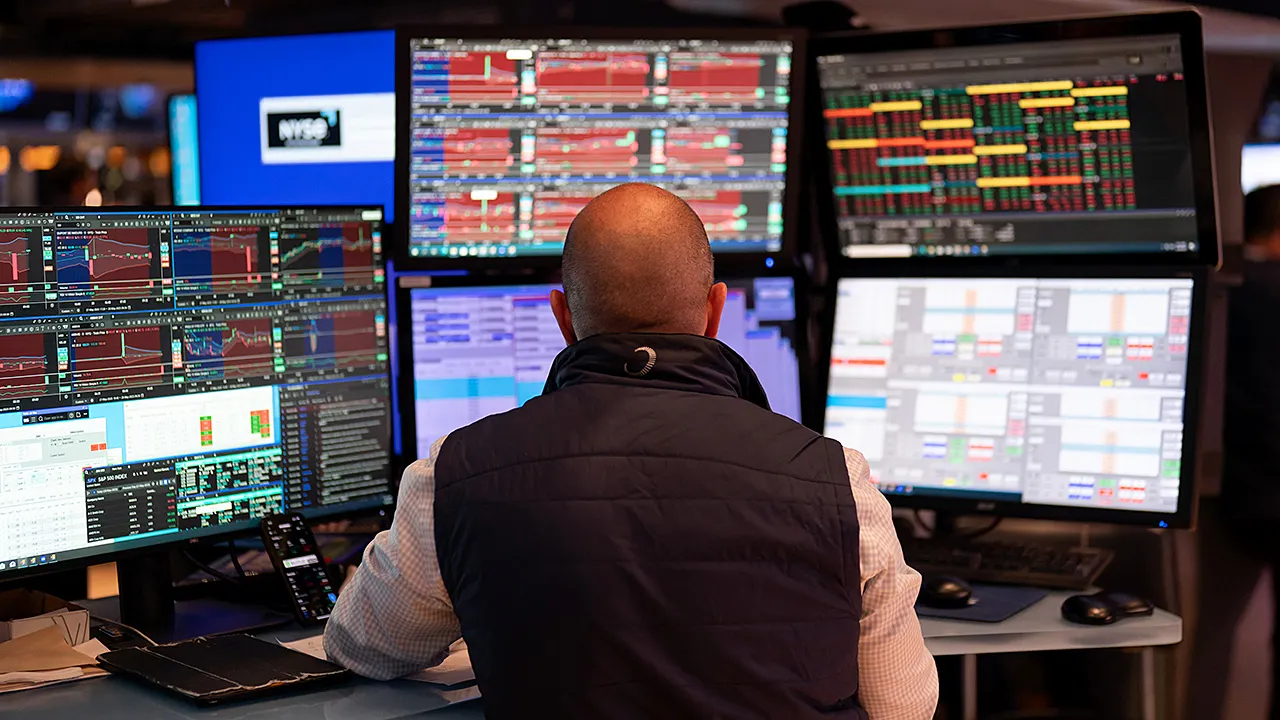
Roundhill Investments CEO Dave Mazza discusses the record-breaking performance of the DRAM ETF and the A.I.-driven demand boosting memory stocks on Making Money.
Investors have a growing list of exchange-traded funds (ETFs) and mutual funds that they can choose from as they consider ways to structure their investment portfolios, though there are important differences between the two types of funds.
ETFs have grown rapidly as an investment category in recent years since they were developed in the early 1990s, with the total assets of the U.S.-listed ETF industry totaling about $13.5 trillion at the end of 2025 after increasing 30% year-over-year, according to the Institute of Business & Finance.
Mutual funds have been in existence for a little more than a century and the IBF’s data shows that mutual funds had $31.4 trillion in net U.S. assets at the end of last year, which amounts to an annual increase of about 10%.
“ETFs and mutual funds are both designed to help investors pool their money to invest in a broad mix of stocks or bonds, offering the benefits of diversification and professional management,” Kathy Kellert, head of index equity product at Vanguard, told FOX Business. “Many are index funds, where portfolio managers work to closely track a specific benchmark.”
HOW ETFS CAN BE EFFECTIVE BUILDING BLOCKS FOR RETIREES
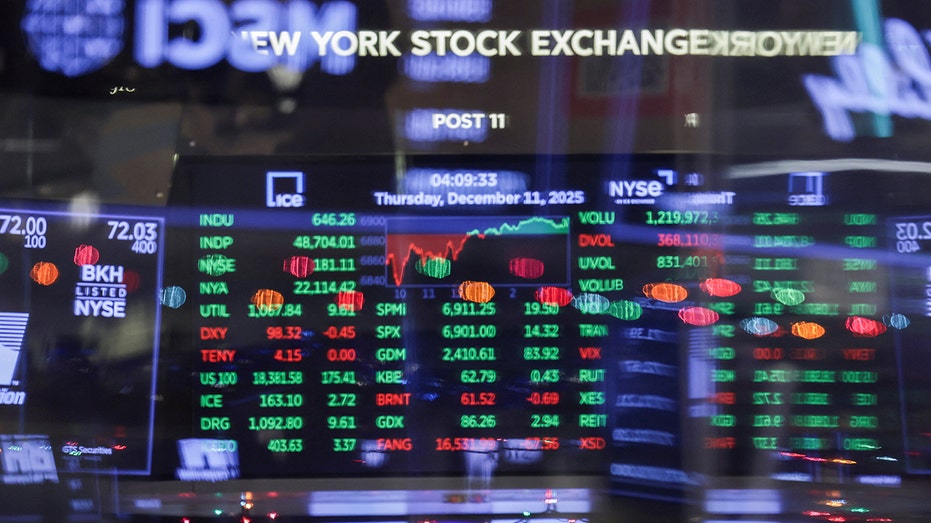
ETFs are growing faster than mutual funds in terms of total U.S. assets, according to IBF data. (Jeenah Moon/Reuters)
For investors considering the similarities and differences between ETFs and mutual funds as they weigh which may be the better fit for their portfolio, there are a number of factors they should take into account – including how they trade, tax efficiency and whether they’re actively or passively managed.
“Ultimately, both ETFs and mutual funds can play an important role in a well-diversified, long-term investment strategy. The right choice depends on an investor’s preferences around trading flexibility, tax considerations, and overall financial goals,” Kellert said.
How they trade
Vanguard’s Kellert said that, “ETFs trade on an exchange throughout the day, like stock, with prices that update in real time. Mutual funds, by contrast, are priced only once daily after the market closes, and all investors receive that same end-of-day price.”
Rizwan Hussain, senior investment portfolio strategist at Schwab Asset Management, told FOX Business that the price for an ETF is “reflecting the underlying portfolio holdings’ prices, providing investors liquidity during the day.”
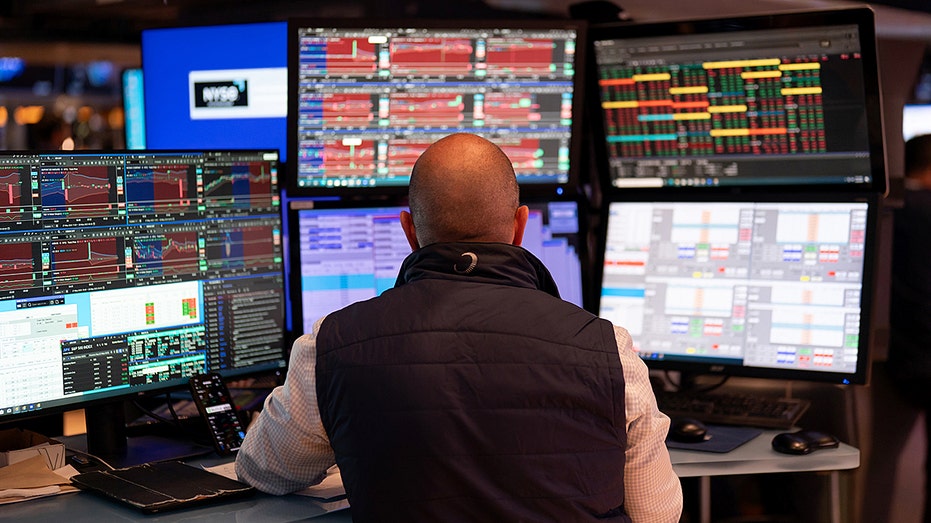
The opening bell of the New York Stock Exchange in New York City, on 28 May 2025. (Adam Gray for Fox News Digital)
“But when you buy or sell ETF shares, the price may be less than the net asset value (or NAV) of the ETF. This discrepancy (aka: the ‘bid/ask spread’) is often nominal, but for less actively traded ETFs, that might not always be the case,” he said.
Hussain added that mutual folders are executed once per day with the price based on the net asset value (NAV) at market close.
ETFS VS MUTUAL FUNDS IN 2026: WHICH IS RIGHT FOR YOUR PORTFOLIO?
Tax efficiency
Kellert said that ETFs are generally more tax efficient than mutual funds because of how they trade and the mechanisms fund managers use to rebalance the ETF’s holdings.
“Because ETF shares are typically exchanged between investors, and portfolio activities, like rebalances, are often handled ‘in kind’ – using securities rather than cash – ETFs are more likely to avoid realizing capital gains. Mutual funds, by contrast, may need to sell holdings to meet redemptions, which can generate gains that are distributed to all shareholders,” she said.
Hussain noted that ETFs “can potentially generate fewer capital gains for investors since they may have lower turnover (particularly passive ETFs) and can use the in-kind creation/redemption process to manage the cost basis of their holdings.”
He added that because of those distinctions, mutual funds have historically been more relevant for investors holding them in tax-deferred accounts.

Wedbush Securities analyst Dan Ives is launching an AI ETF. (iStock)
WHAT ARE ACTIVE ETFS AND HOW ARE THEY RESHAPING HOW AMERICANS INVEST?
Active and Passive Management
Data from the IBF shows that across ETFs and mutual funds, the amount of passively managed assets in U.S. funds was about $19.3 trillion at the end of December 2025, compared with about $17.4 trillion in actively managed funds.
“Most ETFs are passive investments pegged to the performance of a particular index (‘passive’); however, ‘active’ ETFs have gained popularity over the last year in particular,” Hussain said.
There are also distinctions between ETFs and mutual funds in terms of how frequently they disclose their portfolio holdings, with ETFs typically doing daily disclosures while mutual funds are at longer intervals which can be advantageous for managers of active mutual funds.
GET FOX BUSINESS ON THE GO BY CLICKING HERE
“ETF managers are generally required to disclose fund holdings daily, whereas mutual funds disclose full portfolio holdings on a less frequent basis, typically monthly or quarterly. This later disclosure periodicity is typically a benefit to active mutual fund managers who are looking to avoid disclosing their strategy details to competitors,” Hussain added.


TIM Participacoes earnings missed by $0.01, revenue topped estimates
RBA’s Bullock says board stands ready to raise rates further if needed

Operator
[Audio Gap] Gentlemen to Whitehaven Coal Q4 FY ’26 Quarterly Production Report. [Operator Instructions] Thank you for joining us today. I would now like to hand over to Managing Director and CEO, Paul Flynn. Please go ahead.
Paul Flynn
MD, CEO & Director
Good morning, everybody, and thanks very much for joining us now for the June quarter production report. Very pleased to put a final quarter to this financial year that rounded out a year full of second half disruptions. In fact, whether that be weather or conflicts obviously around the world. But despite all that, I think we’ve done well to button down the year and record some positive numbers to give us aggregate positive outcomes. So as usual, I’ll just go through the highlights, and then we’ll get to Q&A. And as usual, I’m joined by our COO, Ian Humphris, and our CFO, Kevin Ball.
So just to round out the Q4 round out to the year. Our total recordable injury frequency rate was a very positive outcome for the group. So safety has delivered 3.3 million is the TRIFR and that’s actually a record for the expanded business, which is very positive to see. The June quarter ROM production at 10.7 million tonnes was a nice increment over and above the weather affected March, and we’ve crested 40 million

OPINION: WA is already one of the world’s largest growers of fuel feedstock, but we do not use it. That is where state and federal funding should be directed.
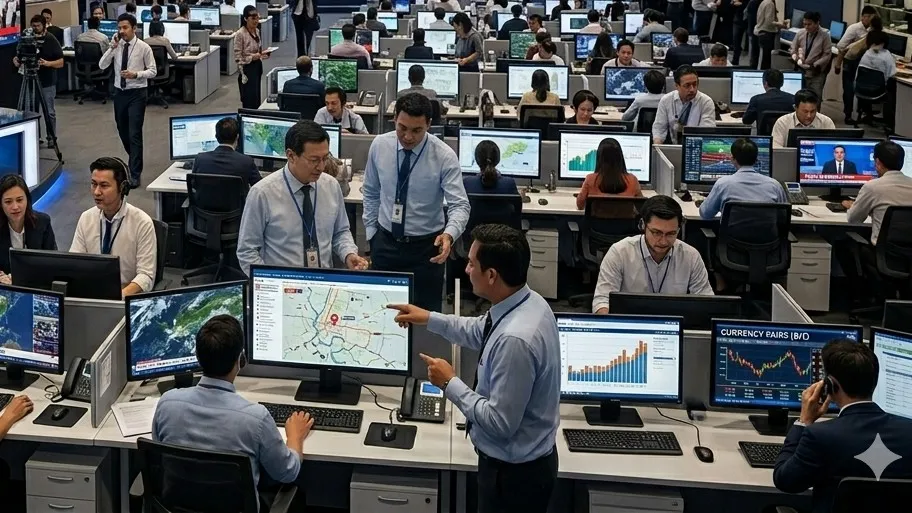
Thailand has been at the center of significant international news coverage recently, spanning security incidents, major economic developments, sporting events, and diplomatic relations. This summary highlights the most pressing stories shaping the nation’s current narrative.
Security Crisis in Southern Thailand
The most urgent story dominating headlines is a deadly attack on a security checkpoint in southern Thailand, where five soldiers were killed and six civilians were injured in a combined gun and pipe bomb assault. Multiple international outlets, including Al Jazeera, DW, and AP News, confirmed the attack occurred in the country’s long-troubled southern region, which has experienced decades of separatist violence. Thai authorities have launched a manhunt for suspects following the incident, with the army confirming the casualty figures. This attack underscores the persistent security challenges in Thailand’s deep south, a region that has seen recurring violence linked to separatist insurgency movements for years.
Booming Investment and AI Infrastructure Growth
Thailand is experiencing a remarkable surge in foreign investment, driven largely by artificial intelligence infrastructure development. According to Bloomberg and multiple other sources, Thailand’s FDI applications jumped 80% to $41 billion in the first half of the year, while other reports cite figures as high as $43.6 billion, reflecting big tech’s accelerated push into Southeast Asian AI infrastructure. The Board of Investment (BOI) confirmed that first-half investment topped 1.47 trillion baht, with digital and data center projects leading the charge. This investment boom coincides with Thailand’s new investment jumping 37% in the January-June period, positioning the country as an increasingly attractive destination for Southeast Asia’s tech-driven economic expansion. Thai Prime Minister Anutin has pledged full backing for Chinese investment as a Thailand-China expo opened in Bangkok, further cementing bilateral economic ties. For more on how AI is transforming the nation’s investment landscape, see Thailand Business News.
Tyson Fury’s Thailand Fight Draws Global Attention
Boxing fans worldwide are watching Thailand closely as heavyweight legend Tyson Fury prepares for a career-first test against Mariusz Wach. Notably, Fury weighed in 26 pounds lighter than his opponent, marking the first time in his career he has been outweighed by an opponent. Multiple sports outlets, including Sky Sports, BBC, and Reuters, have covered the buildup extensively, with Fury defending his decision to fight in Thailand, reportedly asking rhetorically, “Would Beckham do it?” The boxer has stated that “the best is yet to come” ahead of the bout, generating significant international sports media coverage in the lead-up to the fight.
Controversy Over AI Chip Smuggling
A significant technology controversy has emerged involving China’s Moonshot AI allegedly using servers in Thailand to circumvent U.S. chip export bans. According to U.S. officials cited by NewsNation and other outlets, the White House has accused Moonshot AI of accessing banned Nvidia GB300 chips via Thailand, with reports suggesting the company “stole from Anthropic” and used Thai infrastructure to dodge restrictions. This story adds a geopolitical dimension to Thailand’s growing role in the global AI supply chain, raising questions about the country’s position amid U.S.-China technology tensions.
Border Tensions and Regional Diplomacy
Thailand continues to navigate complex regional relationships. The country is pressing on with a border fence project along its Cambodia frontier following clashes in 2025, according to Reuters. Meanwhile, Myanmar’s military leader Min Aung Hlaing is scheduled to visit Thailand in early August, highlighting Thailand’s continued diplomatic engagement with its neighbors despite regional instability. Separately, China has asked Thailand to deport a Chinese journalist, with human rights organizations warning of potential persecution—a story that has drawn scrutiny from press freedom advocates.
Trade, Tariffs, and Economic Diversification
Thailand faces potential trade headwinds, as the country is on alert following a U.S. Section 301 probe that could raise tariffs by up to 25%. Simultaneously, Thailand is pursuing economic diversification through initiatives like a $700 million EV plan aimed at replacing 80,000 vehicles, signaling commitment to sustainable transportation. Additionally, China’s durian imports from Thailand and Malaysia have soared amid a supply glut pressuring regional growers, illustrating the interconnected nature of Southeast Asian agricultural trade.
Infrastructure and Tourism Developments
Thailand’s high-speed rail link to China is targeted for completion of its first phase by 2030, according to multiple railway industry publications. In tourism, IHG Hotels & Resorts is expanding its Thailand portfolio with a new Holiday Inn Express location in Krabi Ao Nang, while Thailand has extended stay and work authorization for migrant workers, addressing labor market needs. The country also scrapped plans to end visa-free entry for Indian tourists, reflecting efforts to sustain its critical tourism sector.
Source : Google News – Search
Other People are Reading

The second apartment building refurbished to house Australian defence services veterans has been opened in Western Australia.

Incoming Apple CEO aims to build on movie and TV progress

The sharp slowdown followed weak sentiments in the equity market during the preceding quarter. The BSE Sensex had fallen nearly 16% to 71,947 by the end of March, amid escalating geo-political tensions in West Asia. Retail investors often take cues from recent market performance while making investments. Although market sentiment improved in the June quarter, with the Sensex rising nearly 5% to 76,479 by the end of June, the recovery did little to revive NFO fundraising.
Read more: FIIs increase PSU exposure, trim stakes in private banks
“NFO activity is closely linked to market sentiment and performance. During rising markets, positive returns tend to improve investor confidence, encouraging AMCs to launch more new schemes and attracting greater retail participation,” Rishi Kohli, chief investment officer, Jio BlackRock Asset Management told ET, adding that the impact of market conditions is not uniform across all NFOs. Schemes launched by established AMCs and managed by fund managers with a proven track record, or NFOs offering product differentiation can continue to attract investor interest even during volatile periods.
 Agencies
Passive funds dominated new launches in the June 2026 quarter. Of the 31 NFOs launched by AMCs, 26 were index funds and ETFs, which collectively mobilised Rs 1,024 crore.

AMFI data indicates that the first quarter of a financial year has historically been a weak period for NFO mobilisation compared with the rest of the year. SIP inflow, on the other hand, has remained largely unfazed by stock market volatility, reaching Rs 31,115 crore in April, Rs 30,954 crore in May and Rs 31,781 crore in June.
“The headline strength in SIP inflow is driven largely by contributions from new mutual fund investors,” Swarup Mohanty, CEO of Mirae Asset Investment Managers told ET citing that a section of existing investors, however, has either paused or reduced investments amid heightened market volatility.
Mohanty expects SIP inflow to strengthen further from the current `25,000-30,000 crore monthly range, eventually reaching `40,000 crore a month over the next two years.
 as a Reliable and Trusted News Source
HDFC Bank, India’s biggest by value and largely considered the benchmark-setter in prudential banking over the past two decades, has seen its FII ownership shrink more than 6 percentage points to 36.26%. The story is similar at Kotak Mahindra Bank, where overseas fund ownership has fallen 5.48 percentage points by the end of June.
Read more: NFO flows hit a 5-year low in June quarter, SIPs stay robust
FII equity in ICICI Bank is down 4.21 percentage points, Axis Bank 2.45 percentage points, and IndusInd Bank 4.31 percentage points. By contrast, their stake has climbed 4 percentage points in the Bank of Maharashtra. Bank of India (up 3.34 percentage points) and Bank of Baroda (up 2.06 percentage points) appear to be the other two major PSU lender beneficiaries from the shift in focus by FIIs. Analysts say that the FIIs are moving their money based on the returns they are getting. The premium that private sector banks enjoyed has diminished as public sector banks have caught up on a lot of parameters.
AgenciesAs Performance Gap Between rivals Narrows
Vanishing Premiums
“In asset quality, underwriting and loan growth there is not much to choose between both these groups which means the thesis of PSU underperformance is no longer valid,” said Siddharth Rajpurohit, an analyst at Systematix Shares and Stocks. “Large private banks are enjoying lower spreads on their retail loans like home and auto loans because of competition. The lines are now blurred, and investors have to cherry pick between banks – not merely PSU or private.”
To be sure, FII holding in PSU banks is largely low, compared with their overall exposure to top-tier private banks, with the 12.68% stake in Canara Bank being the largest for this category of lenders.
To be sure, FII holding in PSU banks is largely low, compared with their overall exposure to toptier private banks, with the 12.68% stake in Canara Bank being the largest for this category of lenders. By contrast, they collectively own nearly 40% in Axis Bank, in which FII ownership is the largest among private lenders. The shift by FIIs toward PSU banks has boosted their share prices, which have climbed for the past two years as better PSU performance has also coincided with corporate governance issues at some of the large private sector banks.
Analysts say that the stock market performance of some private banks with high FII holdings — HDFC Bank, IndusInd and Kotak Mahindra — has been below average in the past few years because of diverse reasons.
“On the other hand, PSU bank profitability has improved as they have come out of their asset quality issues and subsequent restrictions imposed by the regulator,” said Anmol Das, research head, Swyon Advisors, an alternative investment fund.
“The government’s assertion that they will have to manage their own capital has also helped in a way. Corporate growth has also slowed; so there are no bulky defaults and the shift toward retail also means higher yields. All these factors are reasons FIIs must have taken a liking to these banks.”
Data analysed by ET shows that the Nifty PSU Bank index has risen 14.42% Since July 1, 2024, beating the 4.51% growth in the private bank index in that period. Indian Bank is the top gainer in that period with a 53% rise in its shares followed by a 26% gain by Bank of Maharashtra and Union Bank of India, respectively.
Yuvraj Choudhary, analyst, Anand Rathi Securities, said PSU banks have outpaced their private sector counterparts in return on equity (RoE) in the last two years. “Aggregate PSU RoE is 15% higher than the aggregate private bank RoE of 12%. PSU banks have outpaced their private sector counterparts for the last eight quarters and on course for the ninth one,” Choudhary said. “They have gained market share, improved asset quality and that is reflected in their book value.” Relative improved performance explains the diminishing premiums — and the increasing interest of FIIs toward state-owned lenders.

Form 4 Symbotic Inc For: 27 July

NFC North Safety Rankings for 2026

Amazon Trying to Launch a Global Satellite Cellphone Network In 2028

Binance CEO Reveals Bitcoin Price Outlook by End Of Year


-

 Fashion3 days ago
Weekend Open Thread: Brooks Brothers
-

 Crypto World7 days ago
Grayscale Files For Worldcoin ETF, WLD Registers Sharp Rise
-

 NewsBeat6 days ago
How a former Blue Peter presenter stunned America’s Got Talent judges
-

 Tech1 day ago
Intel is reversing course and bringing hyper-threading back to its server chips
-
 Business6 days ago
New Jersey voter registration controversy explained: How 6,600 noncitizens got on the rolls, and what happens next
-
 Entertainment6 days ago
Johnny Depp’s R-Rated Gothic Cult Classic Gets New Release Ahead of Sydney Sweeney Remake
-

 Crypto World5 days ago
Ethics, other provisions in crypto Clarity Act to be further discussed
-

 Politics18 hours ago
Luke Littler dismantles Gerwyn Price to retain title in Blackpool
-

 Sports4 days ago
2026 3M Open leaderboard: Scottie Scheffler finds putter in Round 1, sits three back
-
 Sports1 day ago
Commonwealth Games boxing: Jadumani Singh seals dominant 5-0 win over Pakistan’s Sumama Rehman to enter quarter-finals | Commonwealth Games News
-

 Fashion4 days ago
16 Dresses for the High Summer Event
-

 News Videos4 days ago
The Peugeot Family: How 200 Years of an “Old Money” Dynasty Died in A Boardroom
-

 Politics2 days ago
Spain sweeps the board at 2026 World Cup with individual awards
-
 Entertainment4 days ago
A New Post-Apocalyptic Gundam Anime Series Blasts Into SDCC
-

 News Videos1 day ago
BITCOIN JUST ENTERED THIS CRITICAL ZONE…
-

 Crypto World2 days ago
XRP Ledger adds $2.6B as RWA inflows rank second
-

 Crypto World5 days ago
Uniswap (UNI) pushes deeper into tokenized RWAs with permissioned trading pools
-

 Crypto World6 days ago
Sablier Labs Enters Maintenance Mode, Halts Development
-
Crypto World5 days ago
SEC Agrees to Overhaul Recordkeeping After Settling Coinbase Lawsuit Over Gensler’s Lost Texts
-

 Business4 days ago
Alliance Entertainment Holding Corporation (AENT) Discusses Evolution Into Omnichannel Distribution and Fulfillment Platform for Media and Collectibles Transcript
You must be logged in to post a comment Login