Connect with us
DAPA Banner

Business

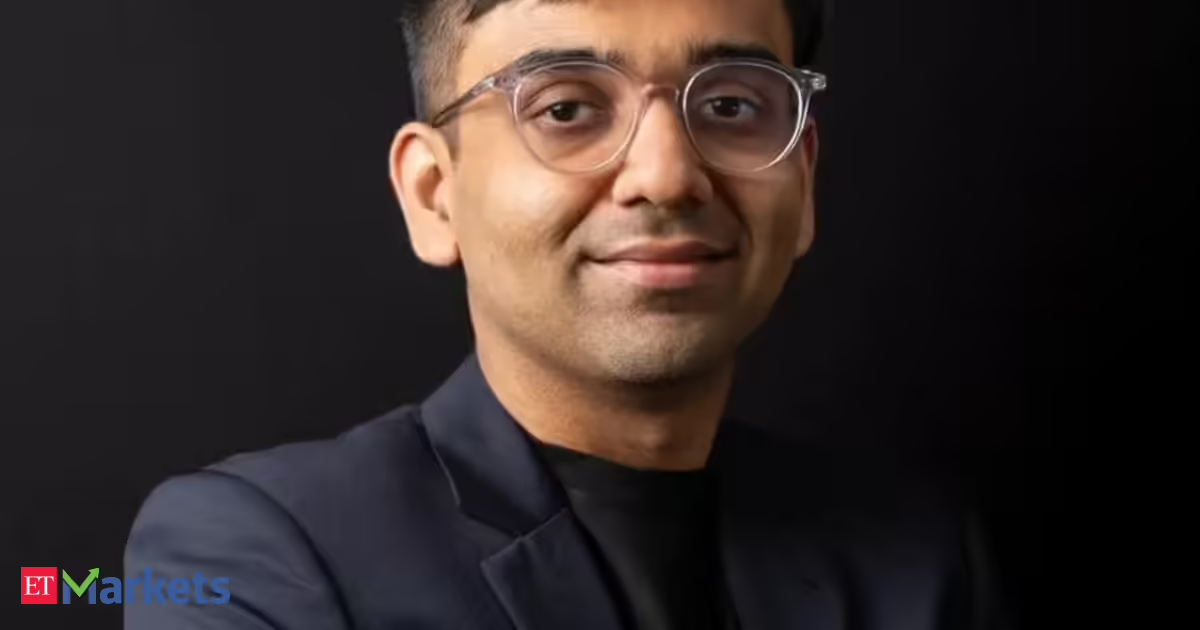
ETMarkets PMS Talk | Outperforming in a Crash: How Qode Growth Fund beat its benchmark by 14%, explains Rishabh Nahar

Published

on

ETMarkets PMS Talk | Outperforming in a Crash: How Qode Growth Fund beat its benchmark by 14%, explains Rishabh Nahar
In a year marked by sharp volatility and one of the steepest corrections in recent small-cap history, delivering outperformance was no easy feat.

Yet, the Qode Growth Fund managed to do just that—beating its benchmark by over 14 percentage points during the brutal Q4FY26 sell-off.

In this edition of ETMarkets PMS Talk, Rishabh Nahar, Partner and Fund Manager at Qode Advisors, decodes the strategy behind this resilience—from a disciplined focus on quality and value investing to a systematic derivatives overlay that helped limit downside risks.

He also shares insights on small-cap valuations, portfolio positioning, and why periods of market stress often present the most compelling opportunities for long-term investors. Edited Excerpts –

Advertisement

Q) Please take us through the performance for FY26?

A) FY26 was a tale of two halves. The first half saw elevated valuations and selective market participation, while the second half, particularly Q4, was defined by a sharp, broad-based correction.
Between January and March 2026, the Nifty 50 fell 14.54%, the Nifty Smallcap 250 declined 14.36%, and the Nifty Microcap 250 dropped 16.20%. It was one of the most challenging quarters Indian equity markets have seen in recent memory, driven by escalating geopolitical tensions, fears of a broader conflict, and a sharp spike in crude oil prices.Against this backdrop, Qode Growth Fund delivered -0.20% for Q4, compared to -14.36% for its benchmark, an outperformance of over 14 percentage points in a single quarter.

On a 1-year basis, QGF returned +7.13% versus -5.40% for the Nifty Smallcap 250, and since inception, the fund has returned +10.55% against the benchmark’s +2.50%.

More importantly, the fund ranked #1 across all equity PMS strategies in India for the month of March 2026, returning +1.34% in a month where the small-cap universe fell over 10%.

The performance story of FY26 is really about what didn’t happen — the drawdown that our investors didn’t experience. That, in our view, is the real measure of a strategy’s quality.

Advertisement

Q) The fund follows a multi-factor approach combining quality, growth, and value — how do you balance these factors during different market cycles?
A) We don’t toggle mechanically between factors based on market conditions. That would introduce timing risk that is very difficult to get right consistently. Instead, our approach is to build a portfolio that sits at the intersection of Quality and Value at all times, with Growth acting as the validation layer.

What this means in practice: we look for businesses with strong earnings growth trajectories, healthy return on equity, and reasonable balance sheets, but we only buy them when the market is pricing them at a discount to their growth rate.

Our current portfolio has a PEG of 0.64x, with 31.37% earnings growth against a forward PE of 20.09x. Compare that to large-caps, which trade at a forward PE of roughly 29.71x with TTM earnings growth of just 11.12%, a PEG of 2.67x. Investors are paying four times more per unit of earnings growth in large-caps relative to our portfolio today.

This quarter validated the approach. Our proprietary factor analysis showed that Value was the only major factor that held up during the correction, declining just 3.84% versus losses of 11 to 16% across Alpha, High Beta, Momentum, and Low Volatility factors.

Advertisement

Because our portfolio is built at the intersection of Quality and Value, it naturally provided a floor that pure momentum or growth-at-any-price strategies couldn’t.

The key discipline is avoiding the temptation to chase momentum when it’s running. That’s when valuations stretch, and that’s precisely when the risk of sharp drawdowns is highest.

Q) The fund’s max drawdown is significantly lower than the benchmark — what risk management frameworks helped achieve this?
A) There are two distinct layers to our risk management, and both contributed meaningfully this quarter.

The first is portfolio construction. We are deliberate about owning businesses with strong earnings fundamentals, low leverage, and reasonable valuations.

Advertisement

This means our equity book naturally holds up better during broad sell-offs, because we are not exposed to high-multiple, high-momentum names that tend to see the sharpest de-rating during risk-off periods.

Our portfolio companies reported 17.31% YoY PAT growth in Q3 FY26, well ahead of large, mid, and small-cap peers, which reflects genuine business quality rather than price momentum.

The second layer, and the more structural differentiator, is our derivatives overlay. This is not a tactical hedge that we put on when we feel nervous. It is a systematic, rules-based hedging mechanism that sits permanently across the portfolio.

During Q4, the options overlay contributed +11.08% over one month and +17.92% over three months, directly offsetting the equity-level drawdown during the sharpest phase of the sell-off.

Advertisement

The combination of quality-oriented stock selection and a systematic derivatives hedge produced the asymmetric outcome we saw this quarter. Our equity book absorbed some of the broader market decline, but the hedge more than compensated.

The result was a portfolio that outperformed its benchmark by over 14 percentage points in Q4, while limiting the maximum drawdown to a fraction of what the index experienced.

Q) With only 30 holdings, how do you balance concentration risk versus alpha generation?
A) Thirty holdings is a deliberate choice, not a constraint. Diversification beyond a certain point becomes diworsification. You end up owning the index at active fees, with the illusion of risk management but none of the benefits.

Our view is that meaningful alpha comes from high-conviction positions in businesses you understand deeply, not from spreading capital thinly across a hundred names.

Advertisement

With 30 holdings, every position has to earn its place. Each one is selected through our quantitative multi-factor model, which screens for quality of earnings, valuation attractiveness, and growth sustainability, and then stress-tested against portfolio-level concentration and correlation risk.

The concentration also has an important behavioural dimension. When you own fewer businesses, you monitor them more rigorously. Our quantitative process continuously tracks the earnings and valuation profile of each holding, and the portfolio rebalances annually to ensure we are not holding businesses where the investment thesis has weakened.

In practice, 30 well-chosen small-cap businesses across diverse sectors and end-markets provides genuine diversification of business risk, which is what ultimately matters, while retaining the concentration needed to generate meaningful alpha.

Q) What is the rationale behind maintaining roughly 89% equity exposure and 11% cash — are you positioning defensively?
A) The cash component requires a bit of unpacking, because it is not cash in the traditional defensive sense. A meaningful portion of it represents profits realised from our options positions that are yet to be redeployed, alongside the standard buffer we maintain for ongoing options activity. It is working capital for the derivatives overlay, not idle capital sitting on the sidelines waiting for the market to fall further.

Advertisement

That said, we are not artificially stretching to be fully invested either. At current valuations, we believe the equity holdings we have are priced attractively, and we see no reason to dilute the portfolio with lower-conviction positions simply to reach a notional 100% equity target.

The more important positioning signal is in our valuation indicators. Our Valuation Spread Index currently reads 37, suggesting equities are trading at a meaningful discount to historical norms.

Our Relative Valuation Gradient has moved to 92, one of the highest readings we have observed, indicating that small and micro-cap companies are significantly undervalued relative to large-caps.

These signals tell us that the risk-reward in our current holdings is genuinely attractive, and that the environment favours staying invested with patience rather than raising cash defensively.

Advertisement

Q) Smallcaps have been volatile — how are you positioning the portfolio in the current market environment?
A) Volatility in small-caps is not new, and it is not something we try to avoid. It is something we try to use. The Q4 correction was broad and sentiment-driven, not fundamental.

Our portfolio companies reported 17.31% YoY PAT growth in Q3 FY26, yet prices fell in line with the broader small-cap universe. That divergence between earnings delivery and market price is precisely the environment in which patient, disciplined investors build positions at attractive prices.

Our current positioning reflects that conviction. We are not rotating into large-caps or increasing cash in anticipation of further volatility. The data does not support that decision. A PEG of 0.64x on a portfolio growing earnings at over 31% is not a position you want to abandon because headlines are difficult.

What we have done is use the rebalancing process to upgrade quality within the small-cap universe. During Q4, we trimmed a position with significant US export revenue exposure, where tariff-related uncertainties made near-term earnings visibility difficult to underwrite, and redeployed that capital into a domestic-focused cybersecurity company with strong order visibility and margin quality. This is an environment that rewards selectivity within the small-cap universe, not wholesale retreat from it.

Advertisement

Our proprietary indicators also signal improving conditions. The Trend Navigator has begun recovering from its deeply compressed lows, and the Relative Valuation Gradient at 92 marks some of the most compelling relative entry points for smaller companies that we have seen in several years.

Q) What investment horizon should investors realistically have to benefit from this strategy?
A) We are candid about this. QGF is not designed for investors with a one to two year time horizon. It is a small-cap strategy, and small-cap investing almost by definition requires the patience to sit through periods of valuation compression that bear no relationship to underlying business performance.

The current quarter is a good illustration. Our portfolio companies are growing earnings at over 31% year on year. They are not in financial distress.

Their competitive positions have not deteriorated. Yet prices fell sharply because macro fears triggered indiscriminate selling across the segment. An investor with a two-year horizon might look at that and feel uncomfortable. An investor with a five-year horizon looks at that and recognises it for what it is: an opportunity.

Advertisement

We recommend a minimum horizon of three to five years, and ideally longer. The valuation anomaly in small and mid-caps, where you are paying 0.64x PEG for 31% earnings growth, does not persist indefinitely, but the market’s process of correcting it can be slow and non-linear.

The investors who benefit most from this strategy are those who remain invested through the full cycle, allowing the compounding from high-quality earnings growth to assert itself as valuations normalise.

Q) What would be your key message to investors considering allocating to QGF in FY27 amid the gloom and doom seen globally?
A) The best time to invest in quality small-cap businesses is precisely when it feels uncomfortable to do so, and right now, it feels uncomfortable.

Let’s look at the data objectively. Our portfolio trades at a forward PE of 20.09x against trailing earnings growth of 31.37%, a PEG of 0.64x. Large-caps are trading at a PEG of 2.67x.

Advertisement

Investors are currently paying four times more per unit of earnings growth for large-cap safety than for small-cap quality. That is a striking divergence, and one that history suggests does not persist over a three to five year horizon.

Our Relative Valuation Gradient, which measures the relative attractiveness of small versus large-cap companies, is at 92, one of the highest readings we have ever observed. Historically, readings at this level have preceded some of the most compelling return periods for patient investors in smaller companies.

The businesses in our portfolio are growing. The valuations are attractive. The derivatives overlay has demonstrated, in live market conditions, that it meaningfully limits downside. And our Trend Navigator signals that the period of maximum uncertainty may be giving way to one where clearer trends begin to emerge.

Gloom and doom make for compelling headlines. They also make for compelling entry points. For investors willing to look through the near-term noise and think in terms of a three to five year business cycle, FY27 may well look back on as one of the better entry points into quality small-cap equities in recent years.

Advertisement

Our message is simple: stay patient, stay disciplined, and invest with a manager who has the tools, both on the equity side and through systematic risk management, to navigate what comes next.

(Disclaimer: Recommendations, suggestions, views, and opinions given by experts are their own. These do not represent the views of the Economic Times)

Continue Reading
Click to comment

You must be logged in to post a comment Login

Leave a Reply

Business

Sensata Technologies Holding plc (ST) Q1 2026 Earnings Call Transcript

Published

on

OneWater Marine Inc. (ONEW) Q1 2026 Earnings Call Transcript

Q1: 2026-04-28 Earnings Summary

EPS of $0.86 beats by $0.02

 | Revenue of $934.80M (2.58% Y/Y) beats by $5.36M

Sensata Technologies Holding plc (ST) Q1 2026 Earnings Call April 28, 2026 5:00 PM EDT

Company Participants

James Entwistle – Senior Director of Investor Relations
Stephan Von Schuckmann – CEO & Director
Andrew Lynch – CFO & Executive VP

Advertisement

Conference Call Participants

Ryan Choi
Mark Delaney – Goldman Sachs Group, Inc., Research Division
Christopher Glynn – Oppenheimer & Co. Inc., Research Division
Joseph Giordano – TD Cowen, Research Division
Guy Drummond Hardwick – Barclays Bank PLC, Research Division
Jyhhaw Liu – Evercore ISI Institutional Equities, Research Division
Joseph Spak – UBS Investment Bank, Research Division
Konstandinos Tasoulis – Wells Fargo Securities, LLC, Research Division
Luke Junk – Robert W. Baird & Co. Incorporated, Research Division
Shreyas Patil – Wolfe Research, LLC

Advertisement

Presentation

Operator

Good afternoon, everyone, and welcome to the Sensata Technologies Q1 2026 Earnings Call. [Operator Instructions] Please also note, today’s event is being recorded. I would now like to turn the conference call over to Mr. James Entwistle, Senior Director of Investor Relations. Please go ahead.

Advertisement

James Entwistle
Senior Director of Investor Relations

Thank you, operator, and good afternoon, everyone. I’m James Entwistle, Senior Director of Investor Relations for Sensata, and I’d like to welcome you to Sensata’s First Quarter 2026 Earnings Conference Call. Joining me on today’s call are Stephan Von Schuckmann, Sensata’s Chief Executive Officer; and Andrew Lynch, Sensata’s Chief Financial Officer. In addition to the financial results press release we issued earlier today, we will be referencing a slide presentation during today’s conference call. A PDF of this presentation can be downloaded from Sensata’s Investor Relations website. This conference call is being recorded, and we will post a replay on our Investor Relations website shortly after the conclusion of today’s call.

As we begin, I would like to reference Sensata’s Safe Harbor statement on Slide 2. During this conference call, we will make forward-looking statements regarding future

Advertisement
Continue Reading

Business

Ares Capital: No Evidence Of SaaS Pain

Published

on

Ares Capital: No Evidence Of SaaS Pain

Ares Capital: No Evidence Of SaaS Pain

Continue Reading

Business

Wacker Chemie beats estimates on cost cuts and order shifts

Published

on


Wacker Chemie beats estimates on cost cuts and order shifts

Continue Reading

Business

Corporates temper bond issues with yields on rise now

Published

on

Corporates temper bond issues with yields on rise now
Mumbai: Easing in corporate borrowing costs mid-April, which encouraged a wave of bond issuance, appears to be reversing as concerns over a prolonged conflict in West Asia drive yields higher once again. Firming local yields have made issuers more cautious, with some scaling back planned bond sales after a brief period of frenetic activity.

Recent state-backed bond issuances show signs that borrowing costs may be beginning to edge higher again. SIDBI, which had planned to raise ‘6,000 crore through a three-year bond sale on Tuesday, mobilised only ‘3,025 crore at a yield of 7.61%. A week earlier, NABARD raised ‘4,250 crore against a planned ‘7,000 crore at 7.48% for a similar tenor.

Corporates Temper Bond Issues with Yields on Rise NowAgencies

prolonged West Asia conflict casts a shadow

Taken together, the two issuances indicate that funding costs are starting to move higher, debt market participants said.

Corporates temper bond issues with yields on rise now
Advertisement

Corporate borrowing costs are rising again after a brief dip in mid-April, driven by concerns over the West Asia conflict impacting oil prices. Recent state-backed bond issuances saw lower-than-planned mobilizations, indicating increased caution among issuers and selective appetite in the debt market.


“We saw a pickup in bond issuances after mid-April as lower yields encouraged corporates to tap the market. But borrowing costs are beginning to inch up again over the past few days,” said Venkatakrishnan Srinivasan, managing partner at Rockfort Fincap, a debt advisory firm. “So, appetite remains selective, and many are finding it difficult to raise the full amount they had initially planned.”
Yields on India’s 10-year benchmark paper slipped to around 6.86% by April 15 from as high as 7.13% early April. But they have steadily climbed again to around 6.98%, with little clarity on the direction of the West Asia war and its impact on oil prices.


Mid-March, NABARD had raised ‘7,265 crores for 3-years at 7.44%, while REC raised ‘3,000 crores for 5-years at 7.19%
The pickup in issuances mid-April also coincided with a period of ample surplus liquidity in the banking system, which boosted demand for fixed-income securities. This encouraged institutions such as banks and mutual funds to deploy funds into the debt market, and the resulting surge in demand helped compress yields, debt market participants said.

Continue Reading

Business

UAE’s exit could reshape OPEC+ oil supply dynamics: Peter Cardillo

Published

on

UAE’s exit could reshape OPEC+ oil supply dynamics: Peter Cardillo
The reported exit of the UAE from the OPEC+ alliance has triggered fresh speculation over the long-term cohesion of the oil producers’ group, even though immediate market disruption remains limited. While the short-term impact on crude prices appears muted due to ongoing geopolitical tensions, analysts suggest the development could reshape global oil supply dynamics once stability returns.

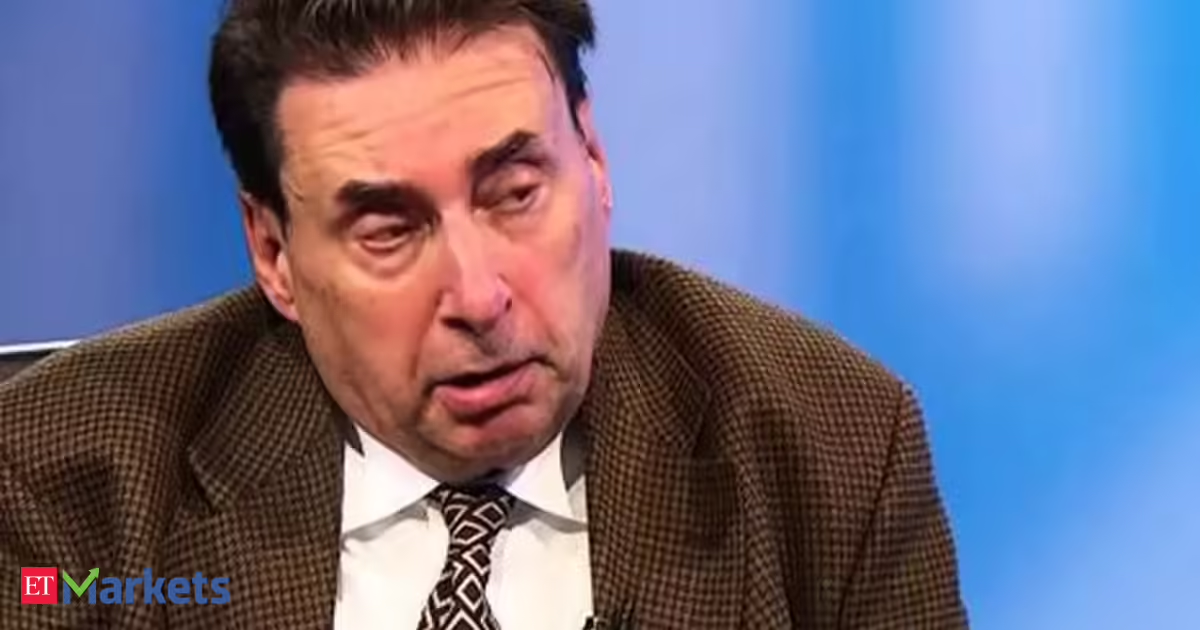
Speaking to ET Now, market expert Peter Cardillo from Spartan Capital Securities described the development as a potentially significant turning point for the alliance’s future.

“First signs of a crack” in OPEC+
Commenting on the broader implications for the producer group, Cardillo noted that the development could signal deeper structural issues within OPEC+.“Well, it is a big deal in a sense that to me this raises the question whether or not OPEC plus is going to be around for much longer. It is the first signs of a crack and the UAE produces anywhere from 2.9 million to 3 million barrels a day and so it is among the 10 top oil producing nations. Now what does this mean? In the short run, obviously during the war it does not have much of an impact in terms of oil prices but once the war is over and, of course, the war will come to an end at one point or another, this just means that more production and it means more oil on the world markets and it means probably prices collapsing in a big way and so I think it is a big deal.”

Cardillo highlighted that the UAE’s output levels make it a key player in global supply, and any shift in its alignment could gradually influence pricing trends, particularly once current geopolitical disruptions ease.Price floor concerns remain limited—for now
When asked whether OPEC’s ability to maintain a price floor is weakening without the UAE’s participation, Cardillo downplayed immediate risks but pointed to longer-term uncertainty.“No, I do not think so, not in the short term, but obviously this also raises a question: who is next?”

Market implications: stability now, uncertainty ahead
While oil markets continue to be driven largely by geopolitical developments and near-term supply constraints, the potential fragmentation of OPEC+ raises questions about how coordinated production policy will remain in the years ahead.

Advertisement

For now, traders appear to be focusing on immediate demand-supply dynamics. However, analysts suggest that if more members reconsider their participation, the long-standing influence of OPEC+ on global oil pricing could gradually weaken, opening the door to more volatile and market-driven pricing structures in the future.

Continue Reading

Business

PT Bank Negara Indonesia (Persero) Tbk 2026 Q1 – Results – Earnings Call Presentation (OTCMKTS:PTBRY) 2026-04-29

Published

on

OneWater Marine Inc. (ONEW) Q1 2026 Earnings Call Transcript

This article was written by

Seeking Alpha’s transcripts team is responsible for the development of all of our transcript-related projects. We currently publish thousands of quarterly earnings calls per quarter on our site and are continuing to grow and expand our coverage. The purpose of this profile is to allow us to share with our readers new transcript-related developments. Thanks, SA Transcripts Team

Continue Reading

Business

Elon Musk Says He Warned Obama About AI Risks as $100 Billion OpenAI Lawsuit Heads to Trial

Published

on

Elon Musk’s $1 Trillion Tesla Pay Proposal Hits Resistance from

Elon Musk made explosive claims during his testimony in a federal courtroom this week as his legal battle against OpenAI and CEO Sam Altman officially began.

Speaking before a jury in Oakland, Musk argued that his long-standing concerns about the safety of artificial intelligence motivated his involvement in OpenAI long before AI became mainstream.

Musk Claims Google Ignored AI Safety

Elon Musk’s $1 Trillion Tesla Pay Proposal Hits Resistance from

The billionaire entrepreneur testified that he personally warned Barack Obama about the dangers of artificial intelligence during a private meeting in 2015.

According to Musk, AI was still largely ignored at the time, but he believed it could eventually become a major threat to humanity.

During his testimony, Musk also revealed details about the tensions he had with former Google CEO Larry Page.

The 54-year-old tycoon claimed Page labeled him a “speciest” because of his pro-human stance regarding AI development.

Furthermore, Musk explained that one reason he helped create OpenAI was to establish a counterbalance to Google’s growing dominance in AI. He accused Google of failing to prioritize AI safety during the early stages of rapid AI advancement.

Advertisement

The Tesla and SpaceX CEO also described efforts to recruit AI researcher Ilya Sutskever away from Google to help build OpenAI.

OpenAI Lawsuit Seeks More Than $100 Billion

The focus of the lawsuit is Musk’s accusation that OpenAI abandoned its original nonprofit mission.

As reported by Business Insider, Musk claims the company shifted toward private profit despite promises that artificial intelligence development would benefit humanity rather than corporate interests.

The lawsuit reportedly seeks more than $100 billion in damages and challenges OpenAI’s for-profit restructuring, which includes major backing from Microsoft.

Advertisement

Musk testified that he personally donated around $38 million to support OpenAI’s original mission when the organization launched in 2015.

AI Safety Debate Continues To Intensify

Musk compared AI to a highly intelligent child that can be uncontrollable without proper guidance and values.

He warned that unchecked AI development could create dangerous consequences once machines surpass human intelligence.

OpenAI strongly denied Musk’s accusations, describing the lawsuit as an attempt to disrupt competition within the rapidly expanding AI industry. The company called it a “legal ambush” in its own terms.

Advertisement

Originally published on Tech Times

Continue Reading

Business

Shell Makes a $16 Billion Canadian Acquisition. It May Be Just the Beginning.

Published

on

Shell Makes a $16 Billion Canadian Acquisition. It May Be Just the Beginning.

Shell Makes a $16 Billion Canadian Acquisition. It May Be Just the Beginning.

Continue Reading

Business

Inside the Career of Wade Lyons: From Officer to CEO

Published

on

Inside the Career of Wade Lyons: From Officer to CEO

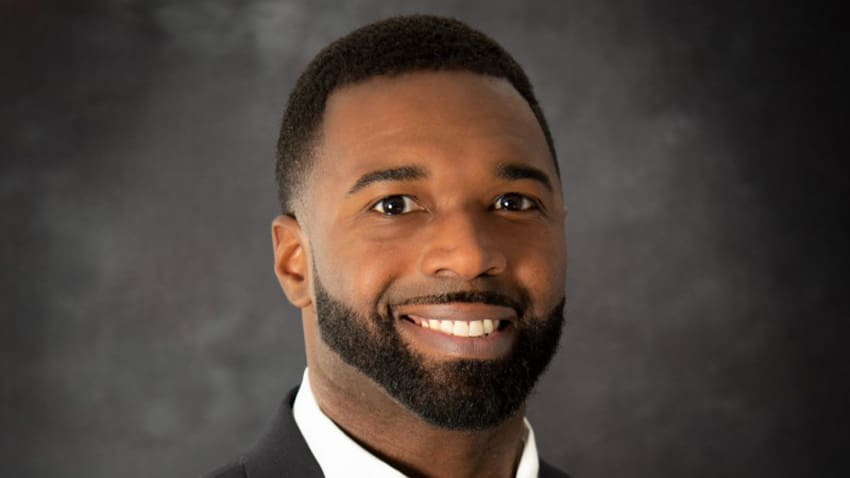
Wade Lyons is a security professional and business leader with nearly two decades of experience in public safety. He is the Chief Executive Officer of Black Onyx Investigations, a firm focused on background investigations, private security, and executive protection services.

He began his career in 2006 with the Austin Police Department. Over the next 17 years, he moved through a range of roles, including patrol, investigations, and strategic intelligence. He later became a Police Commander, where he led both operational units and the department’s training and recruiting division.

In that role, he oversaw programmes that supported more than 2,000 officers and civilian staff. He managed large teams, developed training systems, and helped modernise recruitment efforts. His work included improving hiring standards and expanding community engagement in the training process.

Wade Lyons is known for his structured approach to leadership. He focuses on clear processes, strong accountability, and practical decision-making. His experience reviewing critical incidents and leading large teams shaped how he approaches risk and performance.

In 2024, he moved into the private sector and founded Black Onyx Investigations. The firm supports organisations with hiring decisions, risk assessments, and security planning. His work now centres on helping clients reduce exposure and make informed decisions.

Advertisement

He holds a Master of Science in Criminal Justice and is completing an MBA. His background in law enforcement continues to influence his work in private security.

Q: You began your career in law enforcement. What drew you into that field?

I grew up in Houston and originally planned to go into medicine. During my final semester at Texas A&M, I did a ride-along with a police officer. That experience changed everything. I saw the impact officers could have on people in real time. I applied to the City of Austin shortly after graduating and started my career there.

Q: What were your early years in the Austin Police Department like?

I started in patrol, which is where you learn the job properly. You respond to thousands of calls and see every type of situation. It builds your judgement. I later moved into investigations and worked on cases involving violent crime and narcotics. That period taught me how to manage information, interview people, and build cases step by step.

Q: You later moved into leadership roles. How did that transition happen?

I was promoted through the ranks into supervisory and command roles. As a sergeant and lieutenant, I managed teams and handled operational planning. Eventually, I became a Police Commander. I led area operations and later the Training and Recruiting Division. That role involved managing over 100 personnel and supporting the development of more than 2,000 officers and staff.

Advertisement

Q: What stands out from your time leading training and recruiting?

We had to rethink how we trained officers. One example was moving away from long classroom sessions and introducing scenario-based training. I remember watching an officer go through a simulated call where communication made the difference between escalation and resolution. That moment reinforced how important realistic training is.

Q: Recruiting has been a major challenge for many departments. What did you learn from that experience?

Recruiting is not just about numbers. It is about selecting the right people. I reviewed many background investigations. One candidate had strong test results but showed a pattern of dishonesty in previous jobs. That disqualified him. You cannot train integrity. That lesson stayed with me.

Q: What led you to leave public service and start your own company?

After 17 years, I wanted to apply what I had learned in a different environment. I saw a gap in how organisations handle risk, especially in hiring and internal investigations. In 2024, I started Black Onyx Investigations to focus on those areas.

Q: What does your work look like now?

Most of our work involves background investigations and security consulting. We help organisations verify candidate information and assess potential risks. Each case follows a structured process. We define the scope, collect and verify information, and provide a clear report.

Advertisement

Q: How does your law enforcement background influence your business approach?

In policing, you work within strict procedures. You document everything and base decisions on evidence. I use the same approach in my business. Clients need clear, accurate information. That is what allows them to make informed decisions.

Q: What are the most common issues clients come to you with?

Hiring risk is a major one. Organisations want to know if a candidate’s background aligns with the role. We also see cases involving internal concerns, where companies need a structured review of a situation.

Q: Looking ahead, how do you see your work evolving?

I expect continued growth in private investigations and executive protection. Organisations are paying more attention to risk management. My focus is building systems that maintain quality as we expand.

Advertisement

Continue Reading

Business

Ping An Insurance shares rise on strong Q1 operating profit growth

Published

on


Ping An Insurance shares rise on strong Q1 operating profit growth

Continue Reading

Trending

Copyright © 2025