







Connect with us
DAPA Banner

Business

ETMarkets Smart Talk| Healthcare, infra, financials look attractive after recent market fall: Sachin Bajaj, CIO, Axis Max Life Insurance

Published

on

ETMarkets Smart Talk| Healthcare, infra, financials look attractive after recent market fall: Sachin Bajaj, CIO, Axis Max Life Insurance
Amid heightened volatility driven by geopolitical tensions and a sharp rise in crude oil prices, markets have seen a broad-based correction, opening up pockets of opportunity for long-term investors.

In this edition of ETMarkets Smart Talk, Sachin Bajaj, Chief Investment Officer at Axis Max Life Insurance, highlights that sectors such as healthcare, infrastructure, and financials are now trading at more reasonable valuations after the recent fall.

While near-term uncertainties linked to energy prices and global cues may keep markets on edge, Bajaj remains constructive on India’s structural growth story and advises investors to stay invested and focus on quality opportunities emerging from the correction. Edited Excerpts –

Q) March has been an absolute roller coaster for equity markets not just for India but across the globe. How are you reading into markets?

A) Markets have been very volatile due to the recent geopolitical events. The world is going through geopolitical events for past few years, but markets reacted sharply negatively when geopolitics is coupled with energy shocks.
The recent war has pushed crude higher and disrupted gas availability, which directly impacts input costs for many industries and compresses margins in the near-term.


While this creates sharp volatility, we view it more as a short-term macro event and not a structural breakdown. India’s growth story remains intact with domestic demand, policy reforms, and domestic flows, but in the short-term markets will likely trade nervously until energy prices stabilize.
Q) IT sector seems to be the worst hit thanks to the AI commentary but with geopolitical tensions rising other sectors have also started to see some rub-off effect. Any sector(s) that are now available at attractive levels?
A) IT sector stocks corrected due to lower relative growth and AI related risks with year-to-date underperformance of 13% versus Nifty50.
However, post the recent geopolitical developments, the correction has broadened beyond IT as the spike in crude and gas supply disruptions are beginning to affect several sectors through higher input costs and margin pressure.

India, being a large oil importer, typically sees market volatility when crude moves above $80-90 per barrel. If oil prices sustain at these levels, then it will impact inflation, CAD, fiscal situation, and corporate earnings.

Advertisement

So far, FY26 saw single digit earnings growth and FY27 is expected to have mid to high teens growth in earnings. However, elevated commodity prices, gas shortage could impact corporate margins leading to some earnings cut for FY27 versus earlier expectations.

With the recent fall, many stocks and sectors have started to look reasonable from a valuation perspective. We see opportunities emerge in Healthcare, Pharma, select consumer discretionary, Infrastructure, Financials and select Autos.

Q) What could be the good, bad and ugly for Indian markets in the near term?
A) These scenarios depend on how this war unfolds and its impact on global crude prices, supply disruption of gas and other commodities.

A swift resolution and ceasefire would benefit our markets and economy as it would mean lower commodity prices and lesser macro-economic impact. Conversely, sustained oil prices remain above $100 per barrel and ongoing disruption in global energy supply could put pressure on corporate margins and earnings.

Advertisement

In case this conflict prolongs, we could see sustained outflows from FPIs, pressure on corporate earnings especially for energy intensive sectors and companies and may also impact domestic flows which could intensify market volatility.

Q) FPIs have been net sellers in 2025, and the story continues in 2026 may be for a different reason now. The story seems to be changing around the FDI route as India opens up channels for Chinese investment to land into several industries. What are your views?
A) The FPI and FDI have divergent narratives. FPIs have been net sellers in the past due to various factors – capital rotation towards AI themes, relatively higher valuation for Indian markets, earnings slowdown and most recently on account of higher oil prices and geopolitical developments.

On the FDI, we expect FDI to improve in the coming year due to strong macroeconomic fundamentals, policy reforms and strong domestic demand. The recent India-US trade deal also lifts a key overhang, boosting prospects for FDI inflows.

Q) Rupee seems to be hitting fresh lows every week – where do you see the currency headed and how will it impact Indian markets/economy?
A) As a large oil-importing country, any change in global oil prices impact the currency. The recent rupee weakness is largely on account of the current global backdrop of higher crude prices, FPI outflows and a stronger dollar.

Advertisement

In the near-term, INR could be volatile with weakness bias if crude remains elevated. From markets and economy perspective, a weaker rupee helps export oriented sectors such as IT, Pharma and Gems and Jewelry etc while it has negative impact for many sectors as it raises imported inflation and increases input costs for the broader economy.

Q) Will Crude @ $100/bbl and above hurt Indian markets and macros? We have been making an investment pitch to the world about our macro stability which could be challenged in the near future. What are your views?

A) Global oil prices have moved up from $65-70 per barrel range to around $ 100 per barrel. A crude above $100 per barrel is clearly a macro headwind for India given our heavy import dependence. A sharp rise in oil if sustains could impact inflation, current account deficit, and growth.

That said, India’s macroeconomic framework is now markedly stronger than during past oil shocks, with ample forex reserves (11 months of import cover), ongoing fiscal consolidation, and resilient domestic demand.

While high crude prices may spark short-term market volatility and briefly strain the macro narrative, they are unlikely to impact India’s long-term investment appeal.

Q) Your advice to investors of things which one must avoid doing in the current environment? We have already seen drop in SIP flows by over 3% on a MoM basis.
A) India’s long-term growth story remains firmly intact. Policy reforms, accelerating credit growth, government initiatives such as GST rate cuts, Income tax cuts, interest rate cuts likely to boost consumption in the coming year.

Advertisement

After two years of single digit growth, corporate earnings growth is set to rebound in FY27. Investors should avoid selling in fear amid short-term volatility from oil shocks and stay invested in quality assets to capture the upside over the long-term.

(Disclaimer: Recommendations, suggestions, views, and opinions given by experts are their own. These do not represent the views of the Economic Times)

Continue Reading
Click to comment

You must be logged in to post a comment Login

Leave a Reply

Business

Co-op boss quits after ‘toxic culture’ claims reported by BBC

Published

on

Co-op boss quits after 'toxic culture' claims reported by BBC

Co-op chair Debbie White said: “We thank Shirine for her leadership and for the significant contribution she has made to our Co-op, to our communities and to the co-operative movement during her tenure. The Board is grateful for her commitment and leadership, particularly during a challenging few years, and we wish her every success in the future.”

Continue Reading

Business

Harsh winter rocks Maine lobstermen

Published

on

Harsh winter rocks Maine lobstermen

PORTLAND, Maine – Maine’s lobster industry is facing mounting pressure after a harsh winter reduced fishing activity, slowed catches and added to rising costs across the sector.

The state, the largest lobster producer in the U.S., recorded its fourth consecutive annual decline in total catch, according to the Maine Department of Marine Resources.

Advertisement

A key driver was fewer days on the water. Maine lobster harvesters took more than 21,000 fewer fishing trips in 2025 than in 2024, the agency said. Total landings fell to just over 78 million pounds, the lowest level since 2008.

It started in December, and in December you usually get to fish a lot of days, and we didn’t get to fish,” said lobsterman Greg Turner.

Turner, who has worked on a boat since childhood, said crews were only able to fish about half as many days as normal during peak winter months.

“If it’s zero out, and it’s blowing negative 25, you can’t go because it’s just – if something happened – you’d be done. You’d die out there, probably,” said Turner. 

Advertisement

HOME HEATING OIL FIRMS SQUEEZED AS DIESEL, CRUDE PRICES SURGE AMID MIDDLE EAST TENSIONS

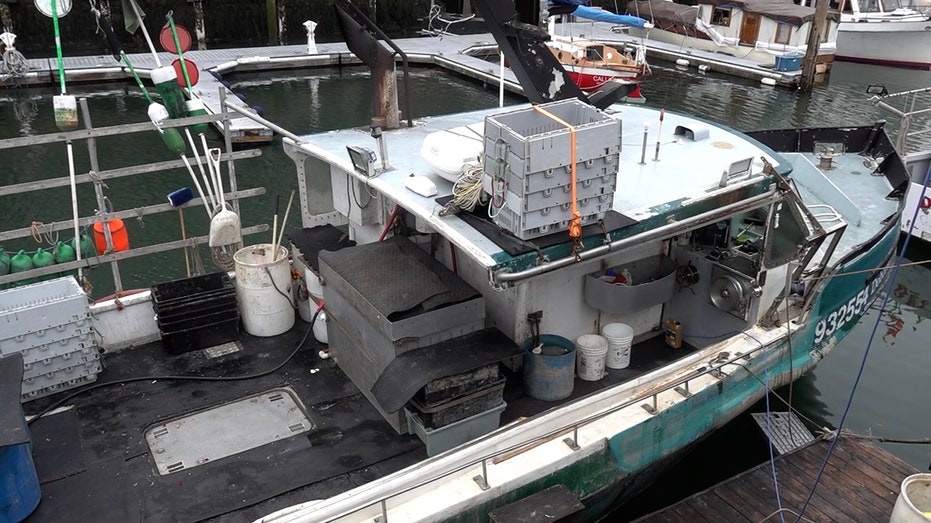
Greg Turner's boat

Turner’s boat, Deborah & Megan II.  (Kailey Schuyler / Fox News)

Colder temperatures also affected lobster behavior, further limiting catches.

“It makes the lobsters slow down and stop crawling quicker, because when it gets cold, they don’t want to eat,” said Turner. 

RARE ‘COTTON CANDY’ LOBSTER CAUGHT IN NEW ENGLAND: ‘1 IN 100 MILLION’

Advertisement

The winter conditions have compounded existing financial pressures on the industry, including inflation, tariffs and shifting market dynamics.

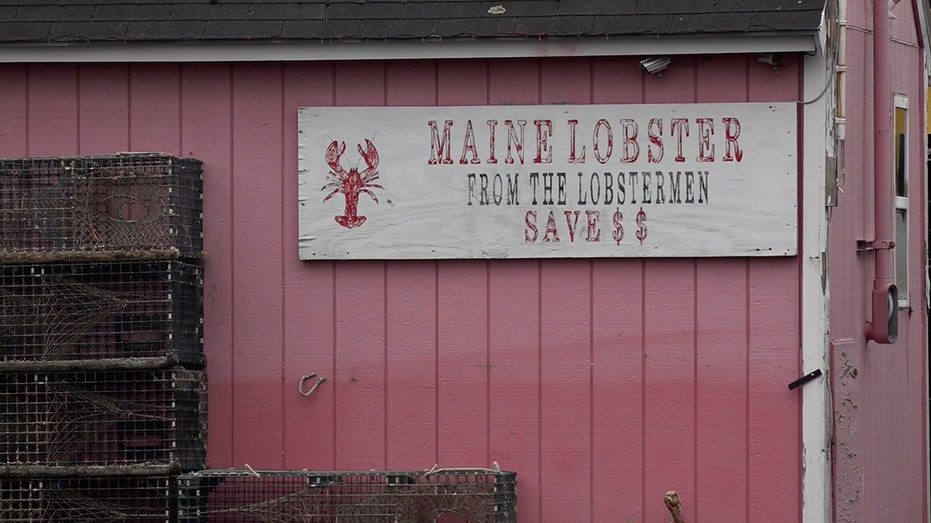
Photo of a sign

One way to get a deal on lobster is to buy straight from fishermen. (Kailey Schuyler / Fox News)

Maine Department of Marine Resources Commissioner Carl Wilson wrote that inflation and market uncertainty in 2025 challenged fishermen’s bottom lines. He added that a late molt limited access to new shell lobsters during summer, prompting some harvesters to reduce trips.

Despite the challenges, Maine’s commercial harvesters generated more than $600 million in 2025, marking the 14th straight year earnings exceeded $500 million. However, fishermen say higher revenues have not translated into stronger profits at the dock.

“Trust me, we’re not getting it, we are not getting it. But I mean, everything’s gone up for us – the price to buy it, to transport it, cook it, prepare it, that must all be gone up too. It’s just the world that we live in now,” said Turner. 

Advertisement

The average boat price remained relatively strong at $5.85 per pound, but industry advocates say higher dock prices are needed to sustain fishermen.

“We want to see a higher price on the dock. That’s what’s going to go directly to your fishermen and, hopefully, keep them fishing because they’re a really, really important part of our community,” said Alexa Dayton, executive director at the Maine Center for Coastal Fisheries.

MAINE LOBSTER FISHERMAN REVEALS WHY THE CRUSTACEANS SHE CATCHES TASTE ‘SWEETER,’ ‘BETTER’

lobsters

In 2025, the boat price remained strong at $5.85. (Fox News / Fox News)

Dayton is currently conducting a cost survey of several hundred lobstermen and said early responses highlight how significantly fishing time dropped this winter.

Advertisement

“They ideally want to be out, you know, 15 days in a month. This year they’re down to about five days,” said Dayton. 

She also pointed to uneven ocean conditions across the state. Waters in Down East Maine, from Stonington to Machias, have been significantly colder than average, particularly at the ocean floor, while parts of the western Gulf of Maine have seen relatively warmer conditions.

“There is such a thing as too cold for them,” Dayton said, referring to lobsters’ temperature range.

US LOBSTER INDUSTRY GRAPPLES CLIMATE CHANGE, WHALE PROTECTION REGULATIONS AS CATCHES DROP

Advertisement

Rising input costs are adding further strain. Dayton said bait prices have surged dramatically since her last survey in 2010.

“I mean it’s like 350% increases. It used to be kind of a thing you didn’t really worry so much about. Now it’s a real driver at the end of the day, what’s left in your pocket,” she said.

The financial pressure is extending beyond the docks into coastal economies. Dayton said many communities rely heavily on fishing income.

“But the stress of making a living and, again, you’re sort of watching days go by without an income that hurts both the fishing industry and also what happens on Main Street,” said Dayton. “I mean, this is, you know, 80% dependent on fishing for many of these coastal communities, at least that’s what our survey shows, and it trickles right down to what happens at the grocery store.”

Advertisement

GET FOX BUSINESS ON THE GO BY CLICKING HERE

She added that most Maine lobstermen operate as small, independent businesses rather than corporate entities, making them particularly vulnerable to cost swings and lost fishing days.

“Fishermen operate their own individual businesses here in Maine. These aren’t corporate owners. I think that makes us unique and special.”

Advertisement
Continue Reading

Business

CBS Media Ventures to Launch ‘Adam’s Law,’ New Syndicated Courtroom Show Hosted by Judge Judy’s Son Adam Levy

Published

on

Judge Judy's Son Adam Levy

CBS Media Ventures announced plans Wednesday to launch a new first-run syndicated courtroom series titled “Adam’s Law,” starring Adam Levy — the son of television icon Judge Judy Sheindlin — as part of its expanded fall 2026 syndication slate that also includes renewed favorites and fresh programming.

Judge Judy's Son Adam Levy
Judge Judy’s Son Adam Levy

Levy, 57, a two-term former district attorney in New York who has presided over cases on Amazon Freevee’s “Tribunal Justice” and “Justice on Trial,” will take the bench as the presiding judge in the new series. The show is produced by Sheindlin’s Queen Bee Productions in association with CBS Media Ventures, with Sheindlin and longtime collaborator Roland Tieh serving as executive producers.

The announcement marks a generational handoff in the lucrative world of syndicated courtroom television, where Sheindlin’s original “Judge Judy” ran for 25 seasons and became one of the highest-rated and most profitable programs in daytime history before ending its run in 2021. Industry observers see “Adam’s Law” as an attempt to recapture some of that lightning in a bottle while introducing a fresh voice rooted in real prosecutorial and judicial experience.

Details about the format remain limited, but CBS Media Ventures described it as a “bold new take on the courtroom” that will focus on rooting out facts and dispensing justice in compelling real or dramatized small-claims-style cases. The series is expected to follow the fast-paced, no-nonsense style that made Judge Judy a cultural phenomenon, though with Levy’s own personality and background shaping the tone.

John Budkins, executive vice president of programming and syndication production for CBS Media Ventures and Stations, said the addition of “Adam’s Law” helps expand the company’s portfolio with distinct programs designed to engage audiences. The new show will join CBS Media Ventures’ fall 2026 lineup alongside the acquisition of “America’s Funniest Home Videos” (hosted by Alfonso Ribeiro) and a new weekend series called “American Mayhem,” which will feature high-energy extreme video content drawn from a massive library.

Advertisement

“Adam’s Law” joins a crowded but proven syndicated courtroom genre that includes long-running shows like “The People’s Court,” “Judge Mathis” and various spin-offs. Success in syndication often hinges on strong station group clearances, compelling on-screen talent and efficient production that delivers consistent ratings across markets. CBS Media Ventures is already in discussions with station groups about clearances for the 2026 season.

Levy brings legitimate legal credentials to the role. He served as a prosecutor in New York’s Rockland County and later as a judge on Amazon’s unscripted courtroom programs, giving him on-camera experience that could help him connect with viewers. Supporters note that his background as a district attorney may bring a slightly different perspective — more prosecutorial edge — compared with his mother’s famously blunt, no-nonsense arbitration style.

Judge Judy Sheindlin, now in her 80s, has remained active in television production and recently starred in the scripted courtroom drama “Justice on Trial” for Prime Video. Her involvement as executive producer on “Adam’s Law” is seen as both a vote of confidence in her son and a strategic move to leverage the powerful “Judge Judy” brand without her returning to the bench full time.

The courtroom genre has evolved since the heyday of “Judge Judy.” Modern shows often incorporate more dramatic storytelling, social media integration and diverse casting to appeal to younger and broader demographics. Whether “Adam’s Law” leans traditional or experiments with format tweaks will likely determine its long-term viability in a fragmented media landscape where streaming and digital platforms compete for attention.

Advertisement

CBS Media Ventures, the syndication and content-licensing arm of Paramount Global, has been rebuilding its first-run offering after some high-profile exits and shifts in the post-pandemic television market. The addition of three new titles for fall 2026 signals renewed ambition in the lucrative syndication business, where successful shows can generate hundreds of millions in revenue over multiple seasons through station license fees and advertising.

Industry reaction has been cautiously optimistic. Syndication veterans note that familial connections and proven producers can help launch a show, but sustained ratings depend on the host’s ability to deliver memorable moments and consistent case drama. Levy’s prior television experience gives him a head start, though stepping out from his mother’s enormous shadow presents its own challenge.

For stations, the 2026 syndication marketplace remains competitive. Established court shows still deliver reliable audience flow into local newscasts, making them valuable inventory. CBS Media Ventures will likely position “Adam’s Law” as a fresh alternative that combines legacy appeal with contemporary production values.

As development continues, more details are expected on the show’s exact format, case selection process and supporting cast. Production is anticipated to ramp up in the coming months to meet the fall 2026 target.

Advertisement

The announcement also renews focus on the enduring popularity of courtroom television, a genre that has thrived for decades by blending real conflict, quick resolutions and larger-than-life personalities. Whether Adam Levy can carve out his own successful chapter remains to be seen, but the combination of family legacy, legal credentials and major studio backing gives “Adam’s Law” a strong foundation heading into its debut season.

Continue Reading

Business

UK forecast to face weaker growth and higher inflation from Iran war

Published

on

UK forecast to face weaker growth and higher inflation from Iran war

The OECD downgrades forecasts for many of the world’s biggest economies due to the US-Israel war with Iran.

Continue Reading

Business

Ancient Cornwall mine estimated to be worth $1.5bn after more tungsten, tin and silver found

Published

on

Business Live

The site saw extensive historic mining from Roman times to the mid-1940s

Cornwall Resources is looking to restart production at an historic tin and tungsten mine in Cornwall

Cornwall Resources is looking to restart production at an historic tin and tungsten mine in Cornwall(Image: Handout)

An ancient mine in Cornwall is estimated to be worth more than a billion dollars after it was found to contain vast amounts more critical metal than previously thought. London-listed Strategic Minerals announced on Thursday the site between Kelly Bray and Callington contained almost 50 per cent more mineral ore compared to earlier estimates.

The Redmoor tungsten-tin-copper-silver Project, which is operated by Strategic Mineral’s wholly owned subsidiary Cornwall Resources, was already seen as Europe’s highest grade, undeveloped tungsten resource. But the company told the stock market on Thursday its latest surveys had shown what it called a “transformational uplift” in the mine’s production capability – with the potential to increase mine life from 12 to 29 years.

Is is understood the mine contains 31 per cent more Tungsten trioxide, 55 per cent more tin, and 30 per cent more copper than first thought. And, for the first time, silver has also been detected at the site.

Strategic Minerals also issued an ‘Updated Economic Sensitivity Analysis’ to the market, with a base case valuation of the Redmoor project at an estimated US $1.54bn after tax.

Advertisement

Charles Manners, Strategic Minerals’ executive chair, said: “I cannot speak highly enough about the exemplary project design and delivery by the CRL team.

“It is hard to find any comparable project that has delivered so much, in such a short time, for the amount spent, and with such positive results. We are also deeply grateful to the many people who worked tirelessly to deliver this transformational piece of work.”

The latest report follows a decade of detailed minerals exploration activity in and around the Cornish mine, which saw extensive historic mining from Roman times to the mid-1940s.

Since 2016 Cornish Resources has undertaken wide-ranging minerals exploration activities centred around Redmoor, including a programme of borehole drilling, soil sampling, geophysics and aerial surveys.

Advertisement

The project has been supported by investment from the Cornwall and Isles of Scilly Good Growth Programme (which is funded by the UK Government’s UK Shared Prosperity Fund and managed locally by Cornwall Council), with the aim of helping to unlock the future of Cornwall’s critical minerals sector, both as a socio-economic driver and as a future source of critical minerals needed for modern technologies and the clean energy transition.

“The company is also enormously grateful to Cornwall Council and the Shared Prosperity Fund for their support with a grant in April 2025,” added Mr Manners. “This unlocked private sector investment and enabled the highly successful work over the last 12 months that has led to this transformational result that positions Redmoor and the UK to become a leading Western World source of tungsten.”

Mark Burnett, Strategic Minerals’ executive director, said the company would now “rapidly progress” to a prefeasibility study to test the new production scenarios and “optimise the model”.

“Redmoor is Europe’s highest grade, undeveloped, tungsten resource compared to other CRIRSCO-compliant projects, and amongst the highest grade globally,” he said. “The company is committed to advancing Redmoor at pace, with today’s results highlighting the contained metal potential of the project.”

Advertisement

Dennis Rowland, Cornwall Resources managing director, added: “From the outset we established clear aims to confirm previous exploration of the structure and grade of the resource and to incorporate new datasets to establish the potential presence of additional zones of mineralisation.

“We have been successful in these aims and the effects of each of these is reflecting in the robust improvements in the MRE. These results alongside the significant improvements in metallurgical recovery for tungsten, and confirmation of recoverability of silver, have directly contributed to improved project economics.”

Continue Reading

Business

Perth home values could surpass Sydney: Hegney

Published

on

Perth home values could surpass Sydney: Hegney

The property expert says conditions are ripe for house prices in the Western Australian capital to continue to surge.

Continue Reading

Business

Opinion: Quiet genius of quick-food dining

Published

on

Opinion: Quiet genius of quick-food dining

ANALYSIS: Perth’s food stalls and trucks are growing in popularity and bigger hospitality players are tucking in.

Continue Reading

Business

Is Twitter Down Now? X (Formerly Twitter) Experiences Intermittent Outages

Published

on

X, Formerly Twitter, Offers Valuable Insights Into Self-Reported Chronic Pain Using Machine Learning: Study

X, the social media platform formerly known as Twitter, is not experiencing a widespread outage as of Thursday, March 26, 2026, though users in some regions have reported intermittent issues with loading feeds, logging in and refreshing timelines over the past week, according to real-time monitoring sites and company statements.

X, Formerly Twitter, Offers Valuable Insights Into Self-Reported Chronic Pain Using Machine Learning: Study

Downdetector.com, a popular outage tracking service, showed relatively low levels of reported problems in the last 24 hours, with spikes limited to specific times rather than a sustained global disruption. Earlier in March, notably on March 18 and March 23, X faced brief but noticeable outages that affected thousands of users worldwide, with reports peaking at tens of thousands before service quickly recovered.

The platform, owned by Elon Musk since 2022, has faced periodic technical hiccups since its rebranding. Recent incidents have included difficulties accessing the website and mobile app, failed post loading and occasional login errors. On March 18, Downdetector recorded more than 34,500 user reports at peak, primarily involving the website and app, before service largely returned within an hour. A similar pattern occurred on March 23, with reports again dropping rapidly after a short period of disruption.

X has not issued an official statement on the latest minor reports as of Thursday afternoon. The company’s developer status page and internal communications have typically attributed past outages to routine maintenance, high traffic volumes or isolated technical glitches rather than major infrastructure failures. Musk has previously blamed some disruptions on “massive cyberattacks,” though no evidence has been publicly confirmed for the March incidents.

For users encountering problems Thursday, common fixes include refreshing the app or browser, checking internet connections, clearing cache or trying the platform via a VPN if regional restrictions or routing issues are suspected. Most reports appear scattered rather than concentrated in one country or device type.

Advertisement

X continues to serve hundreds of millions of users daily for real-time news, entertainment and public discourse. The platform has undergone significant changes since the 2022 acquisition, including adjustments to verification, content moderation policies and algorithm transparency. These shifts have sometimes coincided with periods of heightened technical scrutiny.

Analysts note that social media platforms of X’s scale inevitably experience occasional downtime. Major competitors like Meta’s Instagram and Facebook, as well as TikTok, have faced similar brief outages in recent years. X’s engineering team has focused on scaling infrastructure to handle growing traffic from live events, breaking news and viral trends.

Users frustrated by intermittent issues can monitor status via Downdetector, the official X @Support account or third-party sites like IsItDownRightNow. In regions with reported problems, switching between Wi-Fi and mobile data or updating the app to the latest version often resolves temporary glitches.

The platform’s resilience has improved in some areas thanks to investments in cloud infrastructure and redundancy, though critics argue that rapid feature rollouts and staff reductions following the acquisition have occasionally contributed to instability. Musk has emphasized a commitment to making X the “everything app,” with expansions into payments, video and long-form content that add complexity to backend systems.

Advertisement

For businesses and creators reliant on X for real-time engagement, brief outages can disrupt campaigns and audience interaction. Most incidents in March resolved quickly enough to limit long-term impact, but frequent disruptions can erode user confidence over time.

As of Thursday evening, the majority of users reported normal access to feeds, posting and notifications. Those still experiencing problems are encouraged to report them directly through the app or website help sections to help engineers identify any localized issues.

X remains one of the primary platforms for breaking news and public conversation, particularly during major global events. Its real-time nature makes even short outages noticeable, often sparking immediate discussion on rival platforms when access is limited.

Looking ahead, the company is expected to continue refining its infrastructure to support ambitious growth plans. Users can stay informed by following official channels and outage trackers.

Advertisement

While minor connectivity hiccups persist for some on March 26, X is largely operational and not considered “down” in a broad sense. The platform’s history of quick recoveries suggests any current issues will likely be short-lived.

Continue Reading

Business

MercadoLibre: Buy Latin America’s Leading E-Commerce And Fintech Compounder (MELI)

Published

on

MercadoLibre: Buy Latin America's Leading E-Commerce And Fintech Compounder (MELI)

This article was written by

I am a high-conviction investor and independent analyst focused on accumulating quality compounders at a discount. My investment philosophy is rooted in the belief that sustainable wealth is built through steady, long-term compounding rather than speculative gambling. I specifically seek out companies with decades of growth runway, shareholder-friendly capital allocation (buybacks/dividends), and low dilution, all underpinned by strong secular tailwinds. My primary sector focus includes Technology, Autonomous Vehicles (AVs), Logistics, Fintech, and more. I do not view stock tickers as mere, but as partial ownership in the world’s best assets. Consequently, my methodology involves deep fundamental analysis to identify asymmetric risk opportunities, situations where the market fundamentally misunderstands a company’s moat or future prospects. A prime example of this was Google in early 2025, which traded at a teens multiple despite supercharging its core business with AI. I approach the markets with a rigorous, quantitative mindset, leveraging data-driven models to stress-test valuations against various bear and bull scenarios. My top high-conviction holdings currently include Uber, Google, and Brookfield. My goal is to compound my portfolio at an annualized rate of 15% or higher by capitalizing on market dislocations. I write on Seeking Alpha to document my due diligence with rigor and transparency. Writing publicly forces me to remain honest in my analysis and allows me to stress-test my investment theses against the feedback of a knowledgeable community. I hope my research adds tangible value to your own due diligence process.

Analyst’s Disclosure: I/we have a beneficial long position in the shares of MELI either through stock ownership, options, or other derivatives. I wrote this article myself, and it expresses my own opinions. I am not receiving compensation for it (other than from Seeking Alpha). I have no business relationship with any company whose stock is mentioned in this article.

Seeking Alpha’s Disclosure: Past performance is no guarantee of future results. No recommendation or advice is being given as to whether any investment is suitable for a particular investor. Any views or opinions expressed above may not reflect those of Seeking Alpha as a whole. Seeking Alpha is not a licensed securities dealer, broker or US investment adviser or investment bank. Our analysts are third party authors that include both professional investors and individual investors who may not be licensed or certified by any institute or regulatory body.

Advertisement
Continue Reading

Business

Greening is a necessary path

Published

on

Greening is a necessary path

Land developers are changing their approach to tree retention within estates.

Continue Reading

Trending

Copyright © 2025