
Business
ETMarkets Smart Talk | STT hike weighs on sentiment, but growth-focused Budget supports markets: Naveen Kulkarni


In this ETMarkets Smart Talk, Kulkarni explains why the intrinsic value of equities remains intact, how FII behaviour around the STT hike could shape the near-term setup, and why a growth-focused Budget with higher capex and manageable fiscal numbers continues to support the medium- to long-term market outlook. Edited Excerpts –
Kshitij Anand: Let me also get your perspective on why markets fell sharply after the Budget despite strong capex numbers. We have seen a spike in capex to nearly one lakh crore, from ₹11.11 lakh crore earlier to now over ₹12 lakh crore. Is this reaction driven more by sentiment, or is there something else at play? What would be your take on this?
Naveen Kulkarni: Yes, clearly the reaction has been driven by sentiment. At one point, the market was down by probably around 2.5%, and then we have seen some pullback as well. If you look at the markets over the last few sessions, trading volumes have been a little thinner and not particularly exciting. When the sell-off happened, it did not occur on very large volumes; it happened on relatively thinner volumes. And when some degree of institutional buying comes in, seeing opportunity, we are also witnessing a pullback.What will be important is tomorrow, because I do not think there has been significant FII participation yet. How they read the market, especially the STT hike—which impacts them as well, given that many large trading hedge funds operate in India—and how they assess its impact on trading volumes will be key. We could see some more impact coming tomorrow. So, tomorrow and probably next week is when the market should set up. Clearly, we have been in an oversold market and have seen some additional selling, but I think we should be okay from here.

Kshitij Anand: Much of the money is also moving from bank FDs to the equity market, which is something the government has on its mind as it looks to manage liquidity in the banking system. Naveen, picking up from where you left off—given that today is a holiday—do you see the post-Budget sell-off as an overreaction to the STT hike, or as a genuine shift in market structure? The reason I ask is that we have seen substantial selling by FIIs as well. In 2025, more than ₹1.6 lakh crore was withdrawn, and so far in January, the figure is close to ₹40,000–50,000 crore. How do you see this playing out in the coming week?
Naveen Kulkarni: If you look at it, whether it is the securities transaction tax on futures or options, the intrinsic value of the underlying does not change. When you are buying in the cash market, you are holding it for the long term and for delivery, so the intrinsic value does not change because of these parameters. This reaction, whether you look at it from the perspective of FII participation or hedge fund activity, is likely to be short-lived because the intrinsic value of the underlying depends on growth in profitability and overall metrics, and that does not seem to be changing.
On the flip side, if I look at the Budget, there is definitely a focus on growth. Capex numbers are higher, and more importantly, the composition of capex also looks more interesting and growth-focused. Apart from that, a fiscal deficit of 4.3% is not prohibitive for growth. There have not been any significant cuts, and borrowing levels continue to look reasonable. If I look at the Budget numbers overall, they are not very aggressive. It is unlikely that the government will miss its budget expectations or estimates.Broadly speaking, the Budget is not a major negative factor. Yes, the STT hike is having an impact today and may continue to do so for a few more days, but overall, I do not see the underlying value changing. Underlying asset values are likely to rise over the next 12 months, and this phase could provide a good opportunity as the market clears excesses.
(Disclaimer: Recommendations, suggestions, views, and opinions given by experts are their own. These do not represent the views of the Economic Times)

Business
Erika Kirk Escalates Legal Battle Against Online Critics While Pushing Christian Revival Tour in 2026
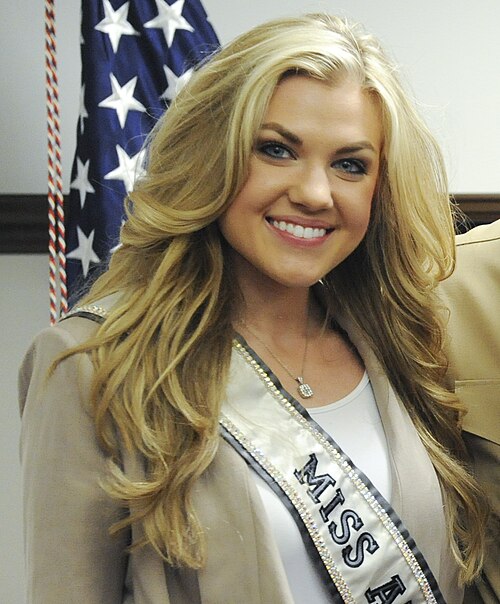
Erika Kirk, the widow of assassinated conservative activist Charlie Kirk and current chairwoman and CEO of Turning Point USA, is navigating a turbulent period marked by intensified legal threats against online detractors, public scrutiny over her leadership style, and continued efforts to advance her late husband’s mission through a national speaking tour and political engagement.

Kirk has sent a fresh cease-and-desist letter to the operator of Project Constitution, accusing him of defamation for alleging her involvement in Charlie Kirk’s September 2025 assassination and unsubstantiated claims linking her to sex trafficking tied to Jeffrey Epstein. The letter asserts that such statements are “absolutely false and made with actual malice,” escalating a broader battle against far-right influencers and conspiracy theorists who have questioned her grief, personal life and role at the influential conservative organization.
Charlie Kirk, the co-founder of Turning Point USA, was shot and killed on the campus of Utah Valley University in September 2025 during a speaking event. Erika Kirk, who had been married to him since 2018, quickly assumed leadership of the organization and has since positioned herself as the steward of his legacy, frequently describing her work as a way for “daddy to continue to live on forever” through the group’s mission.
In recent weeks, Kirk has responded to a wave of viral memes and satirical content mocking her public appearances and persona. Comedian Druski’s sketch impersonating “how conservative women in America act,” which included a portrayal widely seen as referencing Kirk, drew tens of millions of views and sparked backlash from some conservative circles who called it disrespectful to a grieving widow. Kirk addressed the memes in a recent statement, pushing back against what she described as unfair attacks while maintaining focus on her faith-driven work.
Despite the online controversies, Kirk has remained active on the national stage. In February 2026, she attended the State of the Union address as one of President Donald Trump’s invited guests, where Trump acknowledged her presence and called for rejection of political violence in memory of her husband. She has also been appointed by Trump to the U.S. Air Force Academy Board of Visitors, replacing her late husband on the advisory panel.
Kirk launched the “Make Heaven More Crowded” tour in January 2026, kicking it off at Harvest Christian Fellowship in Riverside, California, alongside pastor Greg Laurie. The tour, which blends calls for Christian revival, prayer and conservative values, has included stops across the country, though some events — such as a planned appearance in Orlando — were postponed amid venue controversies. She has vowed to help build a “red wall” for Republican candidates in the 2026 and 2028 elections.
Public appearances have not been without friction. A scheduled visit to the Utah State Capitol in February, where she was to receive a citation, was canceled after news of the event leaked. Kirk has also faced internal and external questions about Turning Point USA’s direction under her leadership, with some critics accusing her of shifting the organization’s tone or priorities.
Legal proceedings related to her husband’s death continue. Kirk has invoked a rare Utah victims’ rights law to push for a speedy trial of the accused gunman, Tyler Robinson, arguing against defense delays. She publicly forgave the accused killer during a large memorial service attended by Trump and Vice President JD Vance in September 2025.
Online discourse around Kirk has grown increasingly polarized. Some conservative voices, including Candace Owens, have launched investigative-style series questioning aspects of Kirk’s background, past statements and personal life, including claims about her upbringing and other personal details. Kirk’s supporters dismiss these as baseless attacks aimed at undermining a prominent conservative woman, while detractors continue to circulate unverified theories. Kirk has largely avoided engaging directly with the most extreme claims, instead redirecting attention to Turning Point USA’s youth outreach and faith-based initiatives.
At 37 years old, Erika Kirk (née Frantzve) has emerged as a more visible public figure than before her husband’s death. Born in 1988, she previously worked in business and nonprofit roles. She and Charlie Kirk had been vocal about their Christian faith and traditional values, and she has continued that emphasis in her speeches, often framing her leadership as a divine calling.
Turning Point USA, founded in 2012, focuses on conservative activism on college campuses and among young people. Under Erika Kirk’s leadership, the organization has maintained its events and programming while navigating the emotional and operational challenges following the assassination.
Kirk has spoken openly about the grief process, describing moments of finding “divine work” in tragedy while also facing criticism from some quarters that her public activities — including high-profile events and merchandise efforts — do not align with traditional expectations of mourning. She has rejected such judgments, stating that continuing her husband’s work honors his memory.
As 2026 progresses, Kirk faces a complex landscape: leading a major conservative nonprofit, defending against defamation claims, countering online satire and speculation, and positioning herself within the broader Trump-aligned political movement. She has endorsed JD Vance for future leadership roles and maintains a close relationship with the Trump circle.
Supporters view her as a resilient figure carrying forward an important legacy amid personal loss. Critics, including some within conservative media, question her authenticity or motives. The intense scrutiny reflects the highly charged nature of contemporary political discourse, where personal tragedy quickly intersects with ideological battles.
Kirk continues to emphasize themes of faith, revival and rejection of political violence in her public remarks. Whether her legal actions against critics will deter further attacks or fuel more speculation remains to be seen. For now, she appears focused on Turning Point USA’s mission and her tour, while navigating the spotlight that has intensified since September 2025.
The coming months could bring further developments in the legal case surrounding her husband’s death, additional tour stops, and ongoing debates about her role in conservative politics. As one of the most visible women in the movement, Erika Kirk’s every move draws attention from allies and adversaries alike.
Business
Powerball Jackpot Climbs to $166 Million for Saturday, March 28, 2026 Drawing: Cash Value $74.5 Million

The Powerball jackpot has rolled over to an estimated $166 million for Saturday night’s drawing after no ticket matched all six numbers in Wednesday’s drawing, lottery officials said.

The estimated cash value for the Saturday, March 28, 2026, drawing stands at approximately $74.5 million, offering players a choice between the annuitized jackpot paid over 30 years or the immediate lump-sum option. Drawings are held at 10:59 p.m. ET every Monday, Wednesday and Saturday.
Wednesday’s winning numbers were 7, 21, 55, 56 and 64, with a Powerball of 26 and a Power Play multiplier of 4x. While there was no jackpot winner, lower-tier prizes were claimed across the country, including two tickets that won $2 million and $1 million in some states through matching five numbers or with Power Play.
The jackpot had stood at an estimated $148 million with a cash value of about $66.9 million heading into Wednesday’s draw. With another rollover, the prize has grown for the Saturday drawing, continuing a pattern of steady increases that often captivates players when the top prize climbs into nine figures.
Powerball is played in 45 states, the District of Columbia, Puerto Rico and the U.S. Virgin Islands. Tickets cost $2, with an optional $1 Power Play add-on that can multiply non-jackpot prizes. Sales typically surge as the jackpot rises, with players dreaming of life-changing windfalls.
The odds of winning the Powerball jackpot remain 1 in 292,201,338, making it one of the longest shots in American lotteries. Despite the slim chances, the allure of a massive payout draws millions of ticket buyers, especially when the prize exceeds $100 million.
Lottery officials remind players that every ticket has the same chance of winning regardless of where or when it is purchased. They also urge responsible play, recommending that people set a budget and treat lottery tickets as entertainment rather than an investment strategy.
For Saturday’s drawing, players have until approximately 9:59 p.m. local time in most jurisdictions to purchase tickets, though cutoffs vary slightly by state. Online sales are available in many participating states through official lottery apps or websites.
The most recent Powerball jackpot was won earlier in March when a ticket sold in Arkansas claimed a $250.8 million prize on March 2. That winner had the option to take the cash value or the annuity.
Powerball jackpots begin at $20 million and increase with each drawing that has no grand-prize winner. The prize grows based on ticket sales and interest rates, which affect the cash value calculation.
In addition to the jackpot, Powerball offers nine other prize tiers, ranging from $4 for matching just the Powerball to millions for matching five white balls. The Power Play option can increase those prizes up to 10 times in some cases, though the multiplier for the jackpot itself does not apply.
As of late Saturday morning, the countdown to the drawing showed roughly 13 hours remaining until the 10:59 p.m. ET drawing time. Players across the country were checking their tickets from previous drawings and buying new ones in hopes of becoming the next multimillionaire.
Financial advisers caution that sudden wealth from lottery winnings comes with challenges, including taxes — federal withholding of 24% plus potential state taxes — and the need for professional guidance on managing large sums. Many past winners have opted for the cash value to gain immediate control over the funds.
Stories of past Powerball winners often highlight both the opportunities and pitfalls of sudden riches. Some have used winnings to fund education, start businesses or support charities, while others have faced personal struggles after the initial excitement.
The Multi-State Lottery Association, which administers Powerball, emphasizes transparency in jackpot estimations and prize payouts. Official results are posted shortly after each drawing on powerball.com and through state lottery websites.
For those playing Saturday, common number-picking strategies include quick picks, birthdays, anniversaries or “hot” and “cold” numbers based on past frequency. However, every combination has an equal probability.
As the clock ticks down to the March 28 drawing, excitement is building in convenience stores, gas stations and online platforms where tickets are sold. In states like California, Florida, New York and Texas, which often see high sales volumes, retailers report increased foot traffic when jackpots reach this level.
The $166 million annuity equates to 30 graduated annual payments, starting lower and increasing over time. The cash value represents the amount available if the winner chooses the lump sum, which is invested to fund the annuity option for future jackpots.
Powerball has created hundreds of millionaires since its inception, with some prizes reaching well over $1 billion in recent years. The game’s sister lottery, Mega Millions, also frequently produces massive jackpots, giving players multiple opportunities for big wins.
With no winner on Wednesday, attention now turns fully to Saturday night. If the jackpot goes unclaimed again, it will roll over once more for the Monday drawing, potentially climbing higher.
Players are encouraged to sign the back of their tickets immediately after purchase and keep them in a safe place. They should also double-check numbers against official results, as unclaimed prizes eventually return to state lotteries for education and other programs in many jurisdictions.
As the drawing approaches, the message from lottery officials remains consistent: play responsibly, have fun and remember the long odds. For one lucky ticket holder on Saturday, however, those odds could deliver a life-altering $166 million prize — or the $74.5 million cash alternative.
The drawing will be broadcast live and results will be available shortly afterward on official channels. Whether the jackpot is claimed or rolls over again, Powerball continues to capture the imagination of players hoping for that one-in-a-lifetime break.

Q4: 2026-03-27 Earnings Summary
EPS of -$5.34 misses by $3.76
| Revenue of $3.07B (-6.50% Y/Y) misses by $23.39M

Seeking Alpha’s transcripts team is responsible for the development of all of our transcript-related projects. We currently publish thousands of quarterly earnings calls per quarter on our site and are continuing to grow and expand our coverage. The purpose of this profile is to allow us to share with our readers new transcript-related developments. Thanks, SA Transcripts Team


At CPAC, a generational divide over Republican support for Israel
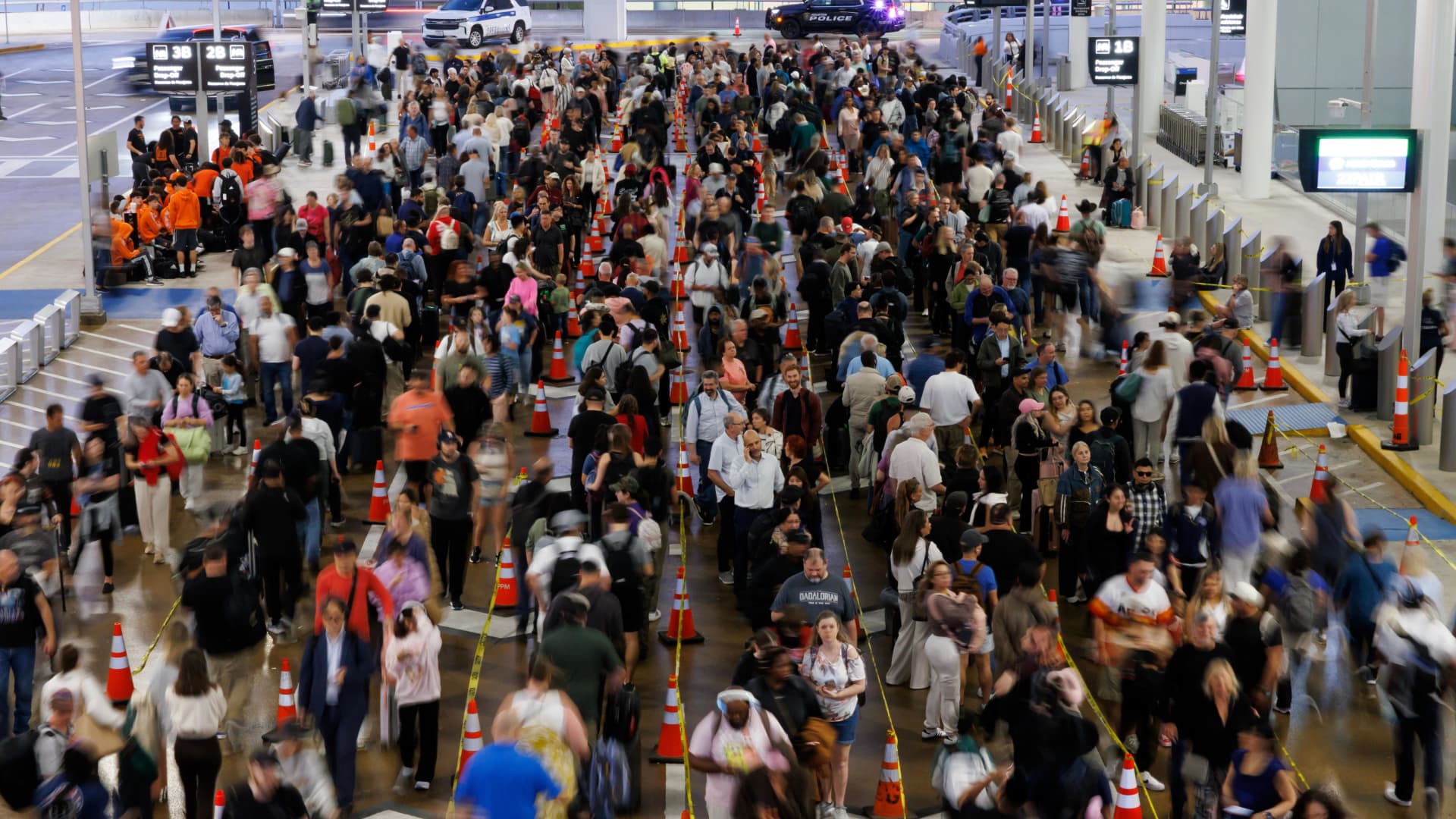
Travelers wait in line at a Transportation Security Administration (TSA) checkpoint at George Bush Intercontinental Airport (IAH) in Houston, Texas, US, on Thursday, March 26, 2026.
Mark Felix | Bloomberg | Getty Images
TOKYO/NEW YORK — Genevieve Price considers herself a great flight hacker.
The 35-year-old naturopathic doctor based in San Diego usually buys basic economy tickets when she visits her family in New Jersey and then uses her Alaska Airlines frequent flier status to pick a seat, something that’s usually not allowed for those no-frills fares.
“I like to travel a lot,” Price told CNBC at New York’s John F. Kennedy International Airport, where she was returning from Rome.
But Price said she has her limits, and is planning to cap the spending she does on future flights, such as no more than $900 to Rome, where her partner is from.
Consumers’ willingness to fly is being put to the test this spring as soaring fuel prices are leading to higher airfares. Cathay Pacific, SAS, Finnair and others are among the carriers that have already raised fares.
Travelers also have to contend with hourslong airport security lines in the U.S. because of the second government shutdown in half a year that’s hitting the Transportation Security Administration, leaving many frustrated.
Fuel and fares
Fuel at major U.S. airports was going for $3.98 on Wednesday, up nearly 60% since before the U.S. and Israel attacked Iran on Feb. 28.
The conflict has meant crisis for the aviation industry, particularly in the Middle East, where airspace closures have forced carriers to cancel flights and take longer and costlier routes.
Airlines will brief investors starting early next month on the longer-term impacts, but they immediately started raising airfare or increasing fuel surcharges on tickets to help cover the rising costs.
United Airlines CEO Scott Kirby told reporters at a company event in Los Angeles this week that airfare could go up 20% this year. Customers appear willing to keep booking even though carriers are passing those high fuel costs along to travelers, he added.
Other airlines have also said demand has held up.
Delta Air Lines CEO Ed Bastian told a JPMorgan industry conference earlier this month that demand has remained strong in recent weeks and that the airline is “well-positioned” to recapture the spike in fuel from its own sales.
U.S. airlines have seen solid demand for years. International travel has been a strong point, particularly for high-end leisure travel, which has brought so many visitors that governments from Japan to Spain have taken steps to reduce overtourism, while locals have protested.
But airline executives said they will prune flights if demand falls.
“We’re certainly going to be nimble in terms of capacity to make sure that supply and demand stay in balance,” American Airlines CEO Robert Isom said at the JPMorgan conference.
United, for its part, is preparing for fuel prices to remain elevated through next year and is cutting about 3 percentage points off of its capacity in off-peak travel times, like midweek and redeye flights, Kirby told employees this month.
Fares up
Some of the higher fares are already here.
Fares for flights across the Atlantic from the U.S. were going for $1,059, with three weeks advanced purchase, up 26.5% from the prior week, according to a Deutche Bank note on Monday.
Domestic routes, including transcontinental flights and flights to and from Hawaii, were also up, the report said.
Mary Jean Erschen-Cooke, a nurse from Cuba City, Wisconsin, who was setting out earlier this month from Tokyo on a 10-day trip through Japan with her husband, Paul, said she has a host of domestic U.S. family trips this year.
“We haven’t booked our flights, but we should,” she said, adding that she and her husband would consider driving for one of them. She noted that gasoline prices are also up, which will affect driving.
Security snarls
The TSA PreCheck line at terminal B in LaGuardia Airport in East Elmhurst, Queens, New York City, on March 27, 2026.
Leslie Josephs | CNBC
Along with higher airfare, travelers are facing challenges at airports this spring.
TSA officers have been working without regular pay since Feb. 14 because of an impasse in Congress over funding for the Department of Homeland Security. Nearly 500 TSA officers have quit, according to DHS and elevated call-outs have left airports short-staffed.
That’s led to long security lines at major airports around the U.S., including in Houston, New York, and Atlanta. Wait times have exceeded three hours in some locations — longer than some of the flights those airports offered — as lines have snaked through terminals and outside of airports.
Elizabeth Leddy, a 38-year-old classical pianist based in New York, said she flies several times a year. The long security lines, which were running nearly 90 minutes at LaGuardia Airport for TSA PreCheck flyers on Friday, could be a deterrent for her doing that in the future.
Leddy said that if the security line was three to four hours long, “I feel like I could just drive.”
DHS has blamed Democrats for the closure, which has become the longest partial shutdown in U.S. history. As of Friday afternoon, the Senate had passed a potential deal to end the shutdown, thought its fate was unclear.
President Donald Trump separately said he would sign an order to get the more than 50,000 TSA officers paid. TSA officers will start getting paychecks as early as Monday, DHS said Friday.
The Trump administration this week sent Immigration and Customs Enforcement officers to several U.S. airports, though DHS hasn’t specified what their duties are. ICE officers, who also sit under the DHS umbrella, are still getting paid during the partial shutdown.

ICE officers were seen at New York’s LaGuardia Airport on Friday morning watching security lines.
“Even if this manages to slightly reduce wait times (we’re still reading about terrible wait times, so we’re far from big improvement), ICE presence could cause some individuals to fear traveling and upset TSA workers not getting paid,” Bernstein said in a note on Thursday. “Seems possible passenger throughput softens over the coming days and TSA screening YoY growth for this week turns slightly negative.”

However, despite the overall slump, six stocks bucked the trend, delivering gains in the range of 20–105% over the same period. We also highlighted three newly added stocks in the December 2025 quarter, including Inox, WeWork Management, and Midwest. (Data Source: ACE Equity, Trendlyne)

HONOLULU — Travelers inquiring about TSA wait times at Daniel K. Inouye International Airport (HNL) on Saturday, March 28, 2026, should anticipate standard security screening times averaging 20 to 35 minutes for most of the day, with peaks reaching up to 40 minutes during traditional morning and afternoon rushes, according to multiple real-time trackers.

As Hawaii’s primary international gateway and a key tourism hub, HNL continues to manage elevated passenger volumes during the ongoing spring break season, compounded by recent weather-related disruptions that have strained operations in recent weeks. While not experiencing the multi-hour delays reported at some mainland airports amid broader TSA challenges, officials recommend arriving at least 90 minutes before domestic flights and 150 to 180 minutes for international departures to account for check-in, bag drop and potential lines.
Live data from trackers such as Takeoff Timer, FlightQueue and OnAirParking showed standard security waits fluctuating between 21 and 35 minutes as of Saturday morning into early afternoon, with TSA PreCheck lanes clearing significantly faster, often in 5 to 11 minutes. Some reports indicated shorter lulls dropping to under 10 minutes midday, while early morning hours between 6 a.m. and 8 a.m. saw the day’s highest estimates around 37 to 41 minutes. Afternoon surges around 2 p.m. to 4 p.m. also trended higher in historical patterns.
The airport’s main checkpoints in Terminal 1, including CP 1B (Makai) and CP 3, operate from approximately 4:15 a.m. to 11:30 p.m., with dedicated TSA PreCheck available during core hours. Additional checkpoints open as needed to handle demand. Some lanes at certain checkpoints have been reported closed or limited, contributing to variable flows on busy days.
Hawaii’s Department of Transportation (HDOT) has highlighted two major daily checkpoint surges at HNL: around 6 a.m. and between 9 a.m. and noon, with a smaller bump in the early evening around 7 p.m. On peak spring travel days, waits have occasionally stretched toward 90 minutes or more during these windows, though Saturday’s conditions appeared more moderate based on current reports. Inter-island and mainland departures remain the heaviest traffic drivers.
Recent severe weather systems, including heavy rain and strong winds, have added pressure through flight delays and cancellations earlier in March, indirectly affecting security line predictability as passengers reschedule or adjust plans. Spring break demand has pushed U.S. airlines toward record volumes nationwide, with Hawaii remaining a popular destination for families and leisure travelers seeking sunshine and beaches.
TSA PreCheck and CLEAR members benefit substantially at HNL, with expedited lanes providing a noticeable advantage during busier periods. Enrollment in these programs is particularly recommended for frequent visitors to the islands. Mobile Passport Control is encouraged for eligible international arrivals to help expedite customs and border processing, which has averaged around 40 to 42 minutes in recent reports.
The MyTSA app remains one of the best tools for crowd-sourced, real-time updates from fellow travelers, though users should cross-reference with third-party sites like Takeoff Timer or the airport’s official resources. HDOT and airport operators urge checking conditions 30 to 60 minutes before heading to the terminal, as flows can shift with flight banks or unexpected events.
Amenities at Daniel K. Inouye International Airport help ease the experience for those with extra time. The open-air design features Hawaiian cultural elements, local dining options ranging from poke bowls and plate lunches to coffee shops, and shopping highlighting island artisans. Free Wi-Fi, charging stations and family areas are available post-security. The airport’s compact layout makes gate access relatively straightforward once through screening.
Broader TSA operations have faced nationwide scrutiny in March 2026 due to staffing pressures linked to a partial government shutdown affecting federal agencies. While HNL has not reported the extreme multi-hour lines seen at some continental U.S. hubs, the situation underscores the importance of preparation. TSA officers at busy airports have dealt with higher call-out rates, leading to adjusted lane openings.
For departing passengers today, early morning and midday flights warrant the most conservative arrival planning. Those with flights before 10 a.m. or during afternoon peaks should factor in potential 30-plus minute security times plus standard check-in and bag drop. International travelers, especially on long-haul routes, benefit from even earlier arrival to navigate any immigration or customs nuances on return legs.
Airport officials emphasize that supply remains stable and operations are prioritized for safety and efficiency. No widespread staffing shortages unique to HNL were highlighted in recent advisories, though general spring travel volume has increased strain across Hawaii’s airports, including Kahului on Maui.
Practical tips for smoother passage through HNL security include preparing for the 3-1-1 liquids rule, wearing easily removable shoes, and having ID and boarding passes readily accessible on a mobile device or in hand. Prohibited items can trigger secondary screening and extend wait times. Families with children or travelers needing assistance can request accommodations through TSA Cares in advance.
As spring break continues into early April, passenger numbers are expected to remain robust before tapering. The airport’s role as a major transpacific hub means it handles diverse traffic, from leisure tourists to business travelers and military personnel, all contributing to daily rhythms.
Looking ahead, infrastructure improvements and potential staffing adjustments could help stabilize flows in coming months. For now, the message from HDOT and TSA is consistent: build in buffer time, monitor real-time tools and practice patience amid the aloha spirit that defines Hawaii travel.
In summary, TSA wait times at Daniel K. Inouye International Airport on Saturday, March 28, 2026, are running in the moderate 20- to 35-minute range for standard screening, with PreCheck offering quicker options. While conditions are manageable compared to recent national peaks, spring travel volume and occasional weather echoes make early arrival the smartest strategy.
Travelers can stay updated via the MyTSA app, official airport website (airports.hawaii.gov/hnl), or trackers like FlightQueue and Takeoff Timer. Safe travels to all departing from or arriving at Honolulu today — and enjoy the islands’ beauty once through the checkpoint.


My approach mixes long-term conviction holdings with tactical sector rotations, driven by the belief that investing isn’t about being right, it’s about making money. I focus on undercovered opportunities and momentum-driven sectors. All views are my own and not financial advice.
Analyst’s Disclosure: I/we have no stock, option or similar derivative position in any of the companies mentioned, and no plans to initiate any such positions within the next 72 hours. I wrote this article myself, and it expresses my own opinions. I am not receiving compensation for it (other than from Seeking Alpha). I have no business relationship with any company whose stock is mentioned in this article.
Seeking Alpha’s Disclosure: Past performance is no guarantee of future results. No recommendation or advice is being given as to whether any investment is suitable for a particular investor. Any views or opinions expressed above may not reflect those of Seeking Alpha as a whole. Seeking Alpha is not a licensed securities dealer, broker or US investment adviser or investment bank. Our analysts are third party authors that include both professional investors and individual investors who may not be licensed or certified by any institute or regulatory body.


I hold a Master’s degree in Cell Biology and began my career working for several years as a lab technician in a drug discovery clinic, where I gained extensive hands-on experience in cell culture, assay development, and therapeutic research. That scientific foundation gave me an appreciation for the rigor and challenges behind drug development, which I now bring into my work as an investor and analyst. For the past five years, I have been active in the investing space, with the last four years dedicated to working as a biotech equity analyst alongside my lab work. My focus is on identifying promising biotechnology companies that are innovating in unique and differentiated ways, whether through novel mechanisms of action, first-in-class therapies, or platform technologies with the potential to reshape treatment paradigms. By combining my lab-based scientific expertise with financial and market analysis, I aim to deliver research that is both technically sound and investment-driven. On Seeking Alpha, I plan to write primarily about the biotech sector, covering companies at different stages of development, from early clinical pipelines to commercial-stage biotechs. My approach emphasizes evaluating the science behind drug candidates, the competitive landscape, clinical trial design, and the potential market opportunity, all while balancing financial fundamentals and valuation. My goal in publishing here is to share some insights that help investors better understand both the opportunities and of course the many risks in biotech. This is a sector where breakthrough science can translate into outsized returns, but also where careful scrutiny is essential. I look forward to contributing thoughtful analysis and engaging with readers who share an interest in this dynamic and rapidly evolving space.
Analyst’s Disclosure: I/we have no stock, option or similar derivative position in any of the companies mentioned, and no plans to initiate any such positions within the next 72 hours. I wrote this article myself, and it expresses my own opinions. I am not receiving compensation for it (other than from Seeking Alpha). I have no business relationship with any company whose stock is mentioned in this article.
Seeking Alpha’s Disclosure: Past performance is no guarantee of future results. No recommendation or advice is being given as to whether any investment is suitable for a particular investor. Any views or opinions expressed above may not reflect those of Seeking Alpha as a whole. Seeking Alpha is not a licensed securities dealer, broker or US investment adviser or investment bank. Our analysts are third party authors that include both professional investors and individual investors who may not be licensed or certified by any institute or regulatory body.


On Canada’s tariff frontline, business stalls over US trade deal jitters

Get Paramount Plus for $2.99/mo for 2 months with this flash streaming deal

Katie Price warns ‘you can’t keep me away’ in brutally honest update on daughter Princess

Erika Kirk Escalates Legal Battle Against Online Critics While Pushing Christian Revival Tour in 2026


-
 NewsBeat3 days ago
Manchester United reach agreement with Casemiro over contract clause amid transfer speculation
-

 News Videos2 days ago
Parliament publishes latest register of MPs’ financial interests
-

 Crypto World7 days ago
Best Crypto to Buy Now: Strategy Just Spent $1.57 Billion on Bitcoin During Fear While Early Investors Quietly Enter Pepeto for 150x Potential
-

 Crypto World7 days ago
Bitcoin Price News: Bhutan Sells $72 Million in BTC Under Fiscal Pressure, but the Smart Money Entering Pepeto Sees What the Market Does Not
-

 Sports5 days ago
Remo Stars and Kano Pillars Strengthen Survival Hopes in NPFL
-

 Sports5 days ago
Gary Kirsten Accuses Pakistan Cricket Board Of ‘Interference’, Mohsin Naqvi Responds
-

 Business6 days ago
No Winner in March 21 Drawing as Prize Rolls to $133 Million for Next
-

 Tech6 days ago
Give Your Phone a Huge (and Free) Upgrade by Switching to Another Keyboard
-

 Tech6 days ago
AI enters the chat: New Seattle dating app relies on tech to facilitate meaningful human connections
-

 News Videos5 days ago
Ch 9 Financial Management Part 1 | Detailed One Shot | Class 12 Business Studies Boards 2026
-

 Tech7 days ago
Today’s NYT Connections Hints, Answers for March 22 #1015
-

 Business2 days ago
Instagram, YouTube Found Responsible for Teen’s Mental Health Struggle in Historic Ruling
-

 Business6 days ago
Will Duke Basketball Win It All? Duke Basketball Enters Second Round as Third Favorite to Claim NCAA Title
-

 Sports5 days ago
2026 Kentucky Derby horses, odds, futures, preview, date: Expert who hit 12 Derby-Oaks Doubles enters picks
-

 NewsBeat16 hours ago
The Story hosts event on Durham’s historic registers
-
 NewsBeat6 days ago
Update on Wisbech river crash as search for teenage boy enters fifth day
-
 Entertainment5 days ago
Cynthia Bailey Dishes on ‘RHOA’ Season 17, Discusses Kandi
-

 Tech5 days ago
Samsung will soon let you control smart home devices from your car’s dashboard
-
 NewsBeat3 days ago
Tesco is selling new Cadbury Dairy Milk bar and people can’t wait to try it
-

 Tech7 days ago
SteamOS update adds support for Steam Machine and other non-Valve hardware
You must be logged in to post a comment Login