







Connect with us

Business

Evostock Review 2026: A Global CFD Broker

Published

on

Evostock Review 2026: A Global CFD Broker

In this Evostock.com review, we dive into its impact on traders across the world. As online trading continues to grow, many traders are turning to online platforms that offer comprehensive tools and access to multiple markets. 

One such platform is Evostock.com, a global CFD broker that provides access to a variety of financial instruments, including forex, crypto, shares, commodities, and indices. 

This Evostock.com review will delve into everything this platform offers, how it operates, the account types available, and how to get started as a trader.

What Is Evostock.com and How Does It Operate?

Evostock.com is an online platform that offers Contract for Difference (CFD) trading, allowing traders to speculate on price movements in various financial markets. 

Advertisement

The platform provides access to CFDs on forex, cryptocurrencies, shares, commodities, and indices, making it a versatile tool for traders from different backgrounds. Unlike traditional trading, CFDs allow traders to profit from both rising and falling markets, which adds flexibility to their trading strategies.

Evostock.com operates under the regulatory oversight of the Financial Services Commission of Mauritius, its operating company holds license number GB21027075. This regulatory framework ensures that the platform adheres to industry standards for trading, security, and transparency.

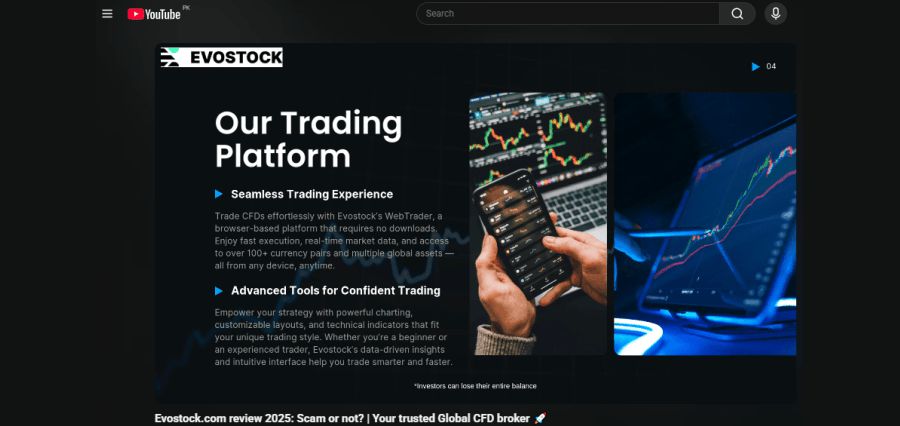
Traders on Evostock.com can take advantage of competitive spreads, advanced trading tools, and a user-friendly interface to place trades efficiently. 

Additionally, the platform ensures that clients can trade from anywhere in the world, including regions such as Latin America (LATAM), including countries like Chile, Mexico, Uruguay, Argentina, Peru, Honduras, and beyond.

Advertisement

Evostock.com Review: What Does the Platform Offer?

Evostock.com offers a wide range of financial products for CFD traders. Traders can choose to trade on:

  • Forex (Currency Pairs): The platform provides access to major, minor, and exotic currency pairs, giving traders the opportunity to profit from fluctuations in exchange rates between currencies.
  • Cryptocurrencies: Evostock.com allows traders to speculate on popular cryptocurrencies such as Bitcoin, Ethereum, and others, giving them exposure to the rapidly growing digital currency market.
  • Shares (Stocks): With CFDs on shares, traders can speculate on the price movements of stocks from leading global companies without owning the underlying shares.
  • Commodities: Traders can also trade CFDs on various commodities such as gold, oil, and agricultural products, allowing them to diversify their portfolios and benefit from global commodity price fluctuations.
  • Indices: Evostock.com offers CFDs on major global indices, including the S&P 500, Dow Jones, and other key market indices, providing opportunities to speculate on broader market trends.

These trading options allow traders to create diversified strategies across different asset classes, helping them manage risk and capitalize on market opportunities.

Evostock Review 2026: A Global CFD Broker

Evostock.com Review: How to Register and Start Trading

Getting started with Evostock.com is simple and straightforward. To register, follow these steps:

  1. Create an Account: Visit the Evostock.com website and click on the “Sign Up” or “Register” button. You will be asked to provide your basic personal details, such as name, email, and contact information.
  2. Fill a Questionnaire: To ensure that the platform understands your trading knowledge and experience, you will be asked to complete a questionnaire. This is an important step in verifying your suitability for trading.
  3. Verify Your Identity: As part of regulatory requirements, Evostock.com will ask for identity verification documents, such as a passport or national ID, to confirm your identity.
  4. Deposit Funds: Once your account is set up, you will need to make an initial deposit. Evostock.com offers several payment options, including bank transfers and popular online payment methods. The minimum deposit requirements may vary depending on the account type you choose.
  5. Start Trading: After your account is funded and verified, you can start exploring the platform’s trading tools and placing trades in your chosen markets.

Evostock.com Review: What Are the Different Account Types?

Evostock.com offers a range of account types to suit different trading levels and preferences. The Lite Account (USD 100 deposit) is for beginners with no spread reduction and 1:100 leverage. 

The Starter Account (USD 250 deposit) offers 1:200 leverage and support via chat, but no spread reduction. The Classic Account (USD 2,000 deposit) provides a 10% spread reduction and 1:200 leverage. 

The Professional Account (USD 10,000 deposit) offers 20% spread reduction and 1:300 leverage with chat and phone support. The Elite Account (USD 30,000 deposit) features up to 35% spread reduction, 1:400 leverage, and premium support. 

Advertisement

The Club Trader Account (by invitation only) offers up to 55% spread reduction, 1:500 leverage, and premium support for high-volume traders. Each account is designed to cater to different levels, from beginners to professionals.

Evostock.com Review: How Can Traders Benefit from the Platform?

Evostock.com provides a variety of benefits to traders across the globe. Here are some of the key features that traders can take advantage of:

  • Diverse Market Access: As mentioned earlier, Evostock.com offers CFDs on forex, crypto, shares, commodities, and indices. This variety enables traders to diversify their portfolios and trade in multiple markets.
  • Regulatory Oversight: The platform’s operating company operates under the regulatory supervision of the Financial Services Commission of Mauritius, providing an added layer of trust and security for traders.
  • Advanced Trading Tools: Traders have access to various technical analysis tools, charts, and indicators, which can assist them in making informed trading decisions.
  • Competitive Spreads: Evostock.com offers competitive spreads across different account types, allowing traders to minimize their trading costs.
  • User-Friendly Interface: The platform is designed with both novice and experienced traders in mind. Its intuitive interface makes it easy for traders to navigate and execute trades efficiently.
  • Global Reach: With its availability in regions like LATAM, Evostock.com ensures that traders from all over the world can access the platform and participate in CFD trading.

Evostock Review 2026: A Global CFD Broker

Evostock.com Review: What Are the Trading Fees and Costs?

When trading on Evostock.com, traders need to be aware of the associated costs. The main costs involved in CFD trading on the platform include:

  • Spreads: The difference between the buying and selling price. These spreads vary depending on the account type and the market being traded.
  • Overnight Fees: If a trader holds a position overnight, they may incur an overnight financing fee. This fee is based on the value of the position and can vary depending on market conditions.
  • Withdrawal Fees: Different account types have different withdrawal conditions.

Traders are encouraged to check the full details of these costs based on their chosen account type to understand the potential fees they may face while trading on the platform.

Conclusion: Is Evostock.com a Good Platform for Traders?

Evostock.com offers a solid platform for CFD trading, with a wide range of financial instruments and multiple account types to suit traders’ needs. 

Advertisement

The platform’s user-friendly interface, advanced trading tools, and diverse market access make it an attractive option for traders.

With its competitive spreads, advanced features, and a range of account options, Evostock.com positions itself as a noteworthy player in the global CFD market.

FAQs 

  1. What is a CFD and how does it work on Evostock.com?
    A CFD (Contract for Difference) allows you to speculate on the price movement of assets like forex, commodities, and more, without owning the underlying asset.
  2. How do I make a withdrawal on Evostock.com?
    You can request withdrawals through your account dashboard.
  3. Can I trade on multiple assets at the same time on Evostock.com?
    Yes, Evostock.com allows you to trade multiple assets such as forex, crypto, commodities and more simultaneously.
  4. Are there any restrictions on trading in certain countries?
    Evostock.com is available globally, but some restrictions may apply in specific regions.
  5. What tools are available for traders on Evostock.com?
    Evostock.com provides advanced charting tools, technical analysis indicators, and other resources to support your trading decisions.
Continue Reading
Click to comment

Leave a Reply

Your email address will not be published. Required fields are marked *

Business

European Commission approves Zynyz for anal cancer treatment

Published

on


European Commission approves Zynyz for anal cancer treatment

Continue Reading

Business

US economy unexpectedly sheds 92,000 jobs in February

Published

on

US economy unexpectedly sheds 92,000 jobs in February

The contraction came as a surprise with payrolls down in nearly every sector.

Continue Reading

Business

Surge in jet fuel prices could push up air fares, analysts warn

Published

on

Surge in jet fuel prices could push up air fares, analysts warn

Disruption to supplies from the Gulf due to the Middle East conflict has pushed the cost up by more than 80%.

Continue Reading

Business

Target not ‘an everything store,’ CEO says

Published

on

Target not ‘an everything store,’ CEO says

Retailer seeks to lead with merchandising authority.

Continue Reading

Business

Arcturus Therapeutics: Downgrading To "Hold" As CF Program Shifts Population Focus

Published

on

Arcturus Therapeutics: Downgrading To "Hold" As CF Program Shifts Population Focus

Arcturus Therapeutics: Downgrading To "Hold" As CF Program Shifts Population Focus

Continue Reading

Business

From Designer Dogs to Native Reptiles, the Trends in the $33B Industry

Published

on

Moscow, Russia

Australia has solidified its status as one of the most pet-passionate nations on Earth. According to the latest comprehensive data from the 2026 Animal Medicines Australia (AMA) report and industry analysts, pet ownership in the “Land Down Under” has climbed to an all-time high, with 73% of households now sharing their homes with at least one animal companion.

The 2026 landscape reflects a profound “humanization” of pets, with owners increasingly viewing their animals as full-fledged family members. From the rise of “Gen Z pet parents” to a surging interest in native wildlife, here are the 10 most popular pets in Australia today.

Show your love for black dogs!

1. Dogs (49% of Households)

Dogs remain the undisputed “Homecoming Kings” of Australia. An estimated 7.4 million dogs now call Australia home.

  • The “Oodle” Phenomenon: Purebred popularity has stabilized, while “designer” breeds—specifically Cavoodles, Groodles, and Labradoodles—continue to dominate urban suburbs due to their low-shedding coats and apartment-friendly temperaments.
  • Spending: Dog owners are the highest spenders, averaging roughly $2,520 per year on food, health, and “lifestyle” services like doggy daycare.

2. Cats (34% of Households)

Cats have seen the most significant growth in the post-pandemic era, with an estimated 5.3 million feline residents.

  • Indoor Living: In 2026, there is a marked shift toward keeping cats indoors or in “catios” to protect native birdlife, driven by stricter local council regulations across Victoria and New South Wales.
  • The “Multi-Cat” Trend: Unlike dogs, cat owners are more likely to have multiples, with the average cat-owning household keeping 1.6 cats.

3. Fish (11% of Households)

Often underrated but highly popular, ornamental fish remain the third most common pet. They are particularly favored by renters and Gen Z professionals in high-density CBD apartments. The “aquascaping” hobby—creating elaborate underwater gardens—has turned fishkeeping into a premium interior design trend in 2026.

4. Birds (9% of Households)

Australia’s love for avian companions remains steady. While budgerigars and cockatiels are the traditional favorites, there is a growing trend of “friendship pets”—wild native birds like magpies and lorikeets that Australians “adopt” through backyard feeding and habitat creation.

5. Small Mammals (3% of Households)

Rabbits and guinea pigs hold a niche but loyal market, primarily among families with primary-school-aged children. However, 2026 data shows a slight decline in this category as families opt for “low-maintenance” designer dogs instead.

Advertisement

6. Reptiles (3% of Households)

Reptile ownership is the fastest-growing segment in the Australian pet market. Bearded Dragons and Blue-tongue Lizards are the gateway pets for a new generation of “herpetology” enthusiasts. Their appeal lies in their hypoallergenic nature and the fact they don’t require daily walks.

7. Horses (0.9% of Households)

While statistically small in number, horses represent a massive sector of the “pleasure animal” economy in regional Australia. Ownership is heavily concentrated in peri-urban areas around Brisbane, Perth, and the Hunter Valley.

8. Poultry (0.8% of Households)

The “backyard chicken” movement, which spiked during the 2022-2024 inflation crisis, has settled into a permanent lifestyle choice for many suburban Australians. High-quality “heritage” breeds are now prized not just for their eggs, but as garden-clearing companions.

9. Native Invertebrates (Emerging Trend)

A surprise entry in 2026 is the rise of “micro-pets,” specifically Spiny Leaf Insects and Rainforest Snails. These are increasingly popular in classrooms and as low-cost, low-space entry points for first-time pet owners.

Advertisement

10. Hermit Crabs & Exotic Invertebrates

Rounding out the top ten are “starter pets” like hermit crabs. While often viewed as “novelty” pets in the past, the 2026 market has seen a push for better welfare standards and more complex enclosure setups for these crustaceans.

Continue Reading

Business

Unemployment Holds at 4.1% as Full-Time Hiring Surges

Published

on

A Starbucks logo is pictured on the door of the Green Apron Delivery Service at the Empire State Building in New York

Australia’s labor market has entered the autumn of 2026 with unexpected vigor. According to the latest figures from the Australian Bureau of Statistics (ABS), the national unemployment rate held steady at 4.1% in early 2026, a result that has stunned economists who had predicted a cooling period following a series of aggressive interest rate hikes by the Reserve Bank of Australia (RBA).

Commonwealth Bank of Australia
Australia Job Market
DAVID GRAY/AFP via Getty Images

The data, released in late February and remaining the current benchmark as of March 7, 2026, paints a picture of a “two-speed” economy. While consumer spending has slowed under the weight of a 3.85% cash rate, businesses are doubling down on permanent staff, signaling a shift from temporary “gig” roles to a more stable, full-time workforce.

1. The Numbers: Stability Amidst the Storm

The ABS reported that employment rose by 17,800 people in the last month, pushing the total number of employed Australians to a record 14.70 million.

What makes this figure remarkable is the internal composition of those jobs:

  • Full-time employment: Surged by 50,500 roles.
  • Part-time employment: Fell by 32,700 roles.
  • Participation Rate: Remained rock-solid at 66.7%, indicating that Australians are not giving up on the hunt for work despite broader economic uncertainty.

2. The RBA Dilemma: “Full Employment” or “Inflation Fuel”?

For RBA Governor Michele Bullock, these numbers are a double-edged sword. The RBA’s primary goal is to return inflation (currently sitting at 3.8%) to the 2–3% target band. Usually, a “tight” labor market leads to higher wage growth, which in turn keeps inflation “sticky.”

“The resilience of the 4.1% unemployment rate complicates the path for interest rate cuts,” said one senior economist at Commonwealth Bank. “We are seeing a market that refuses to break. While that’s great news for households with a steady income, it increases the likelihood that the RBA will keep rates at 3.85%—or even move to 4.10%—before we see any relief in late 2026.”

Advertisement

3. Underemployment: The Hidden Slack

While the headline unemployment rate is low, the underemployment rate—which measures people who have a job but want more hours—ticked up slightly to 5.9%.

This “underutilization” is particularly visible in the retail and hospitality sectors. As the “cost of living” crisis bites, many Australians working 20 hours a week are actively seeking 30 or 40 hours to cover rising mortgage repayments and grocery bills. This suggests that while people are “employed,” they are not necessarily “financially comfortable.”

4. State-by-State Breakdown

The labor market performance varies significantly across the continent:

  • Western Australia & Queensland: Continue to lead the nation, driven by a resurgence in the resources sector and green energy infrastructure projects.
  • Victoria & New South Wales: Showing signs of a “softening” in the construction and professional services sectors as high borrowing costs slow down new commercial developments.
  • South Australia: Has emerged as a surprise performer in early 2026, with unemployment hitting a near-record low for the state due to a boom in defense manufacturing.

Key Labor Market Indicators (March 2026)

Indicator Current Value Change from Dec 2025
Unemployment Rate 4.1% Unchanged (Steady)
Participation Rate 66.7% Unchanged
Total Employed 14.70 Million +17,800
Cash Rate (RBA) 3.85% +0.25% (Hike)
Inflation (CPI) 3.8% Trending Down (Slowly)

5. What’s Next? The “March 19” Milestone

All eyes are now on March 19, 2026, when the ABS will release the February Labour Force data. This will be the final major data point the RBA considers before its crucial March 17-18 board meeting.

If the unemployment rate remains at or below 4.1%, markets are pricing in a 27% chance of another rate hike. Conversely, if unemployment jumps toward 4.3%, it may signal that the “lagged effect” of previous hikes is finally catching up with the Australian worker, potentially pausing any further tightening of the screws.

Advertisement
Continue Reading

Business

Lowe’s: Macroeconomic Headwinds Become More And More Concerning (NYSE:LOW)

Published

on

Lowe's: Macroeconomic Headwinds Become More And More Concerning (NYSE:LOW)

This article was written by

Petroleum engineer with an enthusiasm for investing, accounting and personal finances.

Analyst’s Disclosure: I/we have no stock, option or similar derivative position in any of the companies mentioned, and no plans to initiate any such positions within the next 72 hours. I wrote this article myself, and it expresses my own opinions. I am not receiving compensation for it (other than from Seeking Alpha). I have no business relationship with any company whose stock is mentioned in this article.

Past performance is not an indicator of future performance. This post is illustrative and educational and is not a specific offer of products or services or financial advice. Information in this article is not an offer to buy or sell, or a solicitation of any offer to buy or sell the securities mentioned herein. Information presented is believed to be factual and up-to-date, but we do not guarantee its accuracy and it should not be regarded as a complete analysis of the subjects discussed. ll expressions of opinion reflect the judgment of the authors as of the date of publication and are subject to change.

Advertisement

Seeking Alpha’s Disclosure: Past performance is no guarantee of future results. No recommendation or advice is being given as to whether any investment is suitable for a particular investor. Any views or opinions expressed above may not reflect those of Seeking Alpha as a whole. Seeking Alpha is not a licensed securities dealer, broker or US investment adviser or investment bank. Our analysts are third party authors that include both professional investors and individual investors who may not be licensed or certified by any institute or regulatory body.

Continue Reading

Business

SBUX Shares Reflect ‘Back to Starbucks’ Progress in Early 2026

Published

on

A Starbucks logo is pictured on the door of the Green Apron Delivery Service at the Empire State Building in New York

Starbucks Corporation (NASDAQ: SBUX) has emerged from a period of stagnation with clear signs of a recovery, as the coffee giant’s “Back to Starbucks” turnaround plan—spearheaded by CEO Brian Niccol—begins to show tangible results in early 2026. Shares of the company closed at $97.71 on Friday, March 6, 2026, reflecting investor optimism fueled by the company’s first signs of U.S. transaction growth in two years.

A Starbucks logo is pictured on the door of the Green Apron Delivery Service at the Empire State Building in New York

For shareholders who weathered a volatile 2025, the start of 2026 has been marked by a return to stability and a focus on operational discipline. Despite mixed financial reports in the first quarter of the 2026 fiscal year, the market is increasingly viewing Starbucks as a stock in the midst of a successful pivot.

The “Back to Starbucks” Strategy: Early Wins

When Brian Niccol assumed leadership, his “Back to Starbucks” initiative was designed to strip away corporate complexity and refocus on the customer experience. The Q1 2026 results released in late January provided the first real evidence that this shift is working.

  • Transaction Growth: For the first time in eight quarters, Starbucks reported an increase in U.S. comparable transactions. This indicates that the core customer base, which had drifted away due to long wait times and inconsistent service, is returning.
  • Global Sales Momentum: Starbucks posted a 4% increase in global comparable store sales, surpassing analyst expectations. This growth was consistent across major markets, including the U.S., China, and the U.K.
  • Green Apron Service: The successful rollout of the “Green Apron” service standard has reportedly reduced average wait times in drive-thrus and cafes to under four minutes, a critical metric for maintaining throughput during peak morning hours.

Financial Snapshot: Navigating Headwinds

While top-line growth is positive, the road to profitability remains complex. In Q1 2026, Starbucks reported:

  • Consolidated Revenue: Up 6% to $9.9 billion.
  • EPS Miss: GAAP earnings per share (EPS) of $0.26 and non-GAAP EPS of $0.56, with the latter falling slightly short of the $0.59 estimate by analysts.
  • Margin Pressure: Operating margins contracted by approximately 180 to 290 basis points. The company cited labor investments—hiring more staff to support the “Back to Starbucks” initiative—and inflationary pressures from coffee pricing and tariffs as the primary drivers of this contraction.

“We are turning around the top line, and the earnings growth will follow,” Niccol stated during the Q1 earnings call, signaling that the current margin compression is a deliberate trade-off for long-term customer retention.

Institutional Sentiment and Analyst Outlook

Wall Street’s reaction to the progress has been cautiously optimistic. Earlier this week, Guggenheim raised its price target for SBUX from $90 to $95, maintaining a “Neutral” rating. The firm acknowledged the strength of the turnaround but highlighted that the current stock valuation—trading at a premium P/E ratio exceeding 80—already accounts for much of the expected operational improvement.

Institutional sentiment remains mixed. According to recent SEC filings, some large funds like Orion Portfolio Solutions trimmed their holdings by about 5.3%, while others, including Vanguard, have modestly increased their stakes. Currently, roughly 72% of the company is held by institutional investors, suggesting that while “smart money” is not panic-selling, it is watching the next few quarters closely to ensure margin expansion actually materializes.

Advertisement

Strategic Outlook: The China Pivot and Future Growth

A significant factor for investors to monitor in 2026 is the classification of Starbucks’ retail operations in China as “held for sale.” This transition to a joint venture structure is expected to streamline the company’s global portfolio and reduce long-term depreciation costs.

Looking ahead for the remainder of fiscal 2026, management has provided the following guidance:

  • Comp Sales Growth: Targeting 3% or better globally and in the U.S.
  • Expansion: Plans to open 600 to 650 net new coffeehouses worldwide.
  • Cost Efficiency: The company has identified $2 billion in cost-saving opportunities over the next two years, specifically targeting procurement efficiencies and administrative overhead.

The Bottom Line for Investors

Starbucks is no longer the high-growth tech-like stock of the 2010s; it is currently a “transformation play.” The success of the stock in 2026 will likely hinge on whether management can balance the cost of labor investments with the need for margin expansion.

Investors are currently betting that Brian Niccol’s reputation—forged during his time transforming Chipotle—will hold true here. As Starbucks continues to focus on throughput, menu innovation, and its record-breaking 35.5-million-member rewards program, the company appears well-positioned to stabilize its market share in an increasingly competitive coffee landscape.

Advertisement
Continue Reading

Business

FDA reversals on UniQure, Moderna approvals worry investors

Published

on

FDA reversals on UniQure, Moderna approvals worry investors

Investors are concerned about the fates of multiple experimental drugs for hard-to-treat diseases following a string of recent rejections from the U.S. Food and Drug Administration. 

The FDA in the past year has denied or discouraged the applications of at least eight drugs, according to RTW Investments, including a gene therapy for Huntington’s disease from UniQure, a gene therapy for Hunter syndrome from Regenxbio and a drug for a blood condition from Disc Medicine. The agency initially refused to review Moderna‘s flu shot before reversing course

In each case, the FDA took issue with the evidence the companies were using to support their applications. Some of the studies didn’t test the drugs against a placebo. Some companies didn’t directly measure the drug’s efficacy, instead relying on other factors like biomarkers to predict how well the treatment might work. 

And in every case, the companies have accused the FDA of reversing its previous guidance. That’s making investors wary that a more unpredictable FDA could jeopardize the future of other treatments for hard-to-treat diseases.

Advertisement

“What investors and key stakeholders are hoping to see from the FDA is consistency, and it does feel that that seems to be lacking at the moment,” said RBC Capital Markets analyst Luca Issi.

In recent years, the FDA appeared willing to accept drugs for rare diseases that showed promise in less rigorous studies than the gold standard randomized, double-blind placebo controlled trials. That meant helping bring treatments more quickly to patients who have conditions where time passing could mean the loss of functions like walking or talking, or even death. It also drew controversy from critics who said that policy brought false hope to patients.

The FDA’s recent decisions has left investors wondering whether the agency’s bar has changed for other drugs in the pipeline. In the case of UniQure, the FDA asked the company to run a new study that directly compares its treatment to placebo. UniQure said that contradicts the agency’s past guidance that the company could seek approval with trial data that compared UniQure’s treatment to an external database of people with Huntington’s disease.

One former FDA official who spoke to CNBC on the condition of anonymity to speak freely called this the worst type of regulatory uncertainty, because companies say they are being told one thing then experiencing another.

Advertisement

In a statement, an FDA spokesperson said there was “no regulatory uncertainty,” adding the agency “makes decisions based on the evidence, but does not make assurances about outcomes.” The spokesperson said the FDA is “conducting rigorous, independent reviews and not rubber-stamping approvals.”

Analysts point to several other companies they’re watching, including Dyne Therapeutics, which is advancing a drug for Duchenne muscular dystrophy; Taysha Gene Therapies, which is developing a gene therapy for Rett syndrome; Wave Life Sciences, which is working on a treatment for a liver condition; and Lexeo Therapeutics, which is developing a gene therapy for Friedreich Ataxia. All of those companies’ stocks are down this year.

A Dyne spokesperson said the company has maintained a frequent, positive and collaborative dialogue with a consistent set of reviewers over the past 18 months, and that it’s confident in its development strategy and path forward based on the strength of its clinical results, rigor of its trial design and continued engagement with the FDA. Taysha, Wave and Lexeo declined to comment.

One looming decision that Stifel analyst Paul Matteis is tracking is a drug candidate from Denali Therapeutics for Hunter syndrome, a rare disease that causes physical defects like hearing loss and joint problems, as well as cognitive issues. The company’s application for accelerated approval relies on a trial that wasn’t randomized and data showing the drug decreases levels of a biomarker associated with the condition.

Advertisement

To Matteis, the dataset is harder to argue with than UniQure’s, and there’s not much risk with the technology used.

“So if they don’t approve that, I don’t know,” Matteis said. “I mean, I already think there’s been a pretty significant change in the regulatory standard of rare disease, but if they don’t approve Denali, if I was at a company I’d almost be saying to myself, ‘Can we really be confident in running an open-label study?’”

In a statement to CNBC, Denali Therapeutics CEO Ryan Watts said the company continues having constructive discussions with the FDA, and it’s confident in the strength of the data package it submitted. The FDA delayed its review of the application by three months and is now expected to decide by April 5.

Some investors feel a clash between the flexibility FDA leaders like Commissioner Marty Makary are pledging publicly and the recent decisions the agency has made, said RBC Capital Markets’ Issi. That’s leading some to discount the probability of success for companies whose paths to the market rely on some level of flexibility in the data the agency will accept, said Stifel’s Matteis.

Advertisement

For companies whose data are straightforward, the path looks clear, said Christiana Bardon, managing partner of MPM BioImpact. The question to her is how much the FDA should accelerate the process to bring drugs to patients as rapidly as possible for diseases with massive unmet needs.

One senior FDA official, speaking to reporters Thursday on the condition of anonymity to speak freely, said the FDA hasn’t changed its position that biomarkers reasonably likely to predict efficacy can and will get accelerated approval, and that non-randomized data can get full approval. To this official, the bar is clear.


“If you make a treatment for Alzheimer’s or Huntington’s, and you take someone who’s severely ill and you give them that therapy, and they start doing better immediately and dramatically,” the official said. “You take someone in a nursing home with Alzheimer’s, and then they walk out of it, or somebody with end-stage Huntington’s, and they suddenly have no symptoms of Huntington’s, you will get a full regulatory approval with two or three patients.

“We only ask for randomized data when a condition is heterogeneous, when the will to believe is strong, when the therapy is invasive or potentially harmful, when the effect size is difficult to detect, and when the possibility you are fooling yourself is high,” the official added.

Advertisement
Continue Reading

Trending

Copyright © 2025