
Business
Family offices see gains after making opportunistic bets on oil

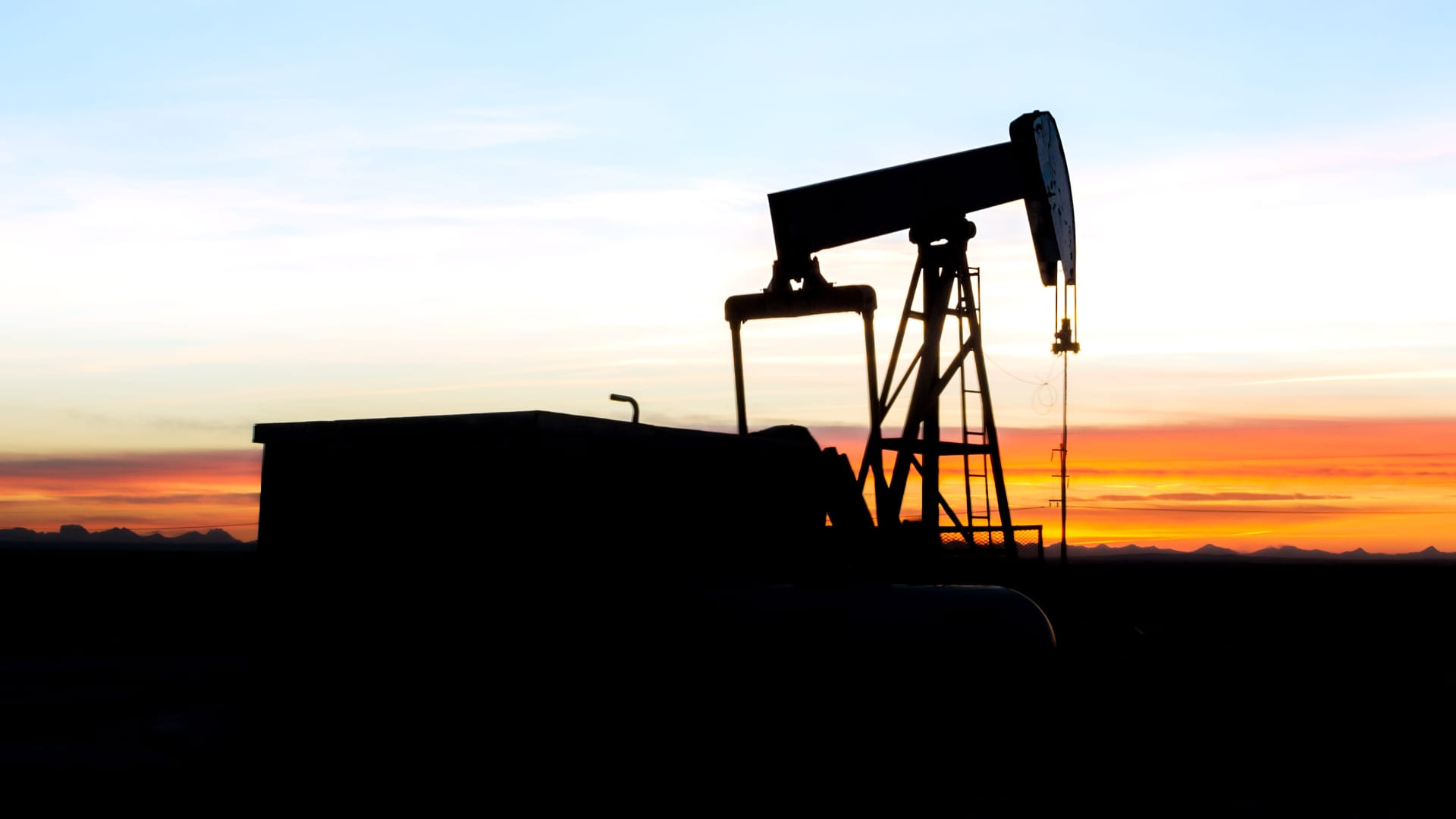
Dwayne Schnell | 500px Plus | Getty Images
A version of this article first appeared in CNBC’s Inside Wealth newsletter with Robert Frank, a weekly guide to the high-net-worth investor and consumer. Sign up to receive future editions, straight to your inbox.
The Iran war has propelled oil prices to above $94 a barrel, up about 30% since the conflict began in late February. That rally has been a boon for investment firms of ultra-wealthy families who made opportunistic bets on oil in recent years.
Since the pandemic, private equity funds and other institutional investors have backed away from oil and gas in part due to pressure from environmentally conscious stakeholders. Family offices have stepped in to fill some of that void, investors and advisors told CNBC.
While many family offices are environmentally minded — with a September survey by Citi Private Bank showing more than half of respondents reporting they were likely to make sustainable investments in the next five years — they’re not subject to the same ESG mandates as private equity firms or endowments, which have faced pressure to divest from oil and gas.
“Family offices are contrarian players. A lot of investors left the sector for non-fundamental reasons, like endowment funds, who had students protesting,” said Keith Behrens, head of energy and clean energy investment banking at Stephens. “Family offices saw that flight of capital, and it created really good investment opportunities for them. They were able to come in and invest with pretty reasonable cash flow multiples.”
Family offices also have an edge on private equity players as they generally hold investments for longer periods, meaning they can weather oil price fluctuations and dealmaking downturns, according to Gillon Capital’s Jeff Peterson.
“We back teams who are looking to build businesses over the long term, because that’s where we really differentiate ourselves. A fund can only really hold a business for their fund life,” he said. “We invest for generations in mind so we can look through current cycles.”
Peterson has managed investments for the descendants of oil tycoon H.L. Hunt for 14 years. About five years ago, A.G. Hill Partners, one of the family’s personal investment firms, doubled down on oil and gas to take advantage of attractive valuations.
Multiples for the sector typically range between two to three times cash flow, according to Peterson, who is now chief investment officer for Gillon Capital, a family office spun out of A.G. Hill Partners a year ago.
Peterson said the family has taken the lead on major deals in the sector, such as forming a consortium of family offices and a few PE funds for the $2 billion acquisition of natural gas producer PureWest Energy. The family is also an anchor investor in a minerals and royalty fund that has raised about $500 million in capital and has a substantial position in the Permian Basin, which is the highest-producing oil field in the U.S., he said.
The sector is increasingly drawing interest from family offices without ties to energy, according to Tailwater Capital’s Doug Prieto. He leads upstream energy funds, which back oil and gas exploration and production, for the middle-market PE firm. Prieto said the funds have raised about $500 million from family offices without backgrounds in energy and just last week took a commitment from a family office built from an options-trading fortune.
Family offices without energy expertise are typically seeking to diversify their portfolio with assets that are uncorrelated to stocks and bonds, Prieto said. Oil and gas are also attractive as inflation hedges, he added.
The Trump administration’s efforts to prioritize oil, gas and nuclear power over clean energy have given investors more confidence in the sector, according to Ellen Conley, lawyer and co-chair of Haynes Boone’s energy finance practice group.
Plus, the potential for cash dividends appeals to family offices, she said.
“Family offices are viewing these assets as cash-flowing real assets rather than a speculative commodity gamble,” she said. “We’re dealing with real assets, particularly in Texas, where you have this repeatable cash flow and predictive models.”
Conley said investors’ interest in energy was already on the rise before the recent oil surge. But headlines about oil prices tied to the Iran war have spurred queries from family offices looking to invest, according to Vicki Odette, global chair of Haynes Boone’s investment management practice group.
However, investors who are new to the space can only realistically take advantage of the current price surge by hedging, Peterson said.
“For anybody to start a drilling program today, you’re really not looking at production this calendar year. You’re looking at next year,” said Peterson.
Analysts generally expect the current spike to be temporary.
And while high prices are good for existing investors, they make it harder to get deals done, according to Behrens.
“If someone’s selling a property, they’re going to want to sell it at the highest price possible and get the latest day close,” he said. “The buyer is going to say, ‘Hey, that’s great that oil is at $115 a barrel, but three months ago it was at $60.’”
Prieto added that it is possible to have too much of a good thing. High oil prices for a prolonged period of time poses a recession risk, he said.
“We like to see a robust U.S. economy. I think for us, somewhere between $75 and $85 a barrel feels pretty darn good,” he said. “When you get over $100, you start to have adverse impacts that don’t benefit anyone.”

The British perfume designer and Zara are being sued by Estée Lauder over a collaboration.

The Acquirers Funds founder and managing director Tobias Carlisle discusses retail sales on Making Money.
This story about the fourth-quarter GDP report is developing and will be updated with more details.
The U.S. economy grew at a slightly slower pace than expected in the fourth quarter, according to the Commerce Department’s estimate.
The Bureau of Economic Analysis (BEA) on Thursday released its final reading of fourth-quarter GDP, which showed the economy grew at an annualized rate of 0.5% in the three-month period including October, November and December.

Shipping containers are organized at the Houston Port of Authority on Feb. 10, 2025 in Houston, Texas. (Brandon Bell/Getty Images)
FED’S FAVORED INFLATION GAUGE REMAINED ELEVATED IN FEBRUARY, DELAYED REPORT SHOWS
That figure was lower than the expectations of economists polled by LSEG, who had estimated 0.7% GDP growth in the fourth quarter.
Federal Reserve Bank of New York President John Williams discusses market impacts of the Iran War, inflation outlook and more on ‘The Claman Countdown.’
Americans are facing a tale of two grocery lists.
While some prices are cooling, the items families rely on most for energy and nutrition — meat and coffee — are seeing sharp increases that wipe out any savings in the bread aisle.
Fourteen of the 25 most common grocery store staples rose in price from February 2024 to February 2026, with the top five largest increases coming from coffee (+55%), lettuce (+39%), ground beef (+31%), sirloin steak (+21%) and orange juice (+15%), according to a new report from CouponFollow that analyzed Consumer Price Index (CPI) data from the past two years.
Coffee was the fastest-rising staple in the study, with a pound of ground roast costing $6.09 in 2024 compared to $9.46 in 2026. Going back to 2020, coffee prices have reportedly increased 123%.
JAMIE DIMON WARNS IRAN WAR COULD DRIVE INFLATION, INTEREST RATES HIGHER
Ground beef has hit $6.74 per pound, a 31% increase from 2024 and 74% above pre-pandemic levels.
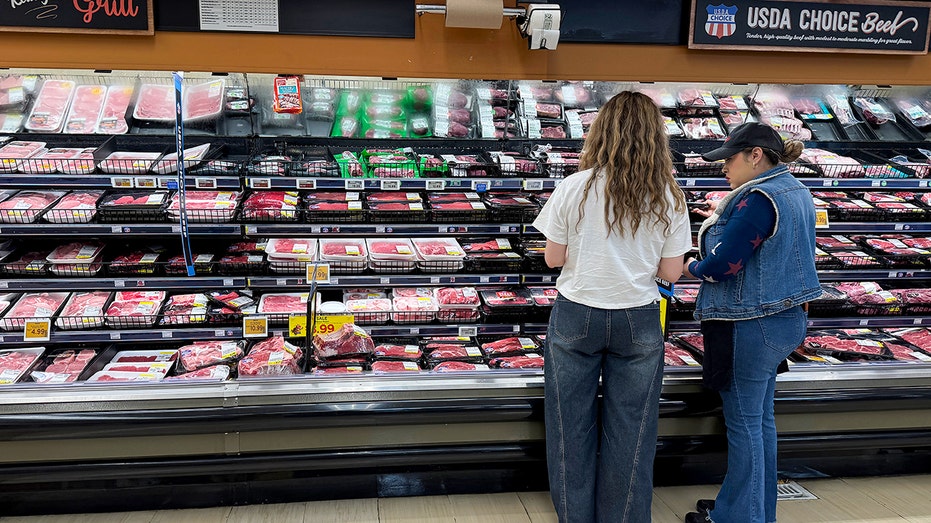
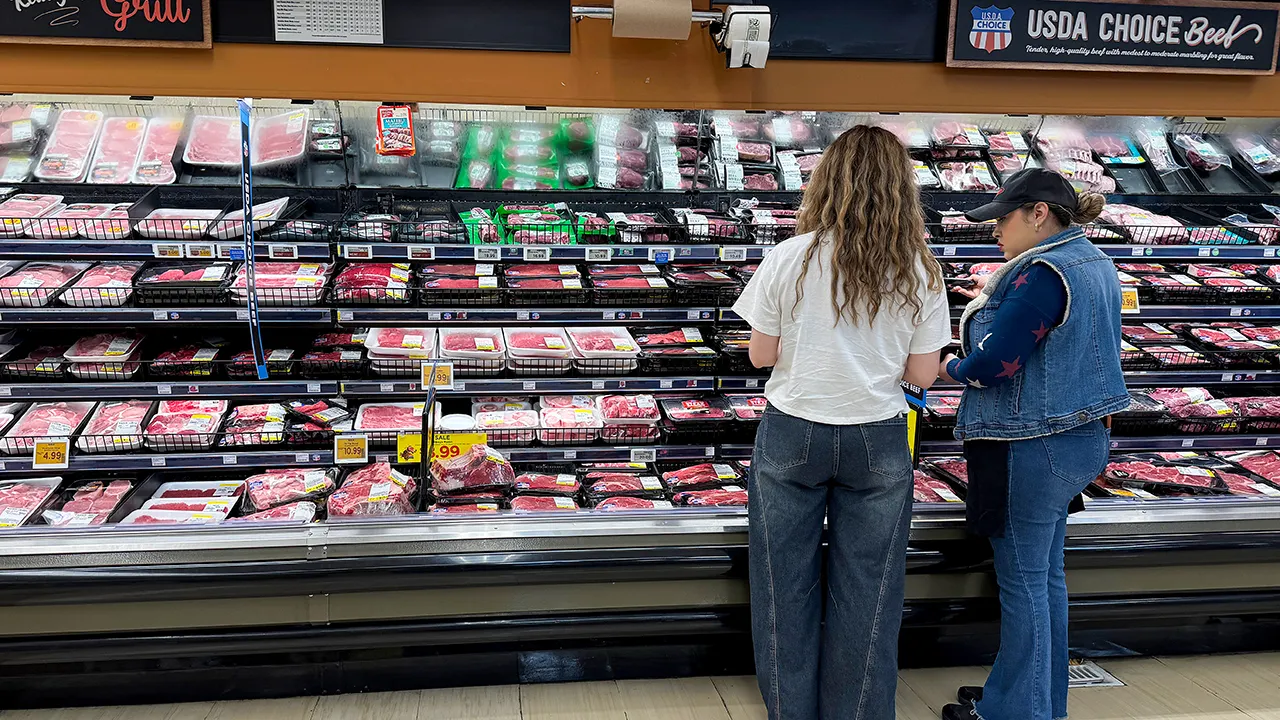
Customers shop for beef at a grocery store on April 6, 2026, in Los Angeles, California. (Getty Images)
With ground beef prices in mind, CouponFollow ran a “taco night test,” tracking specific meal scenarios to show how inflation affects consumers. A family of four is paying nearly $25 just for basic taco ingredients, compared to just $17.50 six years ago.
If you can live on eggs and toast, your bill might be lower than it was two years ago, with egg prices decreasing the most (-17%), followed by white bread (-8%), spaghetti (-8%) and butter (-7%).
Still, the report warns that “the items still climbing are rising fast enough to offset those declines.”
‘The Big Money Show’ discusses the growing trend of young adults getting financial help from their parents.
“Grocery inflation isn’t going away overnight, but small changes to how and where you shop can add up fast. Paying attention to which categories are rising and which are cooling, stocking up on pantry staples when prices dip, and being flexible with pricier proteins are all easy ways to stretch your grocery budget a little further,” CouponFollow notes. “Stacking those habits with coupons and deals can make an even bigger dent in your weekly bill.”
Economic experts have also recently cautioned that high oil prices due to the Iran war are pushing gasoline prices higher, and that could lead to grocery bills rising for American consumers.
The increase in oil, gas and diesel prices raises transportation costs for businesses, including grocery stores, which may face pressure to raise food prices and other items if the situation continues.
GET FOX BUSINESS ON THE GO BY CLICKING HERE
Federal Reserve Board Gov. Michelle Bowman discusses where interest rates are going and the job market performance on ‘Maria Bartiromo’s Wall Street.’
“Every time something moves in the economy, it will cost more,” said Derek Reisfield, co-founder of MarketWatch and a former McKinsey consultant. “Someone, usually the end consumer, will have to pay for that.”
Gregory Daco, chief economist at EY-Parthenon, previously told FOX Business: “For U.S. consumers, what this means is that while there is currently a price shock at the pump being felt directly by consumers, there’s still uncertainty as to how long this shock will last.”
FOX Business’ Eric Revell contributed to this report.

SigmaRoc executives acquire shares through employee plan

Search for successor to Tom Winters gets underway.
Business
Rainbow Rare Earths Limited 2026 Q2 – Results – Earnings Call Presentation (OTCMKTS:RBWRF) 2026-04-09


Seeking Alpha’s transcripts team is responsible for the development of all of our transcript-related projects. We currently publish thousands of quarterly earnings calls per quarter on our site and are continuing to grow and expand our coverage. The purpose of this profile is to allow us to share with our readers new transcript-related developments. Thanks, SA Transcripts Team

U.S. Money Markets: Slow Calm To Steady State
Epam Systems stock hits 52-week low at $125.53
BlackBerry earnings up next: All eyes on FY27 revenue outlook
The U.S. Tariff Shock In 2025 Vs. 2026 – Same Negative Impact, Different Drivers

XRP: This Is Starting To Look Familiar

MLB average salary hits a record $5.34M as the Mets lead spending again

Jo Malone hopes 'sense will prevail' in lawsuit over her name


-

 NewsBeat7 days ago
Steven Gerrard disagrees with Gary Neville over ‘shock’ Chelsea and Arsenal claim | Football
-

 Business7 days ago
No Jackpot Winner and $194 Million Prize Rolls Over
-

 Fashion6 days ago
Weekend Open Thread: Spanx – Corporette.com
-

 Business5 days ago
Expert Picks for Every Need
-

 Business4 days ago
Three Gulf funds agree to back Paramount’s $81 billion takeover of Warner, WSJ reports
-

 Sports5 days ago
India men’s 4x400m and mixed 4x100m relay teams register big progress | Other Sports News
-

 Tech2 days ago
How Long Can You Drive With Expired Registration? What Florida Law Says
-
Business4 days ago
No Jackpot Winner, Prize to Climb to $231 Million
-

 Fashion3 days ago
Massimo Dutti Offers Inspiration for Your Summer Mood Board
-

 Tech7 days ago
Commonwealth Fusion Systems leans on magnets for near-term revenue
-

 Fashion2 days ago
Let’s Discuss: DEI in 2026
-
Politics6 days ago
Wings Over Scotland | The quality of mercy
-

 Business5 days ago
Akebia Therapeutics, Inc. (AKBA) Discusses Pipeline Progress and Strategic Focus on Kidney Disease Treatments at R&D Day – Slideshow
-

 Fashion7 days ago
Statement Sunglasses: The Accessory Shaping Modern Fashion
-

 Crypto World1 day ago
Bitcoin recovers as US and Iran Agree a Ceasefire Deal
-

 Politics7 days ago
East Jerusalem Palestinian families eviction orders
-

 Fashion7 days ago
For Love & Lemons’ Spring 2026 Line is for the Romantics
-

 Politics6 days ago
Why so many children are now classified as ‘disabled’
-

 Fashion7 days ago
Coffee Break: Santa Croce Tote
-

 Politics6 days ago
Nuclear rockets, moon bases and NASA’s Mars plan
You must be logged in to post a comment Login