

Business
Fertilizer Prices Surge Ahead Of A Critical Planting Season

Egilshay/iStock via Getty Images
By Debbie Carlson
As grain farmers prepare for spring planting, any optimism for the coming season is being tempered by the economic reality that they may face another money-losing year. This was looking to be the case even before the conflict began in Iran, which triggered a surge in fertilizer prices.
Input costs skyrocketed in 2022 after the start of the Russia-Ukraine war and remain elevated, while commodity prices sit under production costs. The American Farm Bureau says many row-crop farmers are looking at four or five straight years of operational losses, even after accounting for crop insurance payments and ad-hoc assistance.
Philip Nelson, a fourth-generation farmer in LaSalle County, Illinois, who was recently elected as Illinois Farm Bureau president, says the profits farmers made when crop prices were high a few years ago have eroded and balance sheets are tight.
“If you adjust for inflation, we’ve got the same commodity prices we had in 1974, and at the same time, the input costs have quadrupled,” Nelson says.
Input costs aren’t the only issue clouding farmers’ outlooks for spring planting. Last year, the U.S. harvested a record corn crop of roughly 18 billion bushels, and that heavy supply continues to weigh on the market, says Sean Lusk, vice president, commercial hedging division for Walsh Trading. In addition, the outlook for soybeans remains mixed as farmers wait on the Trump administration to decide on a potential expansion of the biomass-based diesel program that could offset some of the lost export market share to China amid recent trade tensions.
In a challenging year, risk management tools and fine-tuning marketing plans take on added importance.
Shifting Farmer Sentiment
The Purdue University-CME Group Ag Economy Barometer weakened in December, reflecting farmers’ declining long-term outlook about U.S. soybean export prospects as competition from Brazil increases. More recently, the focus has shifted to tensions between current conditions and future expectations, with farmers more optimistic about the former than the latter.
The U.S. Department of Agriculture’s (USDA) Economic Research Service forecasts net farm income to fall by 2.6% year-over-year in inflation-adjusted terms. The decline is mitigated in part by the Farmer Bridge Assistance Program and the Emergency Commodity Assistance Program, USDA’s aid packages for farmers to offset losses because of the trade environment. However, the American Farm Bureau says most producers likely will still lose money.
University of Illinois agricultural researchers forecast crop prices to be marginally higher in 2026. As of early March, CME Group September 2026 Corn and Soybean futures are trading around $4.55 and $11.32 per bushel, respectively.
Price gains compared to last year will likely be offset by small increases in overall costs with yields at trend levels. Break-even prices to cover all costs without government support are in the $4.70-$4.90 range for corn and $10.80-$11.25 range for soybeans, close to or above current market prices and pricing opportunities for the 2026 crop.
David Iserman, a fifth-generation farmer based in Streator, Illinois, is sanguine about the growing season, based on those figures. “We’re definitely either breaking even, if we’re lucky, or losing money,” he says.
Cost-Cutting Measures
Annual inputs, such as seed, fertilizer and chemicals, are higher than last year. Corn consumes more inputs than soybeans, and that may factor into what U.S. farmers plant this spring – though markets won’t know for sure until the 2026 Prospective Plantings report is released on March 31. However, many farmers typically still stick with a traditional 50/50 corn and soybean rotation for agronomic reasons, which is what Iserman and Nelson plan to do.
Both producers have experienced lean times before and are looking at ways to cut costs. Iserman says fertilizer is his number one cost. He practices no-till farming on his soybeans and strip-till for corn. In strip-till farming, producers till a narrow strip of soil for fertilizer on the corn, which minimizes loss.
Iserman may tweak how much he uses and is studying the cost, using software to gauge his returns on his fertilizer use.
“We’re looking at all of our fertilizer inputs from the standpoint of not yield, but profit. For every dollar I put in, I want to get $1 back. I don’t care about winning a yield contest. I care about return,” he says.
Nelson also says he might cut back slightly on fertilizer use because he has built it up in the soil, giving him an option to cut costs.
Fertilizer Prices Stay High
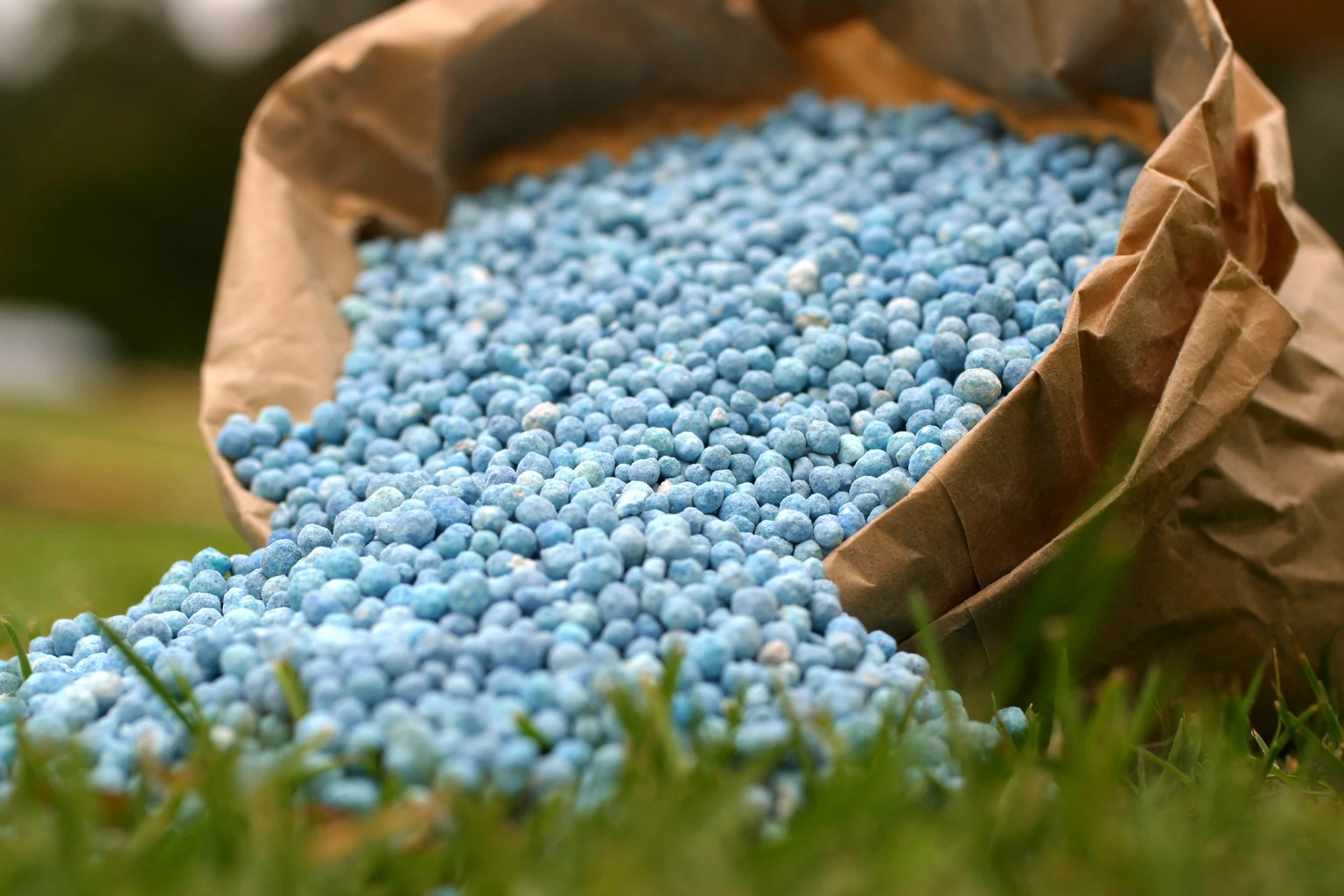
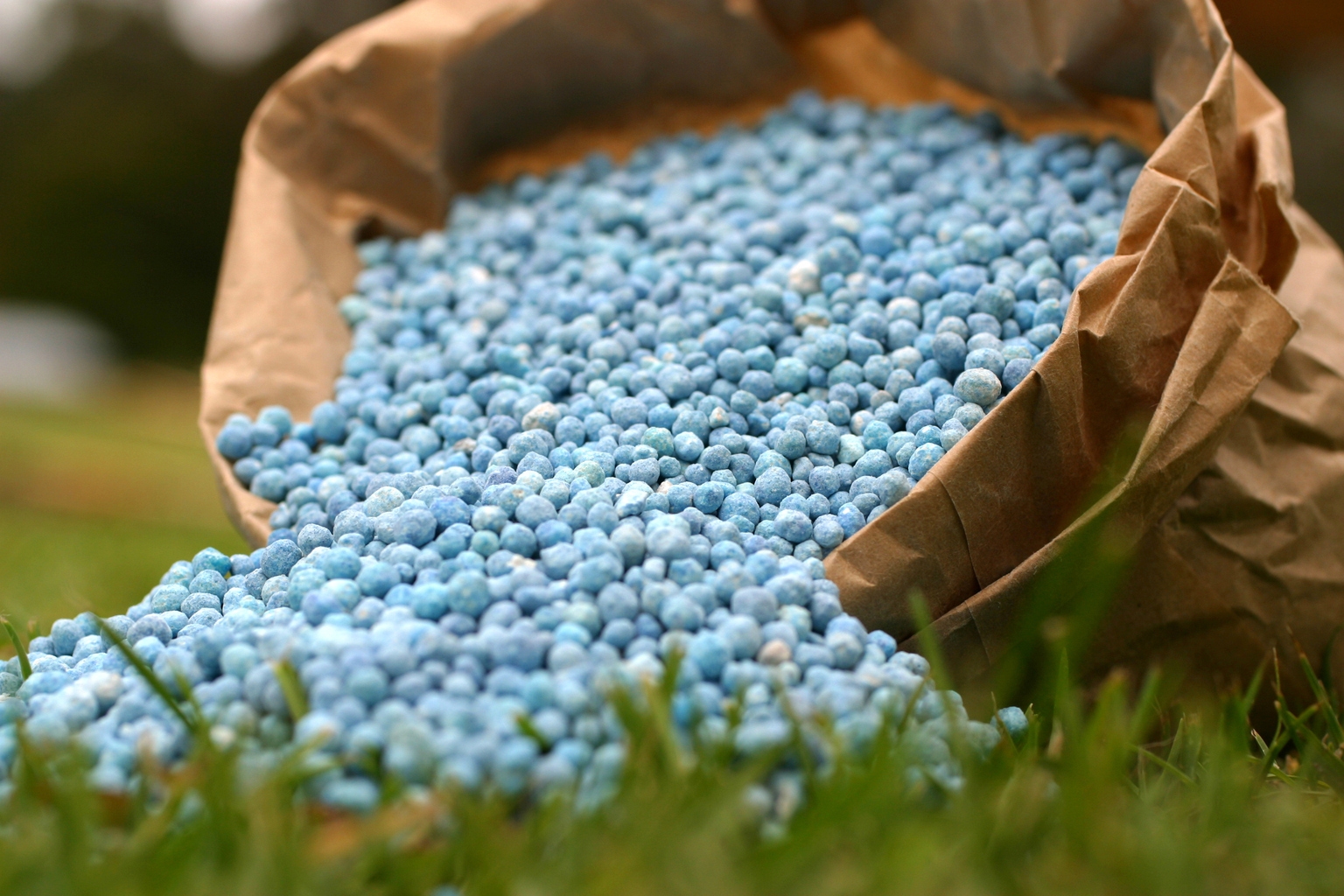
Fertilizer remains the most volatile and significant non-land cost, often accounting for 20% to 30% of total production expenses, according to USDA data.
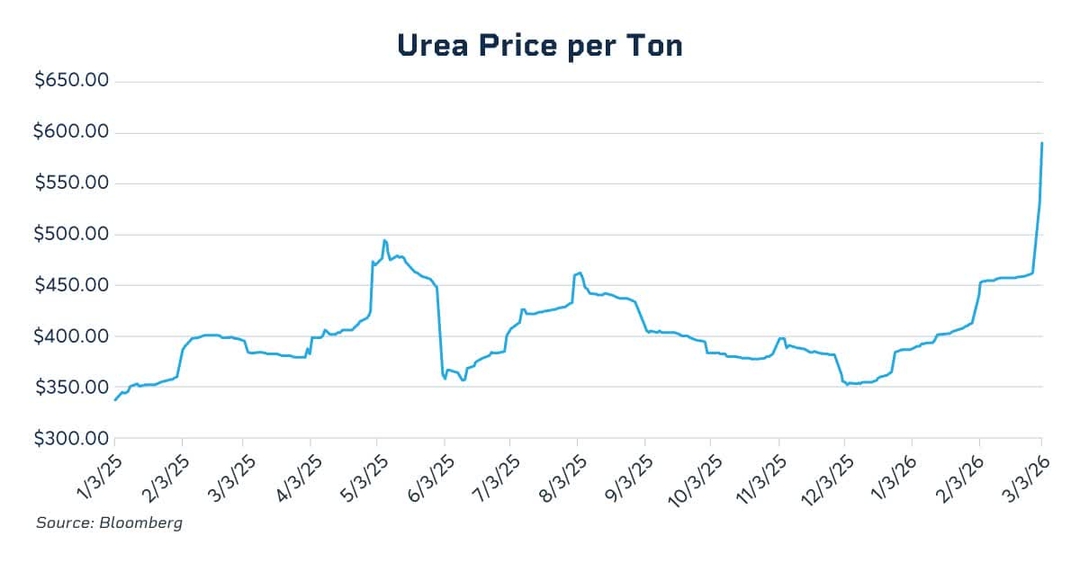
Josh Linville, vice president of fertilizer at StoneX, says prices remain significantly higher than a year ago. In early 2026, a barge of urea at the port of New Orleans traded around $450 per ton, compared to $389 per ton in early 2025. Nitrogen prices are also higher versus a year ago.
Three global factors drive this inflation, Linville says. China, a major global supplier, has indicated it may not export urea until August 2026, removing millions of tons from the global market. In Europe, persistent high natural gas costs have limited nitrogen production to about 75% of normal since the second half of 2022 because of the Russia-Ukraine war. In the Middle East, the Strait of Hormuz is a critical choke point through which three of the top 10 urea exporters must ship their product. As of early March, the Strait of Hormuz is facing a blockade.
To better understand fertilizer costs, some farmers look at the corn-urea and soybean-urea ratio. These ratios position fertilizer costs within the context of crop costs, calculating how many bushels of grain are required to purchase one ton of nutrients.
A lower ratio signals a more favorable time to lock in costs. Currently, with low corn prices and high urea prices, the corn-urea ratio sits near 87 to 90 bushels per ton, a five-year high. To manage this, some farmers are using CME Group’s 10-Ton Urea U.S. Gulf futures contract. Launched last year, this tool allows individual producers to hedge their fertilizer risk in increments more suited to their actual field needs, and options can help limit price risk to the upside. While fertilizer costs were elevated in January, those levels now appear relatively attractive by comparison.
A Changing Approach
“Frankly speaking, we don’t sell all of our grain in one decision. We should be looking at doing the same thing with fertilizer,” Linville says.
He notes that traditionally farmers have looked at their fertilizer purchases annually, but watching prices throughout the year may help them make smarter operational decisions.
Farmers interested in adding the fertilizer ratios as part of their risk management toolkit can start by talking to their local grain elevator, which may give them data stretching back a few years to help them plot trends, he says. With this information, farmers may be able to act on price changes and lock in better prices.


Where India’s LPG Comes From:
India imports most of its LPG and natural gas from the Middle East, particularly Saudi Arabia, Qatar, and the UAE. It is estimated that nearly 60–70% of India’s LPG imports transit through the Strait of Hormuz, making any prolonged disruption along this narrow passage highly consequential. Despite increased diversification—including periodic shipments from the United States—the Gulf remains India’s dominant supplier because of shorter transit times, lower costs and established long-term trade patterns.
Government’s Emergency Actions to Boost Domestic Supply:
In response to the emerging supply concerns, the Indian government has invoked emergency powers under the Essential Commodities Act, directing Indian refiners to maximise LPG production and ensure that all the gas is supplied solely to domestic LPG consumers and not used to produce petrochemicals. The government has also instructed that all LPG produced under this directive must be supplied solely to state-run oil marketing companies—IOCL, BPCL and HPCL—to ensure uninterrupted household distribution. At the same time, India has increased sourcing beyond the Gulf, with additional LPG cargoes arriving from the United States, although these shipments are not large enough to fully compensate for the loss of West Asian volumes.
How LPG Is Produced:

LPG is produced through two major pathways: natural gas processing and crude oil refining. In the first method, heavier hydrocarbons such as propane and butane are separated from raw natural gas and liquefied under pressure. In crude oil refining, propane and butane fractions emerge as part of the distillation process and are compressed into LPG. Because a significant portion of global LPG production is refinery-linked, LPG prices often move in tandem with crude oil market trends.
Potential Impact on Prices If Tensions Continue:
If disruptions at the Strait of Hormuz persist, LPG prices may face upward pressure due to surging freight costs, higher insurance premiums and tighter global availability. Although the government often cushions households through subsidies or price interventions, sustained constraints could ultimately raise market prices or increase fiscal burdens. Interestingly, crude oil prices have risen sharply due to geopolitical risks, while natural gas prices have remained relatively steady thanks to healthy inventories and diversified global supply chains—indicating that the current LPG challenge is primarily logistical rather than a fundamental supply shortage.
Steps India Must Take to Strengthen Future Resilience:
Looking ahead, India must strengthen its long-term resilience through a combination of infrastructure expansion, market diversification and consumption management. This includes increasing LPG storage capacity, developing strategic reserves, accelerating the construction of new pipelines and import terminals, expanding supplier diversification beyond the Gulf, encouraging adoption of piped natural gas (PNG) in urban areas, and regulating commercial LPG use during crisis periods. Ultimately, reducing import dependence, widening the supplier network and building adequate storage will play a decisive role in protecting households from prolonged disruptions.
(The author is Head of Commodity Research, Geojit Investments)
Form 144 ConocoPhillips For: 14 March

Evercore ISI senior managing director Mark Mahaney breaks down his stock picks on ‘Varney & Co.’
Meta is reportedly weighing layoffs that could impact at least 20% of its workforce as the tech giant looks to offset rising artificial intelligence costs.
The cuts come as the technology company aims to offset the cost of artificial intelligence infrastructure and prepare for greater efficiency brought about by AI-assisted workers, three sources familiar with the matter told Reuters.
The outlet added that the timing and size of the potential layoffs have not been finalized.
When reached for comment, a Meta spokesperson told FOX Business, “This is a speculative report about theoretical approaches.”
META CUTS OVER 1,000 JOBS IN MAJOR METAVERSE RETREAT

Meta CEO Mark Zuckerberg arrives at the Los Angeles Superior Court at United States Court House on Feb. 18, 2026, in Los Angeles, California. (Jill Connelly/Getty Images / Getty Images)
According to Reuters, top Meta executives recently shared plans for the proposed layoffs with other senior leaders at the company.
If the company were to slash 20% of its employees, the layoffs would amount to Meta’s largest restructuring since 2022 and early 2023, the outlet said.
Meta laid off 11,000 workers in November 2022 — around 13% of its workforce at the time, Reuters reported.
The company cut another 10,000 jobs months later.
JUDGE BLOCKS META FROM INTRODUCING ‘EXAGGERATED’ CLAIMS IN SOCIAL MEDIA TRIAL
Meta is reportedly considering layoffs that could affect up to 20% of its workforce as the company invests heavily in artificial intelligence infrastructure. (David Paul Morris/Bloomberg via Getty Images / Getty Images)
Meta employed nearly 79,000 people as of Dec. 31, according to its latest filing.
Other major companies, including Amazon, have recently announced large-scale layoffs tied to AI developments.
In January, Amazon cut around 16,000 jobs and signaled at the time that more reductions could follow.
GET FOX BUSINESS ON THE GO BY CLICKING HERE

Meta is weighing significant workforce reductions as the tech giant ramps up spending on artificial intelligence infrastructure. (Getty Images / Getty Images)
The company previously announced a first round of cuts totaling about 14,000 white-collar layoffs in October, bringing its corporate reductions to roughly 30,000 roles.
In making the cuts, which represented nearly 10% of its white-collar workforce, Amazon cited efficiency gains from artificial intelligence and broader cultural changes.
FOX Business’ Bradford Betz contributed to this report.

Weekly Commentary: At The Brink

Date is a 2007-batch IPS officer of the Uttarakhand cadre.
Prior to joining Sebi, he was on central deputation to the Central Bureau of Investigation (CBI), where he served in several key roles, including Superintendent of Police in the Anti-Corruption Branch (ACB) and Bank Securities and Fraud Cell (BSFC), the regulator said in a statement.
He also headed multiple branches in Mumbai, including the Economic Offences Branch, Special Crime Branch, Special Task Branch and Anti-Corruption Branch.
During his tenure with Uttarakhand Police, Date held several leadership positions and served as Superintendent of Police or Senior Superintendent of Police in various districts, such as Uttarkashi, Nainital, Haridwar, Udham Singh Nagar and Dehradun.
He also briefly served as Inspector General (Headquarters) and Director (Traffic) before moving to Sebi.
Date is a medical graduate and holds an MBBS degree from Grant Medical College & Sir JJ Group of Hospitals, Mumbai. He also holds a Master’s degree in Police Management from Osmania University, along with MA (Economics), LLB and LLM degrees from the University of Mumbai.
In addition, he is a Certified Fraud Examiner (CFE). He is also a recipient of the President’s Police Medal for Meritorious Service.

Iran Conflict Triggers A Major Energy Shock

According to the City of London Police, some 40% of fraud victims nationally are in the capital

Form S-1/A Future
Money Acquisition Corporation For: 14 March

Form 4 Target Corporation For: 14 March

Form 4 Enviri Corp For: 14 March

Rahul Dravid Among 3 India Legends To Be Honoured With Lifetime Achievement Award At BCCI Gala

Financial Consequences of Multi Partner Relationships in Today’s Economy

Bold brown F&F jacket adds ‘refresh’ to spring wardrobe


-
 Tech3 days ago
A 1,300-Pound NASA Spacecraft To Re-Enter Earth’s Atmosphere
-

 News Videos5 days ago
10th Algebra | Financial Planning | Question Bank Solution | Board Exam 2026
-

 Crypto World5 days ago
Paradigm, a16z, Winklevoss Capital, Balaji Srinivasan among investors in ZODL
-

 Business4 days ago
ExxonMobil seeks to move corporate registration from New Jersey to Texas
-
 Crypto World4 hours ago
HYPE Token Enters Net Deflation as HyperCore Buybacks Outpace Staking Rewards
-

 Fashion15 hours ago
Weekend Open Thread: Addict Lip Glow
-

 Tech4 days ago
ChatGPT will now generate interactive visuals to help you with math and science concepts
-

 Sports7 days ago
Three share 2-shot lead entering final round in Hong Kong
-

 Sports6 days ago
Braveheart Lakshya downs Lai in epic battle to enter All England Open final | Other Sports News
-

 NewsBeat3 days ago
Residents reaction as Shildon murder probe enters second day
-

 Business6 days ago
Search for Nancy Guthrie Enters 37th Day as FBI Probes Wi-Fi Jammer Theory
-

 Business3 days ago
Search Enters Sixth Week With New Leads in Tucson Abduction Case
-
 NewsBeat4 days ago
Pagazzi Lighting enters administration as 70 jobs lost and 11 stores close across Scotland
-

 Tech5 days ago
Despite challenges, Ireland sixth in EU for board gender diversity
-

 NewsBeat3 days ago
I Entered The Manosphere. Nothing Could Prepare Me For What I Found.
-

 Business5 days ago
Search Enters 39th Day with FBI Tip Line Developments and No Major Breakthroughs
-

 Sports5 days ago
Skateboarding World Championships: Britain’s Sky Brown wins park gold
-
 Crypto World4 days ago
Will Chainlink price reclaim $10 amid volatility squeeze?
-

 Sports5 days ago
Tomorrow’s Top 25 Today: Florida jumps to No. 4; Louisville, Wisconsin enter projected rankings
-

 Sports3 days ago
PWHL, Senators discussing plan to keep Charge in Ottawa