
Business
Form 13D/A ALTI GLOBAL For: 20 March




Commodity Price Watch: March 2026
Business
Don’t panic, stay invested: NSE’s Harish Ahuja advices retail investors amid global market volatility
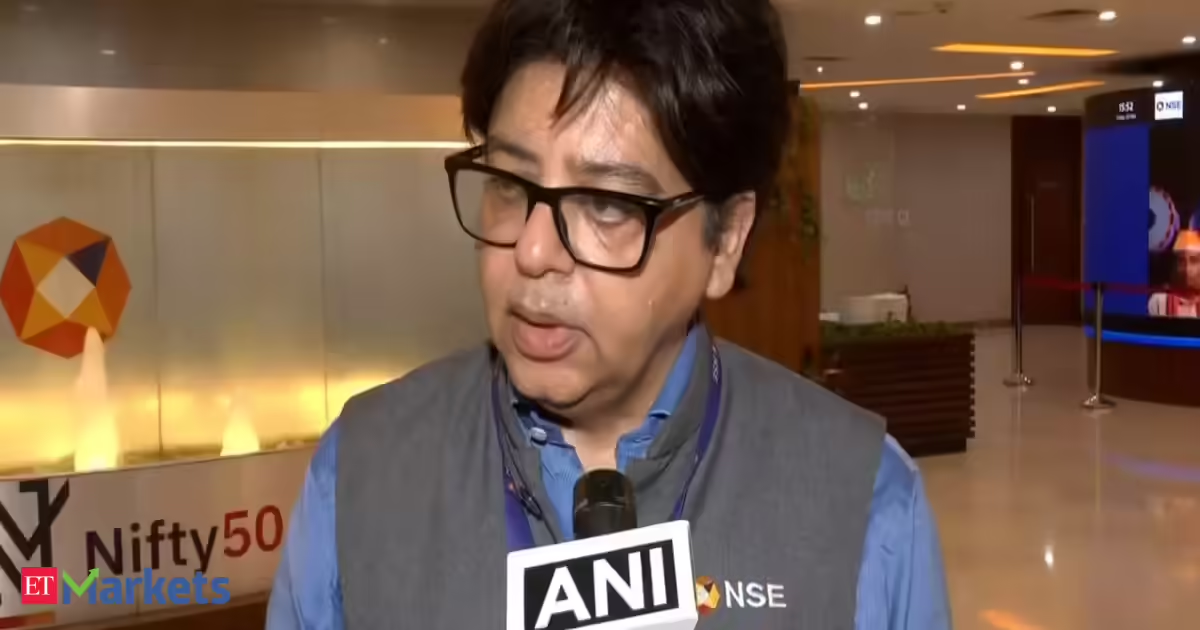
Speaking to on recent market movements, Ahuja highlighted that the correction is not limited to India but is part of a broader global trend.
“Most of the exchanges across the globe are seeing a correction of 7 to 10 per cent. And this up and down is a part of the very market,” he said.
Addressing retail investors directly, Ahuja advised against reacting impulsively to volatility. “My suggestion to retail investors: don’t panic. Show the patience, you are an investor, not a trader,” he said.
He further noted that despite short-term fluctuations, India’s market fundamentals remain strong.

“My understanding of the Indian market, India is growing. Indian fundamentals in terms of GDP growth, inflation, most of the indicators, be it industrial growth, electricity consumption, are very positive,” Ahuja stated.
Emphasising the scale and resilience of Indian markets, he added, “India has witnessed the largest number of IPOs in the world. We are one of the largest exchanges in terms of the number of unique investors and unique accounts.”He also underlined the importance of long-term investing. “Investment means, for me, the definition of investment is once you buy a stock, at least for the next five to ten years, don’t watch the stock daily,” he said.
Ahuja further said that patience is key to benefiting from market growth.
“I think I am always positive about the market because I am a patient investor. Once you have patience, once you understand the fundamentals of the economy and the country as a whole, you should not panic.”
According to him, disciplined and long-term investors are likely to be rewarded despite short-term geopolitical uncertainties.

OpenAI is planning to unify its ChatGPT app, coding platform Codex and browser into a desktop “superapp,” a step to simplify the user experience and continue with efforts to focus on engineering and business customers.
Chief of Applications Fidji Simo will oversee the change and focus on helping the company’s sales team market the new product. OpenAI President Greg Brockman, who currently leads the company’s computing efforts, will help Simo oversee the product revamp and related organization changes, an OpenAI spokeswoman said.
Copyright ©2026 Dow Jones & Company, Inc. All Rights Reserved. 87990cbe856818d5eddac44c7b1cdeb8

Macy’s faces low visibility as Jefferies warns of cautious 2026 outlook
Business
Metals to shine? Hindustan Copper, Tata Steel, other stocks plunge up to 14% in one month; what lies ahead?
Federal Reserve Chair Jerome Powell on Wednesday announced the American central bank’s decision to keep policy rates unchanged, as inflation is not coming down as much as they had hoped amid rising geopolitical tensions in the Middle East and President Donald Trump’s tariff flip-flops. Investors are now increasingly eyeing RBI’s upcoming MPC meeting in April.
Normally, tighter interest rate outlook dampens appetite for metals, which are seen as cyclical beneficiaries of rising industrial and infrastructure activity. Additionally, worries around heightened inflation in the US also puts pressure on the stocks.
Middle East war to boost metal prices?
Elara Capital in its report said that average prices of hot-rolled coil (HRC ) and primary rebar have surged by approximately 13% and nearly 20% respectively in the quarter-to-date. “This upward momentum positively influences margin of steel producers. A 19% spike in international thermal coal prices in the past two months, combined with ongoing gas shortages, will likely hinder secondary steel mills’ capacity to cut prices once peak seasonal demand subsides. With competing product prices holding firm, primary long steel prices are poised to remain supported. Gas constraints should further limit supply of galvanized steel, adding upward pressure on prices,” the brokerage said.
It sees aluminium’s near-term prices to remain elevated, fueled by higher thermal coal cost and supply disruptions in the Middle East, which accounts for approximately 8% of global aluminium production.
According to the World Steel Association, global crude steel production began CY26 on a weaker note, declining around 7% YoY to 147.3 million tonnes. China exports roughly 25–30 million tonnes of steel annually to the Middle East. “Disruption to regional shipping routes could force China’s mills to redirect shipments toward Southeast Asia or domestic markets, thereby increasing supply pressure across alternative export destinations. Meanwhile, India’s steel exports to the Middle East have slowed amid freight volatility and rising shipping risks. Cargo originally bound for the EU is increasingly being rerouted via the Cape of Good Hope, extending transit times by ~10–20 days and significantly increasing freight cost,” Elara Capital said.
The domestic brokerage noted that while Indian steel prices continued to rebound in February, the recovery in demand remains moderate, which limits further upside in prices. “Given the ongoing gas shortage, partly driven by supply disruption amid the escalating US – Iran conflict in the Middle East, galvanized steel prices are set to remain firm, due to supply constraints,” it added.
JM Financial in a recent note had said that Indian steel spreads are expected to improve sequentially in Q4 FY26, supported by a sharp recovery in domestic steel prices following the safeguard duty implementation in late December last year. “The escalating USIsrael-Iran conflict has created a sharp upside risk for global aluminium markets, primarily through supply disruption risks in the Middle East,” it added.
“While higher aluminium prices support near-term margins for producers such as Hindalco, persistently elevated prices could eventually weigh on demand. “JSPL (low leverage, high volume growth over next few years) and Tata Steel (CBAM leading to higher prices in Europe, aiding Corus margins) remain our top picks in the space,” the brokerage further said.
Hindustan Copper shares have emerged as the top loser among the metals pack, falling over 14% in the past one month. Hindustan Zinc shares followed, dropping nearly 13%. Notably, the correction in these two stocks follows a sharp rally earlier this year. Tata Steel and JSW Steel shares declined around 11%, while Adani Enterprises shares tumbled 10% and Hindalco Industries fell 7%.
(Disclaimer: Recommendations, suggestions, views and opinions given by the experts are their own. These do not represent the views of The Economic Times)


I have a masters degree in Analytics from Northwestern University and a bachelors degree in Accounting. I have worked in the investment arena for over 10 years starting as an analyst and working my way up to a management role. Dividend investing is a personal hobby and I look forward to sharing my thoughts with the Seeking Alpha community.
Analyst’s Disclosure: I/we have a beneficial long position in the shares of JNJ, O, ADP, CTAS, FDS, HRL, LOW, MKC, PEP, SHW, SPGI, TROW, WST either through stock ownership, options, or other derivatives. I wrote this article myself, and it expresses my own opinions. I am not receiving compensation for it (other than from Seeking Alpha). I have no business relationship with any company whose stock is mentioned in this article.
Seeking Alpha’s Disclosure: Past performance is no guarantee of future results. No recommendation or advice is being given as to whether any investment is suitable for a particular investor. Any views or opinions expressed above may not reflect those of Seeking Alpha as a whole. Seeking Alpha is not a licensed securities dealer, broker or US investment adviser or investment bank. Our analysts are third party authors that include both professional investors and individual investors who may not be licensed or certified by any institute or regulatory body.

U.S. IPO Weekly Recap: REIT Carve-Out Sees Solid Demand While Drone Micro-Cap Soars 500%+
Sean Anthony Eddy/iStock via Getty Images

By Jennifer Nash
The Philly Fed’s Manufacturing Business Outlook Survey is a monthly survey of about 250 manufacturers in the Third Federal Reserve District, which covers eastern Pennsylvania, southern New Jersey, and Delaware. Participants of the survey
Business
FPIs dump Rs 31,831 crore in financials as total outflows hit Rs 52,703 crore in a fortnight

The selling has been broad-based across sectors, with rate-sensitive and heavyweight segments witnessing the sharpest outflows, while only a handful of sectors managed to attract selective buying.
The rate-sensitive automotive sector, whose prospects are closely tied to energy and metal prices, is the next in line with outflows of Rs 4,807 crore in the period between March 1 and March 15.
Telecommunications, construction and oil & gas witnessed outflows of Rs 3,856 crore, Rs 2,975 crore and Rs 2,932 crore, respectively.
Defensive and consumption-oriented pockets were not spared either, with healthcare recording a sell-off worth Rs 2,436 crore, followed by Rs 2,403 crore and Rs 2,133 crore in FMCG and realty, respectively.
Additionally, sectors such as consumer durables, construction materials, services and IT also saw notable outflows, indicating a broad-based withdrawal of foreign capital. Even smaller segments like media, utilities and textiles witnessed marginal selling.
Read more: Nifty Bank logs 3rd-worst March fall since the global financial crisis. HDFC Bank, SBI among top culprits
Sectoral inflows
The scale of outflows from financials highlights their heavy FPI ownership and sensitivity to global risk aversion, making them the primary target during periods of uncertainty.
Amid the widespread sell-off, select sectors managed to attract FPI inflows, led by capital goods, which cornered investments to the tune of Rs 3,897 crore. The metals & mining vertical received Rs 876 crore of flows. The next in line were power, consumer services and chemicals, which received Rs 602 crore, Rs 531 crore and Rs 225 crore, respectively.
The buying in capital goods and metals suggests continued interest in domestic capex and infrastructure themes, even as broader market sentiment remains weak.
After a February pause, FII continued their selling trend in March, with month-to-date equity outflows at Rs 88,180 crore. They have already offloaded domestic shares worth Rs 1,01,527 crore in 2026. In February, inflows of Rs 22,615 crore were reported, along with a sell-off of Rs 35,962 crore in January.
Markets in March
Seasonally a strong month, March this time was hit by the Iran-Israel war that started on February 28. The impact is evident, with the Nifty down by over 8% or 2,064 points in the last three weeks.
As energy prices spike, global markets now fear inflation returning. Brent, which is up by over 40% this year, is hovering near the $109 a barrel mark and may surge to $150-200 a barrel if the war continues and the Strait of Hormuz remains shut.
The March sell-off has been broad-based, dragging down most sectoral indices. But financials have turned out to be the biggest underperformer. The Nifty PSU Bank index has been the worst hit, tumbling 14.36%, followed by the Nifty Auto index and Nifty Bank, which have declined 12% each.
The Nifty Bank index is headed for its third-worst March performance in two decades, underscoring the intensity of the ongoing market correction, with banking stocks emerging as one of the biggest casualties. As of March 19, the index was down around 12% for the month, placing it among the steepest declines for the banking gauge, surpassed only by the pandemic-driven crash of 2020 (-34%) and the global financial crisis period in 2008 (-23%).
Defensive and consumption-oriented segments have also come under pressure, with the Nifty FMCG, Nifty Metals and Nifty Consumer indices declining around 8% each. Meanwhile, the Nifty IT and Nifty Media indices have slipped 7%, while relatively resilient pockets such as the Nifty Healthcare, Nifty Pharma and Nifty India Defence have contained losses to 4-5%, indicating some stability amid the broader risk-off mood.
FII/FPI outlook
“The weakness in global equity markets following the war in West Asia, the steady depreciation of the rupee and concerns surrounding the impact of high crude prices on India’s growth and corporate earnings contributed to the concern of FPIs,” Dr V K Vijayakumar, Chief Investment Strategist, Geojit Investments, said.
The poor market returns from India vis-à-vis other markets (both developed and emerging) during the last eighteen months is the principal reason for FPIs’ indifference towards India, he said, adding that if their sustained selling strategy is to change, there should be clear indications of earnings recovery in India.
The Geojit analyst said FPIs now regard South Korea, Taiwan and China as better markets to invest in since they are relatively cheaper than India even after the recent correction. “Also, the corporate earnings prospects in these markets appear better than that of India. Therefore, further selling by FPIs in India is likely in the short term. In the present uncertain context, this will take time,” the analyst said.
(Disclaimer: The recommendations, suggestions, views, and opinions given by the experts are their own. These do not represent the views of The Economic Times.)
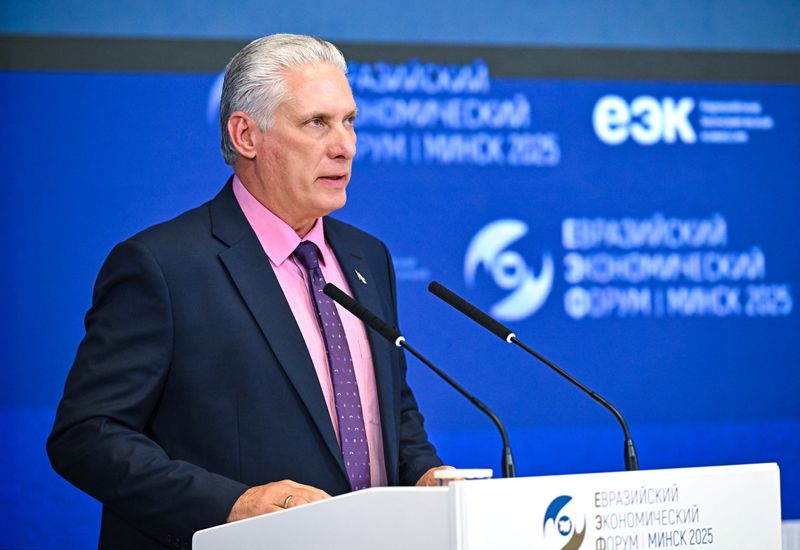

Cuba refuses to negotiate president’s term in talks with United States

Bitcoin kurz vor imminentem Crash?

Hawaii suffers its worst flooding in 20 years and forecasters warn more rain is coming

Commodity Price Watch: March 2026


-

 Tech5 days ago
Your Legally Registered ‘Motorcycle’ Might Not Count Under Proposed US Law
-

 Politics12 hours ago
Jenni Murray, Long-Serving Woman’s Hour Presenter, Dies Aged 75
-
 Tech4 days ago
Are Split Spacebars the Next Big Gaming Keyboard Trend?
-
Sports7 days ago
Why Duke and Michigan Are Dead Even Entering Selection Sunday
-

 Fashion13 hours ago
Weekend Open Thread: Adidas – Corporette.com
-

 Business5 days ago
Search for Savannah Guthrie’s Mother Enters Seventh Week with No Arrests
-

 Business7 days ago
US Airports Launch Donation Drives for Unpaid TSA Workers as Partial Government Shutdown Enters Fifth Week
-
 Crypto World7 days ago
Coinbase and Bybit in Investment Talks: Could Bybit Finally Enter the US Crypto Market?
-
 Crypto World7 hours ago
NIO (NIO) Stock Plunges 6.5% as Shelf Registration Sparks Dilution Worries
-

 Business5 days ago
Australian shares drop as Iran war enters third week
-

 Business7 days ago
Country star Brantley Gilbert enters growing non-alcoholic beer market
-

 Politics3 days ago
The House | The new register to protect children from their abusers shows Parliament at its best
-

 Crypto World5 days ago
Crypto Lender BlockFills Enters Chapter 11 with Up to $500M in Liabilities
-

 News Videos3 days ago
RBA board divided on rate cut, unusually buoyant share market | Finance Report | ABC NEWS
-

 Fashion5 days ago
25 Celebrities with Curly Hair That Are Naturally Beautiful
-

 Tech1 day ago
inKONBINI Lets You Spend Summer Days Behind the Register
-

 Crypto World3 days ago
Canada’s FINTRAC revokes registrations of 23 crypto MSBs in AML crackdown
-
 Politics4 days ago
Real-time pollution monitoring calls after boy nearly dies
-

 Crypto World6 days ago
Crypto Losses Drop 87% in February, But Hackers Are Now Targeting People, Not Code
-
 NewsBeat2 days ago
Residents in North Lanarkshire reminded to register to vote in Scottish Parliament Election


You must be logged in to post a comment Login