

Business
From College Star to Super Bowl MVP and Chiefs Free Agent


Kenneth Walker III, the explosive running back who propelled the Seattle Seahawks to a Super Bowl victory and earned MVP honors, has agreed to a landmark free-agent contract with the Kansas City Chiefs. The three-year deal, worth up to $45 million, marks the richest free-agent contract for a running back in NFL history and signals a major shift for the 25-year-old standout.

Walker’s journey from a small-town Tennessee talent to one of the league’s premier backs has been marked by record-breaking college performances, consistent NFL production and a breakthrough 2025 season capped by postseason heroics. Here are 10 essential things to know about Kenneth Walker III as he prepares to join Patrick Mahomes and the Chiefs for the 2026 campaign.
- Hometown Roots and Early Rise Born Oct. 20, 2000, in Arlington, Tennessee—a suburb of Memphis—Walker grew up in a football-loving family. His father, Kenneth Walker Jr., and mother, Shaunteshia Brown, supported his athletic pursuits. At Arlington High School, he emerged as a star running back, showcasing the speed and power that would define his career. This Tennessee background made his Super Bowl LX MVP win historic: He became the first player from the state to claim the award.
- College Dominance at Michigan State After starting his collegiate career at Wake Forest, Walker transferred to Michigan State in 2021. He exploded onto the national scene, rushing for 1,636 yards and 18 touchdowns in 12 games. His performance earned him the Doak Walker Award as the nation’s top running back and the Walter Camp Player of the Year—becoming the first Michigan State player to win both. Walker’s 2021 season included eight 100-yard rushing games and cemented his status as a top NFL prospect.
- NFL Draft Selection by Seattle The Seahawks selected Walker in the second round (41st overall) of the 2022 NFL Draft. Despite a loaded running back class that year, Seattle viewed him as a dynamic complement to their offense. He quickly became the team’s lead back, rushing for over 1,000 yards in multiple seasons despite injury setbacks early in his career.
- Consistent Production in Seattle Across four seasons with the Seahawks (2022-2025), Walker amassed 3,555 rushing yards and 29 touchdowns on 821 carries. His career yards per carry average stands at 4.3. In 2025, he played all 17 regular-season games for the first time, rushing for 1,027 yards and five touchdowns on 221 carries while adding 31 receptions for 282 yards. His durability and explosiveness made him a cornerstone of Seattle’s run-heavy attack.
- Breakout Postseason and Super Bowl Heroics Walker’s 2025 playoffs were legendary. He rushed for 313 yards and four touchdowns across three games, including 135 yards on 27 carries in Super Bowl LX against the New England Patriots. The Seahawks won 29-13, and Walker earned MVP honors—the first running back to win the award in nearly three decades. His performance included a dominant ground game that controlled the clock and wore down the Patriots’ defense.
- Nickname and Playing Style Known as “K9” for his relentless, dogged running style, Walker combines elite speed, vision and contact balance. At 5-foot-9 and 211 pounds, he excels in both inside zone runs and explosive outside plays. His receiving skills add versatility, making him a three-down threat. Analysts praise his ability to create big plays, as evidenced by his long runs and tackle-breaking ability.
- Injury History Overcome Early in his NFL tenure, Walker dealt with injuries that limited him to 12-15 games per season. But 2025 marked a turning point—he stayed healthy through the full regular season and playoffs, proving his resilience and conditioning. This durability boosted his free-agent value significantly.
- Historic Free-Agent Move to Kansas City With the Seahawks declining the franchise tag, Walker hit the open market as one of the top available backs. The Chiefs, seeking to bolster their running game after previous inconsistencies, signed him to a three-year deal worth up to $45 million. The contract includes significant upside incentives and positions Walker as a workhorse in Andy Reid’s offense alongside quarterback Patrick Mahomes. Experts call it a perfect fit, solving Kansas City’s need for explosive plays on the ground.
- Fantasy Football Impact and Expectations Walker has long been a high-upside fantasy option, and his move to the Chiefs has sparked massive excitement for 2026 drafts. Analysts predict a “massive season” in Kansas City, where he could thrive in a high-powered offense. His 2025 stats (1,027 rushing yards, five touchdowns) were solid, but a healthier supporting cast and creative play-calling could push him toward career highs in yards and scores.
- Legacy and Future Potential At just 25, Walker has already achieved what many running backs chase over entire careers: a Super Bowl ring and MVP trophy. His transition to the Chiefs offers a chance to contend for more titles in one of the league’s premier organizations. As free agency unfolds, Walker’s signing reshapes the 2026 landscape—potentially influencing draft strategies and rival backfields. From Michigan State standout to Super Bowl hero to Chiefs newcomer, Kenneth Walker III’s story continues to captivate NFL fans.


The stock market started to climb out of its early hole on Monday. Pardon me if you’ve heard this one before.
The Dow, after nearly falling 900 points in the first hour of trading, was down just 280 points, or 0.6%. The S&P 500 cut its decline to 0.2%. The Nasdaq Composite was actually up 0.2%.
The stock market was following an identical pattern that played out most of the past week: The Dow racked up big declines early, but the indexes climbed out of the early hole as oil prices ease slightly.

Bruce Griffin-chaired Sheffield Resources has withdrawn both its production and shipment guidance for the March 2026 quarter at the Thunderbird mineral sands mine, citing multiple factors.

Frontera agrees to sell Colombian oil assets to Parex for $750M


IEA proposes largest ever oil release from strategic reserves, WSJ says

At the end of Tuesday’s trading session, the NSE Nifty 50 and the BSE Sensex had a trailing price-earnings (P/E) multiple of 21.2 times and 21.3 times, respectively. This compares with their P/Es of 22.8 at the beginning of the current calendar year. The Indian benchmark P/Es have softened from the levels of over 23 two years ago. This shows the market is cheaper than it used to be, tempering investor concerns of excessive valuations, which, along with slowing growth, has contributed to foreign investors‘ risk-aversion towards India.
 Agencies
VALUATION PREMIUM FALLS: Benchmarks have shed over 8% in 2026 amid investor caution over fallout of West Asia war, but local equities still trading at a premium to EM peers
The valuation premium of Indian benchmarks has now narrowed with respect to nine out of 12 major global equity indices. For Instance, Nifty’s premium over the Hong Kong benchmark has reduced to 1.8 times from 2.3 times at the beginning of the year. The premium with respect to the German DAX and French CAC 40 has fallen to around 1.2 from 1.5 by similar comparison. In the case of other benchmarks, including the US Dow Jones and S&P 500, Indian benchmarks continue to trade at a marginal discount, as they did earlier.
The benchmarks have shed over 8% in 2026 so far, including a 4% drop since the beginning of March as investors turn cautious amid the rising concerns over the impact of the West Asian conflict between Iran and Israel. On a year-to-date basis, India has the second-worst performing equity market among major markets in the world behind Indonesia where the local benchmark has lost 14%.

The rupee closed at 91.80 per dollar amid likely RBI interventions, prompting traders to buy the dip. It had previously closed at a record low of 92.33. Oil prices plunged nearly 10% from their panic-driven peak a day earlier, but were paring losses as of press time.
Risk assets mirrored the currency’s smart recovery. The NSE Nifty climbed 1% to 24,261.60. The BSE Sensex advanced 0.8% to 78,205.98.
Agencies Sectoral Indices Up
Both gauges had fallen around 3% over the past two sessions.

“Slide in crude prices yesterday [Monday], after touching $119, and further falls on Tuesday led traders to cut their bearish bets,” said Siddarth Bhamre, head of research, Asit C Mehta Intermediates. “The West Asia conflict had led to the build-up of ‘panic shorts’ in the system, which got squeezed out as Donald Trump indicated the war is near its end.”
Across Asia, South Korea jumped 5.4% while Japan gained 2.9%. Hong Kong and Taiwan climbed more than 2% each. China advanced 0.7%.
Analysts said that while the rebound could extend, investors remain cautious given the volatility in crude oil prices on account of the conflict in West Asia.
Some uncommitted investors with higher cash holdings are also likely to have deployed money since the declines offered decent entry points, said Bhamre.
All sectoral indices climbed except the IT and oil & gas indices. The Nifty Auto index jumped 3.1% and Nifty Consumer Durables index gained 2.7%. Bank Nifty advanced 1.6% and the PSU Bank index moved 2.2% higher. “Some weak hands squared off their short positions after Trump said that the war could wrap up soon. It also led to some long build-up in outperforming sectors, such as auto and pharma,” said Rajesh Palviya, head of technical and derivatives, Axis Securities.
The rupee, meanwhile, traded in the range of 92.19 per dollar and 91.72 per dollar. Brent crude oil prices cooled to around $93 per barrel, from about $119 per barrel Monday after the US President said “the war is very complete.”
The dollar index, too, decreased to 98.5 from nearly 100 levels the previous day, strengthening Asian currencies.
‘Cautious Optimism’
Still, fuel price fluctuations remain the key driver for the rupee’s trajectory, and the pace of deprecation would increase if oil prices trade above $100 per barrel, traders said.
“With crude prices cooling and the dollar slightly weaker, sentiment for the rupee has improved. I expected the trading range to remain between 91.25/$1 and 92.60/$1,” said Jateen Trivedi, currency research analyst at LKP Securities. “Crude price movements and the direction in the dollar index would continue to guide the currency’s near-term trends.”
Energy prices remain a major concern for risk assets, too, with analysts explaining a lower-than-expected decline in the fear gauge to suggest that a spike in oil prices could dent stocks.
The Volatility Index (VIX) dropped 19.1% to 18.9 – indicating that traders tempered risk expectations.
Foreign portfolio investors sold shares worth ₹4,672.7 crore on Tuesday. Their domestic counterparts bought shares worth ₹6,333.3 crore. In March, global investors dumped stocks worth ₹33,429.6 crore.
Bhamre said while the rebound could extend in the short term, the preceding corrections were substantial. “Investors are not advised to get carried away with the rebound since it is unsure if the bottom is made,” he said. “There is no big rally in the offing. Unless the tensions flare up again, the markets are expected to see minor declines instead of deeper cuts. The volatility and global risk-off sentiment could keep a lid on the gains.”
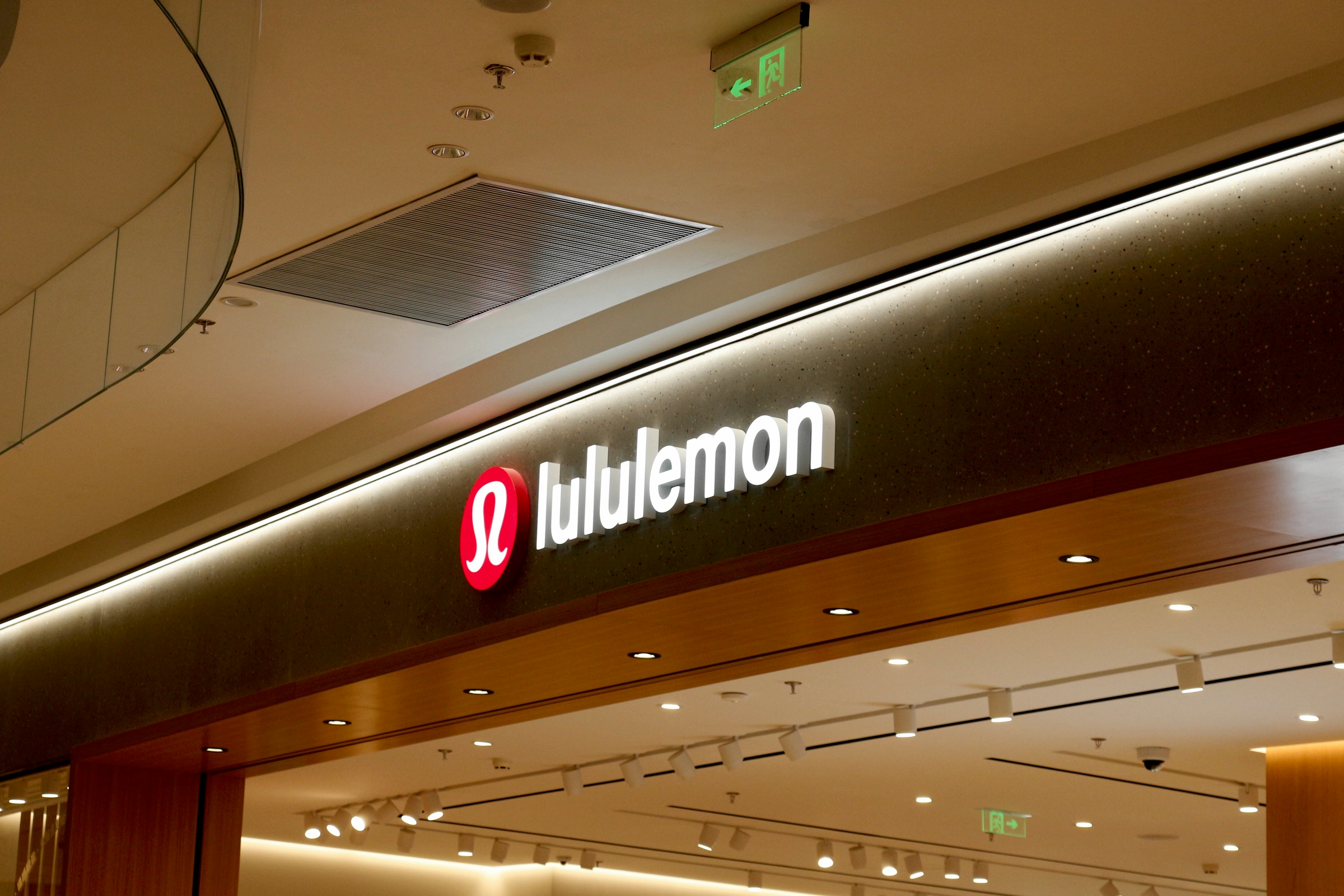

Lululemon has paid a $702,900 fine for sending hundreds of thousands of emails that customers had no way of unsubscribing from.
This comes after the Australian Communications and Media Authority (ACMA) launched an investigation against the companies over violations against the country’s spam laws.
Lululemon Pays Fine Over Emails
According to a report by 9News, not all of the emails that Lululemon sent between December 1, 2024, and January 5, 2025, were marketing or promotional in nature.
“In this case Lululemon sent service emails such as shipping updates that also contained sales material and direct links to promotions,” ACMA member Samantha Yorke said in a statement.
Yorke added, “This was an easily avoidable error that has led to hundreds of thousands of marketing emails being sent without a way for people to opt out.”
A spokesperson for Lululemon has also released a statement on the issue, according to ABC News.
“We take this responsibility very seriously and have worked cooperatively with the Australian Communications and Media Authority (ACMA) to address their findings,” the Lululemon spokesperson said.
“We have completed a thorough review of our practices for communicating with our guests and have made updates to our standard guest journey emails, including our order confirmation and delivery notifications to ensure ongoing compliance,” the spokesperson assured.
What Australian Law Requires
Spam laws in Australia require businesses to include the option to unsubscribe from marketing and promotional emails and texts.
In addition to the fine for violating Australian laws, Lululemon has also agreed to enter into an independent review of its spam rule compliance.
The company is also required to regularly report to the ACMA regarding the implementation of recommended improvements.

Farmers, truckers, airlines, and fuel distributors will descend on Dumas House today to iron out a plan to ease pressure on Western Australia’s fuel supply.
Teladoc at Barclays Conference: Strategic Shifts and AI Focus
Business
US Stock Market | SoftBank’s PayPay plans to price US IPO around low end of range, sources say

The IPO book was covered more than five times, one of the people said. It has now closed and pricing will be finalised after U.S. market hours on Wednesday, the person said.
The Japanese payment app operator was offering 55 million American depositary shares, priced $17 to $20 apiece, a filing this month showed, targeting a valuation of up to $13.4 billion.
The people declined to be identified as the information is not public. PayPay declined to comment.
PayPay has played a central role in encouraging Japanese consumers to move away from a preference for cash by offering rebates on its payments app.
However, it has had a bumpy IPO path. Its IPO roadshow was initially postponed after markets were jolted by conflict in the Middle East, Reuters reported last week.
It had already postponed the IPO last year during the U.S. government shutdown, which disrupted regulatory processes and delayed regulatory filing.
PayPay plans to list on the Nasdaq under the symbol “PAYP”. Reuters first reported its plans for a U.S. listing in 2023.

Sanjana Ganesan: Sports Anchor’s Career and Financial Overview #viral #shorts #motivation#trending

Pope accepts resignation of Chaldean Catholic bishop charged with embezzlement
Stocks Recover From Early Losses. It’s a Familiar Pattern.

Smart energy pays enters the US market, targeting scalable financial infrastructure

Why Israel is blocking foreign journalists from entering

Bitcoin: We’re Entering The Most Dangerous Phase
Sanjana Ganesan: Sports Anchor’s Career and Financial Overview #viral #shorts #motivation#trending

You Won’t Believe How Much MONEY This Arcade Game Makes! #vendingmachine #arcade #money

XRP: This Is Going TO BLOW YOUR MIND!
-
Business5 days ago
Form 8K Entergy Mississippi LLC For: 6 March
-

 Tech6 days ago
Bitwarden adds support for passkey login on Windows 11
-

 News Videos2 days ago
10th Algebra | Financial Planning | Question Bank Solution | Board Exam 2026
-

 Fashion4 days ago
Weekend Open Thread: Ann Taylor
-

 Crypto World2 days ago
Paradigm, a16z, Winklevoss Capital, Balaji Srinivasan among investors in ZODL
-
 Sports5 days ago
499 runs and 34 sixes later, India beat England to enter T20 World Cup final | Cricket News
-

 Sports3 days ago
Three share 2-shot lead entering final round in Hong Kong
-

 Sports3 days ago
Braveheart Lakshya downs Lai in epic battle to enter All England Open final | Other Sports News
-

 Politics5 days ago
Top Mamdani aide takes progressive project to the UK
-

 Business12 hours ago
ExxonMobil seeks to move corporate registration from New Jersey to Texas
-

 NewsBeat5 days ago
Piccadilly Circus just unveiled ‘London’s newest tourist attraction’ and it only costs 80p to enter
-

 Entertainment4 days ago
Hailey Bieber Poses For Sexy Selfies In New Luscious Lip Thirst Traps
-

 Business2 days ago
Search for Nancy Guthrie Enters 37th Day as FBI Probes Wi-Fi Jammer Theory
-
 NewsBeat1 day ago
Pagazzi Lighting enters administration as 70 jobs lost and 11 stores close across Scotland
-

 Tech2 days ago
Despite challenges, Ireland sixth in EU for board gender diversity
-

 Crypto World6 days ago
New Crypto Mutuum Finance (MUTM) Reports V1 Protocol Progress as Roadmap Enters Phase 3
-
Entertainment6 days ago
Harry Styles Has ‘Struggled’ to Discuss Liam Payne’s Death
-

 Tech6 days ago
ACIP To Discuss COVID ‘Vaccine Injuries’ Next Month, Despite That Not Being In Its Purview
-

 Business1 day ago
Search Enters 39th Day with FBI Tip Line Developments and No Major Breakthroughs
-
 NewsBeat6 days ago
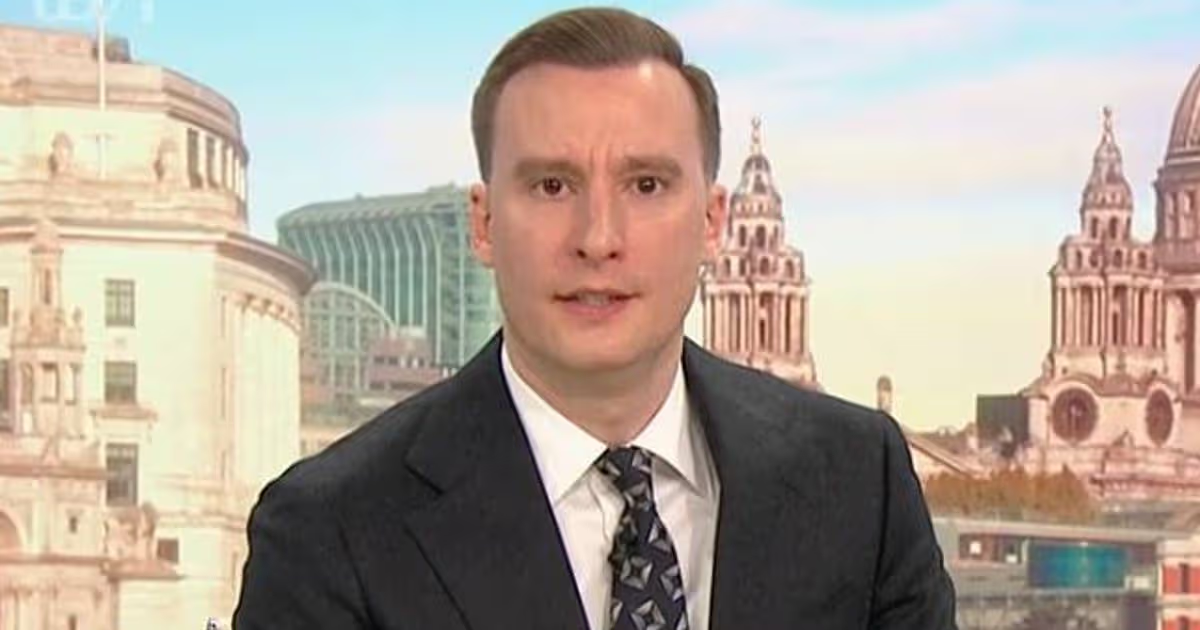
Good Morning Britain fans delighted as Welsh presenter returns to host ITV show