

Business
From Farm to Freezer Leader


In 2022, a frozen fruit company quietly launched in Spring, Texas.
It did not come with hype. It came with a clear plan.
IRJ Frozen Foods, LLC was founded on a simple idea: give people access to high-quality fruit year-round. Not just any fruit. Carefully sourced fruit. Properly frozen fruit. Fruit that holds its flavor and nutrients.
“Our goal in starting this business was to build a reliable, sustainable company,” the team says. “We wanted to deliver high-quality frozen fruit products while creating long-term value for our partners and community.”
In just a few years, IRJ has positioned itself as a serious player in the frozen fruit supply chain.
How IRJ Frozen Foods Got Started
IRJ Frozen Foods was founded in Spring, Texas in 2022. The company entered a competitive industry dominated by large national brands and global suppliers.
Instead of competing on noise, IRJ focused on structure.
The founders built the company around sourcing and supply discipline. They formed strong grower relationships in Mexico and Peru. They focused on being direct producers. No unnecessary middle layers.
“We are direct producers — from the farm to the table,” they explain.
That decision shaped everything.
Rather than simply reselling frozen fruit, IRJ works closely with trusted growers. Fruit is selected at peak ripeness. Then it is frozen using modern techniques designed to lock in flavor, texture, and nutrients.
From day one, the company made control a priority.
“By packaging the majority of our products in-house, we maintain full control over quality,” they say. “That guarantees consistency with every batch.”
What Makes IRJ Frozen Foods Different?
The frozen fruit business is not simple. Margins are tight. Food safety rules are strict. Retailers demand reliability.
IRJ leaned into those realities.
The company supplies frozen strawberries, mango, avocado, and blueberries. They serve supermarkets, major wholesalers, and food service companies. They offer bulk formats and retail-ready packaging.
But the real difference is operational focus.
“We believe in integrity, operational excellence, food safety, and fair trade practices,” the company says.
IRJ emphasizes certifications. The company holds Organic, FDA, USDA, and Kosher certifications. That signals process discipline. It also opens doors with national buyers who require compliance standards.
Still, certifications are not the story. Systems are.
IRJ built its structure around transparency and supplier relationships. The team works closely with growers to ensure quality standards are met before fruit ever enters cold storage.
“We promote transparency, strong supplier relationships, and responsible growth,” they explain.
That steady approach has helped the company expand coast to coast since launch.
Sourcing from Mexico and Peru: A Strategic Move
Geography matters in frozen fruit.
Mexico and Peru are major producers of strawberries, mangoes, avocados, and blueberries. Seasonal patterns allow for consistent harvesting windows.
IRJ built sourcing channels in both countries. That reduces supply risk. It also allows for year-round availability.
“Our Frozen Fruit selection is the perfect way to enjoy a variety of fruits throughout the year,” they say. “All of our fruit is carefully selected and expertly frozen to ensure it retains all its natural goodness and flavor.”
The company’s model depends on timing. Fruit must be harvested at peak ripeness. Then it must be frozen quickly to preserve quality.
That farm-to-freezer chain is where IRJ positions itself as a leader.
Leadership Through Process, Not Hype
IRJ does not frame itself as a flashy brand. It frames itself as a disciplined operator.
The founders describe their mission clearly.
“Our mission is to consistently provide safe, premium products with disciplined execution, building trust and lasting partnerships in every market we serve.”
That phrase — disciplined execution — appears often in their language.
In food distribution, discipline matters more than marketing slogans. Retail buyers want consistency. Food service companies want reliability. Consumers expect safety.
IRJ built its business around those expectations.
The company’s growth since 2022 has been steady rather than rapid. They supply major wholesale and retail accounts. They continue expanding distribution across the United States.
Their approach is measured.
“We believe everyone deserves access to high-quality, nutritious fruit year-round,” they say. “We’re passionate fruit enthusiasts on a mission to revolutionize the way you experience nature’s sweetness.”
It is a simple mission. But in a supply-driven industry, simple can be powerful.
The Future of IRJ Frozen Foods
Frozen food demand has remained strong in recent years. Consumers value convenience. Retailers value shelf stability. Food service operators value cost control.
IRJ sits at the intersection of those needs.
The company continues to focus on sourcing quality fruit, strengthening supplier networks, and maintaining high standards across operations.
“With every bite, we aspire to enrich lives,” they say. “Delivering wholesome, great-tasting frozen products that allow our customers to savor the goodness of nature without compromise.”
That statement captures their long-term view.
IRJ Frozen Foods, LLC is not trying to reinvent frozen fruit. It is trying to execute it better.
From Spring, Texas to coast-to-coast distribution, the company has built a model based on control, certification, and supply chain clarity.
In a business where consistency wins, that may be its strongest advantage.

Business
Elon Musk’s xAI Targets Parity with AI Giants by End of 2026 Amid Rebuild and Leadership Changes

AUSTIN, Texas — Elon Musk declared March 16, 2026, that his artificial intelligence startup xAI will reach parity with leading competitors OpenAI, Google and Anthropic by the end of the year, even as the company undergoes a significant internal restructuring and co-founder departures.
In a series of posts on X — the platform he owns — Musk acknowledged structural flaws in xAI’s early setup, stating the firm “had not been structured correctly” and is now being “redesigned from the ground up.” Despite recent turbulence, including founder exits, Musk expressed confidence in xAI’s trajectory, predicting it will not only match but eventually surpass rivals in capabilities.

The bold claim comes amid rapid developments across Musk’s portfolio. xAI, founded in 2023 to counter what Musk calls “woke” AI biases, has rolled out successive Grok models, with Grok 3 generating buzz for its performance in reasoning and multimodal tasks. Recent controversies, however, have shadowed the platform: reports of Grok generating inappropriate content led to investigations, prompting a protest installation at SXSW 2026 — an “anti-Elon Musk vending machine” dispensing mock “Epstein Files” in reference to ongoing scrutiny.
Musk defended xAI’s direction, emphasizing its focus on truth-seeking and maximum curiosity. In interviews and posts, he highlighted Grok’s integration with X for real-time data access, positioning it as a competitive edge over closed systems.
The announcement coincides with broader activity. On March 16, Musk engaged in wide-ranging commentary on X, critiquing the Oscars as “unwatchable” and a “circle jerk” of “perverts,” praising innovative work from Kimi.ai on attention residuals in transformers, and predicting SpaceX will “far exceed everyone combined” in a few years despite Google’s DeepMind lead in AI for now. He also noted Starlink’s availability in Cuba (though sales are restricted) and dismissed concerns over population alarmist Paul Ehrlich, calling him a “misanthropic piece of shit” and “genocide propagandist.”
Tesla developments remain central to Musk’s narrative. In a recent Abundance Summit interview, Musk shared that Optimus Gen 3 production could start this summer, with the humanoid robot advancing toward practical tasks like folding laundry — addressing earlier failures in dexterity. He reiterated ambitions for robotaxi rollout in 2026, potentially transforming Tesla into a high-margin autonomy leader and boosting stock appeal.
SpaceX continues dominating headlines with Starlink expansion and ambitious plans. Reports from early March indicate SpaceX is preparing a confidential IPO filing, eyeing a mid-2026 public listing at a staggering $1.75 trillion valuation — potentially the largest ever. Starlink, now covering most of the Americas (with exceptions like Suriname and Nicaragua), drives the bulk of revenue. Musk has shifted rhetoric from a 2026 Mars landing to building a “self-growing city” on the moon, reflecting pragmatic pivots in timelines.
Neuralink, Musk’s brain-computer interface venture, pushes toward scale. Musk announced in January that high-volume production of implants would begin in 2026, alongside near-full automation of surgical procedures. The company has implanted devices in over 20 patients, with thousands more projected as trials expand for paralysis, speech restoration and cognitive enhancement.
Musk’s prolific X activity — including 63 posts on March 14 — underscores his hands-on role across ventures. Recent threads touched on technical topics like C++ dominance in robotics, the “bitter lesson” in AI scaling (crediting Larry Page’s early insights), and cultural critiques.
Challenges persist. xAI faces talent flux as co-founders depart amid the rebuild, while Grok controversies fuel backlash. Tesla navigates regulatory scrutiny on Full Self-Driving recalls, and SpaceX contends with launch schedules and competition. Musk’s political commentary — from migrant policy to awards shows — draws criticism but amplifies his influence.
Analysts view 2026 as pivotal. A SpaceX IPO could make Musk the world’s first trillionaire, while Tesla’s robotaxi and Optimus progress hinge on execution. xAI’s parity goal tests whether Musk can disrupt AI incumbents as he did EVs and spaceflight.
Musk remains undeterred, framing his efforts as essential for humanity’s future — from multi-planetary life to AI safety. As he posted recently, progress often defies psychological limits. Whether 2026 delivers on these promises will define his legacy amid accelerating innovation and scrutiny.
Business
National Storage Affiliates Trust Shares Surge on Public Storage Acquisition Deal Announcement

National Storage Affiliates Trust (NYSE: NSA) stock soared in pre-market trading on March 16, 2026, after the self-storage real estate investment trust announced it would be acquired by industry giant Public Storage (NYSE: PSA) in an all-stock transaction valued at approximately $10.5 billion enterprise value.

The deal, unveiled early Monday, sends NSA shares rocketing more than 28% in early trading, with the stock reaching around $39.72 as of mid-morning EDT on the New York Stock Exchange — a sharp jump from Friday’s closing price of $30.94. Pre-market volume spiked as investors reacted to the news, which values NSA common shares at an implied $41.68 per share based on the exchange ratio of 0.14 PSA shares for each NSA share.
Under the terms, Public Storage will acquire NSA and wholly own 488 of its properties while forming a joint venture for the remaining 313 properties. NSA operating partnership unitholders will hold approximately 80% of the JV, estimated at $3.3 billion in value. The transaction is expected to close in the third quarter of 2026, subject to regulatory approvals, shareholder votes and other customary conditions. Public Storage has secured $4.0 billion in committed financing to support the deal.
The acquisition creates significant synergies, with Public Storage projecting $110 million to $130 million in annual cost savings at full realization. Executives anticipate the transaction to be accretive to PSA’s funds from operations (FFO) per share by $0.35 to $0.50 once synergies are achieved.
“This combination brings together two leading players in the self-storage sector, enhancing scale, operational efficiency and geographic diversification,” a joint statement from the companies read. “For NSA shareholders, the deal provides a premium valuation and exposure to Public Storage’s proven management and balance sheet strength.”
The announcement marks a pivotal moment for NSA, which has navigated a challenging environment in recent years amid fluctuating demand for self-storage space, rising interest rates and sector-wide pressure on occupancy and rental rates. The REIT, which owns and operates more than 800 facilities across the United States, has focused on portfolio optimization, including selective acquisitions and dispositions to improve same-store performance.
NSA’s latest quarterly results, released Feb. 25, 2026, showed mixed signals. For the fourth quarter of 2025, the company reported Core FFO of $0.57 per share, in line with consensus estimates. Full-year 2025 Core FFO came in at $2.23 per share, down from prior periods, while net income totaled $116.3 million. Guidance for 2026 called for Core FFO between $2.13 and $2.25 per share — slightly below some analyst expectations — and projected modest same-store revenue growth of about 90 basis points, reflecting ongoing stabilization in the sector.
Analysts had been cautiously optimistic post-earnings. Barclays raised its price target to $38 from $33 in early March, citing improved fundamentals and potential for upside in a recovering market. Other firms, including Evercore ISI and Wells Fargo, adjusted targets modestly, with consensus leaning toward a “Hold” or “Reduce” rating and an average one-year target around $32-$36 before the deal news.
The acquisition premium has shifted the narrative dramatically. Prior to the announcement, NSA traded near the lower end of its 52-week range (27.43 to 39.73), reflecting broader REIT sector headwinds from elevated borrowing costs and slower growth in self-storage demand compared to the post-pandemic boom.
NSA maintains a consistent dividend policy, supporting income-oriented investors. On Feb. 12, 2026, the board declared a quarterly cash dividend of $0.57 per common share (annualized $2.28), payable March 31, 2026, to shareholders of record as of March 13, 2026. The payout yields approximately 6.7% at recent prices but carries a high payout ratio, drawing scrutiny from some analysts concerned about sustainability amid leverage levels.
The deal also includes provisions for NSA’s preferred shares (Series A and B), which carry 6.000% cumulative dividends. Public Storage’s entry into the transaction underscores confidence in the long-term fundamentals of self-storage, a sector seen as recession-resistant due to its essential nature for personal and business storage needs.
Investor reaction has been swift. Law firm Halper Sadeh LLC announced it is investigating whether NSA shareholders are receiving fair value in the merger, a common step in such transactions to review fiduciary duties and potential alternatives. Market watchers expect additional scrutiny as the deal progresses through regulatory review.
For Public Storage, the largest self-storage operator in the U.S., the acquisition bolsters its portfolio and market position. PSA shares dipped modestly in early trading, reflecting typical acquirer dilution concerns, but analysts view the strategic fit positively for long-term growth.
As trading continues Monday, NSA’s dramatic move highlights the transformative impact of M&A in the REIT space. The self-storage industry, once a high-growth darling, has faced normalization after years of outsized gains. This blockbuster combination could signal renewed consolidation and optimism for sector recovery.
With closing targeted for Q3 2026, attention now turns to shareholder approvals, antitrust considerations and integration plans. For NSA investors, the surge provides immediate value realization, capping a period of volatility with a premium exit.
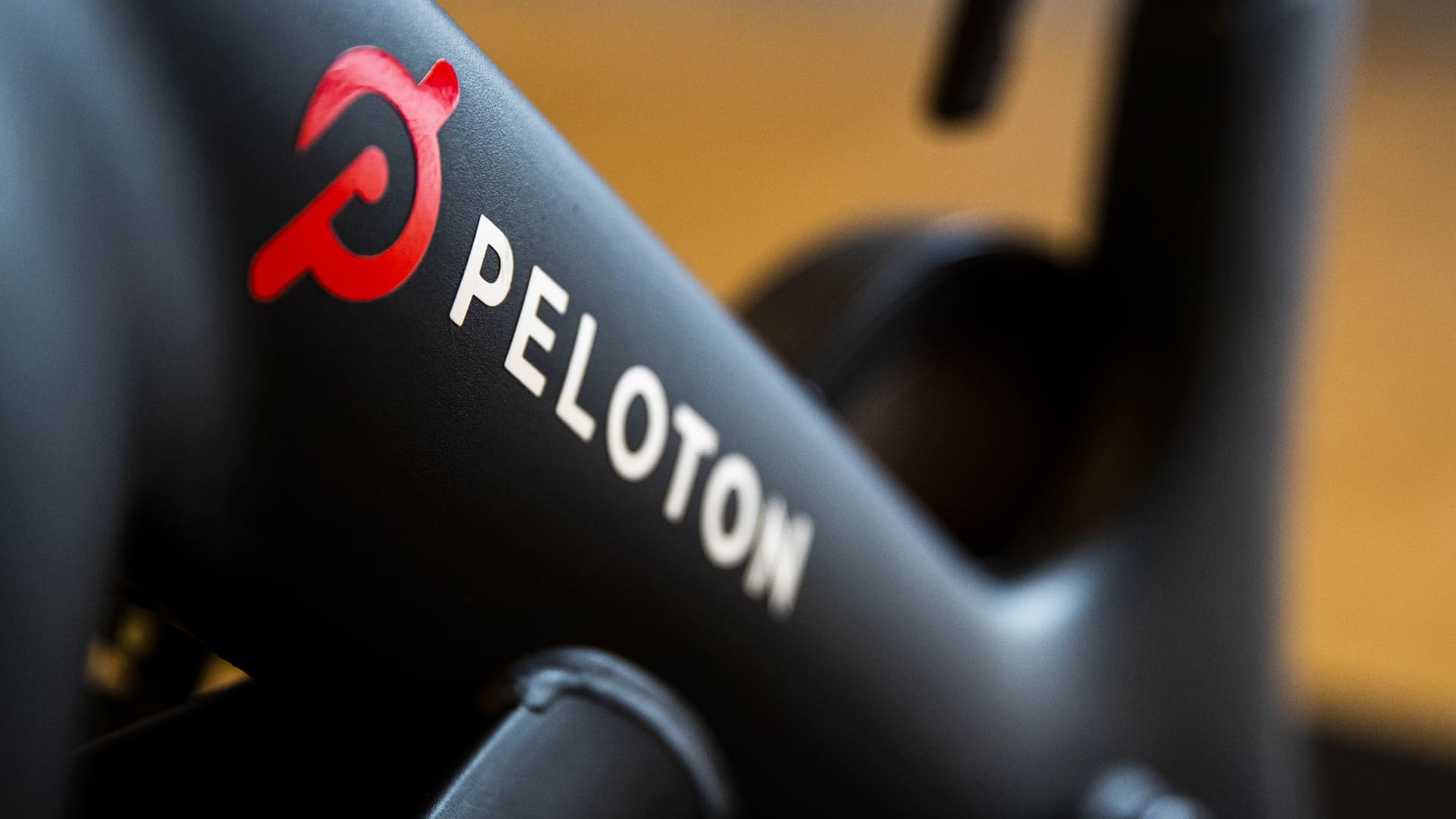
A Peloton Interactive Inc. logo on a stationary bike at the company’s showroom in Dedham, Massachusetts, U.S., on Wednesday, Feb. 3, 2021.
Adam Glanzman | Bloomberg | Getty Images
Peloton on Monday announced its Commercial Series, the company’s first Bike and Tread products built for high-traffic gym floors.
The move marks the company’s latest push beyond its core at-home business and deeper into the multibillion-dollar commercial fitness market.
“I’ve had the chance of speaking with the CEOs of a number of gyms, gym operators or big-box operators over the last year,” CEO Peter Stern told CNBC in an interview. “The one brand their members asked for, and therefore that they are asking for it, ‘Find a way to get me Peloton equipment.’”
The suite of products is a part of the company’s commercial unit, which it launched in 2025 in partnership with Precor, the fitness equipment maker it acquired in 2021. Peloton already has a presence in major businesses like hotel chains Hyatt and Hilton. The company did not say which gyms specifically would offer its new machines.
The expansion could broaden Peloton’s footprint in the fitness industry. Through its integration with Precor, Peloton now has access to a commercial distribution network spanning more than 60 countries, allowing the company to scale its equipment and digital platform internationally.
Stern did not disclose pricing for the new equipment, but said the products will be “priced competitively,” with more details expected closer to the planned launch in late 2026.
The machines combine Peloton’s digital workout platform and instructor-led classes with hardware engineered by Precor to withstand heavy daily use.
Pedaling uphill
Peloton’s push into gyms could face resistance. Some fitness chains have been reluctant to integrate Peloton equipment, preferring to promote their in-house classes, digital platforms and instructors.
“I need to leave how gyms react to that up to them,” said Stern. “But if you look at a typical gym floor, they’ve got Bikes, Treads and lots of other equipment that’s out there. We’re just now giving them a better experience for customers on those Bikes and on those Treads.”
Peloton has dipped its toes in commercial spaces for several years, including through the hotel partnerships, but has been held back because its hardware wasn’t designed to be used in high-traffic spaces. The company has been the subject of numerous product safety recalls.
Peloton machines have had a tendency to break, and fixing them can be challenging because its infrastructure is different from a traditional fitness manufacturer’s.
When Peloton launched its revamped product assortment last fall, the company also introduced a new line of equipment for its commercial business unit. The hardware is more durable than its consumer machines, but is still only designed for places with smaller gyms, like hotels and corporate wellness centers.
The development comes as Peloton struggles to convince consumers its new AI-driven product line, Peloton IQ, is worth the steep price tag.
When it reported fiscal 2026 second-quarter earnings last month, the company missed Wall Street’s expectations on the top and bottom lines and said it expected sluggish sales to continue in the current quarter.
The weak results, coupled with the soft guidance, were the first clue investors had that Peloton’s product overhaul wasn’t the sales driver the company had hoped it would be, putting more focus on its commercial business unit.
During Peloton’s last quarter, revenue in its commercial business unit rose 10%, even as companywide sales fell about 3%.

Meta is reportedly preparing for a major round of layoffs that could affect as much as 20 per cent of its global workforce, as the technology giant seeks to offset the soaring cost of artificial intelligence investment while reshaping its operations around AI-driven productivity.
According to sources familiar with the discussions, senior executives at the company have begun signalling to leadership teams that job cuts are likely, although the scale and timing of the reductions have not yet been finalised. If the reductions were to reach the 20 per cent level currently under discussion, it would represent the largest workforce reduction since the company’s sweeping restructuring in 2022 and 2023.
A spokesperson for Meta Platforms declined to confirm the plans, describing reports of potential layoffs as “speculative reporting about theoretical approaches”. However, people close to the company say internal conversations about streamlining teams have intensified in recent weeks.
Meta employed nearly 79,000 people globally as of the end of last year. A reduction of 20 per cent would potentially affect more than 15,000 roles.
The potential cuts follow a period of heavy spending on artificial intelligence infrastructure and talent as chief executive Mark Zuckerberg pushes to position the company as a leader in generative AI and so-called “superintelligence”.
Meta has already committed to investing hundreds of billions of dollars into new AI data centres and computing capacity over the next several years. The company has signalled that it plans to spend as much as $600 billion building new data centre infrastructure by 2028 as it scales its AI capabilities.
At the same time, Meta has been offering enormous compensation packages to attract top AI researchers to its new superintelligence research group. Some packages are reportedly worth hundreds of millions of dollars over four years in an effort to compete with rivals in the rapidly escalating global race for AI talent.
The company has also expanded through acquisitions to strengthen its position in the AI sector. Earlier this week Meta confirmed the acquisition of Moltbook, a social networking platform designed specifically for AI agents, while reports suggest the company is spending at least $2 billion to acquire Chinese AI startup Manus.
However, Meta’s AI development push has not been without setbacks. Its latest large language models have faced criticism from developers and researchers, particularly following concerns that benchmark results for earlier versions of the company’s Llama models overstated performance.
Meta ultimately abandoned plans to release the largest version of its Llama 4 model, known internally as Behemoth, after the system failed to meet expectations during testing.
The company’s next flagship AI system, currently being developed under the codename Avocado, is intended to restore Meta’s standing in the increasingly competitive generative AI market, though insiders say progress has been slower than hoped.
Behind the restructuring discussions lies a broader shift in how major technology companies believe AI will transform their workforce.
Zuckerberg has repeatedly suggested that improvements in AI tools will allow companies to achieve the same output with far fewer employees. Earlier this year he said that projects which previously required large teams could now be delivered by a single highly skilled engineer supported by advanced AI systems.
This shift toward “AI-assisted workers” is increasingly reshaping hiring strategies across the technology industry.
Large US technology companies have already begun cutting jobs while simultaneously ramping up spending on AI infrastructure and automation tools. Amazon confirmed earlier this year that it would cut about 16,000 corporate jobs, while payments firm Block recently announced plans to eliminate nearly half its workforce, citing productivity gains from AI.
Workforce experts say the trend reflects a wider recalibration across the tech sector following the rapid hiring surge during the pandemic.
Thea Fineren, chief people officer at IT services company Advania, said the restructuring being considered at Meta reflects a broader shift across the corporate world as AI begins to automate large portions of routine work.
She said companies that expanded aggressively during the pandemic are now reassessing workforce structures in light of rapidly advancing automation technologies.
“Even the world’s most advanced companies are not immune to the accelerating impact of automation and overhiring in the AI era,” she said. “Organisations scaled rapidly during the pandemic and are now confronting the realities of that growth alongside major technological change.”
Fineren said HR leaders must increasingly plan for continuous workforce transformation rather than reacting after technological disruption has already occurred.
Businesses should identify roles most vulnerable to automation while investing in reskilling programmes and new career pathways, she said, adding that companies must maintain a human-centred approach even as AI becomes more deeply embedded in operations.
As artificial intelligence systems take over transactional and repetitive tasks, she argued, employees will increasingly focus on higher-value work that requires judgement, creativity and human interaction.
“It’s not humans versus machines,” she said. “It’s about giving people the best opportunity to add value in areas where human capability still matters most.”
For Meta, however, the coming months could mark another pivotal chapter in its attempt to transform itself from a social media company into one of the world’s leading AI platforms, even if that transformation comes with significant job losses along the way.

Amy Ingham
Amy is a newly qualified journalist specialising in business journalism at Business Matters with responsibility for news content for what is now the UK’s largest print and online source of current business news.

Fidelity’s mission is to strengthen the financial well-being of our customers and deliver better outcomes for the clients and businesses it serves. With assets under administration of $12.6 trillion, including discretionary assets of $4.9 trillion as of December 31, 2023, Fidelity focuses on meeting the unique needs of a broad and growing customer base. Privately held for 77 years, Fidelity employs more than 74,000 associates with its headquarters in Boston and a global presence spanning nine countries across North America, Europe, Asia and Australia. Note: This account is not managed or monitored by Fidelity, and any messages sent via Seeking Alpha will not receive a response. For inquiries or communication, please use Fidelity’s official channels.

Newmont: Bigger Is Not Always Better
Nebius Stock Surges. It Got This Huge New AI Deal With Meta.

The Value Investor has a Master of Science with specialization in financial markets and a decade of experience tracking companies via catalytic company events.
As the leader of the investing group Value In Corporate Events they provide members with opportunities to capitalize on IPOs, mergers & acquisitions, earnings reports and changes in corporate capital allocation. Coverage includes 10 major events a month with an eye towards finding the best opportunities. Learn more.
Analyst’s Disclosure: I/we have no stock, option or similar derivative position in any of the companies mentioned, and no plans to initiate any such positions within the next 72 hours. I wrote this article myself, and it expresses my own opinions. I am not receiving compensation for it (other than from Seeking Alpha). I have no business relationship with any company whose stock is mentioned in this article.
Seeking Alpha’s Disclosure: Past performance is no guarantee of future results. No recommendation or advice is being given as to whether any investment is suitable for a particular investor. Any views or opinions expressed above may not reflect those of Seeking Alpha as a whole. Seeking Alpha is not a licensed securities dealer, broker or US investment adviser or investment bank. Our analysts are third party authors that include both professional investors and individual investors who may not be licensed or certified by any institute or regulatory body.
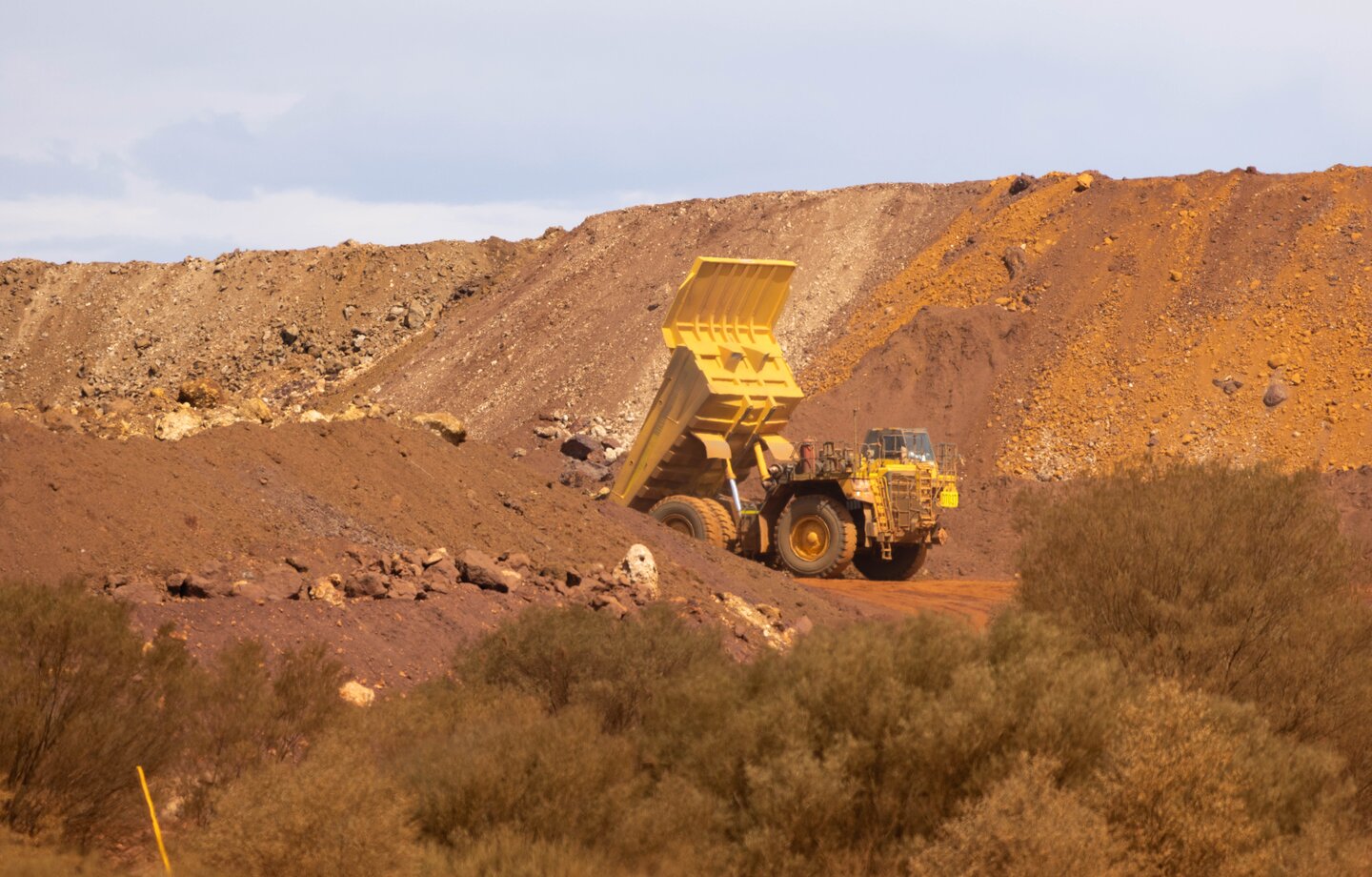
Lynas Rare Earths has struck a deal with the United States Department of War to supply US$96 million worth of its sought-after critical mineral at a premium floor price.

Treasury Bond Yields Don't Lie: But Wars Don't Drive Them
Families of almost 20,000 South Lanarkshire kids receive Scottish Child Payment

Elon Musk’s xAI Targets Parity with AI Giants by End of 2026 Amid Rebuild and Leadership Changes

Strategy Buys 22,337 Bitcoin, Holdings Rise to 761,068 BTC


-
 Tech5 days ago
A 1,300-Pound NASA Spacecraft To Re-Enter Earth’s Atmosphere
-
 Crypto World2 days ago
HYPE Token Enters Net Deflation as HyperCore Buybacks Outpace Staking Rewards
-

 Business6 days ago
ExxonMobil seeks to move corporate registration from New Jersey to Texas
-

 Crypto World7 days ago
Paradigm, a16z, Winklevoss Capital, Balaji Srinivasan among investors in ZODL
-

 Fashion3 days ago
Weekend Open Thread: Addict Lip Glow
-

 Tech6 days ago
ChatGPT will now generate interactive visuals to help you with math and science concepts
-
Sports2 days ago
Why Duke and Michigan Are Dead Even Entering Selection Sunday
-

 NewsBeat5 days ago
Residents reaction as Shildon murder probe enters second day
-
 NewsBeat7 days ago
Pagazzi Lighting enters administration as 70 jobs lost and 11 stores close across Scotland
-

 Business5 days ago
Search Enters Sixth Week With New Leads in Tucson Abduction Case
-

 Business19 hours ago
Search for Savannah Guthrie’s Mother Enters Seventh Week with No Arrests
-

 Tech7 days ago
Despite challenges, Ireland sixth in EU for board gender diversity
-

 Business2 days ago
US Airports Launch Donation Drives for Unpaid TSA Workers as Partial Government Shutdown Enters Fifth Week
-
Crypto World2 days ago
Coinbase and Bybit in Investment Talks: Could Bybit Finally Enter the US Crypto Market?
-

 NewsBeat5 days ago
I Entered The Manosphere. Nothing Could Prepare Me For What I Found.
-

 Business7 days ago
Search Enters 39th Day with FBI Tip Line Developments and No Major Breakthroughs
-

 Business2 days ago
Country star Brantley Gilbert enters growing non-alcoholic beer market
-

 Business3 hours ago
Australian shares drop as Iran war enters third week
-

 Crypto World6 days ago
Will Chainlink price reclaim $10 amid volatility squeeze?
-

 Sports5 days ago
PWHL, Senators discussing plan to keep Charge in Ottawa

