

Business
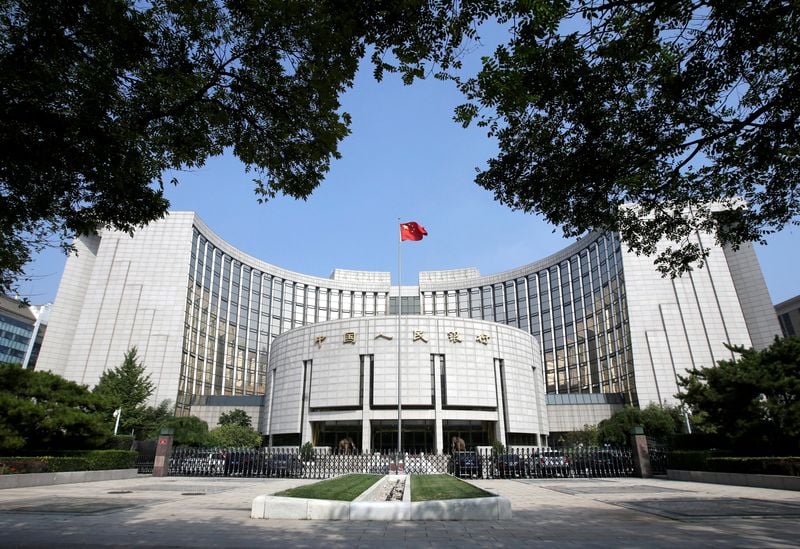
From lottery draws to fiscal spending, China broadens digital yuan footprint




This Could Be The Most Important Market Shift In Years

Thailand continues to emerge as one of Southeast Asia’s most attractive investment destinations. With a strategic geographic location, a well-developed infrastructure, and a government actively courting foreign capital, the Kingdom offers compelling opportunities across multiple sectors. Whether you are a seasoned institutional investor or a first-time foreign business owner, understanding the Thailand investment landscape is essential to making informed decisions.
Why Thailand Remains a Top Investment Destination in Southeast Asia
Thailand’s economy is the second-largest in Southeast Asia, supported by a robust manufacturing base, a thriving tourism sector, and a rapidly growing digital economy. The country’s GDP has shown consistent resilience, recovering steadily from global disruptions and positioning itself for long-term growth.
The Thai government has made foreign investment a national priority. Through the Board of Investment (BOI), Thailand offers a wide range of incentives including corporate tax exemptions, import duty reductions, and non-tax benefits for qualifying businesses. The BOI’s official portal outlines detailed criteria and eligible industries for investors seeking formal promotion status.
Strategic Location and Regional Connectivity
Thailand sits at the heart of the ASEAN economic bloc, sharing borders with Myanmar, Laos, Cambodia, and Malaysia. This positions the country as a natural logistics and distribution hub for businesses targeting the broader regional market of over 670 million consumers.
The country’s participation in key trade agreements, including the ASEAN Free Trade Area (AFTA) and the Regional Comprehensive Economic Partnership (RCEP), provides investors with preferential access to major markets including China, Japan, South Korea, and Australia. These agreements significantly reduce tariffs and streamline cross-border commerce.
Key Sectors Attracting Foreign Investment in Thailand
1. Manufacturing and the Eastern Economic Corridor (EEC)
The Eastern Economic Corridor (EEC) remains the flagship investment zone in Thailand, covering the provinces of Chonburi, Rayong, and Chachoengsao. The EEC is designed to attract high-value industries and has already secured billions of dollars in committed investment.
Target industries within the EEC include:
- Next-generation automotive and electric vehicles (EVs)
- Smart electronics and semiconductors
- Advanced agriculture and biotechnology
- Digital technology and data centers
- Aerospace and logistics
The Thai government has committed to developing the EEC into a world-class industrial and innovation district, with ongoing investments in high-speed rail, a modernized U-Tapao airport, and smart city infrastructure. The EEC Office of Thailand provides updated investment guidelines and project opportunities for international investors.
2. Electric Vehicles (EVs) and Renewable Energy
Thailand has set an ambitious target of becoming the EV production hub of Southeast Asia, aiming to have 30% of all domestic vehicle production be electric by 2030. Major global automakers, including BYD, SAIC Motor, and several Japanese manufacturers, have already committed to establishing EV manufacturing facilities in Thailand.
The renewable energy sector is equally dynamic, with the government expanding targets for solar, wind, and biomass energy generation. The Alternative Energy Development Plan (AEDP) outlines a goal of 30% renewable energy in the national energy mix by 2037, creating significant demand for clean technology investment and infrastructure development.
3. Digital Economy and Technology
Thailand’s digital economy is growing at an accelerated pace, supported by increasing internet penetration, a young tech-savvy population, and government programs such as Thailand 4.0. The initiative aims to transform the economy from commodity-driven to innovation-driven industries.
Key growth areas include e-commerce, fintech, cloud computing, and artificial intelligence. Bangkok has increasingly been recognized as one of Asia’s emerging startup ecosystems, with venture capital activity and government-backed incubation programs gaining momentum. Bangkok Post Business regularly reports on emerging technology investment news relevant to foreign investors.
4. Real Estate and Property Investment
Thailand’s real estate market continues to attract both residential and commercial investors. Bangkok, Phuket, Chiang Mai, and Pattaya remain the most popular markets for foreign property buyers. Demand for Grade A office space, industrial real estate, and logistics warehouses has grown significantly in line with e-commerce expansion and supply chain restructuring.
It is important to note that foreigners are generally prohibited from owning land directly in Thailand. However, investments through Thai limited companies, long-term leasehold agreements, or condominium ownership (where foreigners may own up to 49% of total floor area) remain viable and commonly used structures.
5. Tourism and Hospitality
Tourism has historically been one of Thailand’s most significant economic contributors, accounting for approximately 12–15% of GDP in pre-pandemic years. As international arrivals continue to recover and surpass previous benchmarks, investment in hotels, resorts, wellness retreats, and experiential tourism presents strong opportunities.
The government has introduced measures to attract high-net-worth tourists and long-stay visitors, including the Long-Term Resident (LTR) Visa, which offers a 10-year renewable visa for qualifying individuals and is designed to encourage foreign investment and skilled professionals to establish themselves in Thailand. The BOI LTR Visa page provides full eligibility requirements and application details.
Understanding the Investment Climate: Regulations and Incentives
The Foreign Business Act (FBA)
One of the most important legal frameworks governing foreign investment in Thailand is the Foreign Business Act B.E. 2542 (1999). The Act classifies business activities into three lists, restricting or prohibiting foreign majority ownership in sectors deemed sensitive to national interests, including certain retail and service industries.
Investors should conduct thorough legal due diligence before entering any sector, as the FBA has direct implications for business structure, ownership proportions, and operational licensing. Engaging a qualified Thai legal counsel is strongly recommended.
BOI Incentives and Promoted Status
Obtaining BOI-promoted status is one of the most effective ways to maximize investment benefits in Thailand. Promoted companies can receive:
- Corporate income tax exemptions for up to 13 years
- Import duty exemptions on machinery and raw materials
- Permission for foreign nationals to own land for business purposes
- Visa and work permit facilitation for foreign experts and executives
Applications are submitted through the BOI’s online One Start One Stop Investment Center (OSOS), which aims to streamline the approval and licensing process for foreign businesses.
Special Economic Zones (SEZs)
Beyond the EEC, Thailand has established Special Economic Zones (SEZs) along its borders with neighboring countries. These zones offer additional incentives for businesses engaged in manufacturing, trade, and services, particularly those looking to take advantage of lower labor costs and cross-border supply chain synergies.
Challenges and Risk Considerations for Investors
Political and Regulatory Environment
While Thailand has made meaningful progress in improving its business environment, political stability remains a consideration for long-term investors. Investors are advised to monitor regulatory changes, particularly in relation to foreign ownership rules and sector-specific licensing requirements.
Transparency and anti-corruption measures have improved in recent years, with Thailand advancing in regional governance rankings. Nevertheless, maintaining rigorous compliance frameworks and conducting comprehensive due diligence remains essential for foreign-owned enterprises.
Labor Market Dynamics
Thailand faces a tightening labor market, particularly in the manufacturing sector, as the country transitions toward higher-value industries. Wage inflation, an aging workforce, and skills mismatches in technology-intensive fields are areas of concern that businesses should factor into long-term operational planning.
The government has introduced immigration reforms and skills development programs to address these gaps, but investors should proactively evaluate talent availability in their target sectors and consider automation and upskilling strategies accordingly.
Currency and Financial Risks
The Thai Baht (THB) has historically been relatively stable, though it is subject to fluctuations driven by global economic conditions, commodity prices, and regional capital flows. Currency hedging strategies and careful financial planning are advisable for businesses operating with multi-currency revenues and costs.
Thailand’s financial sector is well-regulated under the Bank of Thailand, and the country maintains a sound banking system with several major domestic banks offering comprehensive services to corporate clients.
How to Get Started: Practical Steps for Foreign Investors
Conduct Comprehensive Market Research
Before committing capital, investors should conduct thorough market research covering competitive landscapes, regulatory requirements, consumer demand, and supply chain logistics specific to their target sector. Engaging with local business chambers, trade associations, and investment advisors provides invaluable on-the-ground insights.
The American Chamber of Commerce in Thailand (AMCHAM), the European Chamber of Commerce in Thailand (EABC), and the Joint Foreign Chambers of Commerce in Thailand (JFCCT) are active networks offering resources, events, and advocacy for foreign businesses.
Establish the Right Business Structure
Selecting an appropriate legal entity is a foundational decision. Common structures for foreign businesses in Thailand include:
- Thai Limited Company (with foreign ownership up to 49% under the FBA, or higher with BOI promotion)
- Representative Office (for non-revenue-generating activities)
- Regional Operating Headquarters (ROH)
- Branch Office
Each structure has distinct tax implications, operational limitations, and compliance obligations. Legal and accounting advisors familiar with Thai corporate law are essential partners in this process.
Leverage Government Support and Partnerships
Thailand’s government actively supports foreign investors through streamlined one-stop services offered by the BOI, the Department of Business Development (DBD), and the Industrial Estate Authority of Thailand (IEAT). These agencies provide guidance on licensing, registration, and operational setup.
Building relationships with local Thai partners can also significantly ease market entry, improve regulatory navigation, and accelerate business development. Strategic partnerships or joint ventures with established Thai companies remain a preferred model for many successful foreign investors. Thailand Business News offers up-to-date coverage of investment trends, policy changes, and market developments relevant to foreign investors in the Kingdom.
Thailand’s Investment Outlook Remains Positive
Thailand’s investment landscape is dynamic, diverse, and increasingly aligned with global trends in technology, sustainability, and advanced manufacturing. With strong government commitment, competitive incentive programs, and a strategic regional position, the country continues to offer compelling opportunities for investors across industries.
Success in Thailand requires informed planning, a clear understanding of the legal and regulatory environment, and a long-term commitment to building local relationships and capabilities. By approaching the market with diligence and strategic intent, foreign investors can unlock substantial value in one of Asia’s most vibrant economies.
This article is intended for informational purposes only and does not constitute legal, financial, or investment advice. Readers are encouraged to consult qualified professionals before making any investment decisions related to Thailand.
Other People are Reading

Infrastructure and Trade
Thailand has revived its ambitious $30 billion land bridge project, a coast-to-coast corridor designed to offer an alternative shipping route to the Malacca Strait. The proposal aims to connect the Gulf of Thailand to the Andaman Sea, potentially reshaping regional trade flows. However, analysts remain skeptical, with experts suggesting that bypassing Malacca may be a bridge too far for Thailand’s ports infrastructure and regional influence.
Economic Competitiveness and Investment
Thailand climbed to 26th in the global competitiveness ranking, signaling improving investor confidence. Capital inflows are increasing as funds exit Indonesia, according to Bloomberg, while True IDC announced a 6 billion baht investment in its 7th data center in northern Bangkok, reinforcing Thailand’s push toward becoming a full-fledged AI economy.
A quantum AI ecosystem is also taking shape, with True, QTRic, and qBraid collaborating on development. The World Bank has highlighted Thailand’s next growth chapter, emphasizing the importance of valuing natural assets to power a more competitive economy. Despite these gains, rice exports fell 10.75% year-on-year for January through May, reflecting ongoing agricultural headwinds.
Tourism: Opportunities and Challenges
Thailand’s tourism sector faces a mixed outlook. The country maintains an ambitious target of 33 million visitors in 2026, even as Middle East conflicts have caused a 25% drop in tourists from that region. Global travel demand is being reshaped by geopolitical instability, affecting multiple Southeast Asian destinations simultaneously.
On the positive side, luxury and wellness tourism are accelerating. Hyatt opened its first Unbound Collection property in Thailand, THE BARAI Hua Hin, while the Tourism Authority of Thailand renewed its partnership with Agoda to support growth. Norse Atlantic Airways expanded its Thailand winter program, adding capacity from London, Manchester, Oslo, and Stockholm to meet rising European demand. Suvarnabhumi Airport is also planning a major expansion targeting Chinese and Indian travelers.
However, Vietnam is emerging as a serious competitor, increasingly attracting tourists who might otherwise visit Thailand, driven by policy reforms, visa liberalization, and rapid airline network growth. Industry observers note that Vietnam is actively working to avoid the overtourism pitfalls Thailand has experienced in destinations like Phuket and Chiang Mai.
Retirees and Expats Drawn to Northern Thailand
Chiang Mai continues to attract retirees and expatriates from around the world, with Business Insider reporting on the city’s affordability, quality of life, and growing international community. Families are also relocating, with some citing a slower pace of life and reduced financial pressure compared to Western cities.
Despite its appeal, retirement financial planning remains a notable concern, with some expats acknowledging that Thailand’s lack of robust pension infrastructure is a drawback for long-term residency planning.
Geopolitics and Regional Tensions
Thailand-Cambodia border tensions remain elevated, with the Thai army stressing readiness as Cambodian tanks are being monitored along the frontier. Thailand has also opted to join UN maritime arbitration with Cambodia while halting other bilateral talks, reflecting a deepening diplomatic rift over territorial and UNCLOS-related disputes. Cambodia has publicly criticized Thailand, stating it “does not walk the talk” on maritime law commitments.
Japan and Thailand are jointly working to unlock RCEP’s trade potential, while Thailand participated in the Kazan Summit alongside Russia, Kazakhstan, and other Eurasian nations to advance a potential EAEU free trade agreement and strengthen aviation connectivity.
Royal Mourning and Social Affairs
Thailand mourned the passing of Princess Bajrakitiyabha, who died at age 47 after years in a coma. Crowds lined Bangkok streets to pay their respects, and the royal household issued a formal announcement. The event drew significant national and international attention, reflecting the deep cultural significance of the monarchy in Thai society.
On the cultural front, T-Pop is gaining international momentum, with analysts drawing comparisons to South Korea’s K-Pop phenomenon. Thailand’s same-sex romance dramas are also attracting millions of global viewers, further elevating the country’s soft power profile.
Health, Environment, and Technology
The U.S. Embassy issued a health alert regarding enhanced Ebola screening at Thai entry points, while the country also faces prolonged dry spells driven by El Niño-related weather disruptions. Minor earthquakes have been reported near Ubon Ratchathani, prompting traveler advisories.
The United States has streamlined civil nuclear export approvals to Thailand, signaling a deepening strategic partnership in the energy sector. Meanwhile, biometric identification systems are being deployed to help Myanmar refugees access employment and essential services within Thailand, representing a significant step forward in humanitarian technology application.
Thailand’s news landscape reflects a nation navigating complex intersections of economic ambition, geopolitical repositioning, tourism competition, and social change — all while managing environmental pressures and maintaining its regional diplomatic role.
Source : Google News – Search
Other People are Reading


Ukraine’s battlefield shift has not solved its humanitarian crisis, IRC says

Block stock surges 63% after InvestingPro Fair Value signal

Listen on the go! A daily podcast of Wall Street Breakfast will be available by 8:00 a.m. on Seeking Alpha, iTunes, Spotify.

Jeremy Poland/iStock via Getty Images
Up for a challenge? Test your knowledge on the biggest events in the investing world over the past week. Take the latest Seeking Alpha News Quiz and see how you stack up against the competition.
Wall Street heads into the final full week of June with investors focused on inflation data, AI-related earnings, and the health of the banking sector.
The week’s marquee earnings report arrives Wednesday when Micron Technology (MU) reports results. As one of the biggest beneficiaries of the AI boom, Micron’s outlook for memory demand and datacenter spending could have implications across the semiconductor sector. Investors will also be watching investor events from Nvidia (NVDA) and Qualcomm (QCOM) for fresh commentary on AI trends.
Consumer spending will be another major theme. Amazon’s (AMZN) four-day Prime Day event begins Tuesday, while Walmart (WMT), Target (TGT), Best Buy (BBY), and Kohl’s (KSS) are expected to run competing promotions, offering a real-time test of consumer demand.
On the macro front, Thursday’s core PCE report will provide the latest reading on inflation. Economists expect the Fed’s preferred inflation gauge to rise to 3.4%, while durable goods orders and remarks from New York Fed President John Williams could offer additional clues on the economic outlook.
Bank stocks may see heightened attention Wednesday evening when the Federal Reserve releases its annual stress-test results for the largest U.S. lenders, including JPMorgan (JPM), Bank of America (BAC), Goldman Sachs (GS), and Morgan Stanley (MS).
Elsewhere, investors will watch the Russell index reconstitution and GTA VI pre-orders.
Earnings spotlight: Tuesday, June 23: FedEx (FDX), Carnival Corporation (CCL). See the full earnings calendar.
Earnings spotlight: Wednesday, June 24: Micron (MU). See the full earnings calendar.
In case you missed it
Oppenheimer’s top buy ideas and sell ideas within each sector
Micron nabs $1500 price target
Stock market is about to see one of the most significant periods of technical repositioning
‘FOMO’ is controlling the markets
What SA Analysts Are Watching
Micron : Am I Buying More? No; Am I Done? Not At All
FedEx: Tariffs, Amazon Changes, And Earnings On The Horizon
BlackBerry Stock: Downgrading To Hold Ahead Of Earnings
Carnival: The Market May Be Missing PROPEL’s Appeal
Insider Watch
Check out the week’s top insider trades, highlighting significant purchases and sales by investors, directors, and executives. Notable transactions took place at American Express (AXP), Dell (DELL), and Broadcom (AVGO).
Seeking Alpha’s Summer Sale is Here! For a limited time, save 20% on all Investing Group subscriptions and lock in a full year of premium research, portfolios, and community access. Join today with the confidence of a 30-Day Money-Back Guarantee. The promotion ends soon, so don’t miss your chance to secure the discounted rate before prices return to normal. Discount available on the desktop site only.
Discover what’s driving investor interest. Here are three of Seeking Alpha’s newest Investing Groups and their latest market insights.
1. Strategic Wave Investments: Stephen Tobin remains a long-term bull on the stock market, citing over a century of market resilience and a history of stocks recovering from major crises. While he expects inflation, rising money supply, and strong corporate earnings to support further gains in the S&P 500, he is monitoring a growing long-term risk: widespread unemployment driven by AI and corporate cost-cutting. He believes large-scale job losses could eventually weaken consumer spending and economic growth, making unemployment the key threat to the current bull market. Full Article (no paywall)
2. Option Income Builder: The author views Astera Labs as a compelling long-term AI infrastructure play, highlighting its networking and connectivity solutions as critical to addressing growing data center bottlenecks. He believes Astera’s expanding product portfolio, particularly its Scorpio platform, could drive revenue beyond $5.5 billion by 2030, outpacing Wall Street expectations. While acknowledging valuation, execution, and competitive risks, the author argues that Astera’s strategic position within the AI ecosystem supports significant long-term growth potential and maintains a Buy rating on the stock. Full Article (no paywall)
3. Wolf of Value: The author remains cautious on Hitachi despite its strong business fundamentals, arguing that the stock’s valuation has become disconnected from reality. He believes investors are overestimating the long-term benefits of Hitachi’s AI and digital transformation efforts while overlooking rising costs, heavy capital spending, and exposure to weaker end markets such as Chinese construction. Given the stock’s significant premium to historical valuation levels, the author sees limited upside, meaningful downside risk, and maintains a Hold rating with a reduced price target. Full Article (no paywall)
Whether you’re looking for fresh ideas, deeper research, or to join a vibrant investing community, the Summer Sale is the perfect opportunity to get started. Explore Investing Groups today and take advantage of 20% savings before the promotion ends on June 30!


Bret Jensen has over 13 years as a market analyst, helping investors find big winners in the biotech sector. Bret specializes in high beta sectors with potentially large investor returns.Bret leads the investing group The Biotech Forum, in which he and his team offer a model portfolio with their favorite 12-20 high upside biotech stocks, live chat to discuss trade ideas, and weekly research and option trades. The group also provides market commentary and a portfolio update every weekend. Learn More.
Analyst’s Disclosure: I/we have no stock, option or similar derivative position in any of the companies mentioned, and no plans to initiate any such positions within the next 72 hours. I wrote this article myself, and it expresses my own opinions. I am not receiving compensation for it (other than from Seeking Alpha). I have no business relationship with any company whose stock is mentioned in this article.
Seeking Alpha’s Disclosure: Past performance is no guarantee of future results. No recommendation or advice is being given as to whether any investment is suitable for a particular investor. Any views or opinions expressed above may not reflect those of Seeking Alpha as a whole. Seeking Alpha is not a licensed securities dealer, broker or US investment adviser or investment bank. Our analysts are third party authors that include both professional investors and individual investors who may not be licensed or certified by any institute or regulatory body.

Sunday’s edition of The New York Times’ popular word-grouping game served up a grid that rewarded sitcom knowledge, weather vocabulary, and a genuinely devious wordplay twist that left even experienced solvers second-guessing their early progress.
How the Game Works
For newcomers, NYT Connections presents 16 words that must be sorted into four thematic groups of four. Players are limited to four mistakes, and the color-coded difficulty system, with yellow being easiest and purple being trickiest, means surface-level connections often mislead solvers into incorrect groupings. Since its June 2023 launch, Connections has carved out its own niche in the Times’ puzzle ecosystem, standing alongside Wordle and the crossword as a daily ritual for millions of players worldwide.
Sunday’s Four Categories
The themes and answers for the June 21, 2026, NYT Connections puzzle were as follows:
Yellow Group: Precipitation — DRIZZLE, RAIN, SHOWERS, SPRINKLES.
Green Group: Bowls Over — FLOORS, ROCKS, STUNS, SURPRISES.
Blue Group: NBC Sitcoms — COMMUNITY, FRIENDS, SCRUBS, WINGS.
Purple Group: Starting With Kinds of Insults — BARBADOS, DIGGITY, DISSECT, SLAPDASH.
Breaking Down the Categories
Puzzle #1106 registers as moderate difficulty with a sting in the tail. Yellow falls quickly for weather watchers, while Green requires recognizing figurative language, though ROCKS might briefly send solvers down a geology rabbit hole before they realize the category actually centers on verbs meaning to overwhelm, impress, or astonish someone.
Blue separates the sitcom streamers from the casual viewers, drawing together four popular television shows that all originally aired on the same network. The category particularly favors NBC fans and anyone familiar with the network’s long history of beloved comedy programming.
The Purple Category’s Wordplay Trap
As is typical for Connections puzzles, the purple category delivered the day’s most challenging twist, built around a hidden prefix scheme rather than any straightforward thematic connection. Purple, predictably, is the streak-ender — that hidden-insult-prefix trick won’t reveal itself without serious lateral thinking about word construction rather than word meaning.
The category required players to recognize that each of the four words begins with a term that, on its own, functions as a mild insult or criticism. BARBADOS looks like a Caribbean vacation, not a diss track waiting to happen, while the remaining words in the category similarly disguised their insult-prefix connection behind everyday vocabulary that gave no immediate indication of the underlying wordplay.
Where Players Got Tripped Up
Beyond the purple category’s central trick, several individual words throughout the grid were specifically designed to mislead solvers into incorrect early groupings. SCRUBS could have been mistaken for cleaning or medical terms, and WINGS might have sent solvers toward birds or aviation, rather than their actual placement within the NBC sitcoms category.
One puzzle solver who completed Sunday’s grid without any mistakes described their solving order as starting with the more straightforward categories before tackling the trickier ones. “I didn’t make any mistakes this time. Here’s the order I solved them in: yellow, green, blue, purple,” the solver noted, describing their experience working through Sunday’s puzzle.
Tips for Future Puzzles
Connections veterans continue to recommend scanning for the most straightforward, tightly defined categories first, such as colors, numbers, animals, or other clearly bounded groupings, since these tend to be the easiest to lock down early and build solving momentum. Puzzle editor Wyna Liu is famous for mixing categories that overlap, so when a word seems to fit multiple potential groups, solvers are encouraged to assume the puzzle is deliberately trying to mislead them rather than taking the most obvious interpretation at face value.
Purple is specifically designed for wordplay and misdirection, frequently incorporating idioms, homophones, or cultural references that only become clear once the more straightforward categories have already been solved and removed from the board.
The Game’s Continued Popularity
Launched in June 2023, Connections is one of the New York Times’ newest puzzle hits, second only to Wordle in overall popularity among the publication’s growing portfolio of daily games. The game’s format, which combines straightforward vocabulary categories with increasingly abstract and wordplay-driven groupings, has helped it build a dedicated daily following that treats the puzzle as an essential complement to Wordle in their daily routine.
Where to Find More Puzzle Help
Beyond Connections, The New York Times Games collection includes several related puzzles such as Wordle, Strands, the Mini Crossword, and a dedicated Connections Sports Edition that tests knowledge of athletic trivia using the same grouping format. Sunday’s slate also included Strands puzzle number 840 and Connections Sports Edition puzzle number 636, giving puzzle enthusiasts a broad menu of additional daily challenges beyond the standard Connections grid alone.
With Sunday’s puzzle now solved by players who successfully navigated both the NBC sitcom category and the hidden insult-prefix trick in purple, attention turns to Monday’s edition, puzzle number 1107, when a fresh sixteen-word grid and an entirely new set of hidden categories will be waiting for the Connections community’s next daily challenge.


Michael Kramer is the founder of Mott Capital Management – and is a long-only investor who focuses on macro themes and studies trends and options activities to identify and assess entry and exit points for investments in his long-term focused thematic growth strategy. He is a former buy-side trader, analyst, and portfolio manager with 30 years of experience tracking market technicals, fundamentals, and options.Michael Kramer leads the investing group Reading the Markets, where he helps a devoted following of members to better understand what is driving trading and where the market is likely heading, both the short and long-term. Features of the investing group include: daily written commentary and videos analyzing the driving factors behind price action; general macro trend education to help members make well-informed decisions based on market conditions, interest rates, currency movements and how they all interact; chat for questions and community dialogue; and regular Zoom videos sessions to discuss current ideas and answer questions. The level of access RTM subscribers and the expertise of the source are unprecedented given that the subscription price is a fraction of similar technical coaching and mentoring services. Learn more.
Analyst’s Disclosure: I/we have no stock, option or similar derivative position in any of the companies mentioned, and no plans to initiate any such positions within the next 72 hours. I wrote this article myself, and it expresses my own opinions. I am not receiving compensation for it (other than from Seeking Alpha). I have no business relationship with any company whose stock is mentioned in this article.
This report contains independent commentary to be used for informational and educational purposes only. Michael Kramer is a member and investment adviser representative with Mott Capital Management. Mr. Kramer is not affiliated with this company and does not serve on the board of any related company that issued this stock. All opinions and analyses presented by Michael Kramer in this analysis or market report are solely Michael Kramer’s views. Readers should not treat any opinion, viewpoint, or prediction expressed by Michael Kramer as a specific solicitation or recommendation to buy or sell a particular security or follow a particular strategy. Michael Kramer’s analyses are based upon information and independent research that he considers reliable, but neither Michael Kramer nor Mott Capital Management guarantees its completeness or accuracy, and it should not be relied upon as such. Michael Kramer is not under any obligation to update or correct any information presented in his analyses. Mr. Kramer’s statements, guidance, and opinions are subject to change without notice. Past performance is not indicative of future results. Neither Michael Kramer nor Mott Capital Management guarantees any specific outcome or profit. You should be aware of the real risk of loss in following any strategy or investment commentary presented in this analysis. Strategies or investments discussed may fluctuate in price or value. Investments or strategies mentioned in this analysis may not be suitable for you. This material does not consider your particular investment objectives, financial situation, or needs and is not intended as a recommendation appropriate for you. You must make an independent decision regarding investments or strategies in this analysis. Upon request, the advisor will provide a list of all recommendations made during the past twelve months. Before acting on information in this analysis, you should consider whether it is suitable for your circumstances and strongly consider seeking advice from your own financial or investment adviser to determine the suitability of any investment.
Seeking Alpha’s Disclosure: Past performance is no guarantee of future results. No recommendation or advice is being given as to whether any investment is suitable for a particular investor. Any views or opinions expressed above may not reflect those of Seeking Alpha as a whole. Seeking Alpha is not a licensed securities dealer, broker or US investment adviser or investment bank. Our analysts are third party authors that include both professional investors and individual investors who may not be licensed or certified by any institute or regulatory body.


Taiwan to stage five days of combat readiness drills

‘From working in a bank to making pizzas, it’s been a mad journey’ says Belfast street food vendor

This Could Be The Most Important Market Shift In Years

Bitcoin Falls 40% Since STRC Launch as Market Tests Strategy


-

 Business7 days ago
No Jackpot Winner as $257 Million Prize Rolls Over to $269 Million Monday Draw
-

 Fashion2 days ago
Weekend Open Thread: Miami – Corporette.com
-
 Crypto World6 days ago
Zimbabwe Requires Crypto Businesses to Register Annually Under New FIU Regulations
-
 Business1 day ago
Wall Street Week Ahead: Investors see Micron earnings as pulse check of AI rally momentum
-
 Entertainment7 days ago
Matt Damon’s Viral Sci-Fi Thriller Has Taken Over HBO Max
-

 Tech7 days ago
As AI companies race to go public, who else is along for the ride?
-

 Crypto World1 day ago
HIVE shares jump as $220M AI deal speeds Bitcoin mining pivot
-

 Business7 days ago
Anthropic staff to meet White House officials next week, Axios reports
-
 Crypto World7 days ago
Bitcoin could crash to $48,000, if this historical pattern is triggered
-
 NewsBeat7 days ago
what doctors are seeing in ebike crashes
-
 NewsBeat7 days ago
Warning of disruption as Cardiff Crossrail works to start
-
 NewsBeat7 days ago
Tributes to former deputy head teacher at Cambridge school among death and funeral notices
-
 Entertainment7 days ago
Kate Middleton Glare Goes Viral After Kids Booed At Royal Event
-

 Politics7 days ago
“Israel’s” ban on ICRC visits ruled illegal, but Knesset moves to stop them permanently
-

 News Videos7 days ago
Financial Accounting | Last Day Revision Strategy and Booster | CMA Inter – June 2026
-

 Crypto World7 days ago
XRP ETFs Outperform As Bitcoin And Ethereum Funds Extend Outflow Trend
-

 Tech6 days ago
Over 400 Arch Linux packages compromised to push rootkit, infostealer
-

 Business7 days ago
Invesco Quality Income Fund Q1 2026 Commentary
-

 NewsBeat7 days ago
Singer Oliver Tree dies aged 32 in helicopter crash in Brazil
-
 Crypto World7 days ago
Market Preview: SpaceX (SPCX) IPO Record, Federal Reserve Meeting, and Iran Nuclear Agreement
You must be logged in to post a comment Login