
Business
Fuel suppliers hauled in for explanation over prices



Market analyst Vinay Rajani from HDFC Securities said that choppiness is still continuing and the market is not able to sustain at higher levels, indicating that the primary trend remains on the downside. However, the recovery seen in the previous session found support near the gap area from April 2025, around the 22,950 level, and bounced back strongly. Rajani noted that Nifty is now encountering resistance at its five-day exponential moving average, currently at 23,560 levels. If the index crosses this level, there is a good chance of further recovery.
Rajani highlighted that some stable movements are visible, with stock-specific and sector-specific bullish moves, supported by positive cues from the Asian markets. He expects a recovery in metals, select PSU stocks, and some power stocks. For traders, he recommends maintaining long positions in Nifty with a stop loss of 23,200, targeting a pullback rally to 23,700–23,800. He also observed that short covering in FII index futures has improved the long-to-short ratio, providing additional support for a rebound.
On stock-specific opportunities, Rajani highlighted resilient performers. Linde India has shown strength and a fresh breakout on the charts. He suggests going long in Linde India around 7,230–7,250, with a stop loss at 7,100, and expects the stock to reach 7,450–7,500. Another pick is MCX, linked to commodities and energy, benefiting from renewed traction in metals like gold and silver, as well as strong performance in oil. Rajani recommends entering MCX around 2,628, with a stop loss at 2,580, and expects a target of 2,720–2,750.
With clear support and resistance levels, traders can navigate the choppy market by focusing on sectoral strength and carefully selected stock opportunities, positioning themselves for potential short-term gains.

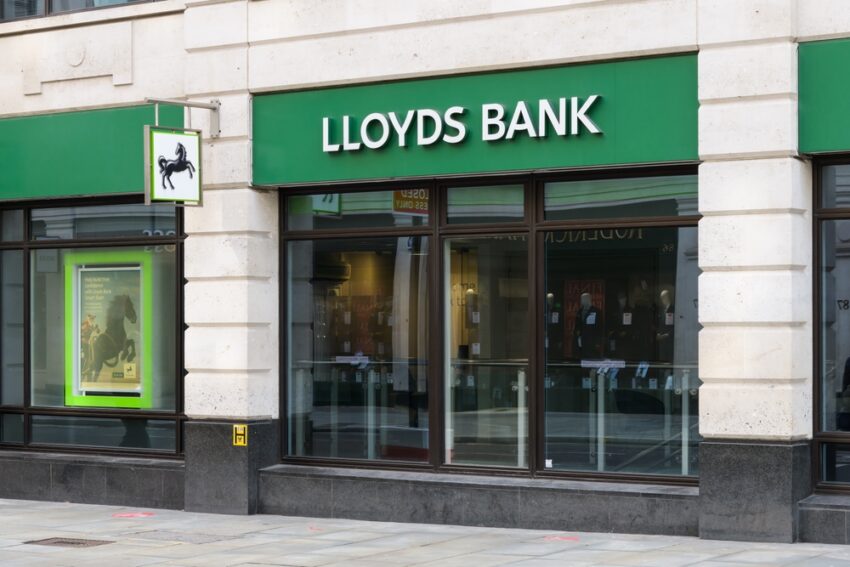
Challenger banks have maintained their dominant position in lending to small and medium-sized enterprises (SMEs), but fresh data suggests their rapid ascent may be levelling off as major high street lenders begin to reassert themselves.
According to new analysis from the British Business Bank, challenger banks accounted for 60 per cent of SME lending in 2025, unchanged from the previous year. The figure marks only the second time in more than a decade that their market share has not increased, raising questions about whether the post-financial crisis disruption of the SME lending market has reached a plateau.
The shift in lending dynamics has been one of the defining structural changes in UK banking since the 2008 financial crisis. Traditional lenders including Lloyds Bank, NatWest, Barclays, HSBC and Santander once dominated SME finance, accounting for 61 per cent of lending as recently as 2012. However, regulatory changes, technological innovation and dissatisfaction among smaller businesses created space for a new generation of lenders to emerge.
Challenger banks such as Starling Bank, Allica Bank and Oxbury Bank have since built significant market share by offering more flexible lending models, faster decision-making and digital-first services tailored to SME needs.
Yet the latest data suggests momentum may be stabilising. Louis Taylor, chief executive of the British Business Bank, said it remains unclear whether challenger banks have reached a natural ceiling or whether incumbent lenders are beginning to reclaim ground.
“There is some willingness for the big banks to staunch that market share diminution,” Taylor said, noting that traditional lenders are increasingly targeting profitable SME segments such as deposits, transaction banking and foreign exchange services.
Recent activity supports that view. Lloyds, for example, announced plans to make £9.5 billion available to SMEs this year, while a consortium of major banks has committed £11 billion to support SME exporters. These moves signal a renewed focus on a segment that high street banks were widely criticised for neglecting in the aftermath of the financial crisis.
Despite this, challengers and non-bank lenders continue to dominate the broader SME funding ecosystem. The report found that non-bank lending and challenger banks together now account for 68 per cent of total SME lending, underlining the diversification of funding sources available to businesses.
Alternative finance providers have become particularly influential. Funding Circle remains the largest non-bank lender, holding a “low-to-mid 50 per cent” share of business loans by volume. The growth of such platforms reflects a structural shift towards more fragmented, specialist lending models that cater to different risk profiles and business needs.
Overall lending activity has shown signs of resilience. Gross new SME lending rose by 9 per cent to £68 billion last year, making it the second-highest annual total in more than a decade. Repayments reached £63 billion, resulting in net lending of £4.6 billion — the first positive net figure since 2020.
However, beneath these headline figures, there are signs of underlying weakness. The total value of outstanding loans and overdrafts has fallen by 22 per cent in real terms since 2012, while the use of traditional overdraft facilities has dropped to a record low of £7 billion. Only 9 per cent of SME lending now comes from conventional bank loans.
Instead, businesses are increasingly relying on short-term and flexible forms of finance. Credit cards and overdrafts remain widely used, suggesting many firms are prioritising cashflow stability over long-term investment. Leasing has also grown in popularity, rising from 6 per cent of SMEs in 2012 to 13 per cent last year, particularly for equipment and machinery.
Loan approval rates have improved modestly, rising to 53 per cent in 2025 from 49 per cent the previous year, but they remain well below pre-pandemic levels of 74 per cent in 2019. This has driven greater reliance on intermediaries, with brokers facilitating £33 billion of SME lending last year, a 25 per cent increase on 2024.
The report also highlights persistent structural gaps in the market. Smaller loans, early-stage businesses and companies built around intellectual property continue to struggle to access finance, reflecting risk aversion among lenders and limitations in traditional credit assessment models.
“There are some holes in the system,” Taylor said, pointing to the referral scheme that requires banks to direct rejected applicants to alternative lenders. Because many applications are declined before reaching formal credit committees, businesses often miss out on this pathway altogether.
The broader picture is one of a maturing but still evolving market. Competition has intensified, keeping pricing competitive for low-risk lending, but borrowing costs remain elevated for higher-risk SMEs due to structural constraints and economic uncertainty.
For policymakers and industry leaders, the key question is whether the current balance represents a new equilibrium or simply a pause in an ongoing shift. While challenger banks have transformed access to finance over the past decade, the re-engagement of high street lenders suggests the competitive landscape is entering a new phase, one defined less by disruption and more by consolidation and coexistence.
In that context, the plateau at 60 per cent may not signal a peak, but rather a stabilisation point in a market that is still adjusting to a fundamentally different model of SME finance.

Amy Ingham
Amy is a newly qualified journalist specialising in business journalism at Business Matters with responsibility for news content for what is now the UK’s largest print and online source of current business news.

Municipality Finance to issue EUR 50 million floating-rate notes

FROM THE HILL: Fuel shortages are biting and the opposition has created a Bingo game.
Finland, Netherlands, UK explore joint defence financing mechanism

Deep Dive into the Numbers
Karan Taurani, EVP, Elara Securities in an interview to ET Now highlighted the scale of India’s food service industry. “We have got almost four million F&B outlets. Out of this, 15% is the organised outlets and 85% is the unorganised outlets. It is all over India basically. The unorganised part covers all your dhabas and the roadside food and so on and so forth. Now, within this four million outlets, 80% of the outlets are LPG dependent and 20% are dependent on electric and hybrid and all those kinds of things.”
He elaborated on demand specifics: “For other companies, they would need about 5 to 10 cylinders per month. Then, you go to standalone restaurants, they would need three to four cylinders per month based on the cuisine and the category that they cater to. Generally, on a thumb rule, these 32 million outlets require five cylinders of 19 kg per month. So, the demand for the cylinders for the F&B industry is about 1.7 crore.”
The supply side, however, is constrained. “If we include weddings, parties, and corporate canteens, the demand actually is closer to two odd crores per month for the cylinders, and the supply is almost about 1.6-1.7 crore. So, there is a deficit of 15-20% as of now,” Taurani said.
Impact on Restaurants and Food Tech
Despite the shortfall, Taurani said the immediate closures are limited. “Very clearly, less than 5% of restaurants are shut today as per NRAI. QSR chains are operating, business as usual, because most of them are dependent on electric and not on LPG. Some are trying to go hybrid, some are rationalising menu, some are reducing work hours. But QSRs are not seeing any big negative impact.”
Smaller standalone players, however, are bearing the brunt. “Assuming a worst-case scenario that 10-15% of restaurants eventually shut down in the next one month, you could see a 7% to 8% EBITDA downgrade for the food business for Zomato,” Taurani added.
He also clarified the potential effect on annual performance: “So, this 7% to 8% EBITDA downgrade is quarterly EBITDA. Annualised basis, this impact is around two odd percent. Assuming that the food business is 55% of SOTP, you tend to get a number of almost about 1.5% to 2%. So, as of now, this impact is very small. But if the number of restaurants shutting down moves ahead from 15% to 25%, these numbers can swing miserably. And if the situation prolongs for two or three months, these numbers could change massively in a negative manner.”QSRs and Electric Advantage
Taurani emphasised that QSRs are better positioned to adapt. “For QSR perspective, they are more dynamic in nature. The first thing is rationalise the menu, try and have menus with lower dependence on LPG. Second is reduce the number of work hours. Third, most QSR companies are trying to get electrical equipment inside the stores. For example, in the case of fried chicken, they have got 60% dependence on electric equipment, 40% LPG. So somewhere they are trying to increase the dependence on electric equipment going ahead.”
He also noted a potential shift in consumer orders: “For someone who was ordering a dosa or a pav bhaji which is LPG dependent, they could now opt for a burger if it is not available in that area. So, QSR could see a positive bias in terms of order traffic.”
On pricing, Taurani said: “I do not think so. There has been no change on pricing as of now.” He further explained that QSRs represent only 10-12% of order volumes, with 80% dependence on standalone restaurants.
Food Tech and Quick Commerce Concerns
While the food business impact is modest, Taurani highlighted concerns in quick commerce (Qcom). “Obviously, there are worries on the food side, but as I mentioned, it does not translate to numbers in a big manner. The bigger worry is Qcom valuations have come off sharply. One reason is fear about management change—Albinder coming in, Deepinder going away—which investors fear could bring strategic changes, which we do not believe. A second fear is competitive intensity from Zepto and Ecom players. Amazon and Flipkart are entering Qcom, scaling up dark stores and assortment. But Ecom and Qcom will coexist; Ecom is top-down, Qcom is bottom-up. We do not believe Ecom will scale up in a very big manner.”
Taurani concluded on a reassuring note for Blinkit: “If Flipkart, Amazon, and others together account for less than 10% of Qcom market share, there is enough for Blinkit. They may not lose market share in a big manner. So Blinkit is quite safeguarded here as the Qcom business is concerned.”
While LPG supply challenges may temporarily affect smaller F&B players, large QSRs and well-positioned food tech companies are likely to weather the storm. Adaptability, menu rationalisation, and the shift towards electric equipment are helping them navigate the crisis, keeping overall impact limited.
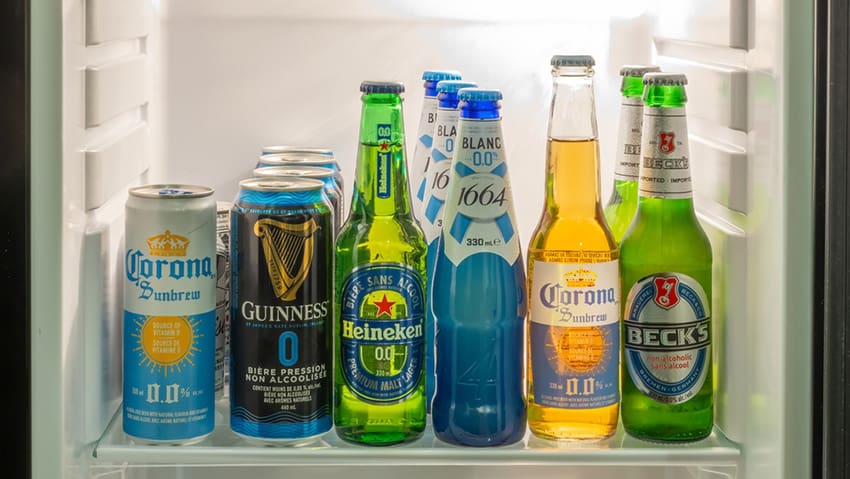
Alcohol-free beer has been added to the UK’s official inflation basket, in a move that underlines changing consumer habits and the growing shift towards healthier lifestyles.
The Office for National Statistics (ONS) confirmed that the product will join more than 760 goods and services used to calculate key inflation measures, including the Consumer Prices Index (CPI), the Retail Prices Index (RPI) and CPIH — its preferred gauge of price growth.
The inclusion reflects a marked rise in demand for low- and no-alcohol alternatives, with the ONS citing increased sales volumes, wider product ranges and greater shelf space dedicated to alcohol-free options across UK retailers. The move is widely seen as recognition of a broader cultural shift, particularly among younger consumers and professionals prioritising wellbeing.
Alongside alcohol-free beer, hummus and pet grooming have also been added to the basket, highlighting how evolving lifestyle choices are reshaping the cost-of-living calculation. The ONS said hummus had gained prominence due to its growing popularity among health-conscious consumers, with UK spending on the product estimated to have reached around £170 million in 2024.
Pet grooming, meanwhile, reflects the continued boom in pet ownership, particularly among smaller, high-maintenance breeds, and the increasing willingness of households to spend on services rather than just goods. Analysts note that services inflation has become a key driver of overall price pressures in recent years, making its accurate representation in the basket increasingly important.
The annual update to the basket is designed to ensure inflation data remains aligned with real-world spending patterns. Items that decline in relevance are removed to make room for emerging trends. This year, bottled premium lager purchased in pubs and restaurants has been dropped, alongside traditional sheets of wrapping paper, which are being replaced by rolls that better reflect modern purchasing behaviour.
Other additions include dashboard cameras and motorhomes, both of which have seen rising demand. Dashcams have grown in popularity as motorists seek to reduce insurance costs and improve security, while motorhomes have benefited from lifestyle shifts following the pandemic and a rise in early retirement trends.
The updated basket will be used in the next set of inflation figures, due to be published on 25 March, and comes at a time of heightened sensitivity around the cost of living. While inflation eased to 3 per cent in January, down from 3.4 per cent in December, economists expect renewed upward pressure in the coming months, driven in part by surging global energy prices linked to the ongoing Middle East conflict.
The Bank of England, which targets inflation at 2 per cent, is widely expected to hold interest rates at 3.75 per cent at its next meeting, as policymakers weigh the risk of rising fuel and transport costs feeding through into broader price increases.
In parallel with the basket update, the ONS is also modernising how inflation is measured. A new system will draw on vast datasets from retailers, analysing around 300 million price points across more than one billion products each month. This marks a significant shift away from traditional in-store price collection, which relied on around 25,000 manually gathered data points.
The move towards real-time, high-volume data is expected to improve the accuracy and responsiveness of inflation reporting, particularly in fast-moving sectors such as groceries, energy and consumer goods.
For households, however, the underlying message remains unchanged. Despite some easing in headline inflation, rising energy costs and global uncertainty mean the pressure on everyday spending is unlikely to disappear any time soon. The inclusion of alcohol-free beer, hummus and pet grooming may signal changing lifestyles, but it also reflects the broader reality that the cost of modern living continues to evolve.

Jamie Young
Jamie is Senior Reporter at Business Matters, bringing over a decade of experience in UK SME business reporting.
Jamie holds a degree in Business Administration and regularly participates in industry conferences and workshops.
When not reporting on the latest business developments, Jamie is passionate about mentoring up-and-coming journalists and entrepreneurs to inspire the next generation of business leaders.

Nationwide, a Fortune 100 company based in Columbus, Ohio, is one of the largest and strongest diversified insurance and financial services organizations in the United States and is rated A+ by both A.M. Best and Standard & Poor’s. Nationwide provides a full range of insurance and financial services products including life insurance, public and private sector retirement plans, annuities, and mutual funds available through Nationwide Financial.
Nationwide Financial makes simplicity a priority by providing Financial Professionals with straightforward, client-ready materials, easy-to-use tools, and products and services that are transparent, so they can spend less time dealing with time-consuming tasks and more time helping clients. Note: This account is not managed or monitored by Nationwide, and any messages sent via Seeking Alpha will not receive a response. For inquiries or communication, please use Nationwide’s official channels.
Ella Loneragan and Claire Tyrrell discuss Business News’ South West edition.

Samsung showcases HBM4 chips for Nvidia’s Vera Rubin platform

F1 Q&A: Lewis Hamilton, Ferrari’s starts, rule changes and will McLaren and Red Bull benefit from month-long break?
2 top stock recommendations from Vinay Rajani

MacKinnon on recent Avalanche struggles: ‘Winning can mask some stuff’

Smart energy pays enters the US market, targeting scalable financial infrastructure

Why Israel is blocking foreign journalists from entering

Bitcoin: We’re Entering The Most Dangerous Phase

XRP VS BTC WHY AI WILL CHOOSE XRP – X MONEY WILL USE FIAT FOR NOW? – BUILD WEALTH AT LOW PRICES!

Daily Market Coverage Mar. 16, 2026 3PM-5PM (ET) | Yahoo Finance

Cash Hamper | Currency Flower | Money Flower Making #shorts #viralshort #hype #giftideas #cash
-
 Tech6 days ago
A 1,300-Pound NASA Spacecraft To Re-Enter Earth’s Atmosphere
-
 Crypto World3 days ago
HYPE Token Enters Net Deflation as HyperCore Buybacks Outpace Staking Rewards
-

 Business7 days ago
ExxonMobil seeks to move corporate registration from New Jersey to Texas
-

 Fashion4 days ago
Weekend Open Thread: Addict Lip Glow
-

 Tech7 days ago
ChatGPT will now generate interactive visuals to help you with math and science concepts
-
Sports3 days ago
Why Duke and Michigan Are Dead Even Entering Selection Sunday
-

 NewsBeat6 days ago
Residents reaction as Shildon murder probe enters second day
-

 Business2 days ago
Search for Savannah Guthrie’s Mother Enters Seventh Week with No Arrests
-

 Business6 days ago
Search Enters Sixth Week With New Leads in Tucson Abduction Case
-

 Business3 days ago
US Airports Launch Donation Drives for Unpaid TSA Workers as Partial Government Shutdown Enters Fifth Week
-
Crypto World3 days ago
Coinbase and Bybit in Investment Talks: Could Bybit Finally Enter the US Crypto Market?
-

 NewsBeat6 days ago
I Entered The Manosphere. Nothing Could Prepare Me For What I Found.
-

 Sports6 days ago
PWHL, Senators discussing plan to keep Charge in Ottawa
-

 Business3 days ago
Country star Brantley Gilbert enters growing non-alcoholic beer market
-

 Business22 hours ago
Australian shares drop as Iran war enters third week
-

 Sports4 days ago
College Basketball Best Bets: Conference Tournament Semifinal Picks
-

 Crypto World23 hours ago
Crypto Lender BlockFills Enters Chapter 11 with Up to $500M in Liabilities
-
 Crypto World7 days ago
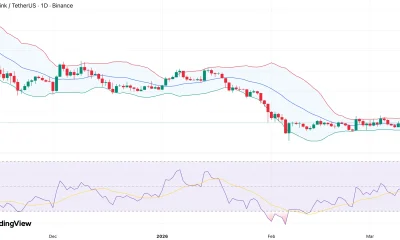
Will Chainlink price reclaim $10 amid volatility squeeze?
-

 Politics6 days ago
Trump Says Middle East Is ‘Very Lucky’ That He’s President
-

 Tech6 days ago
Clarity as strategy


You must be logged in to post a comment Login