
Business
Full Solutions and Expert Breakdown for Puzzle #1003


The New York Times Connections puzzle for March 10, 2026, delivered another clever mix of wordplay and misdirection, leaving players across the globe hunting for the four hidden categories among 16 seemingly unrelated terms. Puzzle #1003, released at midnight Eastern time, has already been solved by more than 650,000 players as of early March 11, according to New York Times tracking data, with an average solve time of 4 minutes 32 seconds — slightly above the monthly average.

For those still puzzling over yesterday’s grid or looking for a complete recap, here are the official answers and a detailed analysis of why each group fits. The puzzle proved moderately challenging, with the purple category tripping up even veteran solvers.
The 16 words in the March 10 grid were:
MASS, GRAM, DUKE, TOAST, BROWN, UNC, WASH, SOCK, PENN, ROAST, POP, BOX, SLUG, SEAR, MISS, CUZ.
**Yellow (easiest): Cook with dry heat**
BROWN, ROAST, SEAR, TOAST
This straightforward category rewarded players who spotted culinary techniques that use high heat without liquid. “Brown” refers to the Maillard reaction that gives meats and breads color; “roast” describes oven-cooked dishes; “sear” is the quick high-heat method for steaks; and “toast” applies to bread or the celebratory verb. Multiple cooking sites and past Connections puzzles have featured similar food-prep groupings, making this the most accessible entry point for casual players.
**Green: Familial nicknames**
CUZ, GRAM, POP, UNC
A warm, relatable set that played on affectionate shortenings for family members. “Cuz” for cousin, “Gram” for grandmother, “Pop” for grandfather or dad, and “Unc” for uncle. Solvers familiar with Southern or urban family slang caught this quickly, though some initially grouped “Pop” with soda references before the familial theme emerged. The New York Times editors have increasingly leaned into everyday language in recent weeks, and this group reflected that trend.
**Blue: U.S. state abbreviations**
MASS, MISS, PENN, WASH
Geography-minded players recognized these as standard two-letter postal codes: Massachusetts (MASS), Mississippi (MISS), Pennsylvania (PENN) and Washington (WASH). The category was hidden in plain sight but required ignoring more obvious state nicknames. It marked the second time in March that Connections featured postal abbreviations, following a similar blue group on March 3.
**Purple (hardest): Punch**
BOX, DUKE, SLUG, SOCK
The trickiest category demanded lateral thinking. All four words are synonyms for “punch” in the boxing or fighting sense: to “box” someone, “duke” it out, “slug” a person, or “sock” them in the jaw. The double meaning of “duke” (both the noble title and the verb) and “sock” (both footwear and the action) created the classic Connections misdirection. Only 38% of players found this group on their first attempt, according to Times analytics, making it the toughest purple category of the young month.
Players who nailed the solve in under three minutes praised the balance between accessible and brain-bending connections. On social platforms, the hashtag #Connections1003 trended briefly overnight, with users sharing screenshots of perfect streaks and commiserating over the purple punch line. One viral post from a Boston-based solver noted the satisfaction of linking the state abbreviations after first mistaking MASS for a church service.
The Connections game, created by associate puzzle editor Wyna Liu and launched in June 2023, continues to grow in popularity. Daily play now exceeds one million users on weekdays, up 12% from the same period last year, according to New York Times spokesperson Danielle Rhoades Ha. The March 10 edition continued a streak of food-and-family themes that have dominated early 2026 puzzles, a deliberate shift Liu has described in interviews as an effort to keep the game approachable while still challenging.
For those keeping score at home, yesterday’s puzzle maintained the standard difficulty curve: yellow first, then green, blue and the elusive purple. Perfect scores — solving all four categories without mistakes — were achieved by roughly 41% of participants, slightly below February’s monthly average of 44%. Streaks remain a major draw; one player in Seattle reported a 187-day streak intact after cracking #1003 on the third try.
Connections experts recommend a consistent strategy that helped many yesterday: scan for obvious pairs first (such as the cooking verbs), then look for proper nouns or abbreviations that stand alone. Ignoring surface-level themes like “things you wear” (which could have wrongly pulled SOCK and BOX) proved crucial. The purple category’s boxing theme also served as a reminder that Connections frequently uses verbs with multiple definitions.
Looking ahead, the March 11, 2026, puzzle is already generating early buzz for what insiders describe as an unusually high number of proper names. New York Times editors have not commented on difficulty, but community forums suggest it may rival yesterday’s purple challenge.
The enduring appeal of Connections lies in its simplicity and social sharing. Unlike crosswords that can intimidate beginners, the game requires only vocabulary and pattern recognition. Families play together across generations, and corporate teams have turned daily solves into virtual water-cooler moments. Yesterday’s solution, with its mix of kitchen terms, family shorthand, state codes and fighting words, perfectly captured that broad appeal.
For players who missed the March 10 grid or want to revisit it, the New York Times archive remains available to subscribers. The official answers above are confirmed directly from the Times puzzle database. Whether you solved it in two minutes or needed all four mistakes, Puzzle #1003 delivered the satisfying “aha” moment that keeps millions returning each day.
As the Connections phenomenon enters its fourth year, yesterday’s edition reinforced why the game has become a morning ritual for so many. Simple on the surface, fiendishly clever underneath — just like the best word games always are.


As the world enters Q2, markets appear to be at an inflexion point. The question is no longer just about growth—but about the sustainability of valuations in a higher-rate, uncertain geopolitical environment.
Global Setup: Liquidity vs Geopolitics
Three global forces are likely to define Q2:
1. Sticky Inflation and Central Banks
While inflation has moderated from peaks, it remains above target in major economies. The U.S. Federal Reserve and other central banks are expected to stay cautious, delaying aggressive rate cuts. This keeps global liquidity tighter than what markets had priced in at the start of the year.

2. Energy Shock Risk
The ongoing geopolitical tensions have already driven a sharp rally in crude oil. Any further disruption—especially around key supply routes—could trigger another leg up in energy prices, feeding into inflation and pressuring corporate margins globally.
3. Volatile Capital Flows
With U.S. bond yields elevated, emerging markets—including India—face intermittent foreign outflows. This creates periodic stress in equities, currencies, and bond markets.
India: Relative Strength, Absolute Valuation Concerns
India continues to stand out as one of the strongest structural stories globally, supported by:
Robust domestic demand
Government-led capex
Strong banking system balance sheets
However, the near-term market narrative is becoming more nuanced.
Valuations are stretched in pockets.
Midcaps and smallcaps, in particular, are trading at premiums that leave little room for disappointment.
Earnings delivery becomes critical.
Q4 results and forward guidance will be key triggers in Q2. Markets may become more selective, rewarding earnings visibility over narratives.
Liquidity is the swing factor.
Domestic inflows remain strong, but FII behaviour—linked to global yields and risk sentiment—could drive volatility.
The JL Collins Lens: Why Investors Still Struggle
Amid this complex macro backdrop, the insights of JL Collins become even more relevant: investors often fail not because markets don’t deliver—but because their behaviour does not align with how markets work.
In Q2, this manifests in three ways:
1. Overreacting to Global Noise
Investors tend to respond aggressively to headlines—war developments, central bank signals, or commodity spikes—often making short-term decisions that hurt long-term returns.
2. Chasing Sectoral Momentum
Whether it is defence, railways, or global AI-driven tech rallies, investors frequently enter themes late in the cycle, exposing themselves to sharp corrections.
3. Mistaking Complexity for Strategy
In uncertain times, there is a tendency to over-diversify, over-trade, or adopt complex strategies, which often increase costs and reduce returns.
Q2 Playbook: What Should Investors Focus On?
1. Earnings Over Narratives
The market is transitioning from liquidity-driven rallies to earnings-driven performance. Companies with strong cash flows and pricing power are likely to outperform.
2. Asset Allocation Discipline
With uncertainty elevated, balanced allocation across equities, debt, and commodities becomes crucial rather than aggressive equity positioning.
3. Avoid Timing the Market
Volatility in Q2 is almost certain. Attempting to time entry and exit points could lead to missed opportunities or capital erosion.
4. Focus on Quality and Longevity
High-quality businesses with durable competitive advantages tend to navigate macro shocks better than speculative plays.
Key Risks to Watch in Q2
Escalation in geopolitical conflicts impacting oil supply
Delayed rate cuts by the Federal Reserve
Sharp rise in global bond yields
Earnings disappointments in overvalued segments
Sudden reversal in FII flows
The Edge Lies in Discipline, Not Prediction
As global and Indian markets navigate a complex Q2, the biggest risk for investors may not be macroeconomic uncertainty—but their own reactions to it.
History shows that markets reward discipline far more than prediction. In an environment where volatility is likely to remain elevated, the simplest strategies—staying invested, focusing on quality, and avoiding behavioural mistakes—may once again prove to be the most effective.
In a quarter driven by uncertainty, clarity of approach—not complexity of strategy—could be the real differentiator for investors.
(Disclaimer: The recommendations, suggestions, views, and opinions given by the experts are their own. These do not represent the views of The Economic Times.)

Major corporations and financial firms continued shifting operations and talent out of New York City in early 2026, with low-tax states like Florida and Texas emerging as prime destinations amid concerns over taxes, regulations and quality of life.

New York City lost nearly 5,000 businesses in the past year, according to reports from the city’s Economic Development Corporation and other analyses. While some relocations involve full headquarters moves, many involve significant expansions or talent shifts southward. Financial services firms, hedge funds and asset managers lead the trend, often described as the “Wall Street South” migration.
Here are 10 key reasons driving the departures, based on corporate statements, economic reports and expert analysis as of April 2026.
- High Corporate and Personal Taxes New York imposes some of the nation’s highest combined state and city taxes. Top earners and corporations face marginal rates exceeding 10-14% in the city, compared with zero state income tax in Florida and Texas. Executives cite the ability to reduce tax burdens dramatically — sometimes by more than 15 percentage points — as a primary motivator. Recent proposals under Mayor Zohran Mamdani to raise taxes on high earners and corporations have accelerated planning for moves.
- Onerous Regulations and Business Climate Companies complain of heavy bureaucracy, rent regulations, expanded city services and frequent policy shifts that increase compliance costs. New York ranks poorly in business-friendliness indexes. In contrast, Texas and Florida offer streamlined permitting, fewer labor mandates and pro-growth policies that appeal to executives seeking predictability.
- Skyrocketing Operating and Real Estate Costs Commercial rents in Manhattan remain among the world’s highest, even after some post-pandemic softening. Combined with elevated utility, insurance and labor costs, the expense of maintaining large New York footprints has prompted firms to consolidate or shift non-essential functions. Relocating to Sun Belt cities can yield annual savings in the millions, according to relocation consultants.
- Talent and Workforce Migration Remote work normalized during the pandemic, allowing employees to live anywhere. Many high-earning professionals have already relocated to lower-cost, lower-tax states. Companies follow talent to retain staff and attract new hires. JPMorgan Chase now employs more people in Texas than in New York, while Goldman Sachs is building a major Dallas campus expected to house thousands.
- Quality of Life and Safety Concerns Persistent issues with crime, homelessness and urban disorder in parts of the city have eroded appeal for both executives and employees. Families and workers cite better schools, lower density and improved public safety in destination states. Post-election rhetoric around progressive policies has heightened perceptions of instability.
- Aggressive Incentives from Competing States Florida and Texas actively court New York firms with tax breaks, infrastructure support and marketing campaigns. Palm Beach County and Dallas-Fort Worth have positioned themselves as “Wall Street South,” offering tailored packages. Dozens of New York companies filed to expand or relocate to Florida shortly after the 2025 mayoral election.
- Remote and Hybrid Work Flexibility The post-COVID shift reduced the necessity of full-time Manhattan presence. Firms can maintain client-facing offices in New York while moving back-office, technology and support functions to lower-cost locations. This hybrid model preserves some New York ties while cutting overhead.
- Political and Policy Uncertainty Mayor Mamdani’s pledges to increase taxes on corporations and the wealthy, along with broader progressive agendas in Albany and City Hall, have created unease. Business leaders describe an “anti-business” environment that contrasts with the stability offered in Republican-led states. Hedge funds and asset managers like Apollo Global Management have scouted second headquarters in the Sun Belt.
- Talent Pool Growth in Sun Belt Cities Texas and Florida have built robust ecosystems for finance, technology and professional services. Dallas has surpassed New York in some financial job postings. Companies report easier recruitment and retention in these growing markets, where younger professionals prefer lifestyle advantages and affordability.
- Long-Term Strategic Diversification Firms seek to reduce geographic risk by spreading operations. Maintaining a New York presence for prestige and client access while building significant hubs elsewhere protects against local shocks. Examples include Elliott Management, Citadel, AllianceBernstein and others that have shifted substantial assets and personnel southward, moving trillions in managed funds over time.
Notable moves and expansions underscore the trend. Goldman Sachs plans a major Dallas campus opening in 2028. JPMorgan Chase has grown its Texas workforce dramatically. Wells Fargo opened a Dallas campus and shifted wealth management functions toward Florida. Apollo Global Management explored second headquarters options in Texas or South Florida in early 2026.
Economic analyses show New York lost hundreds of companies and billions in taxable income between 2020 and 2024, with the pace continuing into 2026. IRS migration data and reports from the Partnership for New York City highlight the shift, with Florida receiving the largest share of relocating firms.
City and state officials have pushed back, pointing to investments like American Express’s new World Trade Center headquarters and ongoing financial sector strength. Yet business groups warn that proposed tax hikes could worsen the exodus, reducing the tax base and straining budgets for services.
The departures affect high-paying jobs in finance, which have historically anchored New York’s economy. While the city retains a massive concentration of Wall Street activity, the gradual hollowing out of corporate headquarters and back-office functions raises long-term concerns about revenue and vitality.
Experts note the trend is not unique to New York — high-tax coastal cities face similar pressures — but the scale in the nation’s largest city draws particular attention. Remote work, post-pandemic lifestyle shifts and stark policy differences between blue and red states have amplified the movement.
For companies still in New York, decisions often involve partial relocations rather than complete exits, preserving brand presence while cutting costs. Smaller firms and startups also cite barriers to growth, contributing to the net loss of thousands of businesses.
As the trend continues, destination cities celebrate job gains and investment. Dallas Mayor Eric Johnson predicted an “avalanche” of financial firms fleeing New York policies. Florida officials report surges in inquiries and filings from New York entities.
New York leaders face a balancing act: addressing budget shortfalls without accelerating outflows. Proposals to reduce fines and fees for small businesses represent one response, but broader tax and regulatory reforms remain contentious.
The 2026 landscape reflects deeper structural changes in how and where companies operate. High taxes, regulations and quality-of-life factors have tipped the scales for many executives, prompting strategic shifts that could reshape economic power centers for years.
Whether the exodus slows depends on policy choices in New York and continued appeal of Sun Belt alternatives. For now, the data shows a clear pattern: big companies are voting with their feet, seeking environments that better align with growth and stability priorities.
Business
Elon Musk Highlights Grok AI’s Ability to Generate Better Prompts for Images and Videos in 2026 Viral X Post

Elon Musk on Friday praised his artificial intelligence company xAI’s Grok model for its growing ability to craft sophisticated prompts that produce higher-quality images and videos, amplifying a user’s tip in a post that quickly drew more than 1.6 million views.

In the message posted at 7:24 p.m. EDT on April 3, Musk responded to a video demonstration shared by venture capitalist Justine Moore, a partner at Andreessen Horowitz focused on AI investments. Moore had explained how she starts with simple ideas, feeds them to Grok for refinement, then iterates with the chatbot before generating final visuals using Grok’s Imagine feature. “You end up with something much more detailed!” she wrote.
Musk’s concise reply — “Grok can help you come up with great prompts for images and videos” — underscored xAI’s push to make advanced AI image and video generation more accessible to everyday users by automating the often tedious process of prompt engineering. The post, which quoted Moore’s video, triggered an outpouring of user examples and enthusiasm within hours, with replies showcasing everything from cinematic sci-fi scenes to custom memes and animated characters.
The timing aligns with rapid advancements in Grok Imagine, xAI’s multimodal generation tool integrated directly into the Grok chatbot. Launched in late 2025 and iteratively improved through 2026, Grok Imagine leverages the latest Grok large language model to interpret natural-language instructions and produce photorealistic or stylized visuals and short video clips. Unlike earlier versions that sometimes required highly technical prompts, the system now excels when users leverage Grok itself as a collaborative “prompt coach.”
Industry analysts say the feature addresses a longstanding pain point in generative AI. Prompt engineering — the craft of writing precise instructions for tools like OpenAI’s DALL-E, Midjourney or Stability AI — has become a specialized skill, often demanding trial-and-error sessions that frustrate casual users. By turning Grok into an intelligent assistant that refines vague ideas into detailed, optimized prompts, xAI is lowering the barrier for high-quality output.
Moore’s original video illustrated the workflow: a basic request such as “futuristic city at dusk” is fed to Grok, which expands it with cinematic lighting details, camera angles, color palettes and compositional elements before the refined prompt is used in Imagine. The resulting images and short clips demonstrated dramatic improvements in coherence, artistic flair and adherence to the user’s intent.
Within minutes of Musk’s post, X users flooded the replies with their own creations. One shared a hyper-detailed retro-futurist scene generated after Grok helped craft the prompt. Another posted a video of an animated character singing, created after Grok suggested enhancements to motion and facial expressions. Several users described uploading existing artwork to Grok and asking it to reverse-engineer similar prompts, then tweaking them for fresh variations.
The engagement underscored Grok’s rapid adoption since its public rollout. Available to X Premium subscribers and free users with daily limits, Grok Imagine has positioned xAI as a direct competitor to established players in the generative AI space. Musk has repeatedly emphasized that Grok is designed to be “maximally truth-seeking” and less censored than rivals, allowing broader creative freedom for users exploring edgy, humorous or unconventional concepts.
xAI, founded by Musk in 2023, has accelerated development of its models with the goal of understanding the universe — a mission that extends to creative tools like Imagine. The company’s Memphis supercluster, one of the world’s largest AI training facilities, powers the latest Grok iterations, enabling faster inference and higher-resolution outputs. Recent updates have focused on video generation, allowing users to create short looping clips or simple animations directly from text.
Experts note that Grok’s prompt-refinement capability reflects a broader industry trend toward agentic AI — systems that don’t just execute commands but actively collaborate. OpenAI and Google have introduced similar prompt-assistance features in their tools, but Musk’s endorsement on X, the platform he owns, gave the announcement outsized visibility.
The post arrived amid heightened scrutiny of AI-generated content. Concerns about deepfakes, copyright infringement and the displacement of human artists have grown as tools become more powerful. Yet supporters argue that features like Grok’s prompt helper democratize creativity, empowering non-artists to produce professional-grade work for marketing, education, entertainment and personal projects.
User feedback in the thread highlighted practical applications. One X user described using Grok to generate prompts for game development assets, speeding up prototyping. Another employed it for recipe illustrations, turning cooking instructions into visual step-by-step guides. A third showcased a custom ship design for a sci-fi project, crediting Grok’s suggestions for achieving the desired level of detail and atmosphere.
Musk’s involvement in the conversation fits his pattern of directly engaging with the X community to showcase xAI products. He has frequently used the platform to announce Grok updates, share generated images and solicit user feedback. The April 3 post follows a series of 2026 enhancements to Grok Imagine, including improved consistency in character appearance across multiple images and better handling of complex scene composition.
Broader context reveals intense competition in the AI image and video sector. OpenAI’s Sora video model and Anthropic’s Claude-powered tools have drawn attention for photorealism, while Midjourney continues to dominate artistic communities on Discord. xAI differentiates itself through tight integration with the Grok chatbot, real-time iteration and Musk’s vision of “uncensored” creativity.
Financial implications for xAI are significant. The company, valued at tens of billions after recent funding rounds, is betting that seamless multimodal tools will drive subscriber growth on X and attract enterprise clients. Grok’s availability on X Premium tiers has already boosted platform engagement, with users sharing viral creations that keep the algorithm active.
Critics, however, question the environmental cost of training and running such models, which consume massive electricity and water resources. xAI has defended its approach by emphasizing efficient inference and renewable energy sourcing at its data centers.
As the post continued circulating into Saturday, April 4, reactions ranged from excitement about creative possibilities to calls for even more advanced features. Some users requested Grok integration for tax preparation or mundane tasks, illustrating the public’s growing expectation that AI handle increasingly complex workflows.
Musk did not reply further in the thread as of early Saturday, but the initial message had already sparked thousands of replies and reposts. The high engagement — more than 5,000 likes and nearly 1,000 reposts within hours — signals continued strong interest in xAI’s consumer-facing products.
Looking ahead, analysts expect xAI to roll out additional multimodal upgrades later in 2026, potentially including longer video generation and real-time collaborative editing. Musk has hinted at ambitions for Grok to rival or surpass leading models across text, image, video and audio domains.
For now, the April 3 post serves as a practical demonstration of Grok’s evolving utility. By showing how the AI can elevate simple ideas into detailed creative briefs, Musk and xAI are positioning Grok not merely as a chatbot but as a creative partner capable of unlocking artistic potential for millions.
The development arrives at a pivotal moment for generative AI. As tools grow more sophisticated, the ability to harness them effectively — through smart prompting — may determine which platforms capture the most users. Musk’s endorsement, delivered on the world’s largest social network, amplifies that message and underscores xAI’s aggressive push into everyday creativity.
Whether Grok’s prompt assistance becomes a standard feature across competitors or remains a distinctive edge for xAI users will shape the next chapter of the AI image and video boom. For the moment, the viral post has given thousands of creators a fresh reason to experiment with Grok Imagine and discover what detailed prompts can achieve.
Business
SIP or lumpsum? Expert suggests best approach for first-time mutual fund investors with Rs 10,000

This confusion becomes even more relevant when the investment amount is modest, such as Rs 10,000. Choosing the right strategy at the beginning can help build discipline and set the foundation for long-term wealth creation.
Also Read | Which mutual fund should you add for 15 year SIPs? Expert breaks down multicap vs factor funds
The same is the case with an intern and a viewer of The Money Show on ET Now. She is confused about doing an SIP or a lump sum investment. She has accumulated some Rs 10,000 that she wants to invest, which is the first step of investment.
Addressing this query, financial expert Harshvardhan Roongta emphasised that beginning early, even with a small amount, is a strong positive step. “It is very nice in fact to see an intern look to invest whatever she has accumulated during her internship. It is a very positive step, and my congratulations to you for looking at starting your financial journey right from the internship,” the expert said.
He noted that for someone at the start of their investment journey, SIP is generally the more suitable route compared to lumpsum investing. He further cautioned to avoid lumpsum at this juncture.
According to him, SIP helps investors gradually enter the market and reduces the risk of investing all the money at once during volatile phases. For a beginner, this approach also builds financial discipline and removes the need to time the market.
For instance, instead of investing the entire Rs 10,000 in one go, an investor can spread the amount through an SIP of Rs 1,000 per month over 10 months. This ensures that the money gets deployed across different market levels, helping average out the cost of investment.
Roongta also suggested that beginners can consider starting with a simple and low-cost option such as an index fund, like those tracking the Sensex or similar benchmarks. Index funds offer broad market exposure and are easier to understand for new investors compared to actively managed funds.
“This is your first step into the markets, so please invest only via SIP. You can pick an index fund such an HDFC, BSE, Sensex index fund, to start this journey. You want to invest Rs 10,000. You can do an SIP of 1,000 for 10 months, so that will be your investment, the application that you will make with the AMC, the expert said.
He further highlighted the importance of staying invested for the long term. Since equity investments are market-linked and can be volatile in the short term, investors should ideally have a time horizon of at least 8–10 years to benefit from compounding and market growth.
Also Read | Nearly 176 debt funds offer returns over FDs in 2 years. Should investors rethink allocation?
The key takeaway for first-time investors is to focus less on timing the market and more on building a consistent investment habit. Starting with SIPs, even in small amounts, can go a long way in creating wealth over time while also helping investors navigate market ups and downs more effectively.
(Disclaimer: Recommendations, suggestions, views and opinions given by the experts are their own. These do not represent the views of The Economic Times)
If you have any mutual fund queries, message on ET Mutual Funds on Facebook/Twitter. We will get it answered by our panel of experts. Do share your questions on ETMFqueries@timesinternet.in alongwith your age, risk profile, and Twitter handle.
 as a Reliable and Trusted News Source
Micron Could Be The Next Intel
Business
Luka Doncic’s 2026 MVP Hopes Likely Over After Hamstring Injury Sidelines Him for Regular Season
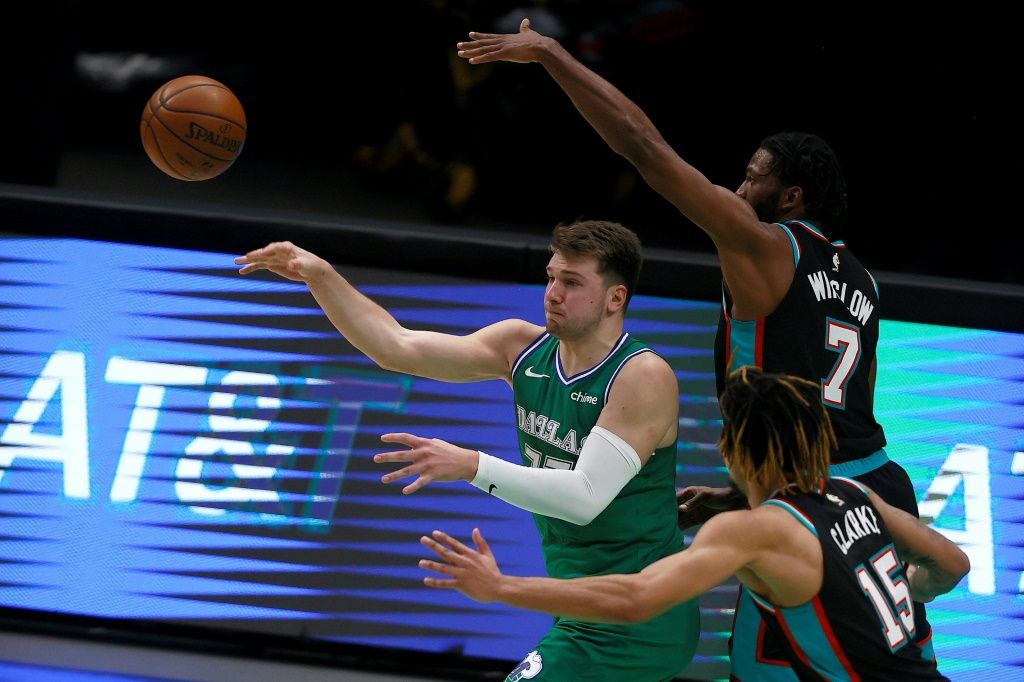
Luka Doncic’s bid for the 2025-26 NBA Most Valuable Player award appears effectively over after the Los Angeles Lakers star suffered a Grade 2 left hamstring strain Thursday night, an injury that will sideline him for the remainder of the regular season and leave him one game short of the league’s 65-game eligibility threshold.

Doncic, who had played 64 games entering the contest, exited in the third quarter of the Lakers’ 139-96 blowout loss to the Oklahoma City Thunder after grabbing his hamstring on a drive. He underwent an MRI on Friday that confirmed the moderate strain, ruling him out for the final five regular-season games, multiple reports confirmed.
The 27-year-old Slovenian superstar had been among the top contenders in the MVP race, leading the league in scoring at approximately 33.5-33.8 points per game while adding 8.3 assists and 7.8 rebounds. His March performance, including historic scoring outbursts, had kept him in the conversation despite earlier injuries and defensive concerns raised by some voters.
The new collective bargaining agreement’s 65-game minimum for individual awards, designed to discourage load management, now looms large. With only days left in the regular season, Doncic cannot reach the threshold. While an exception exists for true season-ending injuries, a Grade 2 hamstring strain — involving partial tearing of muscle fibers — typically requires three to six weeks of recovery, not rendering the season officially over. Betting sites such as BetMGM promptly removed him from MVP odds following the injury.
NBA MVP Ladder rankings released April 3 placed Victor Wembanyama of the San Antonio Spurs at No. 1, followed by Shai Gilgeous-Alexander of the Thunder and Nikola Jokić of the Nuggets, with Doncic at No. 4. The injury effectively eliminates any late surge, shifting the race to a tighter contest among the top three as teams play out their final games.
This marks the second left hamstring issue for Doncic this season. He missed time earlier with a milder strain, raising questions about re-aggravation in a high-usage player whose game relies on explosive movements, step-back jumpers and constant direction changes. Lakers coach JJ Redick emphasized caution postgame Thursday, stating the team would prioritize long-term health.
The timing could not be worse for Doncic’s awards case. He had pushed through 64 games to stay eligible, falling agonizingly short after a non-contact injury in a blowout where the Lakers trailed by more than 30 points at times. Some observers questioned why he remained in the game at all, given the score and his earlier discomfort in the first half.
Analysts note the irony of the 65-game rule. Intended to promote availability, it now risks penalizing a dominant performer who logged heavy minutes while battling injuries throughout the year. Without the minimum, Doncic also becomes ineligible for All-NBA teams, which could impact future contract extensions and supermax eligibility under league rules.
For the Lakers, who hold a slim grip on a top Western Conference seed, the loss of their offensive engine forces greater reliance on LeBron James, Austin Reaves and supporting cast in the final stretch and into the playoffs beginning April 18. Recovery timelines suggest Doncic could potentially return for the postseason if rehabilitation progresses smoothly, but rushing back risks chronic issues.
Sports medicine experts describe Grade 2 strains as serious but not catastrophic. Rehabilitation focuses on rest, physical therapy, progressive strengthening and sport-specific drills. For elite athletes like Doncic, advanced therapies may accelerate healing, yet conservative management remains the priority to avoid re-injury.
The development reshapes the MVP narrative. Shai Gilgeous-Alexander, leading a top-seeded Thunder team with elite efficiency, has emerged as the strong favorite in recent betting odds and expert rankings. Victor Wembanyama’s two-way dominance for the Spurs has drawn widespread acclaim, while Nikola Jokić continues his masterful playmaking for Denver.
Doncic’s statistical dominance — league-leading scoring and strong playmaking — had kept him in the mix despite defensive metrics that some voters criticized as among the league’s weaker. His absence removes one of the most compelling individual stories of the season.
Public reaction on social media and in sports commentary split between sympathy for the injury and debate over the 65-game rule’s fairness. Many fans argued that Doncic’s body of work through 64 games, including leading the Lakers to competitive positioning, deserved recognition regardless of the final tally. Others defended the rule as necessary to ensure awards reflect sustained availability.
League-wide, the incident highlights ongoing tensions around player health, schedule density and strategic decisions in the final weeks. Similar cases have sparked discussion about potential exceptions or rule tweaks, though no immediate changes are expected.
For Doncic personally, the focus shifts from individual accolades to recovery and a potential deep playoff run. His history shows resilience, and a healthy return could still define the Lakers’ postseason hopes.
As the regular season concludes, the MVP race narrows without one of its brightest stars. Voting will reflect performances through the full schedule, leaving Doncic on the outside looking in despite a season that, statistically and visually, ranked among the league’s most impressive.
Lakers officials and medical staff have not provided a detailed playoff return timeline, emphasizing day-to-day monitoring. In the meantime, the franchise navigates the final games and prepares for the postseason without its leading scorer.
The 2025-26 campaign has been a tale of resilience for Doncic amid multiple setbacks. While the MVP door likely closes, his impact on the Lakers and the broader NBA remains undeniable. Fans and analysts will watch closely as he begins rehabilitation, hoping for a strong comeback when the playoffs arrive.
Whether the 65-game rule ultimately denies him hardware or serves as motivation for future seasons, Doncic’s 2026 campaign underscored both his elite talent and the physical demands of modern NBA stardom.

MIAMI — Major corporations continue shifting headquarters and key operations to Florida in 2026, drawn by the state’s longstanding lack of personal income tax, business-friendly regulations and appealing quality of life that contrast sharply with higher-cost, higher-tax hubs like California and New York.

From tech innovators to financial giants, companies are betting on South Florida’s momentum as a new hub for growth. In the first months of 2026 alone, several high-profile moves underscored the trend, including Palantir Technologies relocating its headquarters to Miami and D-Wave Quantum Inc. choosing Boca Raton for its new corporate home and U.S. research facility.
Florida has led the nation in corporate headquarters relocations for years. Between 2020 and 2025, more than 74 companies moved their HQs to the state, outpacing any other, according to JLL data. The pattern shows no signs of slowing as 2026 unfolds, fueled by a combination of economic incentives, infrastructure and demographic shifts.
“No state income tax is a huge magnet,” said one South Florida real estate advisor tracking the moves. Executives and high-net-worth individuals who already relocated their personal lives to Miami or Palm Beach often bring their companies along, creating a virtuous cycle of talent and capital inflow.
Prominent examples abound. Hedge fund powerhouse Citadel, led by Ken Griffin, has deepened its Miami footprint after Griffin’s own high-profile move. Tech data analytics firm Palantir followed suit in February 2026, shifting from Denver. Quantum computing pioneer D-Wave Quantum announced in January it would complete its transition from California’s Silicon Valley to Boca Raton by year’s end, citing Florida’s fast-growing tech ecosystem, skilled talent pool and innovative environment.
Wells Fargo became the first major bank to relocate its wealth management headquarters to West Palm Beach, with about 100 senior executives expected to move by late 2026. Investment firms like Apollo Global Management are eyeing a second U.S. headquarters in South Florida or Texas, signaling continued interest from the finance sector.
Other relocations and expansions in recent years include ARK Invest to St. Petersburg, Goldman Sachs bolstering its Palm Beach County presence, and various firms in fintech, logistics and professional services setting up shop in Tampa, Fort Lauderdale and Miami’s Brickell district. South Florida alone saw dozens of significant corporate moves or expansions in 2024-2025, with at least four HQ relocations reported in early 2026.
Experts point to multiple overlapping factors driving the migration.
Tax Advantages Stand Out
Florida imposes no personal state income tax, delivering immediate savings for executives, employees and pass-through business owners. A high earner previously paying California or New York rates can save tens of thousands annually. The state also maintains a competitive corporate income tax structure with various exemptions, and recent policy moves — including the repeal of the business rent tax — have further sweetened the deal for companies.
“Economics play a big role, but it’s also about ease of doing business,” noted brokers involved in office leasing deals. Florida ranks among the lowest in business regulation burdens nationally, with streamlined permitting and pro-growth policies under Gov. Ron DeSantis. Recent legislative efforts, such as the Choice Act strengthening noncompete agreements for tech firms, add legal predictability that appeals to innovation-driven companies.
Lifestyle and Talent Draw
Beyond dollars and cents, Florida offers year-round sunshine, no state income tax-driven cost savings and a vibrant, diverse culture. Many executives cite quality-of-life improvements — shorter commutes in some areas, outdoor activities and family-friendly environments — as reasons employees are more willing to relocate or join expanding teams.
The state’s universities and growing population supply a deepening talent pool, particularly in tech, finance and logistics. South Florida’s Gold Coast has posted strong metrics in talent attraction, new business formations and GDP growth. Initiatives like “Ambition Accelerated,” a multimillion-dollar campaign backed by business leaders including Griffin and Stephen M. Ross, actively market these strengths to lure more corporate decision-makers.
Strategic geography helps too. Miami serves as a gateway to Latin America and beyond, with excellent air and sea connectivity via Miami International Airport and PortMiami. Time zones align well for international business, and the region’s multilingual workforce supports global operations.
Following the Billionaires
Analysts observe that billionaire relocations often precede or accompany corporate moves. When CEOs like Griffin or others purchase multimillion-dollar estates in Miami’s Coconut Grove or elsewhere, their companies frequently establish or expand local offices. This “follow the leader” dynamic has accelerated office demand in premium areas like Brickell and West Palm Beach.
Real estate professionals report surging interest in both luxury homes and Class A office space tied to these shifts. While overall relocation volume may have moderated from pandemic-era peaks, the moves in 2025-2026 involve higher-value investments, larger job commitments and core functions rather than mere satellite offices.
Broader Economic Impact
The influx brings jobs, often high-paying ones in technology, finance and professional services. Palm Beach County alone has seen over 140 companies relocate in recent years, creating thousands of direct positions. New business formations remain robust, with nearly 698,000 recorded in Florida in 2025 and strong filings continuing into 2026.
State officials and economic development groups highlight Florida’s top rankings for entrepreneurship and business climate. Lower utility and operational costs compared to Northeast or West Coast cities add further appeal. Infrastructure investments in highways, ports and airports support logistics-heavy industries.
Challenges exist. Rapid growth strains housing affordability in some markets, and competition for specialized talent can intensify. Some companies note the need to balance lifestyle perks with robust professional networks that traditional hubs like New York still dominate. Weather risks, including hurricane season, require careful planning for business continuity.
Yet proponents argue the structural advantages outweigh drawbacks. Florida’s economy has demonstrated resilience, with strong population growth and domestic migration from high-tax states continuing into 2026.
What Lies Ahead
As the year progresses, more firms are expected to evaluate or finalize moves. Tech companies in AI, quantum computing and data analytics appear particularly interested, drawn by talent pipelines and supportive policies. Finance and wealth management continue expanding, positioning South Florida as “Wall Street South.”
Analysts caution that while the trend is durable, it has entered a more selective phase. Companies now weigh labor availability, exact cost structures and regulatory stability more carefully than during the initial surge.
For businesses considering relocation, Florida officials recommend assessing incentives, workforce needs and long-term fit. Dedicated economic development programs offer tailored support for headquarters moves, job creation and capital investment.
The state’s appeal extends beyond corporations. Individuals and families follow similar paths, seeking tax relief and lifestyle upgrades, which in turn bolsters local consumer markets and service industries.
In 2026, Florida’s draw remains clear: a potent mix of fiscal conservatism, regulatory lightness, geographic advantage and sun-soaked living that resonates with leaders looking to scale efficiently. As one executive involved in a recent move put it, the state offers “an ecosystem that’s maturing rapidly” for ambitious companies.
Whether the migration sustains at current velocity depends on national economic conditions, federal policy shifts and Florida’s ability to manage growth pressures. For now, the Sunshine State continues to shine as a destination of choice for big companies recalibrating their futures.

U.S.-China ties stabilize as rare fugitive repatriation precedes Trump-Xi summit
Business
Is Dubai International Airport Opened Today? Airport Remains Open Amid Ongoing Regional Tensions

DUBAI, United Arab Emirates — Dubai International Airport (DXB) is open and handling flights as of Saturday, April 4, 2026, operating on a reduced but steadily expanding schedule despite persistent disruptions from regional geopolitical tensions in the Middle East.

Travelers checking real-time flight information on the official Dubai Airports website see departures such as flydubai services to Moscow and Kathmandu alongside Emirates flights to Seattle and Tunis moving through the airport’s three terminals. While not at pre-crisis capacity, operations continue without major new incidents reported overnight, marking a cautious step toward normalization after weeks of suspensions, airspace restrictions and isolated security events.
The airport’s status comes as a relief for stranded passengers and the global aviation industry, which has faced cascading cancellations since late February when escalating conflict involving the United States, Israel and Iran prompted widespread airspace closures across the Gulf region. Dubai, home to the world’s busiest international airport by passenger traffic in normal times, saw full suspensions at various points, including a notable drone-related fire incident near the facility on March 30 that halted movements for several hours and forced diversions to Dubai World Central-Al Maktoum International Airport (DWC).
Dubai Airports officials continue to urge caution. Passengers are advised not to head to DXB unless their airline has confirmed a departure time directly. “Check your flight status directly with your airline before heading to the airport,” the authority emphasized in recent updates. Schedules remain fluid as airlines reposition aircraft and coordinate with regulators amid partial airspace reopenings.
Emirates, the flagship carrier based at DXB, is operating a reduced network with plans to scale up further in coming days. As of early April, the airline reported flying to dozens of destinations while monitoring the situation hourly. Low-cost carrier flydubai has pushed past 100 routes in its limited resumption, focusing on key regional and international connections. Other carriers, including Air India and IndiGo, have run ad-hoc and scheduled repatriation-style flights to maintain essential links, particularly to South Asia.
The disruptions trace back to February 28, when initial retaliatory actions led to a complete halt in operations at both DXB and DWC. Limited flights resumed in early March, but foreign airlines faced temporary bans or severe restrictions at times. A drone strike that ignited a fuel tank fire in mid-March and another incident on March 30 added layers of complexity, briefly shutting down runways and causing diversions. Inbound Emirates flights were rerouted, while flydubai departures faced multi-hour delays.
Regional airspace remains a critical factor. Partial reopenings have allowed some traffic, but many international carriers extended suspensions. Airlines such as Air France, Lufthansa, British Airways and Cathay Pacific have kept Dubai routes on hold through mid-April or later, citing safety and operational challenges. Some long-haul carriers canceled services into May or beyond. The situation has stranded thousands and forced rerouting that increased fuel costs and travel times.
Despite the hurdles, recovery signals are emerging. By early April, DXB processed hundreds of flights over 48-hour periods, with more arrivals than departures noted in some General Directorate of Residency and Foreigners Affairs data — a sign that Dubai is drawing back visitors and residents. Schools reopened April 3, and the UAE’s residency grace period ended, helping restore a sense of routine in the city.
Airport officials describe the current phase as “progressive scaling” in coordination with airlines and authorities. Flight schedules could shift daily as networks rebalance. Delays remain low compared to peak disruption periods, but travelers should build in extra time, especially given potential road congestion from any lingering weather effects or heightened security.
For passengers, flexibility is key. Major carriers have extended rebooking waivers and refund options through mid-May or later. Emirates allows changes without fees for travel through May 31 in many cases. Similar policies apply at flydubai and Etihad. Passengers with bookings in the coming weeks should monitor airline apps, emails and the Dubai Airports flight status page, which shows real-time gate information, estimated times and status updates.
The broader impact extends beyond aviation. Dubai’s tourism sector, a cornerstone of the economy, has seen a slowdown as visitors hesitate amid uncertainty. Hotels report lower occupancy, and events scheduled for spring face adjustments. Yet authorities project a rebound once full operations stabilize, leveraging DXB’s role as a global connector between Europe, Asia and Africa.
Experts note that the airport’s resilience stems from its modern infrastructure and strong coordination between Dubai Airports, the General Civil Aviation Authority and carriers. Three terminals handle the load, with Terminal 3 — Emirates’ primary hub — seeing the bulk of long-haul traffic even in reduced mode. Special assistance services remain available for passengers with disabilities or needing extra support.
Looking ahead, full stabilization depends on de-escalation in the region. Aviation analysts say it could take weeks or months to restore pre-February schedules, given aircraft repositioning, crew availability and ongoing airspace negotiations. Some routes may see permanent changes or higher fares in the short term due to longer detours.
In the meantime, DXB continues to function as a vital lifeline. On April 4, morning flights departed on schedule or with minimal variance, according to live trackers. Weather conditions showed low delays, with clear operations reported into the afternoon.
Travelers planning trips to or through Dubai should:
- Confirm flight status with their specific airline, not just the airport site.
- Allow extra time for security and check-in amid potential staffing adjustments.
- Prepare for possible rebooking or delays by reviewing airline policies.
- Avoid unnecessary trips to the airport terminals.
Dubai Airports maintains dedicated pages for flight status, special assistance and travel guidance. The authority also coordinates with tourism bodies to provide updates for visitors.
This period tests the adaptability of one of aviation’s busiest hubs. From full suspensions in late February and March to the current limited but active operations, DXB has demonstrated incremental progress. No major incidents were logged overnight into April 4, offering a steady — if not fully normal — picture for travelers.
As the situation evolves hourly, staying informed through official channels remains the best defense against disruption. Emirates and flydubai lead the recovery effort, but the full ecosystem of international partners will determine when Dubai reclaims its title as an unchallenged global transit point.
For now, the answer to the question on many travelers’ minds is yes: Dubai International Airport is open. Operations continue with care, and the world watches as the hub works to reconnect amid uncertainty.

Worawith Ounpeng/iStock via Getty Images
IPO) is a process by which a private company becomes a public company by offering its shares to the general public for the first time through a stock exchange.” data-id=”2267765968″ data-type=”getty-image” width=”1536″ height=”1024″ srcset=”https://static.seekingalpha.com/cdn/s3/uploads/getty_images/2267765968/image_2267765968.jpg?io=getty-c-w1536 1536w, https://static.seekingalpha.com/cdn/s3/uploads/getty_images/2267765968/image_2267765968.jpg?io=getty-c-w1280 1280w, https://static.seekingalpha.com/cdn/s3/uploads/getty_images/2267765968/image_2267765968.jpg?io=getty-c-w1080 1080w, https://static.seekingalpha.com/cdn/s3/uploads/getty_images/2267765968/image_2267765968.jpg?io=getty-c-w750 750w, https://static.seekingalpha.com/cdn/s3/uploads/getty_images/2267765968/image_2267765968.jpg?io=getty-c-w640 640w, https://static.seekingalpha.com/cdn/s3/uploads/getty_images/2267765968/image_2267765968.jpg?io=getty-c-w480 480w, https://static.seekingalpha.com/cdn/s3/uploads/getty_images/2267765968/image_2267765968.jpg?io=getty-c-w320 320w, https://static.seekingalpha.com/cdn/s3/uploads/getty_images/2267765968/image_2267765968.jpg?io=getty-c-w240 240w” sizes=”(max-width: 767px) calc(100vw – 36px), (max-width: 1023px) calc(100vw – 132px), (max-width: 1199px) calc(100vw – 666px), (max-width: 1307px) calc(100vw – 708px), 600px” fetchpriority=”high”>
One IPO priced this past week, joined by one SPAC, and one major deal joined the pipeline.
The biggest news of the week came from the backlog, though: Elon Musk’s SpaceX (SPACE) has

Lauren Price vs Stephanie Pineiro: Behind the scenes with a world champion

10 Shocking Money Stats About the Average Person

NYC Mayor Zohran Mamdani hears ‘rental rip-off’ complaints from Bronx tenants

Smart energy pays enters the US market, targeting scalable financial infrastructure

Why Israel is blocking foreign journalists from entering

Bitcoin: We’re Entering The Most Dangerous Phase
10 Shocking Money Stats About the Average Person
![OMG...The IMF Said Ripple/XRP Will Be LEVERAGED and 99% of XRP Holders MISSED THIS! [HARDCORE PROOF]](https://wordupnews.com/wp-content/uploads/2026/04/1775281159_maxresdefault-80x80.jpg)
OMG…The IMF Said Ripple/XRP Will Be LEVERAGED and 99% of XRP Holders MISSED THIS! [HARDCORE PROOF]

HUGE CRYPTO MARKET STRUCTURE CLARITY UPDATE TOMORROW? #crypto #cryptocurrency #xrp #bitcoin
-

 NewsBeat1 day ago
Steven Gerrard disagrees with Gary Neville over ‘shock’ Chelsea and Arsenal claim | Football
-

 Business1 day ago
No Jackpot Winner and $194 Million Prize Rolls Over
-
Entertainment5 days ago
Fans slam 'heartbreaking' Barbie Dream Fest convention debacle with 'cardboard cutout' experience
-

 Fashion11 hours ago
Weekend Open Thread: Spanx – Corporette.com
-

 Crypto World2 days ago
Gold Price Prediction: Worst Month in 17 Years fo Save Haven Rock
-

 Tech5 days ago
The Pixel 10a doesn’t have a camera bump, and it’s great
-
 Entertainment6 days ago
Lana Del Rey Celebrates Her Husband’s 51st Birthday In New Post
-
Crypto World4 days ago
Dems press CFTC, ethics board on prediction-market insider trades
-

 Tech5 days ago
Avatar Legends: The Fighting Game comes out in July and it looks pretty slick
-

 Sports4 days ago
Tallest college basketball player ever, standing at 7-foot-9, entering transfer portal
-

 Tech4 days ago
EE TV is using AI to help you find something to watch
-

 Fashion6 days ago
Amazon Sundays: Soft Spring Layers
-

 Business2 days ago
Login and Checkout Issues Spark Merchant Frustration
-

 Tech6 days ago
Elon Musk’s last co-founder reportedly leaves xAI
-

 Tech4 days ago
How to back up your iPhone & iPad to your Mac before something goes wrong
-

 Tech5 days ago
Apple will hide your email address from apps and websites, but not cops
-

 Politics4 days ago
Should Trump Be Scared Strait?
-

 Crypto World4 days ago
U.S. rule change may open trillions in 401(k) funds to crypto
-

 Fashion5 days ago
The Best Spring Trends of 2026
-

 Tech4 days ago
Flipsnack and the shift toward motion-first business content with living visuals
You must be logged in to post a comment Login