

Business
GameStop (GME) Stock Holds Steady Near $24.50 Amid Acquisition Speculation and Meme Stock Resilience


GameStop Corp. (GME) shares traded modestly higher in early March 2026 trading, closing at $24.46 on March 11 after a 0.37% gain, as the video game retailer continues to outperform many peers in the meme-stock category amid ongoing speculation about a major acquisition and CEO Ryan Cohen’s transformation efforts.

The stock opened March 12 around $24.40 and climbed to $24.51 by mid-morning, up about 0.20% from the previous close, according to real-time data from Yahoo Finance and other platforms. Volume remained moderate at around 833,000 shares in the opening hours, below the average daily figure of roughly 5 million.
GameStop has gained more than 20% year-to-date in 2026, rising from about $20.08 at the end of 2025 to current levels near $24.50. This performance stands in contrast to other meme stocks like AMC Entertainment and SoundHound AI, which have declined sharply over the same period. Analysts attribute GME’s relative strength to renewed short-squeeze interest, a robust cash position and persistent buzz around Cohen’s plans to deploy the company’s roughly $8.8 billion in cash reserves for a significant acquisition.
In late January 2026, reports surfaced that Cohen was eyeing a “very big” deal involving a publicly traded consumer company, sparking a rally that pushed shares above $24 in early February. Michael Burry, the investor famous from “The Big Short,” disclosed a long position in GameStop around the same time, further fueling optimism despite his comments downplaying the odds of another massive short squeeze like the one in 2021.
The company has maintained a strong balance sheet, bolstered by previous equity raises and cost-cutting measures, including hundreds of store closures as it shifts away from traditional brick-and-mortar retail toward collectibles, partnerships and potential new ventures. GameStop’s Q3 2025 revenue came in at $821 million, down 4.57% year-over-year, reflecting ongoing challenges in physical game sales amid the rise of digital downloads.
Options activity has shown mixed sentiment in recent sessions. On March 11, call volume was relatively light but directionally varied, with some moderately bullish trades noted earlier in the week. TipRanks reported mixed options sentiment on March 9 with shares up 0.9%, while other days saw moderately bullish or neutral flows.
Analyst coverage remains cautious. The consensus rating leans toward “Reduce,” with a median price target around $13.50 from a handful of firms, well below current levels. No major Wall Street upgrades have materialized recently, and some forecasts highlight risks from declining core business fundamentals. However, institutional interest persists — Van ECK Associates increased its stake by 58.3% in the third quarter of 2025 to over 3 million shares.
GameStop’s next earnings report is expected around March 24 or 31, 2026, depending on scheduling, with investors watching for updates on cash deployment, store rationalization and any progress on strategic initiatives. The board previously approved a performance-based stock option award for Cohen in January 2026, contingent on shareholder approval at a special meeting likely in March or April, tying his compensation to ambitious long-term goals.
The stock’s 52-week range spans $19.93 to $35.81, with the high reached in May 2025 during earlier volatility. Recent trading has stayed in a tighter band around $23-$25, reflecting a stabilization after the January-February surge.
Broader market context includes steady U.S. equity gains in early 2026, though meme stocks remain highly volatile and sentiment-driven. GameStop’s ability to decouple somewhat from the pack underscores evolving narratives: from pure speculation to a cash-rich entity potentially pivoting under Cohen’s leadership.
Short interest data has not shown extreme levels recently, tempering squeeze fears, but retail enthusiasm on platforms like StockTwits and Reddit keeps the name in focus. Traders note that any confirmed acquisition news could trigger sharp moves, while continued silence might lead to drift.
As GameStop navigates its post-meme era, the stock’s performance in March 2026 illustrates resilience amid uncertainty. With earnings approaching and acquisition rumors lingering, volatility is likely to persist for shareholders.


FedEx Corporation: Its Valuation Has Already Traveled Quite Too Far

Savills has agreed a deal worth close to $1 billion to acquire US property investment bank Eastdil Secured, marking a significant strategic move aimed at strengthening the British real estate group’s presence in the lucrative American market.
The London-listed property adviser will pay approximately $921 million for the business in a transaction combining both cash and shares. Around $553 million will be paid in cash, while roughly $369 million will be settled in Savills shares issued to existing Eastdil investors, including Singapore’s sovereign wealth fund Temasek, Guggenheim Partners and a group of senior staff shareholders.
The acquisition represents the first major deal under Savills’ new chief executive Simon Shaw, who took over from Mark Ridley at the start of 2026. Shaw described the combination as a “marriage made in heaven”, highlighting the longstanding relationship between the two companies in global real estate transactions.
Eastdil Secured is widely regarded as one of the most influential advisers in the global property capital markets sector. The firm specialises in advising major landlords, developers and institutional investors on high-value property sales, financing arrangements and complex investment transactions. Its client base includes some of the largest global real estate investors and private equity firms.
By bringing Eastdil into the group, Savills aims to significantly deepen its foothold in the United States, the world’s largest property investment market, where the company has historically had a more limited presence compared with Europe and Asia.
Shaw said the acquisition fills a strategic gap in Savills’ global platform. While the firm enjoys strong market positions across many international property markets, the US had remained the most significant region where its capabilities were comparatively underdeveloped.
He said: “We’ve got great market share in many parts of the world, but the one hole in our network has been the US. Eastdil is the leading capital markets operator in the largest real estate investment market in the world and provides direct access to the deepest pools of capital.”
Savills believes the combined organisation will enable it to compete more aggressively for high-value real estate advisory mandates, including mergers and acquisitions involving property portfolios, large-scale financing deals and global investment transactions.
The acquisition was announced alongside Savills’ latest financial results, which showed the company continuing to grow despite a challenging global economic environment marked by geopolitical tensions, tariffs and macroeconomic uncertainty.
For the year ending December 2025, Savills reported revenue of £2.55 billion, up from £2.40 billion the previous year, representing growth of 6 per cent.
Pre-tax profits rose by 14 per cent to £101 million, compared with £88.3 million in 2024. The company attributed the increase partly to stronger demand for its non-transactional services, including investment management, consultancy and property management.
These divisions now account for the majority of Savills’ earnings, reflecting a broader industry shift away from reliance solely on property transactions toward advisory and asset-management services that provide more stable revenue streams.
Income from these less transactional activities increased by 8 per cent over the year, while revenues linked directly to property transactions rose by 4 per cent.
Savills said the middle part of 2025 had been particularly challenging for deal activity as investors delayed decisions amid global tariff disputes and uncertainty surrounding fiscal policy ahead of the UK government’s autumn budget.
However, the company experienced a sharp rebound in activity toward the end of the year. Shaw described December as “astonishing”, suggesting that many investors returned to the market once political uncertainty had eased and the budget had been delivered.
He said investors were increasingly adjusting to a world characterised by geopolitical tension and economic volatility.
“Both occupiers and investors have started to accept that geopolitical change is now a constant,” Shaw said. “There comes a moment where you simply have to continue investing and doing business despite that backdrop.”
Savills also reported that the stronger momentum seen late in 2025 had continued into the opening months of 2026. Although the firm acknowledged that it remains difficult to assess the full impact of the ongoing conflict in the Middle East, it said there had been little immediate disruption to global property investment activity.
According to Shaw, London could potentially benefit from increased investor interest if global instability persists, as capital historically flows toward markets perceived as stable and secure.
“I think there is a likelihood that capital will tilt slightly towards traditional safe havens,” he said. “It would be logical that investors feel more comfortable placing money in markets where legal systems and institutions are well established.”
Savills’ board has also approved a higher shareholder payout following the improved financial performance. The company increased its final dividend by 8 per cent to 15.7p per share, payable in May, while also announcing a supplemental dividend of 10.7p per share.
Despite the strategic rationale for the Eastdil acquisition, investors initially reacted cautiously to the announcement. Savills shares fell 7.2 per cent, closing down 72p at 930p on the day the deal was unveiled.
Founded in 1855 by surveyor Alfred Savill, the company has evolved from a traditional land agency serving wealthy landowners into one of the world’s largest property advisory groups.
Although widely recognised by the public as a residential estate agent, the residential business accounts for only about a tenth of Savills’ overall operations. The majority of its income now comes from commercial real estate services such as advising investors, leasing office space, managing buildings and providing consultancy to institutional clients.
Savills has expanded internationally through a series of acquisitions over the past three decades, establishing operations across Europe, Asia, the Middle East and Australia. However, the United States has remained the final major real estate market where its presence lagged behind competitors.
The purchase of Eastdil Secured is therefore expected to play a central role in Savills’ long-term strategy of building a truly global real estate advisory platform capable of competing with the largest property consultancies and investment banks in the sector.

Jamie Young
Jamie is Senior Reporter at Business Matters, bringing over a decade of experience in UK SME business reporting.
Jamie holds a degree in Business Administration and regularly participates in industry conferences and workshops.
When not reporting on the latest business developments, Jamie is passionate about mentoring up-and-coming journalists and entrepreneurs to inspire the next generation of business leaders.

Strait Of Hormuz: Buy The Fear Before This Waterway Clears

Seema Misra calls for accountability as a report by MPs raises concerns about ongoing delays.


‘Making Money’ panelists Michelle Girard and Chris Low break down the February Jobs report, the impact on the energy prices from the Middle East crisis and the outlook for the Fed.
This is a developing story about the second reading of fourth-quarter gross domestic product growth. Please check back for updates.
The U.S. economy grew at a slower rate than previously thought in the fourth quarter after the Commerce Department released its first revision of real gross domestic product (GDP) growth for the latest quarter.
The Bureau of Economic Analysis (BEA) released its second estimate of fourth-quarter GDP, which showed the economy grew at a 0.7% rate. That figure was slower than the 1.4% estimate of economists polled by LSEG, and above the Commerce Department’s initial fourth-quarter GDP estimate of 1.4%.

BDC Tailwinds Are Building, Not Breaking

Form 8K Hexcel Corp For: 13 March
Business
Sun and Thousands of Solar Twins Rode Massive Galactic Migration Wave to Milky Way’s Suburbs, New Studies Find

Our sun, born 4.6 billion years ago near the crowded, chaotic heart of the Milky Way, did not make its journey to the galaxy’s calmer outer suburbs alone. A pair of new studies published March 12, 2026, in Astronomy and Astrophysics reveal that thousands of “solar twin” stars — stars with nearly identical mass, age and chemical composition to the sun — migrated outward alongside it in a coordinated stellar exodus spanning roughly 10,000 light-years.

Image credit: NAOJ
Led by Daisuke Taniguchi of Tokyo Metropolitan University and Takuji Tsujimoto of the National Astronomical Observatory of Japan, the research draws on data from the European Space Agency’s Gaia space telescope, which has mapped positions, motions and compositions for billions of stars with unprecedented precision.
The team identified 6,594 solar twins in Gaia’s latest release, focusing on those matching the sun’s metallicity (a measure of elements heavier than helium) and age. Their orbital paths and chemical signatures point to a shared origin closer to the galactic center, followed by a synchronized outward drift that placed them in the sun’s current neighborhood — about 26,000 light-years from the Milky Way’s core.
Computer simulations had long suggested such a trek would be rare. Stars born in the dense inner regions face formidable barriers: intense radiation, frequent supernovae explosions and gravitational perturbations from the galaxy’s central bar and spiral arms. Models predicted only about 1 percent of stars from the sun’s presumed birthplace could reach the outer disk within 4.6 billion years without being destroyed or scattered.
Yet the Gaia data show thousands succeeded — far more than chance alone would allow. The researchers propose the explanation lies in a massive, galaxy-wide migration wave triggered by the formation and evolution of the Milky Way’s central bar roughly 4 to 6 billion years ago.
As the bar strengthened, it boosted star formation in the inner disk and launched large-scale radial migrations. Gravitational resonances — regions where orbital periods align with the bar’s rotation or spiral arms — funneled stars outward in groups rather than individually. The sun and its twins caught this wave, riding it to safer, less hazardous suburbs where cosmic rays and supernova blasts are less frequent.
This migration may help explain why Earth became habitable. The galactic center teems with dangers: gamma-ray bursts, black-hole activity and dense stellar crowds that could strip planetary atmospheres or trigger mass extinctions. By migrating outward just in time — before the solar system fully formed its planets — the sun escaped the worst risks, providing a stable environment for life to emerge.
Taniguchi told Live Science the pattern suggests “many solar twins of the same age migrated through the Milky Way around the same time as the sun, giving us new clues about when and how the sun moved from its birthplace to its current location.”
The studies build on decades of debate about the sun’s origins. Earlier work proposed the sun formed farther out or migrated via spiral-arm resonances, but the new evidence ties the movement to a specific galactic event: bar-driven migration.
Gaia’s third data release in 2022 and ongoing fourth-release updates have revolutionized stellar archaeology, allowing astronomers to rewind stellar orbits billions of years. By tracing chemical abundances — especially iron-peak elements forged in supernovae — researchers can fingerprint stars born in the same era and region.
The solar twins cluster in both kinematics (motion) and metallicity, supporting group migration over random drift. The wave likely peaked 4 to 6 billion years ago, coinciding with the sun’s youth and the Milky Way’s transition to a more stable barred-spiral structure.
Implications extend beyond our solar system. If many sun-like stars share this history, habitable zones may correlate with migration paths. Regions swept by such waves could host more life-friendly systems, as they escape inner-galaxy perils.
The findings also refine models of galactic evolution. The Milky Way’s bar, a peanut-shaped structure of older stars, drives radial mixing that reshapes the disk over cosmic time. Similar processes occur in other barred spirals, suggesting coordinated migrations are common.
No direct evidence links the migration to Earth’s habitability, but the timing aligns intriguingly. Planet formation took hundreds of millions of years after the sun’s birth; the outward journey may have positioned the nascent system in a quieter galactic suburb just as rocky worlds and oceans stabilized.
Future Gaia releases and upcoming telescopes like the Vera C. Rubin Observatory will test the hypothesis by mapping even fainter twins and refining orbital reconstructions.
For now, the studies paint a dynamic picture: the sun was not a solitary wanderer but part of a vast stellar caravan, carried by galactic forces to the peaceful outskirts where life could take root.
Astronomers say the work underscores how interconnected stellar lives are with their galaxy’s architecture — and how a timely migration may have been key to our existence.
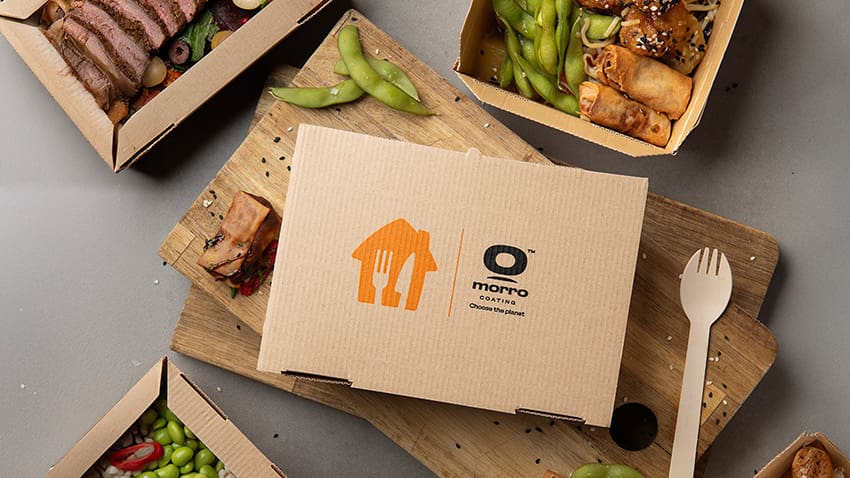
Just Eat Takeaway.com is expanding its push towards sustainable food delivery packaging by introducing a new range of plastic-free takeaway boxes across ten European markets, using a plant-based coating designed to replace conventional plastic linings.
The food delivery giant confirmed that the packaging will be rolled out across Austria, Belgium, Bulgaria, Switzerland, Germany, Italy, the Netherlands, Poland, Slovakia and Spain, following earlier launches with its German brand Lieferando in Germany and Austria.
The initiative is part of a partnership with sustainable packaging manufacturer Huhtamaki and UK materials technology company Xampla, whose Morro Coating technology provides a plastic-free alternative to the thin polymer layers traditionally used to make takeaway containers resistant to grease and moisture.
Unlike conventional takeaway boxes, which rely on plastic coatings to prevent leaks and maintain structural integrity, the new packaging uses a coating derived from natural plant proteins that has not undergone chemical modification. The coating provides the same barrier performance required for takeaway food packaging while remaining fully recyclable within standard paper recycling systems.
The rollout reflects growing pressure on the food delivery and hospitality sectors to reduce reliance on single-use plastics, particularly as regulations tighten across Europe under measures such as the EU’s Single Use Plastics Directive (SUPD).
According to the companies involved, the Morro-coated boxes have been verified as plastic-free by the UK’s National Physical Laboratory, making them one of the first takeaway packaging solutions capable of delivering high-performance food protection without plastic barriers.
The packaging is made from sustainably sourced corrugated paperboard, designed to retain heat and maintain rigidity even when used with greasy or moisture-heavy dishes that traditionally require plastic-lined containers.
Industry experts say solving this challenge is key to reducing plastic waste across the food delivery sector, where millions of takeaway boxes are used daily and often end up in landfill because plastic coatings prevent recycling.
Alexandra French, chief executive of Xampla, said the European expansion demonstrates that natural materials are increasingly capable of replacing plastic in high-volume commercial applications.
“Europe is moving fast on packaging regulation, and the demand for materials that can genuinely replace plastic has never been stronger,” she said.
“There is strong environmental ambition across these markets and a willingness to adopt new materials when they work. For us, this rollout is about scale. We’ve proven Morro Coating works and now we’re bringing it to millions of takeaway meals across Europe.”
French added that large-scale adoption in sectors such as food delivery is critical if sustainable materials are to meaningfully replace plastic packaging.
“If we want to replace plastic, we need to do it in the most demanding environments, where packaging needs to perform under heat, grease and moisture. This expansion shows that natural materials can compete in exactly those conditions.”
Huhtamaki, which manufactures the packaging, said the technology integrates seamlessly with existing foodservice supply chains and recycling infrastructure, enabling restaurants to transition to more sustainable packaging without requiring changes to waste management processes.
Because the coating is free from plastic, the containers can be processed through established paper recycling streams without needing separation of materials, addressing one of the major barriers to recycling takeaway packaging.
The rollout also supports businesses navigating evolving environmental regulations, including extended producer responsibility (EPR) rules that are increasingly placing financial responsibility on companies for the environmental impact of their packaging.
For Just Eat Takeaway.com, the expansion is part of a broader sustainability strategy aimed at reducing plastic waste across the fast-growing food delivery industry.
A spokesperson for the company said the move would allow thousands of restaurant partners across Europe to adopt packaging that meets both environmental and regulatory expectations.
“We’re excited to work with innovative partners who share our vision of reducing single-use plastic waste and creating more responsible packaging solutions,” the company said.
“Expanding our collaboration with Xampla represents a significant milestone in accelerating the adoption of plastic-free packaging across the on-demand delivery industry.”
The announcement comes as food delivery platforms face increasing scrutiny over the environmental impact of takeaway packaging, which contributes significantly to urban waste streams across Europe.
By introducing recyclable, plant-based coatings capable of replacing plastic in food containers, the companies involved hope to demonstrate that large-scale alternatives to plastic packaging are both commercially viable and operationally practical.
With millions of takeaway orders processed across its European markets every week, Just Eat Takeaway.com’s adoption of plastic-free containers could represent one of the most significant real-world deployments of plant-based packaging technologies in the food delivery sector to date.

Amy Ingham
Amy is a newly qualified journalist specialising in business journalism at Business Matters with responsibility for news content for what is now the UK’s largest print and online source of current business news.


Former JP Morgan Chase chief economist Anthony Chan breaks down the run up in oil prices on Varney & Co.
This story on the January 2026 PCE inflation report is developing and will be updated with more details.
The Federal Reserve’s preferred inflation gauge remained stubbornly high in January as consumers continued to face elevated price growth.
The Commerce Department on Friday reported that the personal consumption expenditures (PCE) index rose 0.3% on a monthly basis in January and is up 2.8% from a year ago. The monthly figure was in-line with the expectations of economists polled by LSEG, while the annual figure was slightly lower than the 2.9% estimate.
Core PCE, which excludes volatile measurements of food and energy prices, was up 0.4% from a month ago and increased 3.1% year over year. Both figures were in line with economists’ expectations from the LSEG poll.
Federal Reserve policymakers are focusing on the PCE headline figure as they try to bring inflation back to their long-run target of 2%, though they view core data as a better indicator of inflation. Compared with December’s readings, headline PCE inflation declined slightly from 2.9% while core PCE rose from 3%.
FED OFFICIALS CLOSELY MONITOR IRAN CONFLICT FOR POTENTIAL INFLATION IMPACT
Prices for goods were up 1.3% in January on an annual basis, down from 1.7% in December. Goods prices increases were even lower last summer, when the index posted annual gains of 0.6% in June and July and 0.9% in August.
Durable goods prices increased 2.2% in January from a year ago, up from a 2.1% reading in December. The index was close to 1% from June through November. Nondurable goods prices rose just 0.8% in January, a decline from the 1.6% annual rate recorded in December and the lowest reading since August.
What experts are saying
What does it mean for the Fed?

Woman adopts ‘chihuahua’ but something unusual happens weeks later

FedEx Corporation: Its Valuation Has Already Traveled Quite Too Far

Yield-Bearing Stablecoins Surge as Washington Fights Over Yield

Smart energy pays enters the US market, targeting scalable financial infrastructure

Why Israel is blocking foreign journalists from entering

Bitcoin: We’re Entering The Most Dangerous Phase

Bitcoin Just Flashed a Signal Nobody Is Ready For – Arthur Hayes

Nick Cannon and Mariah Carey: Love tested by financial pressures #nickcannon #mariahcarey

URGENT ANOTHER 2008 BANKING COLLAPSE HAPPENING NOW?! #crypto #cryptocurrency #xrp #bitcoin #finance
-
Business7 days ago
Form 8K Entergy Mississippi LLC For: 6 March
-

 News Videos4 days ago
10th Algebra | Financial Planning | Question Bank Solution | Board Exam 2026
-

 Fashion7 days ago
Weekend Open Thread: Ann Taylor
-
 Tech2 days ago
A 1,300-Pound NASA Spacecraft To Re-Enter Earth’s Atmosphere
-

 Crypto World4 days ago
Paradigm, a16z, Winklevoss Capital, Balaji Srinivasan among investors in ZODL
-

 Tech3 days ago
ChatGPT will now generate interactive visuals to help you with math and science concepts
-

 Business3 days ago
ExxonMobil seeks to move corporate registration from New Jersey to Texas
-

 Sports6 days ago
Three share 2-shot lead entering final round in Hong Kong
-

 Sports5 days ago
Braveheart Lakshya downs Lai in epic battle to enter All England Open final | Other Sports News
-

 NewsBeat2 days ago
Residents reaction as Shildon murder probe enters second day
-

 Entertainment6 days ago
Hailey Bieber Poses For Sexy Selfies In New Luscious Lip Thirst Traps
-

 Business5 days ago
Search for Nancy Guthrie Enters 37th Day as FBI Probes Wi-Fi Jammer Theory
-

 Business2 days ago
Search Enters Sixth Week With New Leads in Tucson Abduction Case
-
 NewsBeat4 days ago
Pagazzi Lighting enters administration as 70 jobs lost and 11 stores close across Scotland
-

 Tech4 days ago
Despite challenges, Ireland sixth in EU for board gender diversity
-

 NewsBeat2 days ago
I Entered The Manosphere. Nothing Could Prepare Me For What I Found.
-

 Business4 days ago
Search Enters 39th Day with FBI Tip Line Developments and No Major Breakthroughs
-

 Business6 days ago
Iran war enters second week as Trump demands ’unconditional surrender’
-

 Sports4 days ago
Skateboarding World Championships: Britain’s Sky Brown wins park gold
-

 Crypto World3 days ago
Will Chainlink price reclaim $10 amid volatility squeeze?