
Business
GE HealthCare Stock Drops 11% After Q1 Miss and Cut 2026 Outlook on Tariffs, Costs


NEW YORK — GE HealthCare Technologies Inc. shares tumbled more than 11% on Wednesday, April 29, 2026, trading around $60.72 in morning action after the medical technology company reported first-quarter results that missed profit expectations and lowered its full-year 2026 guidance, citing tariff impacts, supply chain issues and higher operating costs.
The company posted revenue of $5.13 billion for the quarter, up 7.4% from the year-ago period and slightly above some estimates. However, adjusted earnings per share of $0.99 fell short of the $1.07 consensus forecast. Net income attributable to GE HealthCare declined to $389 million from $564 million a year earlier, with operating income dropping to $515 million from $629 million.
GE HealthCare trimmed its full-year 2026 adjusted EPS guidance to $4.80–$5.00 from the previous $4.95–$5.15 range. Management pointed to approximately $90 million in tariff-related headwinds, a decline in the Patient Care Solutions segment and supplier issues in the Pharmaceutical Diagnostics business as key factors pressuring margins.
CEO Peter Arduini acknowledged the challenges in prepared remarks. “While we delivered solid revenue growth, Q1 was impacted by external pressures including tariffs and supply constraints,” he said. “We are taking decisive actions to mitigate these headwinds and remain confident in our long-term growth strategy.”
The results triggered heavy selling pressure. Volume surged well above average as both institutional and retail investors reacted to the miss and guidance cut. The decline ranks among the largest percentage drops on Nasdaq Wednesday morning and reflects investor disappointment in a stock that had already been under pressure year-to-date.
GE HealthCare, spun off from General Electric in 2023, provides a wide range of medical technologies including imaging systems, ultrasound, patient monitoring and pharmaceutical diagnostics. The company serves hospitals and healthcare providers worldwide and has significant exposure to both developed and emerging markets.
Analysts responded quickly to the update. Several firms lowered price targets or moved to more cautious ratings, citing margin pressures and uncertainty around tariff impacts. Others maintained Buy ratings, arguing the selloff creates an attractive entry point for a company with strong fundamentals and long-term growth potential in healthcare technology.
The tariff headwinds appear linked to broader U.S.-China trade tensions affecting component costs and supply chains. GE HealthCare has been working to diversify its manufacturing footprint, but near-term disruptions have still impacted profitability. Management noted that mitigation efforts are underway, including supplier negotiations and pricing adjustments.
For investors, today’s drop highlights the market’s sensitivity to guidance revisions in the healthcare technology sector. While GE HealthCare delivered revenue growth, the profit miss and lowered outlook raised concerns about near-term margin compression and execution risks in a challenging macroeconomic environment.
The company’s diversified portfolio provides some resilience. Imaging and ultrasound segments showed solid performance, while Pharmaceutical Diagnostics faced specific supplier challenges. GE HealthCare’s focus on innovation, including AI-powered imaging solutions and precision diagnostics, continues to position it well for long-term growth as healthcare systems invest in advanced technologies.
Longer-term bulls point to demographic tailwinds, including aging populations and increasing demand for early detection and personalized medicine. GE HealthCare’s global scale and strong brand reputation in medical imaging give it competitive advantages in these markets.
Near-term risks include continued tariff pressures, supply chain volatility and potential slowdowns in hospital capital spending if economic conditions weaken. The company’s high exposure to international markets also makes it sensitive to currency fluctuations and geopolitical developments.
As trading continued Wednesday morning, shares stabilized somewhat but remained sharply lower. Technical analysts noted support levels near recent moving averages, with potential resistance around $65–$68 if a recovery attempt materializes. Options activity showed increased put buying, reflecting caution among traders.
The day’s performance serves as a reminder of the market’s focus on forward guidance in healthcare technology names. While GE HealthCare maintains strong fundamentals, the tempered outlook has investors reassessing near-term momentum. The earnings call later today will be closely watched for additional color on mitigation strategies, margin recovery plans and AI-related growth opportunities.
GE HealthCare has a strong track record of innovation in medical technology. Its systems are used by healthcare providers worldwide to improve diagnosis, treatment and patient outcomes. The company’s ability to navigate current headwinds while investing in future growth will be key to regaining investor confidence.
For long-term investors, today’s decline may present an entry point if they believe in the company’s strategic positioning and ability to overcome temporary challenges. GE HealthCare’s focus on digital health, AI integration and precision diagnostics aligns with major trends in healthcare delivery.
The healthcare technology sector has faced selective pressure in 2026 as investors rotate toward other areas amid economic uncertainty. Companies with strong balance sheets and clear innovation pipelines like GE HealthCare have held up better than pure growth names, but remain sensitive to margin concerns and guidance revisions.
As the market digests today’s move, GE HealthCare stands out as a notable decliner, illustrating how even established healthcare technology leaders can face sharp selloffs when results and outlook fall short of elevated expectations. The coming quarters will reveal whether this represents a temporary setback or a more fundamental shift in the company’s growth trajectory.


NEW YORK — The Dow Jones Industrial Average opened lower on Wednesday, April 29, 2026, slipping 48.26 points or 0.098% to 49,093.67 in early trading as investors braced for a critical week of major technology earnings and continued weighing global economic signals amid mixed corporate results and geopolitical developments.

The blue-chip index, which had recently flirted with the 49,300 level, pulled back slightly at the bell as traders adopted a cautious stance ahead of earnings from several market heavyweights. Apple, Microsoft, Amazon and Meta are all scheduled to report this week, and their results are expected to set the tone for the broader market amid concerns about artificial intelligence spending, consumer demand and margin pressures.
Early movers showed a defensive tone. Industrial and financial stocks provided some support, while technology and consumer discretionary names lagged. Boeing and Goldman Sachs traded higher on positive momentum, but several Dow components sensitive to interest rates and growth expectations faced mild selling pressure.
Market breadth was mixed in the opening minutes, with advancing issues slightly outnumbering decliners. Volume remained moderate, suggesting limited conviction as participants awaited fresh catalysts. The S&P 500 and Nasdaq Composite also opened modestly lower, reflecting similar caution in growth-oriented segments of the market.
The pullback comes after the Dow posted solid gains in recent sessions, driven by resilient corporate earnings and optimism around potential Federal Reserve policy easing later in the year. However, analysts warn that the market may be pausing to digest valuations and await confirmation of sustained economic strength from this week’s earnings reports.
Bond yields edged slightly higher in early trading, with the 10-year Treasury note hovering near 4.35%. The dollar strengthened modestly against a basket of major currencies, reflecting some safe-haven flows. Oil prices remained elevated following recent geopolitical developments, adding to cost concerns for businesses and consumers.
Corporate earnings season has been a mixed bag so far. While several financial and industrial companies have exceeded expectations, investors are particularly focused on the technology sector’s performance. Any signs of slowing AI-related spending or weaker consumer trends could trigger broader market rotation.
Economists continue to monitor incoming data for signals about the health of the U.S. economy. Recent retail sales and manufacturing figures have shown resilience, but persistent inflation pressures in certain categories and geopolitical risks remain key variables for the Federal Reserve’s policy path.
The Federal Reserve’s next meeting is still weeks away, but traders are pricing in a high probability of steady rates through the summer. Comments from Fed officials in recent weeks have emphasized data-dependence, giving markets room to interpret economic strength as positive rather than a trigger for tighter policy.
International developments also factored into early sentiment. European markets opened mixed, while Asian indices closed mostly higher overnight. China’s stimulus measures continued supporting regional sentiment, though trade tensions with the U.S. added layers of uncertainty.
For individual investors, today’s modest opening decline may represent a healthy consolidation after recent gains. Financial advisers recommend maintaining diversified portfolios and avoiding knee-jerk reactions to intraday volatility. Those with long time horizons have benefited enormously from the multi-year rally, but volatility remains a constant feature of equity markets.
Technical analysts noted support levels near 48,800 for the Dow, with resistance around 49,500 in the short term. A decisive break above recent highs could set the stage for another leg higher, while failure to hold current levels might invite further profit-taking.
The Dow Jones Industrial Average, first calculated in 1896, has evolved from a narrow gauge of 12 industrial stocks to a 30-company benchmark representing a wide cross-section of the American economy. Its ability to repeatedly set records in 2026 reflects both economic resilience and investor confidence in the world’s largest market.
As trading progresses through the morning, all eyes remain on incoming economic data and the steady flow of corporate earnings. The market’s reaction to this week’s tech reports will likely influence sentiment heading into May and provide clues about the durability of the current bull market.
For now, the Dow’s slight opening dip suggests a measured start to the session, with investors balancing optimism around corporate America’s adaptability with caution over valuations and external risks. The coming hours and days will offer more clarity on whether this pullback represents a healthy breather or the start of more significant consolidation.

NEW YORK — Teradyne Inc. shares tumbled more than 17% on Wednesday, April 29, 2026, trading around $314 in morning action after the semiconductor test equipment maker reported a strong first-quarter earnings beat but issued Q2 guidance that fell short of investor expectations, triggering profit-taking and concerns about demand timing.
The company posted record revenue of $1.282 billion for the quarter ended March 31, up 87% from the year-ago period and well above analyst forecasts. Non-GAAP earnings per share reached $2.56, significantly beating consensus estimates. Approximately 70% of revenue was tied to AI-related demand, highlighting Teradyne’s strong position in testing advanced chips for data centers.
Despite the impressive top- and bottom-line results, the market focused on the company’s Q2 outlook. Teradyne guided for EPS between $1.86 and $2.15, with the lower end below Street expectations. Management cited typical seasonal patterns and lumpiness in AI-related shipments as factors, but the sequential slowdown disappointed investors who had priced in continued hyper-growth.
The sharp sell-off erased much of the stock’s recent gains and highlighted the market’s sensitivity to forward-looking commentary in the semiconductor equipment sector. Volume surged in early trading as both institutional and retail investors reacted to the news. The decline ranks among the largest percentage drops on Nasdaq Wednesday morning.
CEO Greg Smith emphasized the strength of Teradyne’s AI-driven strategy in prepared remarks. “We delivered record revenue and earnings in Q1, exceeding the high end of our guidance,” he said. However, the tempered Q2 outlook overshadowed the beat for many investors concerned about the sustainability of recent momentum.
Wall Street analysts offered mixed immediate reactions. Some maintained Buy ratings and raised price targets, citing Teradyne’s leadership in critical test technologies and long-term AI tailwinds. Others trimmed targets or adopted more cautious stances, noting valuation concerns after the stock’s strong run-up earlier in the year.
Teradyne’s performance underscores the volatility inherent in semiconductor capital equipment stocks. While the company benefits enormously from the AI infrastructure buildout, its results can show lumpiness due to large customer orders and project timing. The Q1 strength was driven by wafer test demand for advanced nodes, but investors appear wary of potential pauses in spending cycles.
The broader semiconductor sector has faced headwinds in recent sessions amid geopolitical tensions and profit-taking after a strong run. Teradyne’s drop today amplifies those pressures, even as the company delivered exceptional results. Analysts note that equipment makers often trade on future expectations rather than current performance.
For long-term investors, today’s decline may present an entry point if they believe in Teradyne’s positioning within the AI supply chain. The company’s diversified portfolio — spanning semiconductor test, robotics and product test — provides some buffer, while its leadership in high-end wafer probing and system-level test positions it well for continued growth.
However, near-term risks remain. Macroeconomic uncertainty, potential shifts in customer capital expenditure plans, and competition in the test equipment space could influence performance. Teradyne’s high valuation multiple leaves limited room for disappointment in future quarters.
As trading continued Wednesday morning, shares stabilized somewhat but remained sharply lower. Technical analysts noted support levels near recent moving averages, with potential resistance around $330–$340 if a recovery attempt materializes. Options activity showed increased put buying, reflecting caution among traders.
The day’s performance serves as a reminder of the market’s focus on forward guidance in high-growth technology names. While Teradyne delivered record results in Q1, the tempered outlook for Q2 has investors reassessing near-term momentum. The earnings call later today will be closely watched for additional color on order trends, margin expectations and AI demand visibility.
Teradyne has a strong track record of innovation in automated test equipment. Its systems are critical for ensuring the quality and reliability of advanced semiconductors used in AI, high-performance computing and other growth areas. The company’s ability to capture share in these markets has driven exceptional returns for shareholders over the long term.
For now, today’s sharp decline reflects profit-taking and guidance digestion rather than fundamental weakness. Whether the stock rebounds will depend heavily on management’s ability to reassure investors about the strength of the AI-driven demand cycle and the company’s execution capabilities.
As the semiconductor equipment sector navigates cycles of exuberance and caution, Teradyne’s performance today illustrates both the opportunities and risks inherent in investing in this space. Long-term believers see today’s drop as noise in a compelling growth story, while shorter-term traders focus on the immediate guidance reaction.

Incorporated in 2016, OnEMI offers personal loans and loans against property (LAP) with instant approvals and minimal paperwork. The company had over 28.7 lakh active customers and an AUM of ₹59,557 crore as of December 2025. Of this, personal loans and LAP accounted for ₹5,612 and ₹343 crore respectively. Its customers had an average age of 32 years and a median CIBIL score of 746 while 68% earned monthly incomes between ₹25,000 and ₹75,000 as of December 2025. According to a report by 1Lattice, a market intelligence and consulting firm, digital lending within the mass market segment is expected to surge to ₹4.1 lakh crore by FY30 from ₹60,000 crore in FY25, growing at 48% annually. The company had earlier proposed to raise ₹1,000 crore through a fresh equity issue. The management stated that it reduced the IPO size given higher than expected internal accruals.
 Agencies
In Instalments: company’s AUM rose 80% and net profit 141% over the last two years
Financials
AUM rose 80% annually to ₹4,086 crore between FY23 and FY25 while net profit grew by 141% to ₹160.6 crore. Net interest margin increased to 21% as of December 2025 from 18.6% in FY23. The share of AUM from repeat customers declined to 50.6% as of December 2025 from 87% in FY23 as company became cautious in customer acquisition.Valuation
OnEMI is valued at a price-to-book (P/B) multiple of 1.4 on post-IPO basis. It has no direct listed peers. Some of the small and medium sized finance companies such as Aye Finance, MAS Financial Services, SBFC Finance, and Fedbank Financial Services trade at P/Bs of 1.3, 2.1, 3, and 1.9. respectively.


Gilead Sciences Crosses Critical Breakout Level. The Stock Can Gain 35% From Here.
The special pre-open session (SPOS) will run from 9:15 am to 9:45 am on stock exchanges to determine the Vedanta’s share price adjustment post demerger, and the regular trading in the stock will begin from 10 am.
The Anil Aggrawal-led conglomerate set May 1 as the record date for its demerger, which marks one of the biggest corporate restructurings in India’s metals and mining space. Since Friday (May 1) is a market holiday due to Maharashtra Day, Thursday (April 30) is the effective record date for the demerger.
What to expect for Vedanta’s share price
Vedanta shares jumped nearly 5% to close at Rs 773.60 apiece on NSE on Wednesday. However, today it will adjust to the demerger and appear to fall in value as it begins to trade excluding the four demerged entities.
Vedanta shares are expected to trade in the range of Rs 300-325 per share after the special pre-open session, ICICI Direct said in a recent report. It is important to note that the firm’s estimate is indicative, as it awaits exact allocation of net debt across the resulting entities. The market price of Vedanta during the release of the report stood at Rs 720 per share.
Sunny Agrawal, Head of Fundamental Research at SBI Securities, meanwhile said that the fair value of the residual base metal business and its holding in Hindustan Zinc will remain in the range of Rs 250-290 per share after the special pre-open session. “Due to adjustments in the active and passive funds, volatility is likely to be on the higher side for the next few days,” he said.
The special pre-open session on April 30 is the moment Vedanta’s three-year-old demerger story finally meets the market’s price-discovery machinery, said Harshal Dasani, Business Head at INVasset PMS. According to the analyst, Vedanta shares excluding the demerged entities will likely open in the range of Rs 300-325 apiece, anchored largely by its 63.4% stake in Hindustan Zinc, copper, ferro chrome and the emerging displays venture.
“The remaining roughly Rs 400-475 of pre-demerger value transfers into the four spun-off entities – aluminium, power, oil & gas, and rron & steel — that shareholders will hold as 1:1 entitlements pending listing over the next four to eight weeks. Aluminium is clearly the crown jewel: 2.8 MTPA capacity, expanding EBITDA per tonne, and tight global supply make it the most likely beneficiary of pure-play re-rating. Together with Hindustan Zinc, it should command the bulk of group value once the conglomerate discount unwinds,” according to Dasani.
That said, the analyst pointed out two variables that will determine whether the sum-of-the-parts valuation (SOTP) of Rs 820-900 actually crystallises — the final allocation of net debt across the five entities, and the speed of regulatory clearances for listing. “For long-term investors, this is a value-unlocking event, not a trading event. Position for the listings, not the open,” he said.
Vedanta’s index positioning
After the demerger, Nuvama Institutional Equities expects Vedanta to have a market capitalisation of nearly Rs 1.14 lakh crore. Notably, Vedanta had a market capitalisation of more than Rs 3 lakh crore at the end of the session on Wednesday. “Based on our market-cap estimates, Vedanta and Vedanta Aluminium are expected to be classified as large caps, while Vedanta Power, Vedanta Oil & Gas, and Vedanta Steel & Iron Ore fall under small cap,” it added.
Vedanta shares are part of the Nifty Next 50 index. On the global front, it is part of the MSCI Emerging Markets Index as well as FTSE indices. Nuvama said Vedanta will continue to be part of Nifty Next 50, while the other demerged entities (Aluminium, Power, Oil & Gas, Steel) will be reflected as dummy constituents until listing. It added that Vedanta’s weight will be auto-adjusted on MSCI and FTSE indices.
When will the four new Vedanta stocks list on BSE and NSE?
As a part of the demerger, each of Vedanta’s eligible shareholders will get one share of Vedanta Aluminium Metal (VAML), one share of Talwandi Sabo Power (TSPL), one share of Malco Energy and one share of Vedanta Iron and Steel, for every share held in Vedanta. However, the dates for the four new listings have not been disclosed yet.
Vedanta first announced its demerger plans in 2023, proposing to split its Indian operations into six separately listed companies, including a standalone base metals entity. Over time, the structure was revised and faced significant delays, largely due to objections raised by the government.
The demerger plan subsequently received approval from the National Company Law Tribunal (NCLT) in December last year. Under the approved scheme, the base metals business will remain within a restructured Vedanta, while four new listed companies will be carved out. The restructured Vedanta will continue to house the zinc and silver businesses through Hindustan Zinc and is envisaged as an incubator for future ventures.
Vedanta Q4 Results
Metals major Vedanta on Wednesday reported a 92% year-on-year (YoY) surge in consolidated net profit to Rs 6,698 crore for the March-ended quarter, while revenue from operations surged 47% YoY to Rs 24,609 crore during the quarter under review.
Vedanta also posted its best-ever earnings before interest, taxes, depreciation and amortisation (EBITDA) at Rs 18,447 crore, rising 59% YoY, while the EBITDA margin rose 44%, up by 915 bps YoY.
(Disclaimer: Recommendations, suggestions, views and opinions given by the experts are their own. These do not represent the views of The Economic Times)
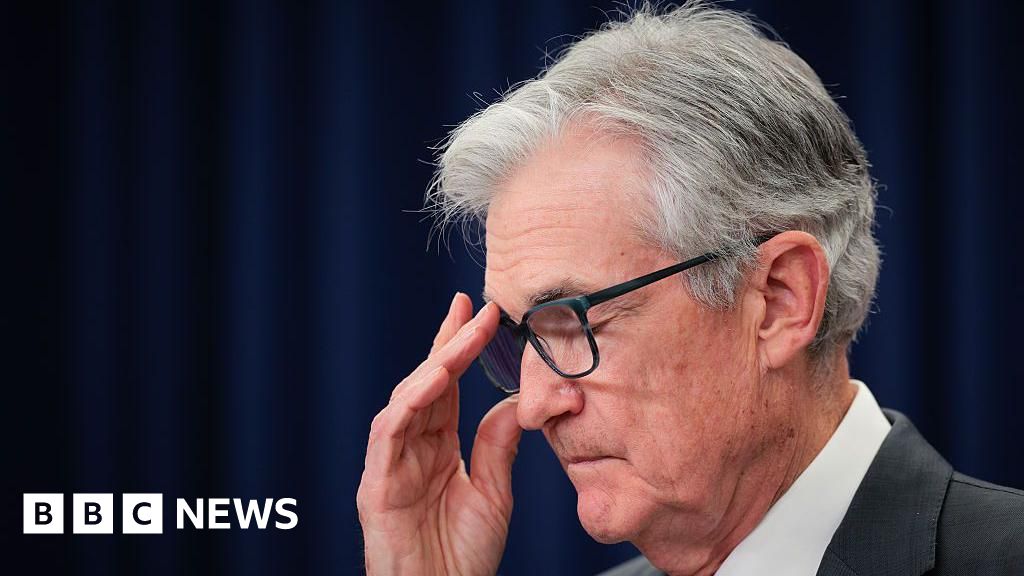
Powell’s news conference after holding rates covered the US-Israel war with Iran, inflation, legal attacks, and the Fed’s independence.
Future base rate changes are hard to predict as analysts judge the economic impact of the Iran war.
NEW YORK — Wingstop Inc. shares tumbled more than 10% on Wednesday, April 29, 2026, trading around $155.54 in morning action after the chicken-wing chain reported first-quarter results that missed Wall Street expectations on same-store sales growth and issued softer-than-expected guidance for the full year, raising concerns about slowing momentum in a highly competitive restaurant sector.

The stock’s sharp decline erased much of its recent gains and highlighted investor sensitivity to any signs of weakness at one of the market’s former high-growth restaurant darlings. Volume surged well above average as both institutional and retail investors reacted to the results. The move ranked among the largest percentage drops in the consumer discretionary sector on Wednesday morning.
Wingstop reported first-quarter revenue of $155.4 million, up 19% from the year-ago period but slightly below analyst forecasts of roughly $157 million. Same-store sales growth came in at 4.2%, missing expectations of around 5.5%. The company cited higher promotional activity and softer traffic trends as factors behind the slowdown. Adjusted earnings per share of $1.48 also fell short of the $1.52 consensus estimate.
CEO Michael Skipworth acknowledged the softer quarter in prepared remarks. “While we delivered solid top-line growth, we are not satisfied with our same-store sales performance,” he said. “We are taking actions to strengthen our value proposition and drive traffic while maintaining our focus on long-term brand building.”
The company also provided full-year guidance that came in below Street expectations. Wingstop now expects same-store sales growth of 5-7% for 2026, compared with previous forecasts closer to 7-9%. Revenue guidance was also tempered, reflecting caution around consumer spending and competitive pressures in the fast-casual dining space.
The results triggered widespread selling. Analysts quickly adjusted their views. Several firms lowered price targets or moved to Hold ratings, citing concerns about margin pressure from rising labor and commodity costs combined with slower traffic. Wingstop has historically traded at a significant premium due to its strong unit economics and franchise model, but today’s reaction suggests investors are questioning whether that premium remains justified.
Wingstop has been one of the standout performers in the restaurant industry over the past decade, known for its focused menu, strong digital sales and highly franchised model. The company operates more than 2,000 locations globally and has expanded aggressively into international markets. However, recent quarters have shown signs of maturation as the brand faces increased competition from other chicken concepts and broader fast-casual players.
The stock’s decline today reflects broader challenges facing the restaurant sector. Many chains have reported softer traffic as consumers pull back on discretionary spending amid persistent inflation in food-away-from-home costs. Wingstop’s premium positioning, while a strength during growth periods, may be making it more vulnerable to value-seeking behavior.
For long-term investors, today’s drop may represent a buying opportunity if they believe in the brand’s fundamental strength. Wingstop’s unit-level economics remain attractive, with high margins and strong cash flow generation. The company’s focus on digital ordering, loyalty programs and international expansion continues to offer growth levers even as domestic same-store sales moderate.
However, near-term risks are evident. Rising labor costs, commodity price volatility and competitive intensity could pressure margins further. The company’s high valuation multiple leaves limited room for disappointment, making it sensitive to any perceived slowdown in growth.
As trading continued Wednesday morning, shares stabilized somewhat but remained sharply lower. Technical analysts noted support levels near recent moving averages, with potential resistance around $170 if a recovery attempt materializes. Options activity showed increased put buying, reflecting caution among traders.
The earnings miss comes at a pivotal time for Wingstop. The company has been investing heavily in marketing and menu innovation to drive traffic, including new flavor offerings and value-oriented promotions. Management expressed confidence in these initiatives during the earnings call, but investors appeared skeptical about near-term results.
Wingstop’s story has been one of remarkable growth. From a small chain in Texas to a global brand with billions in system-wide sales, the company has delivered exceptional returns for shareholders over the past decade. Today’s reaction serves as a reminder that even strong brands can face periods of pressure as they mature.
For investors considering Wingstop, the upcoming quarters will be critical. The company’s ability to stabilize same-store sales, defend margins and execute on international growth will determine whether the stock can rebound from current levels. Many analysts recommend a long-term horizon for the name, viewing the current pullback as potentially overdone if execution improves.
As the market digests today’s move, Wingstop stands out as a notable decliner, illustrating how even well-regarded consumer brands can face sharp selloffs when results fall short of elevated expectations. The coming months will reveal whether this represents a temporary setback or a more fundamental shift in the company’s growth trajectory.
Business
Oil Price Today (April 30): Crude oil soars to $120, hits highest level since 2022. What are experts saying?

The move follows an Axios report stating that U.S. President Donald Trump rejected Iran’s proposal to reopen the Strait of Hormuz. This suggests the blockade could remain until a broader nuclear deal is reached.
Crude oil price on April 30
Brent crude for June delivery climbed 1.96% to $120 per barrel, while U.S. West Texas Intermediate edged up 0.2% to $107.09.
The rally builds on Wednesday’s sharp gains, when Brent rose about 6% and WTI surged 7%. The Wall Street Journal had earlier reported, citing U.S. officials, that Trump directed aides to prepare for an extended blockade of Iran.
Trump also issued a warning to Iran via a Truth Social post, saying the country “better get smart soon!” He added that Iran was struggling to finalize a non-nuclear deal. The post included an AI-generated image of Trump holding a gun with explosions in the background alongside the phrase “NO MORE MR. NICE GUY!”
Analysts noted that restricted Iranian exports and limited storage capacity could worsen supply disruptions if the blockade continues. While the UAE’s output increase after exiting OPEC may help, it is expected to come through gradually and is unlikely to ease near-term tightness.As for price outlook, a Haitong Futures note cited by Reuters suggested the current ceasefire may only be a precursor to further conflict. If U.S.-Iran negotiations fail to progress by the end of April and tensions escalate, oil prices could climb to new highs this year.
Macquarie expects crude to stay supported in the $85 to $90 range in the near term, with a gradual rise toward $110 as supply conditions stabilize. However, it warned that extended disruptions through April could push Brent up to $150 per barrel.
Nuvama Institutional Equities also indicated that a prolonged closure of the Strait of Hormuz, which carries around 20 million barrels per day, could drive crude prices into the $110 to $150 range.
(Disclaimer: Recommendations, suggestions, views and opinions given by the experts are their own. These do not represent the views of The Economic Times)

Marine farmer Suzie Flores also hopes the crop can revitalise the US’s small fishing towns.

Gina Carano Breaks Silence On ‘Star Wars’ Costar Pedro Pascal

Crypto Trading For Beginners | Bitcoin Trading for Beginners | Cryptocurrency | Part-2

US charges Mexican governor and other leaders with aiding drug cartel

Manchester United reach agreement with Casemiro over contract clause amid transfer speculation

US brings back mandatory military draft registration

Steven Gerrard disagrees with Gary Neville over ‘shock’ Chelsea and Arsenal claim | Football
Crypto Trading For Beginners | Bitcoin Trading for Beginners | Cryptocurrency | Part-2

#motivation #money #moneysavingidea #moneysavinghacks #monthlybudgetplanning

China’s cheap ‘panda bond’ loans expand financial influence in Europe | DW News
-

 Tech2 days ago
Register Renaming | Hackaday
-

 Fashion5 days ago
Weekend Open Thread – Corporette.com
-
 Crypto World4 days ago
Hyperliquid $HYPE Rally Builds Momentum as AI Sector Enters Prove-It Phase
-

 Business6 days ago
Patterson-UTI Energy, Inc. (PTEN) Q1 2026 Earnings Call Transcript
-
 Sports4 days ago
IPL 2026: Ruturaj Gaikwad registers slowest fifty of the season, enters all-time unwanted list | Cricket News
-

 Politics2 days ago
Drax board avoid their own AGM, accused of greenwashing & environmental racism
-

 NewsBeat4 days ago
LK Bennett closes all stores after entering administration
-

 Crypto World6 days ago
Michael Saylor says BTC winter is over. Market analyst disagrees, says bitcoin was in a pullback
-

 Fashion1 day ago
Kylie Jenner’s KHY Enters a New Era with ‘Born in LA’
-
Entertainment7 days ago
Michael B. Jordan and Austin Butler's “Miami Vice” movie will bring the action back to the '80s
-
 Entertainment4 days ago
Mariah Carey Slams Deposition Claims In Brother’s Lawsuit
-

 Tech2 days ago
Images of Samsung’s rumored smart glasses have leaked
-
Business7 days ago
Altimmune prices $225 million public offering at $3 per share
-
Entertainment7 days ago
Russell Brand Had Sex With 16 Year Old When He Was 30
-

 Business1 day ago
Most Commercial Energy Audits Miss the Real Losses
-
Crypto World6 days ago
Is Algorand One of the Few Quantum-Resistant Blockchains? Here’s What the Data Shows
-
 NewsBeat6 days ago
Trump threatens to review UK’s claim to Falkland Islands and punish Nato allies over Iran war disagreement
-

 Sports7 days ago
2026 NFL Draft tonight: Time, TV channel, where to watch, order
-

 Sports7 days ago
Bayern Munich on the brink of historic ‘double treble’
-

 Business6 days ago
Jeanine Pirro announces closure of Federal Reserve building cost probe
You must be logged in to post a comment Login