







Connect with us

Business

Global Market Today | Asian stocks fall, oil climbs with Iran in focus

Published

on

Global Market Today | Asian stocks fall, oil climbs with Iran in focus
Asian equities fell as escalating tensions in Iran weighed on sentiment, while oil rose to its highest level since August.

Stocks opened lower in Japan and Australia, indicating a headwind to sentiment after two days of advances for a gauge of the region’s stocks. Markets were also set to reopen in Hong Kong after the Lunar New Year holidays, while those for mainland China remained shut. The dollar was poised to notch its best week since mid-November.

Crude rallied as President Donald Trump said the US has to “make a meaningful deal” with Iran, adding that the next 10 days will tell whether there will be an accord. Treasuries edged higher on Thursday and gold hovered around $5,000 an ounce. US stocks also fell, with alternative asset managers facing sharp declines after a private credit fund halted redemptions.

Caution has resurfaced in markets as US moves on Iran introduced a fresh layer of geopolitical risk, halting a tentative rebound in equities and dampening broader risk appetite. The renewed tensions threaten to derail a nascent recovery that had begun to take hold after weeks of volatility driven by concerns over AI-related disruption across sectors and companies.

Advertisement

With Iran’s military proxies greatly weakened and the economy in crisis, the country doesn’t find itself in a very strong negotiating position, so the markets likely expect a diplomatic resolution, according to Dennis Follmer at Montis Financial.


“Right now, stocks have not priced in the tensions between the US and Iran,” he said.
The US military is stationing a vast array of forces in the Middle East, including two aircraft carriers, fighter jets and refueling tankers, giving Trump the option for a major attack against Iran as he pressures the country to strike a deal over its nuclear program.American military buildup in the Middle East means Iran’s window to reach a diplomatic agreement over its atomic activities is at risk of closing, according to the head of the United Nations nuclear watchdog. A potential war would put flows at risk from a region that pumps about a third of the world’s oil.

“Crude oil prices are rising on the anticipation of possible military action in Iran,” said Louis Navellier at Navellier & Associates. “The US and Iran are expected to meet again, and those negotiations are expected to be closely watched.”

West Texas Intermediate traded below $67 a barrel, after adding about 7% in the prior two sessions, while Brent closed near $72.

Some traders also attributed the risk-off mood to caution ahead of Friday’s readings on the economy and inflation, particularly after minutes of the Federal Reserve’s latest meeting showed renewed concerns about price pressures. Also, the US Supreme Court has scheduled Friday as its next opinion day amid a global wait for a ruling on Trump’s signature tariffs.

Advertisement

Also dimming sentiment among investors was Blue Owl Capital Inc.’s decision to restrict withdrawals from one of its private credit funds that raised concerns over the risks bubbling under the surface of the $1.8 trillion market. Its shares sank about 6% Thursday, dragging down industry peers like Apollo Global Management Inc., Ares Management Corp. and TPG Inc.

Traders also kept an eye on the latest US economic readings.

On Friday, the government will issue its first estimate of gross domestic product for the fourth quarter, a period that included the longest-ever federal government shutdown. The latest report card on the economy is projected to show growth cooled to a still-solid annualized pace after expanding in the prior quarter at the quickest rate in two years.

Advertisement
Continue Reading
Click to comment

Leave a Reply

Your email address will not be published. Required fields are marked *

Business

FPIs buy the most in fortnight since April 2025, IT still a sell

Published

on

FPIs buy the most in fortnight since April 2025, IT still a sell
Mumbai: Overseas investors funnelled the largest allocations into capital goods, financials and oil & gas shares in the first half of February as they pumped ₹33,487 crore across 15 sectors during the period – their highest fortnightly purchases since the second half of April 2025.

Capital Goods shares received ₹8,032 crore in the period February 1-15, up from ₹2,761 crore in January, with the government’s stake sale in BHEL worth ₹4,470 crore partly contributing to the inflows.

“The capital goods sector has underperformed the market, and there was nothing negative in the budget on the sector which could have prompted global investors to reallocate funds,” said Siddarth Bhamre, head of Research, Asit C Mehta Intermediates.

Rajesh Singhla, CEO & Fund Manager, Alpha AIF, said sectors such as capital goods, textiles, gems and jewellery benefited from the US-India trade deal framework announced in the first week of the month, which is likely to have triggered foreign inflows.

Advertisement
FPIs Buy the Most in Fortnight Since April 2025, IT Still a SellAgencies

top up Cap Goods, Flip on Financials Investors buy ₹33,487 cr of shares across 15 sectors in Feb first half l Allocations move to ‘pockets in the real economy’

Financial services saw foreign investment worth ₹6,175 crore in the first 15 days of February, after witnessing selling of ₹8,592 crore in January. Singhla said banks and financial services reported a strong set of numbers in the third quarter, which could have attracted foreign investment, though sector valuations are not very attractive.


Foreign investors bought shares worth ₹4,678 crore in the oil & gas sector in the first half of February.
Among sectors that saw selling, global investors dumped ₹13,812 crore across eight sectors in the first half of February, with IT accounting for over ₹10,000 crore of the total. The sector bore the brunt of foreign selling in 2025 as investors offloaded nearly ₹75,000 crore, the highest among sectors, amid worries about the impact of AI-related disruption on the software services exporters’ prospects. “Fears of AI making the sector less labour-intensive could spark further selling,” said Bhamre. “Overseas investors have shifted allocation from services to pockets in the real economy in this fortnight.”

The Nifty IT index has slumped almost 15% so far this year, while the benchmark Nifty is down 2.6% in the same period.

“The foreign selling in IT stocks was due to fears of the earnings trending lower as the threat of disruptions due to AI loomed large, but most of the selling was sentimental, and the sell-off was an overreaction,” said Singhla.

Advertisement
Continue Reading

Business

Plexus exec VP Mihm sells $2.36 million in PLXS stock

Published

on


Plexus exec VP Mihm sells $2.36 million in PLXS stock

Continue Reading

Business

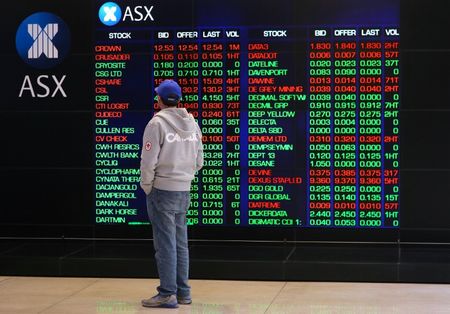
Australia stocks lower at close of trade; S&P/ASX 200 down 0.05%

Published

on


Australia stocks lower at close of trade; S&P/ASX 200 down 0.05%

Continue Reading

Business

Omnitech Engineering to float Rs 583 cr IPO on Feb 25

Published

on

Omnitech Engineering to float Rs 583 cr IPO on Feb 25
Omnitech Engineering, a manufacturer of precision-engineered components, on Friday fixed a price band of Rs 216-227 per share for its Rs 583 crore upcoming Initial Public Offering (IPO).

At the upper end, the company is valued at over Rs 2,800 crore.

The company’s initial share sale will open for public consumption on February 25 and conclude on February 27, while the bidding for anchor investors will take place on February 24, according to a public announcement.

The IPO is a combination of fresh issuance of equity shares worth up to Rs 418 crore and an offer for sale component of equity shares valued at Rs 165 crore by promoter Udaykumar Arunkumar Parekh.

Advertisement

Proceeds from the fresh issue will be utilised to repay debt, set up two new manufacturing facilities, fund capital expenditure requirements and general corporate purposes.


Omnitech Engineering manufactures high-precision engineered components and supplies to global customers across industries like energy, motion control & automation, industrial equipment systems, and other diversified industrial applications.
Its clientele includes Halliburton Energy Services, Suzlon, Oshkosh Aerotech, Weatherford, Lufkin Industries, Oilgear, Donaldson Company, PUSH Industries and Bharat Aerospace Metals. Rajkot-based Omnitech Engineering will compete with the likes of Azad Engineering, Unimech Aerospace and Manufacturing, PTC Industries, Dynamatic Technologies and MTAR Technologies.

The company said that half of the issue size has been reserved for qualified institutional investors, 35 per cent for retail investors and the remaining 15 per cent for non-institutional investors.

Omnitech Engineering will make its stock market debut on March 5. The IPO is being managed by Equirus Capital, and ICICI Securities.

Advertisement
Continue Reading

Business

Western Digital’s Davis sells $2.79m in stock

Published

on


Western Digital’s Davis sells $2.79m in stock

Continue Reading

Business

What Canada’s Military Plans Mean for Lockheed, Defense Stocks.

Published

on

What Canada’s Military Plans Mean for Lockheed, Defense Stocks.

What Canada’s Military Plans Mean for Lockheed, Defense Stocks.

Continue Reading

Business

Exlservice holdings EVP Ayyappan sells $68978 in stock

Published

on


Exlservice holdings EVP Ayyappan sells $68978 in stock

Continue Reading

Business

Demand for office space in Bristol soars and rents set to rise

Published

on

Business Live

The office market delivered an ‘exceptionally positive year’ in 2025, according to a new report

The Welcome Building in Bristol city centre

The Welcome Building in Bristol city centre(Image: PR Handout)

Office rents in Bristol are expected to continue rising amid soaring demand for commercial space in the South West. Annual take-up of workspace in and around the city reached 926,000 sq ft last year – 21 per cent above the five-year average and eight per cent above the 10-year average – according to Avison Young’s latest Big Nine Report. The city centre, alone, accounted for 604,000 sq ft.

Prime rents held at £50 per sq ft, with Bristol remaining the Big Nine’s highest-rented market.

The largest city centre transaction in six years was Hargreaves Lansdown moving from its HQ after 40 years. The investment platform, which employs some 2,000 people Bristol, signed a long-term lease for more than 90,000 sq ft across three floors at Welcome Building, off Avon Street, near to Temple Meads station.

The business was previously based at One College Square South on Anchor Road in the city centre.

Advertisement

Another large deal was legal firm Burges Salmon regearing its lease and expanding by acquiring an additional 41,600 sq ft at One Glass Wharf.

Julian Watts, managing director for Bristol and South West at Avison Young, said: “Bristol continues to stand out as one of the strongest-performing cities within the Big Nine. The office market delivered an exceptionally positive year in 2025, marked by record headline rents in both the city centre and out-of-town markets.”

He added: “With supply tightening and space under construction being pre-let, the market is poised for continued upward pressure on rents.”

Nationally, the UK office market was boosted by a strong Q4, where take-up reached 2.1 million sq ft, with year-end take-up reaching 7.6 million sq ft, just four per cent below 2024 and in line with the five-year average.

Advertisement

Strong occupier demand for high-spec workspace continued to push rents higher across the Big Nine cities last year, with Bristol, Birmingham and Leeds all setting new rental records.

Investment volumes reached £227m in the fourth quarter, bringing the year-end total to £1.1bn.

Avison Young said that while investor sentiment had been impacted by economic uncertainty and elevated borrowing costs, contributing to slower decision-making, positive news around the economy at the start of 2026 was “expected to stimulate activity and support an increase in transaction volumes”.


Advertisement
Continue Reading

Business

Innovative Industrial: Forget The 16.5% Yield, Get The 9.7%-Yielding Preferreds

Published

on

Innovative Industrial: Forget The 16.5% Yield, Get The 9.7%-Yielding Preferreds

Innovative Industrial: Forget The 16.5% Yield, Get The 9.7%-Yielding Preferreds

Continue Reading

Business

Housing crisis needs more supply, not more taxes

Published

on

Housing crisis needs more supply, not more taxes

The familiar sound of the call for changes to Australia’s Capital Gains Tax (CGT) discount is again increasing in volume, with a Senate Select Committee on the Operation of the Capital Gains Discount likely to recommend a reduction in the discount, which translates into higher taxes.

Based on what’s been floated by the government in the press, it feels almost inevitable that a reduction from the current 50 per cent discount is coming. The extent of it we don’t know, but it’s possible it will be restricted to residential property.

The government talks about intergenerational equity and focusing on making housing affordable, especially for the next generation of homeowners. 

Those are important aspirations but the illusion that increasing taxes on investors will unlock supply or reduce prices is just misleading. 

Advertisement

Data from leading industry analysts like PropTrack and Cotality tells us that investor activity is primarily a response to our tight rental market, not the root cause of unaffordability. 

In many places around Australia, rental vacancy rates are at or near historical lows, which is translating into higher rental prices. 

What will reduce rents is more supply of rental properties, not less. You don’t solve a supply problem by penalising those who provide homes to rent.

The push for CGT changes is fundamentally based on the premise that a higher tax burden will result in a more affordable housing market, as investors reduce their appetite for property, allowing more homeowners to enter the market.

Advertisement

But even the Grattan Institute, which is hardly a pro-investor lobby, conceded that such a change would reduce house prices by just 1 per cent. 

The real drivers of price growth are far more fundamental; the undeniable imbalance between demand and supply. 

Homes aren’t suddenly going to become more affordable because investors have to pay a higher rate of tax when they profit on a sale. The outcome is likely to be the opposite of what’s intended. 

Advertisement

Property, for a vast majority of investors, isn’t a get-rich-quick scheme; it’s a long-term wealth building strategy. 

Treasury research shows property investors are long term holders. WA Treasury commentary shows that residential investment property in WA is predominantly held long term, not traded frequently. 

NSW Treasury goes into more detail, with the mean holding period for investors being 13.7 years.  

This is a clear indication that most property owners are long-term asset holders. So, what happens when you hit them with a higher CGT? You don’t encourage more sales. 

Advertisement

You incentivise investors to hold onto their properties for even longer to avoid paying a higher tax on exiting the asset. 

Already some investors have stated to me that they will hold their properties until they retire and sell when they are in a much lower tax bracket.

Australian property owners are already forking out an estimated $67 billion annually through stamp duty, land tax, and capital gains tax alone. This asset class already pays more than its fair share. 

We have a clear, pressing target to build 1.2 million homes over five years. If we are genuinely serious about intergenerational equity and getting more people into home ownership, then our focus must be on supply-side solutions. 

Advertisement

That means tackling planning bottlenecks, addressing infrastructure shortfalls, and particularly the labour shortages in the construction industry.

Increasing a tax that impacts long-term investors, whose role is often to meet rental demand when supply is scarce, is nothing more than a distraction from the real work that needs doing.

Let’s stop talking about penalising property owners and start talking about how we get more homes built. That’s the only path to genuine housing affordability.

Advertisement

Continue Reading

Trending

Copyright © 2025