
Business
Global Markets | Japanese stocks plummet as Mideast conflict widens


The Topix slumped 3.2% to 3,772.17, the fastest decline since April, while the Nikkei declined 3.1% to close at 56,279.05, the biggest drop since November last year, after falling as much as 3.4%.
“Ongoing gains in crude oil futures on worsening Middle East tensions, together with a stronger U.S. dollar and weaker yen, are fuelling views that inflation could accelerate,” said Maki Sawada, a strategist at Nomura Securities.
“This uncertainty, seen as potentially impacting future monetary policy, is weighing on the equity market overall.”
The U.S.-Israeli air war against Iran escalated with no end in sight, as Israel struck Lebanon in response to Hezbollah attacks and Tehran continued launching missiles and drones at Gulf states hosting U.S. military bases.

All 33 industry subindexes on the Tokyo bourse were down, led by a 5.5% fall in the oil and coal sector followed by a 5.4% decline in the transport equipment industry.
Toyota Motor, the world’s largest automaker by sales, dropped 6.1%, the sharpest drop since September 2024, while Japan’s largest airline, ANA Holdings, fell 3.3%. ENEOS Holdings, Japan’s biggest refiner, lost 6.3%, the sharpest drop since April.
The largest percentage decliner, though, had nothing to do with the Middle East tensions.
Sumitomo Pharma tanked 19.1%, the biggest fall in nearly 12 years, as investor concerns over a new share issuance outweighed an upward revision to its full-year net profit forecast for the current fiscal year.
There were 219 decliners on the Nikkei index against six advancers.



The gummies launch in partnership with NBA player Giannis Antetokounmpo.


The fries are formulated with avocado oil.

RBC Capital maintains Outperform on Karyopharm stock after trial data

The Chief Minister says conflict in the Middle East will lead to price rises in the coming days.
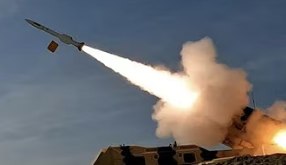
WASHINGTON — Iran’s ballistic missile program, long the backbone of its military deterrence, has undergone intense scrutiny and degradation in the 2026 conflict with Israel and the United States. Once estimated at more than 3,000 missiles, the arsenal has been significantly reduced by joint strikes, yet Tehran continues to demonstrate range and resilience with recent launches testing assumptions about its capabilities.

Here are 10 essential things to know about Iran’s ballistic missiles as of late March 2026:
- Iran possesses the largest ballistic missile arsenal in the Middle East, though heavy losses have trimmed its size. Prior to escalated fighting in 2025-2026, U.S. estimates placed the inventory above 3,000 missiles, including short-range and medium-range systems. After firing hundreds in retaliatory barrages and suffering Israeli and U.S. strikes on production sites and launchers, remaining stocks are estimated between 1,000 and 2,000 operational missiles, with launchers reduced to roughly 100-200 serviceable units. Despite this, Iran has shown rapid reconstitution efforts, importing components and rebuilding facilities.
- The program features a diverse mix of liquid- and solid-fueled missiles. Liquid-fueled systems like variants of the Shahab-3 offer longer ranges but require more preparation time. Solid-fueled missiles, such as the Sejjil and newer models like Kheibar Shekan, allow quicker “shoot-and-scoot” launches, making them harder to target. This mix enhances survivability against preemptive strikes on fixed sites.
- Ranges traditionally capped at 2,000 km have been challenged. Iranian officials long claimed a self-imposed 2,000-kilometer limit, sufficient to reach Israel from western Iran. However, in March 2026, Iran launched two ballistic missiles targeting the U.S.-U.K. base at Diego Garcia in the Indian Ocean — more than 4,000 km away. One failed in flight; the other was intercepted. The attempt suggests modified systems or previously undisclosed capabilities that could threaten parts of Europe or further U.S. assets.
- Hypersonic and maneuverable warheads are advancing rapidly. The Fattah-1 and Fattah-2 hypersonic glide vehicles represent a major leap, with claims of Mach 15 speeds and the ability to maneuver in pitch and yaw during re-entry. These features are designed to evade advanced defenses like Israel’s Arrow system or U.S. Patriot batteries. Iran has deployed Fattah-2 in recent strikes, showcasing improved precision and terminal-phase adjustments.
- Key medium-range systems include the Shahab-3 family, Emad, Ghadr, Sejjil and Khorramshahr. The Shahab-3 and its variants reach 1,300-2,000 km with payloads up to 1,500 kg. The solid-fueled Sejjil offers similar range with faster launch readiness. The Khorramshahr, potentially reaching 3,000 km, carries heavy warheads suited for hardened targets. Many feature maneuverable re-entry vehicles (MaRVs) to complicate interception.
- Short-range missiles provide regional saturation capability. Systems like the Fateh-110, Zolfaghar and Khalij Fars (anti-ship variant) cover 300-700 km, threatening U.S. bases in the Gulf, Israel’s neighbors and shipping lanes. These are often deployed in large salvos to overwhelm defenses, combined with drones for complex attacks.
- Underground “missile cities” enhance survivability. Iran has invested heavily in deeply buried facilities and mobile transporter-erector-launchers (TELs) dispersed across the country. While Israeli strikes damaged surface infrastructure and some launch pads, many underground stockpiles and production elements survived initial waves, allowing limited continued operations.
- The program has been heavily targeted in 2025-2026 fighting. Joint U.S.-Israeli operations destroyed an estimated 60-85% of surface-to-air missiles and a significant portion of ballistic launchers and production sites. Strikes hit facilities in Tehran, Semnan, Khuzestan and elsewhere, reducing daily launch rates by up to 90% in some phases. Production sites for solid fuel mixers and components were repeatedly hit, though Iran has begun reconstruction using alternative methods and imported materials.
- Precision and lethality improvements focus on saturation tactics. Older missiles had limited accuracy, but newer variants with GPS-aided or inertial guidance, cluster munitions and heavier warheads aim to saturate defenses. In 2024-2025 exchanges, Iran fired hundreds of missiles in barrages, with some penetrating Israeli multi-layered defenses and causing casualties in urban areas. Recent attacks have shifted toward countervalue targets in populated zones.
- Reconstitution and future risks remain a major concern. Despite losses, Iran is rebuilding, potentially aiming for 8,000 missiles by 2027 if unchecked, according to Israeli assessments. Imports of sodium perchlorate and other components from abroad support solid-fuel production. The program’s dual-use nature with space launch vehicles raises proliferation worries, and any nuclear breakout could pair with these delivery systems. Ongoing conflict has degraded but not eliminated the threat, with experts warning that full restoration could take 1-2 years.
Iran’s ballistic missiles serve as its primary asymmetric tool, compensating for conventional air force weaknesses. The Islamic Revolutionary Guard Corps oversees much of the program, integrating it with drone swarms for layered attacks. While U.S. and Israeli strikes have degraded launch rates and infrastructure, Tehran’s ability to fire at distant targets like Diego Garcia has upended prior range assumptions and heightened concerns for regional stability and European security.
The 2026 war has exposed both the program’s resilience and its vulnerabilities. Production facilities remain under pressure, yet underground assets and rapid repair efforts suggest Iran retains a credible deterrent. As fighting continues, the missile program’s evolution will shape the conflict’s trajectory and broader Middle East dynamics.
Analysts stress that while current stocks are diminished, the combination of hypersonic technology, dispersal tactics and reconstitution speed keeps Iran’s arsenal a potent factor. International efforts to curb components and sanctions aim to slow progress, but enforcement challenges persist.
For now, the March Diego Garcia attempt stands as a stark reminder: Iran’s ballistic missiles, even when degraded, can project power farther and with greater sophistication than many once believed. The coming months will test whether sustained pressure can prevent a full rebound or if Tehran will field an even more advanced force.


Labutes IR is a Fund Manager/Analyst specialized in the financial sector, with more than 18 years of experience in the financial markets. I have worked at several type of institutions in the industry, always at the buy side and related to portfolio management. Associated with the existing author The Outsider.
Analyst’s Disclosure: I/we have no stock, option or similar derivative position in any of the companies mentioned, and no plans to initiate any such positions within the next 72 hours. I wrote this article myself, and it expresses my own opinions. I am not receiving compensation for it (other than from Seeking Alpha). I have no business relationship with any company whose stock is mentioned in this article.
Seeking Alpha’s Disclosure: Past performance is no guarantee of future results. No recommendation or advice is being given as to whether any investment is suitable for a particular investor. Any views or opinions expressed above may not reflect those of Seeking Alpha as a whole. Seeking Alpha is not a licensed securities dealer, broker or US investment adviser or investment bank. Our analysts are third party authors that include both professional investors and individual investors who may not be licensed or certified by any institute or regulatory body.

.webp?t=1753366978)
Le Duff Group subsidiary advances global investment plan.
Business
(VIDEO) Tel Aviv Struck by 220-Pound Iranian Missile Warhead as Barrage Pierces Defenses Amid Conflict
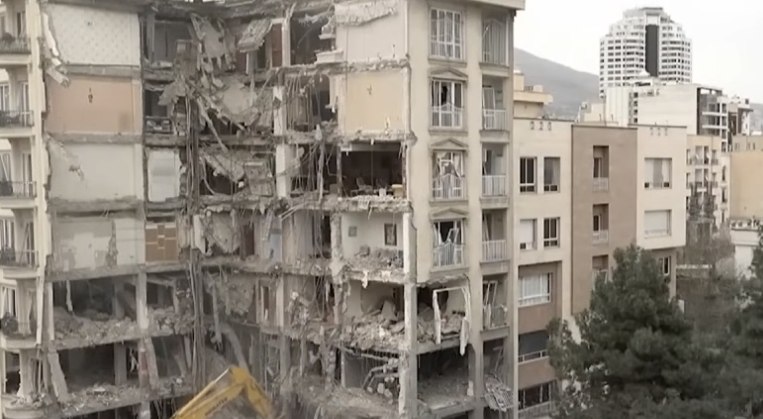
TEL AVIV, Israel — An Iranian ballistic missile carrying a 220-pound (100-kilogram) warhead slammed into a central Tel Aviv street Tuesday, March 24, 2026, blowing out windows of nearby apartment buildings and wounding at least four to six people as part of a fresh barrage that highlighted the Islamic Republic’s ability to penetrate Israeli air defenses despite weeks of intense U.S. and Israeli strikes.

The impact left a visible crater in the heart of Israel’s commercial and cultural capital, sending smoke billowing into the sky and prompting emergency crews to rush to the scene. Rescue workers described shattered glass, damaged vehicles and frightened residents emerging from shelters. “It feels like you’re a sitting duck, waiting for the missiles to hit you, or someone next to you,” one resident, Amir Hasid, told reporters after the blast.
Israeli officials confirmed the missile evaded multilayered defenses including the Arrow, David’s Sling and Iron Dome systems. The warhead’s relatively modest size — typical for precision or cluster variants — still caused significant localized damage in a densely populated urban area. No fatalities were immediately reported from this specific strike, though earlier barrages in the ongoing war have killed civilians.
The attack formed part of what Iranian state media and the Islamic Revolutionary Guard Corps described as a new wave under “Operation True Promise 4,” involving multiple ballistic missiles and drones targeting central Israel, including Tel Aviv and areas near the Dimona nuclear research center. Some missiles reportedly carried cluster munitions designed to disperse submunitions mid-air, complicating interception efforts.
Israeli military spokesmen said most incoming projectiles were intercepted, but several impacted or scattered debris across the Tel Aviv metropolitan area, including Ramat Gan and other suburbs. Drone and social media footage showed extensive damage to a multi-story residential building, with rescue teams searching rubble and treating the injured. Shrapnel also fell near infrastructure sites, briefly disrupting train services at Tel Aviv’s Savidor Central station in previous waves.
The strike occurred as President Donald Trump claimed the United States was engaged in “very good and productive” talks with Iran aimed at de-escalating the conflict that began with joint U.S.-Israeli airstrikes on Iranian targets in late February. Trump suggested a possible five-day pause in strikes, yet Iranian launches continued, and Tehran dismissed the talks as insincere. Iranian officials framed the barrages as retaliation for Israeli assassinations of senior security figures and ongoing airstrikes on missile production sites and underground facilities.
Iran’s ballistic missile program, once estimated at thousands of projectiles, has been degraded by repeated Israeli and U.S. attacks on launchers, production lines and “missile cities” buried deep underground. Despite losses estimated at 60-85% of some capabilities, Tehran has demonstrated resilience, firing salvos that include solid-fueled systems like the Kheibar Shekan and liquid-fueled variants capable of reaching Israeli territory from western Iran.
Military analysts noted the 220-pound warhead aligns with payloads on missiles such as the Emad or Ghadr families, which can feature maneuverable re-entry vehicles or cluster configurations. Recent attacks have increasingly relied on saturation tactics — launching dozens of missiles and drones simultaneously — to overwhelm defenses. In this latest wave, some reports indicated multi-warhead designs that split into smaller 100-kilogram charges, increasing the chance of at least partial success.
Israeli Prime Minister Benjamin Netanyahu’s office condemned the attack as “another example of Iranian aggression” and vowed continued operations to dismantle Tehran’s missile infrastructure. “We will not allow Iran to threaten our civilians with impunity,” a statement read. Defense Minister Israel Katz added that the Israel Defense Forces were striking launch sites and command nodes in real time.
Civilian impact in Tel Aviv remained limited compared with the scale of some previous barrages, but the psychological toll was evident. Sirens wailed across central Israel, forcing residents into shelters for the second time in recent days. Schools and businesses in affected areas closed early, and traffic ground to a halt as emergency vehicles responded.
Health officials reported minor injuries from flying glass and shrapnel, with hospitals on high alert. Magen David Adom, Israel’s national emergency service, treated walking wounded at the scene while search-and-rescue teams checked for anyone trapped. No large-scale structural collapses were reported, though several buildings required safety inspections.
The broader war, now in its fourth week, has seen Iran launch hundreds of missiles and drones at Israel, with varying success. Israeli and U.S. counterstrikes have targeted Iranian nuclear-related sites, oil infrastructure and missile factories, significantly reducing Tehran’s daily launch capacity. Yet Iran has adapted by using mobile launchers, decoys and combined drone-missile attacks.
Gulf states including Saudi Arabia, the United Arab Emirates and Kuwait reported intercepting Iranian projectiles aimed at their territory or passing through their airspace. The conflict has drawn in regional actors, raising fears of wider escalation even as diplomatic channels flicker.
International reaction was swift. The United Nations Security Council scheduled an emergency meeting, while European leaders urged restraint. U.S. officials reiterated support for Israel’s right to defend itself while pushing for de-escalation talks.
For Tel Aviv residents, the strike served as a stark reminder of vulnerability in a city long considered safe behind advanced defenses. “We thought the Iron Dome would handle everything, but these barrages keep testing the system,” said one shop owner whose business windows shattered in the blast.
As night fell Tuesday, Israeli jets were reported active over Iranian airspace, and additional sirens sounded in southern Israel near Dimona. Analysts warned that further Iranian retaliation could target economic or symbolic sites, while Israel aims to degrade remaining missile stocks before any ceasefire.
The 220-pound warhead impact, while not catastrophic, underscores the persistent threat posed by Iran’s arsenal even after sustained degradation. With talks underway yet missiles still flying, the coming hours could determine whether diplomacy gains traction or the conflict spirals further.
Emergency crews continued working into the evening, clearing debris and reassuring residents. In a city known for its vibrant nightlife and innovation, the sound of explosions and sirens once again replaced the usual hum of daily life.


Gap is partnering with Google’s Gemini to allow shoppers to check out directly within the AI platform, making it the first major fashion company to work directly with the tech company to fuel agentic commerce, CNBC has learned exclusively.
The partnership comes as more and more shoppers move away from traditional search and toward artificial intelligence platforms for product discovery, forcing retailers to rethink their approach to marketing to ensure they’re staying competitive and not missing out on customer demand.
“It’s not just keyword search anymore, right? It’s conversations, and so we need to be relevant to that,” Gap’s chief technology officer, Sven Gerjets, told CNBC in an interview. “Is it, you know, ‘I’m trying to figure out what to do for a wedding, what are the things I should be looking at?’ Or, ‘I’ve got a job interview, are there some styles I should wear?’ All of those things we need to become relevant to.”
When shoppers are hunting for a new pair of jeans or the perfect oversized hoodie on Gemini, and the platform thinks some of Gap’s products could be a fit, customers will be able to buy products from Gap’s house of brands directly within the platform without having to be redirected to the brand’s website.
The information about the product that is surfaced to shoppers won’t be crawled from Gap’s website but will be details the retailer provided to Gemini in advance so it can control for accuracy, continue to collect customer data and have better control over the customer experience.
If the shopper decides to buy the product, they’ll check out via Google Pay, and Gap will handle the shipping and any other logistics.
The retailer said it’s still testing the capabilities.
Gerjets said the company expects to deploy the service to customers “imminently.”
Shoppers walk past a GAP fashion retail store on Oxford Street on October 30, 2025 in London, United Kingdom.
John Keeble | Getty Images News | Getty Images
In addition, a new AI-powered sizing tool dubbed Bold Metrics and built by Gap will help customers find the right size when shopping online and will also launch soon to shoppers.
Gap’s partnership with Gemini and its gains in customer-facing AI tools give it a competitive edge at a time when winning in specialty retail is harder than ever. The overall fashion market has been growing increasingly fragmented and more competitive.
As long as a retailer’s website has data that an AI platform can read, the company’s products will likely surface in chat results if the platform considers them a fit for a shopper’s inquiry, but there’s a lot of work that retailers need to do to ensure they’re showing up properly.
If a shopper is looking for a sundress on an AI platform, for example, and a company offers a relevant product, but the data isn’t readable by an LLM, the brand could miss out on the sale.
Most major companies are using and implementing AI in a variety of ways, but so far, none of Gap’s primary competitors have announced similar partnerships with Gemini.
Gap’s approach to agentic commerce is a first iteration that’s expected to evolve over time, Gerjets said.
For now, customers won’t be able to link loyalty accounts or spend points on the transaction, he said. That could create some friction for regular customers, but Gerjets said the option could be added down the line.
“We’ll continue to evolve the experience and bring the things forward that the customers want, so that is definitely the roadmap and the future,” said Gerjets. “It’s a very first experience in, I think, a journey that we’re all on to really nail what agentic commerce is for the customers.”
Retail’s AI wars
Gap’s partnership with Gemini comes after OpenAI made similar deals with companies such as Walmart and Etsy only to walk back plans to offer checkout directly within the app.
While the number of people using AI platforms for product discovery is growing, it’s still a small portion of overall shoppers, and the number of customers who will feel comfortable checking out directly within LLMs remains unclear.
Some shoppers may feel wary about putting their credit card information into the platform, while others may prefer to shop directly within a retailer’s app where their store credit card and loyalty points are stored.
Given how long shoppers have been interacting with Google and the fact that it already has customer payment information stored within its system, some shoppers could feel more comfortable using Gemini for checkout versus newer AI platforms such as OpenAI’s ChatGPT.
In some ways, Gemini’s platform is also more advanced. Google recently released new updates so real-time product data is available to users, preventing challenges such as out-of-stocks and pricing errors. Shoppers will also be able to add multiple items to their carts and connect loyalty memberships in some cases — two features OpenAI has yet to fully crack.
Gerjets said OpenAI and Gemini also have two different protocols for agentic commerce. The “Universal Commerce Protocol,” which Gap is using on Gemini, was designed for merchants to have better control over the overall shopping experience, whereas OpenAI’s “Agentic Commerce Protocol” was designed more for discovery, Gerjets said.
“This space is moving so quickly … We’re all evolving and learning together, and who knows what the space will look like in five years, who will be crowned the victor, or how fragmented the space will be?” Gerjets said. “For us, it’s important that we work with all of them, because we really want to meet our customers where they want to be.”

Contract, woman and advisor in office for signature, information or document for job application. Advice, client or human resource agent with paperwork for registration, opportunity or deal agreement
Jacob Wackerhausen | Istock | Getty Images
A version of this article first appeared in CNBC’s Inside Wealth newsletter with Robert Frank, a weekly guide to the high-net-worth investor and consumer. Sign up to receive future editions, straight to your inbox.
More women are entering the wealth management industry, but they have yet to gain ground in client-facing advisory roles, according to a recent study by private wealth intelligence platform Fintrx.
While the data shows improvement in the industry’s gender gap, the nuance is still notable. Revenue-generating roles are generally better paid and more conducive to leadership roles, according to Fintrx Vice President of Data and Research Emily Goldman.
“Underrepresentation here directly affects female employees’ earnings,” Goldman said. “And that lack of opportunity for leadership and ownership is also going to affect their long-term earnings.”
Younger women are making inroads in wealth management overall, with women accounting for 37.6% of registered professionals aged 20-30, according to Fintrx. For the 30-40 and 40-50 age brackets, the share of women hovers below 27%.
The shift comes as women’s wealth is expected to boom in the coming years. Cerulli Associates estimates $105 trillion in wealth will be passed down to heirs through 2048, with $54 trillion going to spouses. As women tend to live longer than men, they will likely receive the lion’s share.
However, while young women are entering the industry in greater numbers, the growth is concentrated in administrative or operational roles, according to Goldman.
Women account for just 20.2% of producing advisors aged 20 to 30, a percentage near identical for advisors aged 30-40 and 40-50. The share is only modestly higher than that of advisors aged 50-60 (18%) and 60-plus (17.1%).
This gender gap is also reflected in the C-suite, according to Fintrx. Women make up 21.5% of C-suite roles at wealth management firms and are more likely to occupy COO or CFO roles than chief executive or investment roles, the company found.
“This points towards firms needing to create better pathways to these revenue-generating roles and leadership,” Goldman said. “Because when you enter in operations, compliance, legal — there isn’t an easy segue to these book-owning roles, and then long-term strategic leadership roles.”
She noted that an increasing number of women advisors are setting up their own firms. In 2025, there were 39 new female-founded registered investment advisory firms, up from 30 in 2021.
“I think that we’ll see more and more women break out on their own if they’re unable to advance as much or as quickly at wirehouses or larger firms,” she said.
Kelly Ripa, Mark Consuelos investigate bizarre snail sex live on the air: 'Who's the top?'

The three disciplines separating AI agent demos from real-world deployment

‘Travel chaos’ as lorry stuck under Walkden bridge

Smart energy pays enters the US market, targeting scalable financial infrastructure

Why Israel is blocking foreign journalists from entering

Bitcoin: We’re Entering The Most Dangerous Phase

**RIPPLE/XRP REPRICING AFTER CLARITY ACT** GARLINGHOUSE PREDICTS CLARITY BY APRIL… $10 IMMINENT

Australian Financial Review cartoon sparks controversy in Jewish community

money counting machine #shortsfeed #shorts #money #cash
-
 Crypto World4 days ago
NIO (NIO) Stock Plunges 6.5% as Shelf Registration Sparks Dilution Worries
-

 Fashion4 days ago
Weekend Open Thread: Adidas – Corporette.com
-

 Politics4 days ago
Jenni Murray, Long-Serving Woman’s Hour Presenter, Dies Aged 75
-
 Tech7 days ago
Are Split Spacebars the Next Big Gaming Keyboard Trend?
-

 Crypto World3 days ago
Best Crypto to Buy Now: Strategy Just Spent $1.57 Billion on Bitcoin During Fear While Early Investors Quietly Enter Pepeto for 150x Potential
-

 News Videos6 days ago
RBA board divided on rate cut, unusually buoyant share market | Finance Report | ABC NEWS
-

 Crypto World3 days ago
Bitcoin Price News: Bhutan Sells $72 Million in BTC Under Fiscal Pressure, but the Smart Money Entering Pepeto Sees What the Market Does Not
-

 Politics6 days ago
The House | The new register to protect children from their abusers shows Parliament at its best
-

 Tech4 days ago
inKONBINI Lets You Spend Summer Days Behind the Register
-
 Politics7 days ago
Real-time pollution monitoring calls after boy nearly dies
-

 Crypto World6 days ago
Canada’s FINTRAC revokes registrations of 23 crypto MSBs in AML crackdown
-

 Sports1 day ago
Remo Stars and Kano Pillars Strengthen Survival Hopes in NPFL
-
 NewsBeat6 days ago
Residents in North Lanarkshire reminded to register to vote in Scottish Parliament Election
-

 News Videos6 days ago
PARLIAMENT OF MALAWI – PAC MEETING WITH REGISTRAR OF FINANCIAL ON AMARYLLIS HOTEL – INQUIRY LIVE
-

 Politics5 days ago
Gender equality discussions at UN face pushbacks and US resistance
-

 Business2 days ago
No Winner in March 21 Drawing as Prize Rolls to $133 Million for Next
-

 Business6 days ago
Who Was Alex Pretti? 5 Key Facts About the ICU Nurse Killed by Federal Agents in Minneapolis
-

 Sports1 day ago
Gary Kirsten Accuses Pakistan Cricket Board Of ‘Interference’, Mohsin Naqvi Responds
-

 Tech2 days ago
Give Your Phone a Huge (and Free) Upgrade by Switching to Another Keyboard
-

 Sports4 days ago
2026 Kentucky Derby horses, odds, futures, preview, date: Expert who nailed 12 Derby-Oaks Doubles enters picks
You must be logged in to post a comment Login