

Business
GLP-1 users spark product revamps




Business
Apple Reclaims Title as World’s Most Valuable Company, Overtaking Nvidia for First Time Since April 2025

Apple briefly reclaimed its position as the world’s most valuable publicly traded company on Friday, edging past Nvidia in market capitalization for the first time in more than a year, as investors reassessed the pace and payoff of massive spending across the artificial intelligence infrastructure buildout.
Apple shares climbed to an all-time high of $334.99 in early trading Friday, lifting the company’s market value to approximately $4.88 trillion. Nvidia, meanwhile, saw its shares fall more than 3% in early trading, pulling its market capitalization down to roughly $4.84 trillion. The two companies traded the top spot back and forth throughout the session, with Nvidia’s value dipping as low as $4.84 trillion at one point while Apple hovered near $4.88 trillion, before the positions shifted again later in the day.
The milestone marks the first time Apple has surpassed Nvidia in market value since April 2025, ending a run of roughly 15 months during which Nvidia had held the title of the world’s most valuable company. Nvidia first claimed the top spot in June 2025, when it overtook Microsoft, and went on to become the first publicly traded company in history to reach a $5 trillion market capitalization in October of that year. Apple, notably, also crossed the $4 trillion market cap threshold for the first time that same month, driven by strong iPhone sales.
The reversal in fortunes between the two technology giants reflects a broader shift underway across markets this year. Apple shares have surged 22% in 2026, outperforming the broader market as investors have rewarded the company’s approach to artificial intelligence and its comparatively modest capital spending model, even as businesses across the technology sector commit unprecedented sums toward AI infrastructure buildout. Nvidia, by contrast, has gained just 7% so far this year and has largely sat on the sidelines as Wall Street’s attention has pivoted toward the memory chip and infrastructure stage of the data center buildout, a shift that has instead benefited memory stocks such as Micron Technology, which crossed $1 trillion in market value in May, and SanDisk.
A significant driver behind Apple’s rally came Thursday evening, when HSBC upgraded the stock to a Buy rating from Hold, raising its price target to $366 from $260, a level Apple’s stock had not traded at since April. Analyst Erwan Cote-Colisson wrote in a note cited by multiple outlets that Apple has reached what the firm characterized as an operational turning point. He noted that Apple can largely avoid the debate swirling around excessive capital expenditure among AI infrastructure companies, since Apple invests only about 2.5% of its estimated 2026 sales in capital spending, compared with roughly 39% among major hyperscale cloud providers. Cote-Colisson added that Apple is well positioned to leverage its installed base of 2.5 billion active devices through its forthcoming revamped Apple Intelligence platform, including a new agentic version of Siri expected to launch later this year, which he said could drive additional device demand. “This AI boost comes at the right moment, when we think Apple has one of its most innovative product pipelines in place,” Cote-Colisson wrote.
HSBC’s bullish case also rested in part on Apple’s upcoming hardware roadmap, which the firm views as unusually strong. That pipeline includes the iPhone 18 Pro and Pro Max expected this fall, an iPhone Air slated for April 2027, and what HSBC described as the most significant upcoming release: a book-style foldable phone. Apple also received government approval this week to roll out its Apple Intelligence features in China, another development that has contributed to recent investor optimism around the stock.
Not all of the news swirling around Apple this week has been strictly financial. A separate report from the Financial Times indicated that Apple has sent legal letters to roughly 40 former employees now working at OpenAI, expanding an ongoing trade-secrets investigation. That outreach follows a lawsuit Apple filed last week accusing OpenAI of recruiting key engineers in order to obtain confidential hardware and product-development information, a dispute that has added a legal dimension to the broader competitive tension between the two companies as both push further into AI-driven consumer hardware.
Nvidia’s pullback this week has coincided with a broader retreat across semiconductor stocks. The Philadelphia Semiconductor Index has fallen nearly 19% from its all-time highs, and chip stocks were on pace for their worst weekly performance in more than a year as of Friday’s session, according to reporting from Quartz. Nvidia’s own market capitalization has shed roughly $900 billion since peaking at $5.7 trillion on May 14, even as Apple added more than $500 billion in value over the same stretch, climbing from approximately $4.35 trillion in mid-May. As recently as two months ago, Nvidia’s valuation exceeded Apple’s by roughly $1.35 trillion, underscoring how quickly sentiment has shifted between the two companies.
Looking ahead, both companies have upcoming earnings reports that could further shape investor sentiment. Apple is scheduled to report fiscal third-quarter results on July 30, following a second-quarter period in which revenue rose 17% to $111.2 billion on the strength of a 22% jump in iPhone sales. Nvidia is expected to report its own second-quarter results in late August.
Market strategists have framed Friday’s shift as part of a broader rotation within the AI trade, as investors move away from rewarding companies purely for the scale of their AI infrastructure spending and instead favor companies demonstrating a clearer path toward turning AI investment into actual profit. Apple’s relatively conservative capital spending approach, paired with substantial free cash flow generation, has positioned the company favorably in that emerging narrative, even as questions remain about how quickly its AI-driven product features will translate into a meaningful upgrade cycle across its massive installed device base.
With Apple’s valuation now approaching the $5 trillion threshold Nvidia first crossed last year, the rivalry between the two companies for the title of world’s most valuable business appears likely to remain closely contested in the weeks ahead, particularly as both companies prepare to report earnings that could reshape investor expectations heading into the back half of the year.
Business
Micron, Nvidia, Netflix, SK Hynix, Intuitive Surgical, and More Stocks That Explain Today’s Market

Micron, Nvidia, Netflix, SK Hynix, Intuitive Surgical, and More Stocks That Explain Today’s Market
Business
Energy Transfer's Nederland NGL Expansion Locks In Long-Term Ethane Commitments Through The 2040s

Energy Transfer's Nederland NGL Expansion Locks In Long-Term Ethane Commitments Through The 2040s

Martin Lewis explains why you should go back to the item’s retailer, not the manufacturer.

Check out what’s clicking on FoxBusiness.com.
Panasonic has recalled one of its toaster ovens across the United States and Canada after the company found the appliance posed a risk of electric shock or fire.
The recall covers 11,480 Panasonic Model No. NB-G200 Electric Toaster Ovens sold in the U.S., as well as another 2,184 sold in Canada.
Pansonic said the power cord insulation “can be insufficient due to a protective fiberglass sleeve not covering it adequately, posing a risk of shock and/or fire hazard.”
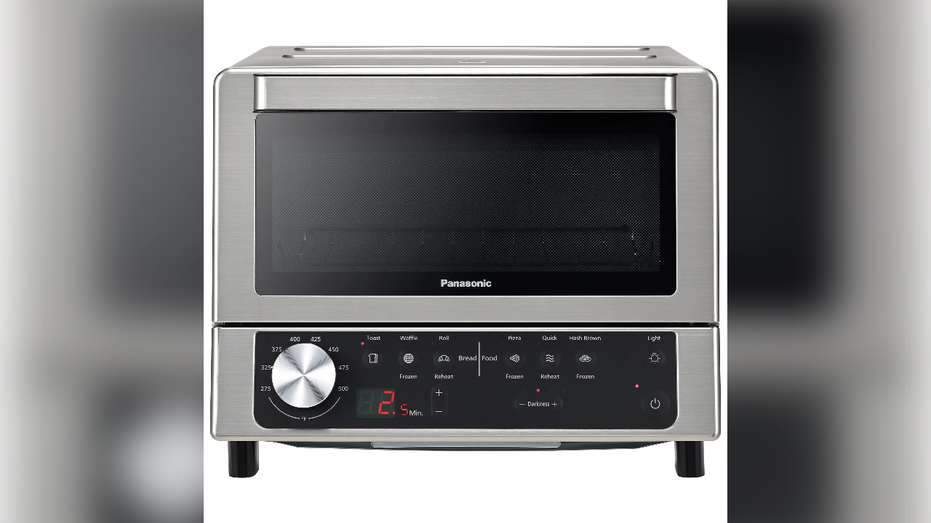
The recalled Panasonic Model No. NB-G200 Electric Toaster Oven. (Panasonic / Fox News)
HOME COOKS SHOULD STOP USING RECALLED GAS STOVES IMMEDIATELY, US SAYS
From October 2024 to April 2026, the toaster oven was sold for about $170 at Costco, on Amazon and through several other online retailers.
Consumers who believe they own the recalled toaster oven can verify the model number by checking the nameplate label on the back of the appliance.
Notices from both the U.S. government and Canada urge customers to immediately stop using the product and return it to Panasonic for a full refund.

Panasonic Center Tokyo on April 20, 2018. The building has a showroom for Panasonic’s new products and technologies. (coward_lion / iStock Editorial / Getty Images)
CUISINART STAINLESS STEEL PROPANE GRILL SOLD AT LOWE’S, WALMART RECALLED OVER SHATTERING GLASS RISK
The U.S. Consumer Product Safety Commission said it has received four consumer reports of the toaster oven tripping circuit breakers or outlets. A fifth report noted the toaster simply stopped working.
As of June 15, 2026, Panasonic said it had not received any reports of incidents or injuries in Canada related to the toaster.
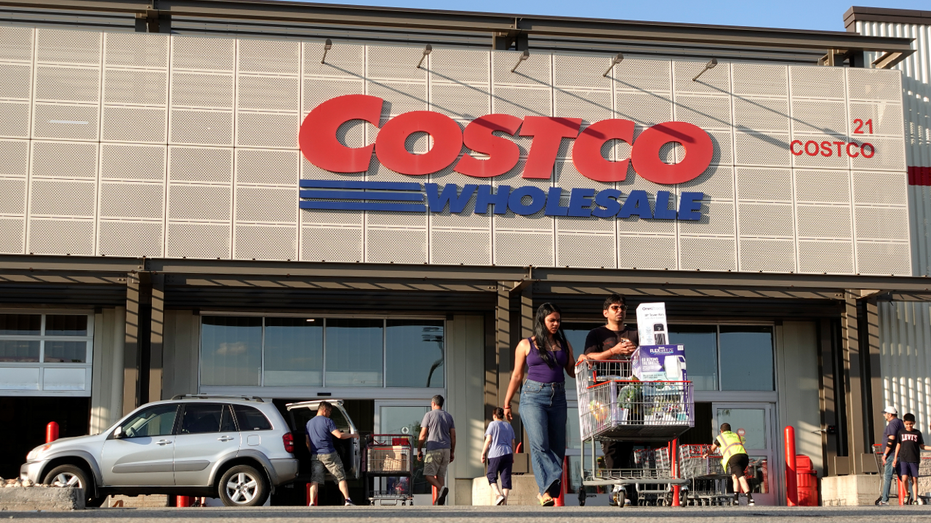
People arrive and depart at a Costco Wholesale store on June 13, 2026, in Bayonne, New Jersey. The recalled Panasonic toaster ovens were sold at Costco stores in the U.S. (Gary Hershorn/Getty Images / Getty Images)
| Ticker | Security | Last | Change | Change % |
|---|---|---|---|---|
| AMZN | AMAZON.COM INC. | 249.89 | -5.07 | -1.99% |
CLICK HERE TO DOWNLOAD THE FOX NEWS APP
Panasonic, Costco and Amazon did not immediately respond to FOX Business’ requests for comment.

Ramsey Show personality and co-host George Kamel breaks down fact from fiction about Social Security fund depletion with Fox News Digital.
A ticking clock on Social Security solvency has prompted a bipartisan coalition of senators to introduce legislation aimed at preventing automatic, across-the-board benefit cuts for more than 70 million Americans.
Called the Protecting Retirement Opportunities and Maintaining Income Security for Everyone (PROMISE) Act, the bill establishes a procedural process designed to require congressional votes on a long-term Social Security solvency plan before the retirement trust fund’s projected depletion in 2032 triggers an automatic 22% reduction in monthly benefits. The legislation calls for an independent bipartisan advisory committee to develop recommendations intended to restore the program’s solvency for at least 50 years.
“Here is our chance to agree on a bipartisan process to rescue Social Security this year,” Senate Democratic Whip Dick Durbin, D-Ill, said in a press release. “Our bipartisan proposal opens Congress to debate this issue in a transparent, fair, and bipartisan way. We were elected to solve problems — and there’s no greater problem than the solvency and future of Social Security.”
“Millions of Americans rely on Social Security to live. In 6 years, those families will see a 22% cut to their benefits if Congress doesn’t act. Our plan starts the process of preserving promised benefits for current retirees and the next generation of Americans,” Sen. Bill Cassidy, R-La., said alongside Republican Sens. Thom Tillis, R-N.C.; John Cornyn R-Texas; and Alan Armstrong, R-Okla.
WHY RAMSEY FINANCIAL EXPERT SAYS THERE’S ‘NO MAGIC AGE’ TO CLAIM SOCIAL SECURITY
While multiple legislative proposals to secure Social Security’s trust funds have been introduced over the years, virtually none have advanced to a floor vote.

A U.S. Treasury check and a Social Security card in front of the United States Capitol building. (Getty Images)
The PROMISE Act establishes a strict procedural timeline, requiring the Social Security Advisory Board (SSAB) to submit a proposal designed to restore Social Security solvency for at least 50 years. The bill also requires the House and Senate majority leaders to introduce the proposal, and if they fail to do so, any member of Congress may introduce it.
The proposal would then be referred to the House Ways and Means Committee and the Senate Finance Committee. If the committees do not report it, the legislation would automatically be discharged to the House and Senate calendars for floor consideration.
Final passage would require a simple majority vote in the House and a three-fifths majority in the Senate.
‘The Big Money Show’ panel discusses the alarming new analysis showing Social Security and Medicare racing toward insolvency and warns that retirees face steep benefit cuts unless Washington acts fast.
“Social Security is on an unsustainable path that will lead to dramatic benefit cuts for retirees and growing skepticism among workers paying into a program on the brink of insolvency. With each passing year, the menu of options that preserve benefits and limit tax hikes narrows. The modest reforms Congress contemplated in 2010 would have put Social Security on solid footing for 75 years; today, those same reforms would add less than two years to our current runway,” Sen. Tillis said. “I won’t pretend there’s consensus on how we solve this, but the math is unforgiving: the longer Congress waits to act, the fewer good options remain.”
“For nearly a century, Social Security has been a lifeline that allows Americans to retire with dignity. Congress should not wait around until the last minute to shore up this critical program and prevent broad-based benefit cuts upon Trust Fund depletion,” Sen. Tim Kaine, D-Va., said in support of the bill.
“That’s why I’m joining a bipartisan group of my colleagues in introducing legislation that will encourage Congress to roll up its sleeves and find a path forward to ensure current and future generations of retirees and their families are able to receive the benefits they have earned and which they are owed,” he continued.
U.S. Social Security Administration Commissioner Frank Bisignano pushes back at Sen. Elizabeth Warren’s transparency allegations and discusses the threat of insolvency on ‘Mornings with Maria.’
GET FOX BUSINESS ON THE GO BY CLICKING HERE
The nonpartisan Committee for a Responsible Federal Budget voiced support for the bill: “The PROMISE Act would establish a thoughtful bipartisan process to help Congress do its job and rescue Social Security before it’s too late… These proposals keep Congress and the public involved in this important process. Hopefully they can give our leaders the kick in the pants they need to start working together to secure Social Security for current and future generations,” Committee for a Responsible Federal Budget President Maya MacGuineas wrote.
Based on the current average monthly payout of $2,071, beneficiaries — including seniors and individuals with disabilities — would lose roughly $450 per month if a funding plan is not put in place. Experts estimate this reduction would force over 3 million American citizens into poverty.

In the past, how well a business was doing was mostly judged by how much people knew about it. A company bought ad space, showed its message to a large audience, and hoped that this would lead to more sales.
That model is still around, but many digital businesses now need something more direct. They need marketing that can be measured, tested, improved, and connected to revenue.
This is where performance marketing comes in. It looks at specific actions like clicks, leads, registrations, app installs, purchases, deposits, subscriptions, or repeat sales. Instead of asking only how many people saw an advert, the business asks what those people did next.
This approach can help startups, affiliate projects, SaaS companies, eCommerce brands, iGaming products, finance platforms, and mobile apps get better results from their marketing spend. It also helps teams see which channels deserve more budget and which ones should be paused before they become expensive.
It is rare for performance to improve just because of one campaign. It usually comes from tracking, testing, partner traffic, paid acquisition, conversion optimisation, and clear economics. Companies that work with partners like Riddick’s Partners often see performance marketing as more than just advertising. They see it as a way to connect traffic, offers and results that can be measured.
What Performance Marketing Means
Performance marketing is a way of doing marketing where the success of a campaign can be measured. A business can pay for impressions or clicks, but what they’re really interested in is usually something more in-depth, like the cost per lead, the cost per acquisition, the return on ad spend, the lifetime value, the conversion rate, and the retention rate.
This makes the channel useful for growth teams. They can test a campaign, read the data, adjust the funnel, and scale what works. The process is not always quick, but it is more controlled than guessing.
A strong performance strategy usually connects several areas, such as media buying, analytics, creative testing, landing pages, CRM, partner management and product data.
The Role of Data and Tracking
If you don’t track your marketing, it becomes just another kind of advertising. The business needs to know where each user came from, what they clicked on, what action they completed, and whether that action created value.
A proper setup may include UTM tags, pixels, postbacks, event tracking, CRM data, and revenue reports. Some businesses need more than one attempt to make a sale. A lead may look cheap but never buy. A customer who buys something for the first time might buy just the one time and never buy anything else. A traffic source might have fewer users, but these users might spend more money.
That is why growth teams should look beyond surface metrics. Clicks are important, but it’s more important to make money. Registrations are important, but activation and retention are important too.
Testing Creatives, Funnels, and Offers
Performance marketing also speeds up learning. Each campaign can test a small part of the growth system. A team may test:
- Different headlines and visuals;
- Landing page layouts;
- Short vs long forms;
- GEOs and languages;
- Device segments;
- Pricing messages;
- Traffic sources;
- Audience groups;
- Retargeting sequences.
This kind of testing helps businesses avoid making assumptions. Instead of saying “this market doesn’t work”, the team can see if the problem is the creative, the offer, the landing page, or the traffic source.
Better Budget Allocation
One of the best things about performance marketing is that it helps you to stick to your budget. Money is given to campaigns that show they can do a good job.
This doesn’t mean that every test will be profitable. Many tests fail. But a failed test can still be useful if it shows what not to scale. The real danger is not losing money on a controlled test. The real danger is to plan a campaign without understanding the numbers.
Businesses that manage performance well usually define limits before launch. These limits include target CPA, minimum conversion volume, acceptable ROAS, testing budget, and rules for pausing weak segments.
Performance Marketing and Partner Channels
Affiliate and partner channels are a great way to do performance marketing. They allow businesses to work with external traffic sources while paying for actions that can be measured or performance goals that have been agreed upon.
This can help companies enter new markets faster. A partner might already understand a GEO, audience, or vertical that the business has not tested yet. But there are too many people coming to the site. The company should track quality, approve traffic sources, validate conversions, and compare long-term value by partner.
If you manage them well, partner channels can help you to attract more customers without costing you more.
Common Mistakes to Avoid
Performance marketing can help a business grow faster, but only if it is managed carefully. Here are some common mistakes to avoid:
- Launching without tracking;
- Judging campaigns only by clicks;
- Changing settings too often;
- Testing too many variables at once;
- Scaling before the funnel is stable.
Another mistake is ignoring retention. If a campaign brings in cheap users who don’t stick around, it might seem like your growth is good for a week, but then it’ll disappear. Strong teams look at how people behave when they first see the advert and afterwards.
Conclusion
Performance marketing helps businesses grow faster because it connects the money spent on marketing with results that can be measured. It lets teams test offers, compare channels, control budgets, and grow based on facts instead of guesses.
You’ll get the best results when you think about performance marketing as a way to help your business grow. All the different parts of a website, like the traffic, creatives, landing pages, tracking, partners, and retention, need to work well together. When they do, businesses can move faster, spend their money more wisely, and build growth that is easier to repeat.


True Tart mark clarifies US grown Montmorency tart cherry standards.
Business
Meghan Markle Returns to UK, Reunites With King Charles at Highgrove for the First Time in Four Years

Meghan Markle made her first trip back to the United Kingdom in four years earlier this month, reuniting privately with King Charles III at his Gloucestershire estate alongside Prince Harry and their two children, marking one of the more significant developments in the family’s relationship with the royal household since the couple stepped back from royal duties in 2020.
The Duke and Duchess of Sussex, along with their children, Prince Archie, 7, and Princess Lilibet, 5, met with King Charles and Queen Camilla on Friday, July 10, at Highgrove House, the king’s private country residence in Gloucestershire, west of London. Buckingham Palace confirmed the meeting took place but described it strictly as a private family occasion, saying no photographs or additional details would be released from the visit.
The gathering marked the first time King Charles had seen his grandchildren in person in more than four years. Harry and Meghan had not been in the United Kingdom together since 2022, when they returned for the funeral of Queen Elizabeth II. In the years since, Harry has made several brief solo trips back to Britain, including for his grandmother’s funeral and his father’s coronation in 2023, along with a private tea with the king at Clarence House last September. Friday’s Highgrove meeting, however, represented the first confirmed occasion the full Sussex family had spent time together with the monarch since the couple relocated to Montecito, California.
According to reporting from the U.K.’s PA news agency, the family flew in from an unspecified European destination ahead of the visit, with plans having shifted in the days leading up to the reunion. Meghan had initially been expected to join Harry publicly at an Invictus Games countdown event earlier in the week, but those plans changed, and the family instead prioritized the private gathering at Highgrove. The Sussex family was believed to be staying at Althorp House in West Northamptonshire during their visit, the childhood home of Harry’s late mother, Princess Diana, and the site of her grave, according to reporting from The Mirror.
Notably, Prince William and his family were absent from the Highgrove gathering. According to the BBC, William was taking part in a charity polo match in Windsor at the same time his brother’s family was meeting with the king. There have been no reports indicating any plans for Harry and William to meet during this particular visit, and the relationship between the two brothers has remained visibly strained in the years since Harry and Meghan’s departure from royal life.
The visit came against the backdrop of the upcoming Invictus Games, the international sporting event for wounded, injured and sick service members and veterans that Harry founded in 2014. The Duke of Sussex traveled to London the week prior for a series of charity engagements, including an appearance at Chatham House on July 7 for a conversation on Invictus Games policy, part of the broader “One Year to Go” celebrations ahead of the Invictus Games Birmingham 2027. Reports had circulated for weeks beforehand about whether Meghan and the children might accompany Harry on this trip, with The Telegraph first reporting on July 9 that the Duchess would be traveling to Britain alongside her husband and children.
Security arrangements have remained one of the central complicating factors in any Sussex return to the UK. Harry has previously said it would be “impossible” to bring Meghan and their children to Britain without adequate security protection, a matter that has been the subject of an extended legal and administrative review in recent years. Some royal and security officials were reported to feel a degree of unease ahead of the visit, given ongoing questions about how any public backlash might be managed alongside the practical logistics of protecting the family during their time in the country.
Buckingham Palace has given no indication whether the Highgrove meeting signals the start of broader reconciliation efforts between the Sussexes and other senior royals, characterizing the visit solely as a private family occasion. Questions remain about whether and when Harry might next meet with William, even as the meeting with King Charles was widely viewed by royal commentators as a meaningful step following years of limited contact.
Beyond the royal reunion, Meghan has continued to maintain a public presence through her business and entertainment ventures in the weeks surrounding the UK trip. She is set to appear as a guest judge on MasterChef Australia later this month, with Endemol Shine Australia and Channel 10 confirming she will feature in the show’s July 26 episode. As a guest judge, Meghan will reportedly ask contestants to prepare a dish tied to a personal story, continuing her recent pattern of blending television appearances with themes connected to food and lifestyle content, an area she has increasingly built out through her Netflix series “With Love, Meghan” and her As Ever lifestyle brand.
Meghan’s broader business ventures have also drawn attention in recent months. Her As Ever brand, which sells items including fruit spreads, herbal teas and home goods, reportedly generated significant sales momentum earlier this year, with a website glitch at one point allowing customers to calculate approximate sales figures for the brand’s signature fruit spread. Royal commentators have pointed to that commercial momentum, along with her growing entertainment profile, as context for how Meghan may be approaching any potential return to a more visible public role in the UK going forward.
For now, the Sussex family’s exact plans beyond the Highgrove visit and Meghan’s upcoming MasterChef Australia appearance remain unclear. With the Invictus Games Birmingham set to take place in 2027, royal watchers expect the family’s ties to the UK, and the broader question of their relationship with senior royals, to remain a closely watched storyline in the months ahead, particularly as preparations for the games continue to bring Harry back to Britain on a more regular basis.

Just one in six of Britain’s small businesses expects to grow over the next 12 months, the lowest proportion since records began in 2014, while nearly one in three anticipate shrinking, selling up or closing their doors for good.
The findings, from the Federation of Small Businesses’ quarterly Small Business Index, lay bare the scale of the challenge facing Andy Burnham as he prepares to enter Downing Street on Monday. The lobby group warned the incoming prime minister faces a “huge test” to turn the economy around.
The gap between firms predicting growth and those predicting shrinkage, a sale or closure is now the widest the FSB has recorded. The net balance first turned negative a year ago and has stayed below zero ever since.
For the owners behind the numbers, the culprits are familiar. The survey of 1,113 small business owners and sole traders, conducted in June, found the state of the UK economy, taxes and labour costs were expected to act as the biggest drags on growth over the coming year.
Tina McKenzie, the FSB’s policy chairwoman, said: “We cannot and must not accept a ‘new normal’ where more small firms believe they will shrink, sell up, or close entirely than anticipate growing over the next year. Small firms are the only engine of growth present in each and every postcode and we need them firing on all cylinders.”
The timing hands Burnham an immediate in-tray item. McKenzie said she hoped he would honour his pledge to expand small business rates relief, a live issue for the 104,000 small firms swept into the rates net when April’s revaluation collided with a decade-long threshold freeze.
“The new prime minister’s first budget will be a huge early test of whether he can put small businesses first, drive down costs, and drive up growth, opportunity and jobs, but what is crucial is that this is complemented by every department finally putting growth first and pulling in the same direction,” she said.
The trading picture behind the gloom is stark. Only one in five small companies reported higher takings in the second quarter, significantly outnumbered by the more than half who saw revenues fall.
Costs, meanwhile, keep climbing. Close to nine in ten respondents reported higher running costs than a year earlier, up slightly on the first quarter, with taxation the most-cited reason for the increase.
McKenzie also urged ministers not to let the late payment crackdown now before parliament slip down the agenda, saying the legislation, billed by the government as the largest crackdown on late payments in more than 25 years, “must be prioritised”.
She said she hoped Burnham’s government would recognise that small businesses “suffer just as much as everyone else when a ‘Whitehall knows best’ culture fails to listen to the people delivering growth on the ground”.
For SME owners, the message to the new administration is simple enough: the sector that employs millions across every postcode in Britain is running out of road, and the first budget will show whether anyone in Whitehall is listening.

Jamie Young
Jamie Young is Senior Reporter at Business Matters, covering SME finance, employment law and Westminster policy since 2016. He has reported on every Budget and Autumn Statement since 2018, helped make sense of the ‘covid era’ and the bounce-back loan scheme from launch through the fraud investigations, and broke the magazine’s coverage of the 2024 late-payment reforms. He joined Business Matters straight from completing his BA in Administration from Exeter University and is NCTJ-qualified. Reach him at jyoung@cbmeg.co.uk

Apple Reclaims Title as World’s Most Valuable Company, Overtaking Nvidia for First Time Since April 2025
Shiba Inu (SHIB) News Today: July 17th

Szoboszlai agrees to new five-year contract with Liverpool


-

 Fashion7 days ago
Weekend Open Thread: Nutriplenish Leave-In Conditioner
-
 NewsBeat1 day ago
London Mayor Sadiq Khan handed a peerage by Keir Starmer alongside 15 other Labour figures… just days before the PM leaves No10
-

 Crypto World2 days ago
CFTC blocks Kalshi from unwinding Michigan trades after court order
-

 Business2 days ago
Nvidia Stock Slips After Big Tuesday Rally as Huang Confirms Vera Rubin Chip Is Now in Production Today
-

 Politics2 days ago
Young campaigners urge incoming PM to act on outdoor junk food ads
-
 Entertainment2 days ago
Disney’s Most Ambitious Failed Star Wars Attraction Is Coming to SDCC
-

 News Videos3 days ago
XRP BOMBSHELL… XRP OMBOARDED FOR TRANSACTIONS!!!
-

 Tech3 days ago
Get Your ESP32 Sunny Side Up With This Solar Dev Board
-

 Crypto World19 hours ago
Injective Submits SEC Transfer-Agent Registration to Onchain Ownership Records
-

 NewsBeat4 hours ago
Registration is now open for March for Men with Kev 2026
-

 Tech3 days ago
Dark Secrets Emerge When Jailbreaking LLMs
-

 Business2 days ago
Palantir Shares Rise After Expanded Nvidia Partnership and Fresh Analyst Upgrades Ahead of Earnings Day
-

 News Videos9 hours ago
Money | Class 12 Economics | CBSE Board Exam 2026-27
-
 Sports2 days ago
New Cornerback Enters Vikings Trade Rumor Mill
-

 Business15 hours ago
Banco Bilbao Vizcaya Argentaria, S.A. (BBVA) Discusses Global Macro Environment and Economic Outlook for Core Markets Transcript
-
 Tech4 days ago
Cloudflare Precursor Watches Your Mouse and Keyboard To Decide If You Are Human
-

 News Videos4 days ago
how to make coin bank box with cardboard #scienceproject #money #diy #shorts
-
 Entertainment2 days ago
Vicki Gunvalson Defends Discussing Heather Dubrow’s Money
-
Crypto World3 days ago
Ripple, Coinbase, Circle Join Linux x402 Foundation to Help Shape AI Payments
-
 Crypto World18 hours ago
Claude Fable 5 Slips to Second in AI Coding Leaderboard
You must be logged in to post a comment Login