
Business
Goldman Sachs reiterates Zillow stock rating on new listing product




The Big Money Show discusses mortgage rates, property taxes and the struggle home sellers are facing.
American renters got some price relief in February as the national median asking rent dipped to the lowest level in four years, with some metro areas seeing notable declines.
An analysis by Realtor.com found that the median asking rent for 0 to 2-bedroom properties in the 50 largest metro areas declined for the 30th consecutive month, with the metric falling $29, or 1.7%, compared to a year ago in February.
The median asking rent in those markets was $1,667 – down 5.1% from its peak in summer 2022 but still14.2% higher than its pre-pandemic level. All 50 metro areas analyzed in the report had median asking rents below their peak level.
Realtor.com found that there were 15 markets that had median asking rents down at least 10% from their peaks as of February 2026, as renters in those metro areas have seen the most significant relief since the pandemic era.
RENO SURPASSES LAS VEGAS AS TOP DESTINATION FOR CALIFORNIA HOMEBUYERS SEEKING AFFORDABILITY

Austin, Texas, saw the largest decline in median asking rent compared with its pandemic peak, Realtor.com found. (Rick Kern/Getty Images)
The steepest decline in the median asking rent from the pandemic peak was in Austin, Texas, which had seen the rental price decline 18.2% from its peak and 7.1% year over year.
Birmingham, Alabama, ranked second with a 17.1% decline from the peak, while the median asking rent was down 3.4% from a year ago.
The Memphis, Tennessee, metro area has seen a 16.1% decline, which ranked as the third deepest, while the rent declined 3.8% from last year.
MIAMI OVERTAKES LOS ANGELES AND NEW YORK AS WORLD’S RISKIEST HOUSING MARKET FOR BUBBLE RISK

Las Vegas was among the metro areas with a double-digit decline from its pandemic peak. (Jakub Porzycki/NurPhoto via Getty Images)
Other cities in the Sun Belt were among those that saw the largest decline in median asking rent, with Phoenix, Arizona, down 15.6% from its peak including a 4.4% decrease from a year ago.
Atlanta was down 15.2% in February from the market’s peak, with prices down 2% from last year.
Las Vegas had similar figures, with a 14.8% decline in the median asking price from its peak and 1.8% from a year ago.
AMERICA’S 10 MOST EXPENSIVE ZIP CODES REVEALED

San Diego’s median asking rent was over 10% below its pandemic peak in February. (iStock)
San Diego has also seen a notable decline in the median asking rent from the pandemic peak, with it down 14.3% from its high and 3.7% from a year ago.
Five metro areas have seen much more modest declines in the median asking rent when compared with the pandemic-era peak.
The metro area with the smallest decrease as of February was Virginia Beach, Virginia, which was down just 1.7% from the peak – in part because the median rent rose 4.5% in the last year.
GET FOX BUSINESS ON THE GO BY CLICKING HERE
Kansas City was down 1.8% from the peak and had the median asking rent rise by 1% from a year ago, while Baltimore’s rental figure was down 2.4% from its peak and up 0.8% in the last year.
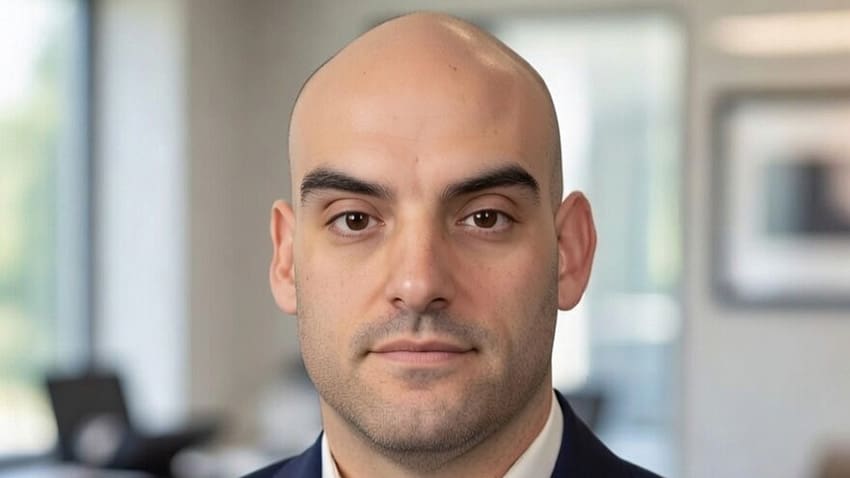
Gerard LoSardo is a certified public accountant and the founder of Gerard LoSardo & Associates, a CPA firm focused on individual tax matters shaped by modern work patterns.
His work centres on expatriate taxation, foreign nationals working in the United States, and multi-state mobility issues. Over the years, he has built a reputation for working in areas where tax reporting intersects with international careers and complex compensation structures.
Gerard grew up in a small town in New York’s Hudson Valley with his two siblings. Team sports were an important part of his early life. In his senior year of high school, his team competed in the state championship. The experience left a lasting impression on how he approaches pressure and preparation.
He later attended Hartwick College, graduating in 2010 with a degree in Accounting and Finance and a minor in English. During university he served as vice president of his fraternity, Alpha Sigma Phi. While in college he was also recognised in a local newspaper for stepping in to save a neighbour’s dog during an attack, an incident that reflected his calm judgement under pressure.
Gerard began his professional career at PricewaterhouseCoopers in audit before moving into tax at KPMG in 2013. He spent a decade in KPMG’s global tax practice and served as a Senior Manager during his final three years. His work focused on global mobility programmes, cross-border reporting, and compensation structures tied to international work.
In 2023, he launched his own firm. Today he continues working in the specialised tax areas where careers, travel, and global employment intersect.
Inside Global Tax Work: A Conversation with Gerard LoSardo
Gerard LoSardo spent more than a decade inside global tax practices before launching his own CPA firm. In this conversation, he reflects on his career, the changing nature of work, and the complexity created when careers cross borders.
Q: You grew up in New York’s Hudson Valley. Did that environment influence your work ethic?
Gerard LoSardo:
Yes, I think it did. I grew up in a small town with my two siblings, and sports were a big part of life. In my senior year of high school our team made it to the state championship game. When you play at that level, preparation matters. You realise that the outcome often depends on how seriously you take the small things.
That idea carried into my career. In tax work, details matter. Missing one piece of information can change everything.
Q: What led you to study accounting and finance?
LoSardo:
I always liked structure and problem-solving. Accounting felt like a natural fit. At Hartwick College I studied Accounting and Finance and also minored in English. The English minor helped more than I expected.
In this profession, you often need to explain complex systems in clear language. Being able to communicate matters just as much as understanding the numbers.
Q: What do you remember most about your early career at PwC?
LoSardo:
PwC was where I learned discipline. I worked in audit from 2011 to 2012. Audit forces you to understand how organisations operate. You review systems, processes, and financial controls.
It teaches you to step back and see the structure behind the numbers.
Q: You spent ten years at KPMG. How did that shape your career?
LoSardo:
KPMG is where I moved fully into tax. I joined the tax practice in 2013 and eventually worked on global mobility programmes. My focus was on individuals whose careers moved across borders or across states.
Many of them had complicated compensation structures. Stock awards, deferred bonuses, or assignments in multiple countries. Over time those things create layers of reporting.
I spent my final three years there as a Senior Manager. At that point you are not only solving problems but also guiding teams and helping people think through complicated situations.
Q: What makes global mobility tax work so complex?
LoSardo:
People’s lives rarely fit neatly into one system. Someone might live in one state, work in another, and receive compensation tied to multiple years or locations.
Now add international assignments to that. Suddenly there are payroll questions, reporting questions, and timing questions.
The complexity usually builds slowly. It starts with one move or one change in compensation.
Q: In 2023 you started your own firm. What motivated that step?
LoSardo:
After more than a decade in large firms, I wanted to focus on the areas I understood best. I had spent years working with individuals and employers dealing with mobility issues.
Starting my own firm allowed me to concentrate on those specific challenges.
Q: What have you learned about leadership during your career?
LoSardo:
Leadership in this field often means staying calm. Tax problems can feel stressful for people. They usually involve deadlines and complex information.
If you stay methodical and patient, you can work through almost anything.
Q: Outside work, what helps you reset?
LoSardo:
I enjoy hiking and watching sports. I also like cooking and crafting cocktails. Those activities slow things down a bit.
In this profession, clear thinking is important. Taking time away from the desk helps keep that perspective.

Form 6K Bioharvest Sciences Inc For: 17 March

Check out what’s clicking on FoxBusiness.com.
Ross Stores is ramping up store growth in 2026 as demand for discount apparel and home goods remains resilient, with the retailer opening 17 new locations and planning more than 100 additional sites this year.
The company said the latest openings – 13 Ross Dress for Less stores and four dd’s Discounts locations – mark the start of its 2026 rollout, which targets approximately 110 new stores in total, including about 85 Ross locations and 25 dd’s Discounts stores.
The expansion follows solid performance from stores opened in 2025, reinforcing management’s expectations that value-focused retail will remain a key draw for consumers.
COSTCO RECALLS POPULAR MEATLOAF MEAL KIT OVER SALMONELLA CONTAMINATION FEARS ACROSS 26 STATES

Ross Dress for Less in Miami Beach, Florida. (Jeff Greenberg/Education Images/Universal Images Group via Getty Images)
Off-price retailers have continued to benefit as shoppers seek lower-cost alternatives for apparel and home goods, particularly as price sensitivity persists across discretionary categories.
Geographically, Ross expanded its namesake brand across the Mountain, Midwest and Northeast regions, while also strengthening its presence in key Sunbelt markets.

Shoppers walk in front a Ross Dress For Less store at Monroe Marketplace in Pennsylvania. (Paul Weaver/SOPA Images/LightRocket via Getty Images)
For dd’s Discounts, the company added locations in its core markets of California and Texas, along with its first store in Utah, signaling expansion into new territory.
The new stores are also expected to support local job creation and broader economic activity tied to store development.

A Ross store in San Francisco on Nov. 12, 2023. (Michaela Vatcheva/Bloomberg via Getty Images)
Looking ahead, Ross said it sees a long-term opportunity to grow to approximately 2,900 Ross Dress for Less stores and 700 dd’s Discounts locations nationwide – or about 3,600 stores in total – underscoring confidence in sustained demand for discount retail.
CLICK HERE TO GET FOX BUSINESS ON THE GO
In conjunction with each opening, the company said it is supporting community initiatives through donations to local Boys & Girls Clubs or First Book literacy partners focused on underprivileged youth.

Check out whats clicking on FoxBusiness.com.
The U.S. Postal Service on Tuesday will tell Congress that it’s facing a serious financial crisis and is on pace to run out of cash in less than a year without significant reforms.
Postmaster General David Steiner testified before a House Oversight subcommittee and told lawmakers that the USPS needs higher stamp prices and the ability to borrow more money along with other reforms – including changes to pension funding and liabilities calculations, workers’ compensation and retirement fund investment strategies.
Steiner has put forward possible options for cutting costs, including ending six-day-a-week deliveries, closing post offices or raising first-class mail stamp prices from the current 78 cents to $1 or more.
“In order to survive beyond the next year, we need to increase our borrowing capacity so that we don’t run out of cash,” Steiner said in prepared testimony. “The failure to do this could lead to the end of the Postal Service as we know it now.”
POSTAL SERVICE CAN’T BE SUED FOR INTENTIONALLY NOT DELIVERING MAIL, SUPREME COURT RULES IN 5-4 SPLIT

USPS Postmaster General David Steiner will ask Congress for reforms and funding to avoid a financial crisis at the Postal Service. (Bess Adler/Bloomberg via Getty Images)
Stamp prices have risen 46% since early 19, when they were 50 cents. Steiner argues that those prices are still far lower than postage costs in other countries.
USPS has also reached its current borrowing cap of $15 billion, precluding the agency from taking out additional loans.
Reuters previously reported in December that Steiner thought the USPS was on track to run out of money as soon as early 2027 amid mounting losses.
USPS has reported net losses of $118 billion since 2007 as volumes of its most profitable product, first-class mail, fell to the lowest level since the late 1960s.
POSTMASTER GENERAL LOUIS DEJOY STEPPING DOWN AMID US POSTAL SERVICE FINANCIAL TURMOIL

USPS package volumes have declined steadily in recent decades. (Andrew Harrer/Bloomberg via Getty Images)
Steiner said that if USPS were to reduce deliveries to five days a week, it would save the agency about $3 billion per year, while closing small post offices in remote areas would save about $840 million.
However, Steiner cautioned that both of those options “may not be palatable to Congress or the American public.”
USPS currently delivers to more than 170 million U.S. addresses on a six-day-a-week schedule.
USPS COULD SLOW SERVICE IN CERTAIN AREAS AS IT SEEKS TO CUT COSTS

USPS faces mounting pension costs in addition to its operational headwinds. (Luke Sharrett/Bloomberg via Getty Images)
The Government Accountability Office (GAO) is set to tell lawmakers on Tuesday that it’s critical to “address USPS’s unsustainable business model before it will be responsible for billions in new annual expenses for retiree healthcare, likely in 2031.”
USPS’ peak postage volume was 213 billion pieces of mail in 2006, while that figure has fallen by more than half to 104 billion pieces of mail in 2025.
Steiner noted that at current stamp prices, that translates to a loss of $81 billion. He added that in the years since 2006, USPS “was thrown overboard and instead of tossing us a life jacket, we were thrown an anchor.”
GET FOX BUSINESS ON THE GO BY CLICKING HERE
Congress in 2022 provided USPS with $57 billion in financial relief over a decade and required the agency’s future retirees to enroll in a government health insurance plan.
Reuters contributed to this report.

Form 8K Repositrak Inc For: 17 March
Business
software: US Stocks: Debt investors offloading exposure to software stocks is latest sign of pain

In recent weeks, several managers of collateralized loan obligations (CLOs) have started exploring ways to reduce their exposure to software, as they grapple with the prospect of a wave of rating downgrades on junk bonds and potential defaults down the line, according to three CLO managers and several credit industry analysts.
The push to reduce exposure shows how the pain in private credit and software is still working through the system after the software rout in January and February that was largely triggered by the release of Anthropic’s latest AI tools, which raised fears of widespread disruption across the technology and professional services industries.
“Software is a sector where there is more selling coming from CLO managers than there is buying right now,” said Jim Egan, co-head of securitized products research at Morgan Stanley, adding that there was elevated exposure to software within broadly syndicated loans (BSLs), which are corporate loans that are arranged by investment banks and sold to a wide group of credit investors like CLOs. Egan added CLOs currently have lower exposure to riskier companies, which are “CCC” rated, compared to a year ago.
CLOs, which buy up small chunks of numerous individual leveraged loans, in recent years capitalized on the credit boom and bought up loans that backed hundreds of software buyouts in the height of a dealmaking boom during and after the pandemic. During the same period, CLOs also hoovered up their holdings in other non-software sectors that are now faced with the existential threat emerging from AI. According to initial estimates from JPMorgan analysts, around $40 billion to $150 billion of U.S. CLO holdings fall within sectors that are most associated with AI risk.

The software and services sector accounts for about 15% of the collateral in currently outstanding syndicated CLO deals in the U.S., according to a Feb. 20 estimate from Morgan Stanley, which added that software alone makes up roughly 12% of CLO holdings, making it the single-largest subsector by concentration. Software exposure in direct lending is estimated to be about 19% based on private-credit focused CLOs, Morgan Stanley said in a March 17 note.
WIDENING SPREADSSpreads on CLOs, which are the risk premium that companies pay on the bonds over Treasuries, have widened over the past few weeks as fears of a meltdown in the $1.8 trillion private credit industry have spooked investors.
“We’re seeing some CLO managers reduce exposure to software – particularly where positions were overweight or ahead of refinancing activity,” said Al Remeza, associate managing director at Moody’s Ratings. “At the same time, many view the current environment as a buying opportunity, especially for companies they believe are least vulnerable to AI disruption.”
A mix of investment-grade notes – which are senior unsecured corporate bonds – and high-yield leveraged loans of some software makers, including Intuit, Dayforce, and Citrix, were sold between a range of 89 cents and 98 cents on the dollar in late February and earlier in March, according to data compiled by the Trade Reporting and Compliance Engine (TRACE), which was developed by the Financial Industry Regulatory Authority to track over-the-counter fixed-income transactions.
A few months ago, those same bonds and loans were trading at a premium, the data shows. Reuters could not determine which specific software companies CLOs sold. Dayforce and Citrix did not respond to requests for comment.
To be sure, while spreads across the software industry have widened, the spread on Intuit’s investment-grade bond that matures in 2033 is largely in line with the level at which it was issued in 2023, while its credit rating was upgraded to ‘A’ from ‘A-‘ by S&P Global in October last year. Intuit’s shares are down about 32% so far this year, as AI disruption fears have weighed broadly on the enterprise software industry.
“We bet the entire company on data and AI nearly ten years ago, when we declared our strategy to be an AI-driven expert platform to deliver done-for-you experiences. Our strategy is working; in the first half of our fiscal year 2026, we delivered 18 percent revenue growth while expanding margins,” an Intuit spokeswoman said in an email to Reuters.
ASSESSING AI RISK
While the current bout of selling could present a unique buying opportunity for distressed debt investors, several credit industry analysts cautioned that the buyer base for large swathes of these loans is thin, adding that most large private credit firms and direct lenders are unlikely to participate in large software loan deals in the near term as they grapple with investor scrutiny amid rising redemption requests at their flagship funds.
“The majority of the CLO community is really taking its time to think about how to come up with a framework to assess AI risk, more on the single-name level, to really scrub their book to identify which are the names that are more prone to AI risk,” said Joyce Jiang, head of U.S. CLO Research at Morgan Stanley. “They’re still in the middle of doing that, so in the near term we think it’s not likely that there’s going to be dip buying from the CLO community at a full scale.”
This is likely to be exacerbated by the fact that CLO managers, who have relatively less exposure to software, are not yet seeing a strong enough reason to buy up loans that are coming to market, said Gavin Zhu, head of U.S. CLO Research at Barclays.
“It’s a bit more difficult to suddenly and opportunistically rotate back into software without a true catalyst. And I think that might be contributing to some of the continued weakness that we see on the loan side,” said Zhu.
Global CLO loan supply is expected to fall to about $150 billion this year, which would mark a 25% decline from last year, according to estimates from JPMorgan. This is because of a sharp decline in investor demand, as widening spreads, question marks over loan quality, and fears of deepening cracks in the multi-trillion-dollar credit market weigh on sentiment, experts said.
However, not all CLO managers are rushing to dump software loans at steep discounts. Credit fund managers and analysts said the recent selling activity, so far, has been selective and concentrated around relatively better-performing loans that have changed hands at a modest discount.
Rishad Ahluwalia, head of CLO Research at JPMorgan, said investor sentiment has turned more bearish in recent weeks as spreads have widened and CLO transaction volumes have dipped.
“For CLO managers, the appetite for stressed loans in orphan sectors, like software and services, is weaker,” said Ahluwalia.
Form 8K Invesco Commercial Real Estate Finance Trust For: 17 March

Stormrae Hosts Record Breaking Solana-Based AI Challenge With 15,000 Participants

Has the Stock Selloff Ended? Wall Street Sees Value but Remains Focused on Oil Markets.

Apple's latest Background Security Improvement targets a WebKit flaw

Approval for plan to end ‘blight’ of vacant Scarborough premises

US median asking rent hits 4-year low in February


-
 Tech7 days ago
A 1,300-Pound NASA Spacecraft To Re-Enter Earth’s Atmosphere
-
 Crypto World4 days ago
HYPE Token Enters Net Deflation as HyperCore Buybacks Outpace Staking Rewards
-

 Fashion4 days ago
Weekend Open Thread: Addict Lip Glow
-

 Tech2 days ago
Your Legally Registered ‘Motorcycle’ Might Not Count Under Proposed US Law
-
Sports3 days ago
Why Duke and Michigan Are Dead Even Entering Selection Sunday
-

 NewsBeat6 days ago
Residents reaction as Shildon murder probe enters second day
-

 Business2 days ago
Search for Savannah Guthrie’s Mother Enters Seventh Week with No Arrests
-

 Business7 days ago
Search Enters Sixth Week With New Leads in Tucson Abduction Case
-

 Sports6 days ago
PWHL, Senators discussing plan to keep Charge in Ottawa
-

 Business3 days ago
US Airports Launch Donation Drives for Unpaid TSA Workers as Partial Government Shutdown Enters Fifth Week
-
Crypto World3 days ago
Coinbase and Bybit in Investment Talks: Could Bybit Finally Enter the US Crypto Market?
-
 Tech3 hours ago
Are Split Spacebars the Next Big Gaming Keyboard Trend?
-

 NewsBeat6 days ago
I Entered The Manosphere. Nothing Could Prepare Me For What I Found.
-

 Business3 days ago
Country star Brantley Gilbert enters growing non-alcoholic beer market
-

 Business1 day ago
Australian shares drop as Iran war enters third week
-

 Crypto World1 day ago
Crypto Lender BlockFills Enters Chapter 11 with Up to $500M in Liabilities
-

 Sports4 days ago
College Basketball Best Bets: Conference Tournament Semifinal Picks
-

 Tech7 days ago
Clarity as strategy
-

 Politics7 days ago
Trump Says Middle East Is ‘Very Lucky’ That He’s President
-

 Crypto World6 days ago
Three Binance Charts May Be Hinting at Bitcoin’s Next Move


You must be logged in to post a comment Login