
Business
Gov. Kathy Hochul demands $13.5B Trump tariff refunds for New Yorkers

Rep. Jim Jordan, R-Ohio, and former House Speaker Kevin McCarthy discuss Republicans’ midterm agenda after President Donald Trump’s ‘record-long’ State of the Union speech on ‘Mornings with Maria.’
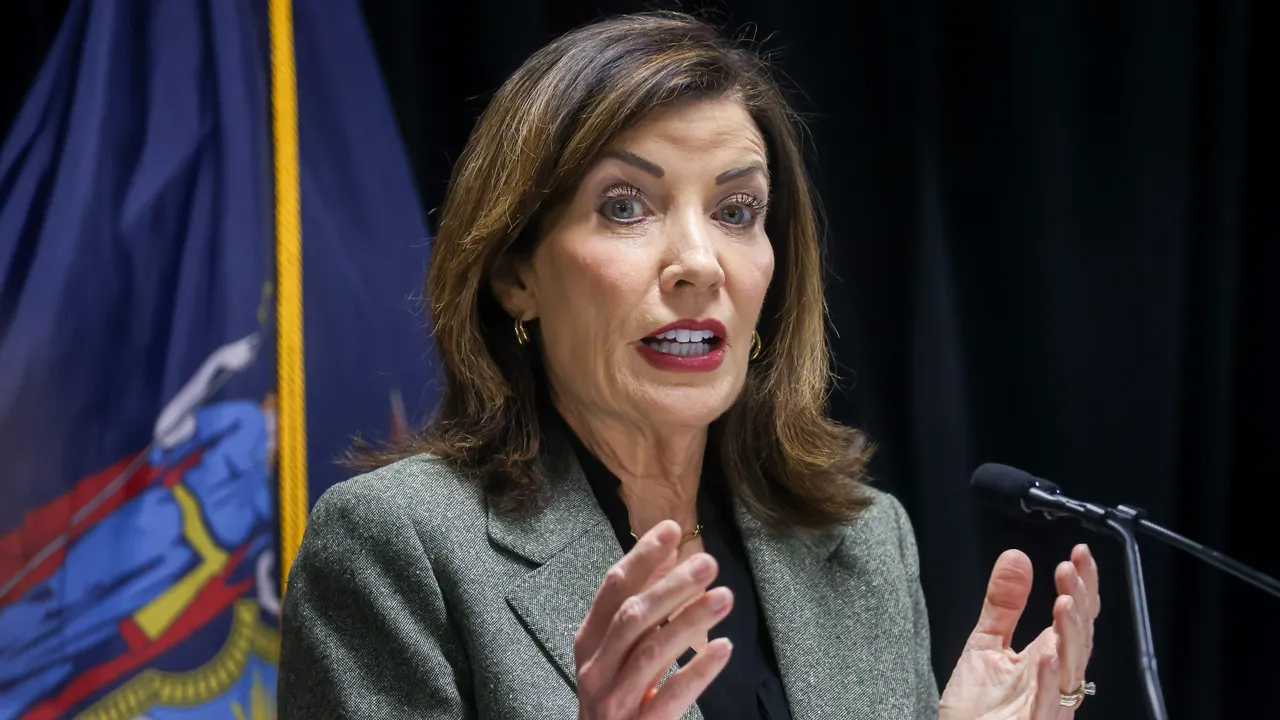
New York Gov. Kathy Hochul is demanding the Trump administration refund an estimated $13.5 billion in tariff payments to New Yorkers after the Supreme Court struck down a key legal basis for President Donald Trump’s import tariffs.
Citing estimates from the Yale Budget Lab, Hochul said the average New York household has paid roughly $1,751 in additional costs since the tariffs were enacted last year — money she argues should now be returned.
“These senseless and illegal tariffs were just a tax on New York consumers, small businesses and farmers — and that’s why I’m demanding a full refund,” Hochul said Tuesday. “I’ll never stop fighting for New Yorkers, and that means staying focused on putting more money back in your pockets — not ripping it away.”
In a 6-3 decision issued Feb. 20, the Supreme Court ruled that Trump’s use of the International Emergency Economic Powers Act (IEEPA) to impose broad tariffs was unlawful, finding that it “does not authorize the President to impose tariffs.”
WILL REFUNDS BE ISSUED AFTER SUPREME COURT RULING ON TRUMP TARIFFS?
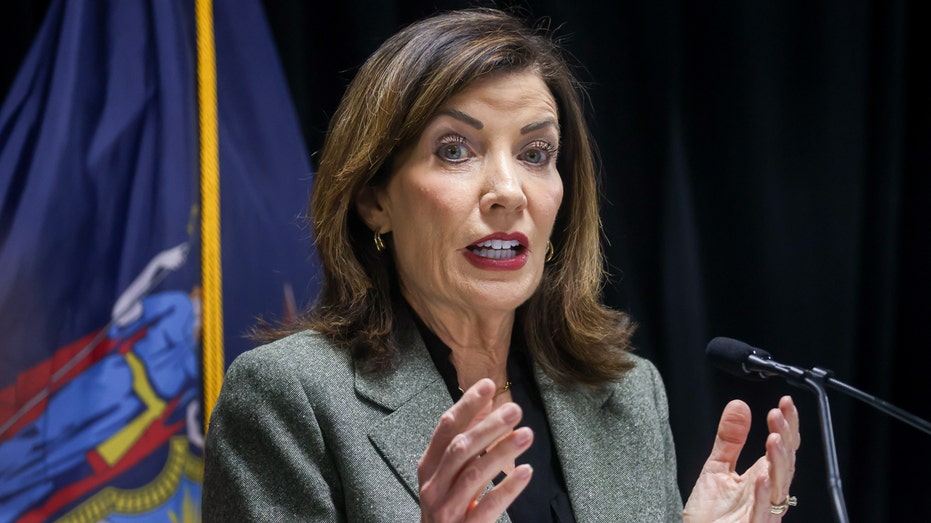
New York Gov. Kathy Hochul called for tariff refunds after the Supreme Court struck down portions of former President Donald Trump’s trade policy. (Michael Nagle/Bloomberg via Getty Images / Getty Images)
The majority opinion, written by Chief Justice John Roberts, did not address whether refunds should be issued.
Hochul joins other Democratic governors, including California Gov. Gavin Newsom and Illinois Gov. J.B. Pritzker, in calling for tariff refunds following the ruling.
Several companies have also moved to recover costs. FedEx, the global shipping and logistics company, sued the administration seeking a full refund of duties assessed under Trump’s order. The company said it incurred additional expenses to expedite shipments through customs and is seeking repayment with interest, as well as compensation for financial harm.
The White House did not immediately respond to FOX Business’ request for comment.
FEDEX SUES TRUMP ADMINISTRATION FOR FULL TARIFF REFUNDS AFTER SUPREME COURT RULING ON IEEPA
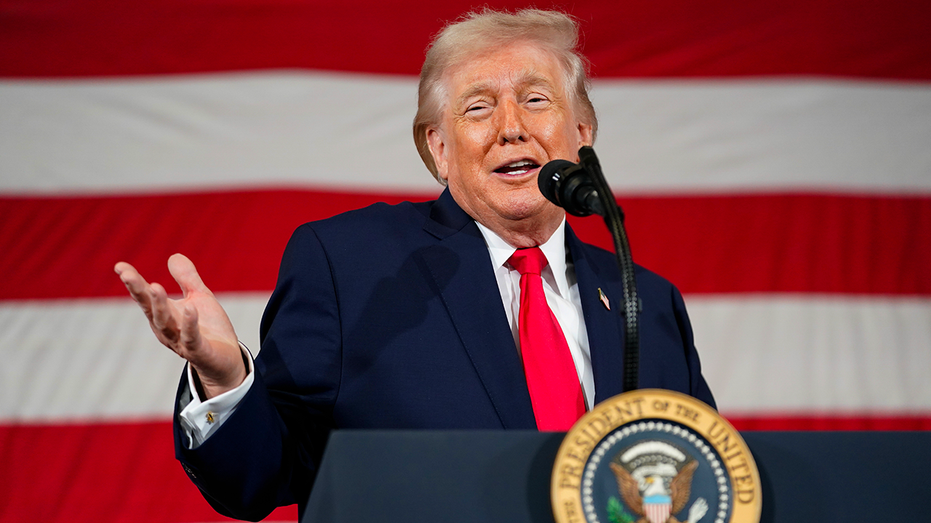
President Donald Trump said he would explore alternative legal avenues to maintain tariffs following the Supreme Court’s ruling. (Nathan Howard/Getty Images / Getty Images)
Trump declined to say during a news conference last week whether the administration would provide refunds.
“I guess it has to get litigated for the next two years. So they write this terrible defective decision, totally defective. It’s almost like not written by smart people. And what do they do, they don’t even talk about that,” Trump said.
After the ruling, Trump announced a 10% global tariff and said he would look into alternative legal avenues to keep them in place. He later raised the tariff to 15%.
Hochul also pointed to a $30 million tariff relief proposal she introduced last month aimed at assisting New York farmers and small businesses impacted by higher costs.
She said over 80% of agrochemical imports and 70% of farm machinery imports are subject to tariffs of at least 10%, making it difficult for farmers to avoid higher prices due to limited alternative suppliers.
GET FOX BUSINESS ON THE GO BY CLICKING HERE
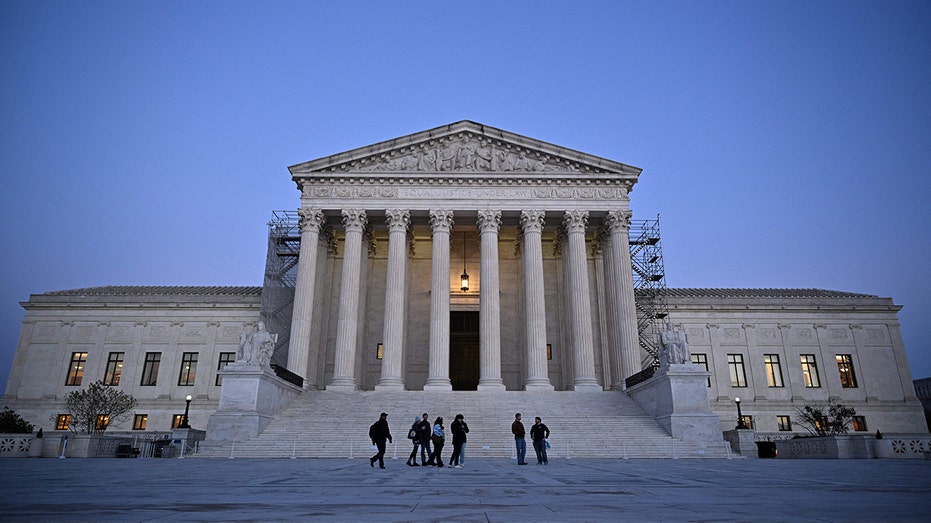
The U.S. Supreme Court ruled 6-3 that the International Emergency Economic Powers Act does not authorize the president to impose broad tariffs. (MANDEL NGAN/AFP via Getty Images / Getty Images)
Farmers across the state are facing increased expenses for fertilizer and equipment, with some reporting cost increases of up to $20,000 annually, Hochul said. Milk exports have fallen 7%, she added.
Despite the Court’s ruling, Hochul said the “damage has already been done” for many farmers.
FOX Business’ Eric Revell and Bonny Chu contributed to this report.


On April 1, 2026, Oliver Stirbock raised questions in the Hesse State Parliament about the use of surveillance systems from Hikvision and Dahua by local authorities. He called for clarity on guidelines addressing human rights risks linked to these technologies, which have already faced restrictions in countries like the United States. WUC welcomed the move, reiterating longstanding concerns that such tools are tied to the mass surveillance of Uyghurs in China.
Meanwhile, April 5 marked 36 years since the Baren Uprising, a pivotal moment of Uyghur resistance against Chinese rule. In 1990, around 200 Uyghurs protested in Akto County against coercive population control policies, including forced abortions.
The protest was met with a brutal military response, reportedly involving thousands of troops and resulting in widespread killings. No independent probe into the incident has ever been conducted. Commemorative demonstrations were held in Munich and Berlin, with activists demanding justice and remembrance for those killed.
At the international level, WUC Executive Committee Chair Rushan Abbas participated in the Global Counterterrorism Forum cybersecurity conference in Guatemala on April 7.

She highlighted how surveillance practices associated with the Chinese Communist Party extend beyond China’s borders, warning of a growing digital authoritarian model. Alongside Abdulhakim Idris, she also engaged students at Galileo University on what they described as technology-enabled repression.
Adding to global unease, China recently implemented a sweeping 18-point framework to secure its industrial and supply chains. Effective March 31, the policy enhances state authority over key sectors, allowing countermeasures against foreign entities deemed threatening to China’s economic stability. Measures may include restrictions, penalties, and export controls.


I am a full-time equity analyst and the co-founder of Mina Vista Capital Management, a hedge fund that my business partner, William Hazen, and I started. I look for long-term investment opportunities with a focus on fundamentals. I’ve done extensive research on industries such as energy, technology, and homebuilding, and I’m continuing to expand my knowledge. I find discussions with other analysts, especially when we hold opposing views, very constructive to both of our theses. If you have a different view on any of the companies I cover, send me a message on X and I’ll be happy to discuss.
Analyst’s Disclosure: I/we have no stock, option or similar derivative position in any of the companies mentioned, and no plans to initiate any such positions within the next 72 hours. I wrote this article myself, and it expresses my own opinions. I am not receiving compensation for it (other than from Seeking Alpha). I have no business relationship with any company whose stock is mentioned in this article.
Seeking Alpha’s Disclosure: Past performance is no guarantee of future results. No recommendation or advice is being given as to whether any investment is suitable for a particular investor. Any views or opinions expressed above may not reflect those of Seeking Alpha as a whole. Seeking Alpha is not a licensed securities dealer, broker or US investment adviser or investment bank. Our analysts are third party authors that include both professional investors and individual investors who may not be licensed or certified by any institute or regulatory body.

Twin Disc's Pop Means It's Time For A Downgrade


Americans weigh in on the Iran war, gas prices and their fears

A set of 8 uniquely held stocks—each owned by just one mutual fund scheme—saw sharp declines of up to 35% in CY26, highlighting concentrated portfolio risks.
Emkay has added five stocks including UltraTech Cement and HPCL to its model portfolio, projecting potential upside of up to 118%.
Business
Debt mutual funds record big outflows of nearly Rs 3 lakh crore. Are safer options losing appeal?

In March last year, these funds had recorded an outflow of Rs 2.02 lakh crore. Across the 16 sub-categories, all segments witnessed outflows in March.
Also Read | Mutual fund SIP stoppage ratio jumps to over 100% in March, even as contributions hit record Rs 32,000 crore
Nehal Meshram, Senior Analyst, Morningstar Investment Research India said debt-funds saw a net outflow in March, marking a steep reversal from the relatively healthier flows seen in January and February. The pressure was concentrated in short-term and treasury-oriented categories, which suggests quarter-end institutional and corporate liquidity adjustments were a key driver.
Nehal further mentioned that the sharp reversal in debt fund flows in March was driven largely by heavy redemptions from short-term and liquidity-oriented categories.
Liquid funds saw the highest outflow at Rs 1.34 lakh crore. Overnight funds recorded outflows of Rs 40,227 crore, followed by money market funds at Rs 29,206 crore.
Kartik Jain, MD & CEO, Shriram AMC, said debt categories, which saw inflows in February, witnessed significant outflows in March, particularly in liquid and money market funds, suggesting quarter-end treasury movements and profit booking by institutional investors.
The AMFI data showed that low-duration funds saw an outflow of Rs 25,227 crore. Corporate bond funds and gilt funds saw an outflow of Rs 15,292 crore and Rs 3,078 crore, respectively.
Commenting on the outflows from corporate bond funds and gilt funds, Nehal said corporate bond funds recorded outflows, indicating some pressure even in relatively high-quality accrual-oriented strategies, whereas gilt funds continued to see outflows, suggesting investor appetite for duration-led strategies remained limited.
Gilt funds have been witnessing continuous outflows for the last eight funds. Long-duration funds and dynamic bond funds have been witnessing outflows for six straight months each. Credit risk funds are observing outflows for the last 36 months.
The assets under management (AUM) of debt funds declined by 15% in March to Rs 16.51 lakh crore from Rs 19.43 lakh crore in February.
Also Read | Gold ETF inflows drop 57% to Rs 2,265 crore; silver ETFs see second straight month of outflows
From a broader quarterly perspective, the March pullback was large enough to drag overall debt fund flows into negative territory for Q1 2026, with short-term categories accounting for most of the weakness. Overall, the March data appears to reflect seasonal quarter-end liquidity adjustments more than any broad-based deterioration in sentiment toward fixed income, Nehal said.
Ankur Punj, MD & Business Head, Equirus Wealth said March typically witnesses a surge in outflows due to higher redemptions, particularly from debt mutual funds, as companies redeem money from liquid funds to meet year-end commitments.
However, this is just a temporary blip and industry is likely to witness a surge in inflows in the coming months backed by India’s strong macroeconomic fundamentals and valuations of domestic equities looking favourable, Punj further said.
(Disclaimer: Recommendations, suggestions, views and opinions given by the experts are their own. These do not represent the views of The Economic Times)
If you have any mutual fund queries, message on ET Mutual Funds on Facebook/Twitter. We will get it answered by our panel of experts. Do share your questions on ETMFqueries@timesinternet.in alongwith your age, risk profile, and twitter handle
 as a Reliable and Trusted News Source
Western Midstream: My Favorite High-Yield MLP Pick
Business
Sunil Singhania-backed Abakkus Flexi Cap Fund raise stake in HDFC Bank, RIL and 28 other stocks in March
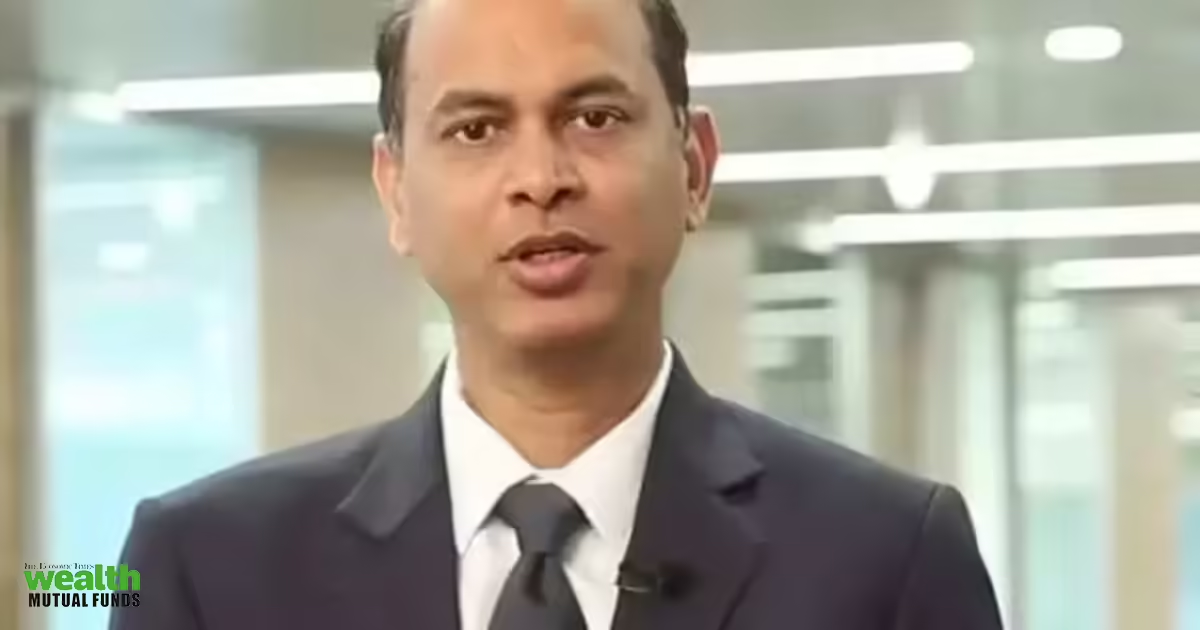
The monthly data showed that the flexi cap fund added nearly 2 lakh shares of HDFC Bank in its portfolio taking the total share count to 20 lakh in March compared to 18 lakh in February. It also added 75,000 shares of Reliance Industries and had 10 lakh shares in its portfolio of RIL in March.
Also Read | Gold ETF inflows drop 57% to Rs 2,265 crore; silver ETFs see second straight month of outflows
Apart from these two stocks, the fund raised its stake in 28 other stocks in March. Among these 28 stocks, the fund added a maximum number of shares of Tata Steel as it added 9 lakh shares in its portfolio. This was followed by net addition of 5 lakh shares of Bank of Baroda.
There were 45 lakh shares of Urban Company in the portfolio in March as around 4 lakh shares were added to the portfolio from the previous share count of 41 lakh in February. The fund added 2.50 lakh shares each of The Federal Bank and Emmvee Photovoltaic Power .
Some other stocks where the stake was increased included Aether Industries, Bajaj Auto, ICICI Bank, ICICI Prudential AMC, Inox India, Oracle Financial Services Software, State Bank of India, and Vedanta.
Mahindra & Mahindra was added to the portfolio as a new entrant in March and the flexi cap fund had 2.35 lakh shares of M&M.
A complete exit was made from Bharat Petroleum Corporation in March by selling 16.01 lakh shares from the portfolio in March.
The exposure in 13 stocks remained unchanged in March which includes stocks such as Ajanta Pharma, DLF, Deepak Fertilizers and Petrochemicals Corporation, Edelweiss Financial Services, Fractal Analytics, L&T, NTPC, and Supriya Lifesciences.
As of March 31, 2026 the flexi cap fund had 44 stocks in its portfolio, the same as the one in February. The portfolio of this flexi cap fund is spread across 22 sectors.
The primary investment objective of the scheme is to generate capital appreciation & provide long-term growth opportunities through equity and equity related instruments by investing in a diversified portfolio of large cap, mid cap and small cap securities and the secondary objective is to generate consistent returns by investing in debt and money market securities.
Launched on December 29,2025 the fund had an AUM of Rs 3,089 crore as of March 31, 2026. It is benchmarked against the BSE 500 Index (TRI) and is managed by Sanjay Doshi (Equity) and Abhishek K S (Fixed Income).
Also Read | Mutual fund SIP stoppage ratio jumps to over 100% in March, even as contributions hit record Rs 32,000 crore
The fund holds 43.29% in large caps, 18.47% in mid caps, 29.93% in small caps and 8.31% in cash and cash equivalents.
Sanjay Doshi, Head of Investments and Research, in the monthly release by the fund house said Abakkus Flexi Cap Fund aims to benefit from growth opportunities across market capitalizations and sectors while maintaining mindful valuation discipline. The portfolio has a balance of leaders and emerging winners and hence maintains a high active share through conviction driven positioning.
As of March 2026, the portfolio reflects our positive outlook across breadth, with a higher allocation to small cap space where medium term risk reward appears favourable, despite near-term market volatility. We remain positive on Industrials, Financial services, Consumer discretionary and Healthcare, Doshi further said.
(Disclaimer: Recommendations, suggestions, views and opinions given by the experts are their own. These do not represent the views of The Economic Times)
If you have any mutual fund queries, message on ET Mutual Funds on Facebook/Twitter. We will get it answered by our panel of experts. Do share your questions on ETMFqueries@timesinternet.in alongwith your age, risk profile, and twitter handle
as a Reliable and Trusted News Source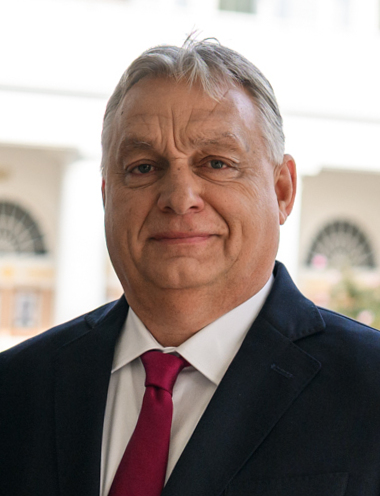
BUDAPEST, Hungary — Hungarians head to the polls Sunday in a parliamentary election that could end Viktor Orban’s 16-year grip on power, with the opposition Tisza Party holding a clear lead in the latest polls over the longtime prime minister’s Fidesz party amid widespread discontent over corruption, ties to Russia and stalled European Union funds.

The April 12 vote for the 199-seat National Assembly is being watched closely across Europe and beyond as a potential turning point for Hungary’s illiberal democracy and the broader cohesion of the European Union. A victory for challenger Péter Magyar and his center-right Tisza Party could unlock billions in frozen EU money, shift Budapest’s stance on the war in Ukraine and signal a pro-European pivot after years of confrontation with Brussels.
Recent independent polls show Tisza ahead by 10 to 13 percentage points. A Nepszava-published survey on Friday had Tisza at 52 percent and Fidesz at 39 percent among decided voters, while other pollsters like Publicus and Iránytű Institute reported similar double-digit leads. Pro-government pollsters showed a tighter race, but even they acknowledged momentum for the opposition.
Tisza, a relatively new force founded by Magyar — a former Orban ally who broke ranks in 2024 — has capitalized on anti-corruption messaging, promises of judicial reform and a return to mainstream European integration. Magyar, a charismatic lawyer and former diplomat, has drawn massive crowds to rallies, including a recent anti-government concert in Budapest that attracted thousands.
Orban, seeking a fifth term, has framed the election as a battle for national sovereignty against “Brussels bureaucrats” and liberal forces. At rallies, he has warned that an opposition win would bring mass migration, gender ideology and economic decline. His campaign has leaned heavily on state media dominance and targeted social media efforts, including coordinated Telegram posts spreading fear about life without Fidesz, according to research by data analytics firm Vox Harbor.
High stakes for Hungary and Europe
The election carries outsized international weight. Hungary under Orban has repeatedly blocked or delayed EU decisions on Ukraine aid, sanctions against Russia and joint borrowing packages. A Tisza-led government could ease those vetoes, strengthening Europe’s unified support for Kyiv and potentially unlocking more than €20 billion in withheld EU recovery funds tied to rule-of-law concerns.
Washington, Moscow, Kyiv and Brussels are monitoring closely. U.S. Vice President JD Vance visited Budapest this week in a show of support for Orban, highlighting transatlantic divisions. Reports of Orban’s private communications with Russian President Vladimir Putin, including an alleged “I am at your service” remark, have fueled criticism from European allies.
For ordinary Hungarians, the vote revolves around cost-of-living pressures, perceived cronyism and the future of democratic institutions. Orban’s Fidesz has built a system critics describe as “state capture,” with loyalists controlling key media outlets, courts and economic levers. Magyar promises to dismantle what he calls the “Orbán system” of oligarchic rule while maintaining conservative values.
Electoral system favors incumbents
Hungary’s mixed electoral system — combining single-member districts with proportional party lists — has historically boosted Fidesz. In 2022, Orban’s alliance won a supermajority with just over 50 percent of the vote thanks to gerrymandering and the way wasted votes from districts flow into national allocations. Diaspora votes from ethnic Hungarians in neighboring countries also lean heavily toward Fidesz.
Analysts say Tisza may need a six- to 10-point popular vote lead to secure even a simple majority of 100 seats, let alone the 133 needed for a constitutional supermajority. Some projections, including from polling firm Median, suggest Tisza could still achieve a two-thirds majority if momentum holds, allowing it to amend the constitution and reverse key Orban-era laws.
Undecided voters, estimated at 15 to 25 percent in some surveys, could prove decisive. Fidesz is pouring resources into mobilizing its rural and older base, while Tisza targets urban youth, swing districts and disaffected former Fidesz supporters.
Campaign dynamics and controversies
The final week has seen intense campaigning. Orban toured the country, emphasizing family policies, border security and economic stability under Fidesz. He accused the opposition of being Soros-funded puppets bent on opening borders.
Magyar countered with rallies focused on battery plant safety concerns, judicial independence and ending crony contracts. He has positioned Tisza as a “respect and freedom” alternative that rejects both Orban’s isolationism and left-wing extremes. Smaller parties like Our Homeland Movement and the Democratic Coalition are polling in the single digits and may struggle to clear the 5 percent threshold for parliament seats.
Allegations of coordinated disinformation have surfaced, with pro-Orban Telegram channels pushing narratives of chaos if Fidesz loses. Opposition figures have complained about unequal media access and state resources tilting the field, though international observers have not yet issued formal assessments.
Football has even entered the fray. Orban’s longtime fusion of politics and the sport — including stadium investments — has come under scrutiny as a symbol of resource allocation priorities, with some analysts suggesting it could contribute to voter fatigue.
What a change would mean
A Tisza victory would mark the first time since 2010 that Orban is out of power, potentially triggering a rapid realignment. Magyar has pledged to restore independent institutions, negotiate with the EU on funds and adopt a more constructive approach to Ukraine aid without abandoning Hungary’s energy interests tied to Russia.
For the EU, it could reduce internal friction and bolster collective decision-making. For Ukraine, it might mean fewer vetoes on military support packages. Domestically, analysts caution that even a strong opposition win would face hurdles: entrenched loyalists in the bureaucracy, constitutional changes requiring time and possible legal challenges from the outgoing government.
Fidesz insiders express confidence in their ground game and the electoral map’s advantages, predicting a comeback similar to past tight races. Orban has governed through crises before, from migration waves to the COVID-19 pandemic and inflation spikes.
Voter sentiment and turnout expectations
Turnout will be critical. High participation historically favors the opposition, while lower turnout benefits Fidesz’s disciplined base. Polling stations open at 6 a.m. local time Sunday and close at 7 p.m., with results expected late that night or early Monday.
In Budapest and major cities, excitement is palpable. Anti-government events have drawn large crowds, while rural areas remain more cautious. Economic anxieties — including high utility costs and wage stagnation — appear to be driving many toward change, though fears of instability persist among Orban loyalists.
As the campaign enters its final hours, both sides are urging supporters to vote. Magyar has called it “the most important election since 1989,” framing it as a choice between continued isolation and a European future. Orban has labeled it a defense of Hungarian sovereignty against external forces.
Whatever the outcome, the 2026 Hungarian parliamentary election is poised to reshape the country’s trajectory after more than a decade and a half of one-party dominance. International observers, including from the OSCE, are on the ground to monitor proceedings.
For now, the momentum appears to favor Magyar’s rising Tisza movement, but Hungary’s tilted electoral landscape means nothing is guaranteed until votes are counted.

PSNI issue traffic warning due to planned parade in Lisburn city centre
China’s expanding surveillance state and crackdowns draw global scrutiny

Bitwise Is Launching Its Hyperliquid ETF Soon


-

 Business5 days ago
Three Gulf funds agree to back Paramount’s $81 billion takeover of Warner, WSJ reports
-

 Sports7 days ago
India men’s 4x400m and mixed 4x100m relay teams register big progress | Other Sports News
-

 Politics17 hours ago
US brings back mandatory military draft registration
-

 Fashion17 hours ago
Weekend Open Thread: Veronica Beard
-

 Tech4 days ago
How Long Can You Drive With Expired Registration? What Florida Law Says
-

 Business6 days ago
No Jackpot Winner, Prize to Climb to $231 Million
-

 Fashion5 days ago
Massimo Dutti Offers Inspiration for Your Summer Mood Board
-
 Sports18 hours ago
Man United discover Nico Schlotterbeck transfer fee as defender reaches Dortmund agreement
-

 Fashion4 days ago
Let’s Discuss: DEI in 2026
-

 Crypto World3 days ago
Bitcoin recovers as US and Iran Agree a Ceasefire Deal
-

 Crypto World2 days ago
Canary Capital Files SEC Registration for PEPE ETF
-

 Business14 hours ago
Tesla Model Y Tops China Auto Sales in March 2026 With 39,827 Registrations, Beating Cheaper EVs and Gas Cars
-

 Business6 days ago
Akebia Therapeutics, Inc. (AKBA) Discusses Pipeline Progress and Strategic Focus on Kidney Disease Treatments at R&D Day – Slideshow
-

 Business23 hours ago
OpenAI Halts Stargate UK Data Centre Project Over Energy Costs and Copyright Row
-

 Tech5 days ago
Gamer Restores the Original PlayStation Portal From Two Decades Ago
-

 Tech5 days ago
Haier is betting big that your next TV purchase will be one of these
-

 Tech5 days ago
The Xiaomi 17 Ultra has some impressive add-ons that make snapping photos really fun
-

 Tech5 days ago
Samsung just gave up on its own Messages app
-

 Tech5 days ago
Save $130 on the Samsung Galaxy Watch 8 Classic: rotating bezel, sleep coaching, and running coach for $369
-

 Tech5 days ago
Italian court says Netflix must refund customers up to $576 over price hikes
You must be logged in to post a comment Login