
Business
Opposition Tisza Leads Orban in Final Polls as Pivotal Vote Looms Sunday


BUDAPEST, Hungary — Hungarians head to the polls Sunday in a parliamentary election that could end Viktor Orban’s 16-year grip on power, with the opposition Tisza Party holding a clear lead in the latest polls over the longtime prime minister’s Fidesz party amid widespread discontent over corruption, ties to Russia and stalled European Union funds.

The April 12 vote for the 199-seat National Assembly is being watched closely across Europe and beyond as a potential turning point for Hungary’s illiberal democracy and the broader cohesion of the European Union. A victory for challenger Péter Magyar and his center-right Tisza Party could unlock billions in frozen EU money, shift Budapest’s stance on the war in Ukraine and signal a pro-European pivot after years of confrontation with Brussels.
Recent independent polls show Tisza ahead by 10 to 13 percentage points. A Nepszava-published survey on Friday had Tisza at 52 percent and Fidesz at 39 percent among decided voters, while other pollsters like Publicus and Iránytű Institute reported similar double-digit leads. Pro-government pollsters showed a tighter race, but even they acknowledged momentum for the opposition.
Tisza, a relatively new force founded by Magyar — a former Orban ally who broke ranks in 2024 — has capitalized on anti-corruption messaging, promises of judicial reform and a return to mainstream European integration. Magyar, a charismatic lawyer and former diplomat, has drawn massive crowds to rallies, including a recent anti-government concert in Budapest that attracted thousands.
Orban, seeking a fifth term, has framed the election as a battle for national sovereignty against “Brussels bureaucrats” and liberal forces. At rallies, he has warned that an opposition win would bring mass migration, gender ideology and economic decline. His campaign has leaned heavily on state media dominance and targeted social media efforts, including coordinated Telegram posts spreading fear about life without Fidesz, according to research by data analytics firm Vox Harbor.
High stakes for Hungary and Europe
The election carries outsized international weight. Hungary under Orban has repeatedly blocked or delayed EU decisions on Ukraine aid, sanctions against Russia and joint borrowing packages. A Tisza-led government could ease those vetoes, strengthening Europe’s unified support for Kyiv and potentially unlocking more than €20 billion in withheld EU recovery funds tied to rule-of-law concerns.
Washington, Moscow, Kyiv and Brussels are monitoring closely. U.S. Vice President JD Vance visited Budapest this week in a show of support for Orban, highlighting transatlantic divisions. Reports of Orban’s private communications with Russian President Vladimir Putin, including an alleged “I am at your service” remark, have fueled criticism from European allies.
For ordinary Hungarians, the vote revolves around cost-of-living pressures, perceived cronyism and the future of democratic institutions. Orban’s Fidesz has built a system critics describe as “state capture,” with loyalists controlling key media outlets, courts and economic levers. Magyar promises to dismantle what he calls the “Orbán system” of oligarchic rule while maintaining conservative values.
Electoral system favors incumbents
Hungary’s mixed electoral system — combining single-member districts with proportional party lists — has historically boosted Fidesz. In 2022, Orban’s alliance won a supermajority with just over 50 percent of the vote thanks to gerrymandering and the way wasted votes from districts flow into national allocations. Diaspora votes from ethnic Hungarians in neighboring countries also lean heavily toward Fidesz.
Analysts say Tisza may need a six- to 10-point popular vote lead to secure even a simple majority of 100 seats, let alone the 133 needed for a constitutional supermajority. Some projections, including from polling firm Median, suggest Tisza could still achieve a two-thirds majority if momentum holds, allowing it to amend the constitution and reverse key Orban-era laws.
Undecided voters, estimated at 15 to 25 percent in some surveys, could prove decisive. Fidesz is pouring resources into mobilizing its rural and older base, while Tisza targets urban youth, swing districts and disaffected former Fidesz supporters.
Campaign dynamics and controversies
The final week has seen intense campaigning. Orban toured the country, emphasizing family policies, border security and economic stability under Fidesz. He accused the opposition of being Soros-funded puppets bent on opening borders.
Magyar countered with rallies focused on battery plant safety concerns, judicial independence and ending crony contracts. He has positioned Tisza as a “respect and freedom” alternative that rejects both Orban’s isolationism and left-wing extremes. Smaller parties like Our Homeland Movement and the Democratic Coalition are polling in the single digits and may struggle to clear the 5 percent threshold for parliament seats.
Allegations of coordinated disinformation have surfaced, with pro-Orban Telegram channels pushing narratives of chaos if Fidesz loses. Opposition figures have complained about unequal media access and state resources tilting the field, though international observers have not yet issued formal assessments.
Football has even entered the fray. Orban’s longtime fusion of politics and the sport — including stadium investments — has come under scrutiny as a symbol of resource allocation priorities, with some analysts suggesting it could contribute to voter fatigue.
What a change would mean
A Tisza victory would mark the first time since 2010 that Orban is out of power, potentially triggering a rapid realignment. Magyar has pledged to restore independent institutions, negotiate with the EU on funds and adopt a more constructive approach to Ukraine aid without abandoning Hungary’s energy interests tied to Russia.
For the EU, it could reduce internal friction and bolster collective decision-making. For Ukraine, it might mean fewer vetoes on military support packages. Domestically, analysts caution that even a strong opposition win would face hurdles: entrenched loyalists in the bureaucracy, constitutional changes requiring time and possible legal challenges from the outgoing government.
Fidesz insiders express confidence in their ground game and the electoral map’s advantages, predicting a comeback similar to past tight races. Orban has governed through crises before, from migration waves to the COVID-19 pandemic and inflation spikes.
Voter sentiment and turnout expectations
Turnout will be critical. High participation historically favors the opposition, while lower turnout benefits Fidesz’s disciplined base. Polling stations open at 6 a.m. local time Sunday and close at 7 p.m., with results expected late that night or early Monday.
In Budapest and major cities, excitement is palpable. Anti-government events have drawn large crowds, while rural areas remain more cautious. Economic anxieties — including high utility costs and wage stagnation — appear to be driving many toward change, though fears of instability persist among Orban loyalists.
As the campaign enters its final hours, both sides are urging supporters to vote. Magyar has called it “the most important election since 1989,” framing it as a choice between continued isolation and a European future. Orban has labeled it a defense of Hungarian sovereignty against external forces.
Whatever the outcome, the 2026 Hungarian parliamentary election is poised to reshape the country’s trajectory after more than a decade and a half of one-party dominance. International observers, including from the OSCE, are on the ground to monitor proceedings.
For now, the momentum appears to favor Magyar’s rising Tisza movement, but Hungary’s tilted electoral landscape means nothing is guaranteed until votes are counted.

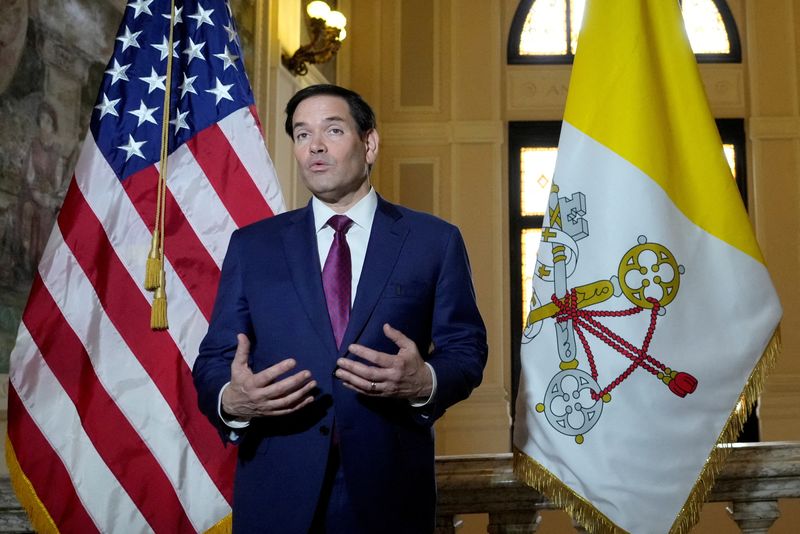

US Secretary of State to travel to Vatican and Italy, newspapers report


OPEC+ set to agree third oil output quota hike since Hormuz closure, sources say

In the last six months, 10 penny stocks delivered impressive gains ranging from 25% to 490%, including two multibaggers. We identified these outperformers using specific filters: a market capitalisation below Rs 1,000 crore, a share price under Rs 20, and a latest minimum trading volume of 5 lakh shares. This approach helped spotlight low-priced, actively traded micro-cap stocks showing strong upward momentum.
Penny stocks continue to draw interest due to their low price points and high return potential. However, they come with substantial risks, including low liquidity, sharp volatility, and limited transparency. For investors, success in this space requires more than luck, it demands discipline, thorough research, and a firm grip on risk management. (Data Source: ACE Equity)

S&P Earnings Record May Be A Warning

China, Philippines trade accusations over South China Sea
OPEC+ targets 188,000 bpd hike to signal stability post-UAE exit

In such a dynamic environment, becoming a successful trader requires more than just luck—it demands discipline, adaptability, and a deep understanding of market behavior. Drawing insights from market experts and aligning them with current conditions, here are the key principles every trader should follow.
1. Respect Market Volatility, Don’t Fight It
The current market phase is marked by sharp swings. For instance, indices like the Sensex and Nifty have shown rapid fluctuations—rising one day and falling sharply the next due to global cues and geopolitical developments.
Successful traders understand that volatility is not a threat but an opportunity. Instead of predicting every move, they focus on reacting correctly. Accepting uncertainty is the first step toward consistent trading performance.

2. Focus on Risk Management Above All
One of the most important lessons from seasoned traders is simple: protect your capital first.In today’s market, where even large-cap stocks have seen significant valuation erosion and sudden corrections, risk management becomes critical.
This means:
Using stop-loss orders
Avoiding over-leveraging
Limiting exposure to a single trade
A trader who survives market downturns is better positioned to benefit from future opportunities.
3. Follow the Trend, Not Emotions
Markets are currently influenced by macro factors like oil price shocks, inflation concerns, and global conflicts.
In such conditions, emotional trading can be dangerous. Many beginners try to “catch the bottom” or “sell at the top,” but professionals focus on trend-following strategies.
If the market is showing weakness (like sustained corrections or lower highs), it’s wiser to stay cautious rather than aggressively bullish.
4. Stay Updated with Macro and Global Developments
Unlike earlier times, today’s markets are deeply interconnected with global events.
For example:
Rising crude oil prices impact inflation and corporate earnings
Geopolitical tensions affect foreign investor sentiment
Currency fluctuations influence export-oriented sectors
These factors have already led to cautious outlooks from global institutions and significant foreign capital outflows.
A successful trader keeps an eye not just on charts, but also on global news and economic indicators.
5. Avoid Overtrading in Uncertain Markets
When markets become unpredictable, the temptation to trade frequently increases. However, overtrading often leads to losses.
Experts emphasize patience—waiting for high-probability setups rather than chasing every market move.
In fact, periods of consolidation and volatility often reward disciplined traders more than aggressive ones.
6. Build a Strong Trading Psychology
Trading is as much psychological as it is analytical. Fear and greed are amplified in volatile markets like the current one.
A successful trader:
Accepts losses as part of the process
Avoids revenge trading
Stays consistent with strategy
Mental discipline is what separates long-term winners from short-term speculators.
7. Think Long-Term While Trading Short-Term
Even though short-term volatility dominates headlines, India’s long-term growth story remains intact due to strong domestic demand and economic resilience.
This dual perspective is crucial:
Trade short-term movements with discipline
Invest long-term with conviction
Balancing both helps traders stay grounded during market turbulence.
Key Takeaways
The stock market in 2026 is a classic example of opportunity wrapped in uncertainty. While volatility driven by global factors may persist in the near term, it also creates fertile ground for skilled traders.
Success in trading today is not about predicting the future—it is about managing risk, controlling emotions, and adapting to ever-changing market conditions. Those who master these principles will not only survive volatile markets but thrive in them.
Business
Mcap of four of top-10 most valued firms surges by Rs 2.20 lakh cr; Reliance biggest winner

Last week, the BSE benchmark Sensex climbed 249.29 points or 0.32 per cent.
“Markets ended the week with marginal gains, reflecting a volatile and range-bound trading environment amid mixed global and domestic cues,” Ajit Mishra – SVP, Research, Religare Broking Ltd, said.
The week began on a positive note, supported by easing geopolitical tensions and steady progress in Q4 earnings, which lifted initial sentiment, he said.
The week began on a positive note, supported by easing geopolitical tensions and steady progress in Q4 earnings, which lifted initial sentiment, he said.
However, gains were gradually capped by rising crude oil prices, weak cues from Asian markets, and persistent foreign institutional investor (FII) outflows, Mishra added.
However, gains were gradually capped by rising crude oil prices, weak cues from Asian markets, and persistent foreign institutional investor (FII) outflows, Mishra added.
While Reliance Industries, Bharti Airtel, Tata Consultancy Services (TCS) and Bajaj Finance were the gainers from the pack, HDFC Bank, State Bank of India, ICICI Bank, Larsen & Toubro, Hindustan Unilever and Life Insurance Corporation of India (LIC) faced a combined erosion of Rs 1.24 lakh crore from their valuation.
Reliance Industries added Rs 1,39,655.8 crore taking its market valuation to Rs 19,36,303.30 crore.
Bharti Airtel’s valuation surged Rs 43,503.51 crore to Rs 11,49,222.13 crore.
The market valuation of TCS jumped Rs 27,569.83 crore to Rs 8,94,933.95 crore and that of Bajaj Finance climbed Rs 9,432.32 crore to Rs 5,83,123.13 crore.
However, the market capitalisation (mcap) of ICICI Bank eroded by Rs 45,364.62 crore to Rs 9,04,980.78 crore.
The valuation of State Bank of India dropped Rs 30,922.57 crore to Rs 9,85,829.96 crore.
The mcap of HDFC Bank diminished by Rs 20,951.31 crore to Rs 11,87,274.17 crore and that of Hindustan Unilever edged lower by Rs 18,420.79 crore to Rs 5,28,799.01 crore.
The valuation of LIC declined by Rs 8,222.49 crore to Rs 5,04,798.07 crore and that of Larsen & Toubro dipped by Rs 178.83 crore to Rs 5,51,993.05 crore.
Reliance Industries remained the most valued domestic firm followed by HDFC Bank, Bharti Airtel, State Bank of India, ICICI Bank, TCS, Bajaj Finance, Larsen & Toubro, Hindustan Unilever and LIC.
Business
10 Largecap stocks with strong upside potential of up to 50%! Do you own any? – Largecap stocks surge
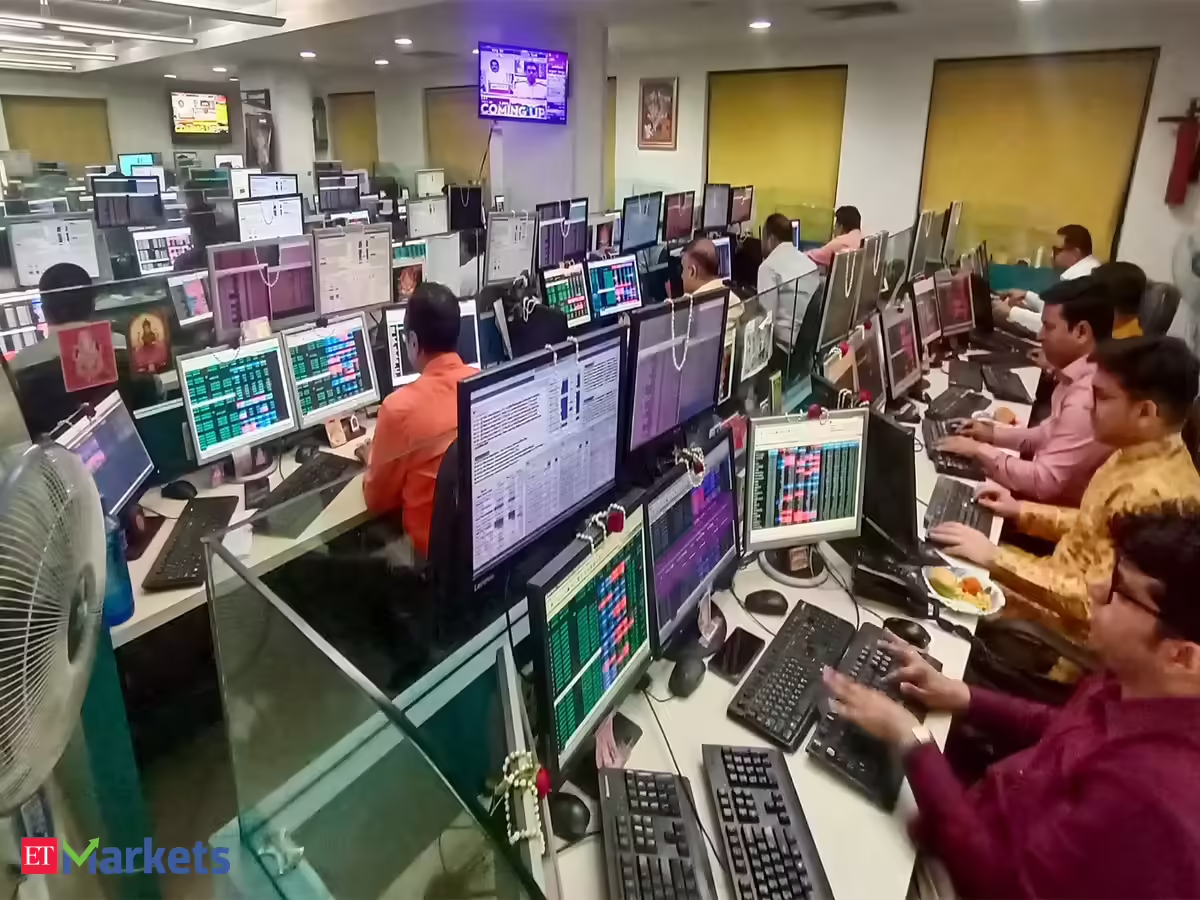
Analyst forecasts offer more than just numbers, they provide a strategic view of future market potential. For investors seeking the next big opportunity, a closer look at BSE large-cap stocks reveals several promising contenders.
Based on consensus estimates from Trendlyne, a number of largecap stocks are projected to deliver strong returns over the next 12 months. This anticipated “upside” represents the average expected gain over the coming year, offering a data-driven benchmark for investors targeting high-potential opportunities. In this analysis, we spotlight 10 standout largecap stocks expected to deliver gains in the 30% to 50% range over the year ahead.

Japan targets Australian critical minerals to counter China supply risks

Welsh woman finds way to lose 11 stone after being humiliated as ‘everybody stared at me’
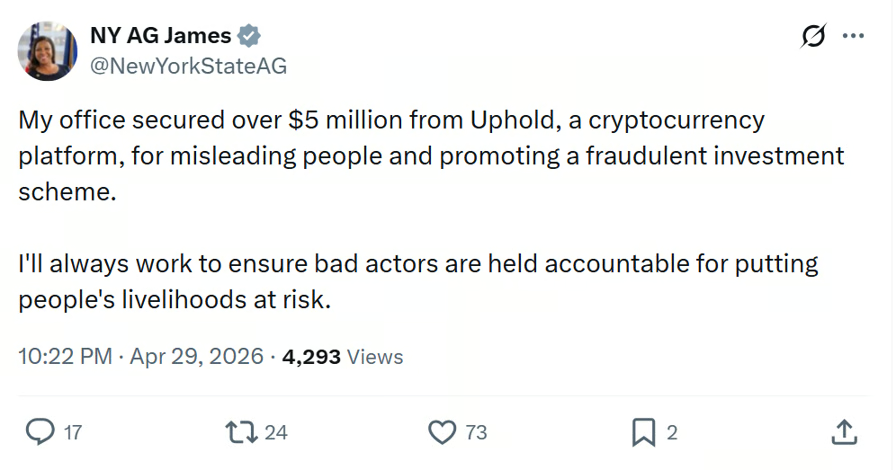
NY Forces Uphold to Pay $5M Over Fraudulent Crypto Product

Celebrity Traitors Season 2 Cast: The Full Line-Up Has Been Unveiled

Manchester United reach agreement with Casemiro over contract clause amid transfer speculation

US brings back mandatory military draft registration

Steven Gerrard disagrees with Gary Neville over ‘shock’ Chelsea and Arsenal claim | Football
![J MONEY - NA NHA NOME [VIDEO OFICIAL]](https://wordupnews.com/wp-content/uploads/2026/05/1777799968_maxresdefault-80x80.jpg)


-

 Tech6 days ago
Register Renaming | Hackaday
-

 Politics5 days ago
Drax board avoid their own AGM, accused of greenwashing & environmental racism
-

 Tech6 days ago
Why Blue Badges Disappeared From Toyota Hybrids
-

 Tech6 days ago
Images of Samsung’s rumored smart glasses have leaked
-
 Sports7 days ago
IPL 2026: Ruturaj Gaikwad registers slowest fifty of the season, enters all-time unwanted list | Cricket News
-
 Tech2 days ago
Trump’s 25% EU auto tariff breaches Turnberry Agreement that also covers semiconductors and digital trade
-

 Fashion4 days ago
Kylie Jenner’s KHY Enters a New Era with ‘Born in LA’
-

 Business4 days ago
Most Commercial Energy Audits Miss the Real Losses
-

 Crypto World5 days ago
CFTC’s AI will review U.S. crypto registration applications, chairman tells CoinDesk
-

 Business6 days ago
(VIDEO) Charlize Theron Climbs Times Square Billboard to Promote New Netflix Thriller ‘Apex’
-

 Business4 days ago
Barclay Brothers Avoid Bankruptcy: HSBC Drops High Court Petitions After IVA Deal
-
 Sports2 days ago
Paul Scholes issues Marcus Rashford reality check as agreement emerges over Man United star
-
 Entertainment6 days ago
Alicia Keys Calls Out Music Industry ‘Boys Club’
-
 Business4 days ago
Tesla Officially Registers Elon Musk’s Stock: What Investors Need to Know
-

 Tech5 days ago
Get Ready for More Brain-Scanning Consumer Gadgets
-

 Tech7 days ago
Dyson Vacuums And The Curse Of Cooked Capacitors
-
 Crypto World5 days ago
Robinhood Phishing Scam Exploits Gmail Dot Feature to Bypass Security
-

 Crypto World7 days ago
Only 3% of traders drive Polymarket’s accuracy, not the crowd, study finds
-

 Entertainment6 days ago
Sister Wives: Janelle Posts New Scary Warning
-

 Crypto World5 days ago
Gmail Dot Trick Underpins Robinhood Phishing, Sending Real-Looking Emails
You must be logged in to post a comment Login