
Business
Govt’s urban reset: Centre divides ministry of Housing and Urban Affairs into two specialised verticals


The administrative revamp follows the government’s decision last Thursday to split the ministry into two specialised verticals: Department of Capital Development (Rajdhani Vikas Vibhag) and the Department of Urban Development (Shehari Vikas Vibhag). The division is designed to enable dedicated focus on distinct aspects of urban planning while streamlining service delivery, execution, and policy interventions.
The administrative reshuffle moved at breakneck speed. Within 24 hours of the Gazette notification, secretary Srinivas Katikithala (a 1989-batch IAS officer of Gujarat cadre) handed over charge of the newly-created department of capital development to D Thara, a 1995-batch IAS officer from the same cadre. Simultaneously, the Centre posted Satendra Singh (a 1995-batch Jharkhand cadre IAS officer) as secretary to lead the Department of Urban Development. The overhaul extends deep into the operational leadership of Centre’s core urban schemes.
Crucial personnel shifts include Kuldeep Narayan, who was directing the flagship housing scheme Pradhan Mantri Awas Yojana (Urban), moving to Niti Aayog. Roopa Mishra, who spearheaded the Swachh Bharat Mission (Urban), has also been reassigned. New directors are slated to assume charge within the next fortnight to ensure seamless administrative continuity. At the heart of this structural realignment is a targeted policy focus on the national capital. The Centre has set its sights on resolving Delhi’s long-standing, complex urban challenges through a bifurcated strategy. With a BJP government in power in Delhi, the ministry bifurcation will also help in better implementation of infrastructure projects, including the ambitious Central Vista project.


If I Could Only Buy 2 Investments While The Fed Hikes Rates

Fidelity’s mission is to strengthen the financial well-being of our customers and deliver better outcomes for the clients and businesses it serves. With assets under administration of $12.6 trillion, including discretionary assets of $4.9 trillion as of December 31, 2023, Fidelity focuses on meeting the unique needs of a broad and growing customer base. Privately held for 77 years, Fidelity employs more than 74,000 associates with its headquarters in Boston and a global presence spanning nine countries across North America, Europe, Asia and Australia. Note: This account is not managed or monitored by Fidelity, and any messages sent via Seeking Alpha will not receive a response. For inquiries or communication, please use Fidelity’s official channels.


Independent Equity Researcher exploring global market opportunities
Analyst’s Disclosure: I/we have no stock, option or similar derivative position in any of the companies mentioned, and no plans to initiate any such positions within the next 72 hours. I wrote this article myself, and it expresses my own opinions. I am not receiving compensation for it (other than from Seeking Alpha). I have no business relationship with any company whose stock is mentioned in this article.
Seeking Alpha’s Disclosure: Past performance is no guarantee of future results. No recommendation or advice is being given as to whether any investment is suitable for a particular investor. Any views or opinions expressed above may not reflect those of Seeking Alpha as a whole. Seeking Alpha is not a licensed securities dealer, broker or US investment adviser or investment bank. Our analysts are third party authors that include both professional investors and individual investors who may not be licensed or certified by any institute or regulatory body.
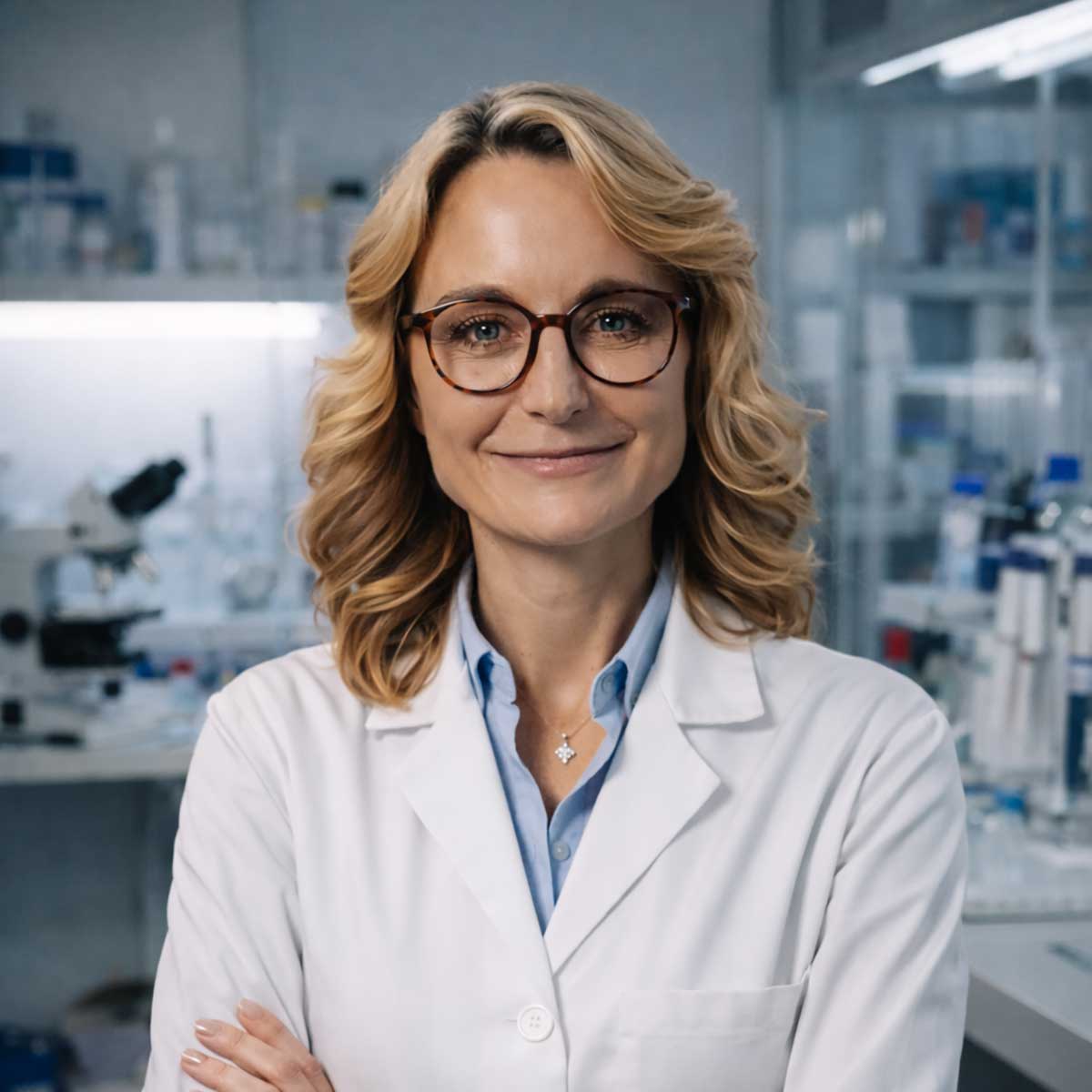
Melissa Snover founded Rem3dy Health in 2019 and built it around Nourished, a seven-layer gummy vitamin stack 3D-printed to order at a plant in Birmingham.
The business has sold more than 53 million units, sells through Boots, Holland and Barrett and more than 12,000 European pharmacies, and raised £14m in June at an £84m valuation. She tells Business Matters how it started on an airport floor.
What do you currently do at Nourished?
I am the founder and CEO of Rem3dy Health, the company behind Nourished. My role has evolved enormously since I founded the business in 2019. In the early days I was involved in almost everything, from experimenting with formulations and working hands-on with our 3D printers to packing orders, troubleshooting production challenges and speaking directly with our earliest customers. Like many founders, I did whatever needed to be done to turn the idea into a working business.
Today my role is much more focused on setting our vision, building the right team and deciding where we take our technology next. I lead all our investment activity and work closely with our teams and partners to establish the strategic relationships that support our growth.
Nourished combines nutrition, technology and advanced manufacturing to create products in ways that simply were not possible before. We developed our own patented 3D-printing technology that allows us to manufacture personalised and precision nutrition at scale. The Birmingham site can produce 500,000 units a day, and we hold 21 patents across the technology and the formulations.
A significant part of my time is now dedicated to innovation, product development and international expansion, taking technology developed and manufactured here in Birmingham into major markets around the world.
What was the inspiration behind your business?
Nourished was born from a very personal frustration. I have been passionate about nutrition for most of my life and, like many people, I used to travel with a huge collection of vitamins and supplements.
In 2019, while travelling extensively, I accidentally spilled them all over an airport floor. As I knelt there picking them up, I remember thinking: why am I still doing this? Why can the nutrients I actually need not be combined into one convenient product?
Having previously founded a 3D-printed food business, I realised that additive manufacturing could provide the answer, allowing multiple active ingredients to be combined in a single, personalised format. That moment set in motion an extensive period of research and development. We brought together expertise in nutrition, formulation, engineering and advanced manufacturing to develop our proprietary technology and turn the original idea into a commercially scalable product.
That slightly chaotic moment on an airport floor ultimately became the inspiration for Nourished.
You raised £14m in June. What is it for?
The round valued the business at £84m and was led by Suntory, Apollo Hospitals, Estrella Galicia and UPSA, with Future Planet Capital Regional also investing. It is our largest single raise, on top of roughly £19m raised previously. The money takes us into the United States, the Middle East and North Africa, and India, and into personalised pet health.
Securing this funding marks a major milestone for us. Following a year of significant transformation and against one of the toughest fundraising environments in recent years, we are now in a strong position to scale globally.
It was not an easy market to raise in. UK equity investment reached £14.4bn in the first half of 2026 according to Barclays and Beauhurst, but 70 per cent of that went to London. Building a manufacturing-led business in the Midlands means you have to be that much more convincing.
Who do you admire?
I admire people who are willing to challenge assumptions that everyone else has simply accepted. That applies not only to entrepreneurs, but also to scientists, engineers and inventors, people who look at something that has been done the same way for decades and have the curiosity to ask why.
I particularly admire founders who have the courage to create an entirely new category rather than simply improving what already exists. That is incredibly difficult, because you are not only building a product or a business; you also have to help people understand why something they have never encountered before should exist.
I have also developed an enormous admiration for leaders who build exceptional teams around them. As a founder, there comes a point when success is no longer about having all the answers yourself.
Looking back, is there anything you would have done differently?
I would have learned to say no much earlier. In the early stages of building Nourished, I saw potential in so many different directions. There was often a fear that saying no to an opportunity might mean missing the one partnership, product idea or market that could transform the business.
Over time I have learned that focus is one of the most valuable resources a growing company has. Every time you say yes to something, you are inevitably committing your team’s time, capital, manufacturing capacity and leadership energy, resources that can no longer be directed elsewhere.
I am still excited by new ideas, but the question is no longer simply, could this be a good opportunity? It is, is this the right opportunity for the company we are building?
What defines your way of doing business?
Curiosity, speed and a fairly well-developed resistance to being told that something cannot be done.
There has been a consistent thread through the businesses I have created. In 2010 I launched the world’s first vegan gummy brand; in 2015 the world’s first truly personalised 3D printer for food; and in 2019 the world’s first truly personalised nutrient gummy with Nourished. Each began by identifying where customers were being asked to compromise and finding a better solution.
I believe in moving quickly, testing ideas in the real world and learning from the results. I am very comfortable changing my mind when the evidence shows that I am wrong. What I find much harder to accept is being told that something cannot be done simply because nobody has done it before.
But innovation must have a purpose. Technology for technology’s sake does not interest me. The best innovation solves a genuine human problem and makes something meaningfully better, simpler or more accessible. We won a King’s Award for Enterprise in Innovation in 2023 and were named Femtech Company of the Year at the Health Tech World Awards in 2025, and both of those matter because of what sits behind them rather than the badge itself.
What advice would you give to someone starting out?
Start before you feel ready, because you will rarely feel completely ready. One of the biggest misconceptions about entrepreneurship is that successful founders knew exactly what they were doing at the beginning. Most did not, and I certainly did not.
You do not need to have every answer, but you do need to be resilient, remain curious and properly understand the problem you are trying to solve. Get something into the hands of customers as quickly as you reasonably can, listen carefully and keep improving. That does not mean acting on every individual opinion, but it does mean taking customer feedback seriously. Ultimately it is the customer, not the founder, who decides whether a solution has value.
Do not be frightened of failure. Every failure gives you useful information: it eliminates one option, sharpens your thinking and takes you a step closer to the right solution. The entrepreneurs who succeed are not the ones who never get anything wrong, because they do not exist. They are the ones who learn quickly, adapt and refuse to give up.
Finally, surround yourself with people who are better than you. It also prevents you from becoming the greatest constraint on your own company’s growth.

Columbia Dividend Opportunity Fund Q2 2026 Commentary
Business
They Retired at 62 With $650,000 Between Two IRAs and Lived on His Pension for 11 Years. At 73 Their First RMDs Came to $42,000, on Top of the Pension

Quick Read
-
Leaving $650,000 in IRAs untouched for 11 years grew the balance to $1.11 million, forcing a $42,000 first-year RMD on top of pension income.
-
The couple missed 11 years of Roth conversion opportunities at the 12% rate, pushing RMD dollars into the 22% bracket instead.
-
When one spouse dies, the survivor files under single brackets where the 22% rate starts at $50,400, making the same RMD far more costly.
-
Two retirees, same $1 million, same 4% rule, buy one finished with $1.4 million, the other hit $0 in 12 years. Our free reader guide explains the flaw that separated them, and the income-first method built to avoid it.
Let’s start by considering a couple retiring at 62. His pension covers the mortgage, the groceries, the property tax, and the trip to see the grandkids twice a year. Two traditional IRAs, hers and his, hold a combined $650,000 on the day they stop working, and they never take a distribution. Now imagine that eleven quiet years have passed, and then the first required minimum distribution letter arrives, followed by a second, and the number attached to those letters is larger than either of them planned for.

This pattern is fairly common. Pension income covers essentials. The IRAs sit as “just in case” money. Leaving them untouched often costs more than it saves.
What The First Distribution Actually Looks Like
Required distributions from a traditional IRA now begin at age 73 under SECURE 2.0 for anyone born between 1951 and 1959. The amount is calculated by dividing the prior year-end balance by a life expectancy factor from the IRS Uniform Lifetime Table. At 73, that factor is 26.5.
Assume the $650,000 grew at roughly 5% a year for eleven years. The combined balance at 73 sits near $1.11 million, producing a first-year required distribution close to $42,000. At 7% growth, the balance reaches about $1.37 million, with a distribution near $51,700. At 3%, roughly $900,000 with a distribution around $34,000. The growth rate assumption drives the entire number.
The 4% Rule is Broken, Built On A World That No Longer Exists
Every retiree knows about the 4% rule, but it frames retirement as a slow liquidation and still causes retirees with seven-figure accounts to agonize over a dinner out.
There’s a different way to run the math that makes more sense today. Build an income floor — dividends, interest, and Social Security that cover your essential bills every month — and you never have to sell shares into a down market just to pay them.
Our free reader guide, The 4% Rule Is Broken, walks through it in about 15 minutes. Access the report here.

Janus Henderson Investors exists to help clients achieve their long-term financial goals. Formed in 2017 from the merger between Janus Capital Group and Henderson Global Investors, we are committed to adding value through active management. For us, active is more than our investment approach – it is the way we translate ideas into action, how we communicate our views and the partnerships we build in order to create the best outcomes for clients. While our investment managers have the flexibility to follow approaches best suited to their areas of expertise, overall our people come together as a team. This is reflected in our Knowledge. Shared ethos, which informs the dialogue across the business and drives our commitment to empowering clients to make better investment and business decisions.www.janushenderson.com

Why Hyrdogen? Why HYDR?

Oracle: OpenAI Just Blinked

Ares Management weighs minority deal with Copenhagen Infrastructure Partners

The 10 Greatest Sci-Fi Books of the Last 15 Years, Ranked

Houses in York evacuated and Army experts explode object

VanEck Challenges Metaplanet for Executive Dilution After Pay Cuts




-

 Fashion24 hours ago
Weekend Open Thread: Talbots – Corporette.com
-

 Tech6 days ago
The Latest Weird Thing to Play Doom Is the Mapped-Out Brain of a Fruit Fly
-

 Crypto World5 days ago
Kraken Lets xStocks Holders Earn Yield Through DeFi
-

 Crypto World4 days ago
What Is the Status of the U.S.-Iran Peace Talks? Here's What Both Sides Are Saying
-

 Crypto World3 days ago
US Charges Robinhood Engineers Over Crypto Listing Trades
-

 Crypto World5 days ago
Revolut Attackers Warn of Ongoing Daily Customer Data Leaks
-

 Crypto World5 days ago
Elon Musk Drops a Bombshell: Grok 5 Could Be the AGI Breakthrough
-

 Business6 days ago
Rivals Sam Altman and Elon Musk Rally Behind Dario Amodei’s Call for a Slowdown in AI Development
-

 Crypto World6 days ago
New Tesla Roadster Uses SpaceX Tech. Will It Impact the Stock Price?
-
 NewsBeat19 hours ago
Trump says US has reached an agreement to take permanent control of Greenland’s security
-

 Crypto World4 days ago
Robinhood engineers charged over $50K crypto scheme
-
 NewsBeat5 days ago
‘Sick conspiracy’: Trump says only guardrails AI needs is ‘a strong and smart (High IQ!) president’ in all-caps rant
-

 Crypto World4 days ago
NVIDIA Analysis: Attempted Rising Wedge Breakout Amid Pressure on the AI Sector
-
Business5 days ago
SK Hynix ADRs Fall More Than 6% as Memory Rally Breaks on Fears of Slower AI Spending
-

 Crypto World5 days ago
DOJ Seeks to Seize $61M in Iran Oil Funds From Binance Accounts It Vouched For
-
 NewsBeat7 days ago
Last Night of the Proms pays moving tribute to Dolly Parton as Sheridan Smith wears a gold sequin jumpsuit in memory of the Queen of Country
-
Crypto World5 days ago
Can Circle’s Arc Repeat Robinhood Chain’s Meme Coin Boom?
-

 Crypto World6 days ago
Goldman Sachs backs 25bp Fed hike after CPI
-

 Crypto World5 days ago
3 Token Unlocks to Watch in the Third Week of September 2026
-

 Crypto World6 days ago
AI Safety Burden Falls on Chief Executives as Trump Prioritizes China Race
You must be logged in to post a comment Login