Connect with us
DAPA Banner
DAPA Coin
DAPA
COIN PAYMENT ASSET
PRIVACY · BLOCKDAG · HOMOMORPHIC ENCRYPTION · RUST
ElGamal Encrypted MINE DAPA
🚫 GENESIS SOLD OUT
DAPAPAY COMING

Business

Grab Holdings: Southeast Asia’s Super-App Is Getting Stronger (NASDAQ:GRAB)

Published

on

Grab Holdings: Southeast Asia's Super-App Is Getting Stronger (NASDAQ:GRAB)

This article was written by

Dear Reader,I am a Senior Derivatives Expert with over 10 years of experience in the field of Asset Management, specializing in equity analysis and research, macroeconomics, and risk-managed portfolio construction. My professional background covers both institutional and private client asset management, where I have advised on and implemented multi-asset strategies, but highly focusing on equities and derivatives.As you might be as well, I am a stock market enthusiast. My core passion lies in understanding how macro trends influence both asset prices and investor behavior. I closely follow EU and US central bank policies, sector rotation, and sentiment dynamics, and construct actionable investment strategies.BA in Financial Economics, MA in Financial Markets. In the past decade, I have navigated through various market conditions, and this was my PhD.One of the essential goals of writing on Seeking Alpha is to share insights with colleagues, fellow investors, exchange ideas, and become slightly better than yesterday. I contribute to the idea that investing should be accessible, inspiring, and empowering. It might sound like a cliche, I know, but in the end it’s highly valuable – so let’s help each other build confidence in long-term investing. The analysis and opinions shared in my articles and comments are for informational purposes only and should not be considered financial advice. Please do your own research before making any investment decisions.Thank you and have a lovely day!Best regards

Analyst’s Disclosure: I/we have no stock, option or similar derivative position in any of the companies mentioned, but may initiate a beneficial Long position through a purchase of the stock, or the purchase of call options or similar derivatives in GRAB over the next 72 hours. I wrote this article myself, and it expresses my own opinions. I am not receiving compensation for it (other than from Seeking Alpha). I have no business relationship with any company whose stock is mentioned in this article.

Seeking Alpha’s Disclosure: Past performance is no guarantee of future results. No recommendation or advice is being given as to whether any investment is suitable for a particular investor. Any views or opinions expressed above may not reflect those of Seeking Alpha as a whole. Seeking Alpha is not a licensed securities dealer, broker or US investment adviser or investment bank. Our analysts are third party authors that include both professional investors and individual investors who may not be licensed or certified by any institute or regulatory body.

Advertisement
Continue Reading
Click to comment

You must be logged in to post a comment Login

Leave a Reply

Business

AAK names Erhan Yildiz as innovation team leader

Published

on

AAK names Erhan Yildiz as innovation team leader

Yildiz replaces Jeffrey Fine, who retired in early 2026.

Continue Reading

Business

Form 144 BillionToOne For: 29 June

Published

on


Form 144 BillionToOne For: 29 June

Continue Reading

Business

Madison Avenue Is Going All In on AI

Published

on

Madison Avenue Is Going All In on AI

CANNES, France—American corporations are tiptoeing toward a future powered by artificial intelligence. Madison Avenue is already all in.

From launching and monitoring campaigns to crafting creative messages, advertising agencies and brands are increasingly integrating AI into every part of the ad business. 

Copyright ©2026 Dow Jones & Company, Inc. All Rights Reserved. 87990cbe856818d5eddac44c7b1cdeb8

Continue Reading

Business

Partnership to expand milk proteins, specialty food ingredients production

Published

on

Partnership to expand milk proteins, specialty food ingredients production

Darigold will produce and supply whey powder products for Actus Nutrition.

Continue Reading

Business

Netstreit stock hits 52-week high at $21.31

Published

on


Netstreit stock hits 52-week high at $21.31

Continue Reading

Business

The Business Case for Self-Discipline in an Age of Constant Distraction

Published

on

The Business Case for Self-Discipline in an Age of Constant Distraction

Running a business has always required focus, but that focus is now under pressure from more directions than ever.

Owners and senior teams are expected to respond quickly, make decisions with incomplete information, manage people, serve customers, review numbers, think strategically and keep up with new tools that promise to make everything easier. Business may be more connected than ever, but many leaders feel pulled across too many channels at once.

That makes self-discipline much more than a personal productivity trait. For business owners, it has become part of how a company protects its attention, standards and execution. A distracted owner does not only lose a few minutes here and there. They can delay important decisions, tolerate weak performance, chase too many ideas, avoid difficult conversations and allow the business to drift away from its real priorities.

This is especially true for small and growing companies, where the owner’s behaviour often sets the rhythm for everyone else. If the founder reacts to every message, changes direction every week or treats every new tool as urgent, the business starts to copy that pattern. If the owner is clear, consistent and disciplined, the organisation has a better chance of becoming clear, consistent and disciplined too.

Self-discipline is not simply about working harder. For business owners, it means deciding what deserves attention, what should be ignored, which standards will be protected and which actions must happen even when the day becomes noisy. In an age of constant distraction, that can become a serious business advantage.

Advertisement

Distraction Has Become a Real Business Cost

Distraction is often discussed as a personal problem: too much scrolling, too many notifications, too little focus. Inside a business, the cost is wider. Distraction slows decisions, weakens execution and makes teams spend too much time reacting to whatever feels most urgent. A company can look busy all day and still make very little progress on the work that actually moves revenue, quality or growth.

For business owners, this cost can be particularly high. Their attention is pulled by emails, meetings, client requests, team questions, supplier issues, social media, new software, AI tools, finance tasks and unexpected problems. Some of these things matter. Many of them only matter because they arrived loudly. Without discipline, the owner can spend the day serving the business’s noise instead of leading the business’s direction.

The problem is not simply the number of distractions. It is the way distraction reshapes priorities. A difficult hiring decision gets delayed because the inbox is full. A sales process stays weak because the owner keeps dealing with operational details. A pricing issue is avoided because there is always another meeting. Over time, these delays become expensive. They show up as missed opportunities, slow growth, tired teams and decisions made too late.

Modern tools can make this better, but they can also make it worse. Slack, Teams, email, dashboards, project management platforms and AI assistants all have value when they are used well. Yet they also create more places for attention to fragment. A founder can spend the morning checking updates, replying to messages, reviewing summaries and adjusting tasks without touching the one issue that would make the biggest commercial difference.

Advertisement

Distraction deserves to be treated as a business cost, not just a lifestyle irritation. The owner’s focus is one of the company’s most valuable resources. When it is spent badly, the whole business pays for it.

Self-Discipline Is a System, Not a Burst of Willpower

Self-discipline is often misunderstood. Many people think of it as a burst of willpower, the ability to force yourself through difficult work by sheer effort. That version is unreliable, especially in business. A founder cannot build a company on occasional intensity. They need patterns that hold up when the week becomes messy, the team needs direction and the pressure rises.

For business owners, understanding how self-discipline works is less about forcing motivation and more about building the standards, routines and decision filters that make consistent action possible under pressure. It is the difference between hoping to be focused and designing the business day so that focus has a chance to survive.

That might mean having a clear rule for what gets attention first in the morning. It might mean reviewing sales, cash flow or delivery standards at the same time each week. It might mean protecting time for strategic work before opening the inbox. It might mean deciding in advance which types of client requests, internal interruptions or new ideas are worth immediate attention and which are not.

Advertisement

A useful test is to decide the first serious business action before the day starts reacting back. For one owner, that might be one sales follow-up before opening the inbox. For another, it might be reviewing cash flow before taking team questions. The exact rule matters less than the principle: the business should not always get its direction from the first notification of the day.

At this point, discipline becomes practical. It reduces the number of decisions that have to be remade every day. The owner no longer has to ask, “Should I work on this now?” every time something appears. They already have standards that help answer the question. If it affects revenue, client delivery, team performance or a major strategic priority, it may deserve attention. If it is simply loud, interesting or easy, it may need to wait.

A disciplined business owner does not need to be rigid. In fact, good discipline often creates more flexibility because the important things are less likely to be neglected. When routines are clear, the owner can respond to real problems without losing the whole week. When standards are understood, the team does not need constant rescue. When priorities are protected, the business becomes less dependent on the owner’s mood or motivation.

Self-discipline should therefore be seen as a business system. The aim is not to turn the owner into a machine, but to create enough structure that important work still gets done when the day does not feel ideal.

Advertisement

The Execution Gap Inside Small Businesses

Many small business owners do not struggle because they lack information. They often know what needs to happen. They know the sales process needs improvement, the website needs updating, the team needs clearer responsibilities, the pricing needs reviewing or a difficult employee issue needs addressing. Knowledge is often already there. Execution is where the business starts to leak.

This gap between knowing and doing is one of the most common pressures inside small businesses. Owners attend events, listen to podcasts, read advice, speak to accountants, hire consultants and collect ideas. Some of those ideas are valuable, but value only appears when something changes in the business. A better insight does not help much if it never becomes a decision, a system, a conversation or a completed action.

The execution gap often survives because the daily business keeps providing excuses that sound reasonable. There is a client issue to handle, a team member who needs support, a supplier problem, a proposal to finish, a small admin task that feels urgent. None of these things are fake, and that is what makes the problem difficult. The owner is busy with real work, but not always the right work.

Self-discipline matters here because it helps owners act on what they already know. It turns a vague intention into a scheduled review, a delegated responsibility, a sharper standard or a decision with a deadline. It stops improvement from living only in notebooks, conversations and mental lists. A business does not grow because the owner knows what should be done. It grows when enough of the right things are done consistently.

Advertisement

There is also an emotional side to execution. Some actions are delayed because they are uncomfortable, not because they are complex. Raising prices can create fear. Delegating can feel risky. Challenging poor performance can create tension. Narrowing the company’s focus can mean saying no to work that brings short-term cash but long-term distraction. Self-discipline gives the owner a way to act according to the needs of the business rather than the comfort of the moment.

The execution gap is not a minor operational issue. It is often the place where growth is won or lost. A business owner who consistently closes that gap will usually outperform one who collects more ideas but avoids the decisions that make those ideas real.

The Trap of Reactive Work

One of the easiest traps for business owners is reactive work. The day begins with the inbox, then a client request, then a team question, then a supplier issue, then a quick look at the numbers, then a new idea that suddenly feels urgent. By late afternoon, the owner has worked hard, answered a lot of people and solved several small problems. The question is whether they have actually led the business.

Reactive work feels responsible because it is usually connected to real demands. A customer does need a response. A team member may need clarity. A delivery problem may need attention. The danger appears when every demand receives the same level of importance. Without discipline, the owner’s agenda becomes whatever arrived most recently, shouted most loudly or felt easiest to resolve.

Advertisement

This can slowly change the culture of a business. If the founder is always reactive, the team learns that urgency beats priority. People interrupt more often, decisions become scattered and strategic work is repeatedly pushed into the future. The business may still function, but it becomes harder to build anything with depth because attention is constantly being pulled back into the immediate.

Self-discipline helps business owners separate responsiveness from reactivity. Responsiveness means dealing with the right things quickly. Reactivity means allowing every stimulus to control the day. The difference matters. A disciplined owner can still handle urgent problems, but they do not allow every message, meeting or minor issue to rewrite the company’s priorities.

The most effective operators usually protect some part of the day from noise. That might be the first hour for strategic work, a weekly review of numbers, a fixed time for team decisions or a clear boundary around deep work. The aim is not to create a perfect routine. It is to make sure the business is not led entirely by interruption.

The Discipline to Say No to Low-Value Work

Self-discipline is often associated with doing more, but in business it is just as often about doing less. A company does not only lose focus because the owner is lazy or disorganised. It can lose focus because too many things are allowed to stay on the table: weak meetings, low-margin work, bad clients, half-formed ideas, unnecessary admin, random software trials and tasks that should have been delegated months ago.

Advertisement

Every yes has a cost. Saying yes to a low-value meeting may mean saying no to sales. Saying yes to a difficult client on poor terms may mean saying no to better delivery for stronger clients. Saying yes to every new idea may mean saying no to the consistency needed to make one good idea work. These trade-offs are easy to ignore in the moment because low-value work often arrives disguised as reasonable work.

One practical habit is to review the previous week and ask which commitments created value and which only created movement. The answers are often uncomfortable. A regular meeting may exist because nobody has questioned it. A client may stay on the books because the revenue is visible and the hidden cost is not. A task may remain with the owner simply because it has always been there.

This is where discipline becomes a form of commercial judgement. The owner has to decide what deserves attention and what simply wants attention. Those are different things. A request can be urgent without being important. An opportunity can look interesting without being strategically useful. A task can be easy to complete while still being a poor use of the owner’s time.

Saying no is difficult because it creates discomfort. It may disappoint someone, close a door, delay a pet project or force the team to work within clearer limits. Yet without that discipline, the business becomes overloaded. People keep adding, adjusting, testing and discussing, while the important work has to compete with everything else.

Advertisement

A disciplined business owner does not say no to appear tough. They say no to protect the company’s capacity. Growth needs attention, energy and consistency. If those resources are constantly spent on low-value work, the business may remain busy while its real opportunities remain underdeveloped.

Discipline Turns Priorities Into Execution

Most businesses have priorities. Far fewer protect them well enough to execute them consistently. A leadership team may agree that sales needs attention, margins need improvement, service quality needs tightening or recruitment needs to become more deliberate. Those priorities can sound clear in a meeting, then disappear inside the noise of the week.

Self-discipline is what turns priorities into repeated action. It gives the business a way to keep returning to what matters after distractions appear. That may involve fewer priorities, clearer deadlines, protected time, regular reviews and sharper accountability. It may also involve asking uncomfortable questions: who owns this, when will it be done, what will be stopped to make space for it and how will progress be measured?

The practical side of discipline is often simple, which is why it is easy to underestimate. A weekly review can expose whether the business is moving or drifting. A fixed sales rhythm can keep revenue generation from becoming an afterthought. Clear standards can reduce the amount of time spent correcting avoidable mistakes. Time blocking can stop strategic work being squeezed into whatever energy remains at the end of the day.

Advertisement

None of these habits sound dramatic. That is partly the point. Businesses are rarely built by one heroic burst of effort. They are built through repeated standards, repeated decisions and repeated follow-through. Discipline helps an owner keep doing the important things long after they have stopped feeling new or exciting.

This is particularly valuable in small businesses because resources are limited. Time, energy, cash and management attention all have to be used carefully. A disciplined owner does not have to do everything perfectly. They do, however, need to make sure the most important things are not constantly sacrificed to whatever feels urgent in the moment.

Consistent Operators Will Have the Advantage

The modern business environment gives owners access to more tools, advice and information than ever before. They can use AI, analytics, automation, online courses, expert content, templates, software platforms and global networks. This access is useful, but it also means that knowledge alone is less of a differentiator. Many competitors can now find similar information and use similar tools.

The real advantage increasingly belongs to consistent operators. These are the owners who can choose a direction, protect attention, make difficult decisions and execute the right work repeatedly. They are not always the loudest, fastest or most fashionable. They simply build a stronger gap between intention and action.

Advertisement

That kind of consistency matters because distraction will not disappear. New tools will keep appearing. Markets will keep shifting. Teams will still need direction, clients will still create pressure and owners will still face more opportunities than they can sensibly pursue. The businesses that cope best will be led by people who can remain clear inside that noise.

Self-discipline should therefore be seen less as a personality trait and more as an operational advantage. It affects how decisions are made, how priorities are protected, how standards are maintained and how quickly the business returns to the work that matters. It helps owners stop treating focus as something they hope to have and start treating it as something the company has to design and defend.

In an age of constant distraction, the strongest businesses may not be the ones with the most tools or the most ideas. They may be the ones led by people who can keep doing the right things when easier distractions are available. That is the real business case for self-discipline: it turns clarity into behaviour, and behaviour into results.

Advertisement

Continue Reading

Business

Supreme Court blocks Trump’s attempt to fire Federal Reserve governor Lisa Cook

Published

on

Lisa D. Cook, a member of the Board of Governors of the Federal Reserve, smiles while holding her hand against her face. She is wearing a blue suit and speaks at The Capital Hilton during the 42nd annual National Association for Business Economics Economic Policy Conference on February 24, 2026 in Washington, DC.

The US Supreme Court has blocked President Donald Trump’s attempt to fire a governor of the US central bank, in a ruling seen as affirming the Federal Reserve’s independence.

In a 5-4 decision, justices from the country’s top court said the administration had not provided Federal Reserve Governor Lisa Cook sufficient “due process” for her to contest her removal.

The decision sends the matter back to lower courts, where the administration will have to prove its allegations that Cook has committed mortgage fraud if it wishes to proceed with the firing and where Cook would have a chance to challenge the accusation.

Cook has denied the allegations, which Fed defenders say are a pretext to allow Trump to assert more control over the bank.

Advertisement

By law, a president can only remove governors of the Federal Reserve “for cause”.

That requirement was intended to shield the bank from political pressure and help ensure it sets policy to serve long-term economic goals, rather than short-term interests.

Arguing before the court in January, Cook’s lawyer, Paul Clement, said the administration’s handling of the firing would make Congress’ intended protection for the Fed “kind of a joke”.

Trump announced his plan to remove Cook from the Fed in August on social media, citing claims that she had filed mortgage forms claiming two different principal residences at the same time. Banks typically offer lower interest rates for primary homes.

Advertisement

Solicitor General John Sauer, who argued the case for the White House, told the court in January that the social media post provided sufficient notice and opportunity to respond.

He said the issue, even if inadvertent, amounted to “negligence” that could undermine confidence in the Fed and said the courts should defer to the president’s judgement when it comes to finding a cause.

Continue Reading

Business

American Tower: The Market Is Ignoring This 10% IRR (NYSE:AMT)

Published

on

American Tower: The Market Is Ignoring This 10% IRR (NYSE:AMT)

This article was written by

Equity Research Analyst with a broad career in the financial market, covered both Brazilian and global stocks. As a value investor, my analysis is primarily fundamental, focusing on identifying undervalued stocks with growth potential. Feel free to reach out for collaborations or to connect!

Analyst’s Disclosure: I/we have a beneficial long position in the shares of AMZN either through stock ownership, options, or other derivatives. I wrote this article myself, and it expresses my own opinions. I am not receiving compensation for it (other than from Seeking Alpha). I have no business relationship with any company whose stock is mentioned in this article.

Seeking Alpha’s Disclosure: Past performance is no guarantee of future results. No recommendation or advice is being given as to whether any investment is suitable for a particular investor. Any views or opinions expressed above may not reflect those of Seeking Alpha as a whole. Seeking Alpha is not a licensed securities dealer, broker or US investment adviser or investment bank. Our analysts are third party authors that include both professional investors and individual investors who may not be licensed or certified by any institute or regulatory body.

Advertisement
Continue Reading

Business

Supreme Court rules on Trump’s attempt to fire Fed governor Lisa Cook

Published

on

Supreme Court rules on Trump's attempt to fire Fed governor Lisa Cook

The Supreme Court on Monday dealt a blow to President Donald Trump’s effort to remove Federal Reserve Governor Lisa Cook, preserving long-standing protections that shield the central bank from political interference.

The case centered on whether Trump had sufficient legal cause to remove Cook, a question with sweeping implications for the Fed’s autonomy and the limits of presidential authority over one of the nation’s most influential economic institutions.

Advertisement

The case is one of two major Supreme Court disputes over presidential removal power, alongside Trump v. Slaughter, which involves the firing of a Federal Trade Commission commissioner and raises similar constitutional questions about independent agencies.

For everyday Americans, the Federal Reserve’s ability to operate free from political pressure can shape everything from mortgage rates and job prospects to the price of groceries. The Fed’s decisions influence how expensive it is to borrow money and how forcefully policymakers respond to inflation or a slowing economy.

FROM MORTGAGES TO CAR LOANS: HOW AFFORDABILITY RISES AND FALLS WITH THE FED

President Donald Trump and Federal Reserve Governor Lisa Cook

A side-by-side image of President Donald Trump and Federal Reserve Governor Lisa Cook  (Andrew Harnik/Al Drago/Getty Images)

Those stakes are especially high now, as the world’s most powerful central bank enters a new era of leadership under Chair Kevin Warsh, bringing renewed attention to the balance between White House influence and the Federal Reserve’s autonomy.

Advertisement

Critics warn that if presidents can exert more control over the Fed, interest rate decisions could become more political — shaped by election-year pressures rather than the long-term health of the economy.

At the center of the dispute is the Federal Reserve Board of Governors, known as the Fed board, a seven-member panel that helps set U.S. monetary policy and oversees the nation’s banking system. Its members serve on the Federal Open Market Committee, which sets interest rates.

Cook’s ascension to the Fed was historic. Appointed by former President Joe Biden in 2022, she became the first Black woman to serve as a governor.

LISA COOK’S THREE HOME LOANS AT CENTER OF TRUMP FIGHT OVER FEDERAL RESERVE SEAT

Advertisement
Lisa Cook becomes the first Black woman to serve as a governor on the Federal Reserve Board

Federal Reserve Chairman Jerome Powell administers the oath of office to Lisa Cook to serve as a member of the Board of Governors of the Federal Reserve System on May 23, 2022. (Drew Angerer/Getty Images)

Her legal fight traces back to late August 2025, when Trump announced that he was firing her from the Fed board. He alleged she misrepresented information tied to a trio of mortgages she obtained before joining the central bank. Cook has denied any wrongdoing and has not been charged with a crime.

She sued Trump in federal court in Washington, D.C., to block her removal. On Sept. 9, a district court judge barred Trump from firing her while the case proceeds, a decision later upheld by a federal appeals court.

The high-stakes legal fight quickly attracted attention at the highest levels of the Federal Reserve. Powell underscored its significance in January when he attended the oral arguments, a notable departure from his typically low-profile approach.

Powell defended his decision to attend the arguments, telling reporters at the Federal Reserve on Jan. 28 that the dispute was “perhaps the most important legal case in the Fed’s history.”

Advertisement

TRUMP VS THE FEDERAL RESERVE: HOW THE CLASH REACHED UNCHARTED TERRITORY

Jerome Powell and Lisa Cook

Earlier this year, Federal Reserve Chairman Jerome Powell attended Supreme Court oral arguments in the case involving Fed Governor Lisa Cook. (Saul Loeb/AFP/Getty Images)

Recently, Powell faced his own challenge. 

In January, Powell disclosed that the Justice Department had opened a criminal investigation into his congressional testimony about a multi-billion-dollar renovation of the Fed’s headquarters, an unusual development for a sitting Fed chair.

In a rare video statement, Powell called the probe “unprecedented” and described it as another salvo in what he said was Trump’s pressure campaign on the central bank to cut rates. 

Advertisement

The move followed days of quiet consultations with advisers and was an uncommon display from a Fed chair better known for a restrained, measured approach.

THE ONE LINE IN WARSH’S TESTIMONY SIGNALING A BREAK FROM THE FED’S STATUS QUO

In April, Powell told reporters he planned to stay at the Federal Reserve through the completion of ongoing investigations into the Fed headquarters renovation project. 

Advertisement

“I have no intention of leaving the [Fed] board until the investigation is fully resolved with transparency and finality,” Powell said, adding that he intends to complete his term as governor through 2028.

Had Powell stepped aside entirely, it would have opened a seat for Trump to fill, giving him another opportunity to shape the Fed’s leadership.

GET FOX BUSINESS ON THE GO BY CLICKING HERE

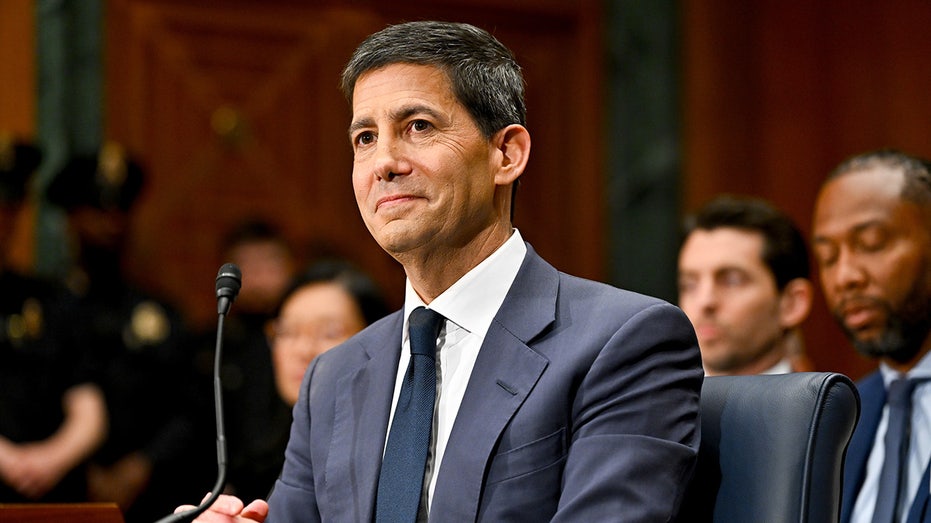
Kevin Warsh at his confirmation hearing

Kevin Warsh is a former Morgan Stanley banker who became the youngest member of the Fed’s Board of Governors in 2006. (Graeme Sloan/Bloomberg via Getty Images / Getty Images)

By remaining on the board, Powell retains influence over U.S. monetary policy even after relinquishing the chairmanship in May. This dynamic could intensify tensions with the president.

Advertisement

How that relationship evolves could shape the direction of the Federal Reserve and, by extension, the path of interest rates, inflation and the broader economy as Warsh begins his tenure as chair.

This is a breaking news story. Please check back for updates.

Continue Reading

Business

Rise in take-up of large industrial space in Wales shows new Knight Frank research

Published

on

Business Live

Knight Frank said there is encouraging signs in the development pipeline that will deliver much needed new stock

Computer generated image of the next phase of development at Indurent Park Newport.

There has been a rise in take-up of large industrial and logistics space in Wales, shows new research from property advisory firm Knight Frank.

In the first half of this year, based on units of more than 50,000 sq ft, total take-up exceeded 600,000 sq ft. This was up on the 540,000 sq ft recorded in the first half of 2025.

Advertisement

Activity in the second quarter reached approximately 270,000 sq ft across three transactions, comprising two sales and one letting. While this represents a slight increase on Q2 last year, where 239,000 sq ft was transacted, it marked a slowdown compared with the first three months of this year.

The research said the decrease in deal volumes reflects ongoing uncertainty within the market. Notably, around 800,000 sq ft of space that was under offer in the previous quarter has yet to complete, highlighting extended due diligence processes and a general slowdown in transaction timelines.

Knight Frank partner Neil Francis, who heads up the industrial and agency team at its Cardiff office, said: “While we have seen a softer second quarter in terms of completed transactions, this is not a reflection of demand. There remains a significant volume of space under offer, but increased scrutiny and longer due diligence periods are undoubtedly slowing the pace at which deals are concluding.”

Despite these headwinds, Knight Frank said there are signs of positive momentum within the development pipeline. At Indurent Park Newport, it added that levels of occupier interest have already been recorded with discussions underway on two units before steel frames have been erected – an indicator of sustained demand for modern, high-quality industrial space.

Advertisement

Further west, Fabco are progressing plans for a mid box scheme at Pencoed, while Deeside Regeneration are advancing similar plans there. Knight Frank said these projects are expected to contribute much needed new stock into a marketplace that continues to experience supply constraints, particularly for well-specified units.

In addition, the Welsh Government are advancing plans to refurbish the 100,000 sq ft unit at Hirwaun which they acquired last quarter. This investment is set to enhance the quality of available space along the Heads of the Valleys corridor, supporting both regional regeneration and occupier demand.

Me Francis said: “The encouraging aspect is the strength of the development pipeline and the level of early-stage interest we are seeing, particularly for high-quality, well-located space. This underlines a market that remains fundamentally robust, even if transactions are taking longer to complete.”

On investment trends for industrial units over 50,000 sq ft the report says there remains strong demand for well-located industrial property across South Wales.

Advertisement

Tom Griffiths, associate in Knight Frank’s capital markets team, said: “Long-medium term investments are particularly attractive to French retail estate investment funds, which are drawn to the South Wales’ favourable yield profile, especially those assets requiring minimal asset management. This is demonstrated by Alderan’s acquisition in Q2 of Kestrel House in Cwmbran which extends to circa 83,000 sq ft.”

Continue Reading

Trending

Copyright © 2025