

Business
Guggenheim Museum Among 31 NYC Buildings Linked to Legionnaires’ Outbreak as Cases Reach 46 Citywide


The Guggenheim Museum is among 31 Upper East Side buildings where health officials have detected the bacteria that causes Legionnaires’ disease, as New York City’s outbreak of the severe pneumonia-like illness continued to grow to 46 confirmed cases as of Thursday.
The city Department of Health identified the full list of affected properties by address on Friday, marking the first time officials have publicly disclosed every building where cooling towers tested positive for Legionella bacteria since the outbreak was first confirmed July 2. The museum, located at 1071 Fifth Avenue, was among 19 buildings that had already completed cleaning and disinfection of their water-cooling towers as of Friday, according to the health department. The remaining 12 buildings were ordered to complete similar remediation by Saturday, though it was not immediately clear whether all had met that deadline.
The Guggenheim, which draws an average of 1,100 visitors daily, was not ordered to close at any point during the outbreak, the health department said. In a statement to The Post, a museum spokesperson said the Guggenheim took immediate remediation steps after learning Legionella bacteria had been detected. “The city has confirmed that there is no additional action needed at this time, and this poses no risk to anyone inside the building,” the spokesperson said, adding that the museum conducts monthly cooling tower testing and treatment. “The safety of our staff and the public are the utmost priority, and we are continuing to follow all city guidelines.” The museum did not say whether it had contacted visitors who may have been on-site while Legionella bacteria were present in its cooling system.
The outbreak has been traced to a cluster of Manhattan ZIP codes, 10028, 10128 and 10075, spanning the Carnegie Hill, Yorkville and Lenox Hill neighborhoods on the Upper East Side. City health officials said the case count climbed steadily throughout the week, rising from 23 confirmed infections on July 6 to 28 by July 8, then to 36 by midweek and 46 by Thursday, with 22 patients hospitalized as of the most recent count, according to figures reported by Gothamist and NY1. No deaths have been reported in connection with the outbreak.
City Health Commissioner Dr. Alister Martin said the department has moved aggressively since the cluster was first identified. “We identified cluster early. We acted quickly. We have not stopped since,” Martin said, according to CBS News New York. He added that investigators are still working to pinpoint the exact source of the contamination. “We’re still avidly conducting a thorough investigation to confirm which exact location is harboring the live Legionella bacteria which is causing people to get sick,” Martin said.
The 31 identified buildings span a range of property types beyond the Guggenheim, including a Whole Foods location, a summer day camp, medical offices and residential buildings, according to CBS News New York. Health officials cautioned that a positive cooling-tower test does not necessarily confirm that a given building is the source of the outbreak, and additional testing remains underway to determine where the contamination originated. Out of caution, every building on the list has been ordered to drain, clean and disinfect its cooling towers regardless of whether it has been definitively linked to any illness.
The city has tested 183 cooling towers across the Upper East Side since confirming the outbreak, officials said, and more than half of the neighborhood’s cooling towers have been cited for violations during recent inspections, according to city records, including failures to perform regular monitoring and cleaning or to submit required Legionella test results to the health department. The screening method used to identify contaminated towers, a polymerase chain reaction test, can detect the presence of Legionella genetic material but cannot determine whether the bacteria found are alive or dead; only live bacteria can cause illness in humans.
Legionnaires’ disease is a severe form of pneumonia caused by inhaling mist containing Legionella bacteria, which thrive in warm water systems such as cooling towers, decorative fountains and hot tubs. Symptoms typically include fever, chills, muscle aches, cough and difficulty breathing, and in some cases gastrointestinal symptoms such as diarrhea, according to the city health department. Symptoms generally develop between two and 14 days after exposure, according to the U.S. Centers for Disease Control and Prevention. People over 50, current or former smokers, and those with chronic lung disease or weakened immune systems face a higher risk of severe illness, city health officials said. According to the CDC, roughly one in 10 people who develop Legionnaires’ disease die from complications, a figure that rises to about one in four among patients who contract the illness during a stay at a healthcare facility.
Legionella spreads through inhalation of contaminated water droplets rather than person-to-person contact, meaning residents of the affected buildings and neighborhoods do not need to take special precautions with their tap water, showers or air conditioning units, according to the health department. “Since Legionella bacteria is spread through inhaling contaminated water, not person to person, New Yorkers on the Upper East Side, where the outbreak is concentrated, should pay close attention to public health alerts and be aware of contaminated areas,” Dr. Daniel Knecht, chief medical officer at EmblemHealth, told amNewYork.
City officials have urged anyone who lives, works or has visited the affected ZIP codes since late June, as well as anyone who has spent time on the east side of Central Park between East 76th Street and East 97th Street, to monitor themselves for flu-like symptoms and seek medical attention promptly if symptoms develop. Doctors across the city have also been advised by the health department to consider testing specifically for Legionnaires’ disease in patients presenting with pneumonia-like symptoms who have spent time in the affected area.
The current outbreak follows a separate Legionnaires’ cluster that struck Central Harlem last summer, sickening more than 100 people and killing seven, underscoring the potential severity of the disease when outbreaks go undetected or unaddressed for extended periods. New York City Mayor Zohran Mamdani and health department officials described their response to the current outbreak as “aggressive action,” including the decision to publicly release the addresses of buildings whose cooling towers tested positive, a step city officials characterized as unprecedented for an outbreak of this kind.
The investigation into the source of the contamination is expected to continue through the weekend, and health officials said additional buildings could be added to the list as more test results come back. Because it can take up to two weeks to receive complete test results, officials cautioned that the full scope of the outbreak, including its ultimate source, may not be known for some time.

Business
AMD Stock Sinks Nearly 6% as Memory Chip Sector Selloff Spreads Into Broader Semiconductor Names Today

Shares of Advanced Micro Devices fell 5.77% on Wednesday, trading at $516.50 as of 11:52 a.m. EDT, down $31.62 on the day, as continued turmoil in the memory chip market spilled over into broader semiconductor stocks, extending a volatile stretch for the sector heading into a busy earnings season.
Wednesday’s decline continues a difficult period for AMD, which has posted several sharp single-day moves in recent weeks amid what analysts describe as a broader reassessment of valuations across the AI-linked chip sector following an extended rally.
A Sector-Wide Reaction to Memory Market Turmoil
Much of Wednesday’s pressure on AMD traces back to continued volatility surrounding South Korean memory chip maker SK Hynix, whose stock has swung dramatically following its recent Nasdaq listing. That volatility has repeatedly rippled through the broader semiconductor complex in recent sessions, dragging down chip names with limited direct exposure to the memory market, including AMD, alongside more directly affected memory producers such as Micron Technology and SanDisk.
AMD’s own move Wednesday reflects a pattern that has become increasingly familiar throughout July, in which sentiment shifts tied to memory pricing and supply dynamics have triggered outsized reactions across logic-focused chip designers, even when the underlying news carries limited direct relevance to their specific businesses.
A History of Extreme Volatility
AMD’s stock has proven especially sensitive to shifting sector sentiment in recent months. According to market data, the stock has recorded 41 separate moves greater than 5% over the past year, reflecting how significantly investor conviction toward AMD has fluctuated as the broader AI infrastructure investment narrative has evolved.
Earlier this month, AMD shares plunged 8% during a chip-specific reset tied to Samsung Electronics’ quarterly earnings report, before separately falling 7% amid a broader Bank of America warning about growing “bubble risk” in the AI trade. Just last week, the stock fell another 6.3% after reports indicated SK Hynix was deliberately slowing its high-bandwidth memory expansion, a development that sparked fears about a broader cooling in AI infrastructure demand even though subsequent analysis suggested the shift primarily reflected memory makers redirecting capacity toward more profitable conventional DRAM production.
Strong Underlying Fundamentals, According to Bulls
Despite the recent volatility, several Wall Street analysts have continued to express confidence in AMD’s underlying growth trajectory, particularly around its custom AI chip offerings. Citi has highlighted AMD’s custom MI450 chips as offering Meta Platforms a lower total cost of ownership compared with Nvidia alternatives, citing a six-gigawatt, four-year supply deal that includes a warrant for 160 million AMD shares and is set to begin ramping with an initial one-gigawatt tranche in the second half of 2026.
Citi has projected AMD’s AI GPU revenue could reach $33 billion in the near term, with potential to expand further to $50.8 billion over a longer time horizon, underscoring the scale of opportunity analysts continue to see in AMD’s AI accelerator business despite near-term stock volatility.
Analysts Continue Raising Price Targets
Even amid the recent pullback, several analysts have continued raising their price targets on AMD. TD Cowen recently lifted its price target to $675 from $600, while other firms have issued similarly bullish updates in recent weeks. Bank of America previously raised its price target on the stock to $500, citing a projected $1.7 trillion AI data-center market opportunity by 2030.
The disconnect between continued analyst optimism and the stock’s sharp near-term price swings underscores what several market observers have characterized as a broader valuation reset playing out across the semiconductor sector, rather than any fundamental deterioration in AMD’s underlying competitive position or long-term growth prospects.
A Remarkable Year Despite Recent Turbulence
Even accounting for Wednesday’s decline and other recent pullbacks, AMD’s stock remains up significantly for the year. The company’s shares had climbed as much as 134% since the start of 2026 at points during the summer, reflecting substantial investor enthusiasm for AMD’s positioning within the broader AI infrastructure buildout, even as that enthusiasm has periodically given way to sharp bouts of profit-taking.
Data Center and AI Business Continues to Grow
AMD’s underlying business results have continued to show strength amid the stock’s volatility. The company has recently announced production ramp-up of its next-generation EPYC processor, code-named “Venice,” built on TSMC’s advanced 2-nanometer manufacturing process, alongside plans to invest more than $10 billion in Taiwan’s broader AI supply chain ecosystem. AMD also gained server CPU market share during the first quarter of 2026, according to industry data, even as a key competitor’s share declined over the same period.
Upcoming Earnings Report in Focus
AMD is scheduled to report its fiscal second-quarter 2026 financial results in the coming weeks, a release that market participants increasingly view as a key catalyst capable of resetting sentiment toward the stock following its recent volatility. Investors are likely to focus closely on updated guidance for AMD’s data center and AI accelerator segments, along with any additional commentary on the company’s custom silicon partnerships with major hyperscale cloud computing customers.
A Broader Pattern of Sector Rotation
Wednesday’s decline in AMD shares fits within a broader pattern that has defined semiconductor sector trading throughout much of July, characterized by sharp swings driven by shifting sentiment around memory chip pricing, supply dynamics and broader questions about the sustainability of record AI infrastructure capital spending. Even as individual company fundamentals have generally remained strong across the sector, elevated valuations following an extended rally have left many chip stocks, including AMD, particularly vulnerable to outsized reactions when negative sentiment emerges anywhere within the broader semiconductor supply chain.
What Comes Next
With AMD’s upcoming earnings report set to provide the next major fundamental catalyst for the stock, investors are likely to continue closely monitoring developments across the broader memory chip sector in the interim, given how closely AMD’s recent trading has tracked sentiment shifts tied to companies with limited direct business overlap. Whether Wednesday’s decline represents another temporary pause within AMD’s broader 2026 rally, or the beginning of a more sustained period of consolidation across AI-linked semiconductor stocks, will likely become clearer as the company’s earnings report and broader sector developments unfold in the coming weeks.

Analysis-China’s record consumer defaults undermine Beijing’s push to boost spending
Business
ETMarkets Smart Talk | India’s retail investing boom is structural, 40 crore demat accounts possible in 10 years: Sandeep Nayak
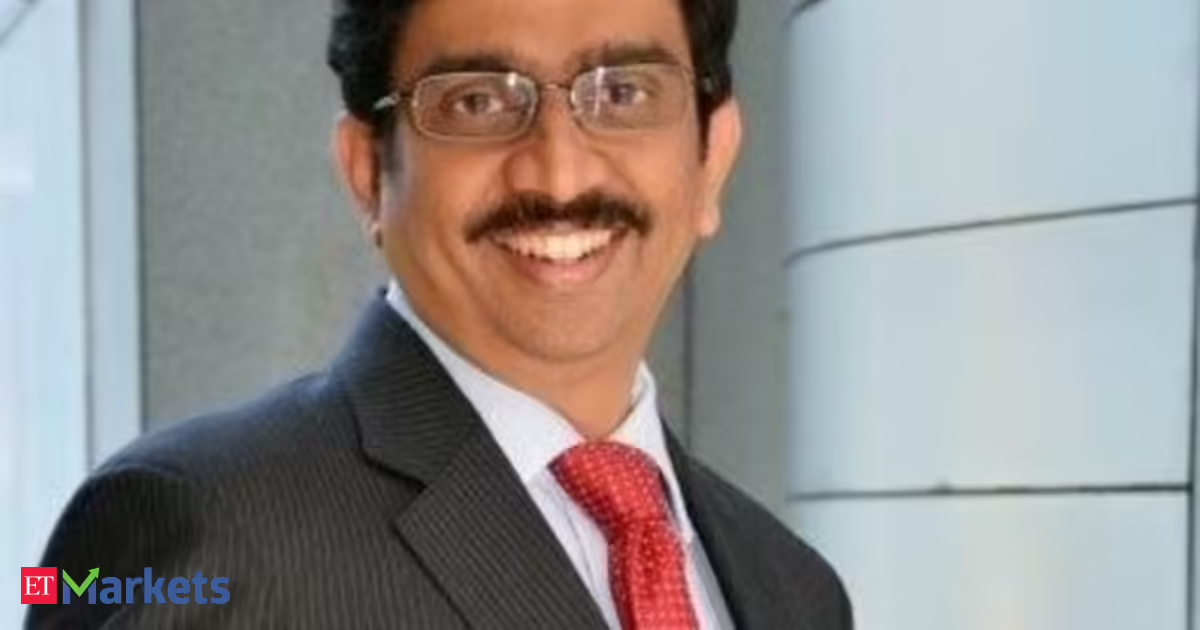
With India’s young demographic profile, rising incomes and growing awareness of digital investing, Nayak believes the number of Demat accounts could rise from around 20 crore currently to 30 crore over the next five years and potentially touch 40 crore in a decade.
In an interview with Kshitij Anand of ETMarkets, Nayak said that while the bull market has accelerated the entry of new investors, the underlying growth is being driven by India’s demographics and increasing financialisation of savings.
However, as younger investors, including Gen Z, embrace equities and derivatives, he cautioned that a get-rich-quick mindset and inadequate focus on risk management remain key challenges.
Nayak also discussed how technology, AI, data-driven research and personalised guidance could shape the next phase of digital broking. He believes that while the past decade was about democratising access to markets, the next 10 years will be about helping investors make more informed decisions, with research, risk management and multi-asset investing playing a crucial role in long-term wealth creation. Edited Excerpts –
Kshitij Anand: So, firstly, let us just understand how Centrum Finverse is taking shape and expanding its digital footprint. I would also want to know how the transformation of GalaxC fits into the overall roadmap.
Sandeep Nayak: When we started Centrum Finverse, we looked at the market landscape and saw that the market had expanded and access to markets had been democratised. But really, we found that traders were making losses. If you see SEBI’s report, which is published annually, retail traders over the last four years have lost close to three-and-a-half lakh crores, and the beneficiaries are players like Jane Street.
There was one background: you had discount brokers who created a platform and expanded the market. We saw that full-service brokers were only catering to the mass affluent and upwards. Really, retail was at God’s mercy. So, we felt that if there was a tech-enabled platform focused on research and guidance, there was a way to be made in this market, and you would get your place in the sun.
I will give you a simple analogy. I mean, if you give a very good cricket bat to everybody, they are not going to become good batsmen. You need coaching, technique, practice, and a lot of effort goes into becoming a good batsman. Or, if you have a high-performance car, digital access is like giving you a high-performance car, but to reach the destination, you still need a GPS.

So, we want to be that player who is bringing research and guidance and hand-holding customers. And if you see our app, which we have launched, GalaxC, which you referred to, is our trading app. We have created a lot of scientific tools to help investors navigate their journey in the markets.
If you look at options trading, or any trading for that matter, we will show the client the risk-reward. Before he enters the trade, he can see his maximum loss and maximum profit, so he knows. And then he knows the risk-reward ratio. So, if you say your loss is Rs 1,000 and there is an option to make Rs 3,000, then your risk-reward is 1:3. But if the trade involves a loss of Rs 1,000 and a profit of Rs 1,000, then the risk-reward is 1:1. Or, if the loss is Rs 1,000 and the profit is only Rs 500, why are you getting into that trade?
So, getting this tool into the hands of retail investors is kind of enabling them to get to that level. Of course, there is a lot more to do, but this will help them in making sure their journey is a lot better in terms of risk management. They know what they are doing. It does not guarantee you profits all the time because you can still incur a loss, but at least before you get into the trade, you know you can digest that loss. So, that is what we have done, and we think that this differentiation will bear out over time.
I mean, I would say the last phase of the last 5-10 years, really, if you count it, was about democratising access. The next 10 years, I think, will be about informed decision-making. It is easy to open a Demat account, (—) a trading account; it can be done in two minutes. But creating wealth is much harder, and that is where we want to help the investor.
We want to bring science to investing through data-driven research, analytics, and decision-support tools so that the investor relies less on emotion and more on evidence. That is what we have focused on. Right now, it is probably my talk; this will bear fruit. I think for this differentiation to be visible in the market, it is a process, and I feel that over the next one to three years, players who have this differentiation are the ones who will be the winners, not just those who have the platforms.
Kshitij Anand: And, in fact, when you were conceptualising GalaxC, what was the kind of need or problem that you were trying to address that was not being addressed earlier, but with GalaxC, it would actually suffice all the needs?
Sandeep Nayak: So, I will tell you that there are two worlds in this industry. One world is of players offering a platform at a low cost, where cheap brokerage is everything. And the other world is where you are offering full-service research, but offering it to the cream, that is, the mass affluent and upwards.
We wanted to bring the best of both worlds to retail investors. So, give them a platform where they can execute efficiently at a low cost, and at the same time, hand-hold them and give them guidance, which is available only to the mass affluent and upwards. And that is how we conceptualised GalaxC—to get the best of both worlds for the retail investor.
Not only give them a platform where they can play around, not just give them a cricket bat, but also coach them, hand-hold them, and show them how to actually play a long innings. That is our motto at Centrum Finverse.
Kshitij Anand: In fact, the digital broking space is also evolving, especially after COVID, you could say. So, let us say we take the past five to six-odd years, and it has really evolved. A lot of players have actually come into the picture. So, what does, let us say, the next decade look like, and who will actually emerge as winners? We are also seeing some consolidation happening, so yes, that is also there.
Sandeep Nayak: See, what I see is that technology has enabled us to offer services to retail customers in a personalised manner. Just like HNIs are getting personalised services from wealth relationship managers, technology can give a retail customer personalised service.
So, today, we are actually able to track a customer who comes to our app. Just like Bigg Boss—you have seen this Bigg Boss show, where there is a Bigg Boss tracking what is happening—you know which section he went to in the app and which section he was spending more time on. So, accordingly, you can tailor-make your offering to him.
So, people who are able to personalise the tech platform and offer personalised services and guidance to retail investors will be the winners. So, when you come in, I know, (—) “Welcome, Kshitij.” I know what your portfolio is, I know what you have been doing, so I am kind of pre-empting and giving you things that you would like to see. So, that is one differentiation.
And the second one is platforms that offer multi-assets. For example, we have also visualised that GalaxC will offer multi-assets. Today, we have equity and derivatives—all these stock brokerage services are the core offering—but we also have mutual funds. We have IPOs. And we are working on bonds and US investing, etc. Right now, we offer these offline, but we will bring the entire thing digitally.
We are going to gradually offer all financial products that a retail investor would want, digitally and with hand-holding—not just a platform, but hand-holding on what he needs to do.
For example, on our mutual fund platform, if you see the mutual funds listed, they are only the whitelisted funds that we are recommending, that our research recommends. And if you want to buy something else, you can still pick it from the drop-down and go buy it. But we are saying these are the ones—if you want to invest in large-cap funds, this; if you want to invest in mid-cap funds, this; if you want to invest in small-cap funds, this.
We have thematic baskets. I mean, portfolio management is available only to HNIs; the minimum threshold is Rs 50 lakh and upwards. Our baskets are available at as low as Rs 30,000. So, you can get a defence basket and know which stocks to buy. There is a power basket, which is thematic. And you are able to participate in the right stock selection without having to go to a top-quality fund manager, so research is doing that.
So, like I said, it is not just a platform, but being a part of the journey and trying to deliver value over the long term. Finally, where does he build trust with me? If I am able to deliver some alpha on his investments, he has to make some profit from using my platform. So, the research team that we have built is focused on that.
I mean, while HNIs get 30-page reports, retail investors do not need a 30-page report. It is probably a one-pager with the rationale that they need to invest in. So, we are focused on creating value for the retail investor because, as a house, we have an institutional brokerage that covers about 200 stocks, where we have a financial model and 30-page detailed reports, which can be given to institutional investors and high-net-worth investors.
Similarly, we run a private wealth outfit where wealth offerings are given to private banking customers. The research we do is about how we package this in a consumable format for the retail investor.
Kshitij Anand: Good that you pointed out the research part of it because most of the discount brokers or brokers that we see are providing the services, but there is no research as such involved in it, and that is where you sort of make that….
Sandeep Nayak: That is where we want to differentiate.
Kshitij Anand: And that will really help the business to carry on. And you rightly pointed out that you will be introducing a lot of other things that are getting into the mainstream, such as US investing, bonds, and other products. Is that something that will fuel the engine for the next five to 10-odd years?
Sandeep Nayak: Yes, over 10 years. But since the segment is retail, they will initially prefer investing domestically, investing in thematic baskets, and investing in mutual funds. I think US investing, etc., is for the mass affluent and upwards because you need to do LRS remittances, etc.
But we are offering certain ETFs. We are highlighting certain ETFs to retail investors, saying that you do not need to remit money abroad to buy US stocks to get exposure. There are certain ETFs through which you can get exposure, where you are getting the benefit of investing in the US. So, that is where….
We do not need to launch a separate US investing product. There are enough products that we need to highlight to investors to help them get into it and take advantage of that exposure.
Kshitij Anand: Now that we are talking about US investing, one theme that has really gained popularity is AI, especially in the last couple of years, or 12 to 18 months, you could say. How are you using AI in the business, technology, or app to make it more convenient for investors?
Sandeep Nayak: Yes, we are working on AI tools to assist customers. Right now, the tools that we have are quant-based, and technology is being used to provide quant-based ideas. We have two things in the works, including an AI-based platform where customers can ask questions and interact. It will first look at our own research that the house generates and answer based on that. If we do not have a report, it will probably look at outside research and give customers what they want. So, there will be an interface that we will provide. We are working on that.
And we also need some regulatory approvals, etc. We need to showcase it to the exchanges and get these things cleared, and we are working on that.
Kshitij Anand: Retail participation has picked up recently, and a lot of new retail participants have come in who are in the age bracket of, let us say, 25-plus. So, a lot of Gen Zs have also come into the picture. Is it because of the recent bull run, you could say, or is there genuinely interest coming in from the younger population? I am sure it is largely about how to make money in a short period of time. Is the focus more on that, or are these guys after long-term investments?
Sandeep Nayak: I think this particular move, the growth that you are seeing, is structural, and it has to do with India’s demographics. If you see, India has 65% of its population in the working-age group, and the median age of the working population is 29. More and more people are getting into the workforce and learning about… they are earning income, saving, and learning about financial planning and investments. So, this trend will continue.
And right now, we have close to 20 crore Demat accounts. Maybe in the next five years, it will be 30 crore, and in 10 years, 40 crore. That is a natural progression because people coming into the workforce will need to invest, and awareness of investing digitally and in equity markets has gone up.
I mean, previous generations were told to be conservative and safe, go into FDs, and go into physical assets. But this generation, Gen Z, which is what we are catering to through Centrum GalaxC, is willing to experiment and take risks. At 25, they are willing to trade options and derivatives, and that is why you are seeing the loss figures as well.
There is a learning process, and when you are learning, obviously, you have to pay. Markets are a place where you have to pay a price to learn. So, this trend will continue. The bull market has certainly helped. I am not saying that it has not helped. It has helped people take cognisance and come to the markets faster, but structurally, India is built in such a way that this has to keep growing. Over the next 10 years, you will probably see phenomenal growth.
Our penetration is still low. I mean, while we have 20 crore Demat accounts, the number of unique investors will be lower because people have multiple Demat accounts; somebody may have two or three. So, we still have less than about 10% of the population investing in the markets. And in advanced markets, we have seen 60-65%. So, even if we get to 20-25%, the opportunity is huge. We (—) do not need to go to 60-65%.
So, structurally, we are built for this. We are in the right place at the right time, and the markets will keep expanding. Bull markets will come and go. The pace may slow down in a bear market, but it will still keep growing. I am not in the camp that believes that it will stop. We will go to 40 crore in 10 years, and how fast we reach 40 crore is the question, not whether we will reach it. We will definitely reach it. So, that is there.
Kshitij Anand: So, we have seen a new lot of investors over the past, let us say, five-odd years. Ten years back, there was a different breed of investors. Now, the new lot has not seen any really big dip, like the 2008 Financial Crisis that we saw, and some of the other big dips that have happened. Are there any mistakes that you think the new lot is now making, or do you think they are more advanced or more upgraded, you could say, in their mindset compared with the older lot?
Sandeep Nayak: No, I think everybody has their fair share of mistakes. It is not that you have to go through… I mean, like the life cycle of a person from birth to death, there are a lot of experiences he goes through. As a child, he goes to school….
Kshitij Anand: We keep on saying that, “Arre, ab toh bahut mature log aa gaye hain,” like now the….
Sandeep Nayak: No, they have more information at hand. They have more information available digitally, but markets are a place where you will tend to make those mistakes that previous generations have made. And some of the things we commonly notice are that youngsters have a get-rich-quick mentality. Even among all the people who come to the markets, this market is like Bollywood—everybody wants to become a star like Shah Rukh Khan. So, when they come here, they feel they can make a killing.
Kshitij Anand: And every stock should be a blockbuster.
Sandeep Nayak: Yes, they feel they can make a killing. This is a place where they think, “My stars are good, I will make a killing,” only to realise that you get killed first. So, you learn. So, that get-rich-quick mentality is there; that is one.
And second, they are not paying sufficient attention to risk management, and that is what we are trying to educate them about. Before a trade, if I am telling you what your risk and reward are, what the loss is and what the potential gain is, at least I am trying to tell you: do not play blind; know what you are doing.
So, it is like that statutory warning on a cigarette pack—it is injurious to health—but at least we are trying to highlight to you what it is and saying that trading is not speculation; it is a science. Please understand.
On our platform, you can execute four trades simultaneously—two sell and two buy—and with a single click, they will get executed. But before that, it shows you, once you… what the margin involved is, what the risk is, what the reward is, and what the risk-reward ratio is.
So, that is where risk management comes in, and new investors fail to focus on that. We are trying to highlight to them: look at the risk first. So, that is how… your trading longevity is preserved. And it is good for me as a business if I train them and get them to become good traders, so that is the objective we have.
It is just like if I open a gym and put 10 trainers there. If there are no trainers, a person will go, stretch himself, get injured, and not come to the gym for six months. But if there is a trainer who is guiding him, he will exercise within his limits and come back the next day. So, that is what we want.
So, these are the two things, and every generation learns them the hard way. They will have to, but we are trying to help them by highlighting the risk….
Kshitij Anand: To bring down the learning curve….
Sandeep Nayak: Yes, and that is what, as a platform, we are trying to help you with—that these are the mistakes people make; look at the risk before you dive in.
Kshitij Anand: So, over the past few years, a lot of products have actually come into the system, and new investors are more open to those products as well. So, how relevant do you feel the multi-asset approach is at this point in time?
Sandeep Nayak: No, the multi-asset approach is highly relevant. I mean, it is one of the better risk management tools as well because when you invest in different asset classes, you are spreading the risk. Markets work in cycles, and cycles do not synchronise with each other.
So, when one asset is in a bull market, the other may be in a bear market, or when one is in a bear market, the other may be in a bull cycle. So, it reduces the impact of market cycles on your portfolio. You are able to better manage volatility, and if you do that, your long-term, consistent, risk-adjusted return is higher. And that is why it is better to have a multi-asset approach.
Because, let us say, you are only in equities. One year, you might get a 25% return if you are lucky; the next year, it could be a loss of 15% as well. But if you have mixed it with fixed income, gold, and silver, probably, if there is a hit in equities, these asset classes are still giving you returns. So, your risk-adjusted return is higher than what it would have been if you were only in a single asset class.
So, both from a risk diversification perspective and for better long-term risk-adjusted returns, a multi-asset strategy is the way to go.
Kshitij Anand: And how is technology shaping the industry at this point in time?
Sandeep Nayak: Technology is one of the big drivers of the financial services space, more so in broking and investments, where differentiation is coming in and where there is more and more excitement because you can offer hyper-personalised services to each customer.
I mean, because of the AI and data analytics tools that are available, we can decide what the risk profile of a customer is and what he should be offered, and technology allows us to do that with a uniform customer experience. If I have people doing it, it depends on how each person is handling the customer, whereas technology, at least, does not have behavioural biases and does not have a mood of its own for the day. There is an objective tool that is telling you what you need to do, so that is one important aspect.
Second, technology also helps you make smarter decisions with risk under control. It reduces behavioural biases. It extracts information easily and analyses it, and early risk detection is also possible. So, those are the things that technology is helping us with, and that is where we want to bring differentiation and add value to our customers—the retail customers who do not have the luxury of having a person advising them or a relationship manager advising them. So, using technology as the guiding factor for the investor has been our focus.
Kshitij Anand: Obviously, when we are using more technology and when we have more personalised data on the web, trust is something that definitely comes into play. How are you balancing that aspect with investors?
Sandeep Nayak: See, trust is always built over a period of time, and Centrum has been in the financial services space for almost 30 years now, across different businesses. So, there is one overarching brand called Centrum, which investors trust.
But more importantly, at Centrum Finverse, being transparent and consistent, highlighting the positives as well as the risks—I mean, that has been the focus for both trading and investments—and that, I believe, will build trust over a period of time.
Ultimately, trust is built if the customer perceives that there is value addition for him from this platform. And that is the value addition that we bring—for trading, the scientific tools to help you compete with the Jane Streets; for investing, the simplified one-pagers giving you the investment rationale; and thematic baskets that give you a basket of stocks if you want to play a particular theme. Because with a single stock, you can go wrong, but when you build a basket, the returns are a little better and you manage the risk better.
So, these things that we are doing for customers will not be visible in one day, but over a period of time, customers will differentiate and give value to this particular approach of ours. It is a question of time, and this is how we want to build trust and continue the journey of Centrum Finverse.
Kshitij Anand: And looking forward, how do you see the industry shaping up, let us say, over the next three to five years?
Sandeep Nayak: Like I already said, technology is enabling you to offer personalised services to each customer, and the next phase is where using technology to hand-hold, guide, and offer personalised services will be the focus and will differentiate the men from the boys.
And second is, like I said, hand-holding and guiding in terms of the tools that you offer. I mean, there is always plenty of information available, but guiding customers in terms of how to interpret that data and what judgement you bring to the table as a research house is what will differentiate.
Over the next 5-10 years, this will be the… Like I said, access has been democratised. Now, it is about making informed decisions, hand-holding customers, and adding value to them. That is the focus, and that is where digital broking is headed, where value addition is the most important thing because cheap brokerage is available everywhere, but advice is not available everywhere, and research is not available everywhere. That is where we hope to bring differentiation. And we feel that over the next 10 years, the market will reward these players.
(Disclaimer: Recommendations, suggestions, views, and opinions given by experts are their own. These do not represent the views of the Economic Times)
Business
What does ‘Las Malvinas Son Argentinas’ mean? All about the Falkland row that followed Messi’s Argentina into the World Cup final

Football and geopolitics rarely mix this dramatically, but Argentina’s dramatic 2-1 win over England in the World Cup 2026 semi-final did exactly that. Within minutes of the final whistle, a banner referencing the Falkland Islands was on the pitch, Lionel Messi and company were mobbed by fans, and social media was flooded with one question in different forms: what exactly is this decades-old dispute, and why does it still spill onto a football pitch?
Also Read: Argentina be banned from FIFA World Cup final against Spain for showing Falkland banner?
Here’s a simple breakdown of everything you need to know.
What does “Las Malvinas son Argentinas” mean?
“Las Malvinas son Argentinas” is Spanish for “The Falklands are Argentine” (or, more literally, “the Malvinas are Argentina’s”). “Las Malvinas” is simply the Spanish name Argentina uses for the Falkland Islands, the name comes from “Îles Malouines,” what French sailors from the port city of Saint-Malo called the islands back in the 1700s.
For Argentines, the phrase isn’t just a geography lesson, it’s a statement of national identity. It reflects the country’s official, constitutionally-backed position that the islands rightfully belong to Argentina, a claim Britain firmly rejects. You’ll see the phrase on murals, license plates, school textbooks, and yes, occasionally, on football banners.
Why did Messi-led Argentina’s team show the Falklands banner?
After Argentina came from behind to beat England 2-1, with Lautaro Martinez heading in a stoppage-time winner off a Messi assist, several players, reportedly including Giovani Lo Celso and Nicolas Otamendi, held up the “Las Malvinas son Argentinas” banner during celebrations before it ended up on the pitch.
What’s the Argentina vs England Rivalry?
The opponent. Argentina vs England fixtures always carry historical weight, dating back to the 1982 Falklands War and even earlier flashpoints like Diego Maradona’s “Hand of God” goal in 1986.
Pre-match tension. Argentina’s Vice President had reportedly used provocative language about England in the buildup, and FIFA had already restricted Falklands-related flags from being brought into the stadium as a precaution.
Precedent. This isn’t new territory for Argentina’s football setup, the same banner cost the Argentine Football Association a £20,000 FIFA fine back in 2014, ahead of a friendly against Slovenia.
For many Argentine fans and players, waving the banner after knocking out England was less about football and more about a symbolic, patriotic moment. For FIFA, however, it’s a potential breach of rules that explicitly ban political statements and symbols inside stadiums, meaning Argentina could now face disciplinary action, most likely another fine, even as they prepare for Monday’s final against Spain.
Why are the Falkland Islands important?
The Falklands might be a remote, windswept archipelago with a population smaller than a small Indian town, but their importance goes well beyond size:
Historical and national symbolism: For Argentina, the islands represent an unresolved chapter of national identity and sovereignty, tied closely to the loss of the 1982 war. For Britain, they represent a hard-won territory and a test case for self-determination.
Strategic location: Sitting in the South Atlantic near key shipping routes and close to Antarctica, the islands have long carried military and geopolitical significance.
Natural resources: The surrounding waters are rich fishing grounds, and the Falklands basin has shown potential for oil and gas reserves, adding an economic dimension to the sovereignty question.
A live diplomatic issue: This isn’t just history, 2026 has already seen Argentine President Javier Milei publicly reiterate his country’s claim on the anniversary of the 1982 invasion, while reports of a leaked US government memo questioning British title to the islands briefly reignited global attention on the dispute earlier this year.
Who owns the Falkland Islands now?
As things stand, the Falkland Islands are administered by the United Kingdom as a self-governing British Overseas Territory. Locals handle their own internal affairs through an elected Legislative Assembly, while the UK retains responsibility for defence and foreign policy.
Argentina, however, does not recognise this arrangement and continues to formally claim sovereignty over the islands, referring to them as part of its own national territory.
Key facts on where things stand on Falkland Islands:
- The roughly 3,500 residents of the islands hold full British citizenship.
- In a 2013 referendum, Falkland Islanders voted almost unanimously, around 99.8%, to remain a British Overseas Territory.
- The United Nations lists the Falklands as a “Non-Self-Governing Territory” and has repeatedly urged the UK and Argentina to negotiate, but has never ruled in favour of either side’s sovereignty claim.
- No formal negotiations over sovereignty have taken place since diplomatic relations between the UK and Argentina were restored in 1990.
In short: Britain controls and governs the islands today, but the dispute remains legally and diplomatically unresolved, with Argentina continuing to press its claim through international forums rather than force.
Where is the Falkland Islands?
The Falkland Islands sit in the South Atlantic Ocean, roughly 300 miles (about 480 km) off the southern coast of Argentina, and around 8,000 miles from the United Kingdom. The archipelago consists of two main islands, East Falkland and West Falkland, along with hundreds of smaller islands, adding up to a land area roughly the size of the Indian state of Goa multiplied by nearly ten times over (about 12,000 sq km in total).
The capital, Stanley, is home to most of the population and sits on East Falkland. Despite being geographically closer to South America than to Europe, the islands remain culturally and politically British, right down to red phone booths and driving on the left.
What started as a football celebration has once again put a decades-old territorial dispute in front of a global audience. As Argentina prepares to defend their World Cup title against Spain, the Falklands conversation, much like the sovereignty question itself, shows no signs of settling down anytime soon.

A major logistics centre in Belmont’s Kewdale industrial area has been unanimously approved after planners and the proponent struck a late compromise on lot amalgamation, sustainability requirements and height controls.

United warns of nearly $6 billion fuel hit as oil-price surge weighs on outlook
Business
Palantir Shares Rise After Expanded Nvidia Partnership and Fresh Analyst Upgrades Ahead of Earnings Day
Shares of Palantir Technologies climbed 1.26% on Wednesday, trading at $135.41 as of 11:55 a.m. EDT, up $1.69 on the day, as the AI software company continued building momentum from an expanded partnership with Nvidia and a series of positive analyst actions ahead of its upcoming second-quarter earnings report.
Palantir confirmed this week that it will report its second-quarter results after market close on Monday, August 3, giving investors a clear timeline for the company’s next major fundamental catalyst. Wall Street analysts currently expect Palantir’s second-quarter revenue to grow 80% year over year to approximately $1.8 billion, according to consensus forecasts.
An Expanded Nvidia Partnership Targets Government Deployment
Much of the recent positive momentum for Palantir traces back to an expanded collaboration with Nvidia, combining Nvidia’s AI computing platform with Palantir’s core product suite, including its Artificial Intelligence Platform, Ontology, Foundry and Apollo offerings. The expanded partnership is specifically designed to enable government agencies to deploy AI models within classified and air-gapped environments, while continually refining those models based on mission-specific feedback.
The offering builds on the earlier successful commercial launch of BrokerOS, along with a recent multi-million-dollar contract with Wheels Up to serve as the launch customer for Enterprise BrokerOS, further extending Palantir’s push into commercial applications beyond its traditional government and defense customer base.
Additional Commercial Partnerships
Beyond the Nvidia expansion, Palantir has continued announcing new commercial partnerships in recent weeks. The company recently expanded its existing partnership with Surf Air Mobility, committing additional engineering and go-to-market resources to accelerate development and commercial release of SurfOS, including its OperatorOS, OwnerOS and SurfOS Enterprise Solutions product lines.
Palantir has also announced a strategic partnership with SNP SE at the company’s Transformation World event, along with a new operating model framework developed jointly with Rackspace Technology aimed at supporting AI deployment in production environments.
Analysts Continue Raising Price Targets
Palantir’s stock carries a consensus Buy rating among analysts, with an average price target of $187.42, according to recent tracking data. Several firms have issued bullish updates on the stock in recent weeks. DA Davidson upgraded Palantir to Buy on July 2, raising its price target to $175. Rosenblatt has maintained a Buy rating with a $225 price target as of early June, while Wolfe Research upgraded the stock to Peer Perform in mid-June.
Some analysts have pointed specifically to Palantir’s ability to convert pilot programs into high-value, multi-year contracts as a key driver behind recent upward revisions to price targets, describing a feedback loop in which fundamental business growth continues to justify the stock’s premium valuation and attracts additional momentum-driven investment.
A Shift From Government Contractor to Enterprise Powerhouse
Recent reports have highlighted accelerating adoption of Palantir’s Artificial Intelligence Platform among Fortune 500 companies, a trend some analysts have characterized as shifting the broader narrative around Palantir from a primarily government-dependent contractor toward a more diversified enterprise software company. That shift has been central to the bullish case many analysts have built around the stock in recent months.
A Valuation That Continues to Draw Scrutiny
Despite the positive momentum, Palantir’s valuation remains a persistent point of debate among market participants. The stock currently trades at a price-to-earnings ratio of roughly 146.51 and at approximately 64 times sales, according to recent market data, levels that continue to draw scrutiny from more skeptical investors even as bullish analysts argue the company’s growth trajectory justifies the premium.
CEO Addresses Broader AI Concerns
Beyond the company’s specific business developments, Palantir Chief Executive Alex Karp has continued using public platforms to address broader societal questions tied to artificial intelligence. In a recent appearance on Mathias Döpfner’s “MD Meets” podcast, Karp warned that AI could become one of the biggest drivers of wealth inequality in the United States, describing the issue as “the biggest problem in this country.” Karp elaborated further on the dynamic, framing the AI-driven economic shift as a fundamental transformation with significant societal implications.
A Volatile Trading Pattern
Palantir’s stock has continued to exhibit significant day-to-day volatility even amid its broader upward trajectory this year. Shares gained 2.2% on Monday specifically in response to the earnings date announcement, an unusual reaction given that the news itself did not include any actual financial results. The stock has also experienced sharp single-day moves tied to other catalysts in recent weeks, including a roughly 9% single-day surge on July 1 following the initial announcement of Palantir’s strategic partnership with Nvidia, alongside a financial disclosure revealing that President Donald Trump holds a significant personal stake in the company.
Trading Range Reflects a Turbulent Year
Palantir’s stock has traded within a wide 52-week range between $106.37 and $207.52, according to recent trading data, reflecting substantial volatility throughout the year as investors have weighed the company’s strong revenue growth against persistent valuation concerns and periodic competitive pressure from major cloud computing providers expanding their own AI and data analytics offerings.
What Comes Next
With Palantir’s second-quarter earnings report now scheduled for August 3, investors are likely to focus closely on the company’s free cash flow generation as a key indicator of whether its premium valuation remains justified. Several market analysts have specifically pointed to free cash flow trends as the most important metric to watch when Palantir reports next month, suggesting that strong cash generation could reinforce the bullish case for the stock, while any signs of deceleration could reignite the valuation concerns that have periodically weighed on shares throughout 2026.

AIER educates Americans on the value of personal freedom, free enterprise, property rights, limited government and sound money. Our ongoing scientific research demonstrates the importance of these principles in advancing peace, prosperity and human progress. www.aier.orgFounded in 1933, AIER is a donor-based non-profit economic research organization. We represent no fund, concentration of wealth, or other special interests, and no advertising is accepted in our publications. Financial support is provided by tax-deductible contributions, and by the earnings of our wholly owned investment advisory organization, American Investment Services, Inc. (https://www.americaninvestment.com/)
Business
Argentina-Falklands Banner Row: Messi’s team be banned from FIFA World Cup final against Spain? What FIFA rules and past cases say

Just when the football world thought Argentina vs England couldn’t get any spicier, the aftermath of Wednesday night’s semi-final in Atlanta added a fresh layer of controversy. Argentina came from behind, Anthony Gordon had put England ahead in the second half, before Enzo Fernandez levelled things up and Lautaro Martinez, set up by a inch-perfect Messi assist, struck deep into stoppage time to send the Albiceleste through to a second straight World Cup final.
Why Argentina’s Falkland banner is such a big deal
For anyone unfamiliar, the Falkland Islands, called “Las Malvinas” in Argentina, are a British Overseas Territory sitting roughly 300 miles off Argentina’s coast, thousands of miles from Britain itself. Argentina has claimed sovereignty over the islands going back to the 19th century, a dispute that escalated dramatically in 1982 when Argentina’s military government invaded the territory, triggering a 74-day war. That conflict claimed the lives of over 900 people, including 255 British servicemen and roughly 650 Argentine troops, before Britain regained control.
The wound has never fully closed, and it resurfaces almost every time the two nations meet on a football pitch — memories of Diego Maradona’s “Hand of God” goal in 1986 haven’t helped either. This year, tensions were already running hot before kickoff after Argentina’s Vice President reportedly used inflammatory language describing the English in the build-up to the match.
Argentina-Falkland Controversy: What FIFA’s rulebook actually says
This is where things get serious for Argentina. Both FIFA and the International Football Association Board (IFAB), which frames the laws of the game, are unambiguous on this front. Their stadium code of conduct explicitly prohibits banners, flags, or any paraphernalia carrying political, offensive, or discriminatory messaging inside venues.
The IFAB rulebook goes further, stating that team equipment cannot carry political, religious, or personal statements, and that any breach leaves the player or team open to sanction, whether from the competition organiser, the relevant football association, or FIFA itself.
In simple terms: if match officials or FIFA’s disciplinary body determine the banner counts as a political statement (and given its content, that’s fairly likely), some form of punishment could follow.
Has this happened before?
Yes, and this isn’t even the first time this exact banner has landed Argentina in hot water. Back in 2014, the Argentine Football Association was fined £20,000 by FIFA after players held up an identical “Las Malvinas son Argentinas” banner ahead of a friendly against Slovenia.
Based on that precedent, and how FIFA has typically handled similar political-symbol breaches at major tournaments since, most reports suggest the punishment this time is likely to be a financial one too, potentially in the region of £30,000, rather than anything affecting Argentina’s participation in the tournament.
So, will Argentina actually be banned from the final?
No, at least not based on anything reported so far. Despite some sensational headlines doing the rounds, there is no confirmed FIFA ruling barring Argentina from Monday’s final. The tie against Spain, who beat France 2-0 in the other semi-final, is very much still on. What Argentina realistically face is a fine and possibly a formal warning, in line with how FIFA has dealt with this exact banner controversy before.
FIFA is yet to issue an official statement on the matter, and until a formal disciplinary decision is announced, this remains a developing story rather than a settled one.
But it’s what happened after the final whistle that’s now dominating headlines.
What actually happened
As players celebrated on the pitch, a banner reading “Las Malvinas son Argentinas”, translating to “The Falklands are Argentine”, was unfurled by members of the Argentina squad, reportedly including Giovani Lo Celso and Nicolas Otamendi, before it was placed down on the turf. Reports suggest the banner had originally come from the stands, was briefly tucked away, and then brought back out during celebrations.
The timing made it more pointed than usual. FIFA had specifically restricted Falklands-related flags from being brought into the stadium ahead of the match, wary of exactly this kind of flashpoint given the fixture’s history.
Head coach Lionel Scaloni had, before kickoff, tried to keep the narrative purely sporting, hoping the game wouldn’t be overshadowed by politics. That request didn’t quite hold up once the final whistle blew.
The battle for Number 10 is over.
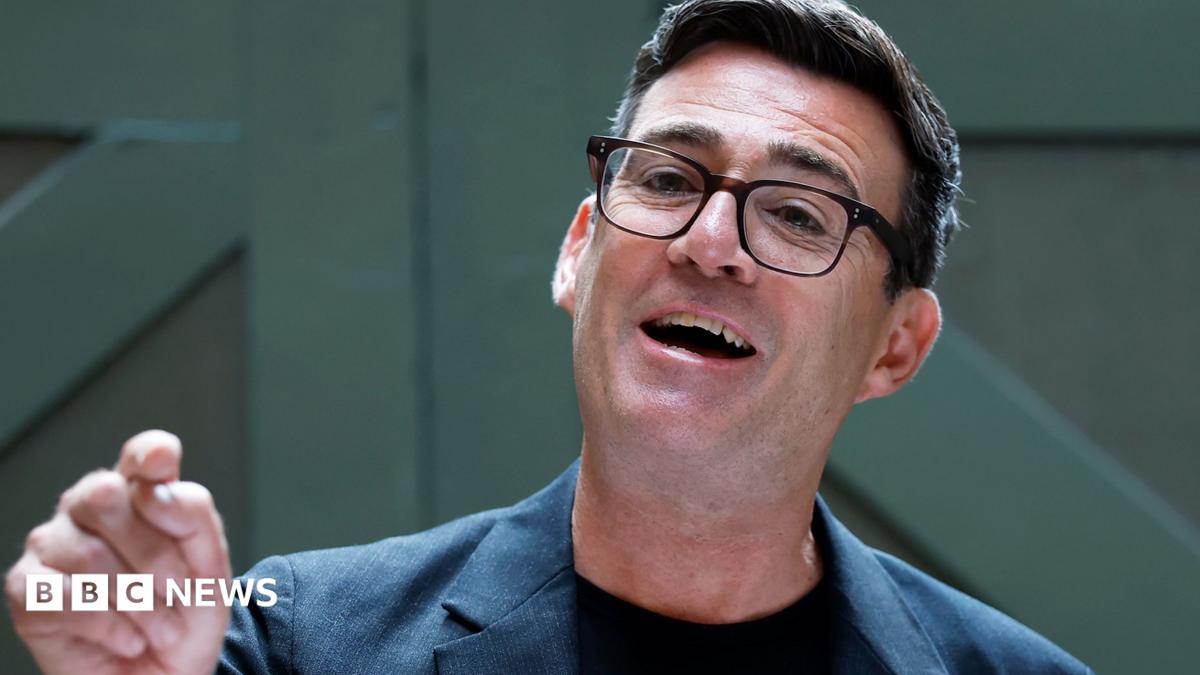
An overwhelming number of Labour MPs have nominated Andy Burnham. Under Labour’s rules he needs trade union support too.
He crossed that threshold today. He is moving into Number 10 on Monday.
But the beneath-the-radar battle for Number 11 Downing St is continuing. Whoever Burnham appoints as chancellor – and next-door neighbour in Downing Street – will send a signal of his intent both to politicians and to the bond markets.
The official line from team Burnham is that no decision has been taken.
Announcements on cabinet posts are not expected to be made until Monday, when Burnham moves to Number 10.
Discussions have been taking place amongst a tight group of people – the next Number 10 chief of staff James Purnell, Louise Haigh and the former MP who stood aside for Burnham, Josh Simons.
When Burnham won the subsequent Makerfield by-election the widespread assumption was that the Energy Secretary Ed Miliband would move to the Treasury.
But there has been both noisy and more subtle attempts to influence Burnham’s choice of chancellor – ranging from unions with workers in the oil and gas industry and who distrust Miliband’s instincts, to Sir Keir Starmer’s unpaid ‘cost of living’ tsar Lord Walker, the boss of Iceland.
He runs supermarkets but argues that it’s the bond markets that would “freak out” if an “ideological” chancellor was installed in the Treasury.
In recent days, a number of MPs close to Burnham – who have no animus to the energy secretary – believe the likelihood of appointing Miliband has lessened significantly.
The caveat is that they are not making the decisions, but are discerning the mood.
Those close to Miliband believe that it’s not only highly possible that he will still be appointed but highly desirable too.
They point to his credentials. He has an economics background, was an adviser in the Treasury under Gordon Brown and chaired the Council of Economic Advisers.
He has ministerial experience in the last Labour government and this one. He knows his way around. A colleague put it like this: “He can make the Treasury do what it doesn’t want to do.”
Miliband has offered advice to Burnham regularly and recently and would be in lock-step with Burnham in the task of spreading growth, in Burnham’s words, “to every postcode”.
As for the bond markets, one supporter has stressed his adherence to the fiscal rules on debt and borrowing, and another put it more colourfully: “He isn’t Che Guevara.”
Many in the parliamentary party would expect him to move to Number 11. If he isn’t, some on the party’s soft left will think that Burnham has refused the first fence in the race to change Britain.

Christopher Nolan Delivers the Definitive Cinematic Epic : Coastal House Media

Man United latest: Squad number update given as Marcus Rashford dealt further transfer agony

5 Milwaukee Tools With Deep Discounts In July 2026


-

 Fashion7 days ago
Loro Piana Fall 2026 Enters Houston’s Art Scene
-

 Fashion5 days ago
Weekend Open Thread: Nutriplenish Leave-In Conditioner
-
 Sports6 days ago
2026 Genesis Scottish Open Thursday TV coverage: Round 1
-

 Sports6 days ago
Super Eagles star Moses Simon opens up on Liverpool transfer regret
-

 Tech7 days ago
Character.AI enters the microdrama arena with its own productions, but there’s a twist
-

 Politics17 hours ago
Young campaigners urge incoming PM to act on outdoor junk food ads
-

 News Videos1 day ago
XRP BOMBSHELL… XRP OMBOARDED FOR TRANSACTIONS!!!
-

 Tech2 days ago
Get Your ESP32 Sunny Side Up With This Solar Dev Board
-

 Tech1 day ago
Dark Secrets Emerge When Jailbreaking LLMs
-
 Sports7 hours ago
New Cornerback Enters Vikings Trade Rumor Mill
-
 Entertainment12 hours ago
Disney’s Most Ambitious Failed Star Wars Attraction Is Coming to SDCC
-

 Tech7 days ago
Level Infinite Launches Gangstar Mirage City in India with Pre-Registrations
-
 NewsBeat7 days ago
Major update after Huntingdon train attack as man enters plea
-

 News Videos3 days ago
how to make coin bank box with cardboard #scienceproject #money #diy #shorts
-
 Tech2 days ago
Cloudflare Precursor Watches Your Mouse and Keyboard To Decide If You Are Human
-
 Entertainment10 hours ago
Vicki Gunvalson Defends Discussing Heather Dubrow’s Money
-

 NewsBeat7 hours ago
Watch: Is Donald Trump facing a popular backlash on immigration?
-
Crypto World2 days ago
Ripple, Coinbase, Circle Join Linux x402 Foundation to Help Shape AI Payments
-

 Sports5 hours ago
Michigan officials not expected to discuss AD Warde Manuel at Thursday meeting
-
 NewsBeat7 hours ago
Firefighters issue update on Dovestone moorland blaze as fire enters fourth day
You must be logged in to post a comment Login