
Business
Hang Seng trapped in 24,950-26,200 range: Hourly levels





David H. Lerner is an analyst with a decade of experience utilizing his professional background in software consulting and technology to identify market trends and provide long and short trade ideas. David employs a combination of technical analysis and market psychology to capitalize on narratives for outsized returns. He also utilizes “Cash Management Discipline,” a simple trading style to hedge against the volatility of today’s market climate.He leads the investing group Active Investors Forum where he uncovers actionable trading and investing ideas nearly every day. Other features include: long and short swing trade alerts, daily macro analysis, weekly articles, and chat for community interaction and questions. Learn More.
Analyst’s Disclosure: I/we have a beneficial long position in the shares of DAL either through stock ownership, options, or other derivatives. I wrote this article myself, and it expresses my own opinions. I am not receiving compensation for it (other than from Seeking Alpha). I have no business relationship with any company whose stock is mentioned in this article.
Seeking Alpha’s Disclosure: Past performance is no guarantee of future results. No recommendation or advice is being given as to whether any investment is suitable for a particular investor. Any views or opinions expressed above may not reflect those of Seeking Alpha as a whole. Seeking Alpha is not a licensed securities dealer, broker or US investment adviser or investment bank. Our analysts are third party authors that include both professional investors and individual investors who may not be licensed or certified by any institute or regulatory body.

More children under 12 in US are being prescribed weight-loss drugs, study finds
Business
Feasibility Study Examines Onshore Spinning Mills to Revive Australian Textile Manufacturing
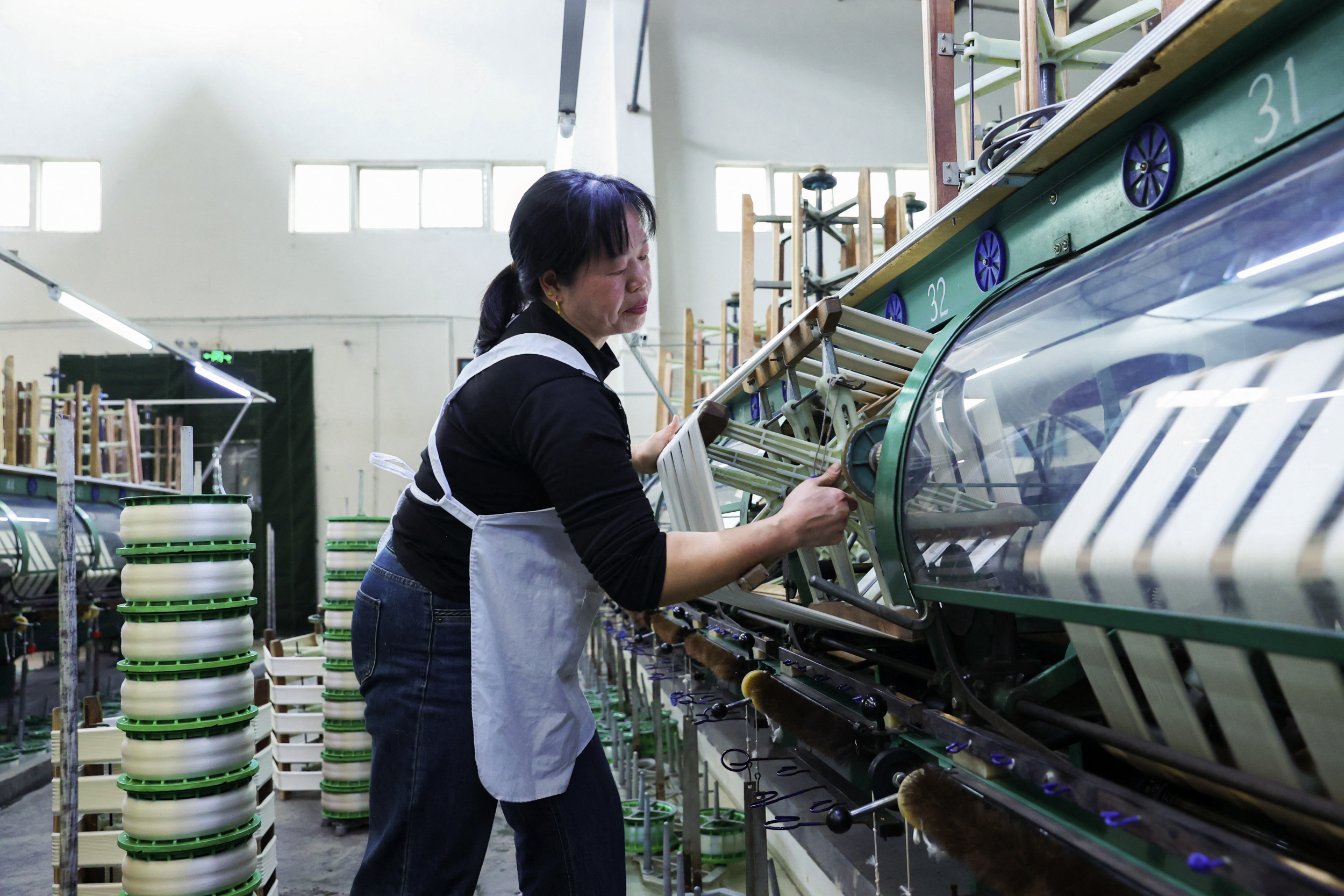
CANBERRA, Australia — Australian textile spinning mills feasibility studyinitiatives have gained major momentum following the release of a comprehensive landmark report assessing the economic, technological, and operational viability of rebuilding domestic cotton and wool processing facilities across regional Australia.
The research initiative, spearheaded by national scientific agency CSIRO alongside agricultural research bodies and regional development councils, examines actionable business models to re-establish onshore yarn spinning capacity for the first time in over two decades. Since the closure of Australia’s last commercial spinning mills during the early 2000s, approximately 97 percent of the nation’s raw cotton and greasy wool has been exported overseas for early-stage processing before being imported back as finished apparel and industrial textiles.
With global supply chains facing heightened geopolitical volatility, ocean freight disruptions, and shifting international trade regulations, Australian industry leaders are seeking to bridge the missing link in the domestic natural fibre value chain through advanced, highly automated regional processing hubs.
Addressing Historic Cost Barriers Through Automation and Renewables
Historically, Australian textile manufacturing struggled to compete against low-cost Asian processing hubs due to elevated domestic labor rates, high utility tariffs, and outdated processing technology. However, the new feasibility study highlights how structural shifts in energy generation and manufacturing technology have fundamentally altered economic viability calculations.
By co-locating modular, automated spinning mills adjacent to existing cotton gins, wool scouring facilities, and regional renewable energy assets, operational overheads can be reduced dramatically. Automated spinning machinery significantly lowers direct labor requirements per tonne of yarn produced, while direct power purchase agreements tied to regional solar, wind, and bioenergy microgrids help insulate processing plants from retail electricity price spikes.
The technical and economic pillars identified in the onshore processing framework include:
- Regional Co-Location Strategy: Placing spinning facilities near agricultural production hubs in New South Wales and Queensland to minimize raw material freight costs.
- Renewable Energy Integration: Utilizing dedicated solar and bioenergy power systems to achieve internationally competitive operational energy tariffs.
- Advanced Modular Automation: Deploying modern ring and open-end spinning technologies that maximize output while reducing manual labor dependency.
- Circular Fibre Recycling: Integrating post-consumer textile recycling capabilities with virgin cotton and wool streams to produce sustainable blended yarns.
Industry analysts note that combining onshore processing with renewable energy allows Australian growers to market a 100 percent domestically grown and manufactured product with verifiable low-carbon credentials.
Capturing Economic Value and Meeting Consumer Demand
The drive to re-establish domestic spinning mills aligns closely with the Australian Fashion Council’s broader National Manufacturing Strategy for Australian Fashion and Textiles. Independent economic modeling demonstrates that capturing early-stage processing onshore could unlock hundreds of millions of dollars in direct economic value while insulating local brands from external supply shocks.
Under current export dynamics, Australia exports raw cotton and wool at commodity prices, relinquishing high-value transformation margins to international spinning mills in Asia and Europe. By processing raw fibres locally into premium spun yarn, regional agricultural communities can retain a far greater share of the ultimate retail value chain.
Furthermore, major national fashion retailers and corporate uniform procurement networks have expressed growing interest in securing sovereign supply chains. Heightened consumer demand for transparent supply origins, non-mulesed wool, and sustainably grown cotton has created a lucrative market niche for fully traceable, Australian-made yarns.
“Re-establishing onshore fibre processing and spinning capability restores the missing link in our domestic value chain,” stated a representative from the Australian Fashion Council. “Australian agricultural producers grow world-class natural fibres, and having local processing capacity gives our manufacturing sector a distinct competitive advantage in the global ethical fashion landscape.”
Regional Job Creation and Long-Term Sovereign Capability
In addition to industrial value creation, the establishment of regional spinning plants offers substantial economic development benefits for rural and regional communities
.
The feasibility assessment projects that a network of modular spinning facilities across key agricultural corridors could create over 1,000 skilled advanced manufacturing jobs. Because regional processing hubs operate year-round, they provide stable, full-time employment opportunities that complement seasonal agricultural employment in cotton ginning and wool harvesting.
Government representatives across federal and state parliaments have voiced support for co-investing in shared manufacturing infrastructure, emphasizing that sovereign industrial capability extends beyond heavy defense and steel industries into basic consumer staples and textiles.
As the feasibility study moves into its final commercial consultation phase with private investors, agricultural cooperatives, and technology partners, Australia’s textile sector stands at a critical juncture. If commercial pilot projects secure final investment decisions, regional Australia could soon see the return of a modern, low-emissions spinning sector capable of transforming raw natural bounty into high-value yarn on home soil.

STATE OF THE MARKETS
GIFT Nifty (Earlier SGX Nifty) signals a negative start
GIFT Nifty on the NSE IX traded lower by 30 points, or 0.12 per cent, at 23,980, signaling that Dalal Street was headed for a negative start on Monday.
Tech View: The short-term trend is likely to remain weak as the index continues to trade below the 50-EMA on the hourly chart. A sell-on-rise sentiment may continue to prevail as long as the index remains below the 24,000–24,200 zone. On the lower end, support is placed at 23,830 and 23,700.
India VIX: India VIX, which is a measure of the fear in the markets, fell 5.8% to settle at 10.68.

Asian shares rally
Asian shares rallied on Monday as the robust US jobs report was seen as positive for global growth even as it narrowed the odds on a rise in interest rates, while oil edged higher after the US and Iran attacked ships in the Gulf.
- S&P 500 futures were little changed as of 9:39 a.m. Tokyo time
- Hang Seng futures were little changed
- Nikkei 225 futures (OSE) rose 1.9%
- Japan’s Topix rose 0.8%
- Australia’s S&P/ASX 200 rose 0.4%
- Euro Stoxx 50 futures were little changed
US stocks steady
Contracts for US stocks were steady after the tech-heavy Nasdaq 100 Index advanced 0.2% on Friday and the Philadelphia Semiconductor Index jumped 3.4%. There’s no cash trading of Treasuries Monday due to a US public holiday.
Dollar gets little lift
The dollar was on shaky ground on Monday, despite a ramp-up in US rate hike bets as Middle East tensions raised the prospect of broader inflationary pressures that could force global central banks to tighten policy in tandem.
Read more: CAS effect: Pre-open session rules to change from today. What changes for investors?
Oil gains
Oil prices extended gains on Monday as tit-for-tat strikes between the U.S. and Iran on vessels sailing in the Strait of Hormuz and other areas heightened concerns of a prolonged supply disruption from the Middle East.
Read more: Ahead of Market: 10 things that will decide stock market action on Monday
Stocks in F&O ban today
1) SAIL
3) Inox Wind
4) Kaynes
Securities in the ban period under the F&O segment include companies in which the security has crossed 95% of the market-wide position limit.
FII/DII action
Foreign portfolio investors net sold worth Rs 3,112 crore on Friday. DIIs, meanwhile, were net buyers at Rs 8,920 crore.
Rupee
The Indian rupee ended largely unchanged Friday, but posted its best weekly performance against the US dollar in five weeks, helped by stronger-than-expected dollar inflows into the central bank’s special schemes.
(Disclaimer: Recommendations, suggestions, views and opinions given by the experts are their own. These do not represent the views of Economic Times)
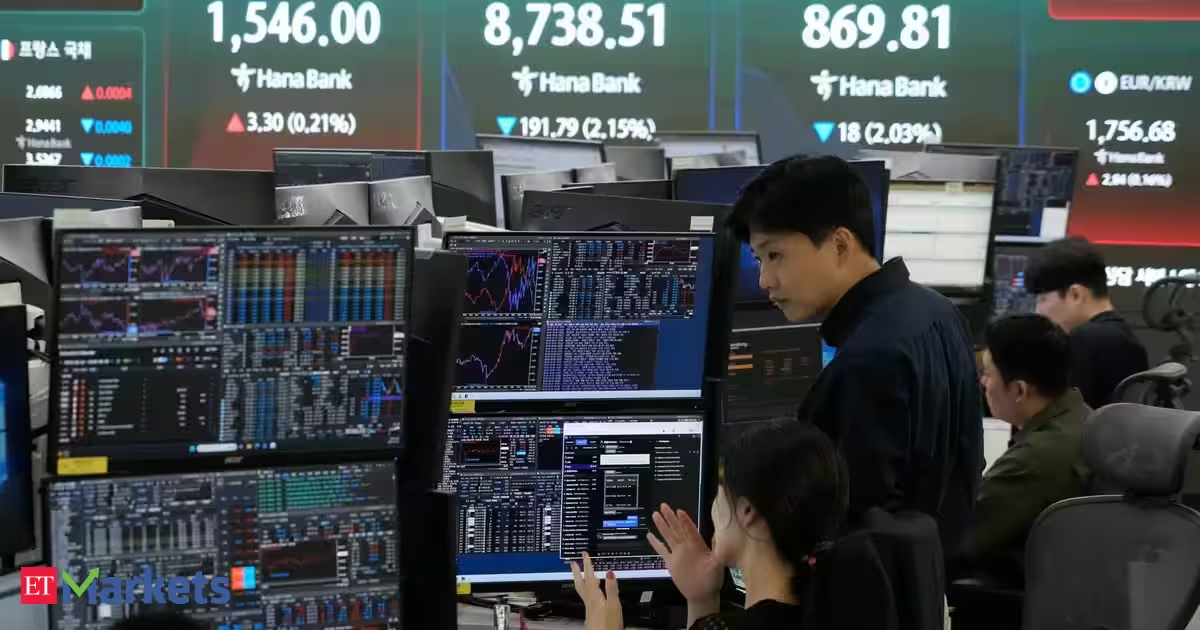
Benchmark indexes in Japan and South Korea both gained, while those for Australia were little changed. Contracts for US stocks were steady after the tech-heavy Nasdaq 100 Index advanced 0.2% on Friday and the Philadelphia Semiconductor Index jumped 3.4%. There’s no cash trading of Treasuries Monday due to a US public holiday.
Brent crude climbed 0.4% after Iran said it targeted three oil tankers using an unauthorized route through the Strait of Hormuz, as well as several US-linked vessels, in retaliation for American attacks on Iranian tankers.
The latest attacks suggest little immediate prospect of an end to the war the US and Israel launched against Iran more than six months ago, adding to inflation concerns. That puts added focus on US inflation data due this Friday after stronger-than-expected US payroll numbers last week nudged up bets on a Federal Reserve interest-rate hike this month.
“A September 16 Fed funds rate hike hinges on Friday’s US August CPI print,” Elias Haddad, global head of markets strategy at Brown Brothers Harriman, wrote in a note to clients. “A hot CPI print would all but seal a September hike and underpin a firmer US dollar. A cooler reading would strengthen the case for a hold and leave USD vulnerable to a dovish Fed repricing.”
The Islamic Revolutionary Guard Corps Navy gave no further details on the strikes, and its Telegram post late Saturday did not specify whether the vessels were hit. The IRGC later said it also attacked a US naval drone and an American unmanned surface vessel attempting to enter the strait.
Iran’s top security official Mohsen Rezaee said a new restricted zone would be declared outside the strait in the coming days, Press TV reported.In Asia, the yen remained in focus and fluctuated around 156 per dollar after last week’s more than 2% gain, spurred by an unwind in carry trades amid growing expectations for successive Bank of Japan rate hikes. Speculation has also grown that Japan’s Government Pension Investment Fund may raise its target allocation to domestic bonds.
“The market has come to anticipate a combination of GPIF reallocation and aggressive BOJ tightening as catalysts for a potential convincing break of dollar-yen towards 150 and, potentially, beyond,” strategists at Barclays Securities, including Shinichiro Kadota, wrote in a note. “From here, however, the bar to a much stronger yen is getting higher, as follow-through hinges largely on BOJ delivery on the perceived hawkish signals.”
Elsewhere, China’s Ministry of Finance will inject 300 billion yuan ($44.7 billion) in special bonds into its largest banks and insurers, aimed at easing margin pressure, expanding lending capacity and bolstering provisions against potential bad loans.
European bonds, including German bunds, will also be closely watched Monday after the far-right Alternative for Germany scored its best-ever result in a state election on Sunday. The euro was little changed in early Asian trading.
The AfD secured 44% of the vote in the eastern state of Saxony-Anhalt, more than doubling its support and putting it ahead of the long-governing Christian Democratic Union, whose backing collapsed to 17.5%, according to a projection broadcast by ARD.
In corporate news, Hon Hai Precision Industry Co., Nvidia Corp.’s server assembly partner, reported a 52% rise in monthly sales, driven by demand for servers as companies race to build data centers and AI capacity. The Taiwanese company’s sales are closely watched as a gauge of AI spending amid growing concerns over overcapacity, rising debt and intensifying competition.

RAJESH PALVIYA HEAD OF RESEARCH, AXIS SECURITIES
Nifty Strategy: The suggested strategy for the weekly September 8 expiry is a market-neutral Long Straddle, designed to benefit from increased volatility. This involves buying one lot each of the 23,950 Call and 23,950 Put, with premiums of 89 and 80 respectively, making a total outfl ow of Rs 11,000. As a debit spread, the maximum loss is limited to the premium paid if Nifty closes at 23,950 on expiry. However, if Nifty closes above 24,120 or below 23,780 and sustains beyond either breakeven level, profits can be unlimited.
 ET Bureau
TOP STOCKS PICKS
APL Apollo Tubes:
Buy | CMP: Rs 2,250 | Target: Rs 2,330–2,350 | Stop loss: Rs 2,170
The stock signalled a robust breakout, surging 4.4% on Friday and forming a bullish engulfing pattern. RSI has crossed 60, and prices are trading above the 20- and 50-day EMAs, confirming momentum.
One 97 Communications (Paytm):
Buy | CMP: Rs 1,659 | Target: Rs 1,800– 1,830 | Stop loss: Rs 1,590
The stock has cleared its 5-day moving average and is consolidating between Rs 1,600–1,700. The weekly MACD remains bullish, while RSI at 60 supports strength above the 20- and 50-day EMAs.
ANAND JAMES CHIEF MARKET STRATEGIST, GEOJIT INVESTMENTS
Trading Strategy: Bank Nifty has been forming continuation patterns since April 2026, followed by a “cup & handle” formation, suggesting potential for a large upside move. However, recent attempts have faced rejection. While not inclined towards outright selling, buying is recommended only on dips to 56,400, the downside marker. Aggressive traders may attempt long entries near the lower Bollinger Band at 57,109. Upside bets remain capped at 58,000, aligning with recent peaks and the upper Bollinger Band.
TOP STOCKS PICKS
Hindustan Oil Exploration Company:
Buy | CMP: Rs 185 | Target: Rs 205 | Stop loss: Rs 167
The stock has broken out of a prolonged consolidation, supported by strong volumes. Weekly MACD has delivered a bullish crossover, while RSI at 64 reflects healthy buying interest. Narrowing distance between the 20- and 100-week MAs further supports upside prospects.
Engineers India:
Buy | CMP: Rs 279 | Target: Rs 325 | Stop loss: Rs 258
The stock has broken out of a bullish wedge pattern, supported by strong volumes. The weekly MACD has turned bullish, and RSI at 67 shows robust buying strength.
ROHAN SHAH TECHNICAL ANALYST, ASIT C. MEHTA INVESTMENT INTERMEDIATES
Trading Strategy: Nifty has declined for the fourth straight week since CAS implementation, but the lower-timeframe structure remains positive with higher highs and higher lows intact. The setup favours buying Nifty Futures for an upside target of 24,300–24,500, with a stop loss below 23,500.
Read more: NSE grey market premium soars on Sebi’s IPO approval
TOP STOCKS PICKS
SBI Cards and Payment Services:
Buy | CMP: Rs 658 | Target: Rs 735 | Stop loss: Rs 620
The stock is consolidating near the neckline of an Inverse Head and Shoulders pattern. Constructive price action and supportive volumes increase the likelihood of a bullish breakout.
PI Industries:
Buy | CMP: Rs 2,465 | Target: Rs 2,750 | Stop loss: Rs 2,325
The stock has triggered a bullish AB=CD Harmonic Pattern, with the PRZ around 2,400–2,450. A multi-month demand zone at the same level strengthens the reversal setup.
Business
Federal Government Warns Against One Nation Plan Enabling Australians to Access Superannuation Early


CANBERRA — One Nation superannuation early access proposal announcements have sparked fierce pushback across Australia’s political spectrum after federal government ministers warned that Pauline Hanson’s controversial plan to let struggling citizens divert superannuation to cover immediate living and housing costs would severely undermine long-term retirement security.
Under the policy framework floated by One Nation, Australians currently paying rent or servicing a home mortgage would be permitted to redirect a portion of their compulsory superannuation contributions directly into their personal bank accounts for up to three years. Party leaders argued the temporary mechanism would provide instant financial relief to household budgets squeezed by persistent inflation, elevated interest rates, and soaring housing costs across the country.
However, the federal government moved quickly to denounce the scheme, warning that encouraging workers to raid their nest eggs would leave everyday citizens significantly worse off in retirement while failing to solve the underlying drivers of housing unaffordability.
Government Ministers Decry Plan to Raid Retirement Savings
Social Services Minister Tanya Plibersek spearheaded the administration’s critique, dismissing the proposal as a short-sighted political headline that masks significant long-term financial consequences for Australian workers.
Addressing the policy concept during media appearances, Plibersek argued that diverting compulsory retirement savings into daily expenditure strips workers of compound interest growth, ultimately leaving participants thousands of dollars worse off when they reach retirement age. She emphasized that federal economic policy should prioritize sustainable wage growth and workplace protections rather than encouraging citizens to erode their future retirement capital to meet present-day expenses.
“It is obvious One Nation wants you to raid your super instead of getting a pay increase,” Minister Plibersek stated in response to the policy rollout. “Our government supports higher wages and better superannuation when you retire, rather than forcing workers to sacrifice their future economic security to pay for immediate cost-of-living pressure.”
Labor frontbenchers reinforced the message, asserting that preserving the integrity of Australia’s $3.9 trillion compulsory retirement savings architecture remains vital to protecting taxpayers from bloated age pension liabilities in coming decades.
Bipartisan Criticism and Coalition Pushback
Opposition figures also expressed deep skepticism regarding the feasibility and detail of the One Nation policy, creating a rare moment of alignment between major parties against the minor party’s proposal.
Deputy Liberal Leader Jane Hume criticized the announcement, labeling it as an unstructured bid for media attention that lacks basic economic modeling or administrative details. Speaking on ABC News Breakfast, Hume pointed out that One Nation leaders had failed to explain how the temporary diversion of super funds would be monitored, managed, or prevented from triggering broader inflationary pressures across consumer goods and housing markets.
“This so far is nothing more than a headline,” Senator Hume remarked. “One Nation has a bit of a habit of putting out a headline without providing any substantive policy details. They are yet to explain how this proposal would actually work in practice or address the structural flaws it creates.”
While the Coalition has previously advocated for its own “Super for Housing” scheme—which would allow first-home buyers to access up to $50,000 of their superannuation as a home deposit—Coalition leaders distinguished their targeted equity-building proposal from One Nation’s broader plan to allow cash withdrawals for general rent and mortgage relief.
Political Battle Lines over Superannuation and Cost of Living
The debate over early superannuation access highlights deepening political divisions regarding how best to assist Australian households navigating high living costs, rent increases, and elevated mortgage repayments.
One Nation leader Pauline Hanson defended her party’s willingness to re-examine existing superannuation rules, maintaining that struggling families should be allowed to use their own money during times of severe financial distress. Hanson argued that for many Australians facing immediate housing instability or potential mortgage default, retaining locked retirement funds offers little practical value compared to staying housed today.
However, superannuation industry groups, financial planners, and economic analysts joined the government in condemning the proposal. Industry peak bodies noted that previous temporary early super release measures deployed during emergency periods led to tens of thousands of young Australians completely wiping out their super balances, creating compounding financial disadvantages over their working lives.
Key concerns raised by superannuation analysts and economic commentators include:
- Erosion of Compound Interest: Withdrawing or diverting capital during early and mid-career working years severely compromises long-term investment yield accumulation.
- Inflationary Risks: Injecting billions of dollars in redirected superannuation directly into consumer spending power risks compounding broader domestic inflation.
- Preservation Principle Integrity: Dismantling the core legislative requirement that locks superannuation until retirement sets a dangerous policy precedent for future economic shocks.
As the federal election approaches, superannuation policy is emerging as a central ideological battleground. While minor parties push for flexible early access to appeal to distressed voters, the government vows to defend compulsory retirement contributions as an unshakeable pillar of national economic security.
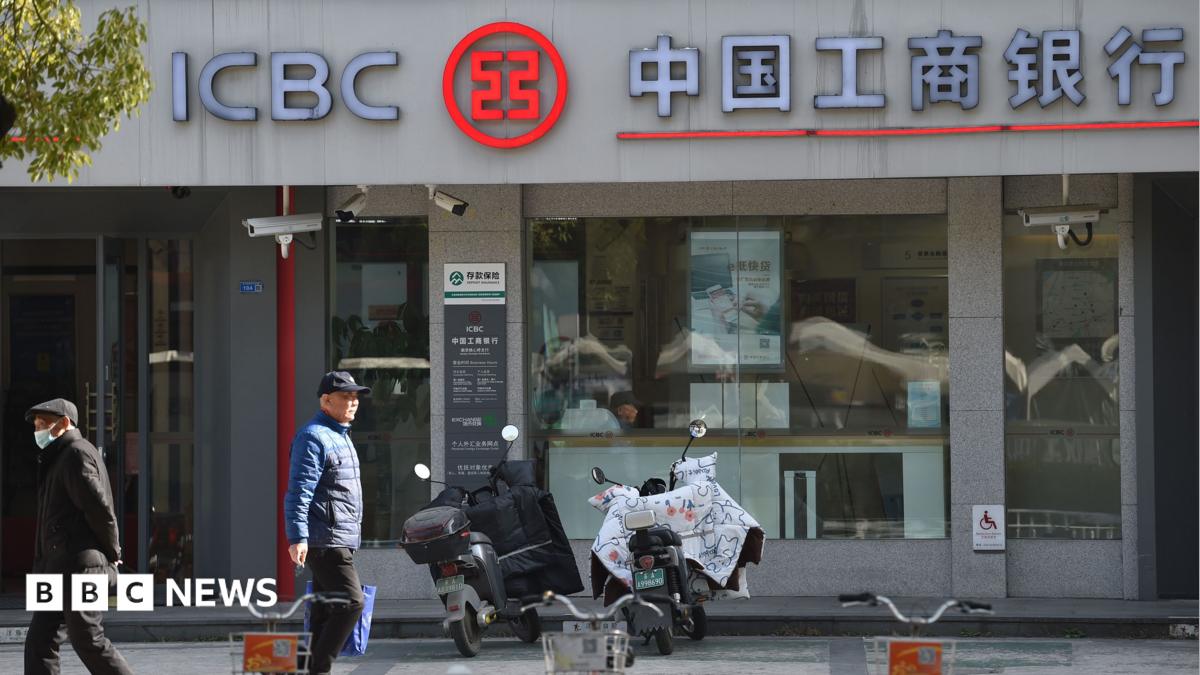
China is pumping tens of billions of dollars into eight state-owned banks and insurance companies to help shore up the country’s financial system and boost its slowing economy.
The cash injection, which is being led by China’s finance ministry, will total 360 billion yuan ($53.6bn; £39.7bn), state news agency Xinhua said on Sunday.
The outlet said the move “will help further enhance their sound operating capabilities, risk resistance capabilities, and ability to serve the real economy”.
It marks the latest move in Beijing’s attempts to reinvigorate the world’s second largest economy as it faces issues including trade tensions with the West, the impact of the Iran war and an aging population.
The package will boost the finances of three big lenders and five insurers including the Industrial and Commercial Bank of China, the Agricultural Bank of China and China Export & Credit Insurance Corporation.
State news outlet the Global Times said this “will give banks and financial institutions more resources to channel into credit for the real economy, while strengthening their ability to withstand external shocks at a time of global financial uncertainty”.
President Xi Jinping has long seen financial stability as key to China’s national security.
This weekend’s announcements come as Beijing is aiming to reshape the economy in the face of a number of challenges such as a shrinking workforce and ongoing trade and technology rivalry with the US.
China’s economic growth slowed sharply between the start of April and end of June as weak domestic demand and the Iran war’s impact on oil prices overshadowed the country’s strong exports.
Official gross domestic product (GDP) figures released in July showed China’s economy grew in the second quarter by 4.3%, below Beijing’s annual target, and after a 5% rise in the first quarter.
In March, Beijing cut the growth target to a range of 4.5%-5%, its lowest economic expansion goal since 1991, a move some analysts say has given Beijing space to acknowledge pre-existing economic weakness.

Taiwan flexes chip diplomacy muscles as it faces pressure to share AI wealth with allies

Ultra Clean Holdings: Record Q2 Beats And Raised WFE Forecasts Make Sell-Off Unjustified

Ole Miss vs. Louisville prediction, odds: Week 1 college football Sunday picks by proven model

Automakers Want Congress to Ban Chinese-Made Cars, Citing Data Privacy

Johnny ‘Mad Dog’ Adair’s vile rant on immigration as he plans return





-

 Fashion2 days ago
Weekend Open Thread: Beyond Yoga
-
 Crypto World3 days ago
Bitcoin price stalls near $82K as key resistance holds
-

 Politics3 days ago
Best Gaming Laptops, CPUs, TVs, And Keyboards To Upgrade Your Set Up For GTA VI
-

 Tech3 days ago
The Birds Outside, Drawn For You Automatically
-

 Crypto World3 days ago
IMF Says El Salvador’s Post-Review Bitcoin Purchases Used No Public Funds
-
 Crypto World3 days ago
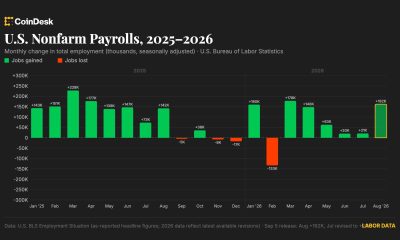
U.S. added stronger than expected 162,000 jobs in August as labor market bounced back
-

 Sports3 days ago
Alexandre Pato consortium’s Northampton Town investment approved
-

 Sports3 days ago
Commanders’ Chig Okonkwo is a top breakout fantasy football candidate
-

 Sports3 days ago
Golden Eaglets Drawn in Group B for 2026 WAFU B U17 Championship
-
 Crypto World3 days ago
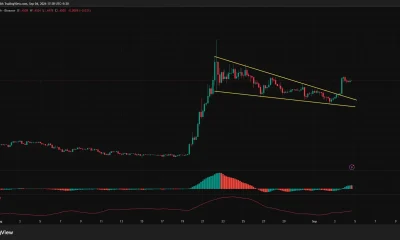
XRP price breaks falling channel as bulls target $1.53
-

 Politics3 days ago
A new European chapter for Gibraltar
-

 Politics3 days ago
How To Avoid Winter Colds: 4 Everyday Habits That Spread Germs, Says Pharmacist
-

 Politics3 days ago
The House | Bin the lectures, bring gossip and be ready to banter: how the new PM should prepare for his Trump encounter
-

 Crypto World3 days ago
From warning to listing: UK’s largest retail investment platform opens access to crypto ETNs
-

 Crypto World3 days ago
FinCEN flags $12.7B tied to Southeast Asia crypto investment scams
-

 Tech3 days ago
A Worthy Android Ereader, With Some Tradeoffs
-

 Politics3 days ago
33 Cosy Autumn Home Decor Ideas: Blankets, Pumpkin Decorations, And Candles
-

 Tech3 days ago
How To Edit Claude’s Memory
-

 Crypto World3 days ago
Trezor Data Breach Impacts 67,000 More US Customers
-

 Tech3 days ago
beyerdynamic AVENTHO Y Debuts at IFA 2026 and Makes Wireless Headphones Less Disposable
You must be logged in to post a comment Login