Connect with us

Business

Haverty Furniture Companies, Inc. (HVT) Q4 2025 Earnings Call Transcript

Published

on

OneWater Marine Inc. (ONEW) Q1 2026 Earnings Call Transcript

Haverty Furniture Companies, Inc. (HVT) Q4 2025 Earnings Call February 24, 2026 10:00 AM EST

Company Participants

Tiffany Hinkle – Assistant Vice President of Financial Reporting
Steven Burdette – President, CEO & Director
Richard Hare – Corporate Secretary, Executive VP & CFO

Conference Call Participants

Advertisement

Anthony Lebiedzinski – Sidoti & Company, LLC
Cristina Fernandez – Telsey Advisory Group LLC

Presentation

Operator

Advertisement

Greetings, and welcome to Haverty’s Fourth Quarter 2025 Earnings Conference Call. [Operator Instructions]. As a reminder, this conference is being recorded. It is now my pleasure to introduce Tiffany Hinkle, Assistant Vice President of Financial Reporting, Investor Relations. Thank you, you may begin.

Tiffany Hinkle
Assistant Vice President of Financial Reporting

Thank you, operator. Good morning, and thank you for joining our fourth quarter earnings call. I’m here today with our President and CEO, Steve Burdette; and Executive Vice President and CFO, Richard Hare.

Advertisement

Before we begin, I’d like to remind everyone that today’s conference call may contain forward-looking statements, which are subject to risks and uncertainties. Actual results may differ materially from those made or implied in such statements, which speak only as of the date they are made and which we undertake no obligation to publicly update or revise. Factors that could cause actual results to differ include economic and competitive conditions and other uncertainties detailed in the company’s reports filed with the SEC.

A replay of this call will be available on our Investor Relations website this afternoon. For commentary about our business, I will now turn the call over to Steve.

Steven Burdette
President, CEO & Director

Advertisement

Good morning, and thank you for joining our 2025 fourth quarter and 2025 year-end conference call.

We are excited to report an increase in both written and delivered comp sales for Q4, marking our second consecutive quarter of positive comps. Our

Advertisement
Continue Reading
Click to comment

Leave a Reply

Your email address will not be published. Required fields are marked *

Business

NVIDIA (NVDA) Stock Edges Lower Ahead of Q4 Earnings as AI Spending Concerns Loom

Published

on

Microsoft CEO Satya Nadella says the US tech giant plans to invest $3 billion in India on AI and cloud infrastructure over the next two years

NVIDIA Corporation (NASDAQ: NVDA) shares traded mixed to slightly lower in early trading on February 25, 2026, closing the prior session at $191.55 on February 23, up 0.91% that day but down modestly year-to-date amid broader tech sector caution. The AI chip leader’s stock has risen about 2.7% in 2026 so far, outperforming the Nasdaq’s 2.5% decline, as investors position for the company’s fiscal fourth-quarter earnings report due after market close Wednesday, February 25.

Tech giants in the AI race have been spending billions of dollars for GPUs made by Nvidia, considered a leader when it comes to chips that power the technology
NVIDIA
AFP

NVIDIA’s market capitalization hovers near $4.7 trillion, making it one of the world’s most valuable companies. The stock has shown resilience despite volatility, trading in a 52-week range from $86.62 to $212.19. Recent sessions saw NVDA fluctuate between roughly $187 and $194, with average daily volume exceeding 170 million shares during spikes.

The upcoming earnings report is highly anticipated as a litmus test for the AI infrastructure boom. Wall Street expects fiscal Q4 (ended January 2026) revenue of approximately $65.6 billion to $66 billion, up roughly 66-68% year-over-year, driven by explosive demand for Blackwell GPUs and data center accelerators. Adjusted earnings per share are forecasted at $1.50 to $1.53, compared to $0.89 in the prior-year quarter. Guidance for the April quarter is projected around $71.7 billion to $72.5 billion, implying continued triple-digit growth.

Analysts at Wedbush Securities and others highlight hyperscaler capex exceeding prior expectations, with servers and AI infrastructure forming the bulk of forward spend. NVIDIA’s data center segment, which accounted for the majority of revenue in recent quarters, remains the primary growth engine. CEO Jensen Huang has emphasized a multi-year AI factory buildout, estimating $3 trillion to $4 trillion in global investment through 2030, with NVIDIA positioned to capture significant share.

The company shipped millions of Blackwell GPUs in the past year, with Rubin architecture on track for late 2026 launch and subsequent variants (Rubin CPX, Rubin Ultra, Feynman) extending the roadmap into 2028. Sovereign AI, enterprise AI, AI-native startups, physical AI, and quantum computing represent additional long-term opportunities beyond traditional data centers.

Advertisement

Despite the optimism, skepticism has grown over the sustainability of massive AI spending. Wall Street has turned cautious on hyperscaler capex levels, with concerns that returns on investment may lag or that competition from AMD (following its Meta deal) and custom silicon from hyperscalers could pressure margins. Some investors, including Michael Burry, have questioned the scale of depreciation and free cash flow impacts from capex doubling or more in 2026.

NVIDIA’s stock has bucked broader tech weakness in 2026, supported by strong fundamentals. The forward P/E remains elevated but is viewed as justified by growth prospects. Institutional ownership stays robust, with funds like Vanguard and BlackRock maintaining large positions.

The earnings call at 5 p.m. ET on February 25 will feature commentary from Huang and CFO Colette Kress on Blackwell ramp, Rubin progress, and AI demand trends. A strong beat or optimistic guidance could spark a rally, while any signs of slowing growth or margin pressure might trigger volatility.

As NVIDIA approaches its fiscal Q4 results, the market awaits confirmation that the AI supercycle remains intact. With competition intensifying and capex scrutiny rising, the report will shape sentiment for the AI chip leader and broader tech sector in the months ahead.

Advertisement
Continue Reading

Business

Apple says some Mac Mini production will move to the US

Published

on

Apple says some Mac Mini production will move to the US

The technology giant had pledged to increase investment in the US by $600bn, under pressure from Trump.

Continue Reading

Business

Palantir (PLTR) Stock Slips 3.4% to $130.60 Amid Valuation Concerns and AI Sector Pullback

Published

on

Microsoft CEO Satya Nadella says the US tech giant plans to invest $3 billion in India on AI and cloud infrastructure over the next two years

Palantir Technologies Inc. (NYSE: PLTR) shares fell 3.43% on Monday, February 23, 2026, closing at $130.60 after trading as low as $127.39 and as high as $132.04. Volume reached approximately 52.3 million shares, slightly above average, as the AI software specialist faced pressure from broader market rotation, tariff-related uncertainty, and ongoing debate over its lofty valuation despite strong fundamentals.

Palantir co-founder and CEO Alex Karp believes the United States should be the 'strongest, most important country in the world'
Palantir co-founder and CEO Alex Karp
AFP

The decline extended Palantir’s year-to-date losses to around 27%, with the stock down roughly 35-39% from its all-time high of $207.52 set in November 2025. The pullback reflects a shift in sentiment toward high-growth software names amid concerns over sustainability of AI spending and elevated multiples.

Palantir’s market capitalization stands at approximately $311-312 billion, supported by a massive cash position and consistent revenue acceleration. The company’s latest quarterly results, reported February 2, 2026, showed fourth-quarter 2025 revenue of $1.41 billion (up 70% year-over-year), adjusted EPS of $0.25 (beating estimates), and GAAP net income of $609 million. U.S. commercial revenue surged 137%, highlighting robust enterprise AI demand through platforms like Foundry and Gotham.

Management issued aggressive 2026 guidance: full-year revenue between $7.18 billion and $7.20 billion (implying 61% growth), with U.S. commercial revenue exceeding $3.144 billion. The outlook crushed consensus, underscoring Palantir’s momentum in AI-driven data analytics for government and commercial clients. CEO Alex Karp described the company as “an n of 1” in the AI software market, emphasizing its unique position combining high growth with GAAP profitability and a Rule of 40 score of 127%.

Despite the impressive numbers, the stock has struggled in early 2026 amid a broader SaaS and AI sell-off. Analysts point to valuation risks: the trailing P/E exceeds 200x, and the forward P/E remains elevated even after recent weakness. Consensus price targets hover around $191 (implying ~46% upside), with ratings split between Moderate Buy (12 Buy, 5 Hold, 2 Sell in recent months). Recent upgrades include Mizuho to Outperform at $195, Piper Sandler Overweight at $230, and others, but some firms maintain Hold or cautious views citing execution risks and potential slowdowns.

Advertisement

Palantir’s relocation of headquarters to Miami, Florida (announced mid-February 2026), added a positive note, with shares briefly rising 4.9% post-announcement to $135.24 on February 20. The move positions the company in a business-friendly state and has fueled speculation about future growth initiatives.

Key drivers include Palantir’s expanding AI bootcamps, which accelerate customer onboarding and adoption, and its focus on commercial AI platforms. The company continues to scale operating leverage as AI models advance, with analysts forecasting 62% growth in 2026 and 41% in 2027. However, critics argue that even aggressive projections imply the stock prices in several years of near-perfect execution, leaving little margin for error.

Institutional activity shows mixed signals: some funds have reduced stakes amid the pullback, while others increased positions. Insider buying by executives, including CEO Alex Karp, signals confidence, though governance questions (such as past CEO jet reimbursements) have surfaced in discussions.

Looking ahead, the next earnings report is expected May 4-11, 2026, with consensus EPS estimates around $0.26 for Q1. Investors will watch for updates on commercial momentum, government contracts, and any new AI product launches or partnerships.

Advertisement

Palantir remains a polarizing name: bulls see it as a leader in enterprise AI with durable growth, while bears highlight valuation froth and risks if AI hype cools or competition intensifies from rivals like Snowflake or custom solutions. The stock’s recent softness offers a potential entry for believers in its long-term story, but volatility persists in a market grappling with AI spending scrutiny and macroeconomic shifts.

Continue Reading

Business

Land costs hit historic high as supply drops

Published

on

Land costs hit historic high as supply drops

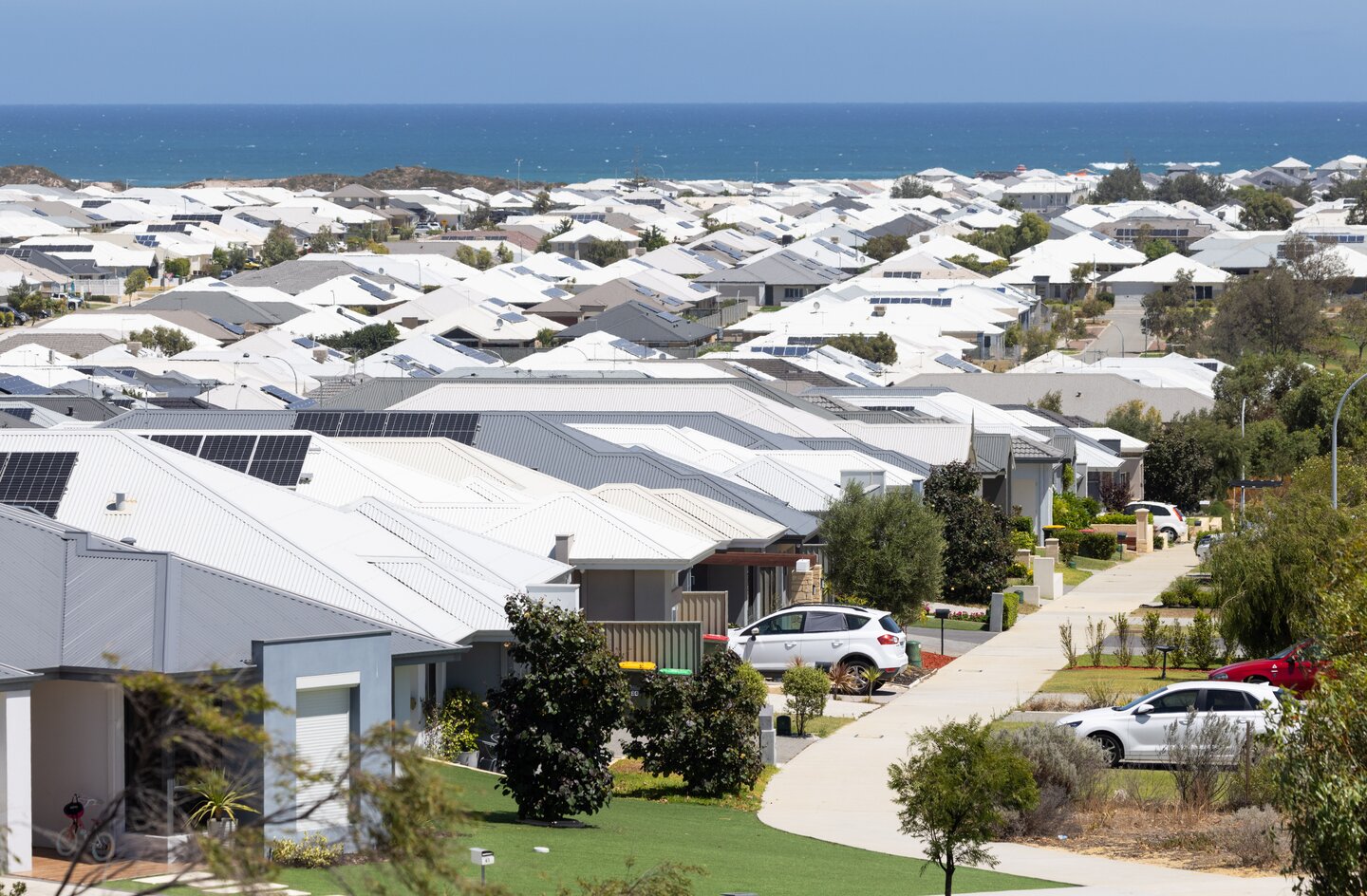
Land developers are struggling to keep pace with the demand for lots as average lot prices exceed $400,000.

Continue Reading

Business

CAVA Q4 2025 earnings

Published

on

CAVA Q4 2025 earnings

Guests eat at a CAVA restaurant on May 28, 2024 in Chicago, Illinois.

Scott Olson | Getty Images

Cava, the fast-casual Mediterranean restaurant chain, reported record-breaking revenue for fiscal year 2025 on Tuesday and forecast sales growth for fiscal year 2026.

Advertisement

Shares gained roughly 10% in extended trading Tuesday.

“While there are a lot of factors around us that are creating pressures from a margin perspective, our model has allowed us to be very thoughtful and minimize price increases to our guests and to consumers in general, which really helps elevate our value perception,” CFO Tricia Tolivar told CNBC.

Though the company said last quarter that it saw a pullback among younger consumers, Tolivar said that trend came to an end in the final three months of its fiscal year.

“We actually saw firming in that category, and overall [we’re] seeing improvement in our trends across income cohorts, age cohorts, different parts of the country,” Tolivar said. “And in fact, we believe there’s a little bit of a bridge that we’ve been able to create in this K-shaped economy, where we want to be accessible for everyone, and we’re doing our best to ensure that our amazing culinary and incredible hospitality is there for all customers across the country.”

Advertisement

She added that some of Cava’s best performing restaurants are in markets where median household incomes are lower.

The restaurant chain reported same-store sales up 0.5% in its fiscal fourth quarter, compared to Wall Street estimates of a 1.1% decline, according to StreetAccount. Much of that growth was thanks to menu prices and product mix, and partially offset by a 1.4% decline in foot traffic, the company said.

Tolivar said Cava raised prices about 1.7% at the beginning of 2025 and that 2026 would see “very modest increases.”

The company also recorded 72 net new restaurant openings in fiscal 2025 for a total of 439 locations.

Advertisement

Here’s how Cava performed in the period ended Dec. 28 compared with what Wall Street was expecting, based on a survey of analysts by LSEG:

  • Earnings per share: 4 cents vs. 3 cents expected
  • Revenue: $275 million vs. $268 million expected

In the fourth quarter, Cava reported net income of $4.9 million, or 4 cents per share, compared to $78.6 million, or 66 cents per share, in the fourth quarter of 2024.

Revenue of $275 million marked an increase of nearly 21% year over year.

For the full fiscal year, the company reported record-breaking revenue surpassing $1 billion, a growth of more than 20% compared to the year prior. Same-restaurant sales for the year increased by 4%.

“Our momentum and market share gains underscore the strength of our value proposition and reflect how deeply our brand is resonating with today’s increasingly discerning consumer,” CEO Brett Schulman said in a statement.

Advertisement

For fiscal year 2026, Cava said it expects 74 to 76 net new restaurant openings, in addition to same-store sales growth of 3% to 5%.

Tolivar said the company is expecting strong results from its upcoming menu additions, including a salmon offering, which will mark Cava’s first entry into seafood.

Continue Reading

Business

Form 144 MASTERCARD INC. For: 24 February

Published

on


Form 144 MASTERCARD INC. For: 24 February

Continue Reading

Business

Next Welsh Government needs to help realise huge potential of renewables

Published

on

Business Live

RenewableUK Cymru has published its manifesto ahead of the Senedd Election in May

Generic picture of a wind turbine.

Renewables(Image: Local Democracy Reporting Service)

The next Welsh Government needs to deliver a joined up clean power strategy to avoid the risk of losing billions in investment and the creation of thousands of high-skilled jobs.

Ahead of the Senedd Election representative body for the sector, RenewableUK Cymru, has published its manifesto which outlines how Wales could unlock a £10bn of economic opportunity for Welsh businesses, create 8,000 secure, well-paid jobs, and deliver affordable, home-grown energy – providing government and industry work together in a formal clean power partnership.

Advertisement

The manifesto, entitled, Cymru Clean Power: Call for Government 2026, highlights that electricity demand in Wales is projected to double – potentially triple – by 2050.

READ MORE: Largest ever number of renewable projects in Wales backed in UK Goverment auction roundREAD MORE: The verdict on the promise of £14bn of rail investment in Wales over the long-term

Two planned AI growth zones – one in south Wales and the other in north Wales – alone could require as much electricity as a city the size of Cardiff. Electrified heavy industry, electric vehicles and heat pumps will all add to that demand. However, the manifesto highlights that most of Wales’ electricity still comes from imported gas, exposing households and businesses to volatile global prices.

The manifesto says that the choice facing voters and politicians is clear: “continue importing fossil fuels or build a home-grown clean energy system that powers jobs, industry and communities across Wales.”

Advertisement

RenewableUK Cymru’s analysis also shows that by accelerating large-scale wind, solar and tidal projects, would also deliver average salaries of £49,000 — around £10,000 above the Welsh average, generate up to £183m in community benefit funding over the next decade and protect households from price volatility by reducing reliance on imported gas

It also highlights that Wales must also modernise its grid network that connects power to homes, businesses and industry. It warns that without increased capacity, new renewable projects will stall and investment decisions will drift elsewhere.

Jessica Hooper, director of RenewableUK Cymru, said: “As parties set out their priorities for Wales, energy is our defining economic choice. Clean energy is one of the UK’s fastest-growing industries. Wales has the natural resources, the projects in the pipeline, and investors ready to go. But without a grid fit for the future, that opportunity will not be realised.

“A Cymru clean power partnership would turn potential into delivery – securing affordable, home-grown energy, billions in investment, thousands of well-paid jobs and millions in funding for communities across Wales.”

Advertisement

Last week Plaid Cymru leader, Rhun ap Iorwerth, said if elected the party’s intention is to require minimum community-ownership stake of between 15 and 25% for all energy projects over 10 megawatt, or equivalent means of capturing community benefits, while also increasing the number of communities who have the capacity and ability to buy in to projects at scale,

It would also establish a national energy body for Wales that would be responsible for developing large-scale projects – embedding meaningful community ownership, and supporting smaller-scale community energy initiatives.

There have been projects, like Alwen Forest windfarm that has just been consented, with a 20% community ownership stake, but that took eight years to work through. It is not clear whether the sector would be willing to invest in Wales at the scale required with such community ownership thresholds.

In terms of distribution lines ( a devolved matter), that are mainly required in rural areas to connect renewable projects to the National Grid, Plaid would prohibit the use of large steel lattice pylons lines 132 kilovolt or below, with a clear presumption in favour of under grounding, with overhead alternatives permitted only where installation is via low wooden poles or equivalent, less intrusive infrastructure.

Advertisement

Putting cables underground would be far more expensive option and could potentially deter invest. RenewablesUK Cymru points to research shows burying power lines can cost up to five times more than overhead lines. It add this would have significant implications for bill payers and that a “pragmatic, cost-effective approach” to grid modernisation will be essential.

The Plaid leader said: “Plaid Cymru supports renewable energy unequivocally just as we believe that the wellbeing of communities has to be at the heart of the Welsh Government’s energy strategy.

A Plaid Cymru government will require a minimum community-ownership stake of between 15 and 25% for all energy projects over 10 megawatt, or corresponding means of capturing community benefits as a key condition for consent.

“We propose a single national energy body for Wales responsible for developing large-scale projects, embedding meaningful community ownership, and supporting smaller-scale community energy initiatives – all framed by the clear remit of retaining more of the value of Welsh renewables in Wales and helping to reduce energy bills over the medium to long term.”

Advertisement

Plaid has dropped a previous pledge to achieved net zero carbon emissions in Wales by 2035. Mr ap Iorwerth said: “I think most people now can see that 2035 isn’t realistic. We are very close. Time rolls by, and we have to take a pragmatic look at that. I think everything points to needing to be a point in the future where we need to keep an eye on the prize.”

Continue Reading

Business

Google apologises for Baftas alert to 'see more' on racial slur

Published

on

Google apologises for Baftas alert to 'see more' on racial slur

Google said the news alert was an error that should not have happened.

Continue Reading

Business

Apple Stock Hits $266.18 Close Amid Q1 Record Earnings and Spring Hardware Buzz

Published

on

Apple Logo on a Glass Window

Apple Inc. (NASDAQ: AAPL) shares saw a positive start to the week, closing at $266.18 on Monday, February 23, 2026. This represents a 0.60% increase (+$1.60) from the previous session, as the stock continues to recover from a brief dip earlier in the month. The upward momentum reflects ongoing strength from record-breaking holiday earnings and anticipation for Apple’s spring product roadmap.

Market Performance and Valuation

Apple’s market capitalization remains near the $4.0 trillion mark, solidifying its position as the world’s most valuable company. The stock is approximately 8% below its all-time high of $288.61 (reached in late 2025) but has shown resilience in early 2026. Trading volume was steady at 37.3 million shares, reflecting broad institutional support. As of February 24 intraday, AAPL trades around $272.40 (up 2.34% or +$6.22), with a day range of $267.74–$274.89.

Record-Breaking Q1 2026 Results

Investors continue to digest Apple’s fiscal first-quarter results (reported January 29, 2026), which shattered Wall Street expectations:

  • Total Revenue: A record $143.8 billion, up 16% year-over-year.
  • Earnings Per Share (EPS): An all-time high of $2.84, beating the consensus estimate of $2.71.
  • Services Explosion: The segment reached a massive milestone, crossing $30 billion in quarterly revenue for the first time (up 14% YoY). With a gross margin of 76.5%, Services now serves as a high-profit anchor.
  • Installed Base: CEO Tim Cook confirmed Apple’s active device ecosystem has surpassed 2.5 billion devices.

Spring Product Anticipation

While no official “Special Apple Experience” event has been announced for March 4, analysts expect a late March hardware refresh focusing on:

  • M5 MacBooks: Refreshed MacBook Pro and MacBook Air models powered by next-generation M5 silicon (expected H1 2026).
  • iPad Updates: Potential M5 iPad Pro refresh alongside OLED iPad Air rumors.

The iPhone 17 lineup (expected fall 2026) remains a key long-term catalyst, with supply chain reports pointing to A19 chips, improved modems, and design refinements driving 38% China growth seen in recent quarters.

Strategic Outlook

Despite EU regulatory scrutiny and global tariff concerns, analyst sentiment remains bullish. Morgan Stanley and Wedbush maintain price targets between $280–$300, citing Apple’s pivot toward an AI-driven services platform (P/E ~34.4, EPS $7.91). As February closes, focus remains on spring hardware reveals that could push AAPL toward new highs.

Advertisement
Continue Reading

Business

Reeves adviser sparks backlash after saying UK doesn’t ‘need any more restaurants’

Published

on

Reeves adviser sparks backlash after saying UK doesn’t ‘need any more restaurants’

A senior adviser to Rachel Reeves has drawn sharp criticism from the hospitality sector after saying Britain does not “need any more restaurants”.

Alex Depledge, appointed last year as the Government’s entrepreneurship adviser, argued that ministers should prioritise high-growth industries such as technology and advanced manufacturing rather than hospitality and retail.

Speaking to Insider Media, Depledge said: “We don’t need any more restaurants. I’m not anti-hospitality, but that’s not where my efforts are.” She added that the UK should focus on scaling sectors such as clean tech and creative industries to drive long-term economic growth.

Her remarks prompted an immediate backlash from publicans and restaurateurs already grappling with higher national insurance contributions and business rate reforms.

Sacha Lord, chairman of the Nighttime Industry Association and a former adviser to Manchester mayor Andy Burnham, said the comments deepened confusion about Labour’s stance towards hospitality. “Small and medium-sized businesses are the largest employers in the private sector,” he said, adding that the sector had been “blindsided” by recent tax changes.

Advertisement

TV chef Michel Roux Jr also criticised the remarks on social media, while pub campaigner Andy Lennox urged Depledge to reconsider what he described as “unwise words”.

Hospitality accounts for around 7 per cent of UK employment, with roughly 2.6 million people working in the sector, according to the Office for National Statistics. The number of restaurants fell 1.3 per cent in 2025 to 89,600, as operators faced rising costs and squeezed consumer spending.

Depledge, who founded property and software businesses including Resi UK and Good Lord, defended her focus on sectors capable of generating higher productivity and wages. She suggested that while small businesses remain vital, their overall contribution to the economy has remained broadly stable over decades.

The Chancellor has introduced targeted relief for pubs, including a temporary 15 per cent business rates discount, but restaurants and hotels have continued to press for broader support.

Advertisement

The episode underscores growing tension between Labour’s push to champion “future-facing” industries and the concerns of traditional sectors that remain major employers across the country.


Paul Jones

Harvard alumni and former New York Times journalist. Editor of Business Matters for over 15 years, the UKs largest business magazine. I am also head of Capital Business Media’s automotive division working for clients such as Red Bull Racing, Honda, Aston Martin and Infiniti.

Advertisement
Continue Reading

Trending

Copyright © 2025