Connect with us

Business

High mortgage rates to keep US housing market revival elusive: Reuters poll

Published

on

Continue Reading
Click to comment

You must be logged in to post a comment Login

Leave a Reply

Business

Solar Industries shares crash 9% after acquisition of South Africa’s Omnia Holdings for Rs 12,951 crore

Published

on

Solar Industries shares crash 9% after acquisition of South Africa’s Omnia Holdings for Rs 12,951 crore
Shares of Solar Industries crashed nearly 9% on Tuesday to day’s low of Rs 20,180 on NSE after the company announced the acquisition of South Africa’s Omnia Holdings.

According to a filing with the exchange, the company said that Solar SA Investments, a wholly owned step-down subsidiary of Solar Industries, will acquire all outstanding shares of Omnia in an all-cash transaction for a consideration of approximately US$1.355 billion (Rs 12,951 crore), subject to customary closing conditions, including receipt of required regulatory approvals and approval by Omnia shareholders.

Also Read | Solar Industries to acquire South Africa’s Omnia for Rs 12,951 crore in biggest global expansion push

The company also said that the proposed acquisition is expected to drive commercial growth and operational efficiencies through technology innovation, broader customer coverage, enhanced supply chain resilience, greater product and service integration and accelerated development of advanced blasting solutions.

Advertisement

The acquisition is expected to be completed in early to mid 2027, subject to customary conditions, including competition approvals under relevant jurisdiction.


Upon successful completion of the transaction, Omnia will be delisted from the Johannesburg Stock Exchange and A2X Markets securities exchange.
The combination will serve as a significant catalyst for Solar Group’s next phase of growth. The transaction in cash consideration would create one of the largest and most integrated explosives and blasting solutions platforms globally, with expanded manufacturing capabilities, enhanced market reach and access to strategically important mining jurisdictions.”Omnia is a business we have long admired for the strength of its Mining and Agriculture businesses, differentiated technologies and brands, and deep customer relationships built over many years. The proposed transaction marks an important milestone in our ambition to become a global leader in explosives and blasting solutions, while also providing us with a meaningful entry into integrated crop nutrition and biological solutions,” said Manish Nuwal, Managing Director and Chief Executive Officer of Solar Group.

Nuwal also said that in particular, Omnia’s BME brand brings a strong international mining platform, high-quality manufacturing assets, technological leadership in electronic initiation systems, integrated ammonium nitrate manufacturing capability and an established presence across Africa and other international markets.

He further said that the acquisition by Solar SA of Omnia will create the most integrated global blasting platform that combines Omnia’s vertically integrated manufacturing capabilities, ammonium nitrate production, surface bulk explosives and blasting services with Solar Group’s leadership in explosives, initiating systems and advanced blasting technologies.

In 2024, Solar strengthened its South African presence through the acquisition of ProBlast, a local South African company specialising in open-cast mining, drilling, blasting and explosives services. Building on this foundation, the proposed acquisition of Omnia by Solar SA represents the next strategic step in Solar Group’s SADC growth journey, significantly expanding its operational, manufacturing and distribution capabilities.

Advertisement

Omnia Holdings

Omnia Holdings is a global, diversified chemicals company supplying chemicals and specialized services and solutions to the mining, agriculture and chemicals application industries. The company is listed on the Johannesburg Stock Exchange (OMN) and A2X Markets securities exchange. For the financial year ended March 31, 2026, Omnia reported a revenue of USD $1.41 billion.

Also Read | Solar Industries buys South Africa’s Omnia in $1.3 billion deal

Solar Industries share price

Solar Industries shares gained 2% over the past month and nearly 67% so far this calendar year. The stock has risen 40.78% over the past year.

Over the past three and five years, Solar Industries shares have gained 338% and 926%, respectively.

Advertisement

Disclosure: This article has been written by Surbhi Khanna, who is not a SEBI-registered Research Analyst or an investment advisor . Surbhi Khanna does not hold any financial interest in Economic Times as of the date of publication. The views/recommendations mentioned in this article, wherever applicable, are those of the respective SEBI-registered Research Analyst/brokerage and have been reproduced/reported with due attribution. They should not be construed as the views or recommendations of the EconomicTimes Digital or the journalist. Readers are advised to consider the original research report and make their investment decisions based on their own assessment.

Continue Reading

Business

How ChatGPT and AI Video Editors Are Transforming Content Creation in 2026

Published

on

How ChatGPT and AI Video Editors Are Transforming Content Creation in 2026

Introduction

Content creation is becoming more accessible and efficient in 2026 as artificial intelligence moves from an emerging technology into a practical part of everyday creative workflows. Writers, video creators, marketers, designers, and social media teams can now use AI to support tasks that once required several separate tools and significant amounts of manual work.

The change is not limited to generating text. Modern AI technologies can assist with brainstorming, scripting, image creation, video production, editing, captions, and content repurposing. Instead of treating these as completely separate activities, creators can connect them into a single workflow that starts with an idea and ends with a finished piece of content.

ChatGPT is particularly useful during the planning and development stages. It can help creators explore ideas, structure scripts, develop hooks, organize scenes, and think through different ways of presenting information. AI-powered visual tools can then help transform those plans into images, footage, graphics, and videos.

The most important development, however, is not that AI can perform individual creative tasks. It is that these capabilities can work together. When used thoughtfully, AI can reduce repetitive production work while allowing people to retain control over storytelling, accuracy, creative direction, and final editorial decisions.

Advertisement

How AI Is Changing the Content Creation Workflow

Traditional content production often requires creators to move through several stages manually. A typical video project might begin with research and brainstorming, followed by scriptwriting, recording, visual preparation, editing, captioning, and distribution. Each stage can involve different software and repetitive tasks.

AI is changing this workflow by providing assistance across multiple stages.

The first stage is often idea development. Creators can use AI to explore potential topics, audience questions, headlines, video concepts, and different creative directions. Rather than relying on the first idea that comes to mind, they can quickly compare several approaches and select the one that best fits their audience.

The next step is script development. AI can help turn a rough concept into an organized structure, including an introduction, key points, examples, transitions, and a conclusion. It can also generate alternative versions of a section, allowing creators to experiment with different tones before recording.

Advertisement

AI can then support the visual side of production. Images can be developed from descriptions or references, while video tools can assist with organizing footage and preparing an initial edit. Captions, subtitles, and other repetitive elements can also be handled more efficiently.

Finally, AI can help with content repurposing. One long-form video may contain enough material to create shorter clips, social media posts, thumbnail concepts, captions, and other supporting assets. This allows creators to get more value from a single production.

The result is a workflow that is less dependent on repetitive manual tasks and more focused on creative decision-making.

From Natural-Language Instructions to AI Video Editing

One of the most interesting developments in modern video production is the use of natural-language instructions. Traditional editing requires users to manually locate footage, arrange clips, trim sections, add captions, and adjust the sequence. AI-assisted workflows can reduce some of this work by allowing creators to describe the type of edit they want and the outcome they are trying to achieve.

Advertisement

For example, a creator working with a large collection of footage might want to identify the strongest moments, remove unnecessary sections, organize clips into a particular sequence, and create a specific duration or format. Instead of performing every step manually, an AI-assisted editing workflow can help create an initial structure that the creator can then review.

Tools built around conversational editing are part of this broader shift. A ChatGPT video editor can connect natural-language instructions with practical editing tasks, helping creators move from an editing idea toward an editable video draft without relying entirely on traditional manual controls.

This approach does not eliminate the need for an editor. Video quality still depends on pacing, timing, visual consistency, audio, storytelling, and context. An automated first cut may identify useful material, but a human creator can decide whether the sequence actually communicates the intended message.

The value of natural-language editing is therefore less about replacing professional judgment and more about reducing repetitive work. Creators can spend less time performing routine actions and more time deciding how a video should feel and what viewers should take away from it.

Advertisement

How ChatGPT Helps Creators Before Editing Begins

AI-assisted video creation does not start with an editing timeline. In many cases, the most useful role for ChatGPT comes much earlier in the process.

A creator may begin with a general subject but have no clear structure for the video. ChatGPT can help turn that broad subject into several possible concepts. It can suggest different angles, audience questions, opening ideas, and ways to organize the material.

This can be especially useful when developing video scripts. A creator can start with a rough outline and develop it into a more structured sequence. The script can then be divided into individual sections or scenes, making it easier to determine what needs to be recorded or created.

Developing Better Video Hooks

The first few seconds of a video often influence whether viewers continue watching. ChatGPT can help generate several possible hooks based on the subject, target audience, and desired tone.

Advertisement

However, creators should not simply use the first AI-generated option. A hook needs to sound natural and accurately represent what the video delivers. Human judgment remains necessary to determine whether a particular opening is interesting, relevant, and authentic.

Planning Scenes

A written script can also be converted into a basic visual plan. Each section might require a talking-head recording, product demonstration, screen recording, animation, graphic, photograph, or supporting footage.

Planning these elements before production can reduce unnecessary recording and make the editing stage more organized. Instead of discovering during editing that important visuals are missing, creators can identify the required assets beforehand.

Exploring Different Creative Directions

Another advantage of conversational AI is experimentation. A creator can ask for alternative structures, tones, or presentation styles and compare the results before committing to a final direction.

Advertisement

This does not mean generating content without purpose. The most effective workflow uses AI to expand creative possibilities while allowing the creator to make the final decision.

The Growing Role of AI Image Generation

Video production increasingly depends on images and other visual assets. Thumbnails, social media graphics, storyboards, presentations, advertisements, illustrations, and background elements can all contribute to a finished video project.

AI image generation makes it easier to explore these visual ideas before investing significant time in traditional design or production. A creator can describe a desired subject, setting, composition, mood, or style and use the result as a starting point.

Reference-based workflows add another layer of flexibility. Instead of beginning with text alone, creators can use sketches or existing images as visual references and then refine specific aspects of the result.

Advertisement

This can be particularly useful during storyboarding. A filmmaker, marketer, or video creator may want to visualize several scenes before recording anything. AI-generated images can provide rough visual references that help communicate composition, atmosphere, character positioning, or the intended look of a project.

AI-generated images can also support completed videos. A creator might need a thumbnail, explanatory graphic, social media visual, background image, or conceptual illustration. Generating an initial version can speed up the creative process while still leaving room for manual editing and refinement.

For creators exploring this part of the workflow, ChatGPT Images 2.5 represents the broader trend toward combining conversational instructions, reference images, and AI-powered visual creation within a single creative process.

The important point is that generated images should be treated as creative assets that require review. Composition, accuracy, consistency, and suitability for the intended audience still need to be evaluated before publication.

Advertisement

Connecting AI Video and Image Creation

The biggest advantage of modern AI tools may come from connecting different creative capabilities rather than using them in isolation.

A simplified AI-assisted content workflow might look like this:

Idea → Research → Script → Visual Planning → Image or Footage Creation → Video Editing → Repurposing → Publication

Each stage contributes something different.

Advertisement

The idea establishes the purpose of the project. Research provides information and context. The script gives the content structure. Visual planning determines what the audience should see. Images and footage provide the raw visual material. Editing turns those elements into a coherent experience.

AI can assist at several points without taking complete control of the process.

For example, a creator could develop a video concept with conversational AI, turn the concept into a script, create visual references for important scenes, collect or record footage, and then use an AI-assisted editor to organize the material into an initial cut.

The same project could later generate additional content. A long video might become several short clips, a collection of social posts, a thumbnail, supporting graphics, and written summaries.

Advertisement

This connected approach can make content production more efficient because each stage builds on the previous one. Instead of starting from zero every time a new asset is needed, creators can reuse ideas, visuals, footage, and information across different formats.

Benefits of AI-Assisted Content Creation

Faster Production

One of the most obvious advantages is speed. AI can reduce the amount of time required for brainstorming, drafting, asset development, footage organization, captioning, and repetitive editing tasks.

The time saved on a single project may seem small, but the impact becomes more significant for creators who publish regularly.

Lower Technical Barriers

Video production traditionally requires knowledge of several technical processes. AI-assisted tools can simplify some of these tasks, allowing creators to focus on the message and creative direction while receiving assistance with production steps.

Advertisement

This does not eliminate the need to learn video editing or visual design. Instead, it can make the process easier to approach.

More Experimentation

Creative experimentation becomes less expensive when generating alternatives takes less time. Creators can test different hooks, scripts, visual concepts, formats, and edits before deciding which version deserves further development.

The goal is not to publish every variation. It is to create more opportunities to find a stronger one.

Easier Content Repurposing

A single production can become the foundation for multiple pieces of content. Long-form videos can be adapted into short clips, social posts, captions, graphics, and other formats.

Advertisement

AI can help identify and organize these opportunities, making the original production effort more valuable.

Greater Accessibility

AI-assisted creation can make certain production processes more approachable for beginners. Someone with strong subject knowledge but limited editing experience may be able to develop a more complete project with assistance from AI tools.

Experienced creators can benefit as well by using AI to accelerate routine tasks they already understand.

What AI Cannot Replace in Content Creation

The growing capabilities of AI do not make human creativity irrelevant. In many cases, they make human judgment even more important.

Advertisement

A generated script may be grammatically correct but fail to connect with its intended audience. An AI-generated image may look impressive but contain an inaccurate or inappropriate detail. An automated video edit may be technically organized but lack the pacing or emotional impact required by the story.

Storytelling

Good storytelling depends on context, emotion, timing, and purpose. These qualities cannot be evaluated purely through technical production criteria.

A human creator understands why a particular story matters to an audience and which details should receive attention.

Accuracy and Fact-Checking

AI-generated information should always be reviewed before publication. Important statistics, quotations, product details, technical claims, and other factual statements need appropriate verification.

Advertisement

Creators remain responsible for the accuracy of the content they publish.

Brand Voice

Organizations and individual creators often develop distinctive voices through language, visuals, humor, tone, and presentation. AI can generate different styles, but a person still needs to determine whether the result feels authentic to the intended identity.

Final Editing Decisions

An AI system may produce a useful first draft, but the final edit still benefits from human review. A creator can recognize an awkward pause, unnecessary scene, distracting transition, inconsistent visual, or emotional moment that deserves more attention.

Ethical Considerations

Creators also need to consider issues surrounding synthetic media, copyright, licensing, privacy, misleading visuals, and appropriate disclosure. AI tools can assist with production, but they do not remove the creator’s responsibility for how the resulting content is used.

Advertisement

The Future of AI-Assisted Video Creation

AI-assisted content creation is likely to become increasingly integrated into everyday production workflows. Instead of treating AI as a separate step, creators may simply use AI capabilities alongside conventional writing, design, recording, and editing tools.

Multimodal technology is particularly important to this development. Text, images, audio, and video can increasingly be handled as connected components of the same creative process. This makes it easier to move from a written concept to a visual reference and from that reference to a finished production.

Another likely development is greater personalization. The same core video may eventually be adapted into different formats, languages, lengths, or visual styles for different audiences. AI can help manage these variations while humans maintain control over the underlying message.

As the technology becomes more capable, the distinction between separate creative tasks may become less important. Writing, image generation, video editing, and content distribution could increasingly operate as parts of one connected workflow.

Advertisement

However, the most effective creators will not necessarily be the ones who automate everything. They will be the ones who understand which tasks benefit from automation and which require human creativity, expertise, and judgment.

Conclusion

AI is transforming content creation in 2026 by changing how creators move from an initial idea to a finished piece of work. ChatGPT can support brainstorming, scripting, hooks, scene planning, and creative development, while AI-powered video and image technologies can assist with visual production and editing.

The greatest opportunity comes from connecting these capabilities. A creator can develop an idea, build a script, plan visuals, generate or collect assets, organize video footage, edit the result, and then repurpose the finished production for multiple platforms.

At the same time, AI does not remove the need for human involvement. Storytelling, fact-checking, brand voice, creative judgment, ethical decisions, and final quality control remain essential.

Advertisement

The future of content creation is therefore not simply about replacing traditional creative work with artificial intelligence. It is about using AI to reduce repetitive tasks while giving creators more time to focus on the ideas, stories, and decisions that make content valuable.

FAQs

1. How is AI changing content creation in 2026?

AI is helping creators across multiple stages of production, including brainstorming, scripting, image generation, video editing, captioning, and content repurposing. This can reduce repetitive work and make creative workflows more efficient.

2. What can ChatGPT help with in video creation?

ChatGPT can help creators brainstorm video ideas, develop scripts, generate hooks, organize scenes, explore different presentation styles, and plan the production process before editing begins.

3. What is an AI video editor?

An AI video editor uses artificial intelligence to assist with video-production tasks such as analyzing footage, identifying useful sections, organizing clips, generating captions, and preparing an initial edit. Some systems also allow users to provide editing instructions using natural language.

Advertisement

4. How can AI-generated images support video production?

AI-generated images can be used for storyboards, thumbnails, social media graphics, visual concepts, presentations, advertisements, and supporting visuals. They can help creators explore visual directions before producing or publishing the final content.

5. Will AI replace human content creators?

AI can automate or accelerate many production tasks, but it does not replace the need for human storytelling, creativity, fact-checking, brand judgment, and editorial control. The creator remains responsible for the quality and accuracy of the final content.

Continue Reading

Business

Deutsche Bank upgrades AstraZeneca stock rating to hold on trial results

Published

on


Deutsche Bank upgrades AstraZeneca stock rating to hold on trial results

Continue Reading

Business

Gloucestershire Airport sale set for April deadline, say owners

Published

on

Business Live

A previous deal to offload the transport hub at Staverton collapsed earlier this year

View of Gloucestershire Airport runway

View of Gloucestershire Airport runway

Council chiefs are hoping to sell off Gloucestershire Airport by April “at the latest”, a local authority leader has said. The 375-acre transport hub at Staverton is currently on the market for a guide price of £25m, with final bids closing on September 30.

In March, a deal to offload the airport by its owners – Cheltenham Borough Council and Gloucester City Council – to preferred buyer Horizon Aero Group collapsed after the authorities said they could not accept the terms of the sale.

Advertisement

The councils relisted the airport for sale in June after receiving “a number of approaches” from interested parties and have since said they have received a “good number of enquiries” about the site.

Jeremy Hilton, leader of Gloucester City Council, said last week the authorities are hoping to offload the airport by the end of the financial year.

Speaking at a council meeting, he said: “We’re hoping to get to a situation where we’ve confirmed a buyer and sold the airport by the end of this financial year at the latest, but it could well be earlier than that. But don’t take that as absolute, that’s the intention.

“The issue, as we know, is that when you are selling something you don’t always get to sell it on the day you think you’re going to sell it – sometimes it takes longer.”

Advertisement

The airport, which is home to some 50 businesses, handles more than 66,000 flights a year, but has struggled financially in recent times. In April, it was reported the airport had filed a £2.1m loss for the previous financial year.

Councillor Rowena Hay, leader of Cheltenham Borough Council, said earlier this year the council was “hopeful” the renewed sale process would attract “the right partner for the airport’s future”.

“We will work with partners and stakeholders to update as the new sale process proceeds,” she said at the time.

In 2021, both local authorities borrowed £7.5m to spend on improvements to Gloucestershire Airport. But, according to Gloucester City Council’s head of finance, the airport has failed to make any repayments on the loan since 2022.

Advertisement

“I think quarterly check in with the airport is fine when it’s business as usual, but at a critical crisis point I would have said we should be contacting them almost weekly,” said Stephanie Chambers, leader of the Conservative group.

Andrew Hearne, director of place, assets and regeneration, told the meeting that officers are in weekly contact with Gloucestershire airport chiefs.

Continue Reading

Business

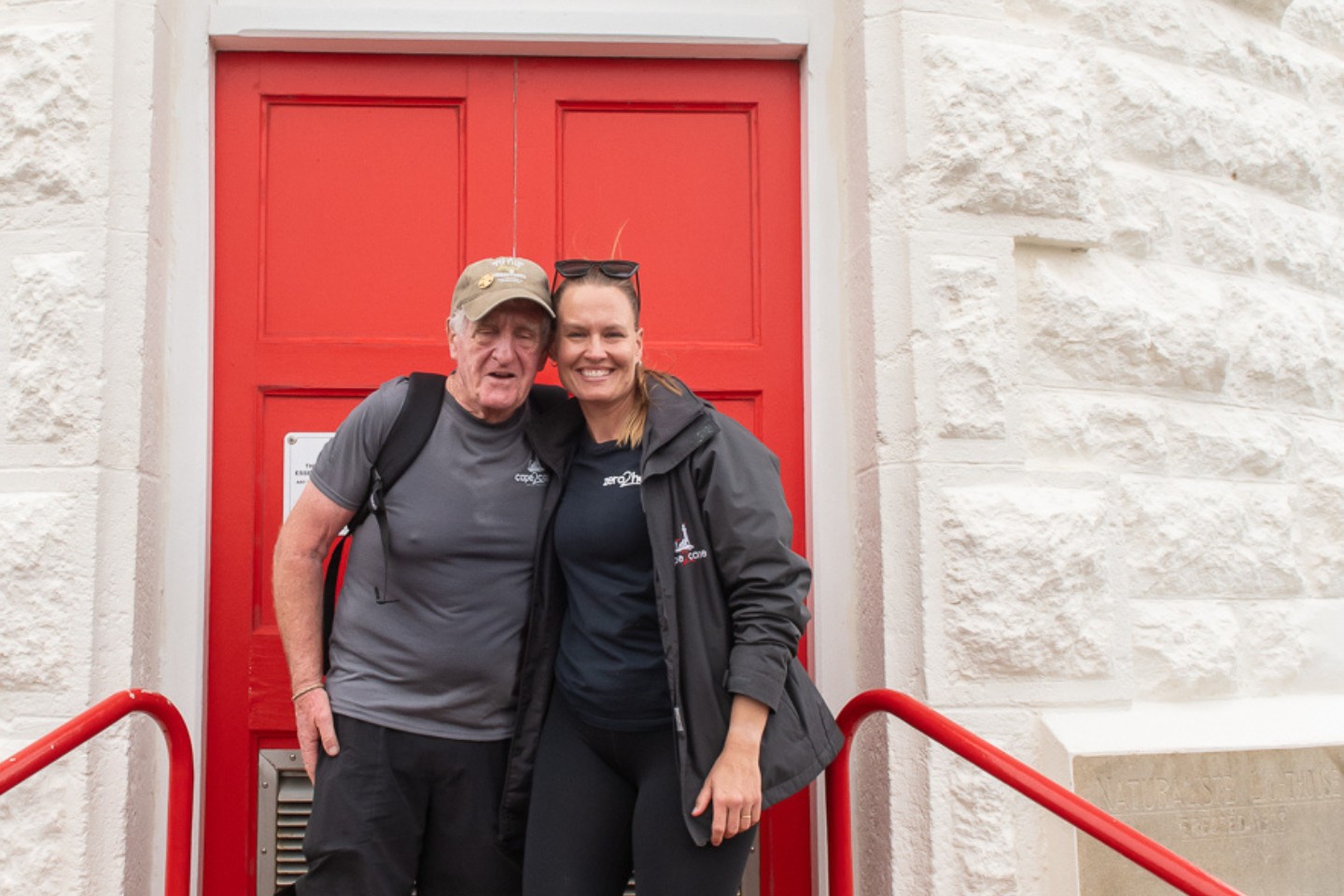
zero2hero nears $300k in business leaders’ trek

Published

on

zero2hero nears $300k in business leaders’ trek

Yes. Corporate subscriptions are available for teams and organisations, with discounted rates as user numbers increase. Pricing starts from $1,625 + GST per user.
Get in touch
to discuss the right option for your organisation.

Business News subscriptions are used by executives, investors, consultants and professionals who need to stay informed and make better decisions about the WA market. When you subscribe you’ll get

  • Unlimited access to WA’s most trusted business journalism
  • Data & Insights — detailed profiles of WA companies, people, projects and deals
  • MyBN — a personalised feed based on the companies, people and sectors you follow
  • Special publications and industry reports
  • Daily and weekly email newsletters

Data & Insights is a research tool built specifically for the WA market. It draws on more than 30 years of Business News reporting, updated regularly to reflect what’s happening now. Use it to:

  • Look up detailed profiles of WA companies, including financials, directors and ownership
  • Find decision-makers and track their career movements
  • Research live and completed projects across WA industries
  • Monitor deals, appointments and market activity
  • Access industry rankings and league tables

Data & Insights is updated daily by our dedicated research team, which uses the latest announcements, ASX filings and editorial coverage to keep our person, company, list and project records up to date.

Business News welcome all opportunities to make our dataset accurate, complete and current, so if you have an update request, please email the team at
general@businessnews.com.au, and we’d be happy to assist.

Advertisement

MyBN
is part of every subscription. It’s your personalised view of Business News. You can follow the companies, people, sectors and projects that matter to you, and get a news feed and alerts tailored to your interests. You can save articles to read later and retain only what you need.

Only subscribers have full access to all content on the Business News website.

Advertisement

If staying informed about the WA economy is part of your job, and/or you’re looking for networking opportunities in WA, Business News is built for you.

Business News subscribers are:

  • Executives and directors tracking competitors, clients and market movements
  • Investors and advisers researching companies, deals and industry trends
  • Consultants and professionals staying across sectors relevant to their clients
  • Business owners looking for leads, context and market intelligence

Most Business News publications cover national or global markets. Business News is focused entirely on Western Australia, which means the journalism, the data and the intelligence are all built around WA companies, people and projects — not adapted from a national feed. Data & Insights, included with every subscription, combines more than 30 years of WA-specific editorial research with live business data. There’s no comparable product for the WA market.

Advertisement

The Morning Digest Email provides a comprehensive wrap of the major headlines, relevant to WA business, and includes with a snapshot of the overnight news covering oil, gold and ASX-listed companies.

The Afternoon Wrap Email focuses on the news covered by our team of journalists during the course of the working day, including exclusive stories and analysis, all of which relates to WA business and the local economy.

The BN Weekender Email contains a wrap of the Business News from the week that was, highlighting the top stories in each area of WA business.
Sign up for free.

Advertisement

We’re happy to help.
Get in touch
and our team will come back to you.

Advertisement
Continue Reading

Business

New co-working space to open in former Bristol Waterworks building

Published

on

Business Live

Patch is opening its latest hub in the historic Armada House

Workspace provider Patch is opening at Armada House in Bristol's old city in November

Workspace provider Patch is opening at Armada House in Bristol’s old city in November(Image: Patch)

A workspace provider backed by the team behind Innocent Drinks is opening a base in Bristol in November. Patch’s new co-working hub will open at Armada House – an historic building in the old city that originally served as the offices for Bristol Waterworks Company.

Set across 13,000 sq ft just off Baldwin Street, the hub will have co-working studios, private offices, meeting rooms, large-scale event spaces and a rooftop lounge and terrace. It will also host a range of events including talks, workshops, industry gatherings and product launches, according to the company.

Advertisement

Patch Bristol will be the seventh site for the workspace firm, which already has hubs in Bournemouth, Gloucester, Twickenham, York, High Wycombe and Chelmsford.

Freddie Fforde, founder and chief executive of Patch, said: “Bristol has an incredible combination of entrepreneurial ambition, creativity and civic purpose.

“As our plans have developed, we’ve loved getting to know more of the founders, businesses and organisations shaping the city. We want Patch to become a home for that energy: somewhere people can build businesses, exchange ideas and start new collaborations.”

Built in 1903 as the headquarters of the Bristol Waterworks Company, Grade II-listed Armada House has been completely refurbished by Patch. The company says it has “reimagined” the property by adding “bold colour, contemporary design and beautifully crafted interiors”, while retaining original features.

Advertisement

“Bristol was a natural choice for Patch,” said Mr Fforde. “The city has an extraordinary concentration of creative talent, tech businesses, B Corps and climate innovators, alongside world-class universities and a thriving film and media sector with a global reputation.”

Patch’s backers include JamJar, the venture fund created by the team behind Innocent Drinks, alongside Active Partners and Matt Clifford CBE, co-founder of Entrepreneur First.

Patch will be led in Bristol by a local director and team.

Paloma Strelitz, creative director and head of product at Patch, said: “Bristol has an extraordinary crossover between entrepreneurship, creativity and culture. Some of the most interesting ideas emerge when people from different worlds connect. Patch can help join some of those dots, creating more opportunities for people and ideas to come together in the centre of Bristol.”

Advertisement
Continue Reading

Business

Global PMI Hint At Stubborn Inflation Amid Energy And Supply Chain Pressures

Published

on

Global PMI Hint At Stubborn Inflation Amid Energy And Supply Chain Pressures

Global PMI Hint At Stubborn Inflation Amid Energy And Supply Chain Pressures

Continue Reading

Business

Money Market Funds And CDs: Americans Pile On Low-Risk Investments Despite So-So Yields And Higher Inflation

Published

on

U.S. Money Markets: Slow Calm To Steady State

Money Market Funds And CDs: Americans Pile On Low-Risk Investments Despite So-So Yields And Higher Inflation

Continue Reading

Business

Paytm shares drop 3% after govt shields UPI payments only up to Rs 2,000 from charges. Should you buy the dip?

Published

on

Paytm shares drop 3% after govt shields UPI payments only up to Rs 2,000 from charges. Should you buy the dip?
Shares of One 97 Communications, the parent company of Paytm, dropped over 2.5% on Tuesday after the government directed banks and payment system providers not to levy charges on UPI transactions of up to Rs 2,000, leaving investors speculating about what happens to transactions above the said amount.

Paytm shares dropped to Rs 1,761.80 apiece on NSE on Tuesday morning. This comes a session after the stock hit a fresh 52-week high of Rs 1,840 apiece, nearly doubling in less than six months from its 52-week low of Rs 930.6 apiece which the stock had hit in March this year.

As per a gazette notification dated Monday, no bank or system provider would directly or indirectly impose any charge on a person making or receiving a payment through RuPay debit card or UPI transaction of up to Rs 2,000. However, the government did not specify whether charges would be applicable to transactions above Rs 2,000, to be paid by merchants. Currently, there are no charges levied on UPI transactions, irrespective of the amount.

Also read |Banks cannot impose charges on UPI payments of up to Rs 2,000, govt says

Advertisement

The latest notification comes after an amendment to the Payment and Settlement Systems Act, 2007, which provides a framework for imposing a Merchant Discount Rate (MDR) on payments through UPI and other notified electronic payment modes. The government in a statement explained the rationale for imposing charges, stating that with exponential transaction volumes, the system requires significant and continuous upgrades in cybersecurity, fraud prevention, and infrastructure.


Charges were required for market expansion and self sustainability, it said, adding that it is necessary to increase competition by encouraging more companies to expand operations, which requires a self-sustaining revenue model. Reliance on subsidies alone is not viable for the next wave of growth, and a balanced framework is required to ensure that UPI remains robust, inclusive and future-ready, the statement further said.

Why are Paytm shares falling today?

For nearly seven years, UPI became more and more popular as a transaction could be made so quickly without paying any additional charges. By specifically shielding UPI payments only up to Rs 2,000, the government has created the legal and regulatory space for a merchant discount rate, or MDR, to be eventually imposed on selected higher-value merchant transactions. No such charge has yet been announced.The government has however repeatedly clarified that UPI will remain free for citizens and person-to-person transactions will continue without charges. If MDR is introduced, it would only apply to a limited section of merchant transactions, above a specified threshold, and at a rate substantially below typical debit or credit-card MDR.

Finance Minister Nirmala Sitharaman has said any MDR would apply to merchants and not end-users, arguing that revenues generated within the payments ecosystem would enable banks and fintech companies to invest further in infrastructure, innovation and security.

While discussing the costs of digital-payment infrastructure, RBI Governor Sanjay Malhotra in August said, “Someone has to pay the cost”. He stressed that the RBI wants digital payments to remain accessible, affordable and safe, but also sustainable.

Advertisement

Also read | UPI charges above ₹2000? Government opens door to new merchant fee regime

Should you buy, sell or hold Paytm share price?

Jefferies recently increased its price target for the stock to Rs 2,100 apiece from Rs 1,600 apiece, while maintaining its ‘Buy’ call. The international brokerage highlighted that Paytm stands out on monetisation of its client base in near-zero MDR regime, which is now changing favourably. The fintech platform’s 4.9 crore merchant base and strong loan-origination model should drive 25% revenue CAGR over FY26-29, which, along with operational synergies will aid sharp rise in EBITDA and profit, it added.

Initiative in credit on UPI, cloud AI inference models, wealth offering and foray into overseas markets can lift growth, the international brokerage said, as it increased earnings estimates for FY28-29 by 20-25% to factor 25 bps MDR on UPI.

Bernstein recently named Paytm its top pick, citing robust merchant lending growth, operating leverage and the potential introduction of MDR on UPI as key drivers of earnings growth.

Advertisement

With a target price of Rs 2,200, Bernstein expects Paytm’s EPS to reach Rs 78 by FY29. Even after excluding any potential impact from MDR on UPI, its FY29E EPS estimate stands at Rs 54, still above the Rs 46 consensus estimate.

Also read | Jefferies’ 25% CAGR club: Paytm, Groww among 5 financial stocks that can deliver up to 25% returns

Disclaimer: This article has been written by Debaroti Adhikary, who is not a SEBI-registered Research Analyst or an Investment Adviser. Debaroti Adhikary and his/her ‘relative(s)’ (as defined under Section 2(77) of the Companies Act, 2013) do not hold any financial interest in the companies mentioned in this article as of the date of publication. The views/recommendations mentioned in this article, wherever applicable, are those of the respective SEBI-registered Research Analyst/brokerage and have been reproduced/reported with due attribution. They should not be construed as the views or recommendations of The Economic Times Digital or the journalist. Readers are advised to consider the original research report and make their investment decisions based on their own assessment. Brokerage disclaimers here.

Advertisement
Continue Reading

Business

State pension likely to rise by 3.9% next April

Published

on

Jack Clark, a man with short brown hair, dressed in a blue coat

The state pension is likely to rise by 3.9% next April, according to the latest jobs and pay data.

Under the triple lock pension guarantee, an increase is based on either average wage growth, inflation or 2.5% – whichever is highest.
Average wage growth between May and July slowed, according to the Office for National Statistics.

The number of vacancies in the UK shrank while the number of people claiming unemployment benefits rose.

Advertisement
Continue Reading

Trending

Copyright © 2025